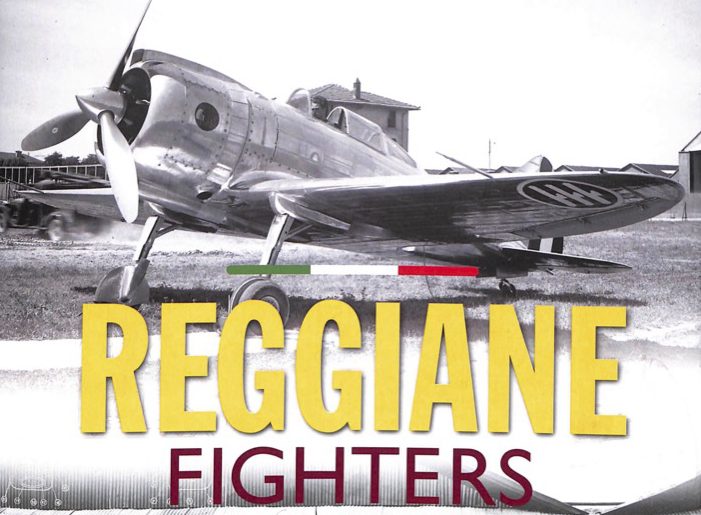

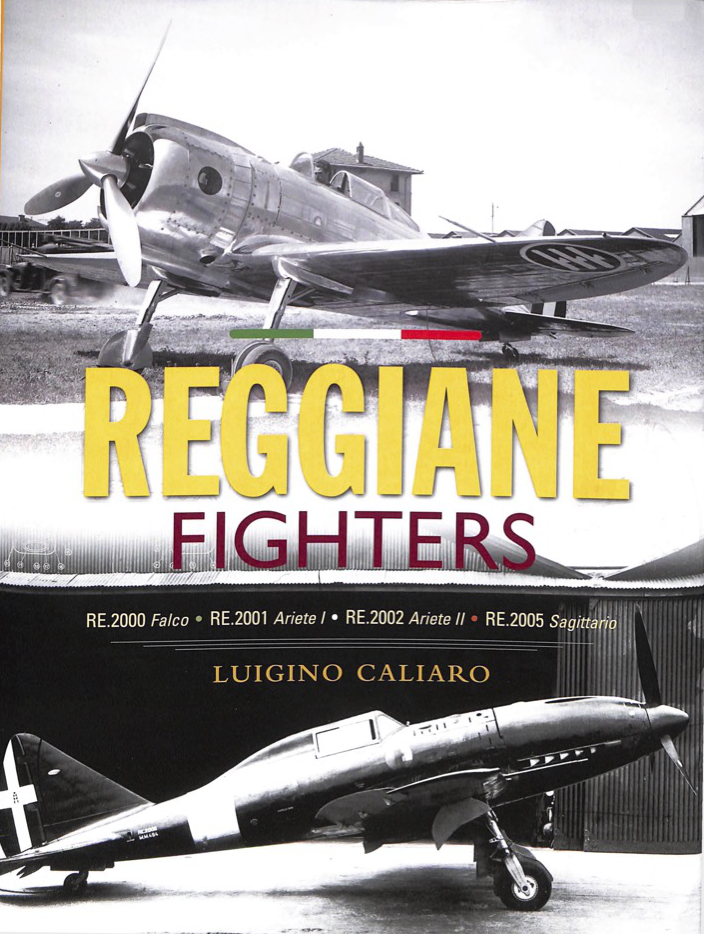
Reggiane Fighters: RE.2000 Falco, RE.2001 Ariete I, RE.2002 Ariete II, RE.2005 Sagittario by Luigino Caliaro, reviewed by Joe May, available on Amazon.
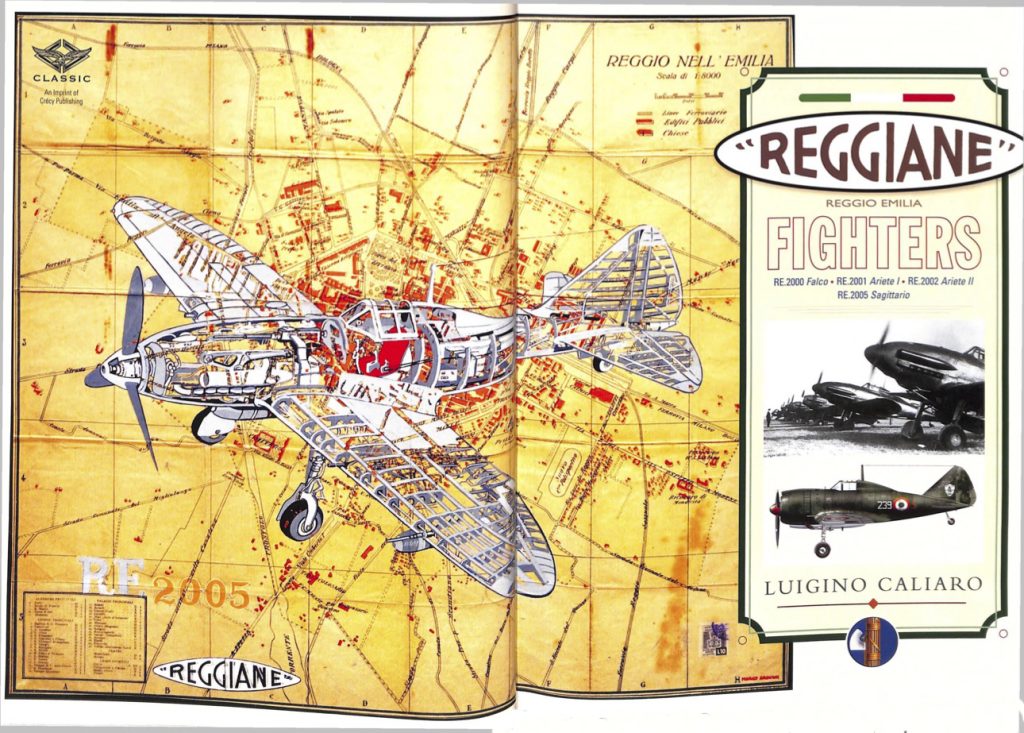
Caliaro has scored a writing hat trick with Reggiane Fighters: Reggio Emilia RE.2000 Falco, RE.2001 Ariete I, RE.2002 Ariete II, RE.2005 Sagittario. This is his third and latest book on Italian fighters and interceptors of the 1930s and 1940s, thus encompassing WWII. The book Reggiane Fighters has much more knowledge and understanding than the four fighters listed in the complete title and produced by Reggio Emilia Officine Meccaniche Reggiane—most commonly called Reggiane. Caliaro takes readers through the history of Reggiane, beginning with product design and manufacture, which widely ranged from large agricultural machinery to steam locomotives and more. Shortly after WWI, a major share was purchased by Caproni, and this, in concert with Italy’s then fascist governmental support, solidly placed Reggiane within the aviation manufacturing ecosystem. Reggiane was subsequently contracted to license-build the SIAI-Marchetti S.79 Sparviero, second only in volume to SIAI-Marchetti itself, for example.
A superbly well-written short biography of Gianni Caproni is inserted within the chapters, as are several other assorted brief, yet pertinent, inserts throughout this challenge-to-put-down book. Names that are often lost to history, such as aeronautical engineer Giuseppe Pambianchi and Maggiore Giuseppe Cenni, are two of several such Easter eggs. Their contributions were significant and historic, yet unheralded by most authors. Caliaro expertly guides readers through Reggiane’s chief fighter designs produced during WWII. The RE.2000 Falco (Falcon), RE.2001 Ariete I (Aries I), RE.2002 Ariete II (Aries II), and RE.2005 Sagittario (Sagittarius) are all well described in terms of engineering design, influenced by the Italian government (being fascist, factories were largely viewed as serving the government), as well as combat stories.
Caliaro excels in retelling a variety of combats, and he does so with greater objectivity than most authors. His objectivity is in part due to his ability to research Italian archives, as Italian is his first language; he is advantaged over English-only writers. Readers will likely become grounded to learn of successful Italian aerial fighting, along with the combats ending in defeat. Caliaro’s retelling is definitely unbiased, not one-sided. Often, excerpts of these combat reports are presented for readers to interpret witness accounts for themselves. A somewhat rare yet wonderful gift for readers.
Reggiane’s future designs, all of which remained on the drawing boards, are both beautiful and fascinating—being addressed in Chapter Seven. Tantalizing designs were: a fighter powered by a compound engine; an idea coinciding with the design of the Twin Mustang; a post-war mail-carrying aircraft; a pylon racer; and a trans-oceanic flying boat. All are sleek and polished looking to the eye.
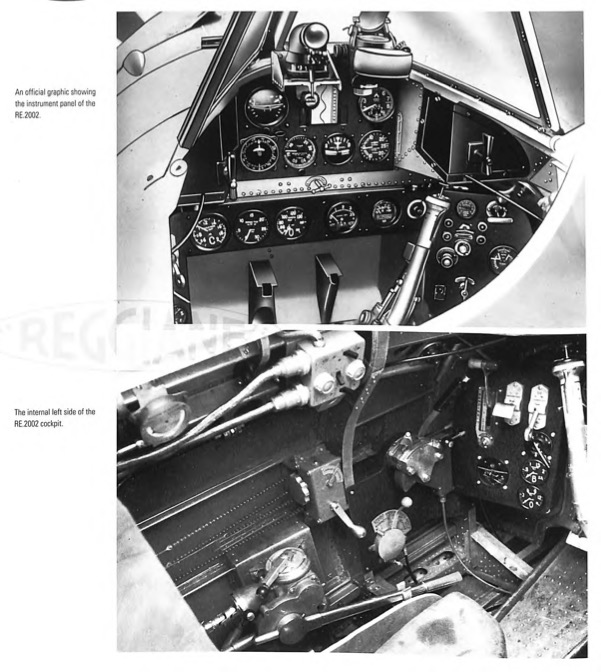
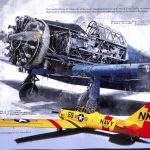
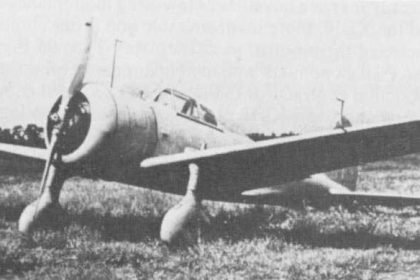
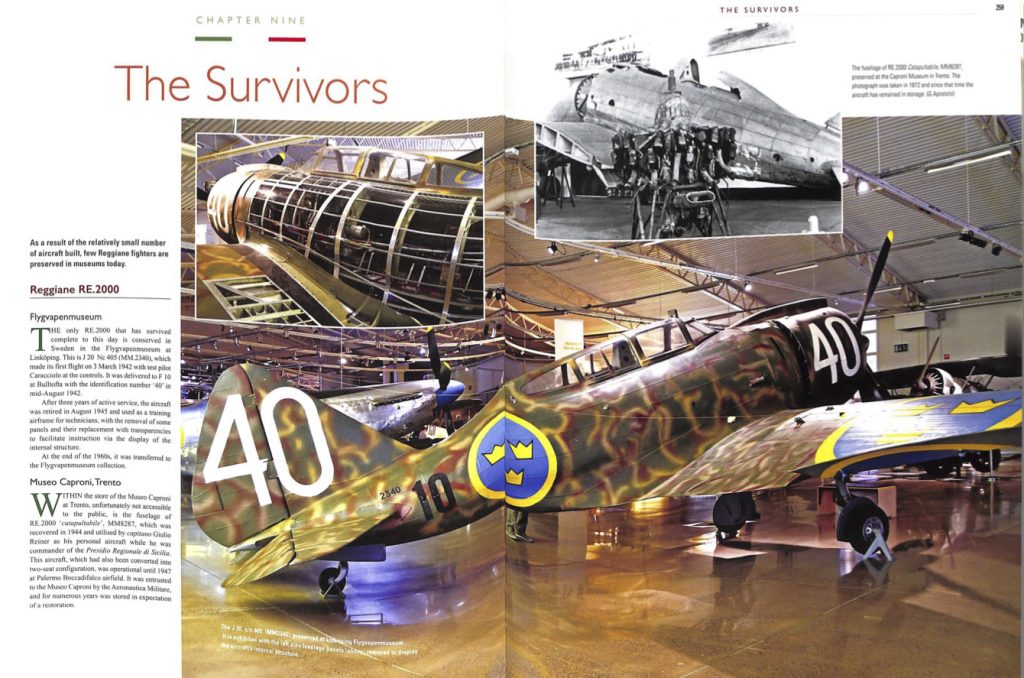
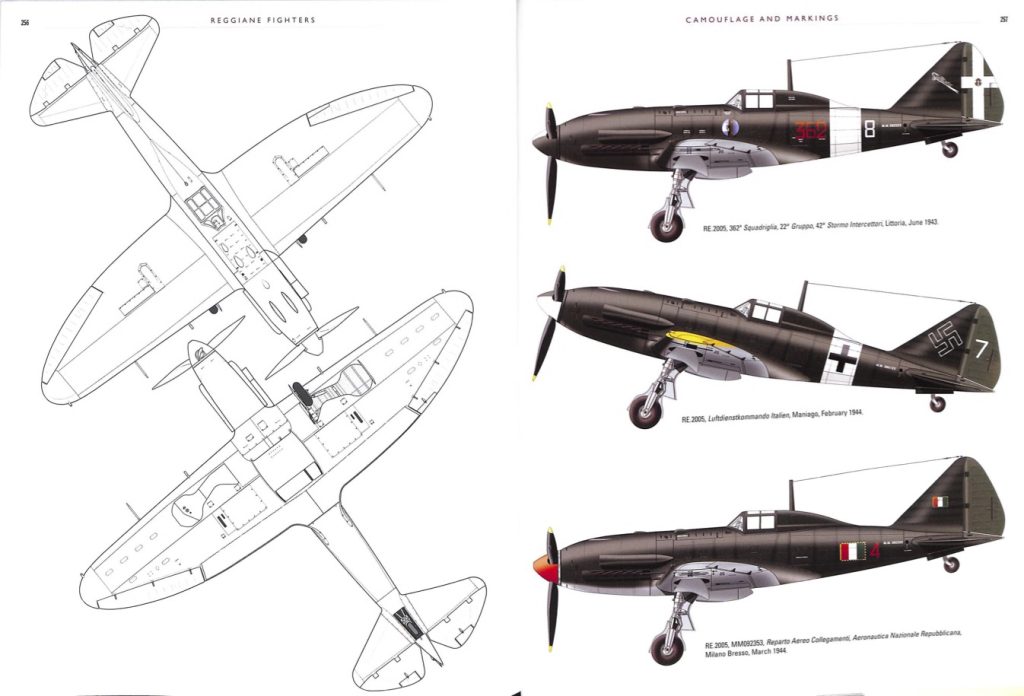
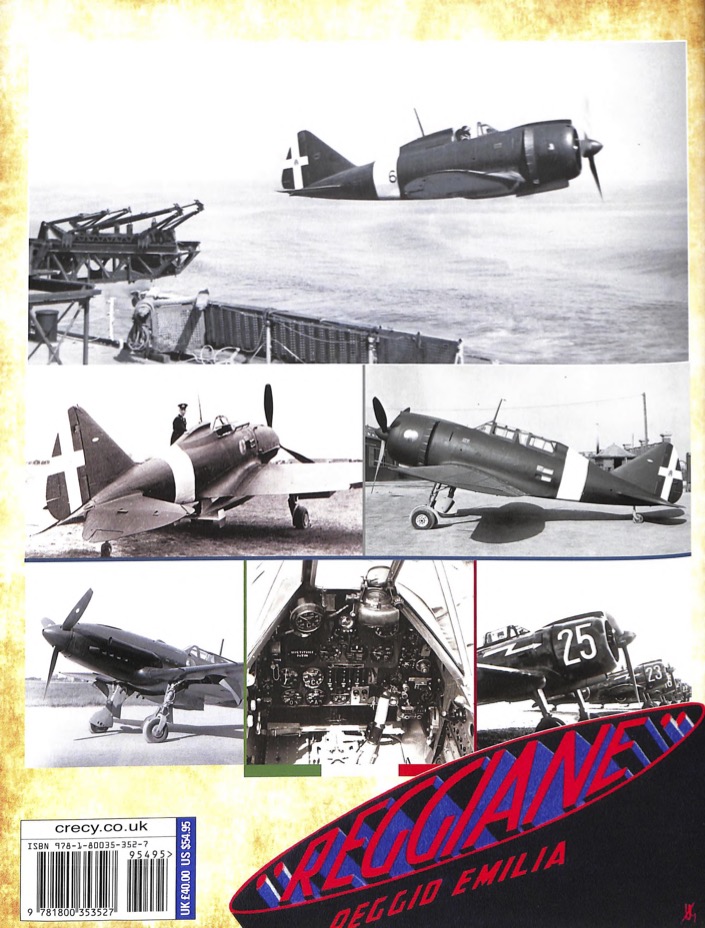
Reggiane Fighters is filled with images and artwork from archives as well as collections—many, if not most, previously unpublished. The final chapters are brilliant in their color with line work and profiles created by A. Brioschi, as well as modern-day photos of existing Reggiane fighters in their current habitats. This book must be on the bookshelves dedicated to aviation’s history, especially regarding WWII and Italy’s air war role.
Luigino Caliaro’s previous two books, with links to their reviews, on his Italian fighters of the 1930s and 1940s are FIAT Aeritalia Fighters: CR.32, CR.42 Falco, G.50 Freccia, G.55 Centauro by Luigino Caliaro and Aeronautica Macchi Fighters: C.200 Saetta, C.202 Folgore, C.205 Veltro.
| Hardback
Publisher: Crécy Publishing Ltd. (2025) SIze: 12” x 9” Index: ✔︎ Bibliography: ✔︎ Notes: 𝑿 Photos: ✔︎ Cost: $45 ISBN: 978-1-80035-352-7 Page Count: 272 Available on Amazon. |