






On this day in aviation history, 79 years ago (July 10, 1947), the Airspeed AS.57 Ambassador took flight for the first time. Prototype AS.57 Ambassador 1 G-AGUA was the first of the type to fly from Christchurch at the hands of pilot George Errington. The AS.57 was a byproduct of the Brabazon Committee’s 1943 quest to find a post-WWII solution for airliners in the United Kingdom. Through study, the committee found that a twin-engined airliner with short to medium range was desirable, with the intent of replacing the proven but aging Douglas DC-3. The “next in line” airliner was referred to as the Type 2.
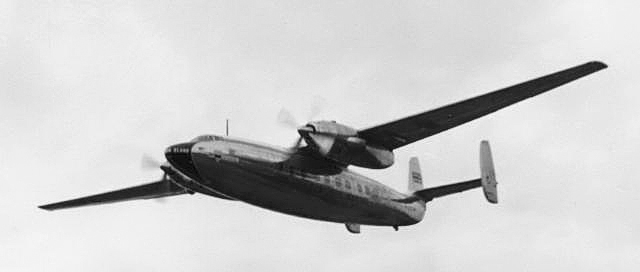
British aerospace manufacturer Airspeed Ltd. took an interest in the Brabazon Committee’s request and began to develop a solution in 1943. Development continued as WWII began to draw to a close, and immediately following the end of the conflict, the British Ministry of Aircraft Production ordered two prototypes from Airspeed. The first prototype was unpressurized and powered by two Bristol Centaurus radial engines. Initial flight testing showed favorable results for the AS.57, which underwent a series of modifications after the first flights. Tabs were added to the rudders, as were reversible propellers.
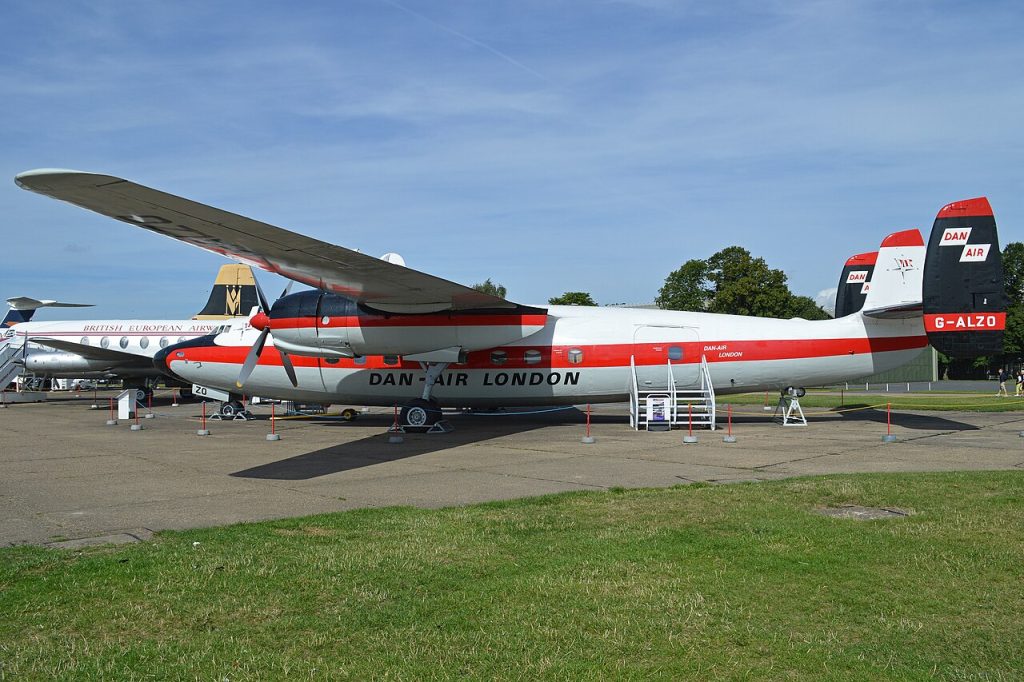
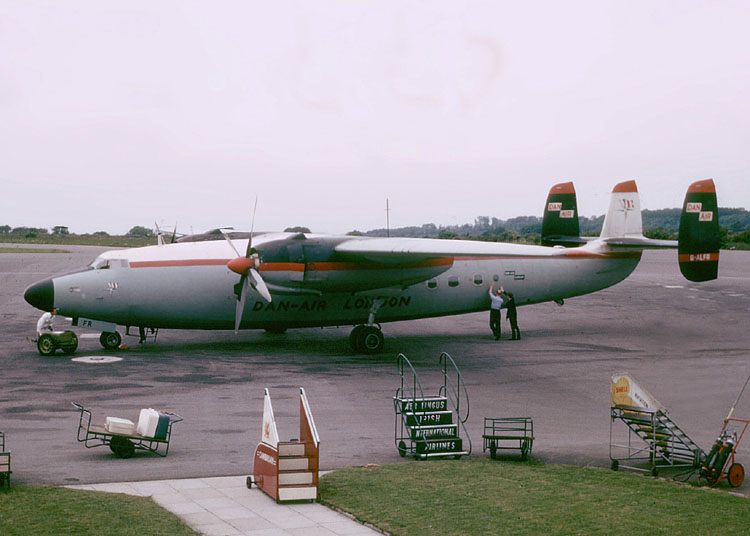
Despite a gear-up landing in November of 1947, due to a loss of hydraulic pressure, confidence in the prototype remained high in the UK. Flight testing revealed the aircraft to have exceptional low-speed handling characteristics. A demonstration at the 1948 Farnborough Airshow with one engine shut down intentionally proved these characteristics to the public. British European Airlines (BEA) began to fly the Ambassador commercially in 1952. BEA would be the most prolific operator of the AS.57, with a fleet of 20 aircraft. Dan-Air was the next biggest fan of the Ambassador, flying 7 in their fleet. The Royal Jordanian Air Force and Moroccan Royal Flight operated the AS.57 in a military role.
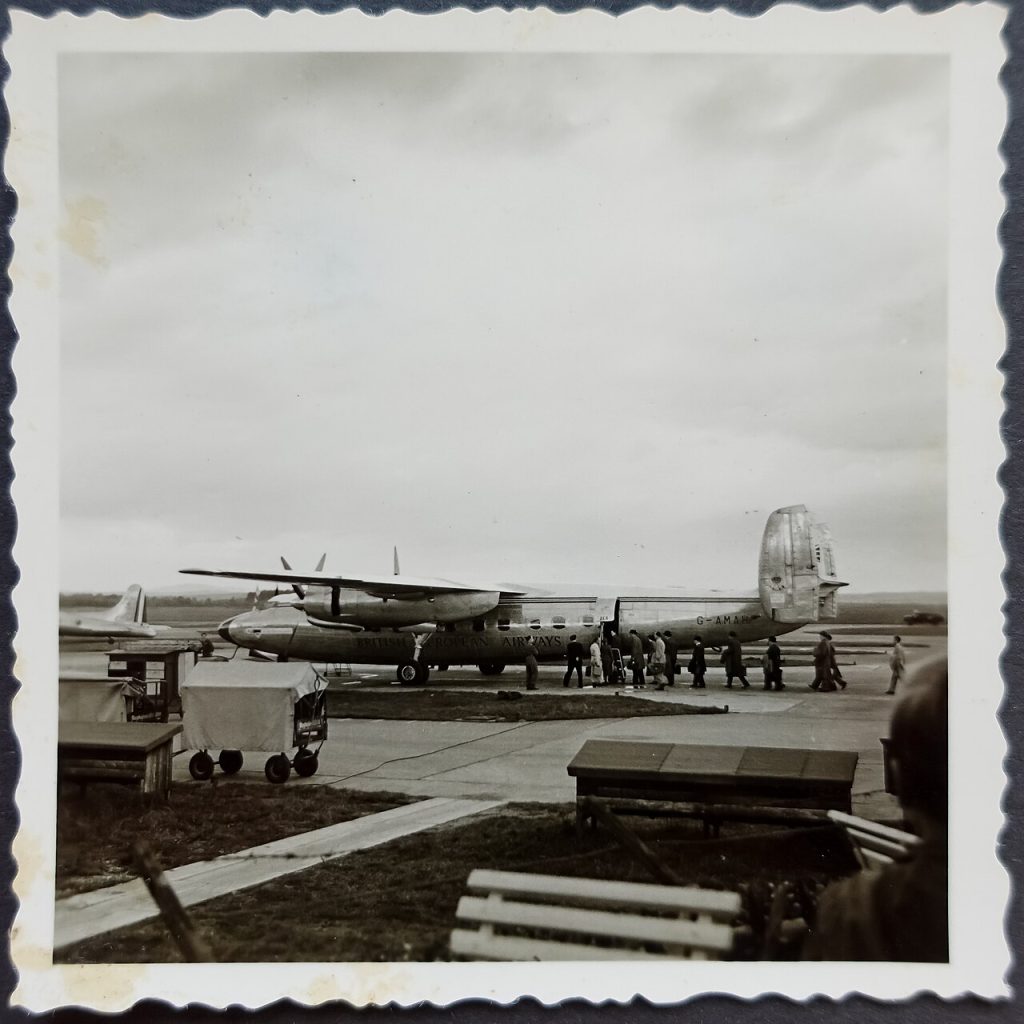
The Airspeed AS.57 was flown by a crew of three and had a capacity for up to 60 passengers. At 20,000 ft, the AS.57 would typically cruise at 300 mph with 65% power, but it could attain a maximum airspeed of 312 mph at 75% power. With 7,900 pounds of payload and a cruise speed of 220 mph, the Ambassador could reach a maximum range of 1,690 nautical miles. At a maximum weight of 52,000 lbs, the AS.57 could takeoff at 3,270 ft and land with 2,565 ft. Airspeed manufactured 23 AS.57s between 1947 and 1953, and the Ambassador served admirably during its service run.
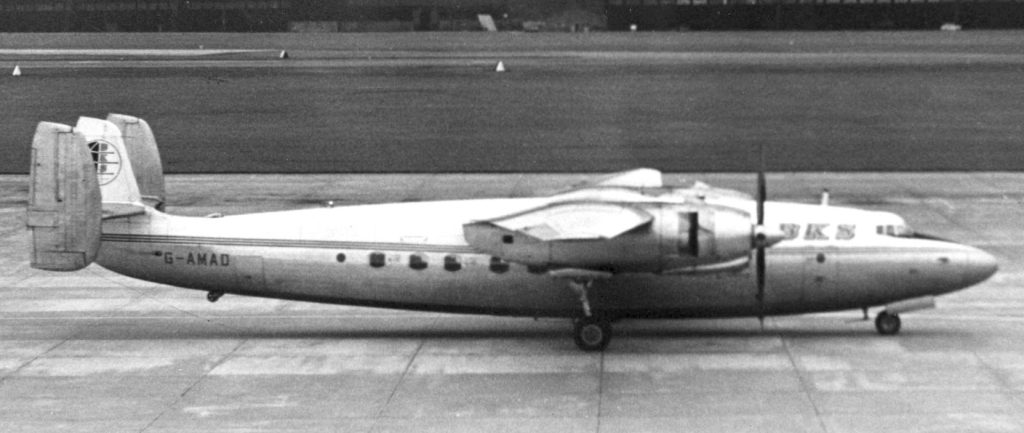







My father worked on these at BEA in the ’50s. It was used in a London to New Zealand air race, which he worked on…