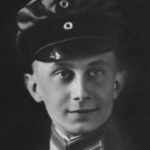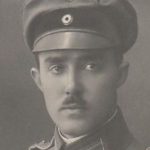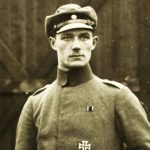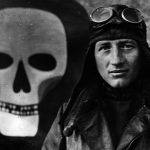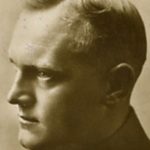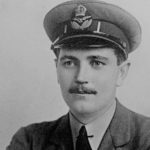
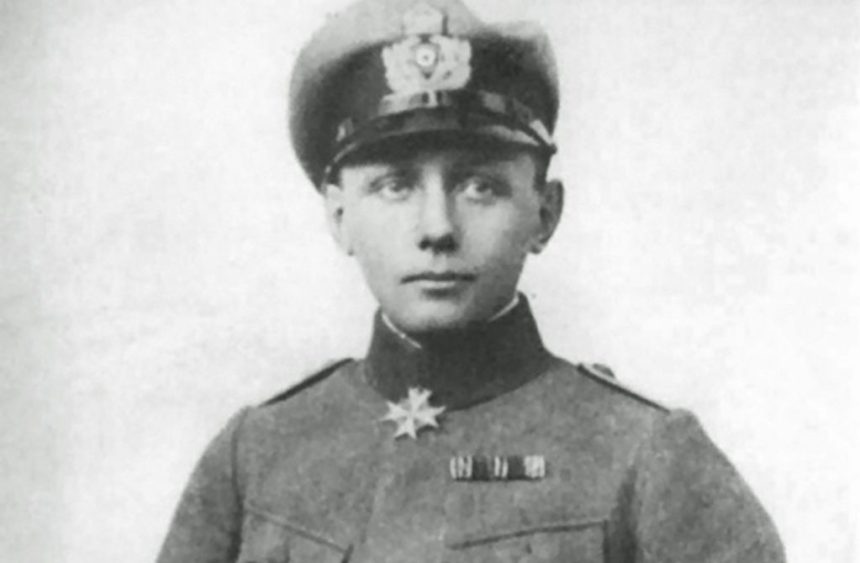

There was a German ace who went on to become the commander of the world’s first naval air wing in WWI and an anti-Nazi after the war. Born on December 6, 1891, in Dessau, Germany, Gotthard Sachsenberg became a sea cadet in April 1913. In 1914, he was promoted and transferred to the battleship SMS Pommern. In August 1915, he received the Iron Cross First Class as an officer candidate for his outstanding work as an artillery spotter. However, Sachsenberg was interested in aircraft and joined the air service in December 1915. He was sent to Marine Feldflieger Abteilung II (MFA II) as an observer and was promoted to Leutnant in early 1916. Gotthard Sachsenberg first worked as a teacher for observers. Then, he completed pilot training and became a qualified pilot. After that, he returned to MFA II to fly a Fokker Eindecker. On February 1, 1917, Sachsenberg took command of Marine Feld Jasta I (MFJ I).
Ace Journey of Gotthard Sachsenberg
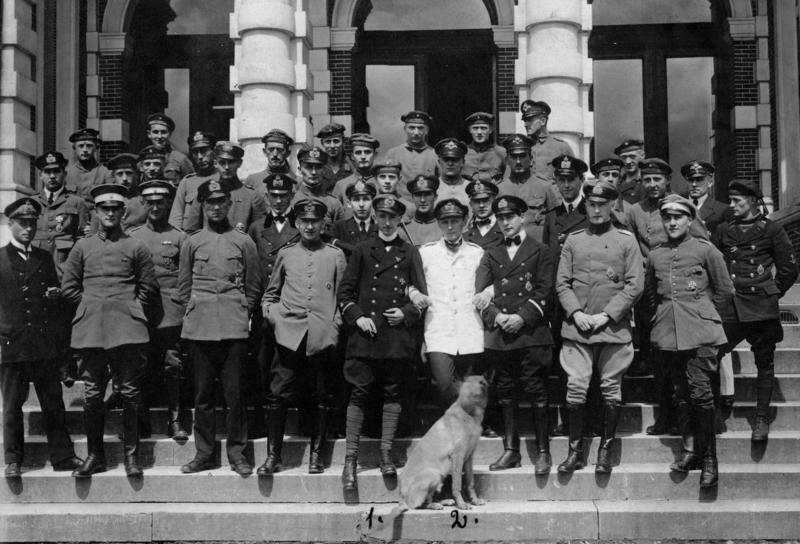
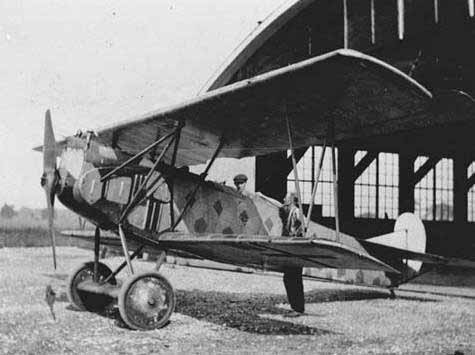
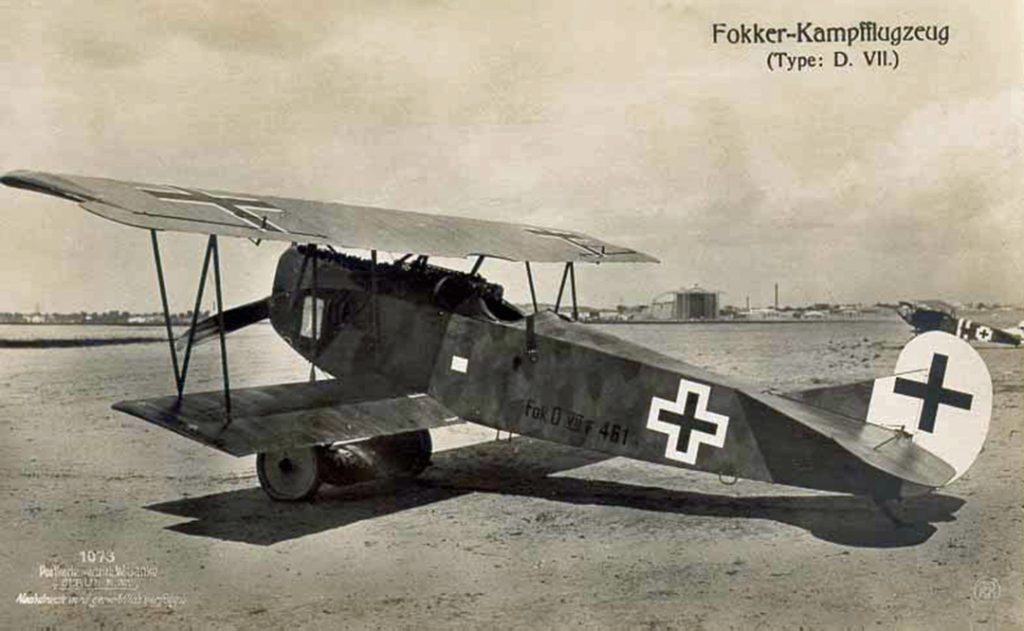
Gotthard Sachsenberg’s first victory came on March 1, 1917, when he shot down two aircraft, including a Farman and a Sopwith 1½ Strutter. After scoring another victory in May, he shot down two aircraft on June 7 to become an ace officially. He scored one victory in August, and on August 20, Sachsenberg was awarded the Knight’s Cross of the Royal House Order of Hohenzollern. Further, he claimed one victory each in November and December, bringing his 1917 score to eight. In 1918, his first victory came in March, followed by one in April and two in May. In June, his unit received new Fokker D.VIIs, painted in bright, distinctive colors, similar to Manfred von Richthofen’s “Flying Circus.” The main colors were yellow and black, with a yellow-and-black checkerboard pattern designed by Sachsenberg. In June, he scored two victories, followed by five in July, and five in August, bringing his score to 24. Gotthard Sachsenberg was awarded Germany’s highest award, the Pour le Mérite, on August 5, 1918. Following that, he claimed one victory in September and six more in October, bringing his WWI total to 31. After the war, in January 1919, Sachsenberg created Kampfgeschwader Sachsenberg, which had 700 personnel, including WWI aces such as Theo Osterkamp, Alexander Zenzes, and Josef Jacobs. The group supported the Freikorps in their fight against Russian communist forces along Germany’s Baltic borders. They successfully gained air superiority over their opponents and mainly carried out ground support missions for the Freikorps. Later, he teamed up with Professor Hugo Junkers to start Aero Lloyd Airlines. Gotthard Sachsenberg also had an interest in his brother’s shipyard, which built river boats and small coastal ships.
Postwar Life
Gotthard Sachsenberg was elected to the German Parliament and represented Liegnitz from May 1928 to July 1932. He took a pacifist stance and had Jewish family members, which put him at odds with the Nazis. He wrote articles warning against Germany’s military buildup and the creation of the Luftwaffe, predicting it would bring war to German families. In retaliation for his views, the Nazis held a secret trial while he was absent. They sentenced him to death, even though he was a Member of Parliament. However, he managed to escape on his way to the firing squad and was not rearrested. Gotthard Sachsenberg avoided the consequences of his conviction because his family’s shipyard was making military ships. In the mid-1930s, Sachsenberg partnered with Hanns von Schertel, the inventor of the hydrofoil ship. Hydrofoil ships could reach speeds over 30 knots, making them faster than any warships of that time. It caught the attention of the German Ministry of Transportation and Finance, the German Navy, and the German Air Force. However, the chance to use hydrofoils for commercial purposes ended with WWII. During the war, several military hydrofoils were developed, some capable of reaching speeds up to 60 knots. Most of these were just prototypes and suffered damage during the war. After WWII, the Soviet Union occupied Dessau and took control of the shipyard. Gotthard Sachsenberg and Shertel founded a new hydrofoil company, Supramar, in Switzerland. In 1953, they launched the first commercial hydrofoil service on Lake Maggiore, operating between Ascona, Switzerland, and Arona, Italy. The idea of hydrofoils gradually spread around the world, but Sachsenberg did not live to see their widespread use. He passed away in Bremen on August 23, 1961. In the Aces series, Gotthard Sachsenberg was not only brave in the air but also during his political time, when it was not easy to go against the Nazis. Read stories about more Aces HERE.