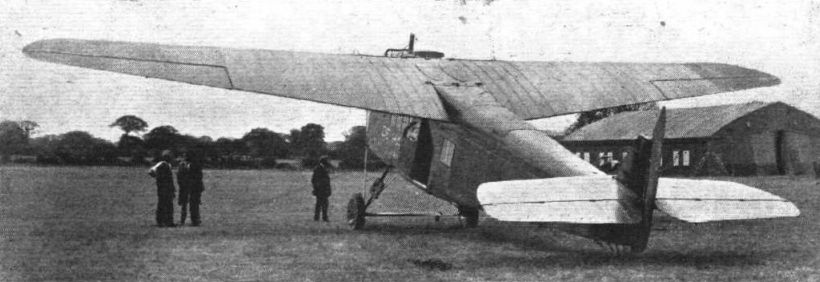
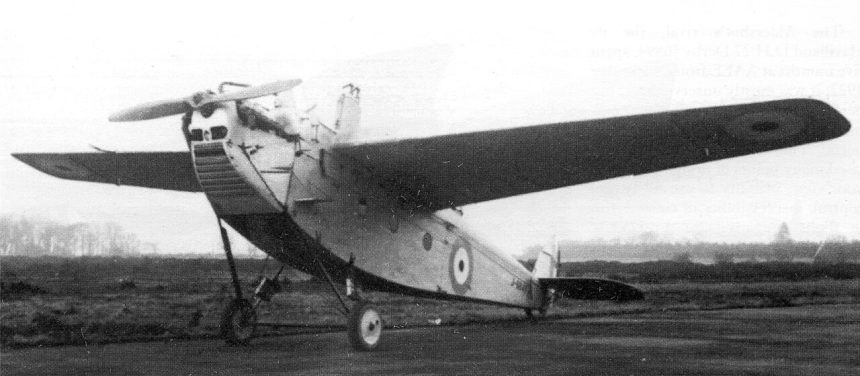


On this day in aviation history, 105 years ago (July 5, 1921), the first flight of the de Havilland DH.29 Doncaster took place. An experimental long-range aircraft, the DH.29 was developed at the request of the British Air Ministry. The Doncaster was a high-wing monoplane design that was powered by a single 450-horsepower Napier Lion IB W-12 water-cooled engine. Both the aircraft’s wings and fuselage were constructed of wood, with fabric covering. The pilots of the DH.29 sat in an open cockpit that was situated forward of the wing.
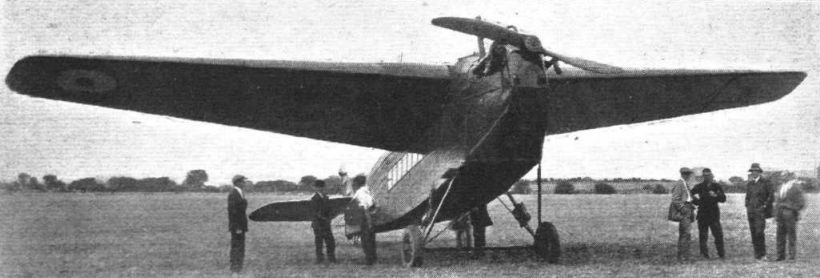
de Havilland manufactured two HD.29s, both at Stag Lane Aerodrome, near London, in the United Kingdom. Doncaster J6849 was the first prototype to be built, and also the first to fly. Early flight testing of the aircraft showed that the engine’s installation needed to be redesigned, and it promptly was. G-EAYO was the second DH.29 prototype, and it was built to seat ten passengers in the cabin to attract potential airline suitors. Unfortunately, the airlines proved uninterested in the Doncaster, and the design was soon abandoned. The de Havilland DH.34 biplane design showed more promise as a people-mover, and the airlines gravitated towards that model instead.
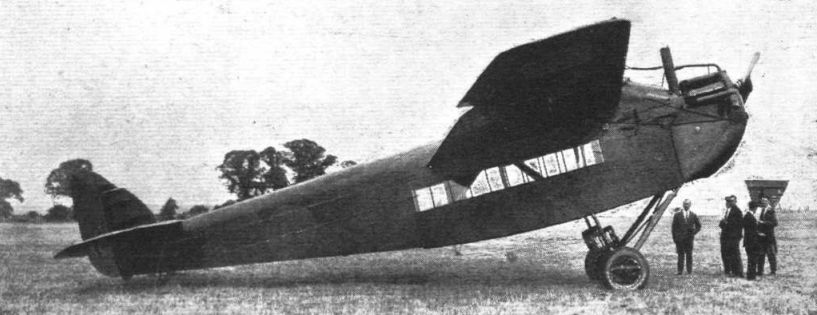
de Havilland proposed a military reconnaissance variant of the Doncaster, to be designated as the DH.30. This concept was never created, but the Air Ministry did continue to test the two DH.29 airframes at RAF Martlesham Heath. Of particular interest to the Air Ministry were Doncaster’s thick-section cantilever wings, as it was the first British aircraft to employ them. The DH.29 had a wingspan of 54 feet, and the aircraft was 43 feet long. A gross weight of 7,500 pounds gave the Doncaster ample space to move people or objects over it’s 4,370 pound empty weight. In cruise flight, the DH.29 would typically move along at 100 mph, while the aircraft could attain a maximum airspeed of 116 mph. The Doncaster would land at 54 mph. Had the DH.30 variant been developed, it would have been armed with Scarff ring-mounted .303 inch machine-guns.