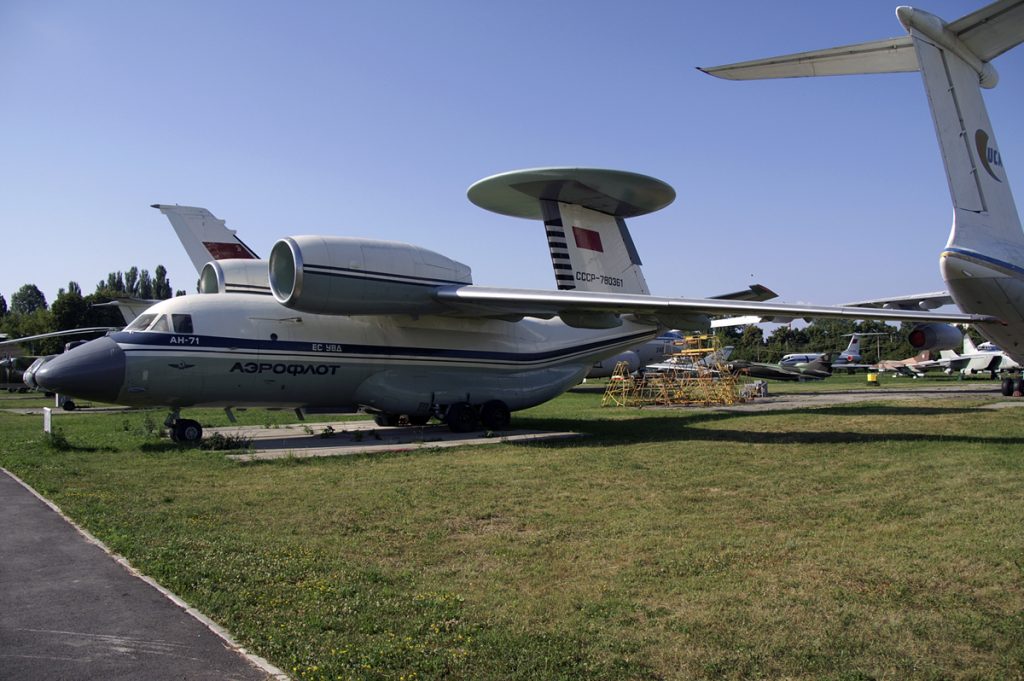
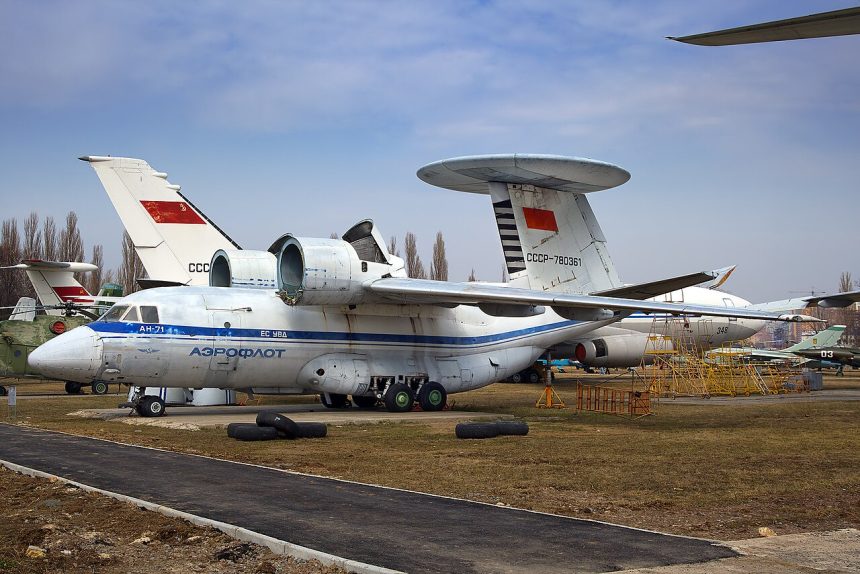


On this day in aviation history, 41 years ago (July 12, 1985), the Antonov An-71 Madcap flew for the first time. An AWACS (airborne early warning and control) aircraft, the An-71 was to be used with Soviet Air Force VVS-FA fighter-bomber forces. Dubbed the Madcap by NATO, the An-71 was a further development of the successful Antonov An-72 transport. The distinguishing feature between the two airframes is the rotodome RADAR and reinforced rear-fuselage found on the An-71. During the Cold War, the Soviet Air Force was divided into three units: bombers, fighters/attack, and transport. The Voyska PVO, a primary fighter-interceptor unit, was not part of the VVS, so the Tu-126 Moss and A-50 Mainstay AWACS aircraft served exclusively with the PVO. This left a need for AWACS ships with the VVS itself. The An-71 was developed to fill this need by serving with the VVS-FA for tactical sorties.

Antonov used the cargo hold of the An-71 as the radio equipment section for the An-71, with positions for six radio operators. Following the Madcap’s first flight, development of the aircraft never went beyond that of a prototype. The fall of the Soviet Union ultimately led to the cancellation of the project. A highly modified An-75 variant was proposed for carrier operations, but the aircraft was found to be too much of a hassle, as a complete redesign of the airframe would have been required. Of the three Madcaps manufactured, two are accounted for. One An-71 was sold to India in the early 2000s for $200 million, and another was restored and placed on display at the Ukraine State Aviation Museum. The Antonov An-71 was crewed by six personnel and powered by two Progress D-436K turbofan engines. The Madcap would cruise at 330 mph and could attain a maximum airspeed of 400 mph. The aircraft’s service ceiling was 35,400 ft, and it carried a Vega-M Kvant search radar.