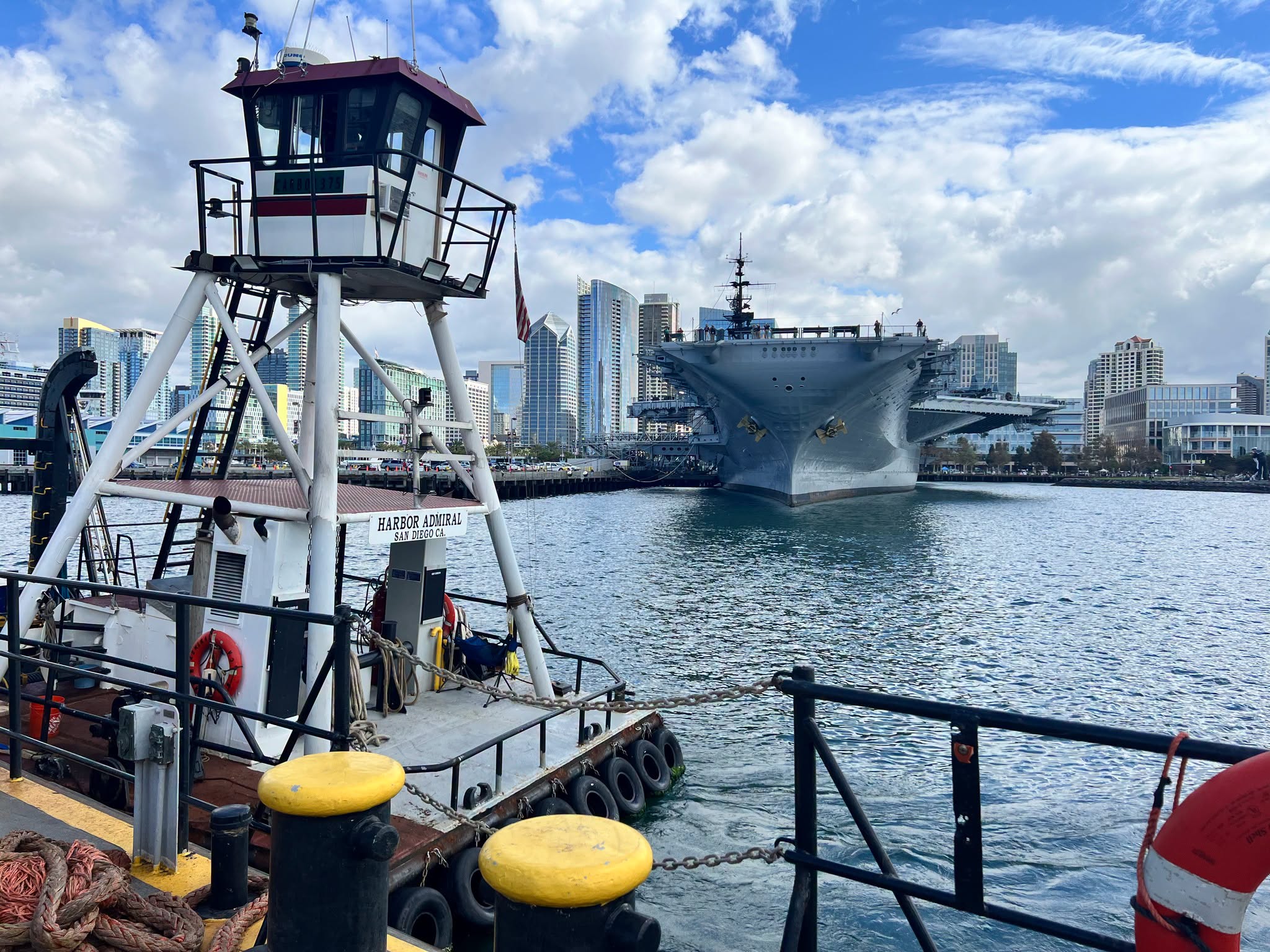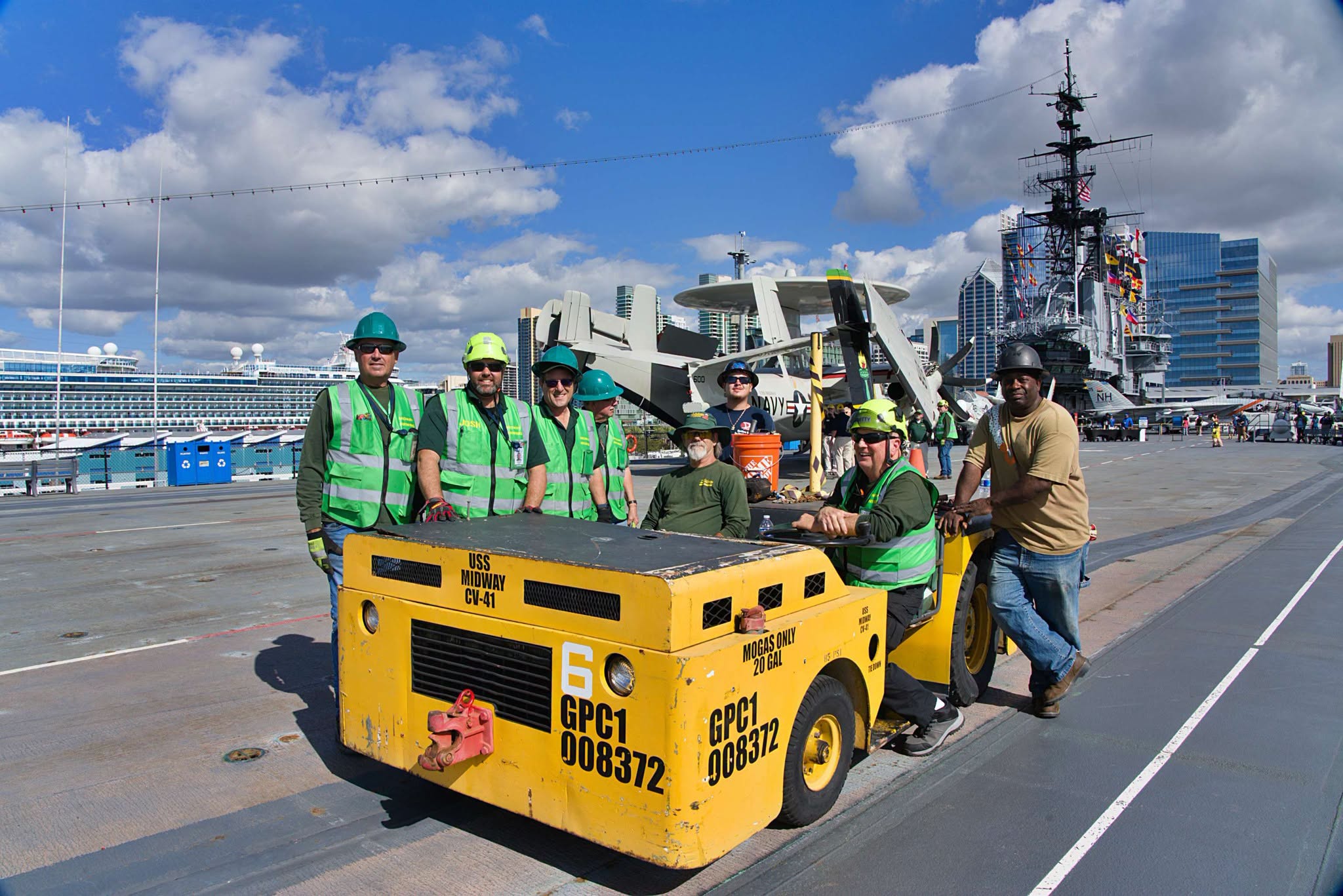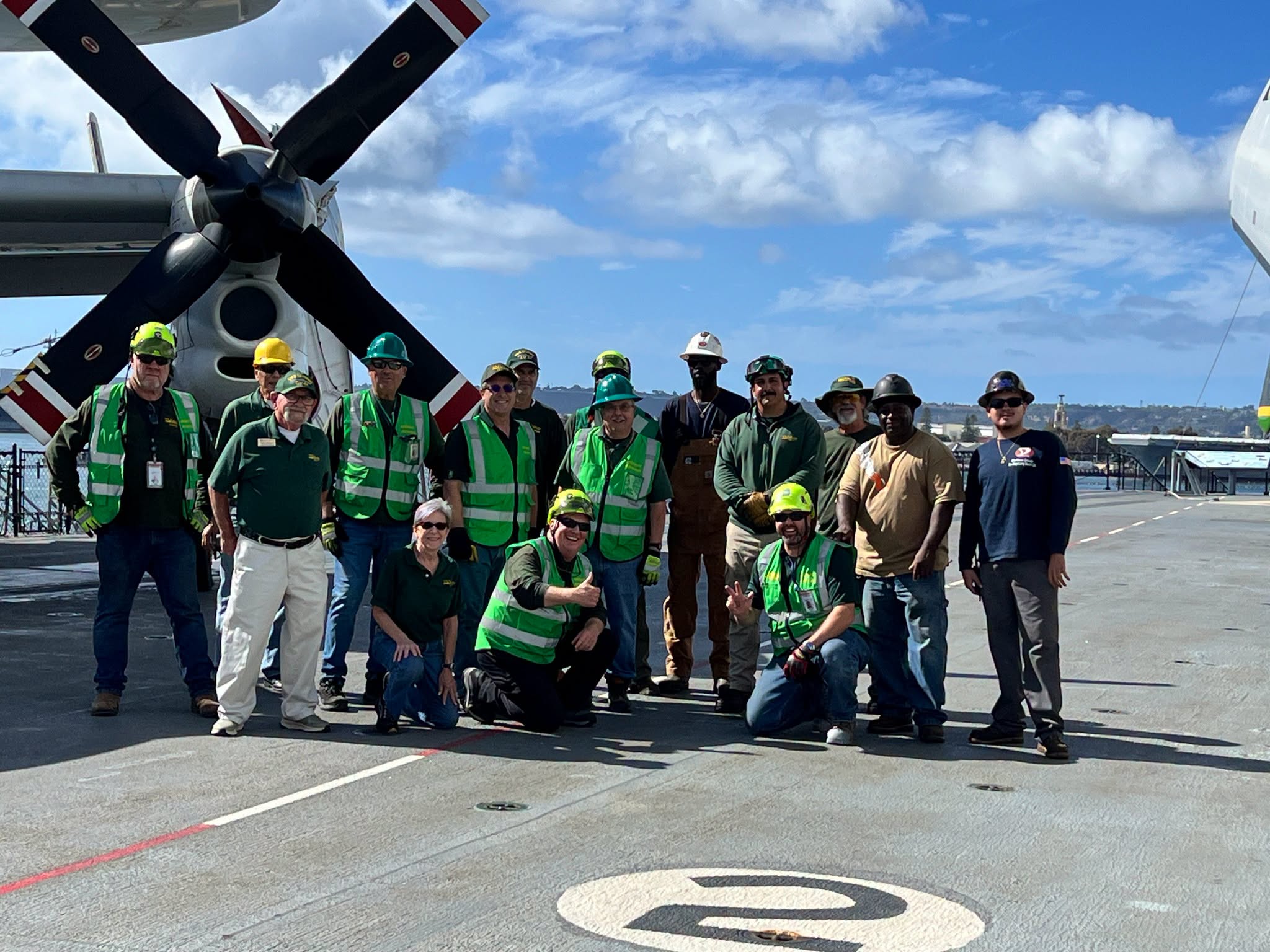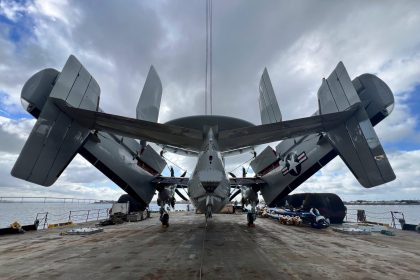
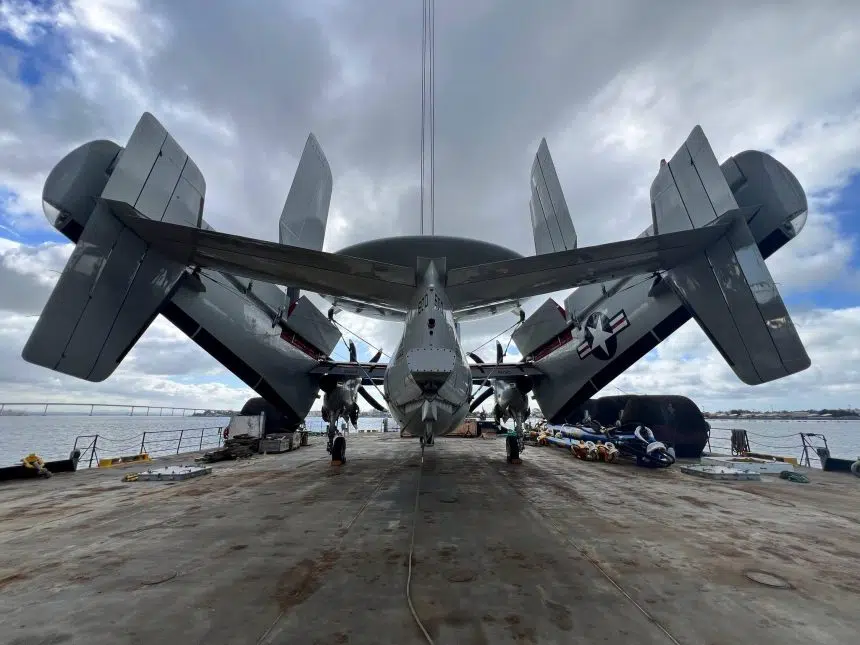

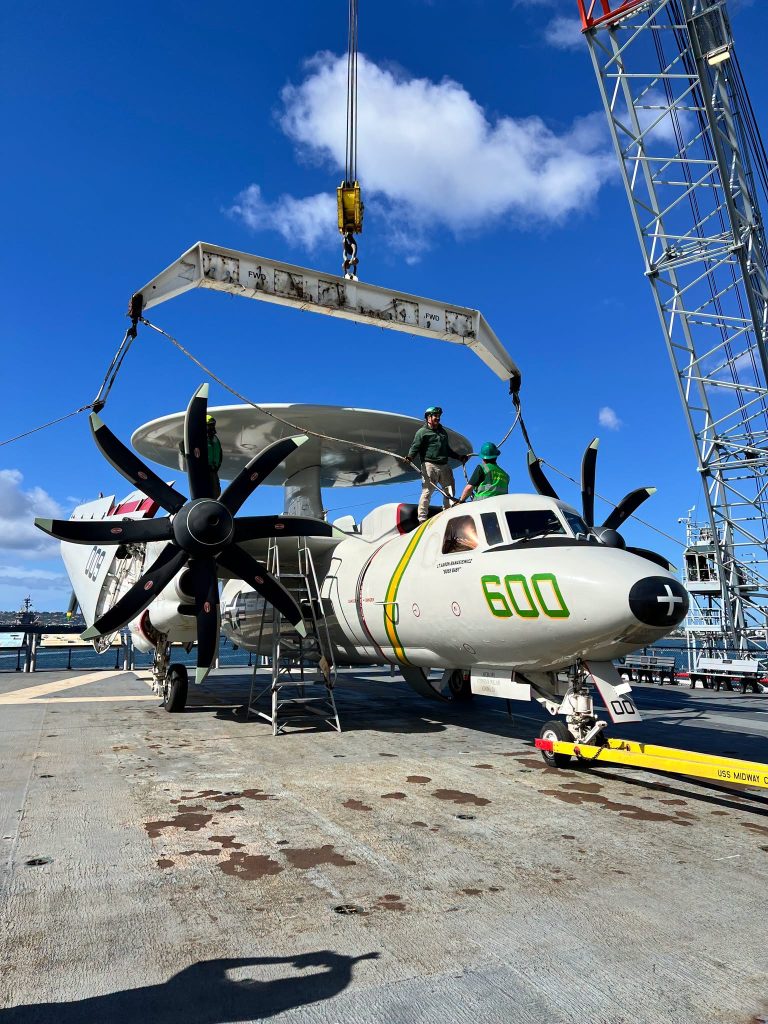
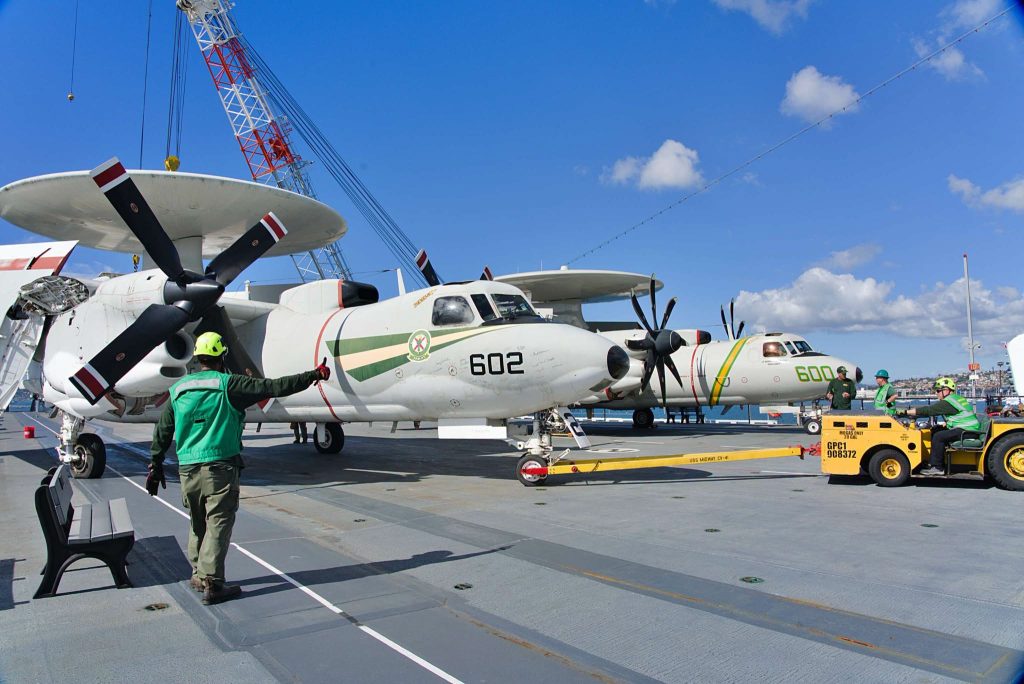
A Grumman E-2C Hawkeye has joined the USS Midway Museum’s flight deck in San Diego, California, preserving another chapter in the history of carrier aviation. Arriving in time for Fleet Week, the aircraft begins a new role educating visitors about the airborne surveillance crews that helped protect the fleet. USS Midway Museum Curator David Hanson confirmed to Vintage Aviation News that the newly displayed Hawkeye, carrying the side number 600, is Bureau Number 166506. The aircraft previously served with Carrier Airborne Early Warning Squadron 115 (VAW-115), the “Liberty Bells.”
(Image credit: USS Midway Museum)
The newly arrived aircraft served with a squadron based in Norfolk, Virginia, before its retirement earlier this year. It flew to Naval Air Station North Island around June, where crews completed repairs and repainted it in markings representing a squadron that operated aboard Midway. The Hawkeye was subsequently lifted onto the museum carrier’s flight deck in early November. The museum’s earlier E-2C Hawkeye has been removed from the carrier’s flight deck. According to Hanson, its disposition remains undecided, with transfer or scrapping under consideration. The final decision rests with the National Naval Aviation Museum in Pensacola, Florida.
(Image credit: USS Midway Museum)
With its elevated radar dome, folding wings, eight-bladed propellers, and four vertical tail surfaces, the newly displayed Hawkeye is among naval aviation’s most recognizable aircraft. Museum volunteer docent David Daugherty, who flew an earlier version during his 23-year Navy career, brings firsthand experience to explaining its mission to visitors. The Hawkeye’s distinctive appearance reflects its specialized purpose. Its 24-foot-diameter rotodome houses the radar antenna, while the aircraft carries communications and surveillance equipment that allows its crew to detect, track, and assess potential threats. Operating above the fleet, the Hawkeye extends radar coverage and serves as an airborne command center, sharing information with ships and aircraft and helping coordinate their activities.

The E-2 was the first carrier-based aircraft designed specifically for all-weather airborne early warning and command and control. It entered fleet service in 1964, replacing the Grumman E-1 Tracer, and made its combat debut during the Vietnam War. The improved E-2C became operational in 1973, with successive upgrades to its sensors, engines, propellers, and mission systems extending its usefulness across decades of carrier operations. A typical Hawkeye crew consists of two pilots and three naval flight officers. While the pilots operate the aircraft, the mission crew manages the surveillance and command-and-control systems. Beyond providing early warning, the Hawkeye supports air warfare coordination, surface surveillance, communications relay, and airborne coordination of search-and-rescue operations.

The E-2C’s transition into museum collections comes as the Navy replaces it with the newer E-2D Advanced Hawkeye. Although the aircraft retain a similar appearance, the E-2D incorporates a substantially improved radar and updated systems to meet modern surveillance and battle-management requirements. The Hawkeye mission therefore continues, even as individual E-2Cs conclude their flying careers.

Visitors can now view the recently arrived aircraft with general admission to the USS Midway Museum. Interior tours are expected to begin in early 2027, offering a closer look at the working environment of the crews who served as the fleet’s eyes beyond the horizon. For more information about the USS Midway Museum, visit www.midway.org.