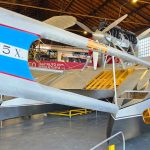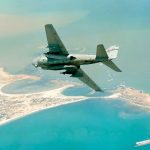


New Zealand restoration firm Aviationz Ltd is inviting inquiries from collectors, museums, and heritage groups worldwide about the only known surviving Fairey Gordon biplane. The aircraft dates back to the 1930s and once served with the Royal Air Force (RAF) before becoming a training aircraft for the Royal New Zealand Air Force (RNZAF). The aircraft, identified as K2759 / NZ629, is the last remaining example of its type. Its history includes overseas service with the RAF, wartime training in New Zealand, and a crash in the Southern Alps in April 1940. Both people on board survived the crash, but the plane remained in the remote area for decades before being recovered. Today, it is displayed as a static restoration and is not for sale as an airworthy aircraft. The Fairey Gordon was a British military aircraft developed in the late 1920s. It entered service with the RAF and Fleet Air Arm in 1932 for communications and reconnaissance duties. It was powered by a 525hp Armstrong Siddeley Jaguar IIa radial engine. The two-seat biplane had a wingspan of 13.94 meters (46 feet) and a length of 11.18 meters (36 feet). Aviation historian Philip Jarrett noted that the Prince of Wales, who later became King Edward VIII, chose the Gordon, showing its significance in British military aviation during the interwar period.
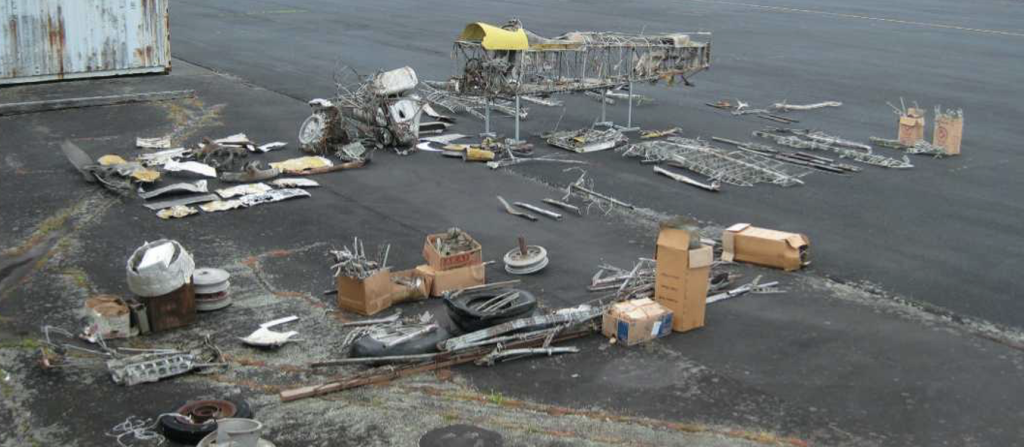
The Fairey Gordon also served outside of Britain. One aircraft, K2759, began its service in England, then traveled to Argentina and later served in Sudan, Egypt, and Iraq from 1932 to 1939. In May 1941, Fairey Gordons played a role in an important RAF operation in the Middle East. They supported the effort to break the siege of RAF Habbaniya in Iraq. Churchill had used the aging plane to reinforce the isolated air base sympathetic to the Iraqis. At the start of WWII, the aircraft K2759 was sent to New Zealand for use as an advanced training plane. Its time in New Zealand ended in April 1940 when it crashed during a training flight in the Southern Alps. Both pilots survived the crash, but the aircraft became stuck in dense bush, where it stayed for many years. The isolation and rugged terrain of the site prevented salvage. One person connected to the aircraft’s training history was Wilfred Thomas Everist (1918–1941). He later joined No. 258 Squadron in the RAF and flew Hurricane fighters. Everist was killed over France in June 1941, at the age of 23. His story adds a personal element to the aircraft’s history, linking its training in New Zealand to the larger air war in Europe. The wreck was in the Southern Alps for 32 years before a salvage team recovered it. According to Aviationz, in 1972, a team lifted the aircraft’s parts from the valley and packed them into a shipping container. These parts stayed in storage for decades before restoration began. However, another account of the recovery mentions a helicopter extraction in 1976.
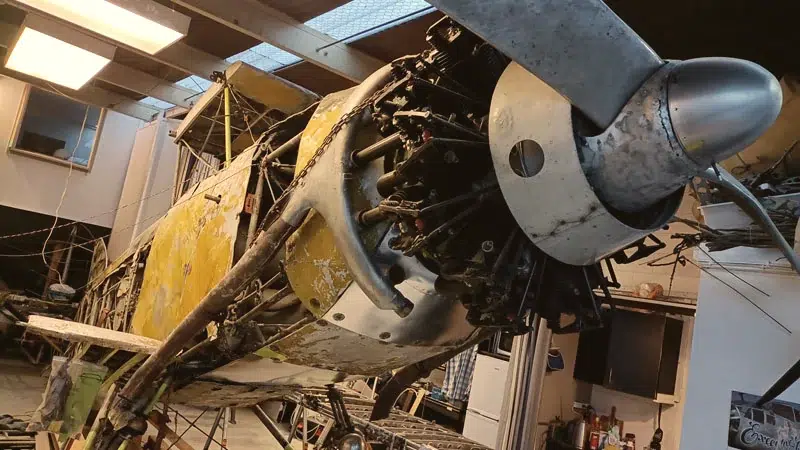
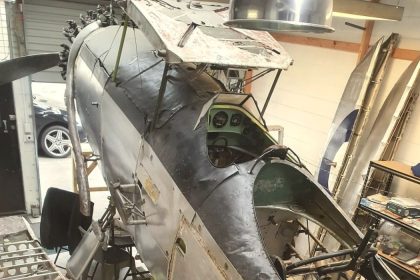
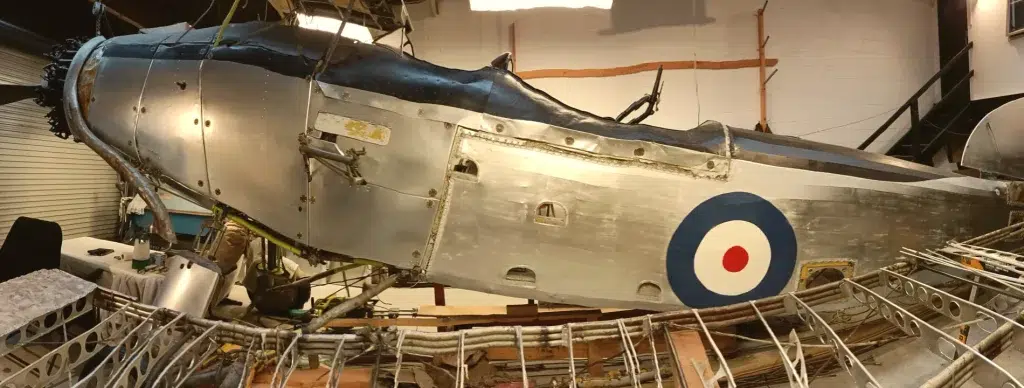
The restoration focuses on the remaining airframe and original parts, with new parts made when necessary. Aviationz describes the result as a static-display restoration, keeping as much original material and surface character as possible. Original parts include the left side of the fuselage, the pilot’s leather seat and controls, the left cockpit parapet, and the forward-firing Vickers gun mount with its ammo feed. The aircraft also keeps original hoisting fittings and catapult attachments, and enough folding-wing hinge components are available for the restoration. Other parts, like the upper and lower wings, flaps, ailerons, tailplane, elevator, and rudder, are newly made. The rear gunner’s mount is adapted from a Fairey Swordfish, while the original forward gun mount was never removed. The aircraft’s propeller is still on a static hub and spins freely, though it has a slight bend. Aviationz calls the plane a true barn find and emphasizes the importance of keeping original parts and not converting it into a pristine airframe. The only known surviving Fairey Gordon aircraft is now in Auckland and is available for sale to collectors, museums, and heritage institutions worldwide. Read more about the aircraft at www.rafk2759.co.nz/