
It’s been several months since our last visit to Brian Pierson’s West Virginia “hangar,” where the ambitious Building the Last B-36 project continues to take shape. While the Convair B-36 Peacemaker remains one of the largest combat aircraft ever built, Brian’s full-scale recreation of the Cold War giant is slowly – but surely – coming together, one rivet at a time. Since our May update, Brian has made significant progress on the bomber’s flight deck, with plenty of research, reverse engineering, and a few unexpected discoveries along the way.
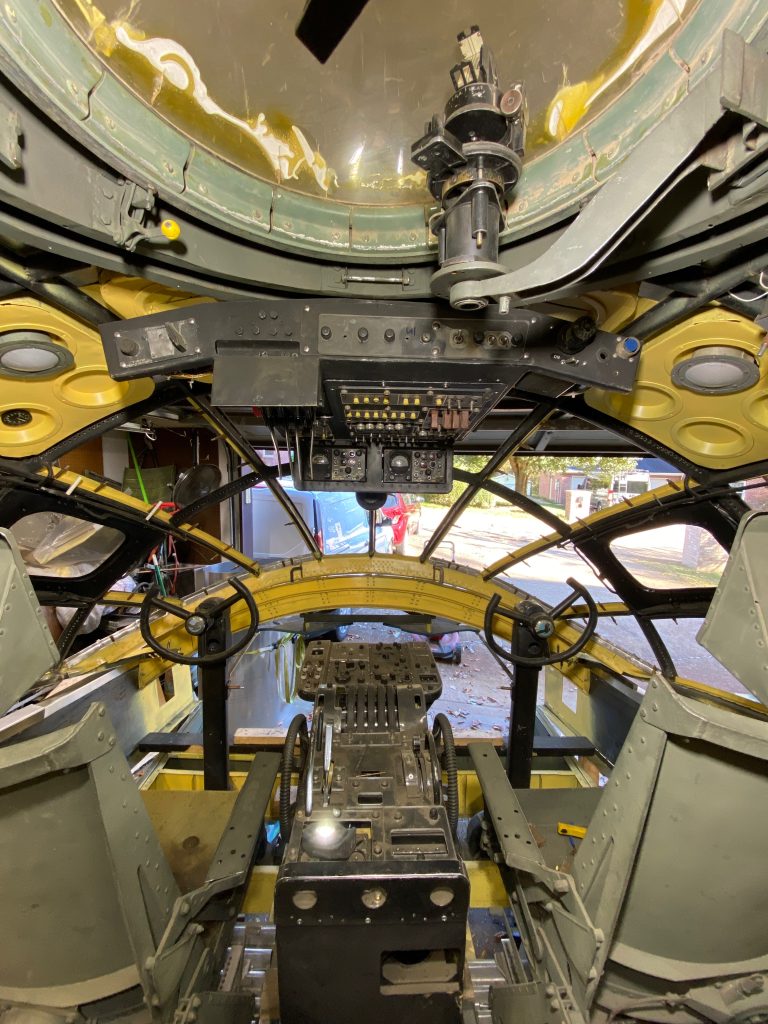
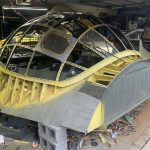
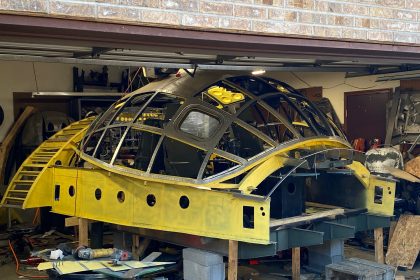
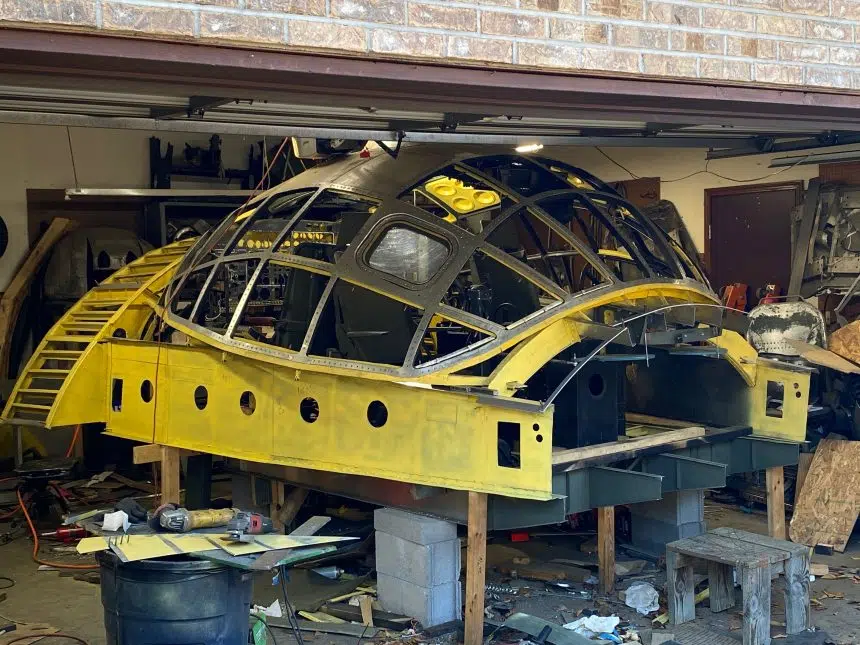
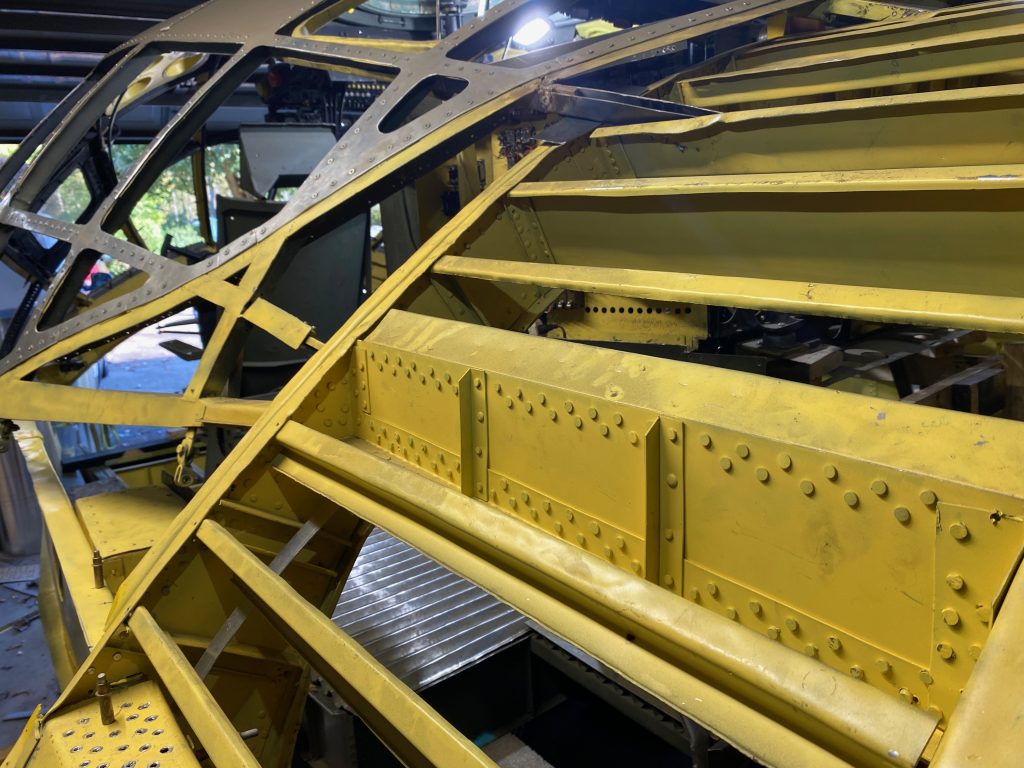
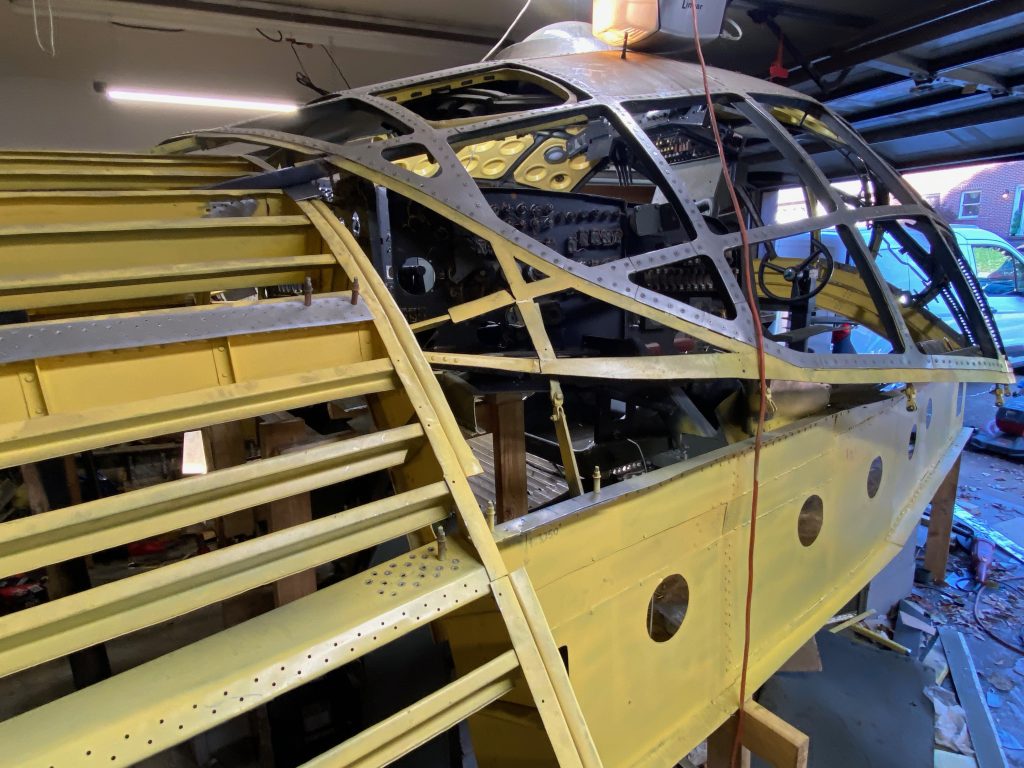
Much of Brian’s recent work has focused on the structural accuracy of the B-36H’s forward fuselage. Thanks to newly acquired photographs showing previously hidden portions of the Peacemaker’s airframe, along with assistance from Castle Air Museum and the Strategic Air Command & Aerospace Museum, Brian has been able to take a closer look at the aircraft’s internal construction. These photographs, combined with videos documenting B-36 crash sites, have provided invaluable reference material for the project. Using this information, Brian has begun fabricating the longitudinal shear beams that form the sides of the flight deck’s structural “box,” connecting fuselage bulkhead 3.0 with belt frame 1.1.
Of course, achieving historical accuracy sometimes means taking a few steps backward before moving forward. Brian, who has made no secret of his dislike for the pop rivets used during the project’s early stages, recently removed his previous version of belt frame 1.1 entirely. Using specifications from the B-36 structural repair manual, he rebuilt the assembly, also removing the original stringers connecting it to the forwardmost bulkhead, 1.0. The remaining pop rivets are now largely confined to portions of the flight engineer’s station, which Brian intends to replace as the project progresses.
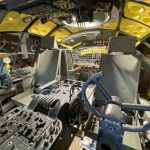
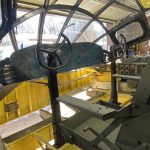
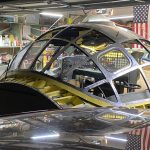
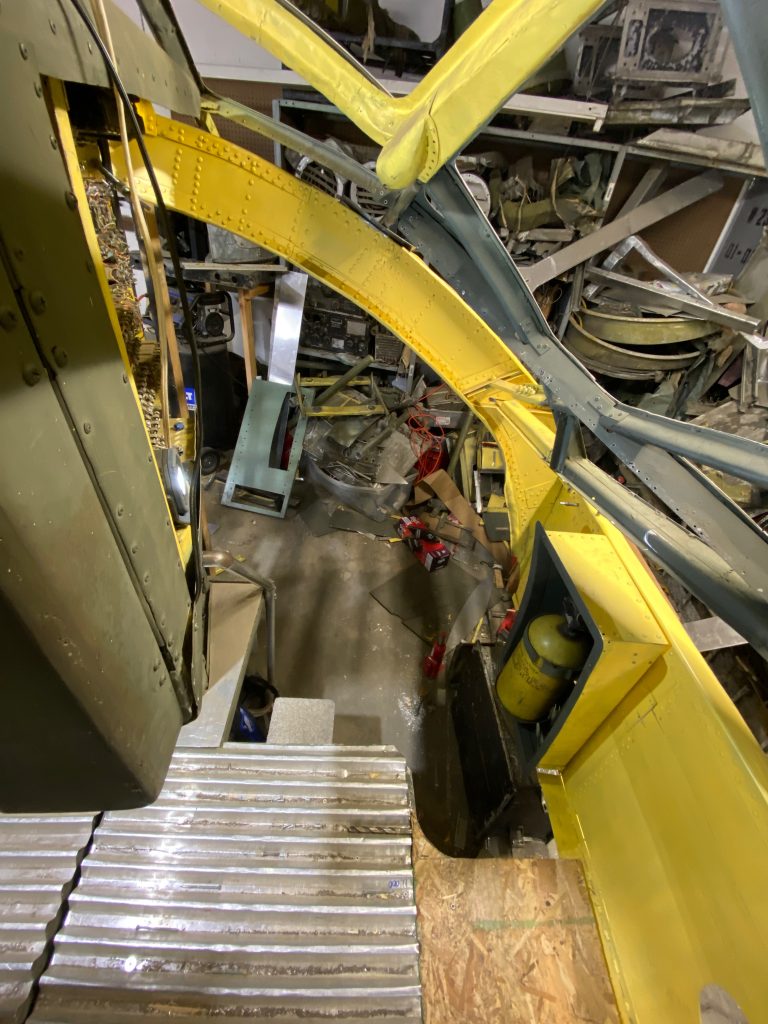
With bulkheads 3.0 and 3.1 now completed, Brian has also raised the canopy twice, finally bringing it to its intended height. This adjustment allows for the accurate placement of the flight engineer’s station, an important milestone as the flight deck begins to take its final shape. However, not everything has gone according to plan. While studying an early B-36 engineering drawing, Brian discovered references to a previously unknown bulkhead, designated 3.05. Curiously, this structure does not appear in the later USAF technical manuals, leaving Brian with yet another mystery to solve before moving forward.
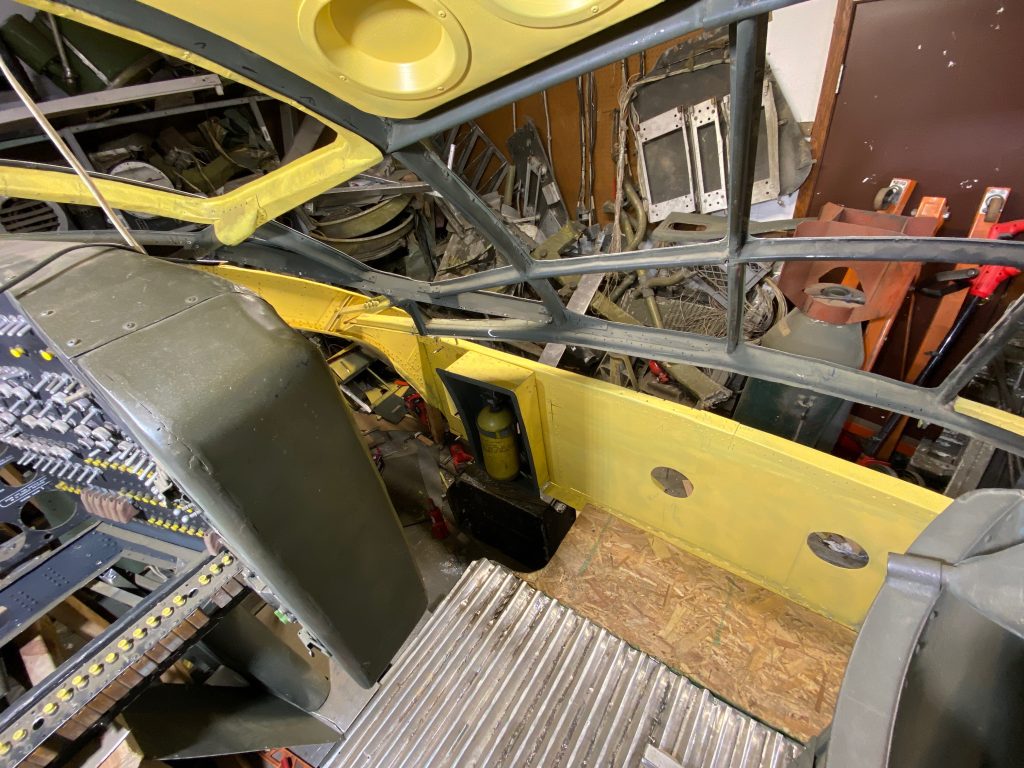
The forward fuselage has undergone additional changes, with Brian removing the previously constructed airframe sides and the structures housing various storage compartments, access doors, and oxygen mask equipment. With detailed photographs now available, these components will be rebuilt to better reflect the original aircraft.
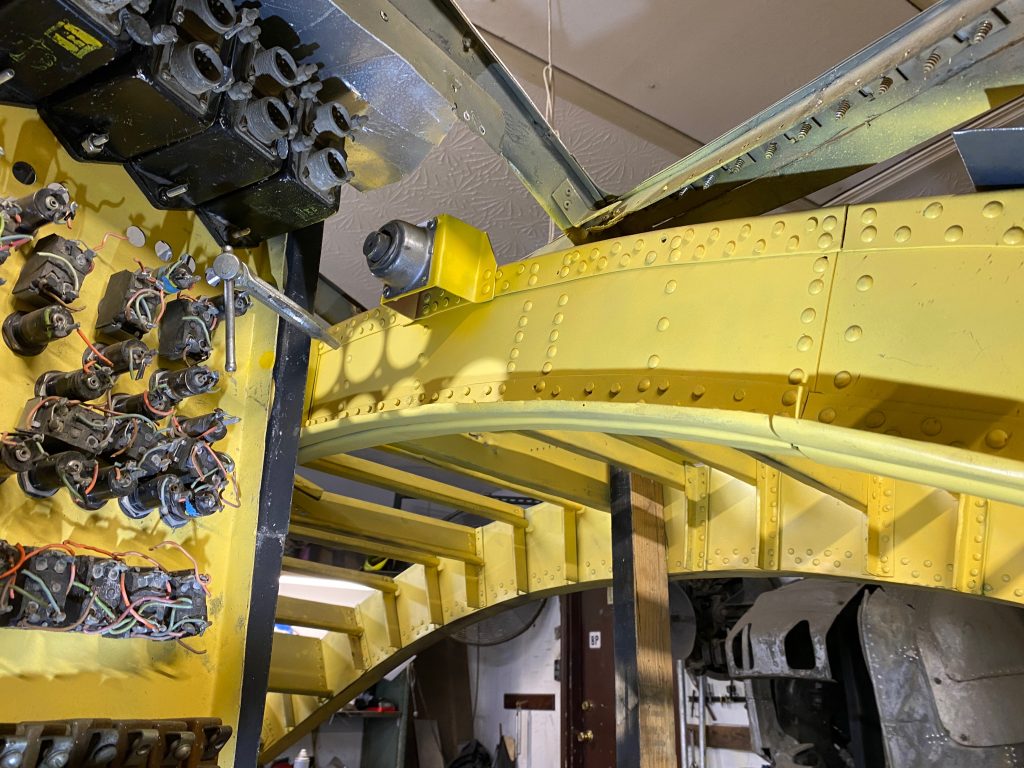
Another major development involves the B-36’s “clear vision system,” incorporated into the newly rebuilt belt frame 1.1. This arrangement featured a double-window design in the forward canopy, allowing heated air to circulate between the panes for de-icing purposes. Brian has also completed the escape hatches, which form a moving part of the assembly. Once the Plexiglas glazing is installed, he intends for the system to be fully functional.
Beyond the airframe itself, Brian has made a particularly interesting discovery while browsing Facebook Marketplace: a pair of original B-36H/J astrodomes, complete with their mounting frames. Finding original components for an aircraft that has been out of production for more than seventy years is no small accomplishment, and these pieces will provide another touch of authenticity to the project. Perhaps social media isn’t so “evil” after all?
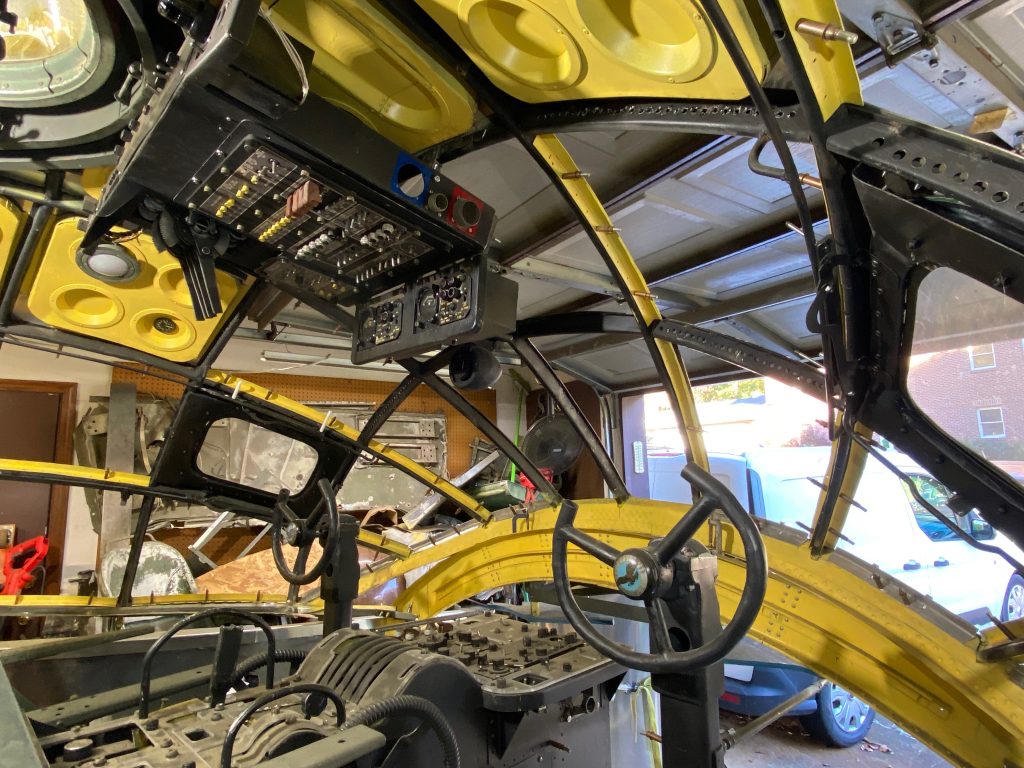
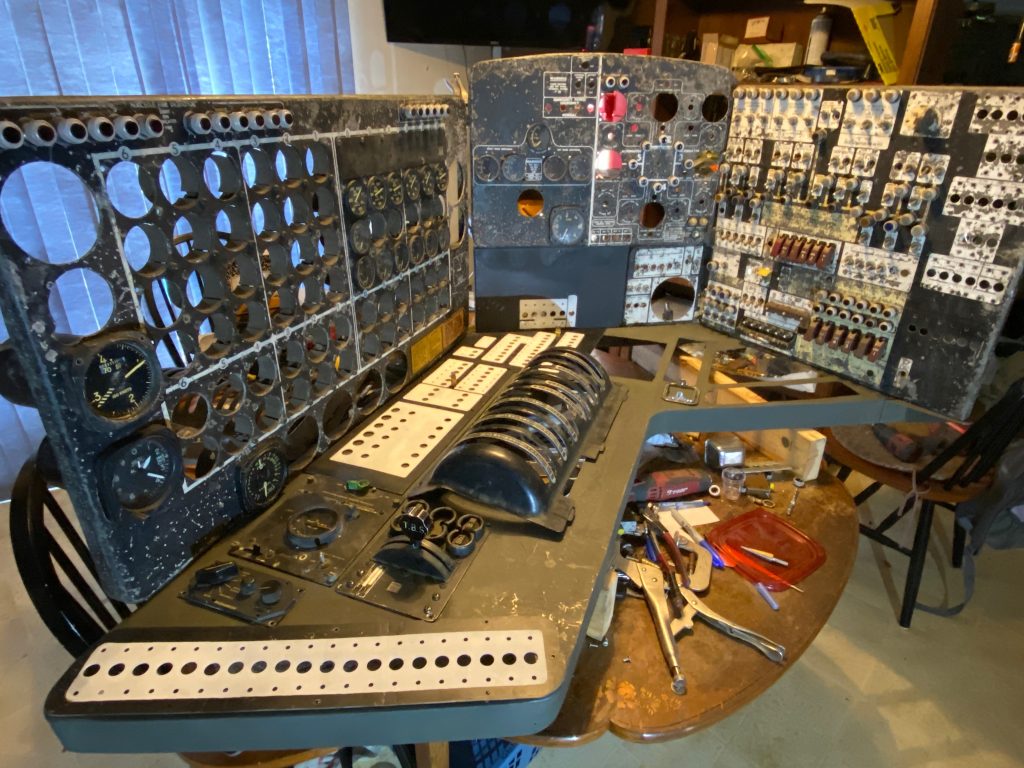
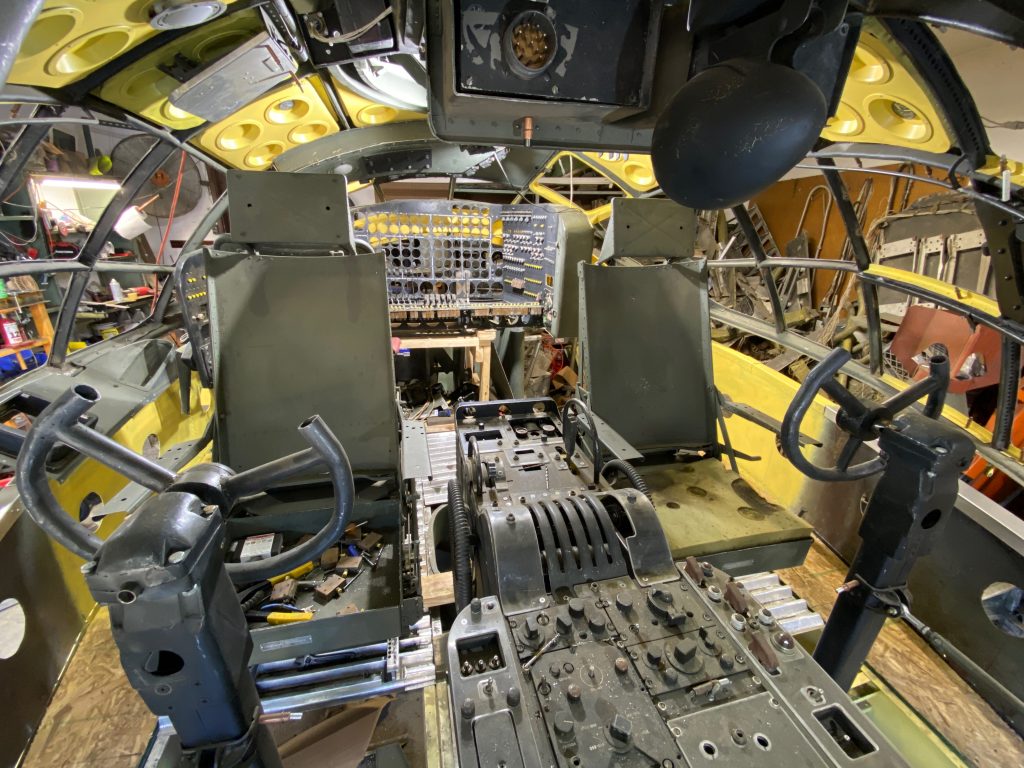
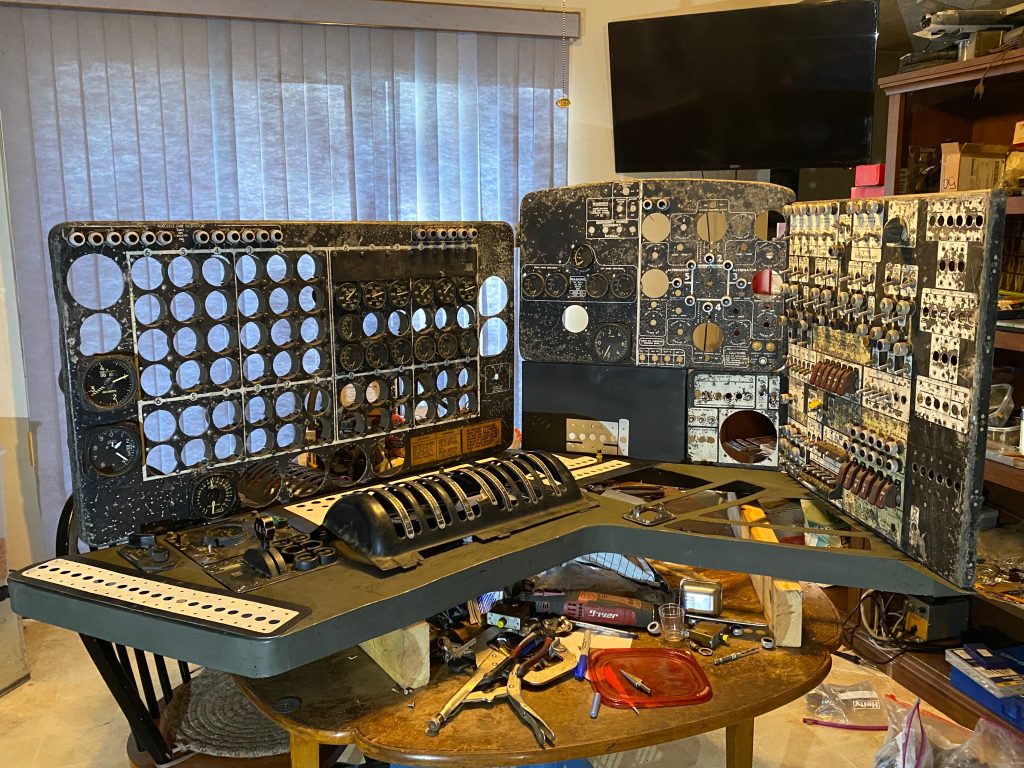
Work has also continued on Brian’s RB-36E flight engineer’s station. Unlike the later B-36H and J models, which featured dual-seat engineer stations, the earlier B-36 variants, from the A through F models, used a single-seat arrangement. Although the aircraft always carried two flight engineers, the second engineer on the earlier models occupied a jump seat behind the aircraft commander, assisting with monitoring the aircraft’s instruments. Brian has been recreating this early configuration and plans to display the station at the National Museum of the United States Air Force’s Bombers and Brews event in November.
As with any ambitious restoration or recreation project, funding remains a constant challenge. Fortunately, Brian recently received his largest donation to date, allowing him to purchase another sheet of aluminum, along with rivets, tools, and proper fasteners. The cost of materials has certainly not helped matters, with Brian noting that a sheet of aluminum that once cost approximately $90 now carries a price tag of $220. Nevertheless, the generosity of his supporters continues to keep the project moving forward. Brian also wishes to extend a special thank-you to the generous supporter who donated Cleco fasteners and AN rivets, both invaluable supplies as he continues rebuilding the Peacemaker’s airframe to historically accurate specifications.
With the major flight deck structural sections now rebuilt, properly spaced, and aligned, Brian can begin focusing more attention on the smaller details that will bring his Peacemaker to life. And while the project remains firmly planted in his garage for the foreseeable future, Brian has already announced an ambitious deadline for its first flight. After learning that one enthusiastic supporter had supposedly purchased advance tickets for EAA AirVenture Oshkosh 2096, Brian jokingly committed to having his B-36 certified as airworthy in time to perform a low-level, high-speed pass over the crowds. We certainly admire his optimism!
All jokes aside, the progress made on Building the Last B-36 continues to demonstrate Brian’s remarkable dedication to preserving aviation history. Through countless hours of research, fabrication, and occasionally rebuilding work already completed, he is steadily bringing one of America’s most iconic Cold War bombers back to life, at least from the flight deck forward. We at Vintage Aviation News look forward to seeing what comes next for this extraordinary project. To follow Brian’s progress, visit his YouTube channel, Building the Last B-36. Those wishing to support the project can also contribute through Brian’s GoFundMe campaign