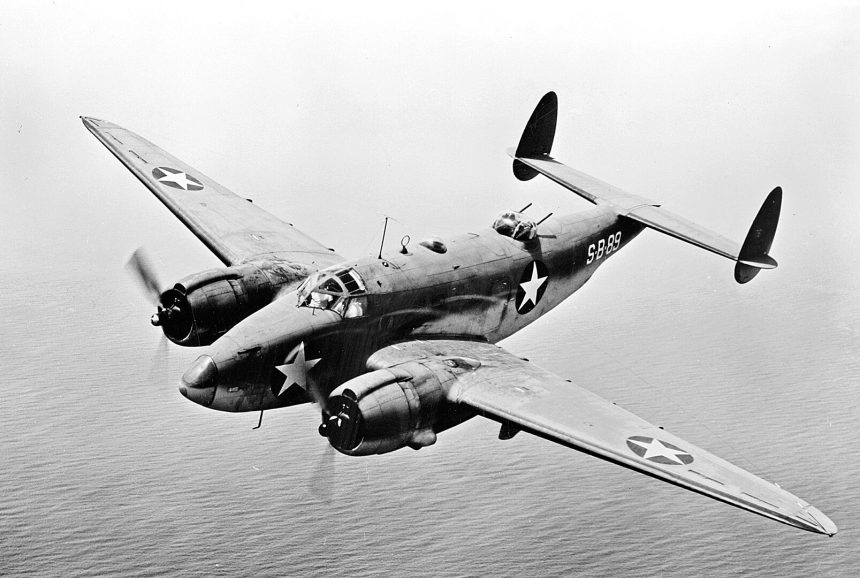

Patrol Bombing Squadron 139 (VPB-139) was a US Navy patrol bombing squadron that began as Bombing Squadron VB-139 on April 1, 1943, at Ault Field, Naval Air Station Whidbey Island, Washington, and was under the control of Fleet Air Wing 6. The squadron operated as a medium bombing unit and used the Lockheed PV-1 Ventura, a twin-engine aircraft designed for maritime patrol, reconnaissance, and bombing missions. The squadron conducted ground school and flight training on Whidbey Island during the summer. On July 22, the squadron moved to NAS Alameda, California, to have new instrument panels installed in its aircraft. After returning to Whidbey Island, the flight crews started training with a new instrument-flying syllabus. This prepared them for flying in the tough weather conditions of the North Pacific. On October 1, 1943, VB-139 left Whidbey Island for its first combat deployment. The squadron traveled in three groups of five aircraft, arriving at Naval Air Facility Amchitka in the Aleutians between October 7 and 10. Under Fleet Air Wing 4, it began routine search missions over the northern Pacific.

On November 1, 1943, VB-139 sent three aircraft to Naval Air Station Adak, Alaska, for patrol duties and training. On December 8, three other planes replaced this group, while the first group went to NAS Attu for a new assignment. The squadron moved to Attu on December 10, taking over from VP-136. From there, the crews searched areas about 350 to 550 miles from base. They focused on the northern Pacific, where Japanese positions in the Kuril Islands were key targets for American missions. Starting January 19, 1944, the squadron conducted photographic reconnaissance and bombing missions over the northern Kurils. They also sometimes attacked Japanese picket boats. During one attack, a Ventura aircraft was heavily damaged, and copilot Lieutenant (junior grade) Clifford Thambs lost his life. Bad weather made it hard for the squadron to complete their missions. They often had to cancel planned shipping attacks due to poor conditions. Icing and fog also complicated the flights to and from Attu. On one mission, Lieutenant W. S. Whitman and his five-person crew did not return and were reported as missing in action. VB-139 started important missions over the Kuril Islands as American forces aimed to expand their reconnaissance and bombing missions into Japanese-controlled areas. Earlier, Lieutenant Mantius of VB-136 showed that the PV-1 Ventura could reach the Kurils, challenging beliefs about which aircraft could fly over these distant islands.

On May 19, 1944, Lieutenants R. A. MacGregor, D. M. Birdsall, and T. H. McKelvey flew the first night missions over the Kurils in VB-139 Venturas. Before this, only aircraft like the B-24 Liberator and PBY Catalina were thought to have the range for missions in this area. For the next four months, the squadron took part in Empire Express missions over the Kurils, performing photographic reconnaissance and bombing attacks despite cloudy conditions. On June 30, 1944, VB-139 completed its mission and returned to NAS Whidbey Island. The crew returned to Washington, took home leave, and then began preparing for their next deployment. VB-139 formed at NAS Whidbey Island on August 1, 1944, as part of Fleet Air Wing 6. The squadron received new gear and switched from the PV-1 Ventura to the Lockheed PV-2 Harpoon. Training on the new planes continued through the winter. In January 1945, crews focused on using high-velocity rockets, preparing for missions that might target ground installations and ships. The squadron also worked on ground-controlled approach equipment recently installed at Attu. The new landing-control system helped crews returning from long missions, especially when fog covered the airfield. By the end of February 1945, the squadron completed training.

On February 26, Patrol Bombing Squadron 139 deployed to NAS Attu and arrived on March 16 to take over from VPB-136. The squadron returned to Fleet Air Wing 4 and worked with VPB-131, conducting routine searches and patrols. The squadron’s second deployment included more direct attacks on Japanese positions in the Kurils. On March 27, 1945, one of its aircraft crashed on Shemya, but the crew escaped without injuries. On April 6, four Patrol Bombing Squadron 139 Harpoons attacked Kokutan Zaki in the Kurils using rockets and machine guns. However, concerns about the strength of the Harpoon’s wings and stabilizers limited the squadron’s ability to carry out these attacks. On May 6, the Bureau of Aeronautics ordered the squadron to stop attacking ground targets with the affected aircraft because of concerns about stress on the wings and stabilizers during high-G pullouts after attacks. Until maintenance teams completed necessary repairs, Harpoon squadrons could only conduct patrols and occasional attacks on surface vessels. Patrol Bombing Squadron 139 continued reconnaissance and search missions throughout May, flying over Minami Zaki and the Sea of Okhotsk. The Japanese usually offered little fighter opposition, but anti-aircraft fire remained a constant threat.

On May 10, eight squadron aircraft attacked radar installations at Minami Zaki and Shimushu. Anti-aircraft fire hit five of the eight aircraft, but all returned to base safely with no reported casualties. On April 22, Lieutenant William D. See and his five-person crew did not return from a patrol and were declared missing. In June, Patrol Bombing Squadron 139 carried out more attacks on Shimushu and targeted several ships in the harbor. Japanese fighters were often present, but only a few of their attacks succeeded. Enemy defenses, Harpoon restrictions, and challenges of operating from distant islands continued to affect the squadron’s missions. On July 24, 1945, a group of six airplanes moved from Attu to Naval Air Facility Amchitka, while the rest of the squadron stayed at Attu. Their tasks included regular patrols, searches, and carrying mail between remote islands. After WWII ended, Patrol Bombing Squadron 139 intensified its surveillance and support responsibilities in the Aleutians. The squadron was officially disbanded on September 13, 1945. Read more Squadron Histories articles HERE.