
In 1926, Fleetwings was founded under a different name, based on a patented mechanical timing device for controlling automated welding equipment. The company later added welding services and focused on research and technology for welding stainless steel. In 1929, it reorganized as Fleetwings, Inc. in Garden City, New York, to develop aircraft structures made of stainless steel. The company began making parts for other aircraft makers, including ribs and control surfaces for the Ireland “Privateer” amphibian, as well as ribs, flaps, and tail surfaces for Grover Loening Aircraft Company. It then moved to a larger location in a hangar at a lower Roosevelt Field on Long Island. In 1934, the company acquired the former Keystone Aircraft facility on the Delaware River in Bristol, Pennsylvania, and relocated there. The de Ganahl family led Fleetwings, Inc.

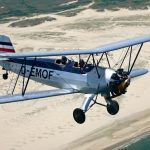
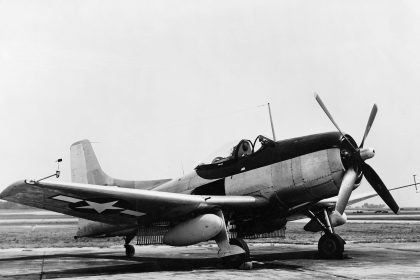
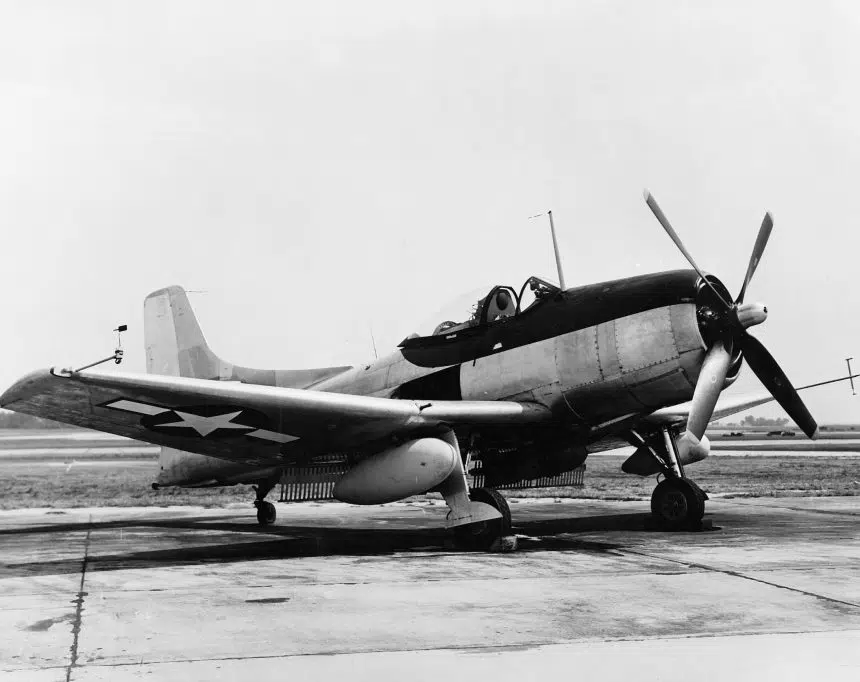
In the mid-1930s, the board of directors included Carl, Charles, Chloe, Joe, and Frank de Ganahl. Throughout its history, Carl, Cecil, and Frank de Ganahl each served as president at different times. The company became Kaiser-Fleetwings in March 1943 when Henry J. Kaiser’s Kaiser Industries purchased it. Kaiser-Fleetwings entered its XBTK-1 in a competition for a Navy attack aircraft, with five planes being flown. The contract went to the Douglas AD-1 Skyraider and the Martin AM Mauler. By 1951, the company had reportedly stopped its aviation operations. The Kaiser-Fleetwings Co. still existed in 1960, when it made the launch canister for the Echo 1 balloon satellite at its Bristol factory. The plant closed in 1962 and was demolished to make room for housing development. Fleetwings made a small but diverse range of aircraft. It started with the Sea Bird, a single-engine flying-boat utility aircraft, of which six were built beginning in 1936.

Then it developed the BT-12 Sophomore, a single-engine trainer, with 25 produced. It also created the Fleetwings 33, another single-engine trainer, but only one was built in 1940. During WWII, Fleetwings produced unmanned aircraft, including nine PQ-12 single-engine aerial targets and a few flying bombs, the BQ-2 and BQ-1, with one of each made. After the war, the company pursued more ambitious projects, such as the Kaiser-Fleetwings A-39, a planned single-engine attack aircraft that was never built. It also worked on the Kaiser-Fleetwings BTK, a single-engine torpedo bomber, and made five of them in 1945. Fleetwings stopped its aviation operations mainly because the government canceled many defense contracts after WWII. The company also faced financial troubles during the Great Depression. Read more Forgotten Factories articles HERE.