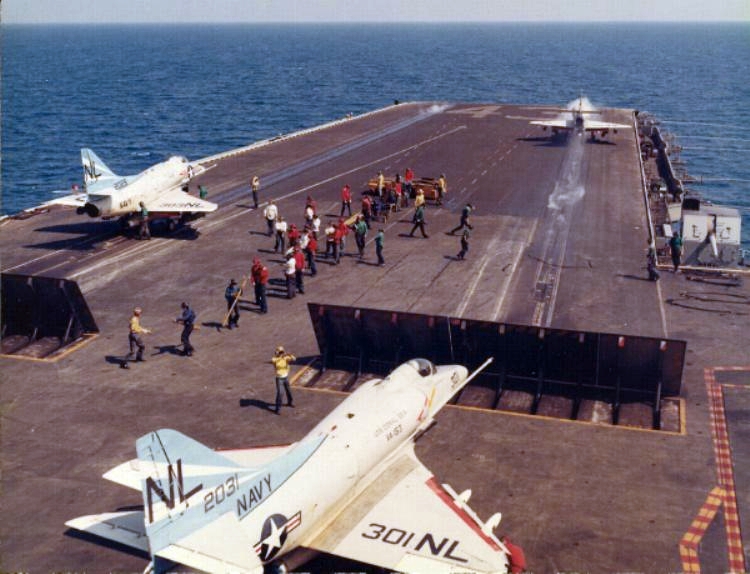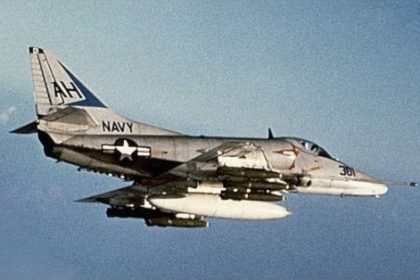
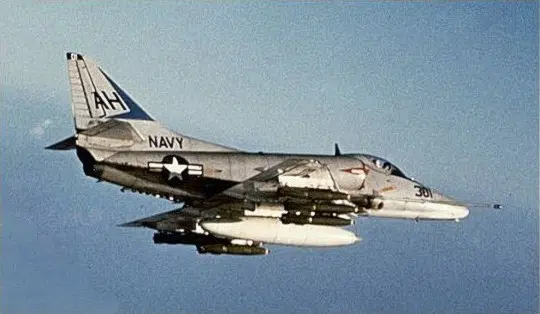

Attack Squadron 163, known as the “Saints,” was a US Navy squadron that operated the Douglas A-4 Skyhawk from 1960 to 1969. It formed on September 1, 1960, at NAS Cecil Field in Florida, then moved to NAS Lemoore in California to prepare for its first deployment aboard an aircraft carrier. Over the next ten years, VA-163 completed six cruises in the Pacific Fleet, including four combat cruises during the Vietnam War. The Saints made their first five deployments with Carrier Air Wing 16 on the USS Oriskany from 1962 to 1968. They then completed one final cruise with Carrier Air Wing 21 on the USS Hancock from 1968 to 1969. The squadron began combat operations in Southeast Asia in 1965.

Between 1965 and 1968, the Attack Squadron 163 squadron faced many losses during its first three combat missions in the Western Pacific. Enemy attacks destroyed 14 of their aircraft, resulting in the deaths of at least five pilots and the capture of five others. The squadron also lost two commanders during this time. In November 1965, Commander Harry Jenkins was shot down and taken prisoner. In July 1966, Commander Wynne Foster was hit by anti-aircraft fire. He lost an arm but managed to eject and was rescued. In October 1966, a fire broke out on the USS Oriskany near Vietnam, killing 44 people on board, including members of Attack Squadron 163. However, VA-163 kept flying combat missions. Its fourth WESTPAC combat cruise, from 1967 to 1968, was the most costly in the squadron’s history. During this time, five Saints pilots were killed or went missing in action over North Vietnam, and the squadron lost 12 A-4E aircraft, ten due to enemy action and two from accidents. Among those connected to Attack Squadron 163’s combat missions were two future prisoners of war.

Then-Commander James B. Stockdale, who was leading Carrier Air Wing 16, was flying a Saints A-4E when enemy fire shot him down in 1965. Two years later, Lieutenant Commander John S. McCain III was also shot down over North Vietnam while flying an A-4E with VA-163. Despite the heavy losses, the Saints earned a reputation for bravery. Three pilots from VA-163 received the Navy Cross for heroic combat actions, including Commander Bryan Compton, the squadron’s leader, and Lieutenant Commanders James Busey and Marvin Reynolds. They earned their awards during the tough 1967-1968 deployment. Compton and Busey received their Navy Crosses for their actions in the same mission in August 1967, when Attack Squadron 163 took part in a missile strike against the Hanoi Thermal Power Plant. After nearly ten years of service, including four combat missions in Vietnam, Attack Squadron 163 went inactive on April 1, 1969. The squadron stayed inactive for two more years before it was officially disbanded on July 1, 1971.