






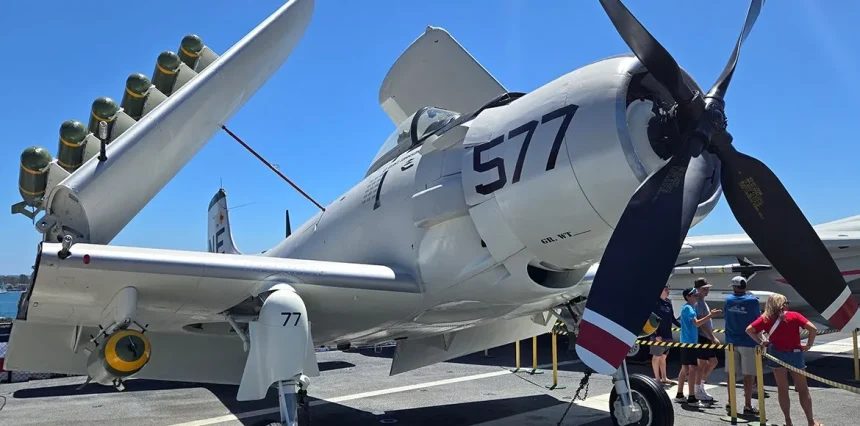

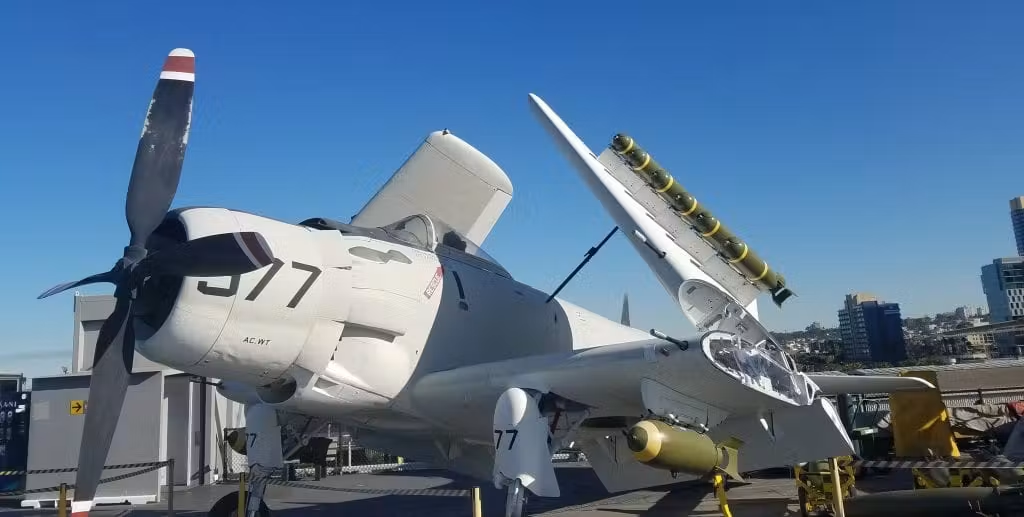
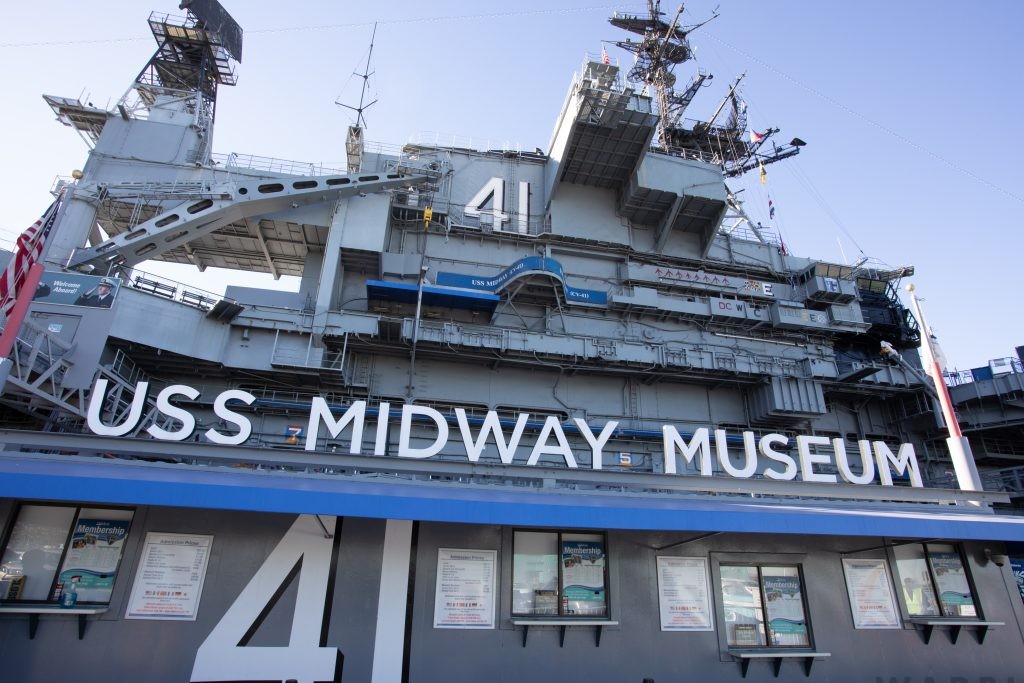
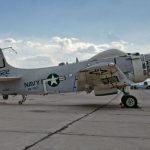
After more than two years and 8,000 hours of volunteer work, the USS Midway Museum’s Douglas A-1 Skyraider (BuNo 127922) has returned to the carrier’s flight deck in San Diego, California, following an extensive restoration aimed at preserving one of the museum’s most popular aircraft. The A-1 Skyraider was one of the most capable piston-powered attack aircraft of the post-World War II era. Developed for the U.S. Navy, the rugged single-engine aircraft combined exceptional endurance with a heavy weapons payload and excellent low-speed handling. Those qualities made the Skyraider particularly effective during the Korean and Vietnam Wars, where it became closely associated with close-air-support and combat search-and-rescue missions.
(Image credit: USS Midway Museum)
Affectionately known as the “Spad” by many of those who flew and maintained it, the Skyraider remained in frontline service well into the jet age. “The Skyraider is a very historical airframe,” said Steve Smith, the USS Midway Museum’s airwing director. “It tells an incredible story about these great flying machines and the men who flew them. The tales of its close-air and search-and-rescue support missions in Korea and Vietnam are renowned.” The type also has a direct connection to the aircraft carrier Midway. Skyraider squadrons operated from the carrier beginning in the late 1940s, shortly after the aircraft entered operational service, and again during the early stages of the Vietnam War in the mid-1960s.
A Well-Traveled Skyraider
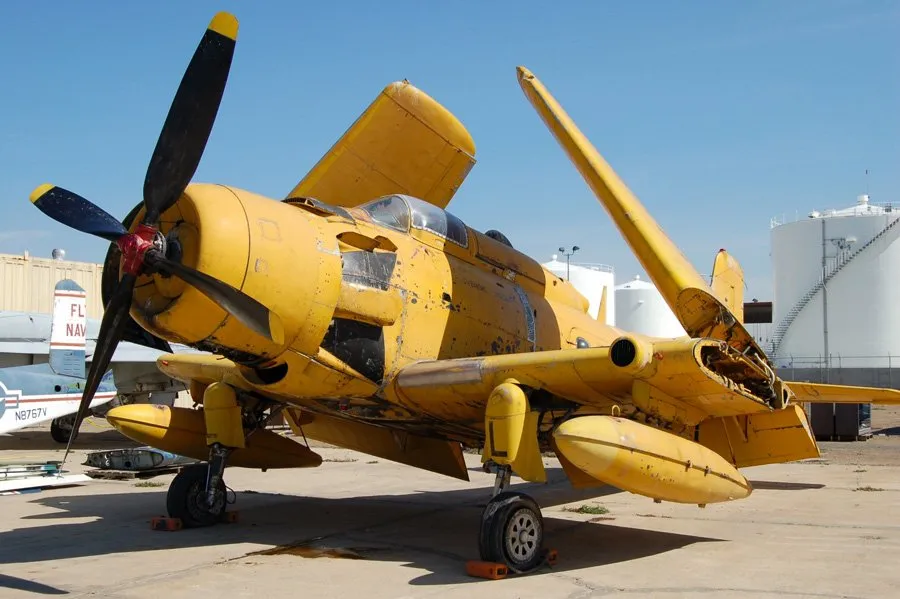
The aircraft preserved aboard Midway has an extensive history of its own. Built by Douglas as an AD-4W airborne early warning variant and assigned U.S. Navy Bureau Number 127922, the aircraft entered service in 1952. In 1955, it was transferred to the British Royal Navy, where it served as Skyraider AEW.1 WT987. The Royal Navy operated the Skyraider in the airborne early warning role until the type was replaced by the Fairey Gannet AEW.3. Following its British service, the aircraft was converted for target-towing duties and transferred to Sweden. There it operated as SE-EBL with Svensk Flygtjänst, supporting military gun and missile training before eventually being retired and placed in storage.
(Image credit: USS Midway Museum)
The Skyraider returned to the United States in 1984 and later became part of the collection at Geneseo, New York, where it was displayed by the National Warplane Museum and its successor organizations. Warbird collector and preservationist David Tallichet subsequently donated the aircraft to the USS Midway Museum. It arrived at the museum’s restoration hangar at Naval Air Station North Island on March 12, 2006, where volunteers began preparing it for exhibition aboard the former aircraft carrier. Although the aircraft was originally constructed as the multi-seat AD-4W airborne early warning variant, it was restored externally to represent an AD-6, the single-seat attack version redesignated A-1H following the introduction of the U.S. military’s unified aircraft designation system in 1962. Following its initial restoration, the Skyraider went on display aboard Midway, becoming one of the many aircraft used to interpret the carrier’s long operational history. “This aircraft has literally been around the world and back,” said Mark Berlin, the museum’s operations director. “In the nearly 20 years it’s been on Midway, it’s been one of the most popular aircraft. I’m glad it’s restored and back on the flight deck for our guests to see.”
(Image credit: USS Midway Museum)
Fighting Corrosion
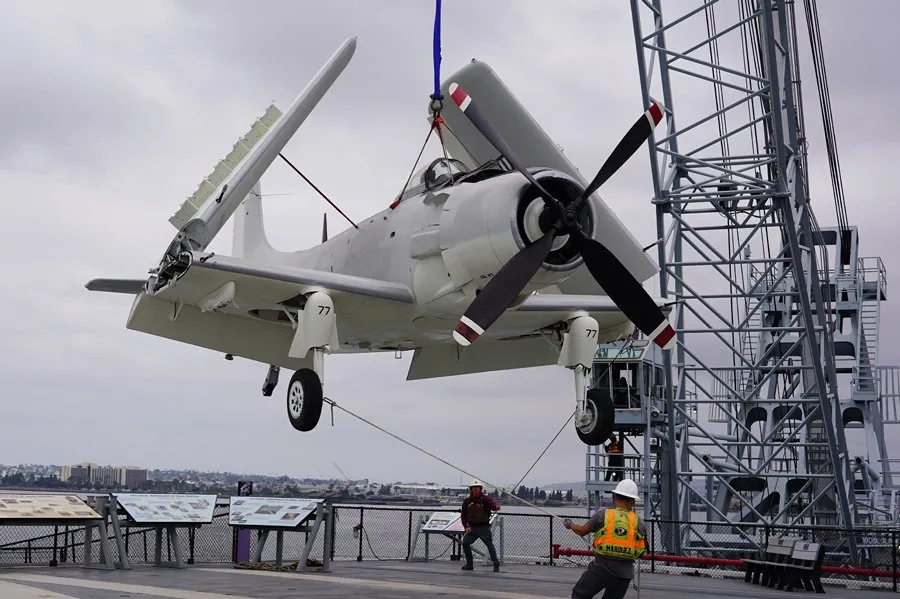
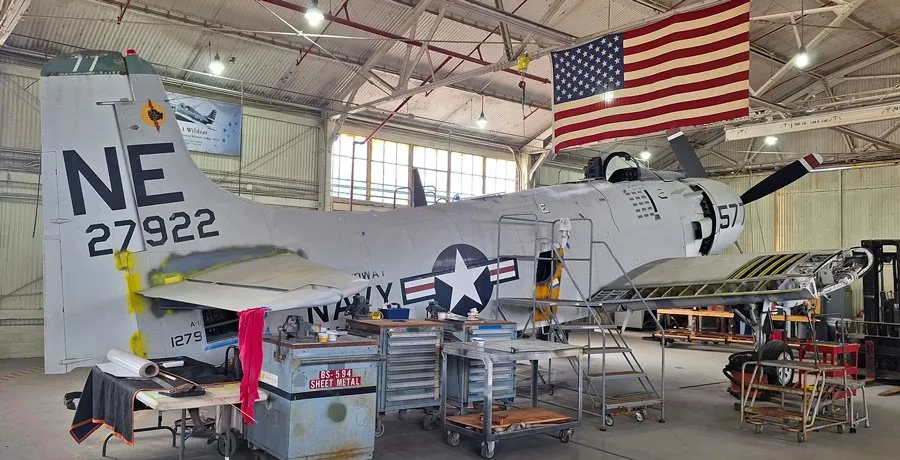
Nearly two decades of exposure on the museum’s flight deck eventually took a toll on the aircraft. The salt-laden marine environment surrounding San Diego Bay is particularly challenging for the preservation of historic aircraft, and corrosion had developed in several areas of the Skyraider’s metal structure. The aircraft was therefore removed from the flight deck and returned to the USS Midway Museum’s Hangar 805 at Naval Air Station North Island for another extensive restoration.
(Image credit: USS Midway Museum)
“The major issue was corrosion,” Smith said. “The airwing team treated the corrosion on the wings and fuselage. We also had to reskin several areas of the Skyraider to bring it back to the proper condition to be exhibited on Midway.” Over more than two years, Midway’s volunteer airwing team devoted approximately 8,000 hours to the project. Work included treating corrosion on the wings and fuselage, repairing deteriorated areas and replacing sections of the aircraft’s skin where necessary. The goal was not simply cosmetic. Addressing the underlying corrosion was essential to ensuring the aircraft could continue to withstand long-term outdoor display aboard the carrier. The Skyraider returned to Midway in May 2026, where volunteers completed the final stages of the project, including painting the aircraft in the markings of Attack Squadron 25 (VA-25).

The markings provide another connection between the aircraft type and Midway. VA-25 operated Skyraiders from the carrier during its 1965 Vietnam deployment, flying hundreds of combat missions over North Vietnam. The museum aircraft itself did not serve with VA-25, but its current appearance represents the AD-6/A-1H Skyraiders flown by the squadron from Midway during that period. “The airwing volunteers worked their magic again,” Smith said. “They did a great job removing all the corrosion and rust, and with the tremendous focus our team had on its preservation and maintenance, the Skyraider will last a very long time.”

With its latest restoration complete, the aircraft has returned to its place on the USS Midway Museum’s flight deck. Its unusual journey—from U.S. Navy service to the Royal Navy, target-towing duties in Sweden, preservation in New York and ultimately display aboard Midway—also reflects the varied career of an aircraft type that remained useful long after the arrival of the jet age. For more information about the USS Midway Museum, visit https://www.midway.org/.










I worked on AD4W SKYRAIDERS for two years , 1957 until 1959.The SKYRAIDER was the most reliable aircraft I ever worked on in fourteen and half years in the FLEET Air Arm (ROYAL NAVY). They were very much the workhorse of the ship apart from their designated role of A.E.W. The reliability was such that off Northern Norway one of our aircraft was the only one airborne during Exercise Dawn Strike due to a very hairy storm we encountered. My Squadron was 849 D Flight , fortunate to do a very pleasant commission on HMS BULWARK 57 / 58 , West Indies through to the Far East , January 58, back in U.K. November 58 . January 59 saw us joining H.M.S. CENTAUR for .
mainly the Mediterranean . The Flight was awarded by the Herbert Lott fund for efficiency and serviceability, but it was all down to the fantastic SKYRAIDER. I wonder if the aircraft mentioned in the article as being an original AD4W was one of D Flights? Would be good to know.