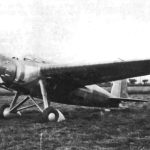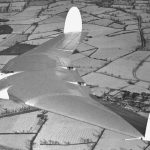



On this day in aviation history, 97 years ago (November 15, 1929), the Dyle et Bacalan DB-70 took flight for the first time. Developed in France as an experimental passenger airliner, the enormous three-engine aircraft featured an unusual thick-wing configuration that accommodated its passengers within the wing itself. The DB-70 represented an ambitious attempt to rethink the conventional layout of commercial aircraft during the interwar years. Designed by Louis de Monge, the DB-70 was constructed largely from duralumin and incorporated a massive central wing section connected to two rear fuselages. The thick center section housed the passenger compartments, pilots’ cockpit, and three Hispano-Suiza engines. Unlike conventional airliners, passengers were seated within the wing, which featured two outer cabins and a central lounge with armchairs and tables. The aircraft could accommodate 28 passengers during daytime operations or 24 passengers in sleeping arrangements for overnight flights.

The DB-70 made its maiden flight from Mérignac Aerodrome near Bordeaux. Initial testing demonstrated promising takeoff performance, with the aircraft reportedly becoming airborne in approximately 400 feet while carrying a five-ton load. It subsequently appeared at the National Aviation Meeting at Vincennes in June 1930. Despite its innovative design, only one DB-70 was constructed. The manufacturer, Dyle et Bacalan, had already reorganized as Société Aérienne Bordelaise before the aircraft’s first flight, and the basic design later influenced the company’s AB-20 and AB-21 military prototypes. The DB-70 measured 65 feet 7 inches in length with a wingspan of 121 feet 5 inches and was powered by three 600-horsepower Hispano-Suiza 12Lbr engines. It could reach a maximum speed of approximately 120 mph, cruise at 112 mph, and had a range of 620 miles. Its service ceiling was 14,800 feet, while its maximum gross weight was approximately 28,660 pounds. The aircraft required a crew of three and could accommodate up to 28 passengers.