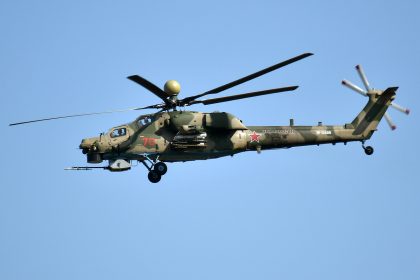
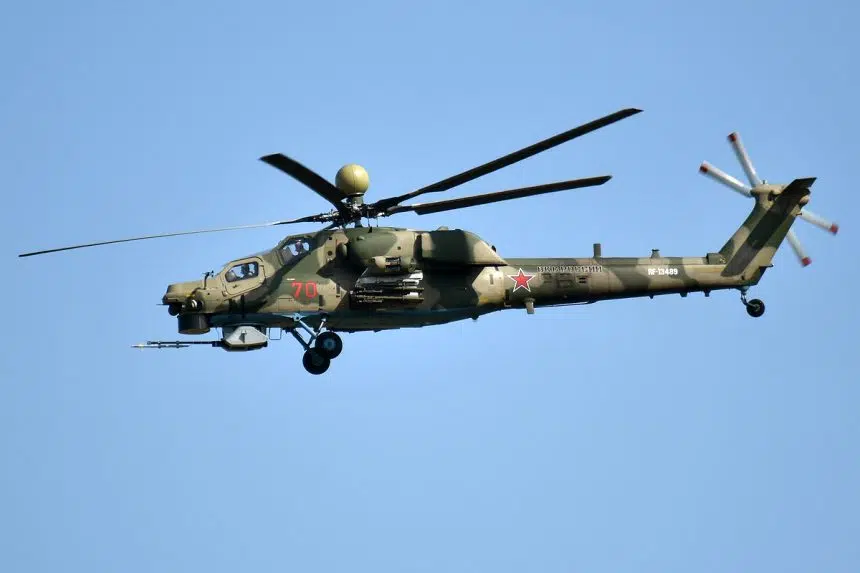


On this day in aviation history, 30 years ago (November 14, 1996), the Mil Mi-28N took flight for the first time. Known by the NATO reporting name “Night Havoc,” the Russian twin-engine attack helicopter was developed as an improved, all-weather version of the Mi-28 Havoc, incorporating advanced avionics and targeting systems for combat operations during both day and night. Development of the original Mi-28 began during the Soviet era as a dedicated attack helicopter intended to replace or supplement the Mi-24 Hind. Designed by Marat Tishchenko, the aircraft featured tandem cockpits, extensive armor protection, and a powerful weapons system optimized for destroying enemy armored vehicles. The original Mi-28 first flew in November 1982, but the Soviet military initially favored the competing Kamov Ka-50. Development of the Mi-28 nevertheless continued, eventually producing the improved Mi-28N.

The Mi-28N introduced a more sophisticated navigation and targeting system, including infrared sensors, improved night-vision equipment, and provisions for a distinctive radar mounted above the main rotor. This arrangement allowed the helicopter to detect and engage targets while minimizing its exposure to enemy fire. Although the prototype flew in 1996, financial difficulties delayed further development and production. The first production Mi-28N was delivered in June 2006, and the type formally entered Russian military service in October 2009. Export variants were subsequently acquired by several countries, including Iraq and Algeria. The Mi-28N measures approximately 55 feet 10 inches in length, excluding its rotors, and has a main rotor diameter of 56 feet 5 inches. Published Mi-28-family specifications list two Klimov VK-2500 turboshaft engines producing approximately 2,194 horsepower each, giving a maximum speed of 200 mph, a range of 270 miles, and a service ceiling of 18,700 feet. Armament includes a chin-mounted 30 mm Shipunov 2A42 cannon with 250 rounds, along with provisions for anti-tank guided missiles, rockets, bombs, and gun pods carried beneath its stub wings.