By Jakob McKenney
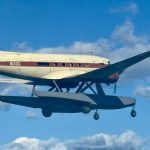
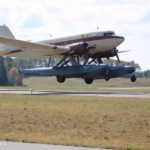
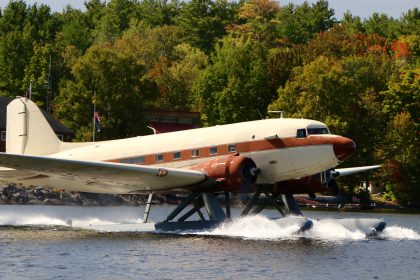
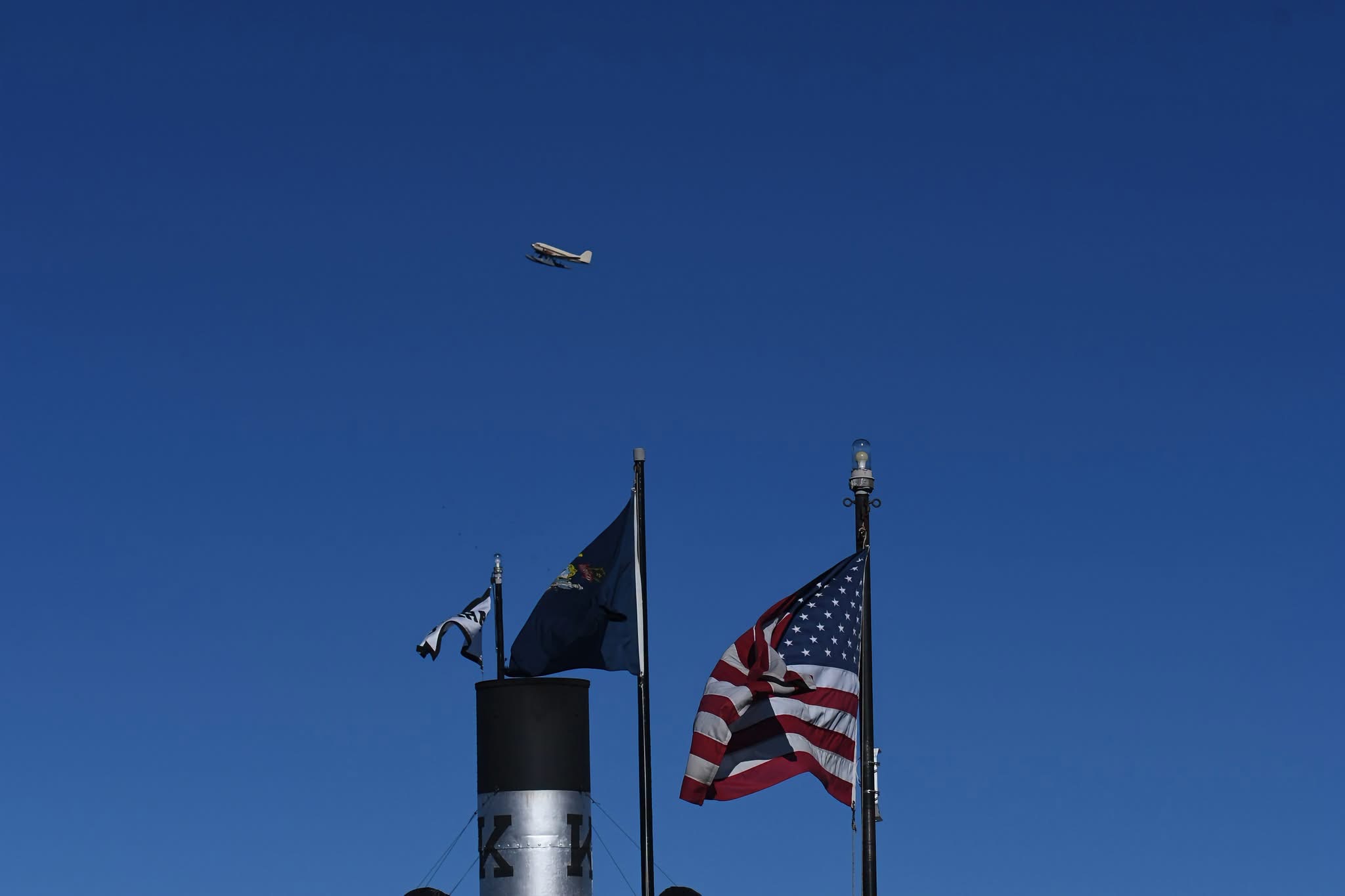
After taking to the air over Labor Day weekend, N130Q, the sole surviving Douglas DC-3 on Amphibious Floats, made its triumphant return to Greenville, Maine’s International Seaplane Fly-In (its first appearance since 2002). Click HERE to read our coverage. Held annually on Moosehead Lake in Greenville, Maine since 1974, the event draws pilots and enthusiasts from around the continent and typically sees the largest gathering of seaplanes outside of Alaska. Attendees were treated to numerous landings, takeoffs, and flybys by the World’s Largest Floatplane as pilots Eric Zipkin and Sam Canders put the one-of-a-kind flying machine through its paces. Photos and videos of the aerial demonstration circulated worldwide, with Folsom’s DC-3 being something of an icon to both the region and the float flying community. Aviation photographer András Mihalik even made the trek all the way from Budapest, Hungary, just to see and capture the enormous seaplane in motion. Moments like these cement the importance of keeping this truly unique aircraft airworthy for all to see and appreciate. In short, the airplane was made for the Mountain Lakes of Maine and has helped put Greenville and Moosehead Lake on the map for the past three decades. A testament to the region’s dauntless bush-flying spirit and aviation heritage.

Now, as the one-of-a-kind Gooney Bird potentially faces its darkest hour since flying the flak-filled skies of Nazi-occupied Holland as part of Bernard Law Montgomery’s fruitless attempt at one powerful, full-blooded thrust across the Rhine and into the heart of Germany, a local vintage aircraft preservation group has stepped up to secure the airplane’s long-term future and share it with the world. Leading the effort is Sam Canders, a prominent figure in the Maine aviation community with deep-rooted involvement in grassroots historic aircraft preservation and youth aviation education. Through his non-profit, the Maine Center for Classic Aviation, based at Thompson Memorial Field in Pittsfield, ME, Canders has restored a 1929 Ford Model A-powered Pietenpol Air Camper and is in the process of rebuilding a rare Corvair-powered example. MCCA is also the steward of a 1941 Boeing PT-17 Kaydet. Over the past year, Sam trained rigorously with the Dutch Dakota Association utilizing their one-of-a-kind DC-3 simulator and, in July, obtained his DC-3 type rating with Job Savage at Vintage Flying Machines aboard the former Western Air Lines NC33644. An accomplished seaplane instructor, he had already received his MES (Multi-Engine Sea) rating through Sebring Aviation and Southern Seaplane. This culminated in being asked to fly N130Q by Rodney Folsom and Eric Zipkin at the 2026 International Seaplane Fly-In. Canders went on to log many more hours in the airplane over the next month. While the DC-3 on Floats would no doubt be the biggest project undertaken by the organization, Maine Center for Classic Aviation has partnered with Dirigo Aerospace Solutions, headed up by DC-3 master mechanic Mark McGhee, himself the steward of the 1941 DC-3A N137PB. On October 23rd, 2026, N130Q made the hour-long hop down to Auburn-Lewiston Municipal Airport in its first foray outside Greenville since 2004, where it will undergo necessary maintenance over the winter in the old Lufthansa Starliner hangar overseen by McGhee.
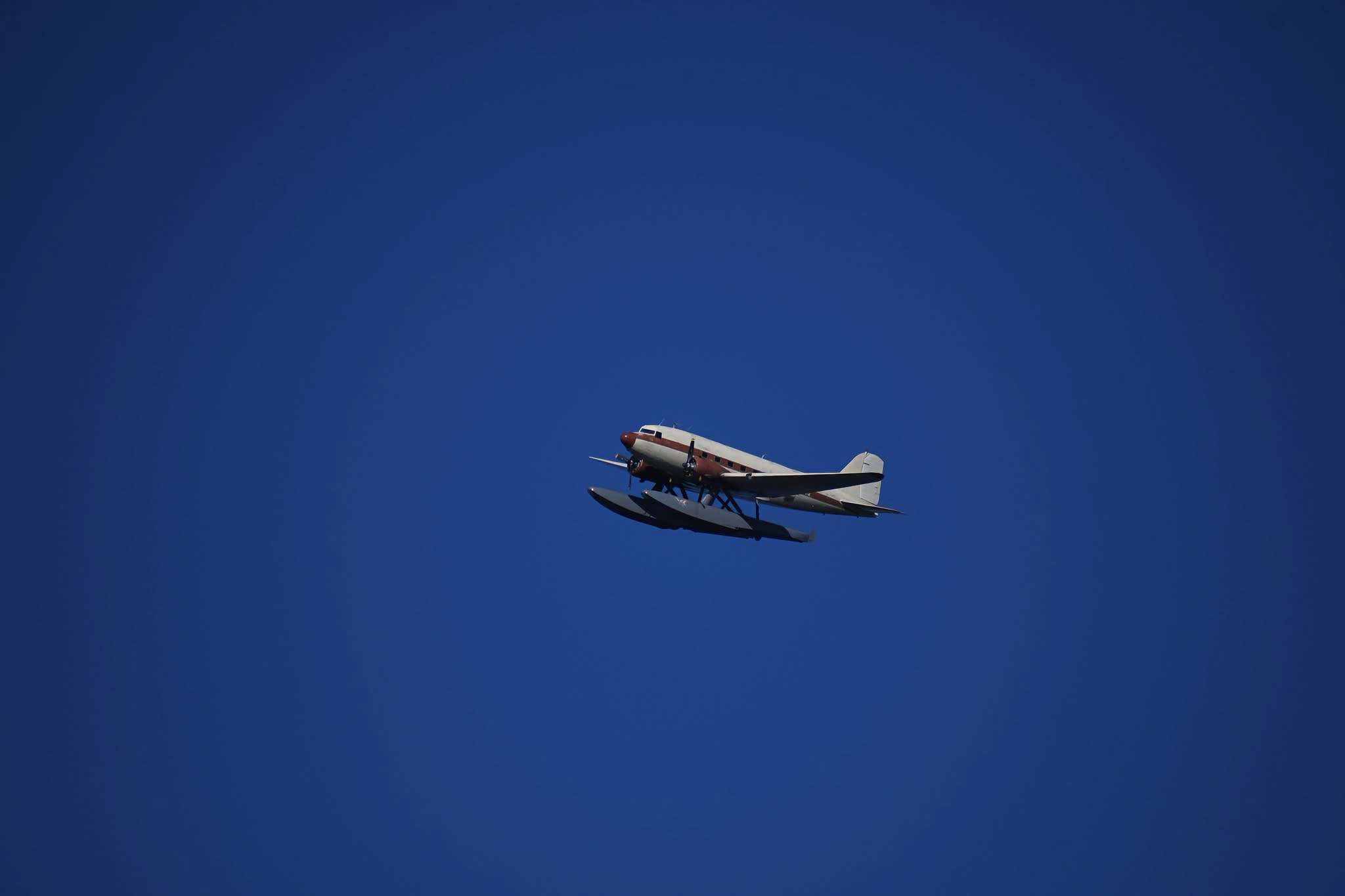
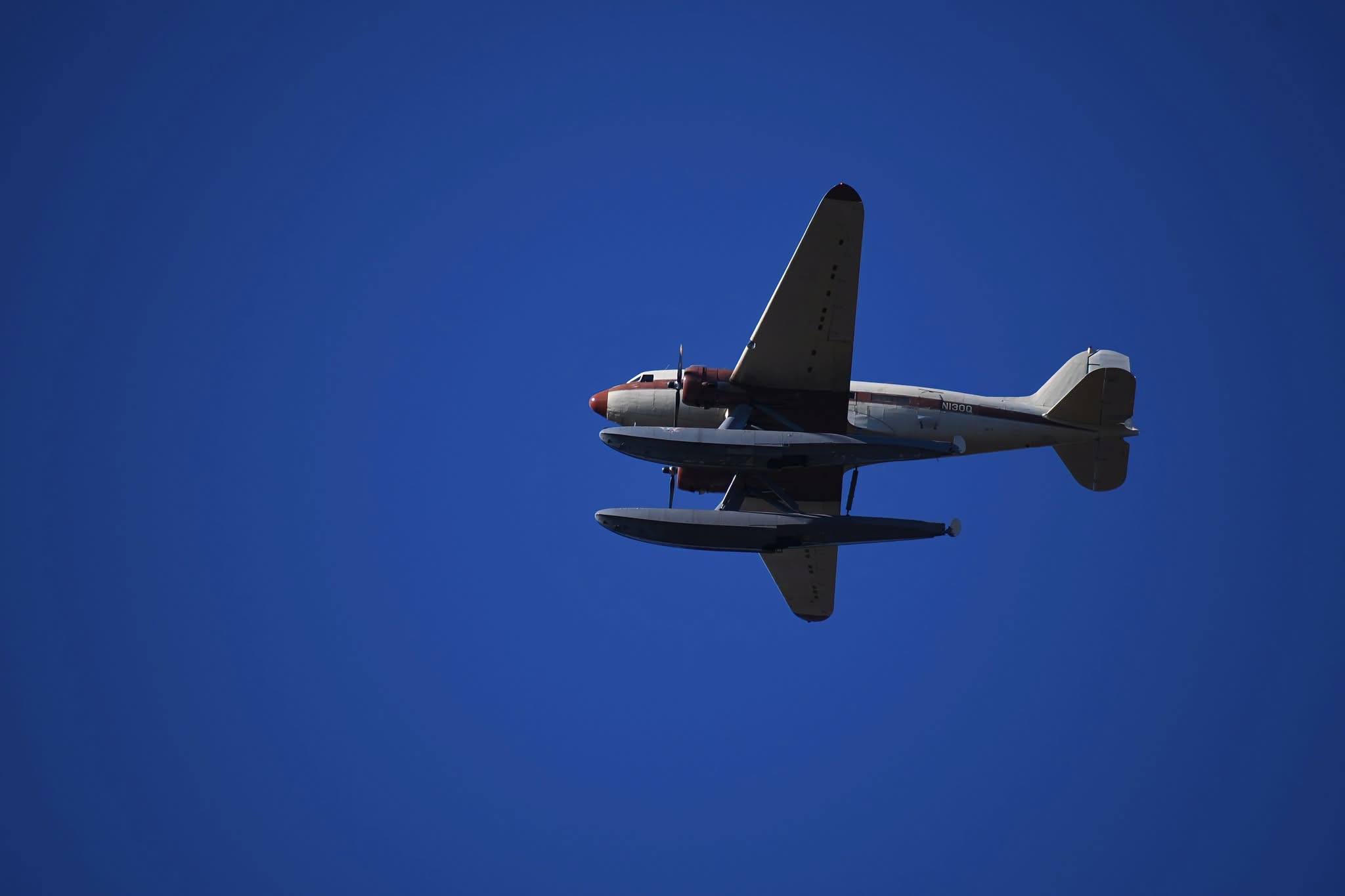
MCCA’s short-term goals include recovering the fabric on the control surfaces, engine work, as well as brake modification and adjustments, with the eventual intention of bringing something never before seen in the Warbird community to the world stage. Float-equipped C-47/DC-3 aircraft trace their roots to the early days of the War in the Pacific. With airfields being heavily contested or unavailable entirely during the Japanese invasions of the Philippines and New Guinea, the U.S. Army sought a way of transporting supplies, ordnance, and replacements to their troops without the use of airstrips. The EDO Aircraft Corporation was contracted to build 150 sets of floats large enough for use on the C-47. The prototype XC-47C was converted in June 1942, becoming the largest American aircraft to go on floats as well as the largest amphibious floatplane ever converted (the largest floatplane of all time being the gargantuan Italian CANT Z.511). Flight characteristics proved favorable during evaluation, though the C-47’s payload and cruise speed were greatly diminished. The XC-47C was even tested with JATO solid-fuel rocket bottles to shorten the takeoff distance at the airplane’s gross weight of 29,800lbs. While the type was selected for inventory, the little-known project would ultimately be canceled in 1943 after the U.S. Navy Seabees (Construction Battalion) were able to build airfields in the Pacific within a matter of days using Marston Matting, a type of perforated steel planking. Production halted after 33 sets of the massive EDO Model 78-29400 floats had been completed, with 13 being delivered to the Midwest City Douglas Aircraft Company plant, where all further float conversions took place.

Ultimately, four float-equipped C-47Cs would be stationed in Port Moresby, New Guinea, in the medical evacuation role, while another was assigned to the 54th Troop Carrier Squadron (“The Eager Beavers”) out of Elmendorf Field in Alaska. The Maine Center for Classic Aviation aims to honor this little-known aspect of the C-47’s history with the long-term plan of repainting N130Q in a USAAF scheme to represent C-47C 42-108868, complete with the Eager Beavers emblem on the nose. As reported previously by Vintage Aviation News, N130Q began life on July 12th, 1943, as a C-53D Skytrooper and was subsequently assigned to the 8th Air Force in England. It flew as a troop carrier, most notably airlifting members of the 82nd and 101st Airborne Divisions during Operation Market Garden. After the war, the airplane was acquired as surplus by Eastern Air Lines and converted to a standard passenger-carrying DC-3A airliner; it would go on to fly with Eastern Air Lines ‘Great Silver Fleet until 1949, when it was purchased by L.B. Smith Aircraft Corp., one of the foremost airplane interior modification centers in the country, where it would receive a luxurious executive interior and go on to pass through a number of corporate and private owners throughout the next three decades.

In the early 1980s, the aircraft was overhauled by AirPower Inc. and fitted with two fresh Curtiss-Wright R1820-56 engines generating 1350 hp a side. It would serve as a test stand for the 1829 engines built for the Ayer’s Corporation King Cat and Thrush aerial sprayers. In 1985, N130Q was first sought by Maine Bush Pilots Dick and Max Folsom as they envisioned the airplane carrying passengers between the Moosehead Lake Region and cities in the northeast, including Boston, New York, and Atlantic City, on a Part 135 charter as the Moosehead Express. The lighter C-53 airframe and more powerful engines made it a good candidate for a potential float conversion. It was first flown to Maine in 1986 while the floats were located at a junkyard outside of Dallas, Texas, in 1987, where they had been intended for use on a catamaran. They are believed to be the last EDO Model 78-29400 amphibs in existence. Folsom’s Air Service spent the next four years remanufacturing the struts and attachment gear based on original EDO blueprints stored on microfilm. The airplane made its first flight on floats on September 5th, 1990, with Max Folsom and Lou Hilton at the controls.
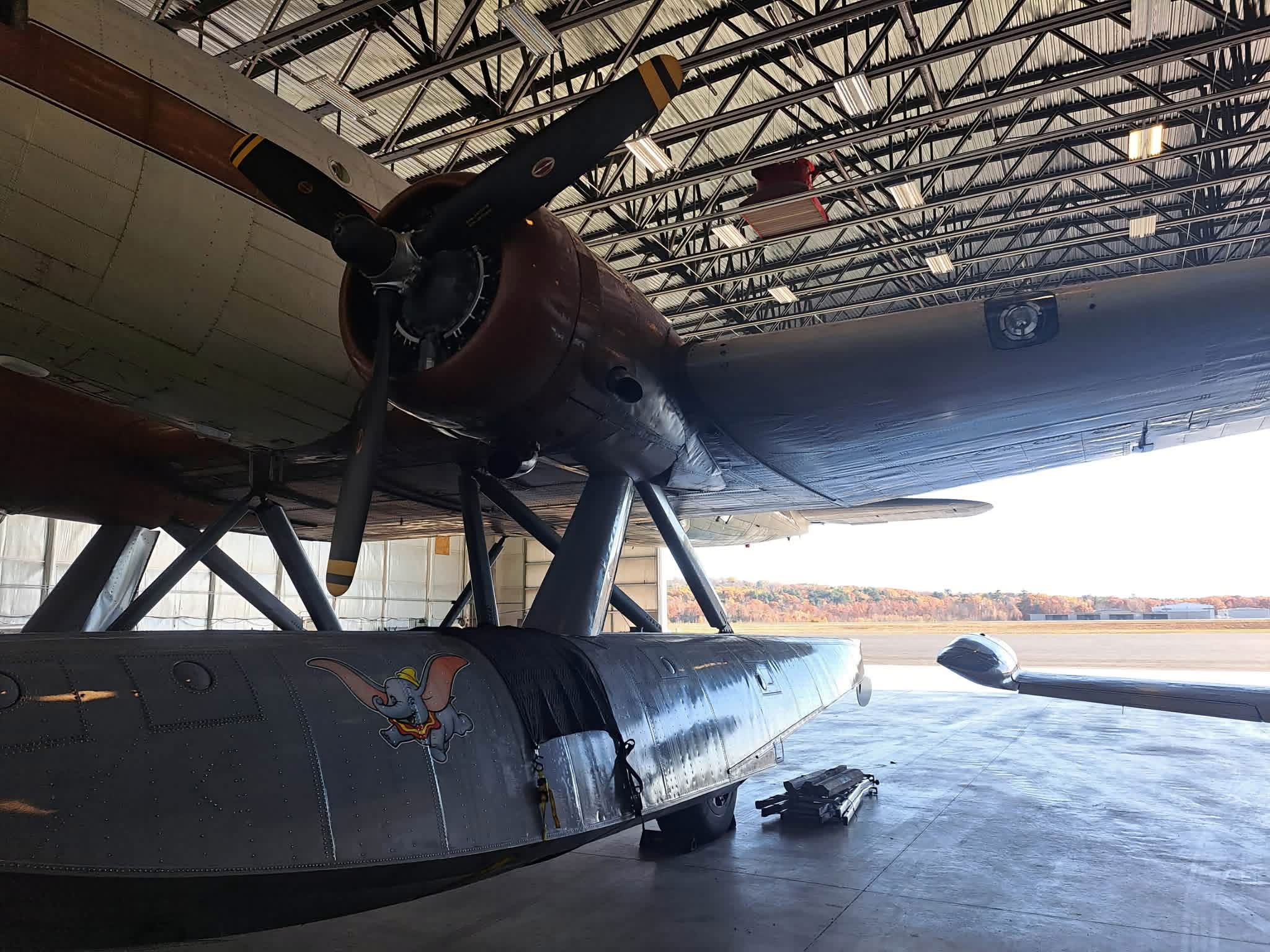
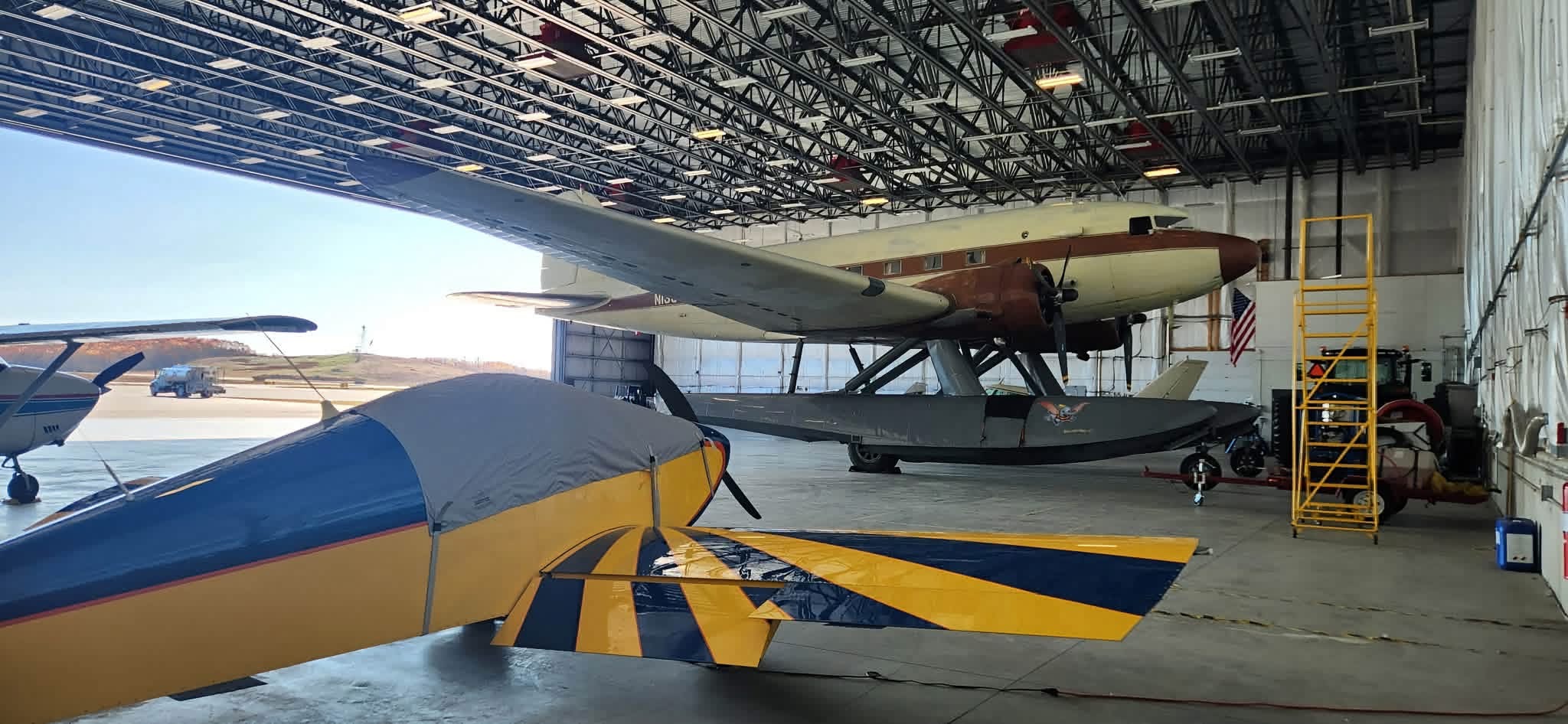
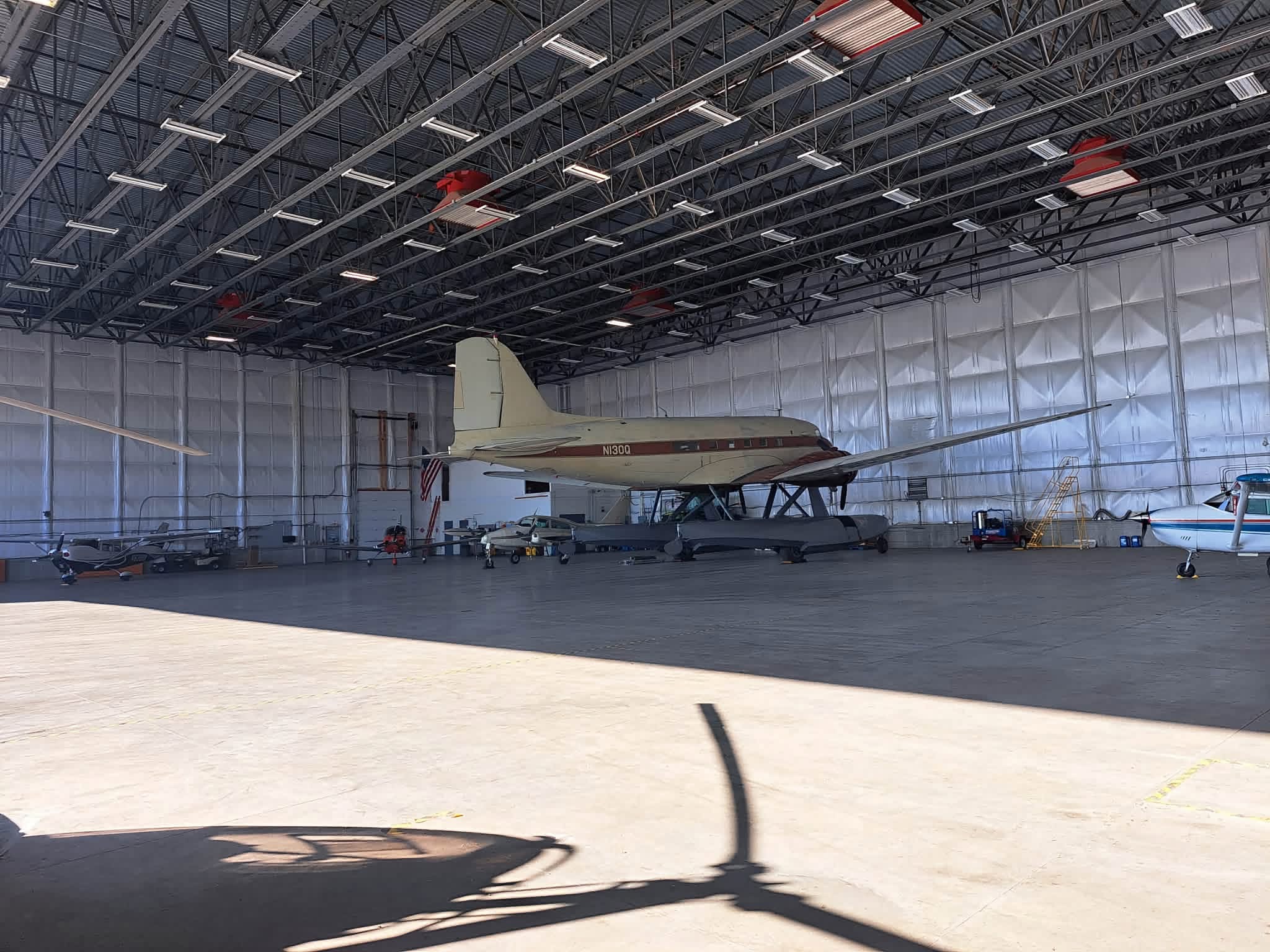
While the one-of-a-kind seaplane’s Experimental status kept it from being operated on a Part 135 operation, the Folsoms continued to fly the airplane privately for many years, making several excursions to Sun n Fun and other events in the spring or fall when the bush flying season in Maine wound down. It was subsequently returned to wheels after a gear collapse in May of 2004 caused significant damage to the left float. The float was extensively rebuilt over the next decade and a half before both were returned to the airplane in July 2020, while the engines and propellers were also overhauled. N130Q subsequently made its first flight since 2012 on September 14th, 2024, piloted by Eric Zipkin and Garrett Fleischmann. Now its future hangs in the balance.

Since 1986, ownership of the World’s Only DC-3 on Floats has been held by HBF Inc. The original shareholders — Louis Hilton, Herman Bayerdorffer and Dick and Max Folsom have since passed away, leaving their heirs as owners. Dick’s son Rodney Folsom stepped up as the aircraft’s primary caretaker and has devoted considerable time and effort, alongside Danny Pelletier and Ben Doughty, to return the airplane to flying condition to be demonstrated at the International Seaplane Fly-In and for potential sale. Over the years, a number of prospective buyers have come to assess the DC-3; one interested party has recently raised concern amongst the community, that being notorious aircraft collector Kermit Weeks. Weeks’s penchant for acquiring countless projects that are subsequently parked or stored interminably is well known. Were he to acquire the airplane, it would never fly again and would slowly deteriorate in the Florida environment, as, according to Weeks’ former Director of Aircraft Maintenance, Paul Stecewycz, none of the hangars he has could accommodate the size of this aircraft on floats.

The fate of the PBY-5A Catalina N96UC donated and ferried to Weeks’s “World’s Greatest Aircraft Collection” by Charles Largay in 2006, only to be overtaken by corrosion on the ramp, would be a good indication of N130Q’s future if it were to go down this path. It would be a travesty for such a special aircraft to fall to pieces. Conversely, Canders and the Maine Center for Classic Aviation would ensure the airplane is hangared and kept airworthy, operated under a 501c3 as an educational outreach tool and flown to events throughout the Northeast in the summer months while continuing to be an annual crowd pleaser at Greenville’s International Seaplane Fly-In. MCCA has been allowed the opportunity to fundraise toward becoming a shareholder of the iconic airplane; eventual ownership would ensure its future is secure. The ultimate goal is to debut the World’s Largest Floatplane at EAA AirVenture; a viable plan for getting N130Q to Oshkosh has been discussed with Steuben County Tri-State Airport in Angola, IN, providing a stopover point. In the meantime, a GoFundMe has been established to help make this effort a reality. Click HERE. Preserving this incredibly unique piece of aviation history is imperative to ensuring that this little-known piece of the indomitable DC-3/C-47/Dakota’s history survives.