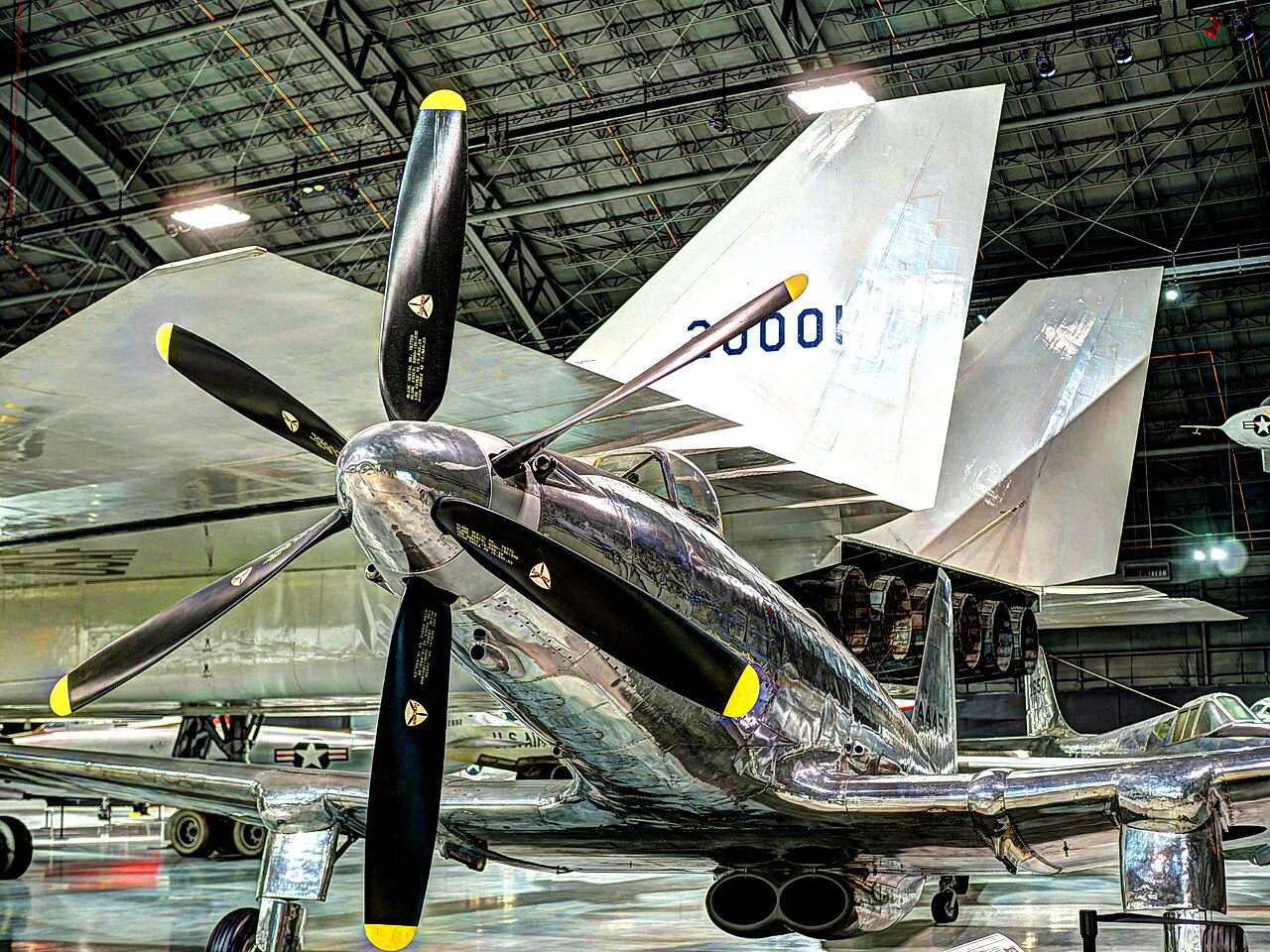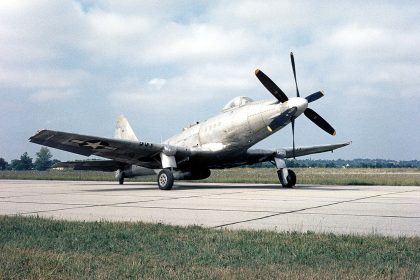
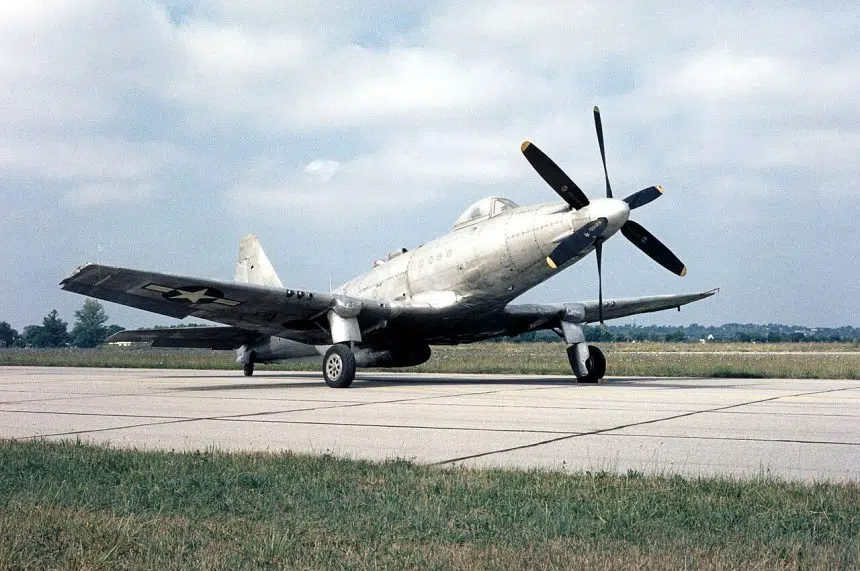

On this day in aviation history, 83 years ago (November 17, 1943), the General Motors Fisher XP-75 Eagle took flight for the first time. Developed as a high-performance interceptor for the United States Army Air Forces, the unusual single-seat fighter was powered by an Allison V-3420 liquid-cooled engine driving coaxial contra-rotating propellers. The first prototype, serial number 43-46950, represented an ambitious attempt to produce a fighter with an exceptionally high rate of climb. Development began in 1942, when the Fisher Body Division of General Motors received a contract to construct two XP-75 prototypes. To accelerate production, the aircraft incorporated components adapted from existing fighters, including outer wing panels from the Curtiss P-40 Warhawk and landing gear based on the Vought F4U Corsair. Its massive 24-cylinder Allison engine was mounted behind the cockpit, driving the nose-mounted propellers through extension shafts.

By the time the XP-75 entered flight testing, American military priorities had shifted toward long-range bomber escort fighters. Six additional prototypes were ordered with modifications for this role, but testing revealed numerous problems, including poor engine cooling, inadequate power, high control forces, and undesirable spin characteristics. Although later modifications improved the aircraft, the successful Lockheed P-38 Lightning and North American P-51 Mustang made the Eagle increasingly unnecessary. The program was cancelled in October 1944 after eight prototypes and six production P-75As had been constructed. One surviving P-75A is preserved at the National Museum of the United States Air Force in Dayton, Ohio. Published XP-75 specifications list a length of 40 feet 5 inches and a wingspan of 49 feet 4 inches. The later Allison V-3420-23 engine produced 2,885 horsepower, giving a maximum speed of approximately 433 mph at 20,000 feet. The fighter had a range of 2,050 miles and a service ceiling of 36,400 feet. Planned armament consisted of ten .50-caliber machine guns, with provisions for two 500-pound bombs.