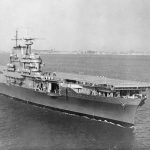
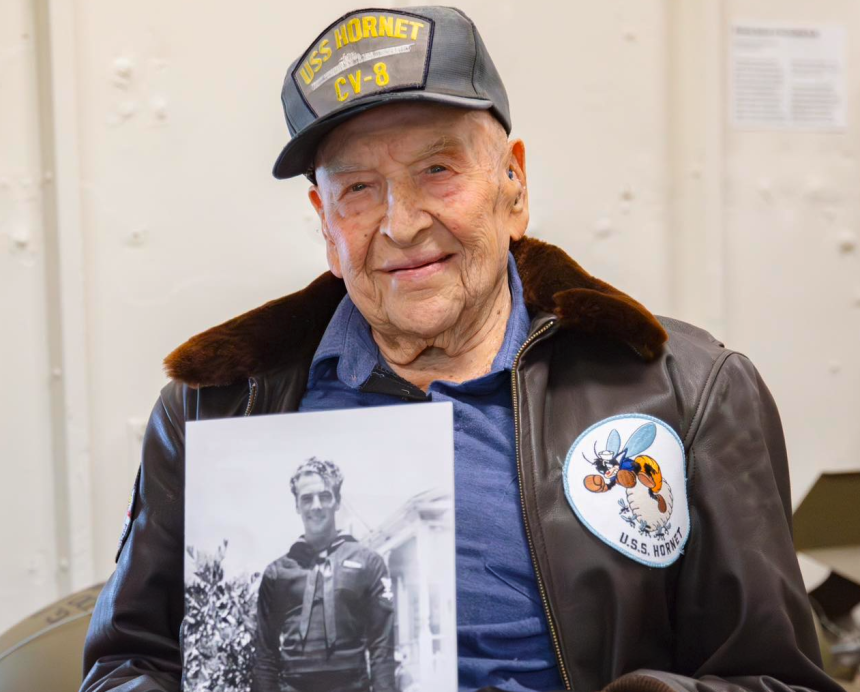

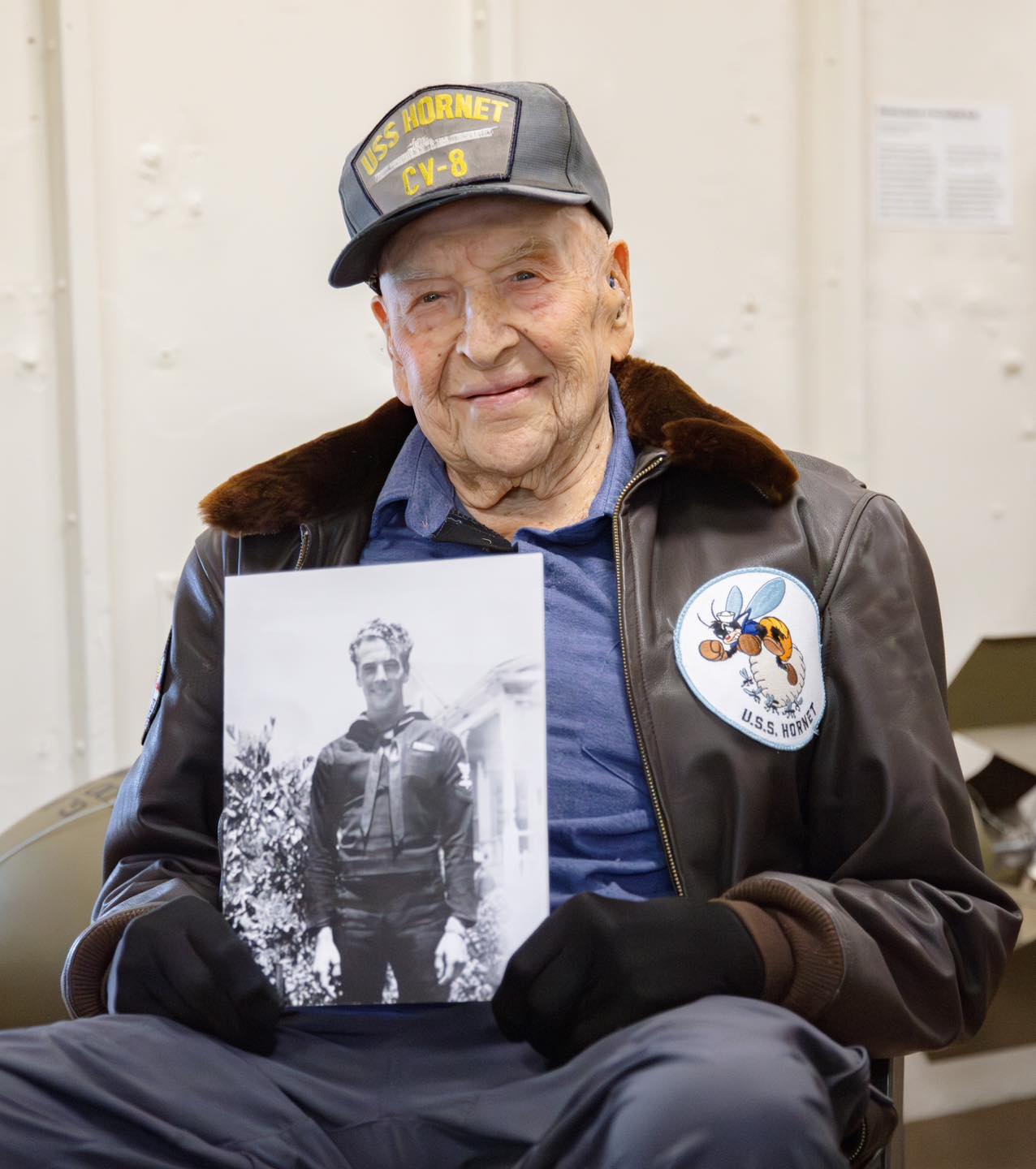
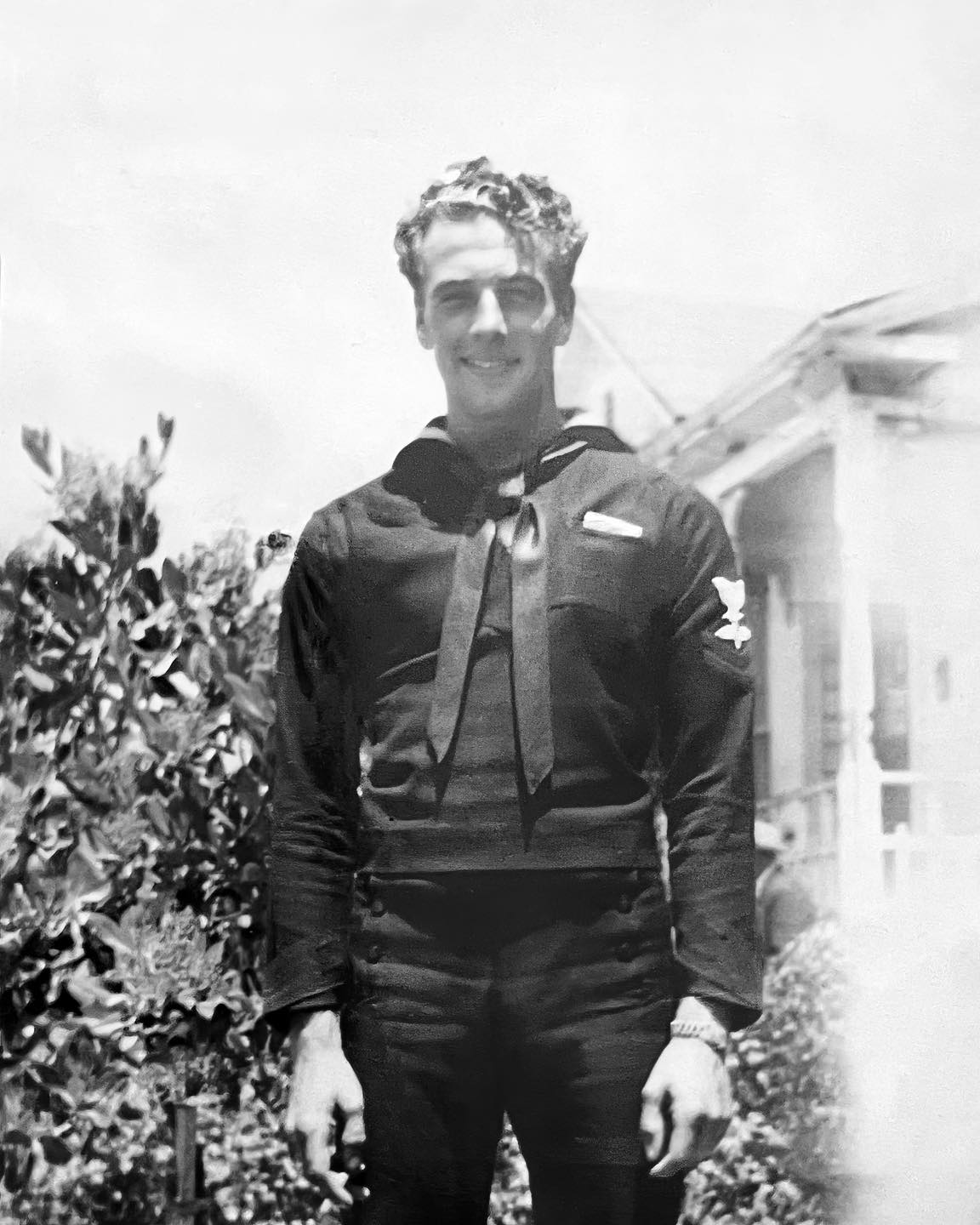
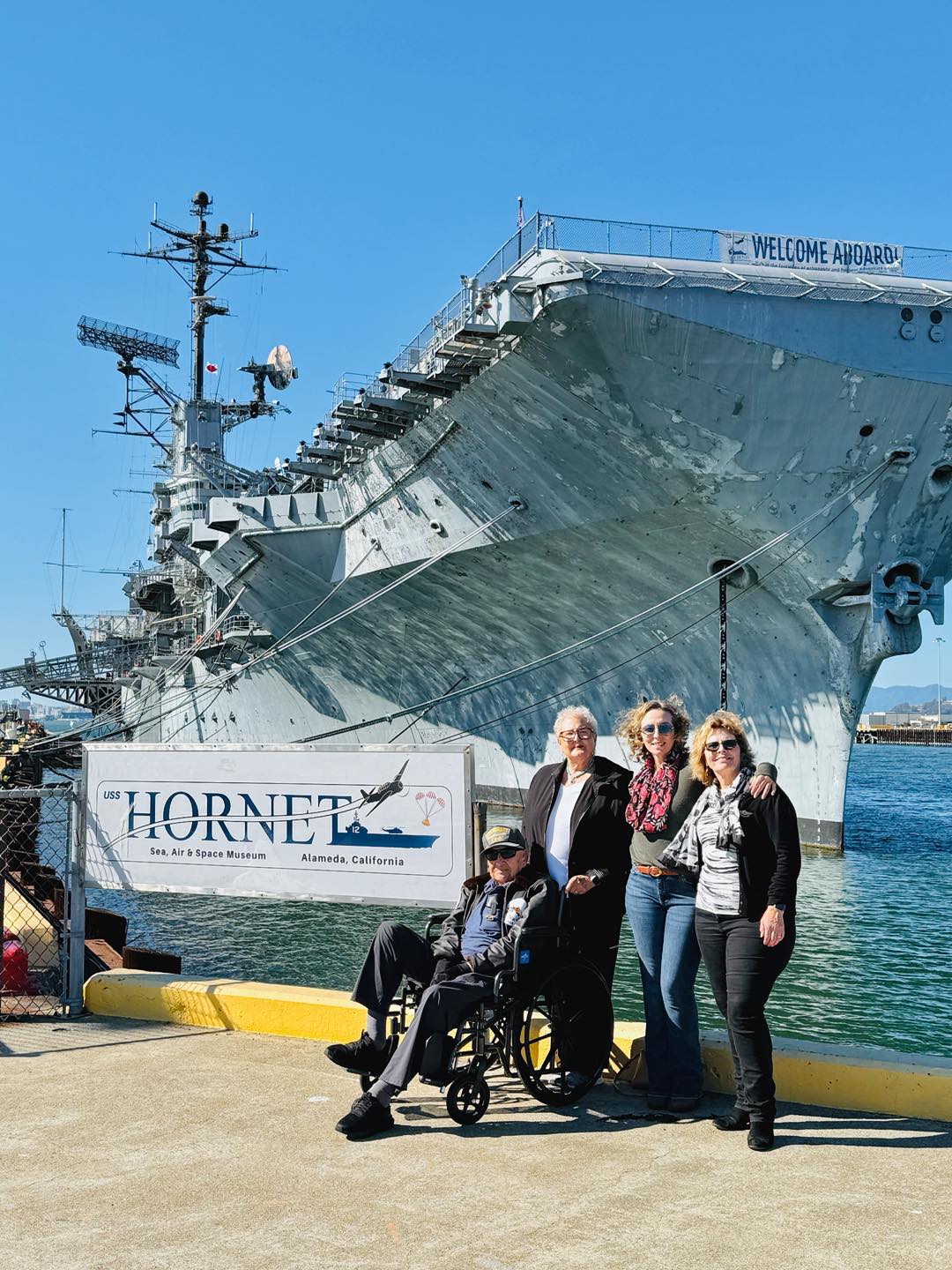
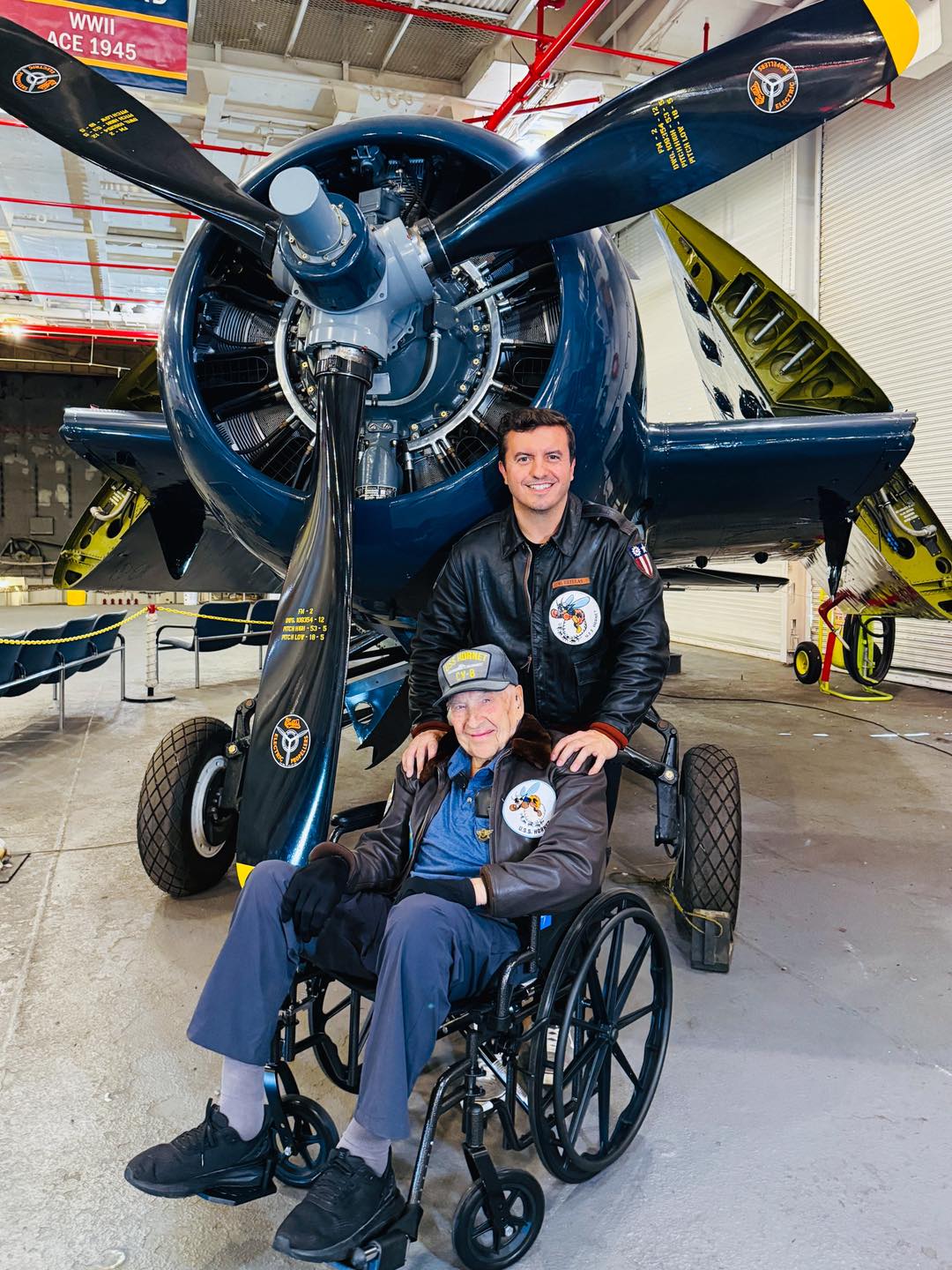
On October 26, 2026, Alfred J. Payne, the last surviving World War II veteran from the USS Hornet (CV‑8), stepped aboard the USS Hornet Museum at the age of 101. Payne, who joined the Navy at 17, served aboard CV‑8 during the Battle of Midway, which ended with the carrier’s sinking 83 years ago. Accompanied by his family, he spent time visiting with museum guests, staff, and volunteers, and ceremoniously cut the ribbon for the soon-to-open CV‑8 Legacy Room. This new permanent exhibit will feature artifacts from the original Hornet and mementoes from the men who served aboard her, including a fragment of the Doolittle Raider B‑25 “Whirling Dervish,” recently recovered from China.
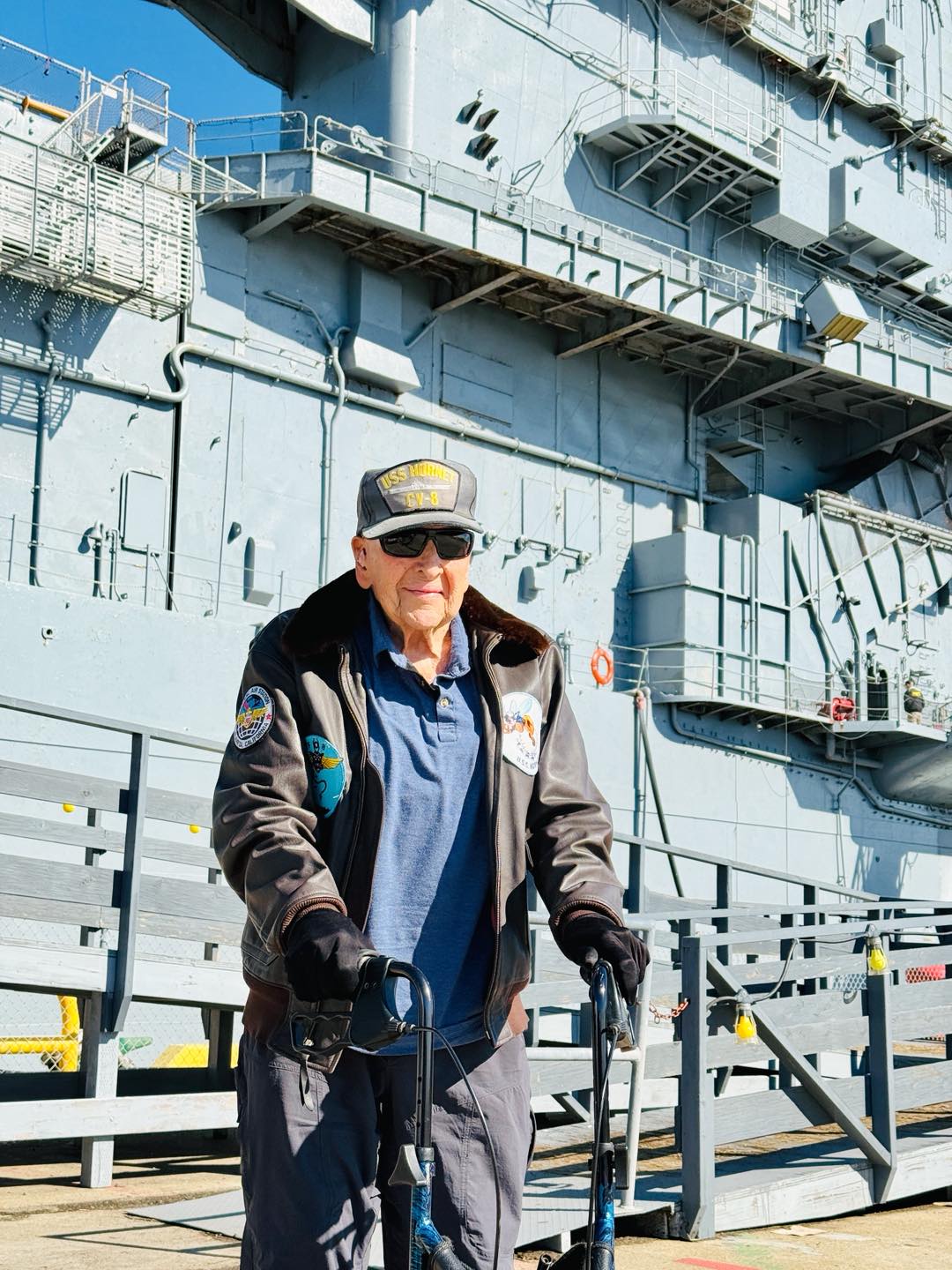
The USS Hornet Sea, Air & Space Museum is located aboard the USS Hornet (CV‑12), an Essex-class aircraft carrier permanently moored in Alameda, California. The museum’s exhibitions span sea, air, and space, combining the ship’s naval history with retired aircraft and NASA Apollo program artifacts. Visitors can tour large sections of the ship, including the flight deck, hangar deck, and first below-deck areas, while guided docent tours provide access to spaces such as the navigation bridge and engineering compartments. The USS Hornet saw service during World War II, the Cold War, and the Vietnam War, and played a crucial role in the U.S. space program by recovering the Apollo 11 and Apollo 12 command modules. Its Apollo exhibit, one of the largest on the West Coast, features a command module, Mobile Quarantine Facility, and a recovery helicopter. Decommissioned in 1970, the ship was preserved and opened as a museum in 1998, with astronaut Buzz Aldrin as a featured speaker. The collection now contains more than 17,000 artifacts, from World War II propeller planes to Cold War jets, along with crew documents, uniforms, and personal items. The museum also maintains an oral history program, a research library, and hosts community events and youth programs, and is affiliated with the Smithsonian Institution.
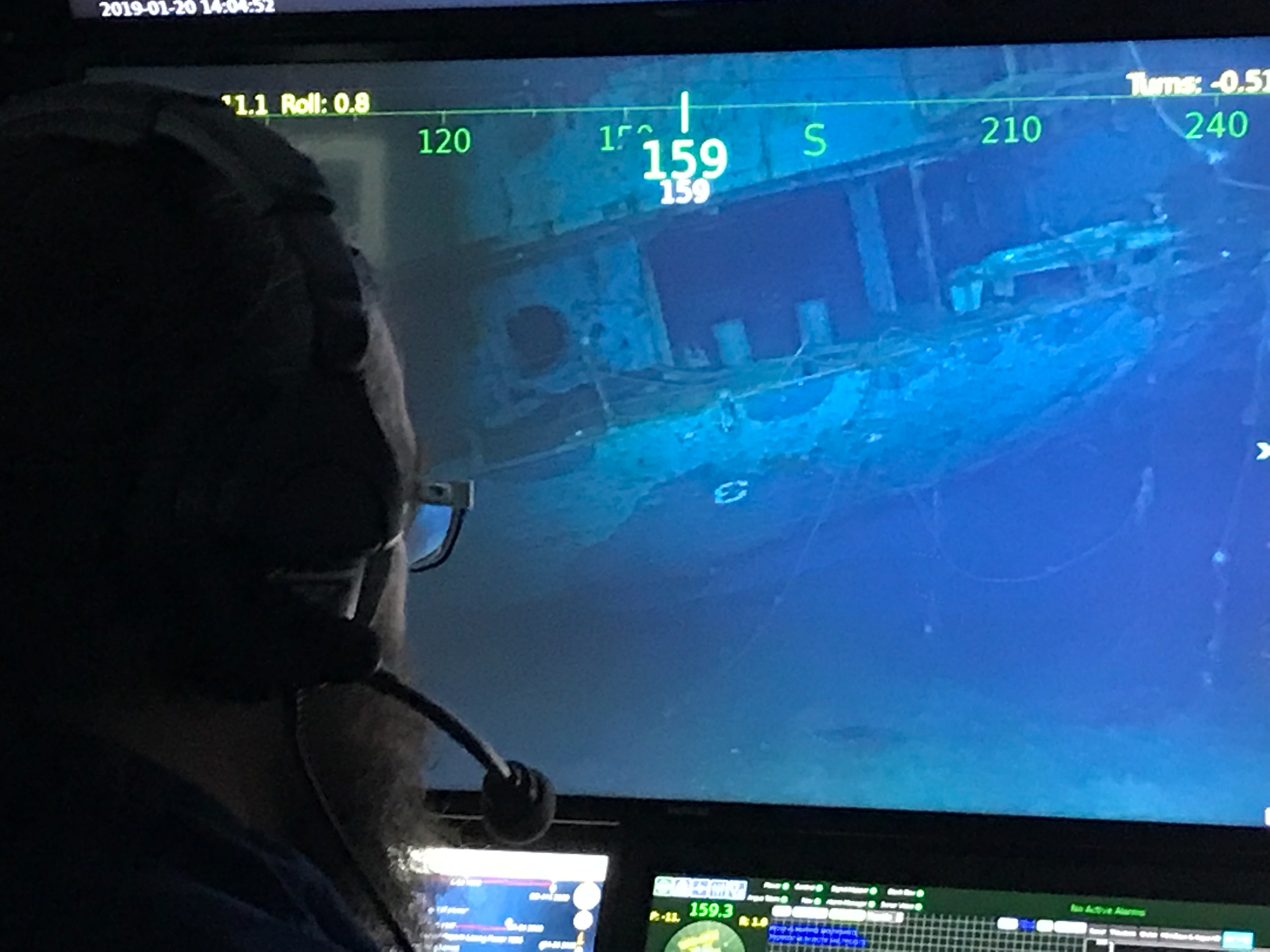
The wreckage of the original USS Hornet (CV‑8) was discovered in late January 2019 by the expedition crew of Paul G. Allen’s research vessel, R/V Petrel. The carrier rests nearly 5,400 meters (17,500 feet) below the South Pacific Ocean near the Solomon Islands. HERE you can read our article.
Watch Alfred Payne’s interview to hear his firsthand account of serving on the flight deck during enemy attacks. For more information about the USS Hornet Sea, Air & Space Museum, visit www.uss-hornet.org.