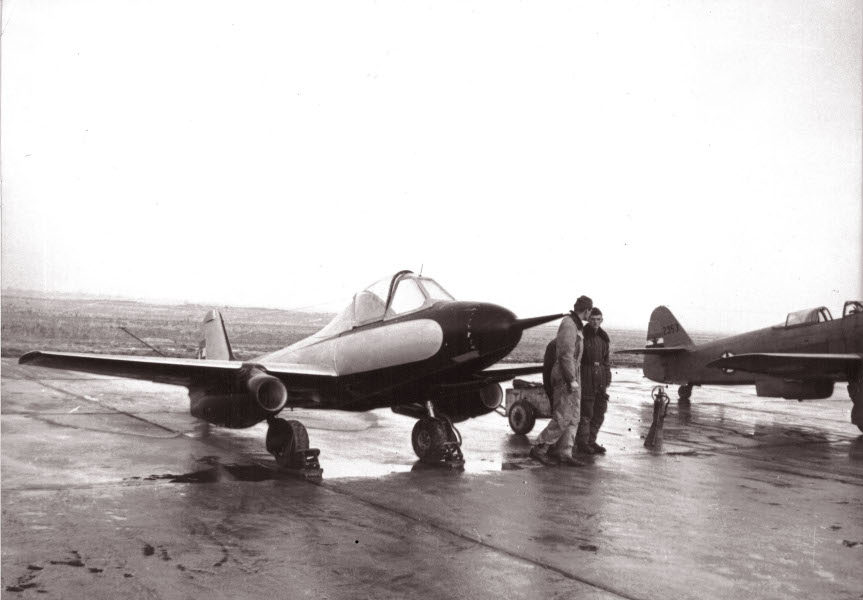
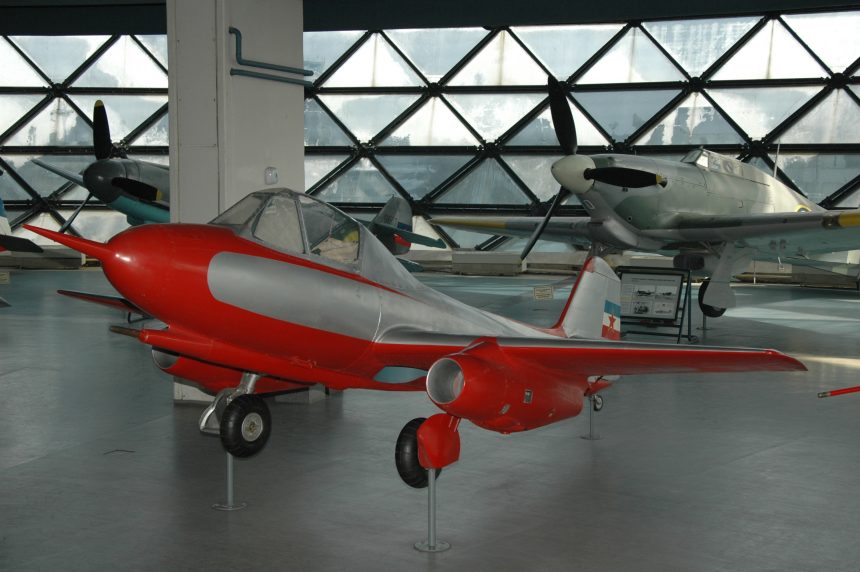


In the 1930s, aircraft speeds reached nearly 400 mph. During air combat or ground-attack maneuvers, pilots had to endure high g-forces from sharp, abrupt maneuvers. To overcome this, the Yugoslav designer Dragoljub Bešlin proposed building an aircraft in which the pilot lies flat on their stomach in the prone position to operate it, a design concept aimed at increasing G-force tolerance, improving aerodynamics through a narrower fuselage cross-section, and enhancing downward visibility. He began working on his idea in cooperation with the Belgrade-based manufacturer Ikarus, now Ikarbus. Under the project, Bešlin designed an experimental wooden B-5 aircraft in 1940, but the onset of World War II delayed testing. Later, the plane was captured by German troops who transported it back to Germany to study the idea. After World War II ended, Bešlin decided to return to the subject, and design work on the new aircraft was assigned to Design Group No. 9 of the Main Directorate of Aviation Industry, which Bešlin himself headed. Bešlin had already worked on high-performance aircraft design and had a reputation as a highly inventive designer. He also designed the B-5 dive bomber. Bešlin’s group first designed the Ikarus 232 Pionir, based on the pre-war B-5 project, to test the concept of the prone position, which flew in 1947. The 232 Pionir was a small, twin-engined, low-wing monoplane powered by two 48 kW (65 hp) Walter Mikron III piston engines. By understanding the flight data of the 232, two prototypes of an experimental light assault plane were developed, designated the Ikarus 451. The first Ikarus 451 prototype flew on September 22, 1951, and the second on February 26, 1952.
Design of Ikarus 451
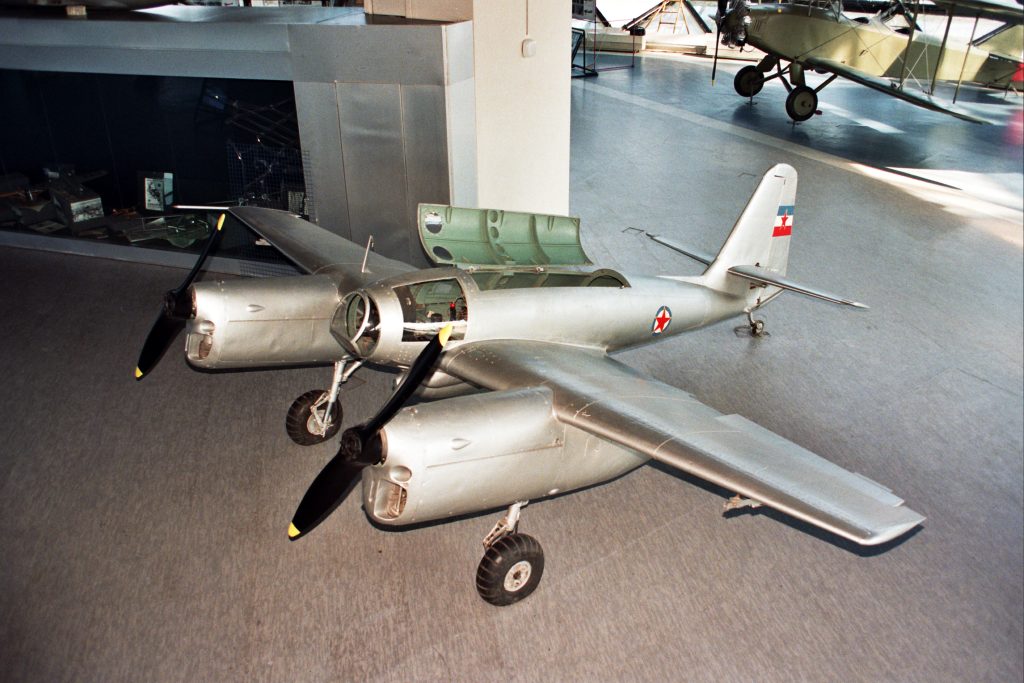
The all-metal Ikarus 451 was powered by two Walter Minor 6/III piston engines, each producing 160 horsepower, and its pilot could withstand positive acceleration of 8-9g without a G-suit. Despite the aircraft’s purely experimental nature, it was armed with two 13mm MG 131 cannons and six missile pylons. The aircraft’s empty weight was 2,170 pounds, while its maximum takeoff weight was nearly 2,600 pounds. Ikarus 451 was 15 feet long, 7.6 feet high, and had a wingspan of 22 feet. Despite a relatively modest engine, the aircraft was very fast due to its small hull cross-section. During testing, the pilot withstood 9 Gs without any problems. However, this design had downsides, and during further testing, it became clear that the pilot faced several problems. While the plane’s horizontal position prevents brain hemorrhage during dive recovery, breathing was completely impossible, as the ribcage is completely compressed. Due to excessive load on the cervical vertebrae, the pilot’s neck went numb after half an hour of flight. Poor visibility from the cabin was another pain point of the aircraft. Moreover, at the time, G-suits were emerging, which applied pressure to the pilots’ legs and stomachs to help prevent loss of consciousness even under high G-forces, thereby diminishing the need for specialized equipment and an aircraft in a prone position, such as the Ikarus 451.
The Future Versions
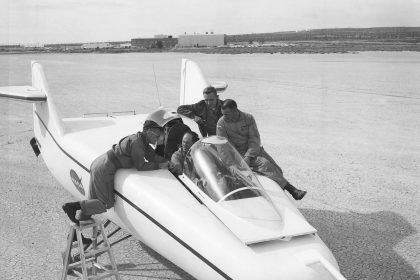
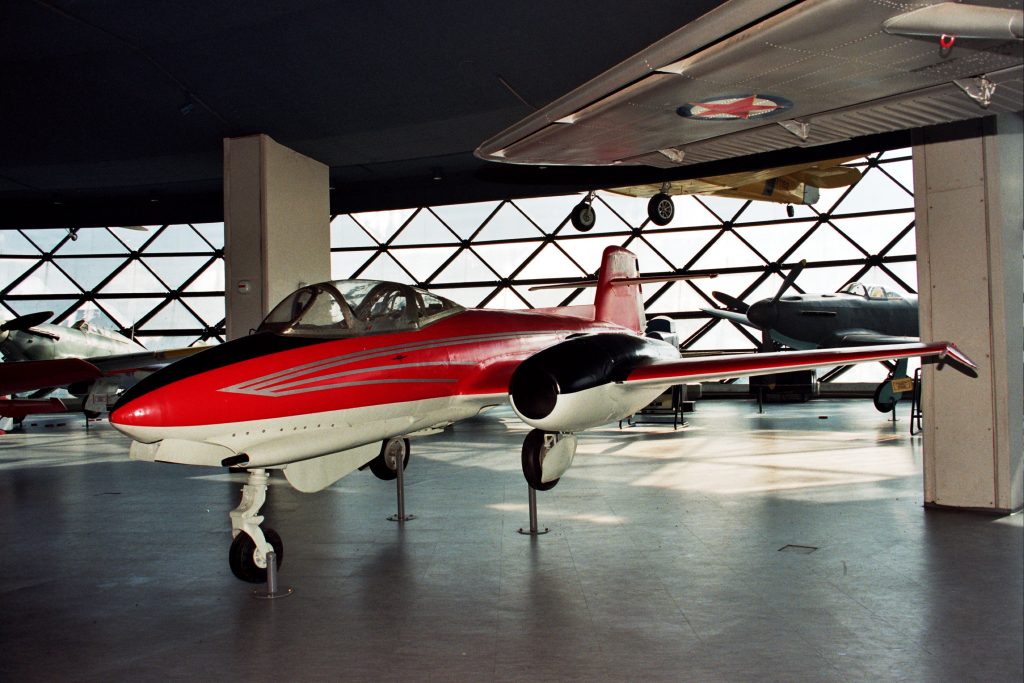
Therefore, the Ikarus 451 program to test the prone position was ended, but it was an excellent aircraft. The aircraft’s small size, low weight, and excellent aerodynamics were ideally suited for the Palas turbojet engine. In mid-1952, the Ikarus 451 was converted to the 451M Mlazni, which featured a conventional pilot seating arrangement. The 451M became the first domestically-built jet aircraft to fly in Yugoslavia on October 25, 1952. Various variants of the 451 were developed before culminating in the ultimate Ikarus T-451MM Stršljen II in 1958, the most capable single-seat ground-attack jet of the Ikarus 451 family. However, no member of the 451 family was produced in any significant number for the military, as the series was designed solely for experimental purposes. Instead, the technology and development experience gained from the 451 series were utilized by the SOKO factory in Mostar for later, successful aircraft production. The Ikarus 451 demonstrated the feasibility of prone-pilot concept, and might have proved it useful with some layout changes, but the emergence of anti-G suits ended further development. But the aircraft’s aerodynamics and design were so perfect that the engineers couldn’t resist testing it in various versions and conditions throughout the 1960s. The idea, which originated in the 1930s, was finally shelved in the late 1960s and tested various concepts and exposed some misconceptions. Hence, the Ikarus 451 was not actually grounded; it was reborn to perform other roles, the roles that some US aircraft performed at the NASA Dryden Flight Research Center, now known as the Armstrong Flight Research Center. In the Grounded Dreams series, the aircraft stands out as an example of how some so-called “grounded” aircraft helped shape the modern aviation we witness today. Read about other Grounded Dreams aircraft HERE.