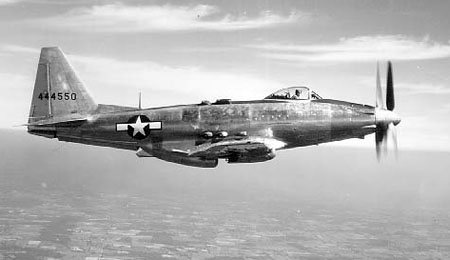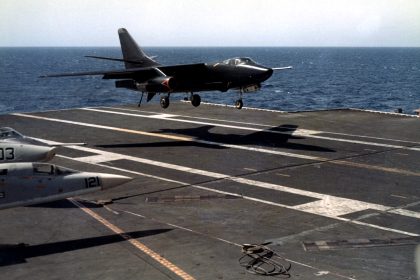
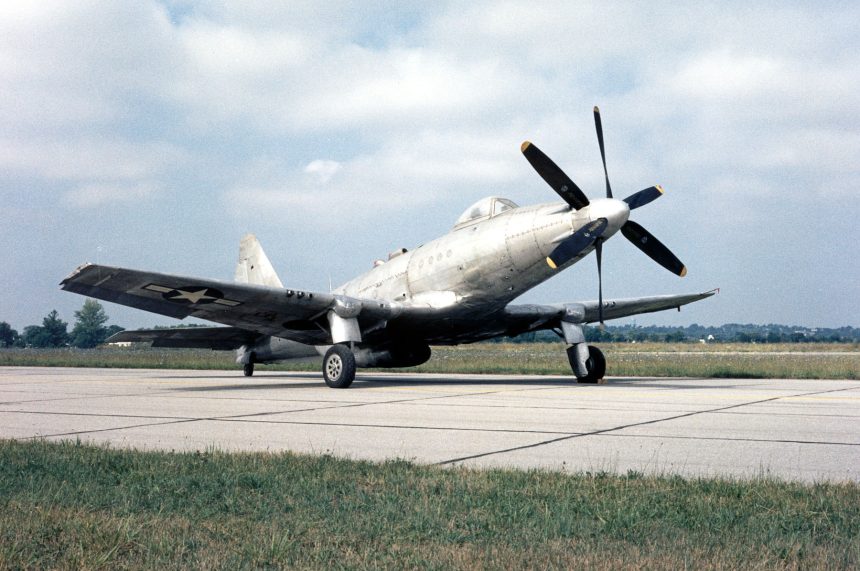


During the early years of World War II, the US Army Air Forces sought a high-climb interceptor aircraft to intercept enemy bombers at high altitude and protect vulnerable Allied bombers. Fisher Body Division of General Motors developed the P-75 Eagle to fill this urgent need, and the aircraft design incorporated the most powerful liquid-cooled engine then available, the Allison V-3420, along with components from other aircraft to expedite production. The design was intended to use the North American P-51 Mustang’s outer wing panels, the Douglas A-24’s tail, and the Vought F4U Corsair’s landing gear. The overall layout was envisioned as similar to that of the Bell P-39 Airacobra, with the engine in the middle and contra-rotating propellers connected by extension shafts. However, in an early design phase, the outer wing panels of the Curtiss P-40 Warhawk replaced those of the P-51.
Design of P-75 Eagle
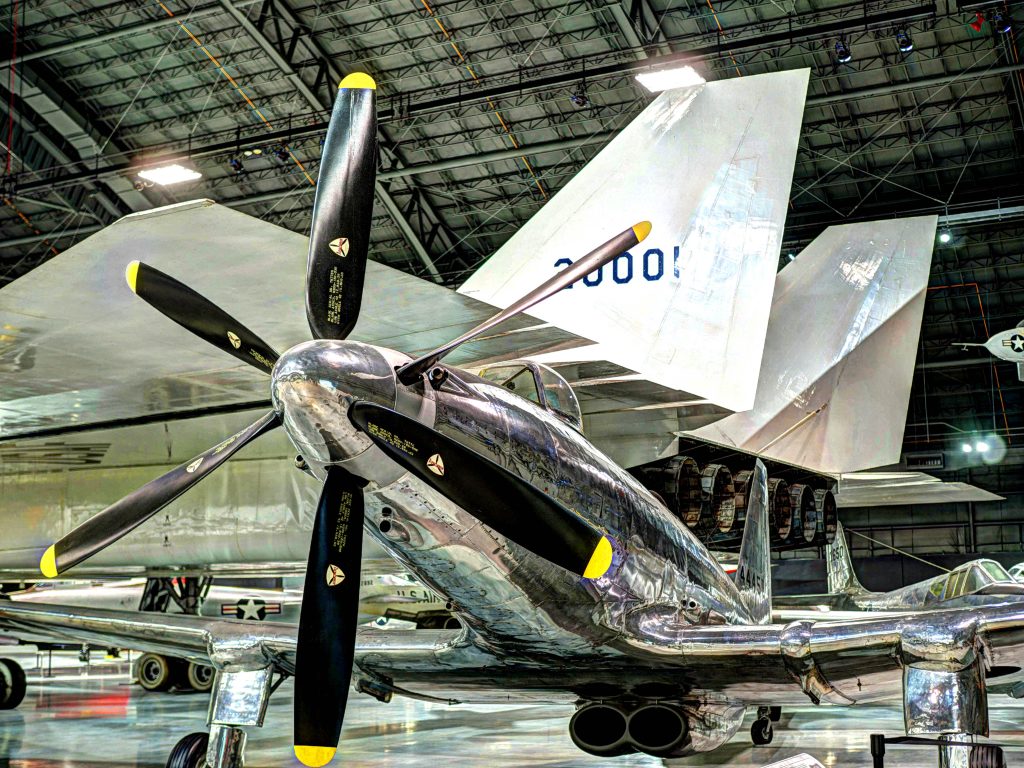
In October 1942, the Fisher Body was tasked with developing two prototypes of the P-75, designated XP-75 as the experimental version. In mid-1943, the military urgently needed long-range escort fighters rather than fast-climbing interceptors. Therefore, the US Air Force decided to order six more XP-75 airplanes modified for long-range missions, thereby abandoning the idea of using other aircraft components. At the same time, the service also placed an order for 2,500 production aircraft, with the condition that the aircraft must perform well during flight tests; otherwise, the order will be canceled. The XP-75, powered by an Allison V-3420 engine producing 2,885 hp, first flew on November 17, 1943. The aircraft was 40 feet long and had a wingspan of nearly 50 feet. It was armed with ten .50-caliber machine guns and two 500-pound bombs. The maximum speed was 430 mph at 20,000 feet with a projected range of up to 2,600 miles and a service ceiling of 36,400 feet. Its loaded weight was 19,420 pounds.
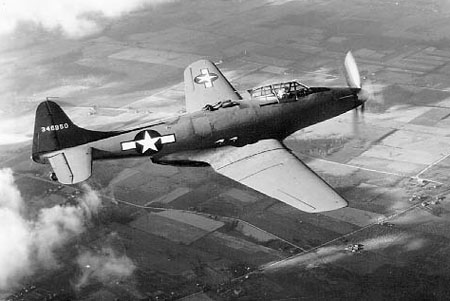
The second XP-75 flew shortly after the first one, and six long-range XP-75s entered flight testing by spring 1944. The test program revealed several initial problems with the fighter, including errors in calculating the center of gravity, insufficient engine power, poor engine cooling, excessive aileron forces at high speeds, and poor spin behavior. To address these issues, redesigns were made to the long-range XP-75s, including a new tail design, a “bubble” canopy, and a V-3420-23 engine that addressed most of the problems. By September 1944, the first P-75A, the upgraded version of the Eagle, began flight testing. By this time, the Army Air Forces decided to limit the number of combat aircraft types being produced. So, the service chose not to start large-scale production of new aircraft that might not be ready before the war ended. In addition, by the fall of 1944, the US Army Air Forces already had capable escort aircraft like the P-51 Mustang and P-47 Thunderbolt, and it canceled the order for 2,500 P-75As. Only two XP-75s and six P-75As were ever built. During the testing, three P-75As crashed, killing two pilots. The first crash occurred in April 1944, the second in August, and the third in November, indicating a problem with the machine.
Consistent Changes and Cancelation
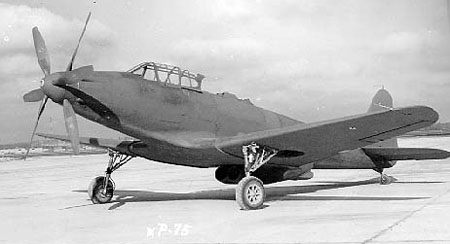
Finally, the P-75 Eagle did not find its place in aviation history and was described as slower and sluggish compared to the fighters of its time. The initial idea was to use parts from different aircraft to make a new aircraft, and those parts kept changing right up to the end. According to Old Machine Press, then Col. Mark E. Bradley, Chief of Aircraft Projects at Wright Field, was so dissatisfied with the XP-75 after a test flight that he requested that North American add a large fuselage fuel tank to the P-51 Mustang. The continuous shift of the first idea, to develop a high-climb interceptor into a long-range escort aircraft, could also have had a major impact on the aircraft’s poor performance. Together, changing parts and changing ideas had cost the aviation world what could have been an excellent aircraft, the P-75 Eagle. One of the P-75s is still on display at the National Museum of the United States Air Force at Wright-Patterson AFB in Dayton, Ohio. Called the “wonder plane” even before its first flight, the P-75, like many other aircraft in the Grounded Dreams series, looked like a great idea on paper, but failed to do well on the ground. It truly had the most advanced engine of its time as its heart, but every part of the body was mismatched. Read about more Grounded Dreams aircraft HERE.