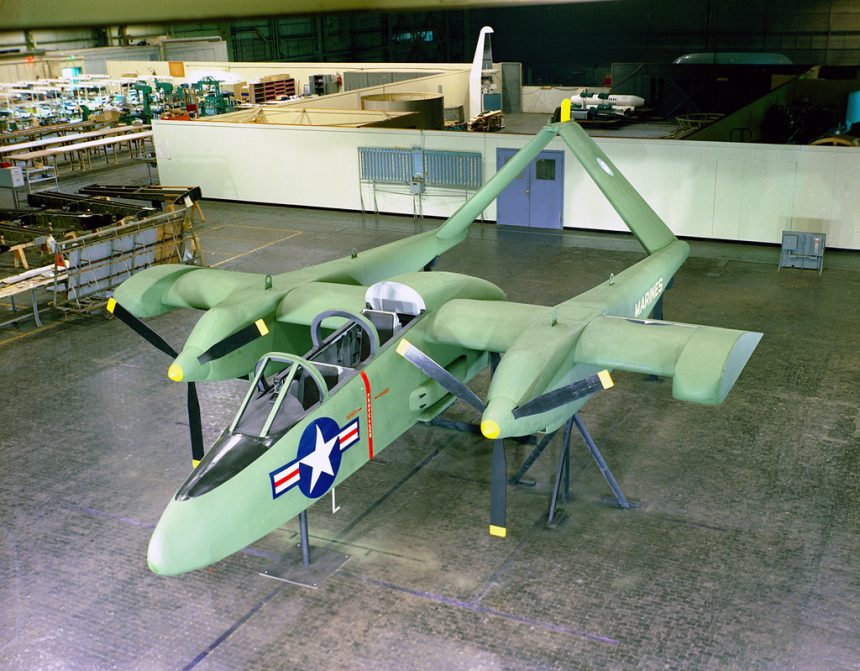


During World War II, the US relied on several light aircraft, such as the Stinson L-5, Cessna O-15, and North American LT-6, for reconnaissance missions. But they were never designed for such missions. As the Cold War intensified and entered its dangerous phase, the US military felt the need for a light aircraft specifically to meet urgent counterinsurgency (COIN) needs in Southeast Asia. Hence, in 1963, the US Army, Navy, Marine Corps, and Air Force requested proposals from the industry for the Light Armed Reconnaissance Aircraft (LARA) program. The aircraft was intended to be multipurpose, capable of carrying 2,000 pounds of external ordnance or cargo, 6 paratroopers, or several medical stretchers in a fuselage cargo compartment. The twin-engine aircraft needed to operate from small, unprepared airstrips, maintain position over a target 50 miles from its base for one hour, reach 350 mph, operate from aircraft carriers, fly on one engine, and have a short 800-foot takeoff run. Eleven companies submitted designs, including Lockheed Martin, then known as Lockheed-California.
CL-760’s Design
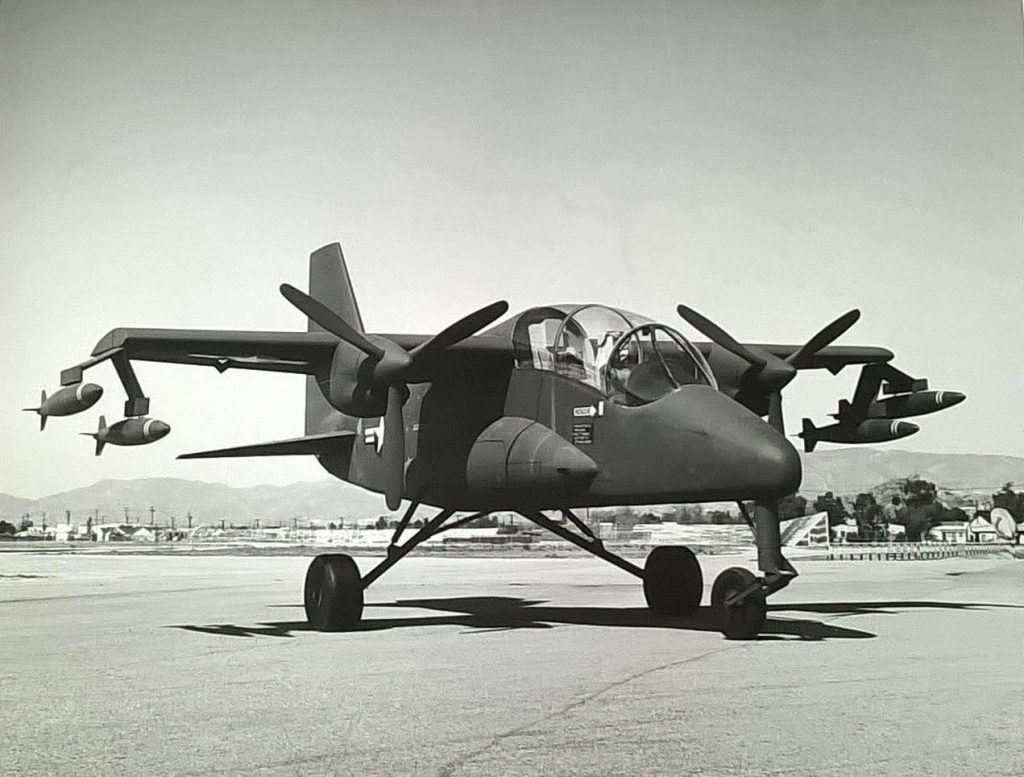
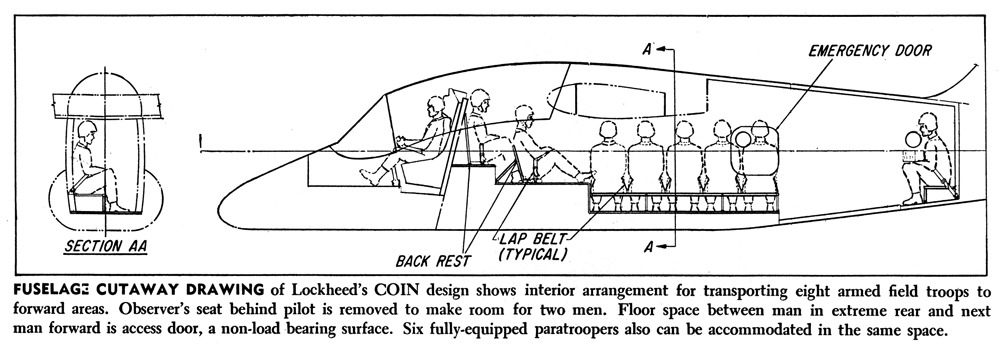
In response to a requirement for a Light Armed Reconnaissance Aircraft, Lockheed-California submitted a proposal in March 1964 for its CL-760 counterinsurgency aircraft. The CL-760 was powered by two 600-shaft-horsepower Garrett 176 turboprop engines. The fuselage featured blisters that housed the retractable main landing gear and four 7.62 mm machine guns. The aircraft could carry weapons on multiple racks beneath the fuselage and wings. The crew of two was seated in tandem, located forward of the wing. For troop transport or assault missions, the CL-760 could accommodate eight fully armed troops in the fuselage. The aircraft had a wingspan of 30 feet, a length of 40 feet, an empty weight of 5,106 pounds, a maximum takeoff weight of 9,270 pounds, and a maximum speed of 325 mph. It was designed to carry a maximum internal cargo load of 2,400 pounds. It was the most compact and fastest aircraft among all the participants.
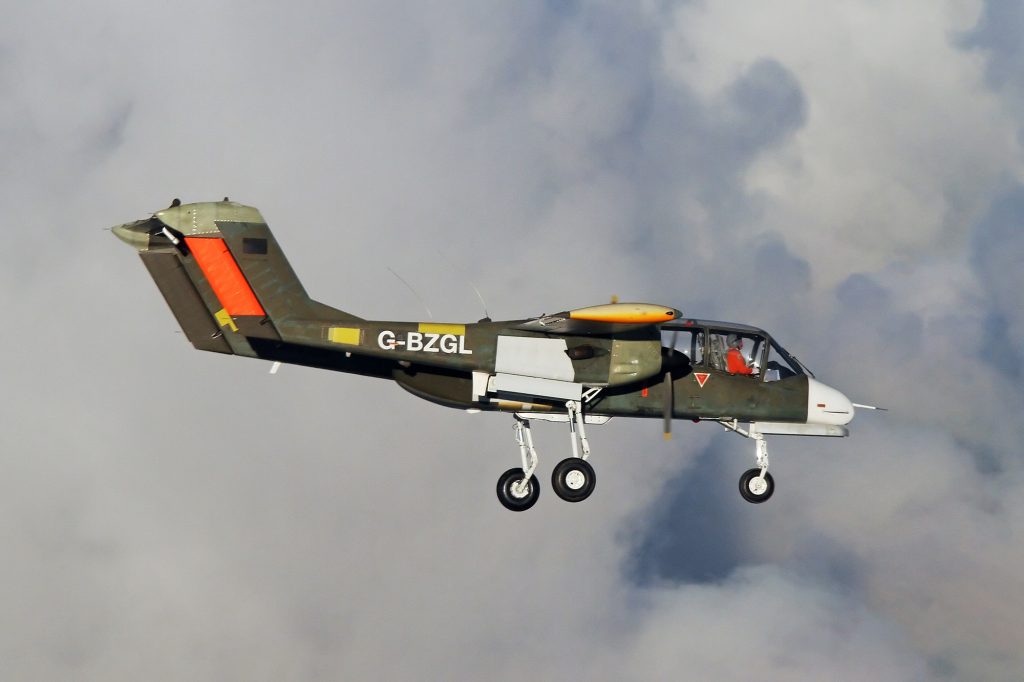
Among others, the most notable was North America’s NA-300, a twin-turboprop short-takeoff-and-landing aircraft. According to the US Air Force, it had a rear fuselage compartment with a capacity of 3,200 pounds of cargo, five combat-equipped troops, or two litter patients and a medical attendant. The aircraft’s main gun was the same as the CL-760. However, the NA-300 offered an external capacity of up to 3,600 pounds of munitions, including 500 lb bombs, rocket launchers, and AIM-9 missiles, which the CL-760 lacked. Powered by two Garrett T76 turboprops with 715 shaft hp each, the maximum takeoff weight of NA-300 was 14,444 pounds, nearly 5,000 pounds more than the CL-760. The NA-300’s maximum speed was 281 mph, with a cruising speed of 223 mph, which was far lower than the CL-760’s. But the US military wanted to use the selected aircraft in the Vietnam War.
No Orders
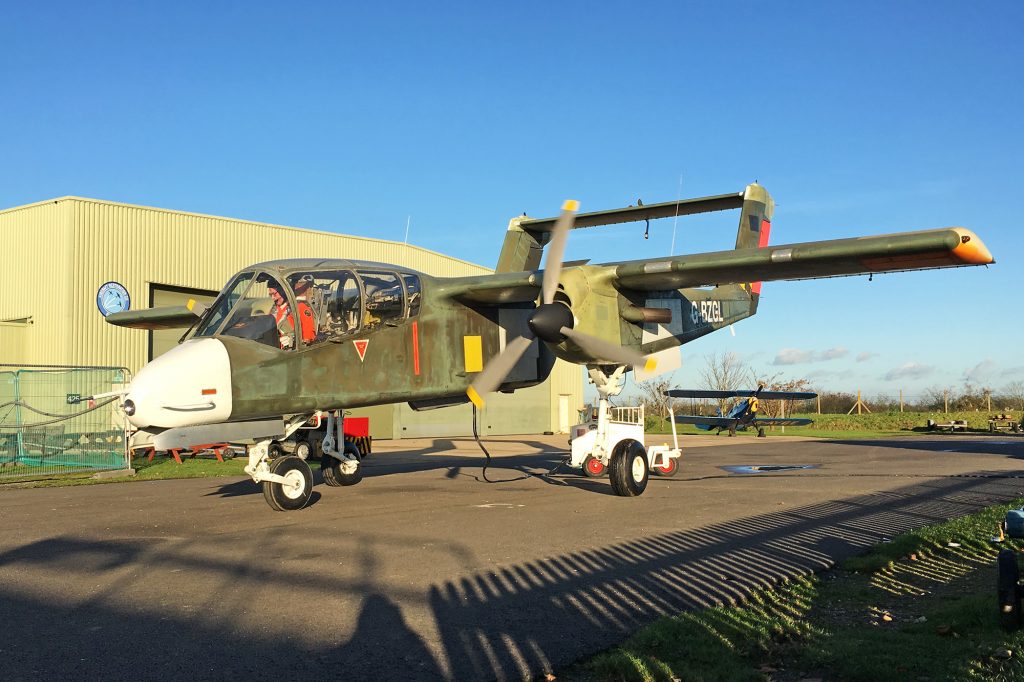
During the Vietnam War, the US always tried to equip itself with heavy-payload aircraft, both large transports and light, rugged planes with high capacity, to overcome severe logistical challenges, such as poor infrastructure, the lack of a defined front line, and the need to supply isolated outposts. As a result, the US military chose the NA-300, which became OV-10 Bronco in military service, over the CL-760 solely because of the former’s greater payload capacity. Despite the services being impressed by the CL-760’s speed, carrier operations capability, and light-attack mission, the solution the US military was looking for wasn’t found in it. But it was not a bad design or technology; in fact, it was one of the fastest-flying light aircraft of its time. The US’s Vietnam War doctrine, which was heavily focused on big load-carrying aircraft, prevented the CL-760 from becoming an aircraft that served in a war or entered large-scale production. Only one prototype was ever produced. Like many other aircraft in the Grounded Dreams series, the CL-760 did not find its purpose despite being a good aircraft. Read about more Grounded Dreams articles HERE.