






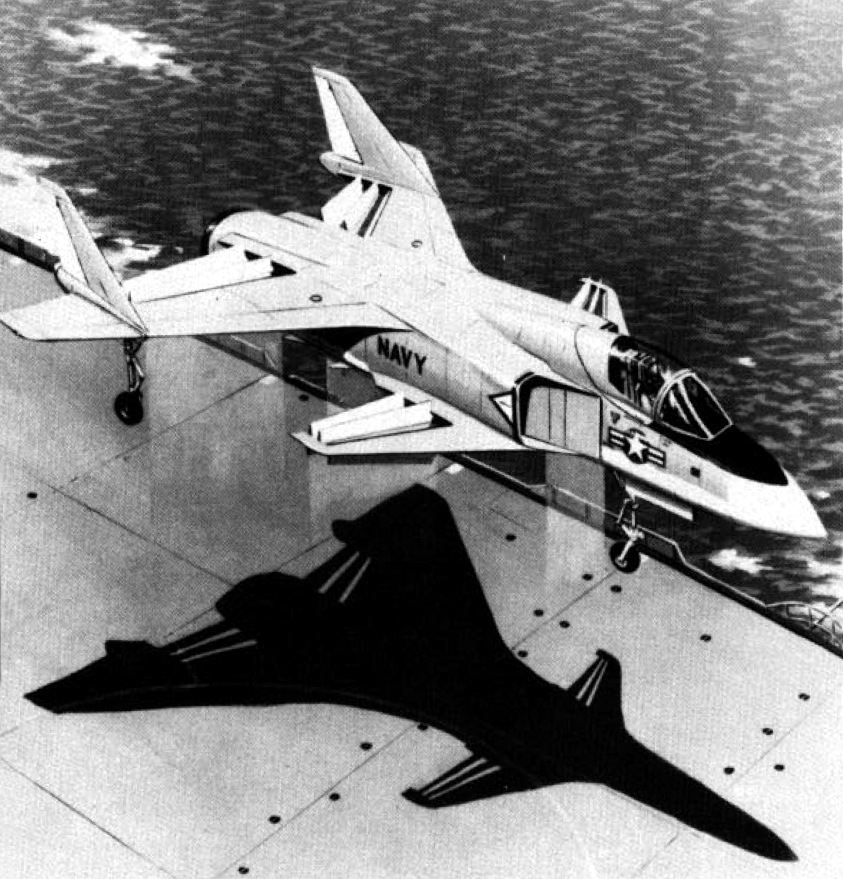


In the early 1970s, the US Navy sought a supersonic fighter aircraft with vertical/short takeoff and landing (V/STOL) capability for use on light aircraft carriers, known as the Sea Control Ship (SCS), which was under study at the time. During the late 1960s and 1970s, the British Harrier was the only true V/STOL fighter aircraft. The Navy issued a request for proposals in 1972, and two companies responded. Rockwell proposed the XFV-12, while Convair offered the Model 200. The Navy chose Rockwell’s XFV-12 design, an attempt to combine Mach 2 speeds with the capability to fire medium-range air-to-air missiles such as the AIM-7 Sparrow. Rockwell was awarded a $47 million contract in May 1972 to develop two XFV-12s. The aircraft, on paper, looked even better than the Harrier, but was risky too.
Design of XFV-12
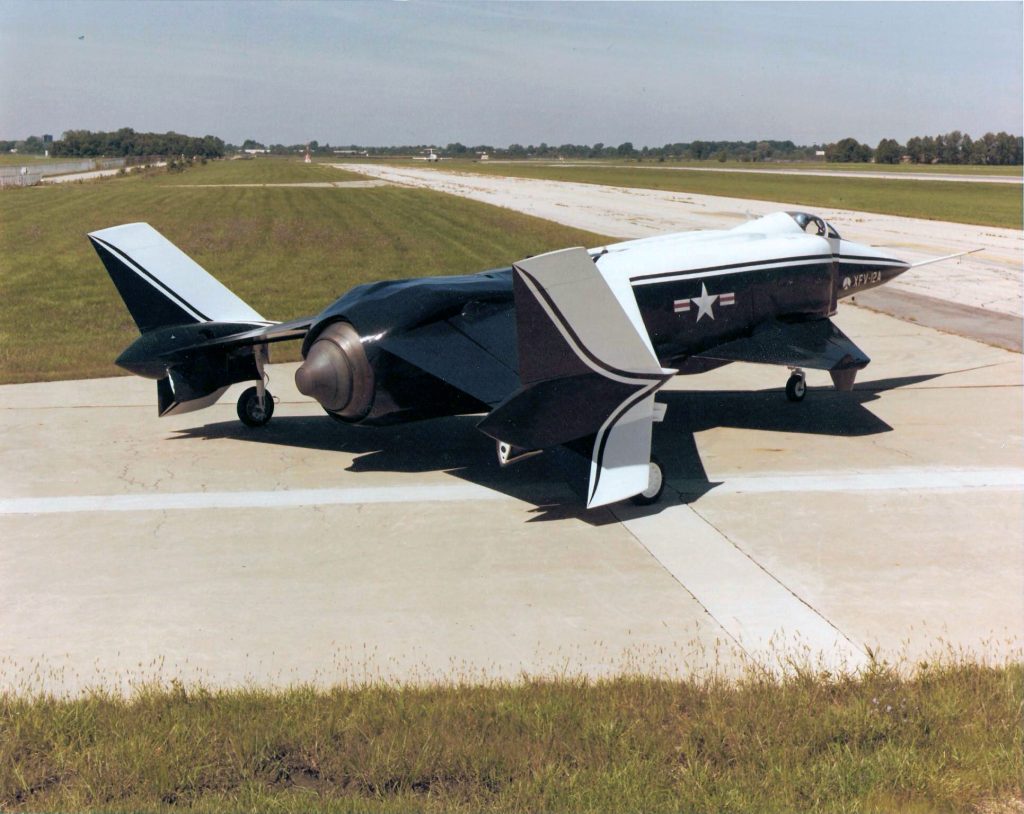
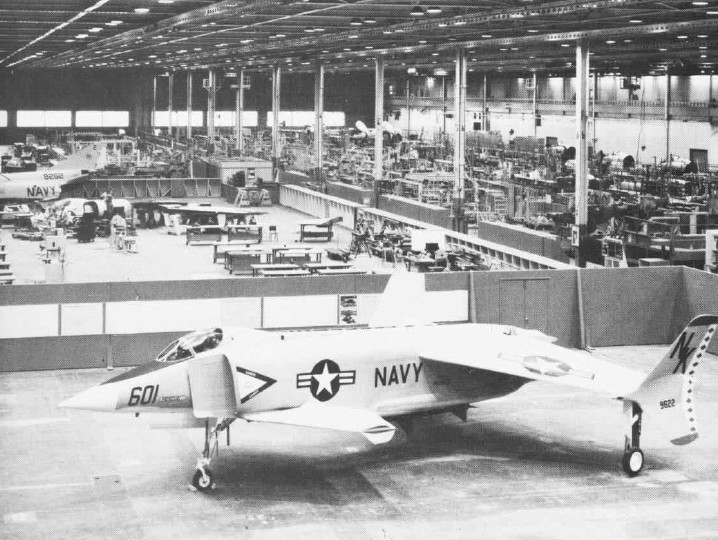
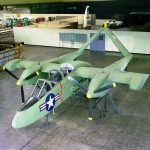
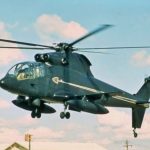
The design of the XFV-12 was unique, as it used intakes from the F-4 and the nose from the Douglas A-4 Skyhawk. The aircraft was 43 feet long and had a wingspan of 28 feet. At 10 feet tall, the aircraft’s empty weight was 13,800 lb, with a gross weight of 19,500 lb. It used a special wing design that increased lift by directing exhaust through openings in the wings, similar to how venetian blinds work. This design limited the ability to carry weapons to areas under the narrow fuselage and two missile mounts on the wings. The canards, which are forward wings, were very large, making up almost 50% of the wing area and effectively creating a tandem wing setup. The aircraft was powered with a modified Pratt & Whitney F401-PW-400 afterburning turbofan engine, which provided nearly 30,000 lbf (130 kN) of thrust. The modifications included closing the rear exhaust and redirecting the gases through ducts to nozzles on the wings and canards to enable vertical lift. In 1974, the aircraft’s engine rig tests were initiated, and free-flight model tests in NASA’s Langley full-scale wind tunnel showed that the expected thrust levels were uneven. The aircraft was found suitable for conventional flight, but it could not fly vertically due to uneven thrust. The aircraft was rolled out on August 26, 1977, at Rockwell’s Columbus, Ohio, Division. After substantial ground testing, it was determined that powered tethered tests were needed to validate the thrust augmenter wing system. In November 1977, the XFV-12A was transported via the Aero Spacelines Super Guppy aircraft to the NASA Impact Dynamics Research Facility, formerly known as the Lunar Landing Research Facility, at Langley. Due to rising costs, the development of a second prototype was canceled. In 1978, the tethered hover tests were performed on the aircraft. Within six months, the aircraft showed serious vertical flight problems, mainly due to insufficient vertical thrust. Lab tests indicated a 55% thrust increase should be possible. However, in the full-sized system, it dropped to 19% for the wing and only 6% for the canard. While the thrust augmenters worked as expected, the extensive ducting of the propulsion system degraded thrust. Ultimately, the engine could only lift 75% of the aircraft’s weight.
The Cancelation
“Unfortunately, computational fluid dynamics was not available at the time. That may have predicted the corner flow for the ejectors and isolated the vertical thrust anomalies,” Bob Gulcher, division chief engineer for the XFV-12A, said in a later Boeing report, following Boeing’s acquisition of Rockwell’s aerospace division. “Had we shifted away from vertical lift, I believe the aircraft would have made an excellent short takeoff and vertical land fighter.” After the tests and facing rising costs, the Navy decided not to continue developing the XFV-12A and canceled the project in 1981. Finally, the US Marine Corps adopted the British Harrier aircraft for its operations. The US Navy also began shifting, by the mid-1970s, toward a re-emphasis on larger Nimitz-class aircraft carriers and basing larger, multirole fighter/attack aircraft, leading to the cancellation of the SCS program. The original plan for the XFV-12A was to start with a standard first flight. However, the program focused mainly on solving V/STOL challenges. Instead of flying conventionally, the XFV-12A aimed to show its ability to maneuver sharply using direct lift, thrust for side control, and a large speed brake. It was designed to reach supersonic speeds, which might have impressed the Navy. But like many other aircraft in the Grounded Dreams series, it chose to change the future for the better. Today’s strategy favors short takeoff for multimission, flexible-base fighters. Rockwell’s work on the XFV-12A led to the creation of a demonstrator aircraft that incorporated envelope-pushing technologies. Although the Navy ultimately scrapped this program in part due to strategic shifts, XFV-12 helped pave the way for other advanced flight programs. Read about more Grounded Dreams aircraft HERE.
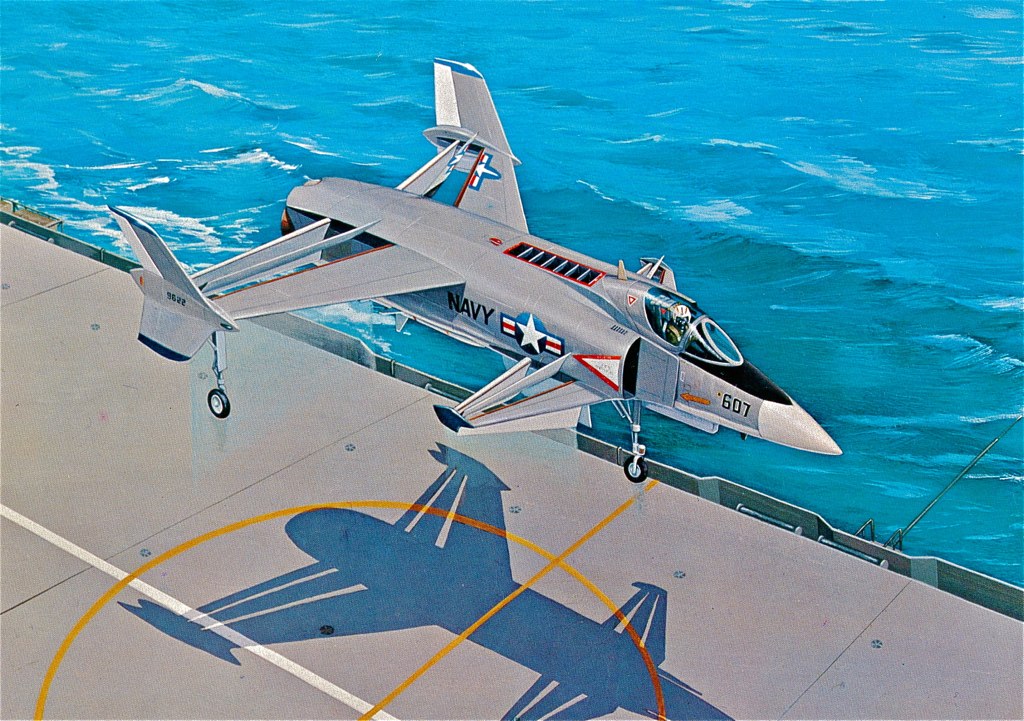





This aircraft was just too ambitious for its time, and with all of the problems it was suffering from, it wouldn’t have worked as a full production, and fully operational fighter. Plus, with the death of the Sea Control Ship concept, this fighter had no future. Also, this fighter was being designed to a supersonic STOVL aircraft, the term “V/STOL” is incorrect, because the Harrier , and the F-35B are designed to make short, conventional takeoffs, and when recovering back aboard a big deck amphibious assault ship, they make a vertical landing.