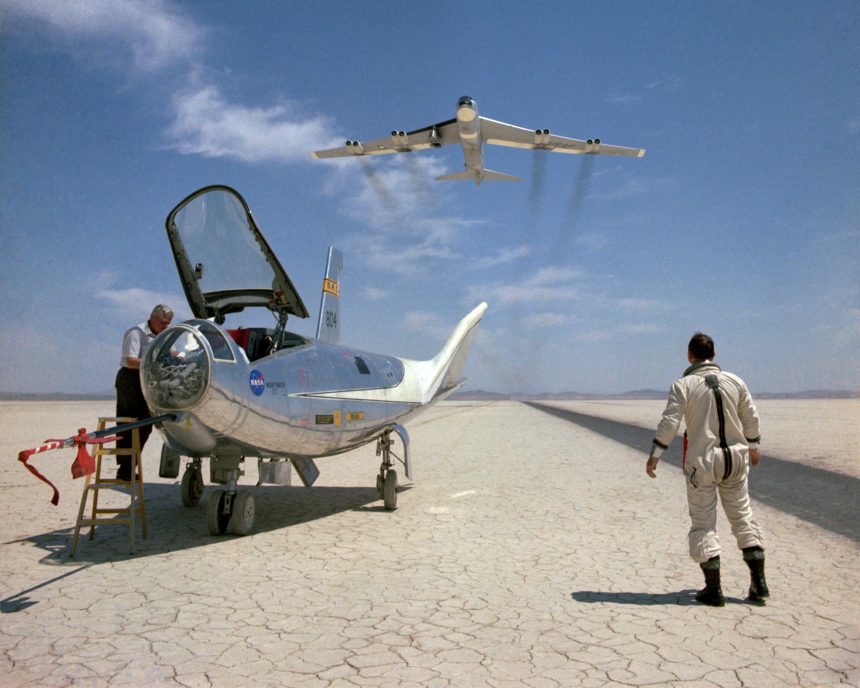

In the 1960s, NASA wanted to understand how a spacecraft might return from space and land on a runway without a traditional wing, which led to a study of the lifting body. The HL-10 was one of five lifting bodies flown in NASA’s Lifting Body Research Program. “HL” meant horizontal landing, and “10” was the number of the tenth design that engineers studied at NASA Langley Research Center in Hampton, Virginia. Wingless lifting bodies didn’t use their wings to achieve aerodynamic stability and lift; instead, they relied on the vehicle’s shape. Lift resulted from air pressure at the bottom of the body rather than at the top, while energy and aerodynamic lift were used for in-flight maneuvering and a powerless, glider-like landing. The idea of lifting bodies was conceived in 1957 at the NACA Ames Aeronautical Laboratory, now NASA Ames Research Center. In 1962, a prototype called the M2-F1 was built at NASA’s Flight Research Center at Edwards Air Force Base, which had a plywood shell over a steel tube frame. The M2-F1 was first towed into the air by a modified Pontiac Catalina and later by a C-47 aircraft. More than 100 towed flights were made to study basic stability and control. Those early tests led to a formal program, and in June 1964, Northrop Corporation was awarded a contract to build the HL-10 and the M2-F2, the first of the heavy-lifting bodies.
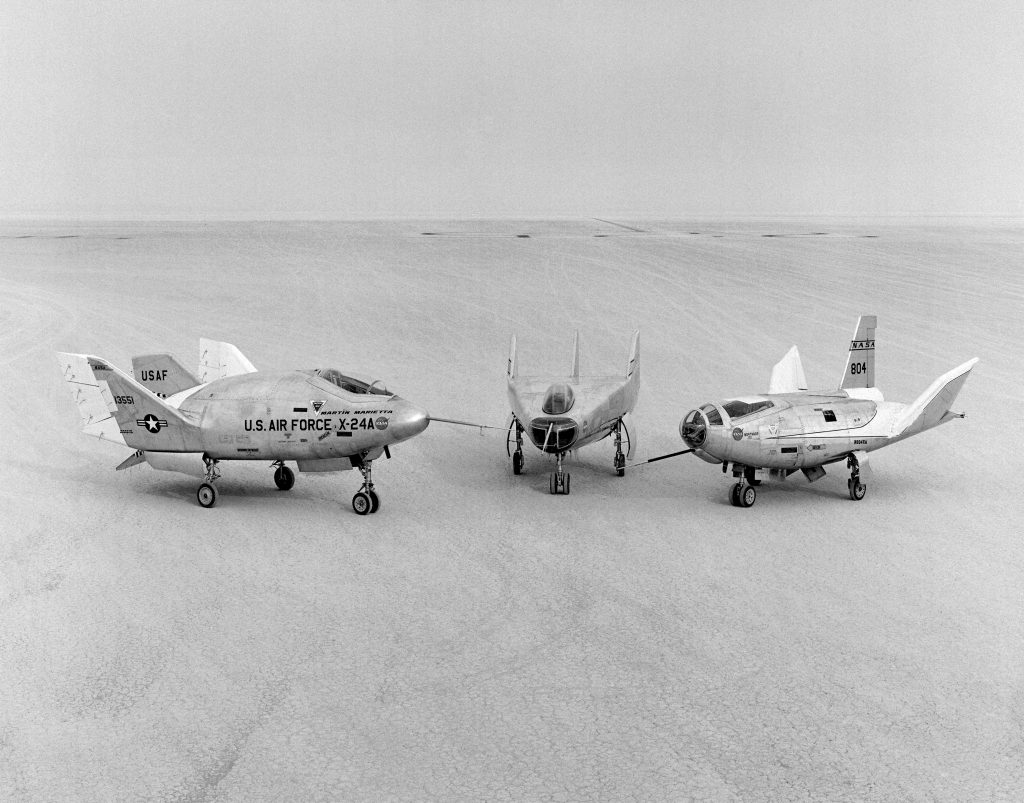
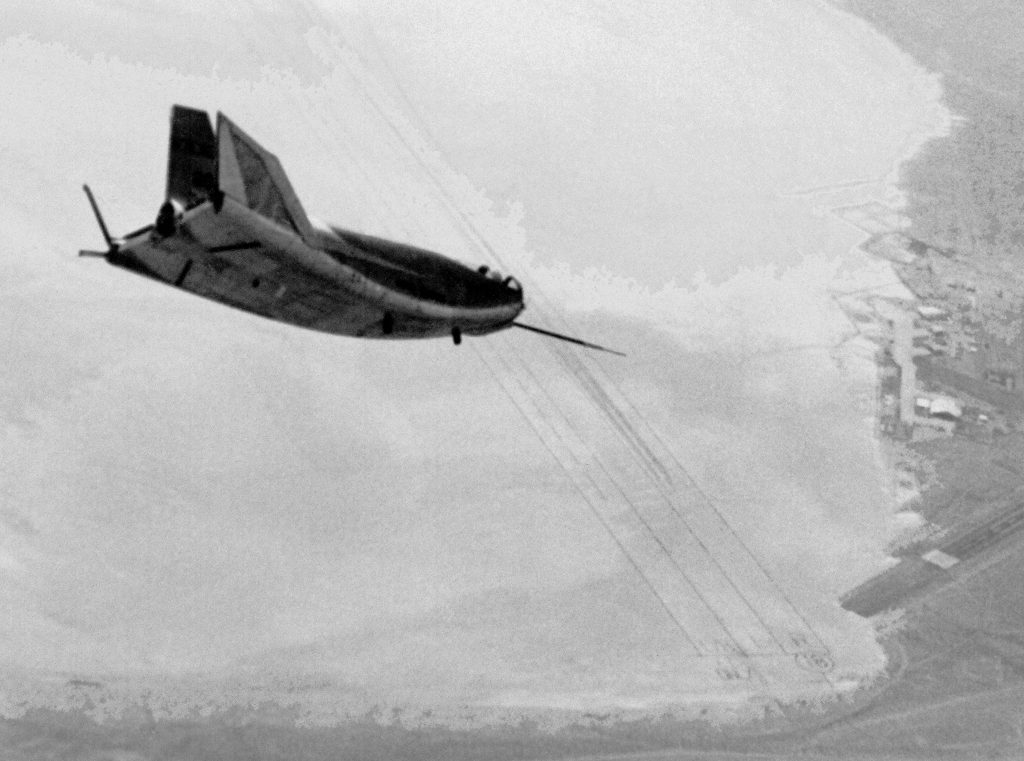
The HL-10 arrived at NASA in January 1966, and over the next 10 months, it was instrumented and prepared for flight, including tests in wind tunnels, before the research flight began. The first flight of the HL-10 took place on December 22, 1966, with research pilot Bruce Peterson in the cockpit. Although the vehicle was fitted with a rocket engine, the first 11 flights were unpowered glide tests. These drop flights from a B-52 allowed engineers to examine handling qualities, stability, and control before adding rocket thrust. Later flights used the four-chamber XLR-11 rocket engine, the same basic engine type used in the Bell X-1. It burned ethyl alcohol and liquid oxygen and could produce up to 6,000 pounds of thrust. The HL-10 was 22 feet long, 15.7 feet wide, and 11.5 feet high. Its minimum weight was 5,265 pounds, and maximum weight with water ballast tanks full was 9,000 pounds. The vehicle used elevons between the vertical and center fins for pitch and roll control, a split rudder on the center fin for yaw and speed control, and all surfaces used in the three-axis stabilizer augmenter system. The power for the control system and flight instruments came from silver-zinc batteries. Four small hydrogen peroxide rockets were installed to assist during the landing flare, providing up to 400 pounds of thrust if needed. The landing gear was adapted from existing aircraft, with the main gear from a modified T-38 system and the nose gear from a T-39. Both gears retracted manually and extended using nitrogen pressure. The ejection seat system was based on that of the F-106. The HL-10 did not carry payloads or perform operational missions as its purpose was to answer technical questions.
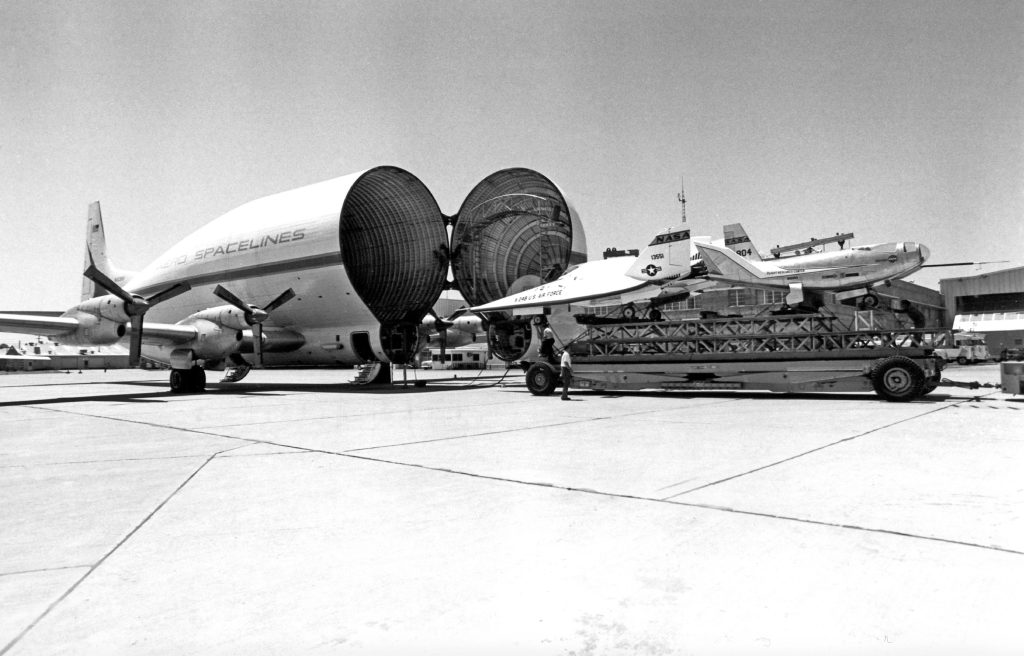
During its lifting body flights, the HL-10 was released from a B-52 at about 45,000 feet and roughly 450 miles per hour. After separation, the pilot ignited the rocket engine. The lifting bodies carried enough fuel to power flight for 100 seconds and reached altitudes between 50,000 and 80,000 feet, at speeds above Mach 1. As soon as the engine stopped, the pilot began losing altitude, using a circular approach to land on one of the Rogers Dry Lake runways at Edwards Air Force Base. On the final approach, the descent rate was increased to build energy. At about 100 feet above the surface, the pilot flared, reducing speed to about 200 miles per hour for landing on Rogers Dry Lake. On February 18, 1970, Air Force test pilot Peter Hoag flew the HL-10 to Mach 1.86. Nine days later, NASA pilot Bill Dana reached 90,030 feet, the highest altitude achieved in the lifting body program. The HL-10 flew 37 times during the program. Among the lifting bodies, including M2-F2, M2-F3 (rebuilt M2-F2 following a landing accident), X-24A, and X-24B (the rebuilt X-24A with a different aerodynamic shape), the HL-10 reached the highest speed and altitude.
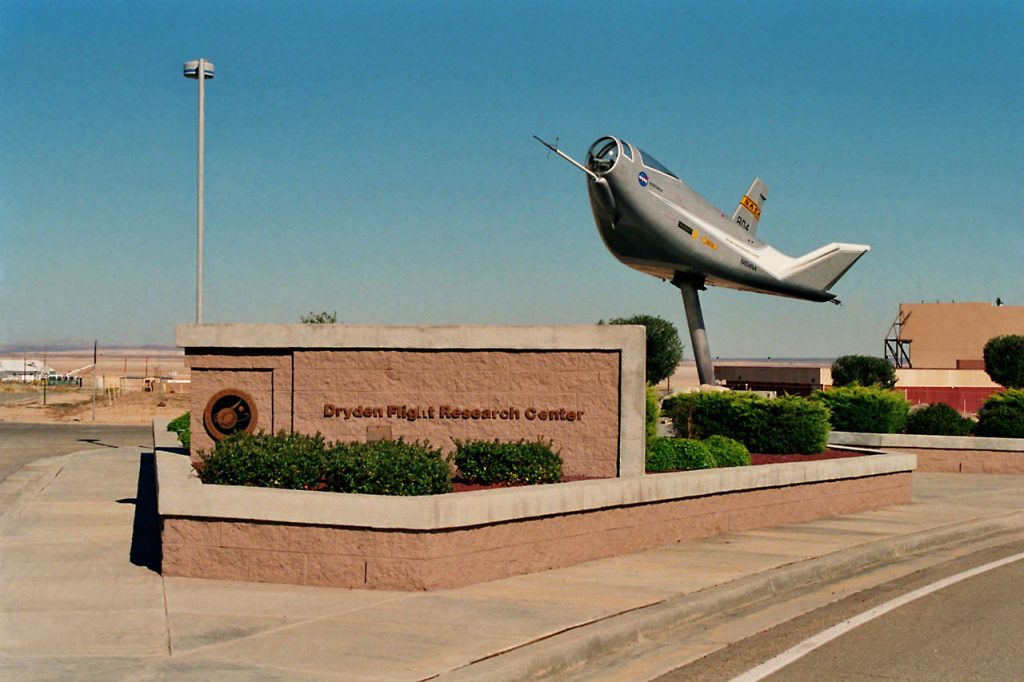
The HL-10 tests helped develop landing techniques that space shuttles still use today. It also helped in developing energy management techniques. These lessons, along with information from its sister ship, the M2-F2/F3, provided one option for designers of future atmospheric reentry vehicles. Today, the HL-10 is displayed at the entrance to NASA’s Armstrong Flight Research Center at Edwards. The aircraft (serial number 804) was famously featured in the opening credits and pilot movie of The Six Million Dollar Man. However, the crash footage shown was actually from its sister ship, the Northrop M2-F2. In the Flight Test Files series, it remains a record of a period when engineers tested whether shape alone could replace the wing. Read more Flight Test Files stories HERE.