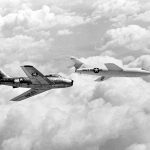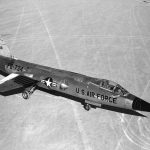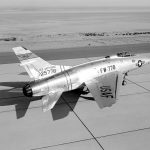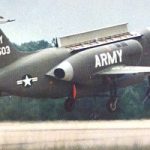
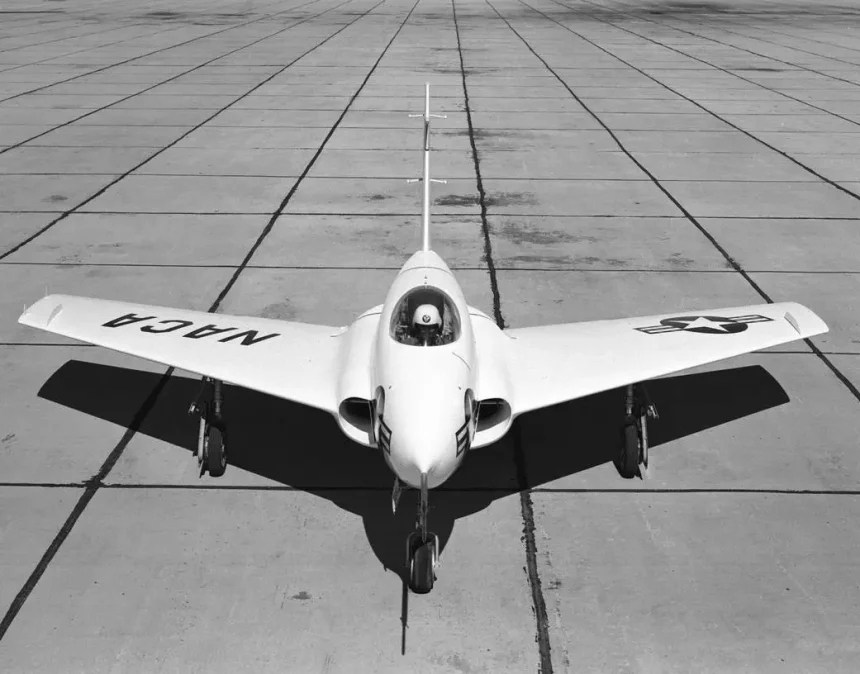

During World War II, the German Air Force (Luftwaffe) developed a semi-tailless aircraft, the Me 163 Komet. It was one of the fastest fighter aircraft of its time. Curious about its speed, US and UK engineers tried to replicate the model to see whether such a design could avoid the shock waves, which were believed to be the source of instability at transonic speeds between the wings and stabilizers. In 1946, British engineers built an experimental tailless, swept-wing aircraft known as the de Havilland DH.108 Swallow. The aircraft became the first British jet to break the sound barrier. On June 11, 1946, the US Army Air Forces signed a contract with Northrop Aircraft, known for developing flying wing designs such as the XB-35, N9M, and YB-49, to build two X-4 Bantam aircraft. They were designed to test a semi-tailless wing configuration at Mach 0.9 speed. The X-4 was so compact that it required no ladder to maintain, and a person standing on the ground could easily reach its cockpit. It could only house two J30 jet engines, a 45-minute fuel supply, instrumentation, and a pilot. The X-4 used a combined elevator and elevons for pitch and roll control, without horizontal tail surfaces, and it was equipped with split flaps. The first X-4 aircraft (serial number 46-676) was delivered to Muroc Air Force Base in California in November 1948. It underwent taxi tests and first flew on December 15, 1948, with Northrop test pilot Charles Tucker at the controls. After heavy winter rains flooded Rogers Dry Lake, more flights were postponed until April 1949.
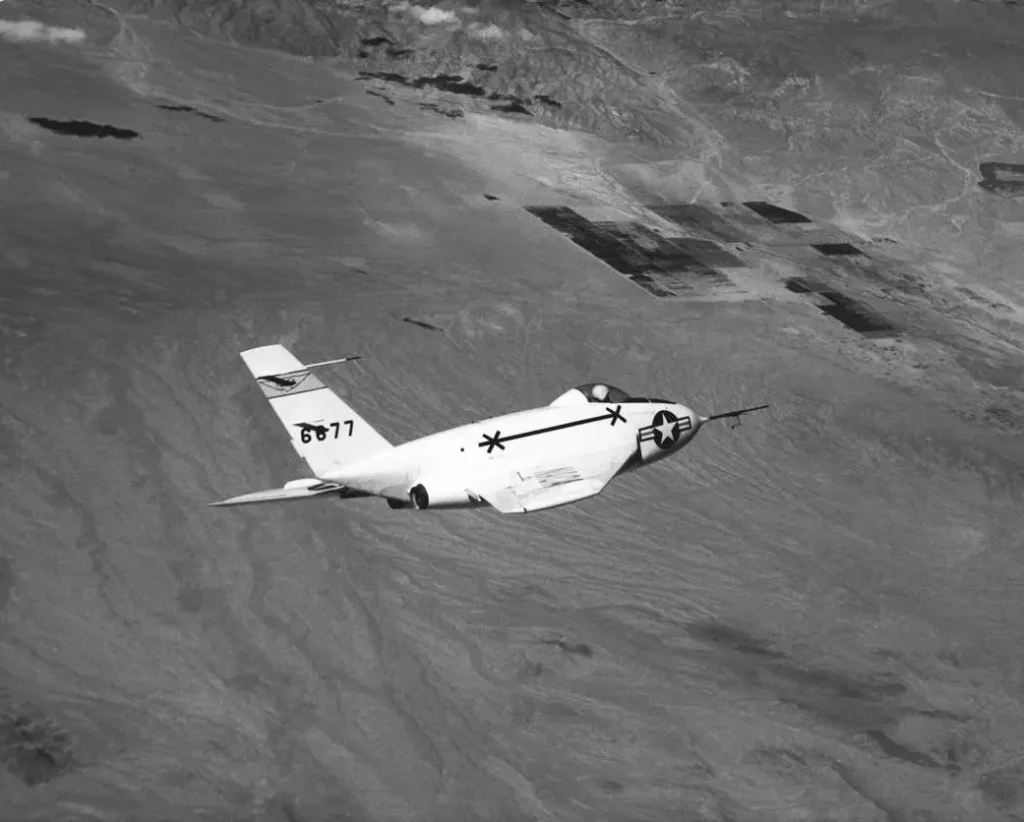
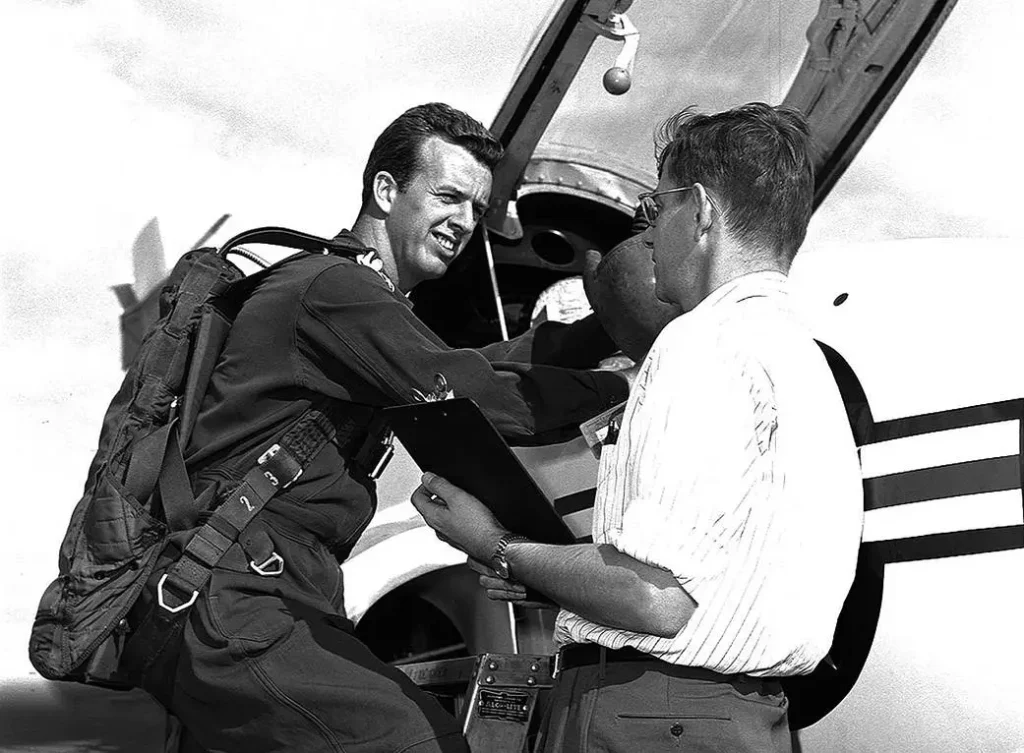
The first X-4 had mechanical problems and only completed 10 flights. Walt Williams, who led the NACA Muroc Flight Test Unit, now part of NASA’s Armstrong Flight Research Center, called this aircraft a “lemon.” The second X-4 (serial number 46-677) was delivered while flights were on hold and proved to be much more reliable. It completed 20 flights. However, the contractor flight program continued until February 1950, when both aircraft were handed over to the Air Force and NACA. The first X-4 never flew again and became a source of spare parts for the second aircraft. The NACA organized a series of flights with the second X-4, using Air Force pilots. The pilots included Jack Ridley, Chuck Yeager, Pete Everest, Al Boyd, Richard Johnson, Fred Ascani, and Arthur Murray. These flights took place in August and September of 1950. John Griffith was the first NACA pilot to fly it, completing his flight on September 28, 1950. The initial NACA X-4 Bantam flights continued from late 1950 through May of 1951. These flights focused on how sensitive the aircraft was in pitch. NACA pilots Griffith and Scott Crossfield observed that as the X-4’s speed approached Mach 0.88, it began to experience a pitch oscillation that grew more intense, like driving on a rough road. At higher speeds, the aircraft also exhibited a nose-down pitching issue called “tucking.” More seriously, the X-4 began to “hunt” around all three axes, yaw, pitch, and roll. The issue worsened with speed and was an early sign of inertial coupling, which would pose significant challenges in the future.
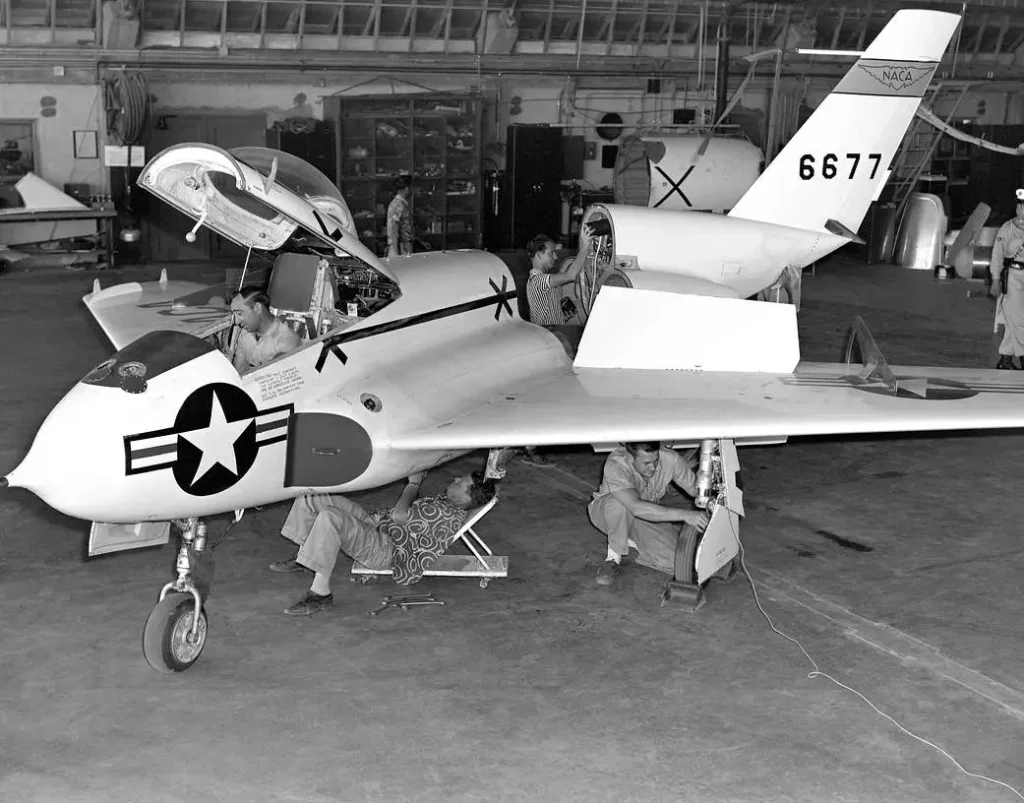
To improve stability, project engineers decided to make the trailing edge of the flap and speed brake thicker. They added balsa wood strips between the halves, which kept them open at a 5-degree angle. The first test flight with the new trailing edge took place on August 20, 1951, with NACA pilot Walter Jones at the controls. A second test occurred in October with Crossfield. The results were good; Jones noted that the X-4’s flight qualities improved significantly, and the aircraft did not have pitch control issues up to a speed of Mach 0.92. The balsa strips were removed, and the X-4 Bantam flew many times to test how it lands. The speed brakes were opened to reduce the aircraft’s lift-to-drag ratio to less than 3:1, gathering data for future rocket-powered aircraft. The tests went on until October 1951, but the aircraft had to be grounded due to fuel leaks in the wing tanks. Testing resumed in March 1952. NACA pilots Stanley Buchard, Joe Walker, and George Cooper were also trained to fly the aircraft. The tests on the thickened flap and speed brake were promising, so the engineers put balsa wood strips back on both the flap/speed brake and the elevons. Jones made the first flight on May 19, 1952. Unfortunately, one of the engines got damaged during the flight, and the engineers had to wait until August to find a replacement J30 engine. Once the flights resumed, the changes showed that stability improved in both pitch and yaw. Additionally, the nose-down trim changes were delayed from Mach 0.74 to Mach 0.91.
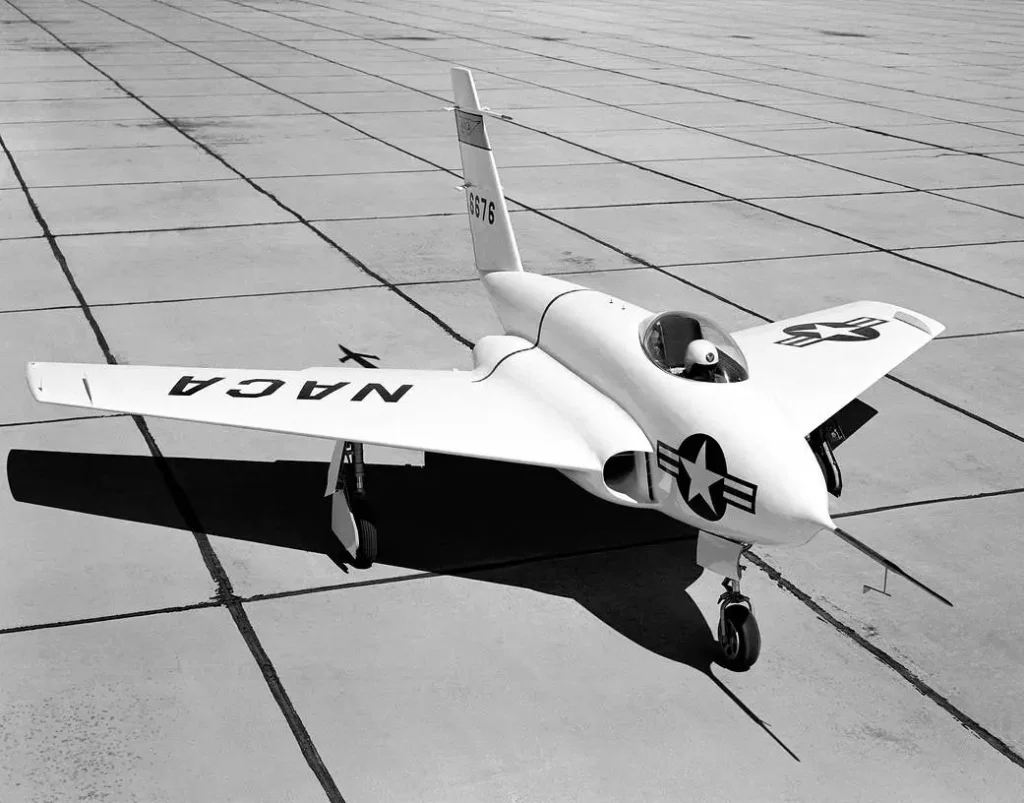
However, the X-4 still experienced oscillation above Mach 0.91. In May 1953, the team removed the balsa wood strips again to study the X-4’s dynamic stability with its original flap/speed brake and elevon setup. Crossfield and John McKay conducted these flights. It was the final project for the X-4, which completed its 81st and last NACA flight on September 29, 1953. Both aircraft successfully finished the test program, and after that, the first X-4 went to the Air Force Academy in Colorado Springs, Colorado, before returning to Edwards Air Force Base. The second X-4 was sent to the Air Force Museum at Wright-Patterson Air Force Base in Ohio. In the Flight Test Files series, the X-4 demonstrated that sometimes upgrading an old concept is as important as establishing a new one or delivering a new aircraft. The X-4 Bantam was important because it showed that a semi-tailless design with swept wings was not suitable for flight at Mach 1, and this finding helped aircraft designers avoid a dead end. It wasn’t until computer fly-by-wire systems were developed that such designs became practical. Semi-tailless designs later appeared in the X-36, Have Blue, F-117A, and Bird of Prey, but these planes looked very different from the X-4 Bantam. Read more Flight Test Files articles HERE.