
(Image credit: VAN)
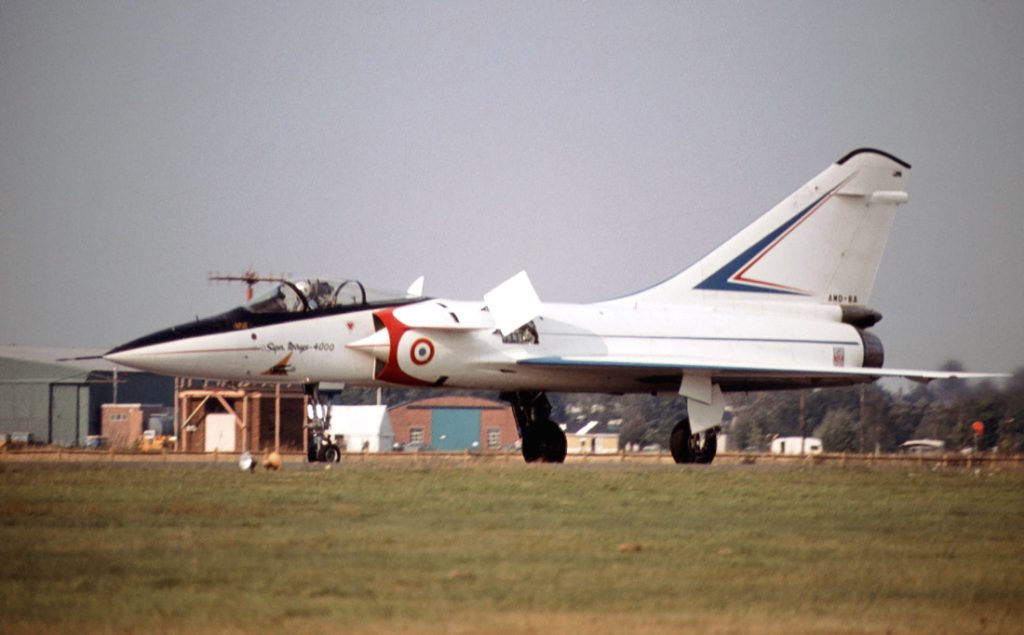
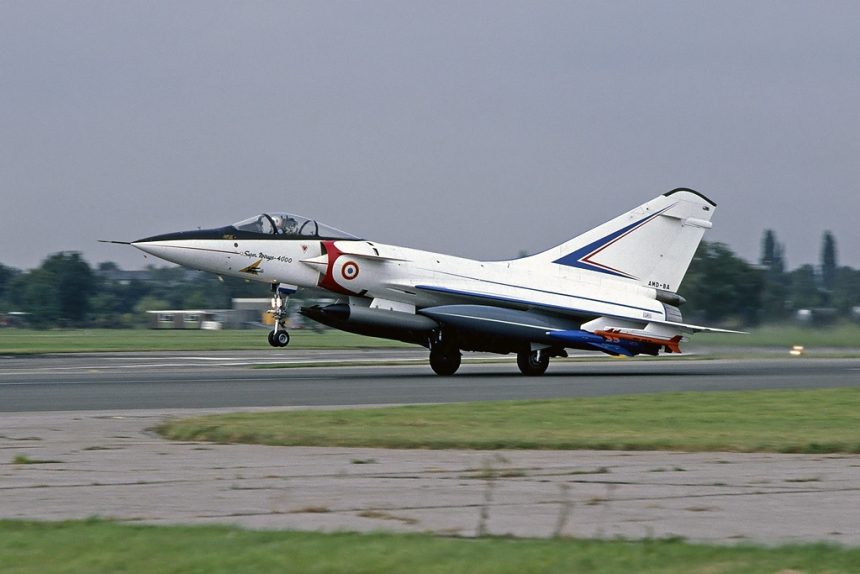
On this day in aviation history, 47 years ago (March 9, 1979), the Dassault Mirage 4000 took flight for the first time. Also referred to as the Super Mirage, the 4000 was a further development of the Mirage 2000 by Dassault-Breguet. The Mirage 4000 was a prototype twinjet fighter, which Dassault sought to develop as an improvement on their already successful 2000 variant. Being a twinjet design, the Mirage 4000 already differed from its single-engined predecessor. Additionally, the 4000 was noticeably larger than the original Mirage.
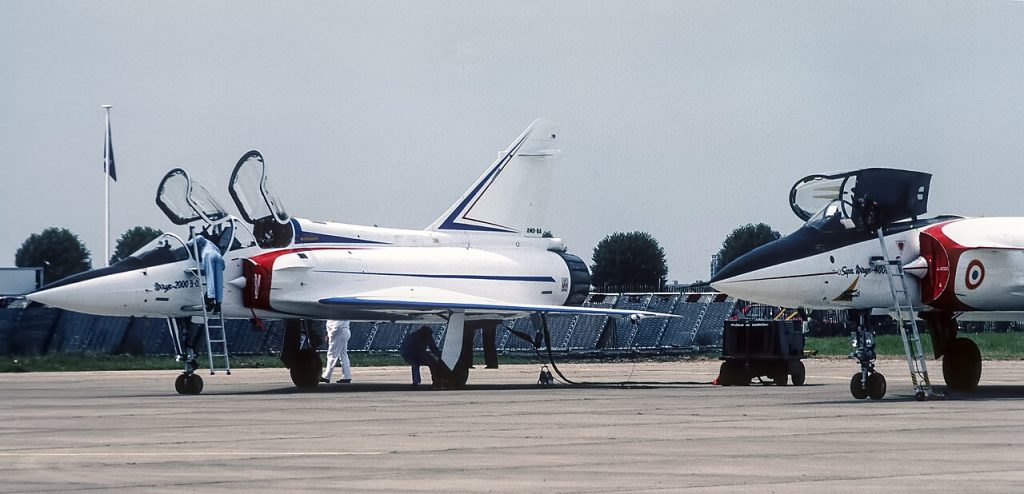
Dassault developed the Mirage 4000 to have small canards above the engine air intakes. The aircraft’s design would improve the bubble canopy from the previous models, with better all-around visibility. The Mirage 2000 and 4000 remained similar in other regards. Both aircraft shared the delta wing, with semi-conical Oswatitsch-type air intakes. The overall configuration of both Mirages was similar. The size of the Mirage 4000, being larger than that of the 2000, was comparable to that of the McDonnell F-15 Eagle.
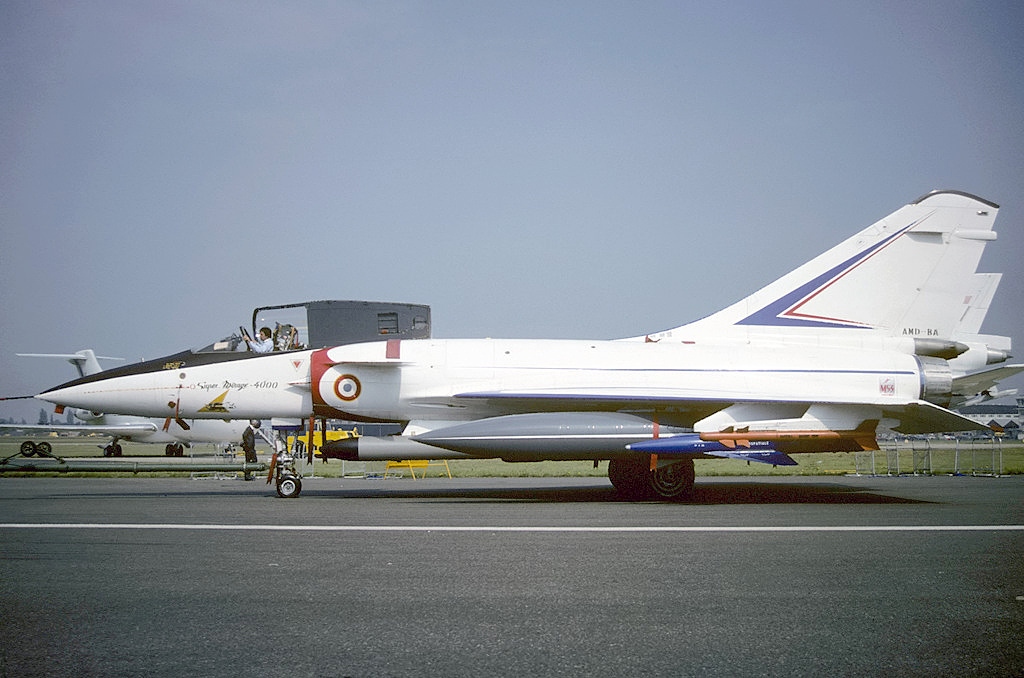
Dassault financed the Mirage 4000 as a private venture, with the hope of luring government contracts as a byproduct of their improved fighter’s development. The company intended the 4000 to be a long-range interceptor as well as a fighter-bomber. Development of the Mirage 4000 was ended in the early 1980s by Dassault, after the Royal Saudi Air Force placed an order for the Panavia Tornado. The Iranian Revolution of 1979 meant that Iran was no longer a potential suitor for the 4000. India had expressed interest in the improved Mirage, but instead opted to purchase more 2000s and Mig-29s instead. Even the French Air Force preferred to stick with the 2000. The market for the Mirage 4000 had dried up.
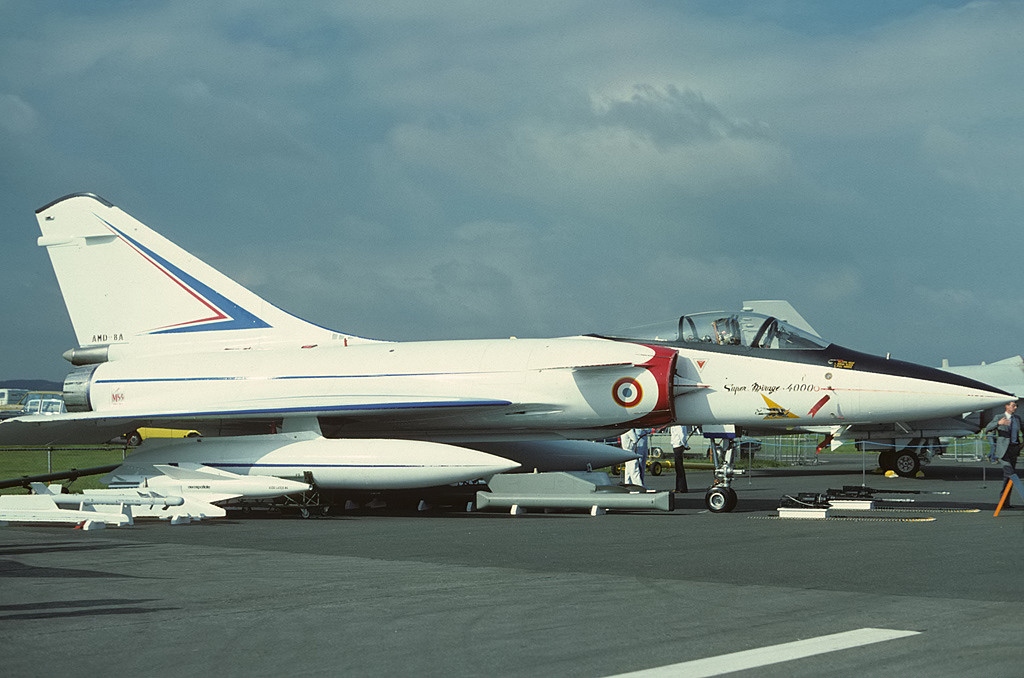
The Mirage 4000 was powered by two SNECMA M53 turbofan engines, with 14,500 pounds of thrust each dry and 21,400 pounds with afterburner. The aircraft could attain a maximum airspeed of Mach 2.3, which is 1,519 mph. During flight testing, the maximum sustained airspeed was found to be Mach 2.2. Combat range for the upgraded Mirage was found to be 1,000 nautical miles, potentially more with untested external fuel tanks. The 4000 had a service ceiling of 66,000 feet, and could climb at a rate of 60,000 feet per minute. Planned armament for the Mirage 4000 included two 30 millimeter DEFA cannons and provisions for rockets, bombs, and missiles.
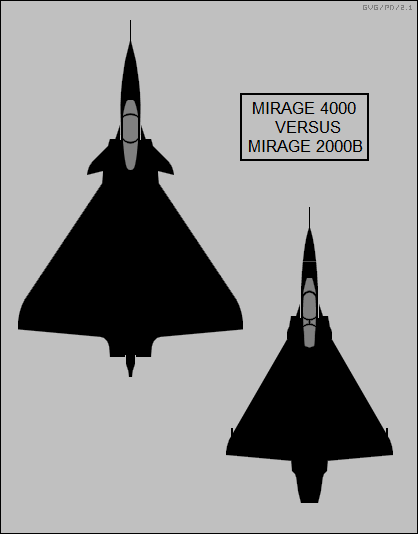
Despite no military contracts for the Mirage 4000, the aircraft was not a wasted effort. The technology developed, and flight data gained from 336 test sorties, played a direct role in the development of Dassault’s next successful fighter, the Rafale. The sole Mirage 4000 prototype built by Dassault survives today, and the aircraft is on display at the Musée de l’Air et de l’Espace in Paris, France.