






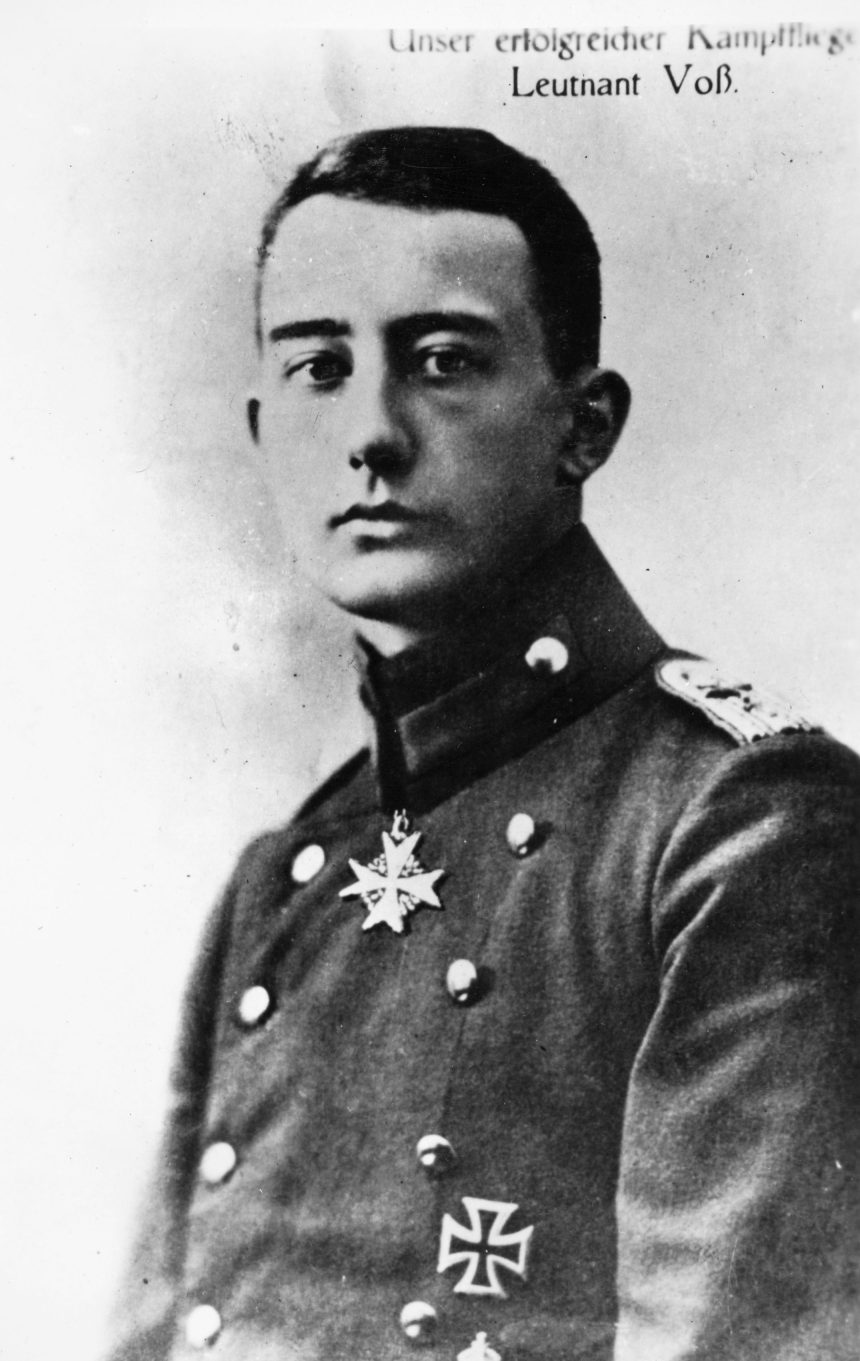

Earning praise from an adversary is considered rare and powerful, often signaling that one’s achievements are undeniable, even to those who oppose them. But being called the “bravest airman” by one of the enemy’s greatest pilots seems impossible, unless you are Werner Voss. Born on April 13, 1897, in Krefeld, Germany, Voss was a patriot since his childhood. He was expected to join his family business after school, but he wanted to join the military. When World War I began, he initially served as a civilian volunteer driver. In November 1914, he became a recruit in the 11th Hussar Regiment, which was soon deployed to the Eastern Front, where he performed well and received two back-to-back promotions. At just 18 years old, he became a junior non-commissioned officer and was awarded the Iron Cross 2nd Class for his service in May 1915. In August 1915, he was transferred to the German Air Service. On September 1, Voss began his training and completed his first solo flight on September 28. He completed his flying training on February 12, 1916, and was posted to Tactical Bomber Squadron 20 as an observer in March 1916. He received his pilot’s license in May and was posted to Fighter Squadron 2 on November 21 after receiving commission as an officer.
Werner Voss’s Ace Journey
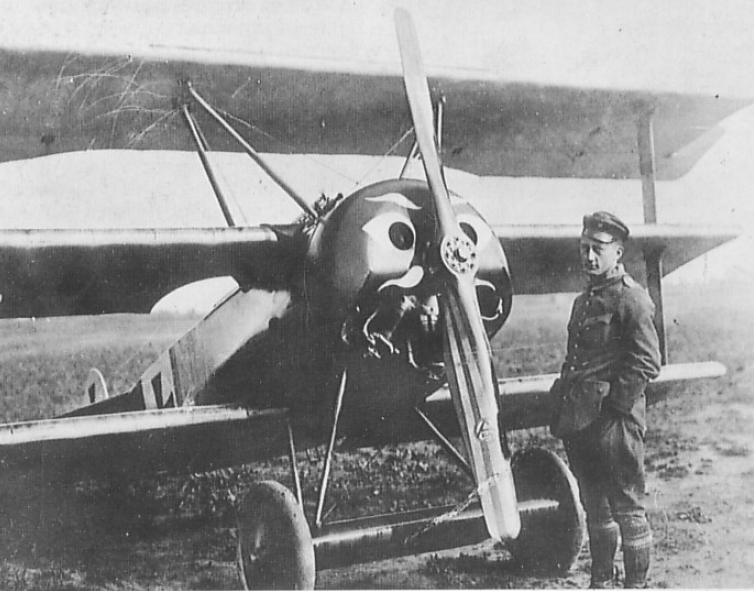
His first victory came soon after, when he shot down two aircraft in a single day on November 26 with his Albatros D.III. He was awarded the Iron Cross 1st Class on December 19 for his action. He added another kill to his tally in December 21 and ended 1916 with 3 kills. In 1917, his first victory came in February. On February 1, he downed a D.H.2 fighter and ended February with a total of 8 aerial victories. In March 1917, he continued his successful run with 11 victories, for which he was awarded the Knight’s Cross with Swords of the Order of Hohenzollern on March 17. He had achieved 22 aerial victories by the end of March. Werner Voss scored his 23rd victory on April 1, during which he also crash-landed his aircraft. But he didn’t stop and scored another victory on April 6. Such courage had won him Pour le Mérite on April 8, 1917. The award made him eligible for a month’s leave, which he took. He returned to the battle on May 5, but that also meant he was out of action during the most intense air fighting of the war, Bloody April, which hurt his tally as his unit was responsible for the Royal Flying Corps’ heavy losses at the time. His friend and squadron mate, Manfred von Richthofen, who gained fame as the Red Baron, achieved 13 additional victories during his absence. As soon as Voss returned, he shot down an S.E.5 aircraft on May 7 and downed three more aircraft on May 9 in a single day.
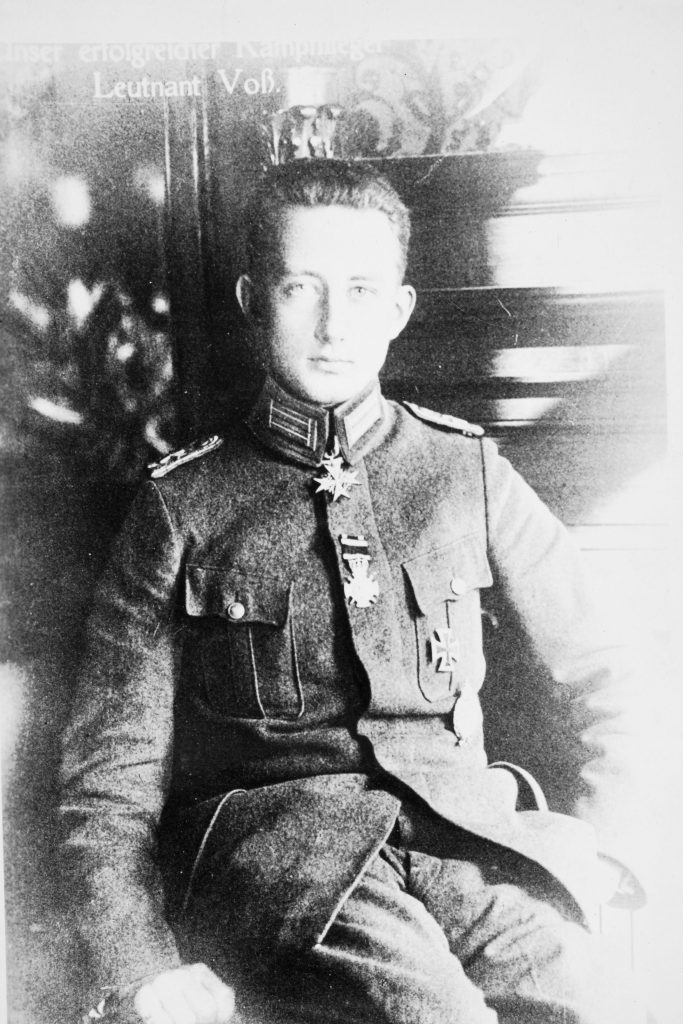
Later, Werner Voss complained to higher leadership that his commanding officer was insufficiently aggressive, and he was transferred to Jagdstaffel 5 as a temporary commander on May 20. With the new unit, he scored three victories in May and 3 in June. His last victory came on June 6, when he shot down a Nieuport 17, but he was slightly injured in this battle. After this, Werner Voss went on leave until June 28, and upon his return, he was given the responsibility of first commanding Jagdstaffel 29, and just five days later, Jagdstaffel 14. But instead of joining the battle, he was called upon to Schwerin to test fly Fokker F.I on July 5, 1917. Despite its drawbacks, Voss liked the aircraft and recommended its adoption. On July 30, Voss joined Jagdstaffel 10 as a permanent commander. His score stood steady at 34 since June 6. He was assigned a Pfalz D.III in his new unit, and in August, he shot down four aircraft to increase his personal score to 38. Though he was unsatisfied with the Pfalz D.III’s performance compared with his Albatross, in late August, he was assigned a Fokker F.I. The new aircraft brought him new energy, and within the first 11 days of September, he shot down 9 aircraft, bringing his overall aerial victories to 47. He went on leave from September 12 to September 2022, during which he also visited the Fokker factory in Schwerin.
The Death
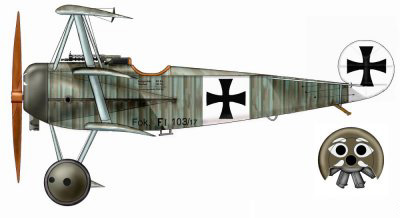
Werner Voss returned on duty on September 23, 1917. Despite being tired, he flew a mission and shot down an Airco DH.4 in the morning, bringing his aerial victories tally to 48, his last. On the afternoon patrol, Voss would battle No. 56 Squadron Royal Flying Corps, led by Captain James McCudden, which included pilots such as Captain Keith Muspratt and Lieutenant Arthur Rhys-Davids. During the afternoon patrol, Voss fought a memorable dogfight alone against several Allied pilots. He battled the Royal Flying Corps biplanes for 10 minutes, hitting each one. Werner Voss used his triplane’s ability to climb quickly and turn sharply to outmaneuver his opponents. He also turned at high speed and attacked the planes behind him. During a head-on encounter with McCudden, Voss’s Fokker was hit on the right side. One bullet went through his right side and into his lungs. Rhys-Davids attacked him from behind and below, and eventually, Voss’s Fokker fell and crashed into the British lines, leading to his death.
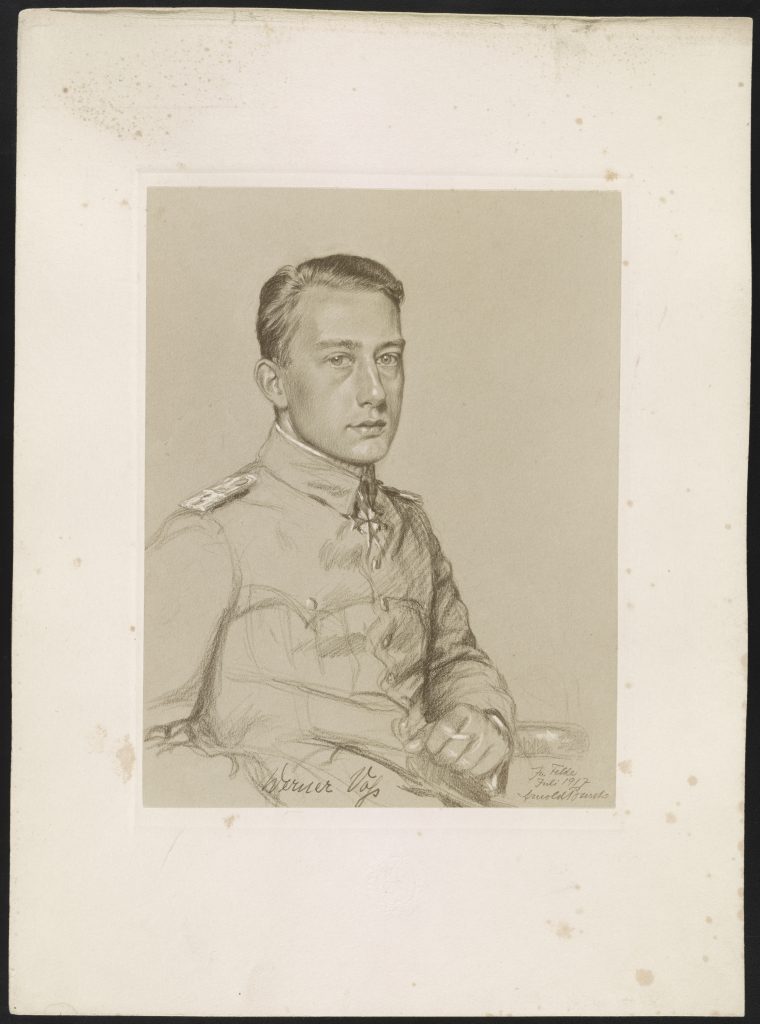
After his death, James McCudden was recorded saying, “I shall never forget my admiration for that German pilot [Voss], who single-handedly, fought seven of us for ten minutes. I saw him go into a fairly steep dive, and so I continued to watch, and then saw the triplane hit the ground and disappear into a thousand fragments, for it seemed to me that it literally went into powder. His flying was wonderful, his courage magnificent, and in my opinion, he is the bravest German airman whom it has been my privilege to see fight.” In the Aces series, Werner Voss stands out as a patriotic pilot who loved his machines, knew how to fight, and honored his company and country. Despite being tired and showcasing his desire for additional leaves on September 23, he still went into combat and fought several aircraft alone, damaging each one of them. Such dedication comes not only from hard work but also from being a perfectionist at his game. Read about more Aces and their stories HERE.






The triplane was the Fokker *DR* 1, not F1. And I’m pretty sure Voss didn’t shoot anyone down in 2021. Does anybody there bother to proofread?
The Fokker F.I was a prototype single-engine, single-seat triplane fighter, designed and built by Fokker Flugzeugwerke GmbH. Maybe check your facts before posting comments.