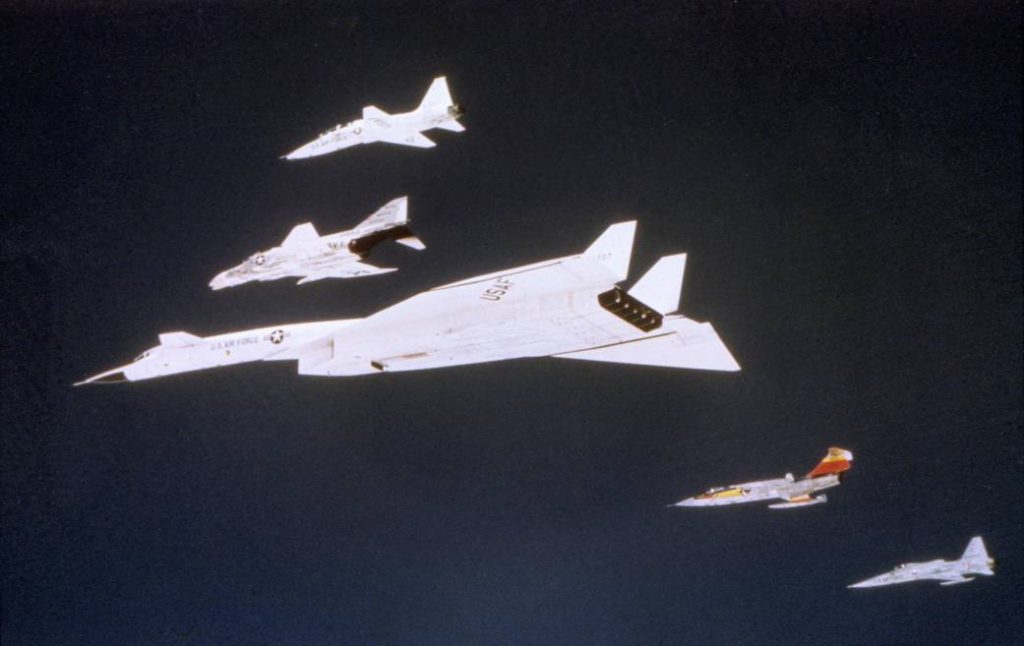
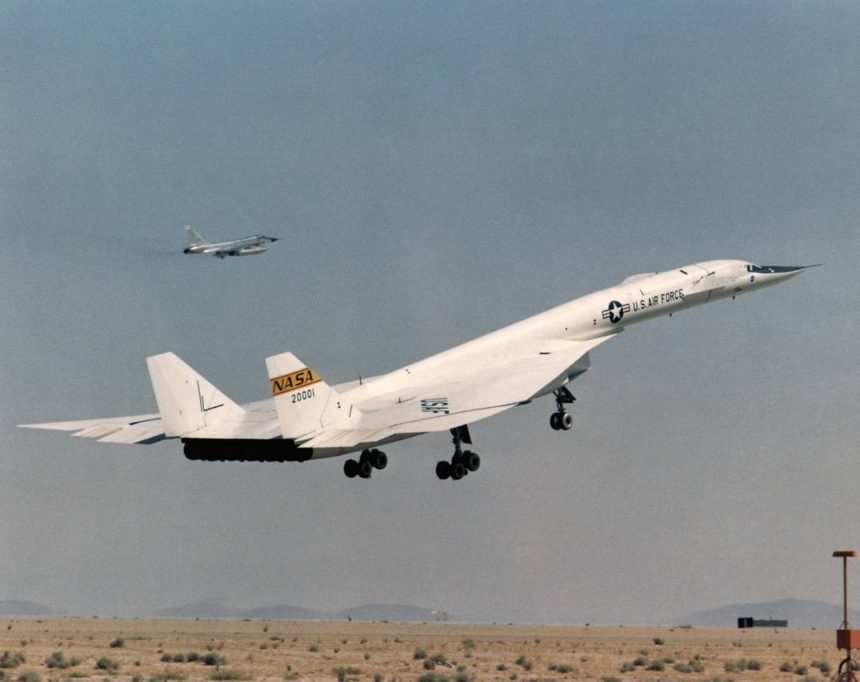

In the middle years of the Cold War, the US government encouraged the development of supersonic airliners through the National Supersonic Transport program. NASA Flight Research Center, now Armstrong Flight Research Center, at Edwards Air Force Base, California, was tasked with better understanding supersonic flight with larger airplanes, including the proposed supersonic transport (SST) airliner. NASA used a prototype of a supersonic bomber, the North American XB-70 Valkyrie, as its primary aircraft to investigate SST operations between 1966 and 1969. The XB-70 Valkyrie was a high-altitude, high-speed bomber. It was designed to cruise at Mach 3 and operate at 70,000 feet. But its major impact did not come on the battlefield; it came at the research center.
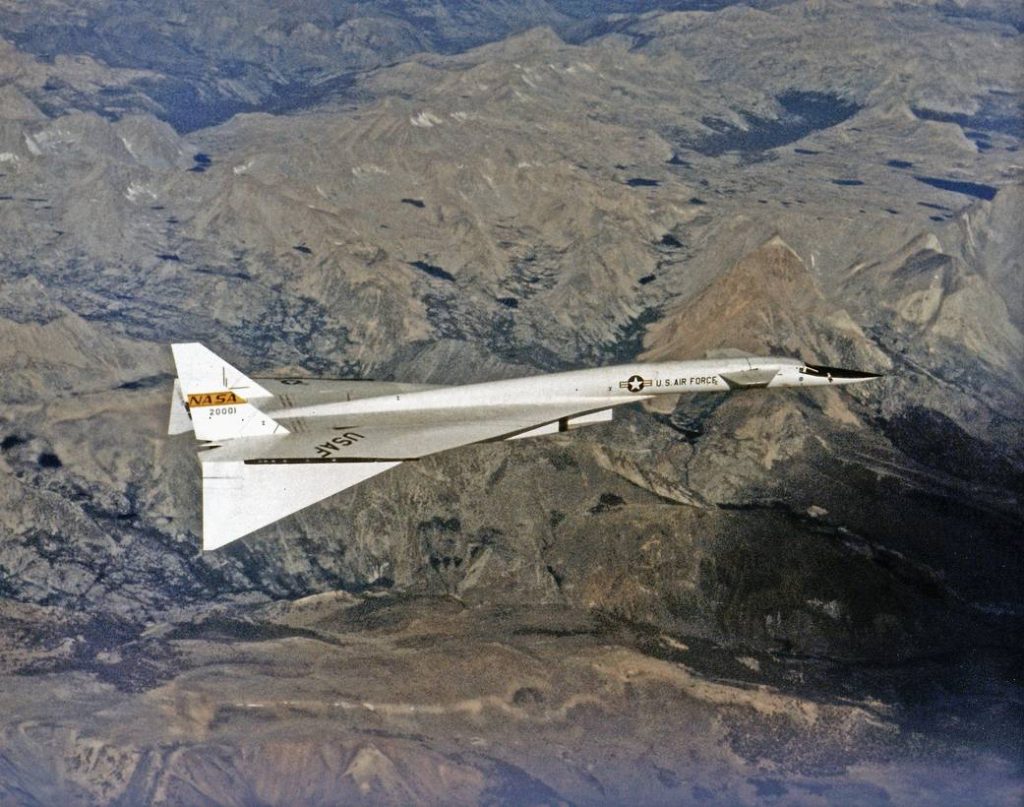
The XB-70 was designed to ride its own shockwave to reach Mach 3 speeds. To do that, it used a delta wing on a slab-sided fuselage, which housed the aircraft’s six jet engines. The outer wing panels remained horizontal during takeoff, landing, and subsonic flight to enhance lift and the lift-to-drag ratio. At supersonic speeds, the panels hinged downward to minimize drag and improve directional stability. The forward fuselage was long and thin, and two large canards behind the cockpit served as control surfaces. The XB-70 was an advanced aircraft developed during a time when the future of manned bombers was in doubt, as many believed the future would belong to missiles. As a result, the Kennedy Administration canceled plans to deploy the B-70. At the time of the cancellation, two XB-70A prototype aircraft were already under construction at North American Aviation.
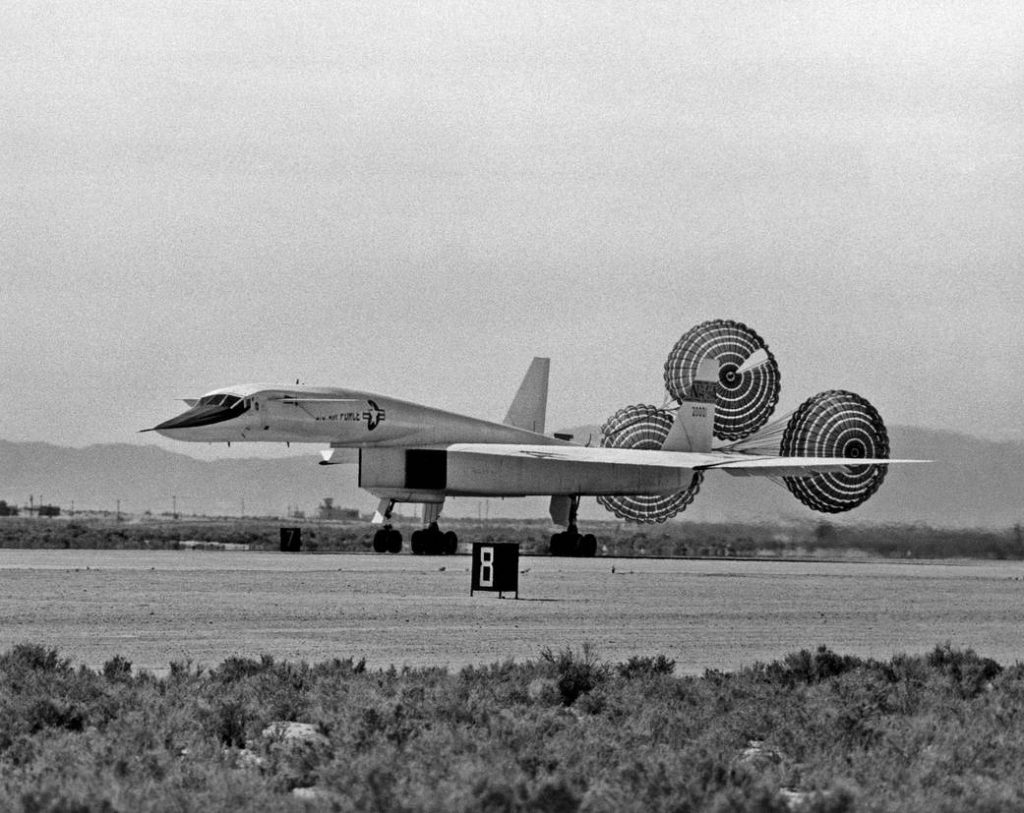
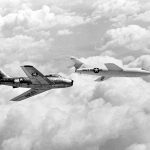
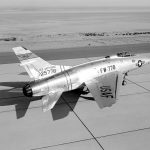
However, growing interest in developing an SST during the early 1960s to reduce flight times led NASA’s Flight Research Center to study various aircraft, including the Douglas F5D-1, North American F-100C, A-5A, and Lockheed JetStar. Still, the B-70, which had already been canceled from entering military service, was a perfect testbed for SST research. Its size and structural materials, like brazed stainless steel honeycomb and titanium, made it an ideal testbed for SST designs. The XB-70A number 1 (62-001) conducted its first flight on September 21, 1964, from Palmdale to Edwards Air Force Base. Airworthiness tests were conducted by North American and Air Force pilots throughout 1964 and 1965. However, the aircraft was found to have poor directional stability above Mach 2.5. Despite the problems, the early flights provided data on control system design, aircraft noise, operational problems, air turbulence, and comparisons of wind-tunnel predictions with actual flight data.
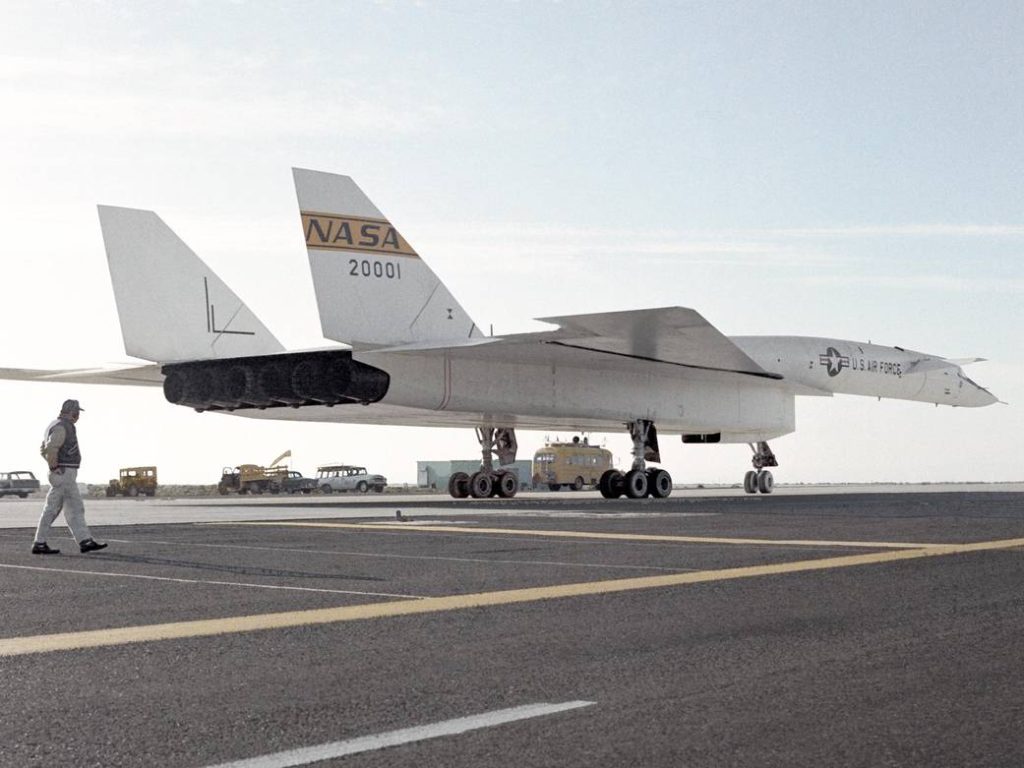
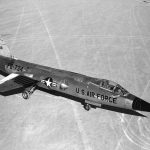
NASA Ames Research Center conducted wind-tunnel studies that led North American Aviation to modify the second XB-70A (62-207) by adding 5 degrees of dihedral to the wings. The aircraft first flew on July 17, 1965, and achieved Mach 3 for the first time on January 3, 1966, completing a total of nine Mach 3 flights by June. Impressed with this result, NASA and the Air Force signed a joint agreement to use the second XB-70A prototype for high-speed research flights supporting the SST program. This prototype was chosen for its superior aerodynamics, inlet controls, and instrument package compared to the first aircraft. Research flights, led by NASA pilot Joe Walker, were set to begin in mid-June after North American Aviation conducted airworthiness tests. The flights aimed to evaluate typical SST flight profiles and study sonic boom issues. However, on June 8, 1966, the second XB-70 crashed due to a midair collision with NASA’s F-104N chase plane. Joe Walker, the pilot of the F-104N, was killed. Al White, the XB-70 test pilot, ejected but sustained serious injuries, while co-pilot Maj. Carl Cross, unable to eject, died in the crash.
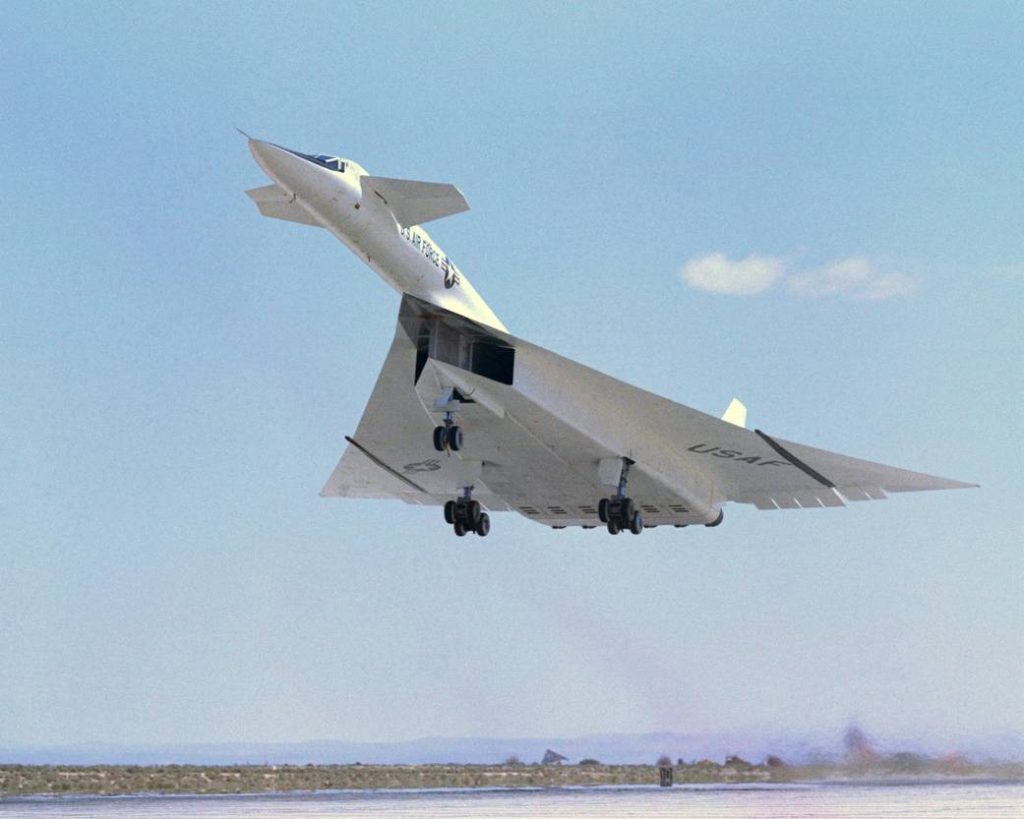
The deaths of Walker and Cross, along with the destruction of the second XB-70, significantly impacted the research program. NASA and the Air Force had chosen this aircraft for Phase II tests, leaving only the first XB-70 available. Due to its shortcomings, the Air Force became skeptical about meeting the goals of the Phase II tests. In addition, the first XB-70 was under maintenance at the time of this accident and did not fly again until November 3, 1966, with Col. Joe Cotton as pilot and Fitzhugh Ful as co-pilot. The flight achieved a top speed of Mach 2.1. From November 1966 to January 1967, there were 11 joint Air Force/NASA research flights, with Cotton, Fulton, and Van H. Shepard as crew. The highest speed recorded during the XB-70 program was Mach 2.57. The tests identified a “boom carpet” area and measured overpressure effects, showing that large aircraft like the XB-70 could create damaging overpressures. When the XB-70 turned, the convergence of its shock waves could double the ground overpressure.
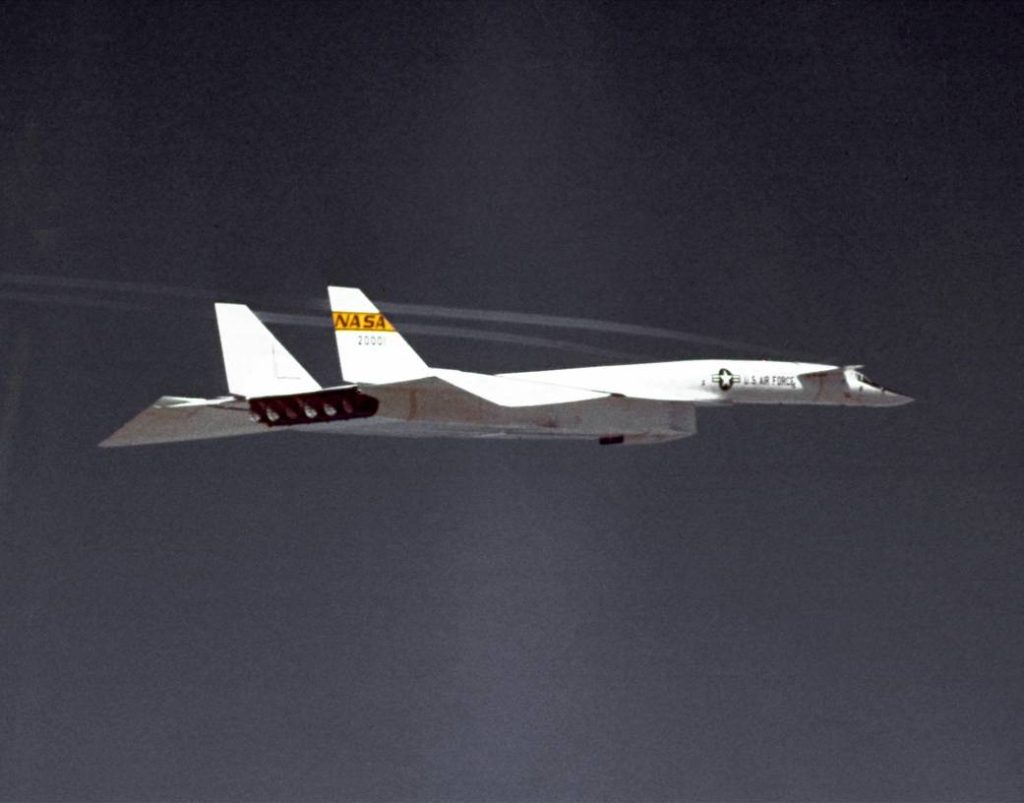
The XB-70 was grounded for 2.5 months for maintenance, after which the Air Force decided to transfer the program to NASA. A joint operating committee was formed on March 15, 1967, to manage the XB-70 program with continued Air Force support. NASA XB-70 first flew on April 25, 1967, and by March 1968, another 12 research flights had been completed to measure the aircraft’s structural response to turbulence and determine its handling qualities during landings. The flights also investigated boundary layer noise, inlet performance, and structural dynamics, including fuselage bending and canard flight loads. As the pilots were experiencing trim changes and buffeting during high-speed, high-altitude flights, a result of clear-air turbulence and rapidly changing atmospheric temperatures, engineers decided to modify XB-70 following a flight on March 21, 1968.
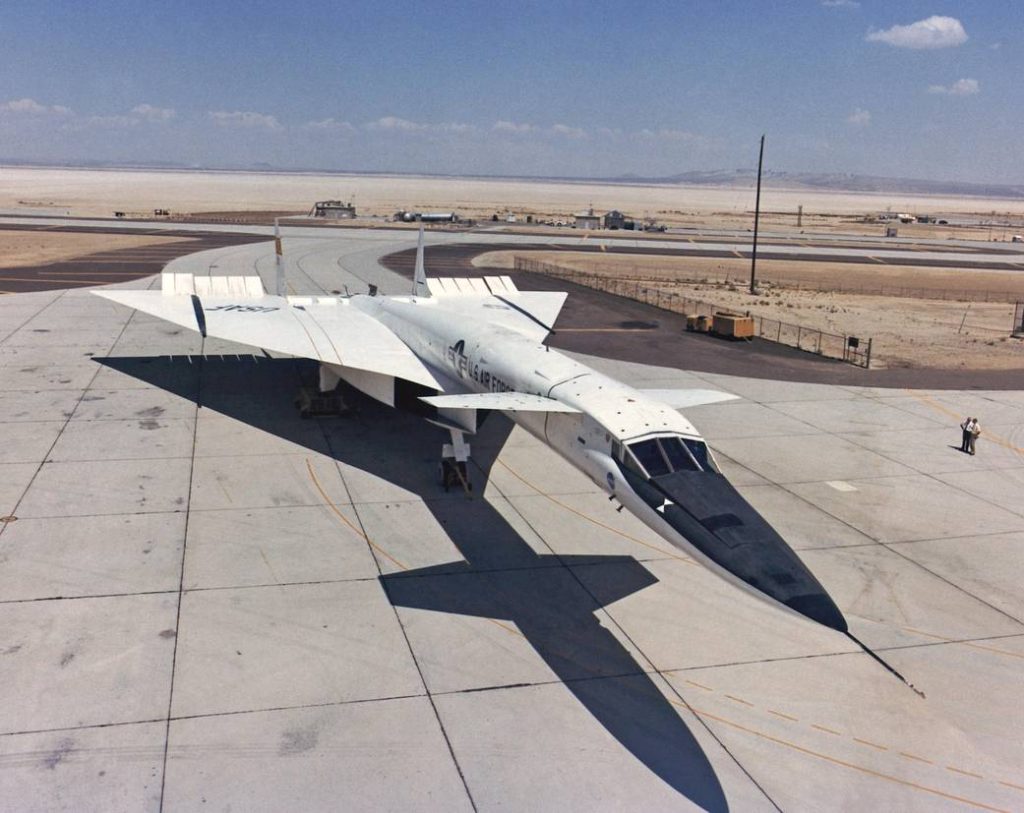
The aircraft was fitted with two small vanes that rotated 12 degrees at up to 8 cycles per second for the Identically Located Acceleration and Force (ILAF) experiment, leading to reduced turbulence during research flights that resumed on June 11, 1968. However, the XB-70 research program was nearing its end, as NASA and the Air Force shifted focus to research missions using YF-12As and a YF-12C (an SR-71), which employed more advanced technology. The XB-70s had recorded a total of 1 hour and 48 minutes of Mach 3 flight time, while a YF-12 could achieve that in a single flight. The final XB-70 research flight took place on February 4, 1969. Pilots Fulton and Sturmthal conducted a subsonic structural dynamics test and ferry flight from Edwards to Wright-Patterson Air Force Base, where the aircraft was displayed at the Air Force Museum. The first XB-70 completed 83 flights for a total of 160 hours and 16 minutes, while the second XB-70 logged 46 flights totaling 92 hours and 22 minutes. In the Flight Test Files series, the XB-70 still stands as an iconic research aircraft that gave birth to the fastest air-breathing, crewed aircraft, holding records for speed, Mach 3.3+, the Lockheed SR-71 “Blackbird.” Check out more Flight Test Files articles HERE.