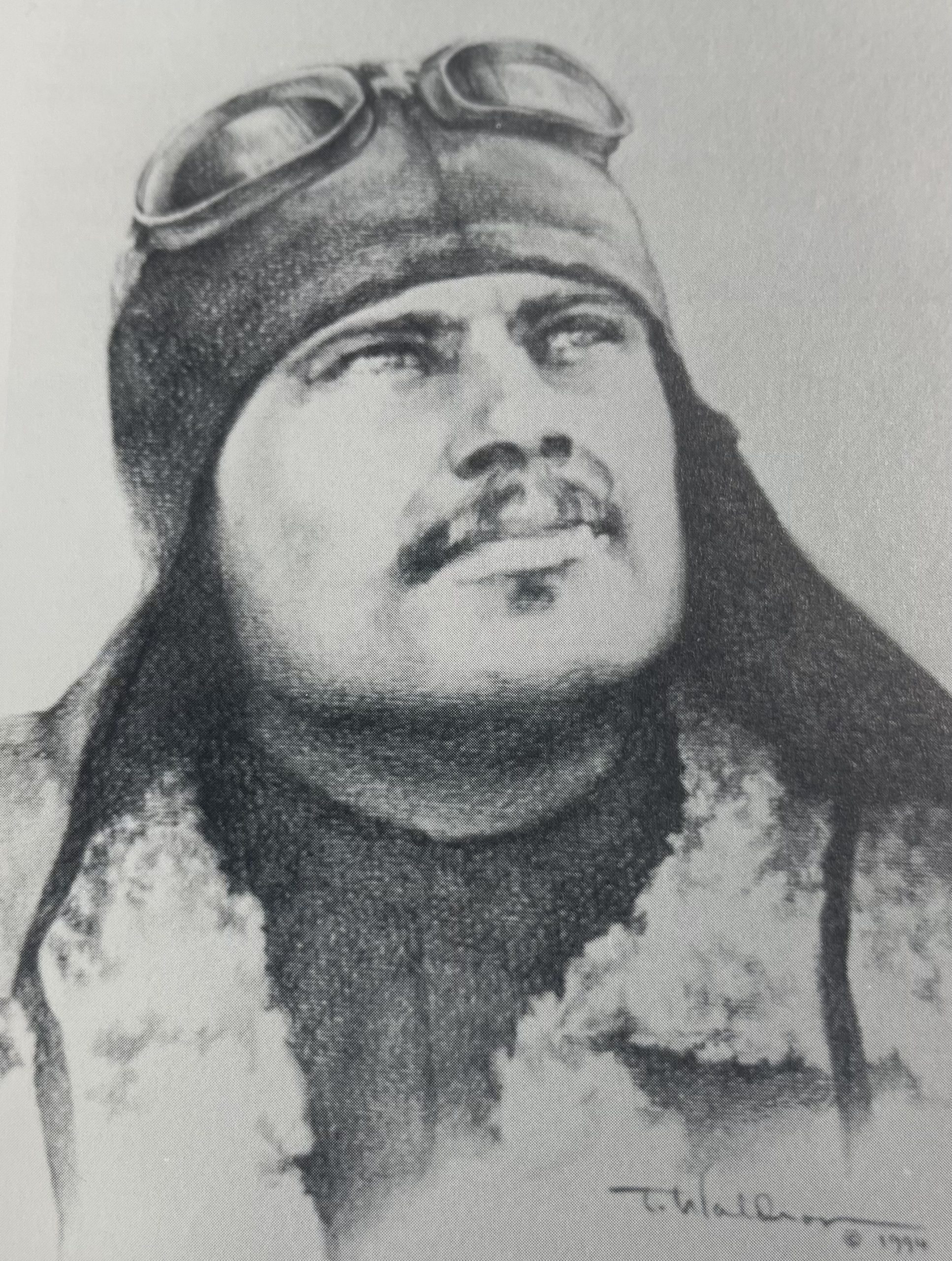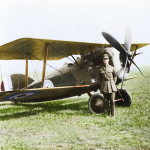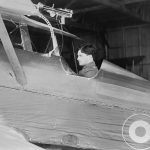
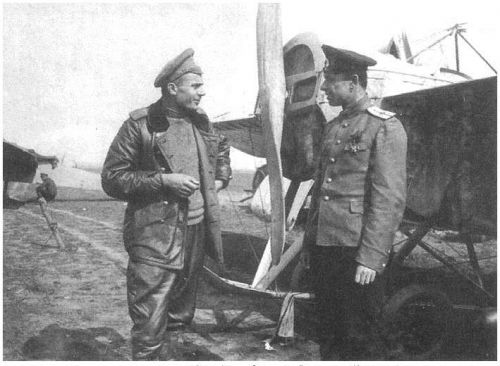

Vasili Yanchenko was born on January 1, 1894, in the city of Ussuriysk, Russia, to a Ukrainian family that had migrated to the Far East in search of a better livelihood. A lover of technology since childhood, he enrolled in mechanical engineering after completing secondary school. He graduated in 1913, and the planes were still new. Like many aces, aircraft attracted Yanchenko’s attention. In 1914, as World War I started, he volunteered with the Imperial Russian Air Service’s 3rd Corps Aviation Detachment as a motor mechanic. On November 22, 1914, his efforts were recognized with his promotion to corporal, marking the beginning of Yanchenko’s military career. After a few months of training, he was initially posted as a sergeant to fly reconnaissance missions. In mid-September 1915, during his first mission, Yanchenko encountered a problem when his aircraft engine exploded. His aircraft was burnt, and he suffered second-degree burns. Despite that, he continued flying daily missions with burns, for which he was awarded the Cross of Saint George.
Vasili Yanchenko’s Ace Journey
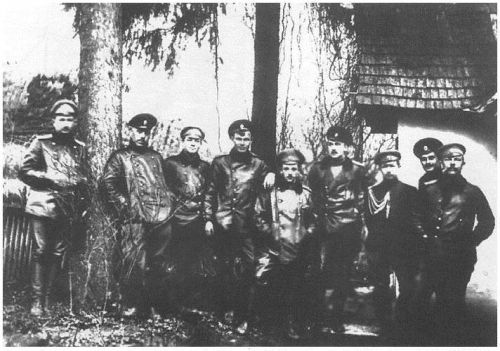
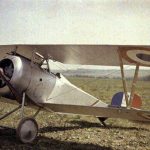
His advanced training to fly a fighter aircraft began in November 1915 at Moscow Air School. By January 5, 1916, he was assigned at the rank of sergeant major to the Imperial Russian Air Service’s 3rd Corps Aviation Detachment. His initial days at the unit were not good as he got into an argument with the commander and was demoted back to sergeant. He requested a transfer and was sent to the 7th Fighter Aviation Detachment on April 7, again as a sergeant major. He started flying Nieuport 11 aircraft regularly in the new unit and scored his first victory on June 25, 1916, a shared one with another Russian flying ace, Ivan Orlov. For his first victory, he was awarded a Second Class Cross of Saint George. He had to wait until October 4 for his second victory, again a shared one with Orlov. His first solo victory came on October 18. In November, he was sent to France for training with a group of promising pilots. There, in the towns of Pau and Cazaux, he mastered aerobatics and acquired aerial gunnery skills. Before his training was over, Yanchenko, along with French pilots, took part in skirmishes with German aircraft. On March 17, he, along with Polish ace Donat Makijonek, shot down a German Albatros aircraft.
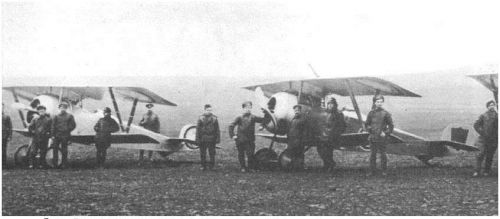
After that, Yanchenko returned to the Russian military on the Eastern Front as an experienced air fighter. On April 13, 1917, while flying a Morane aircraft, he shot down two enemy aircraft to become an ace. His signature move was a bold frontal assault. He never turned away, waiting for the enemy to falter, and then, from a range of 15–20 meters, he would fire at the enemy aircraft point-blank. In June 1917, Yanchenko flew out to conduct aerial photography of enemy positions northeast of Březany. Russian ace Donat Makijonek covered him. While taking the photographs, Yanchenko’s plane was attacked by a German fighter. Yanchenko quickly maneuvered, escaped the fire, and destroyed the German aircraft. Those who fought alongside Yanchenko commended his bravery. On July 7, 1917, Russian troops near Ternopil were forced to retreat. To increase the pressure, the Germans sent a large group of aircraft to bomb the retreating columns. Sometime around 8 or 9 pm, a trio of fighters, piloted by Yuriy Gilsher, Donat Makienok, and Yanchenko, scrambled. They spotted eight German aircraft and headed toward them. Makienok was the first to enter the fray. Busy pursuing the enemy, he broke away from the group. At that moment, 16 more enemy aircraft appeared over the battlefield. They immediately attacked a pair of Russian airplanes. In a brief battle, Gilsher’s plane was shot down. Yanchenko managed to escape the German fire, and his aircraft, which had sustained several holes, landed on a field next to the wreckage of his commander’s plane, who was dead by then. Yanchenko brought his body back to his airfield. By August, he shot down 13 aircraft.
Evacuating Russia
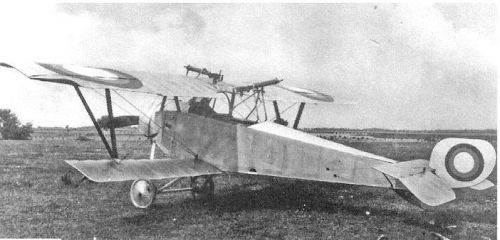
In September 1917, he was transferred to a new unit and received a Nieuport 23. He used the aircraft to down his final three targets, and his last victory came on October 14, 1917, before the October Revolution and Bolshevik influence halted operations in his unit. Till 1920, he led the 2nd Air Squadron during the Russian Civil War and evacuated Russia with the White Russian defeat. He reached the US and became an American citizen in the late 1920s. In the US, he worked as a design engineer in New York and died in 1959 in Florida. During World War I, he claimed 16 aerial victories. He received the full set of St. George Crosses, the Order of St. George (4th Class), the Order of St. Vladimir (4th Class, with swords and bow), the Order of St. Anne (4th Class), and the Romanian Knight’s Cross of the Order of the Star. The story of Yanchenko was different from that of other aces, who became popular and celebrated in their respective countries. He was, however, forced to leave his country in silence despite being a national hero. Still, in the Aces series, Vasili Yanchenko is a perfect example of skills, passion for flying, and humanity, which he showed time and time again. Read about more Flying Aces HERE.