






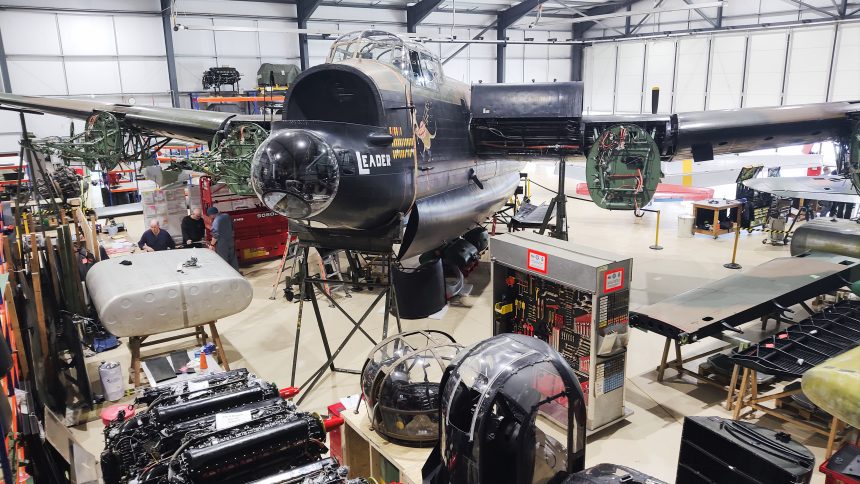

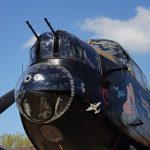
This is the second in a planned series of updates for members of the RAF Memorial Flight Official Club, outlining progress on the extensive maintenance programme currently underway on the Battle of Britain Memorial Flight’s Lancaster PA474. We kindly remind members that these reports are intended solely for Club readership and ask that they are not shared elsewhere, in respect of their exclusive nature and the author’s copyright. Since the previous update in the December newsletter, the engineering team at the Aircraft Restoration Company (ARCo) in Duxford has continued to make steady headway on the program.
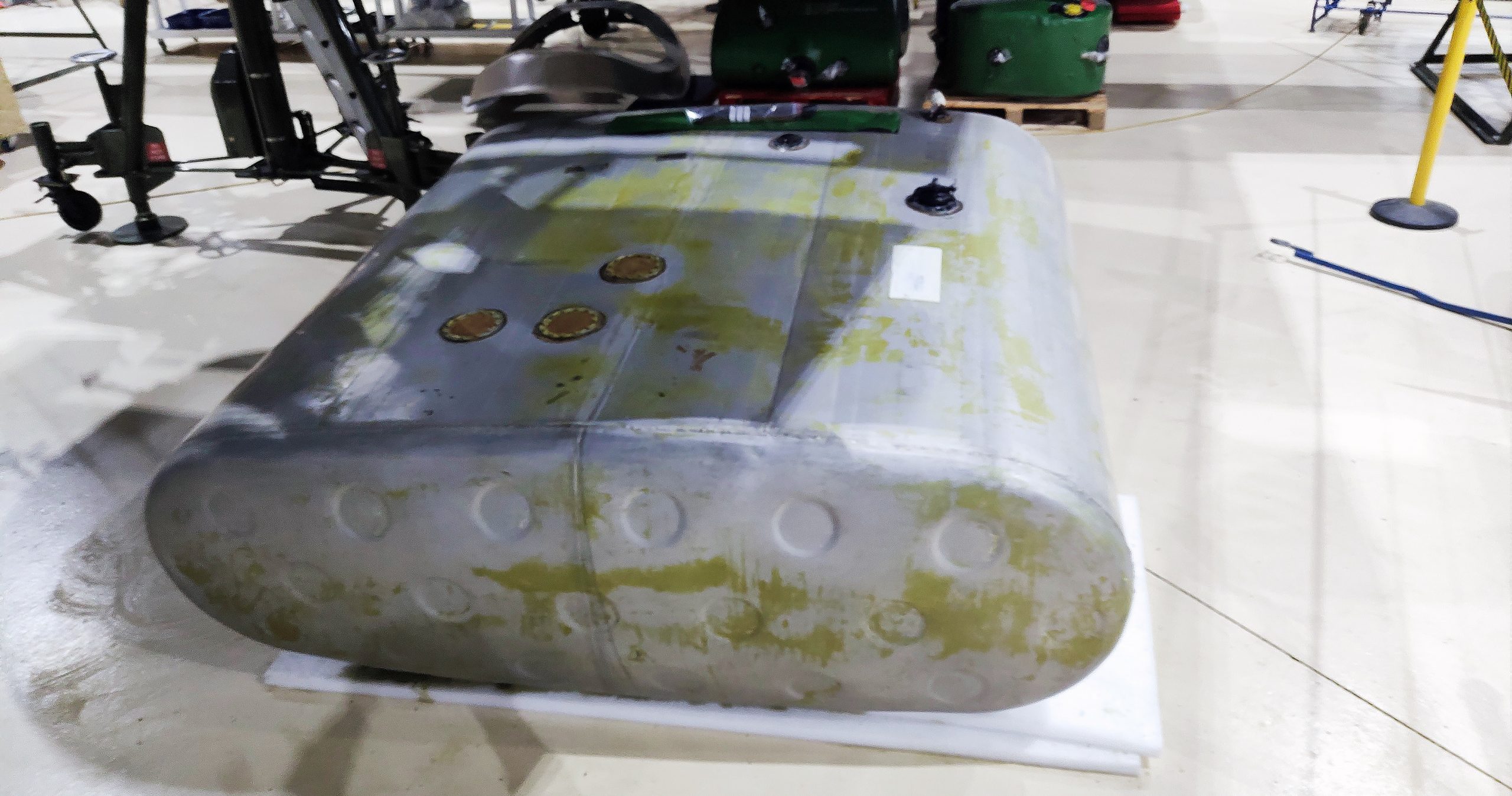
Most of the Structurally Significant Item (SSI) inspections have now been completed. An elastomeric hose survey has begun, while zonal surveys are also in progress. A considerable portion of the work involves non-destructive testing (NDT), which is now underway and expected to continue for approximately six weeks. All six fuel tanks have been removed from the Lancaster’s wings, and their outer coverings stripped. Engineers from BAE Systems recently visited Duxford to verify the configuration of PA474’s fuel tanks against original drawings. This step is necessary before production begins on a new set of six tanks for the aircraft. At the same time, the radiators and coolant header tanks have been removed and dispatched to a specialist contractor for overhaul.
The main undercarriage units, along with the tail wheel assembly, have also been removed and stripped down for inspection and servicing. The tail leg had been experiencing oil leaks, reduced oleo pressure, and occasional shimmy. Dowty Aviation originally manufactured Lancaster undercarriage components; today, the company forms part of the Safran Group, a leading global supplier of aircraft landing gear systems. Safran engineers visited Duxford on 12 January to examine the assemblies and identified several issues with the tail leg, including configuration discrepancies, seal deterioration, and corrosion on the sliding tube. ARCo and the BBMF Project Team are now working together to rectify these findings, including the manufacture and sourcing of replacement components.
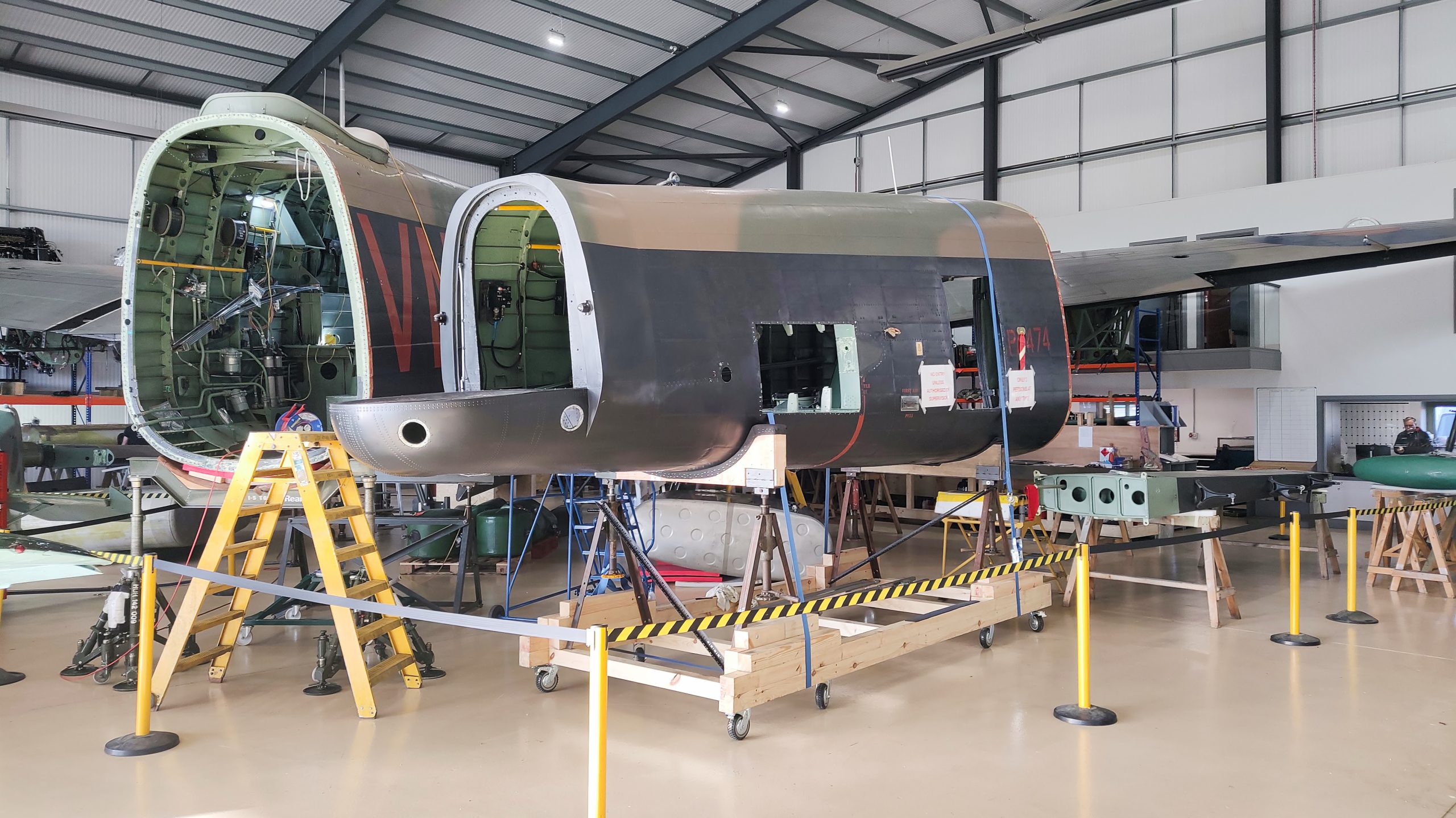
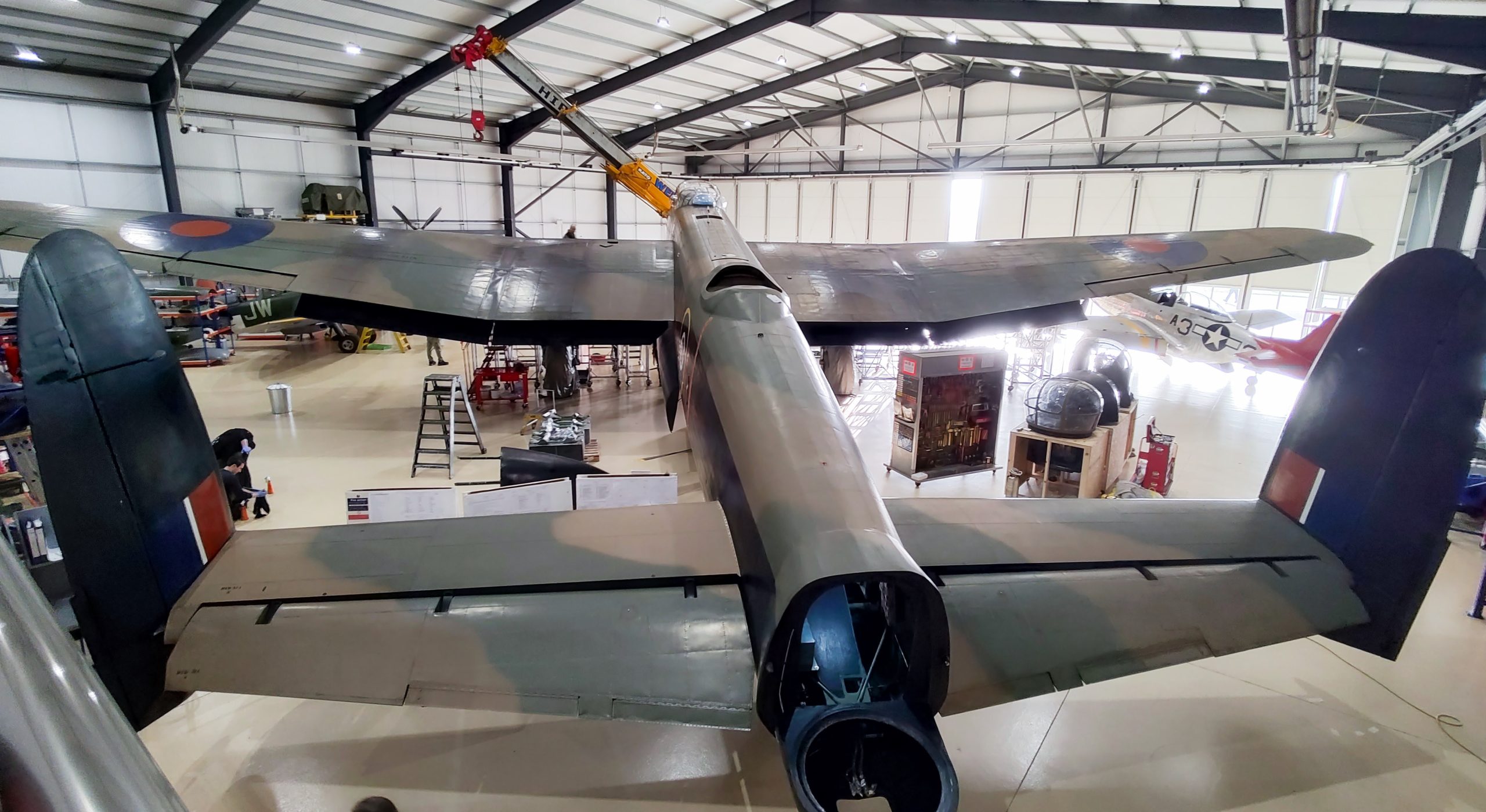
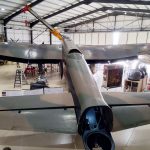
One of the more visible milestones in recent weeks has been the separation of the rear fuselage at the transport joint, located just aft of the mid-upper turret position. Dividing the fuselage in this manner allows access to replace the elevator and rudder control rods, which run through the internal structure. Equipment was temporarily loaned from East Kirkby to assist with the process, and a new heavy-duty trestle was fabricated to support the rear fuselage section. The separation was completed successfully on 16 January, and inspections revealed no evidence of corrosion or structural damage at the frame joints. The first batch of components has also been dispatched for ‘bay’ maintenance. This initial shipment includes electrical, avionics, and instrument items sent to SkySmart MRO Ltd, a specialist company providing avionics and mechanical component repair, overhaul, and inventory support services. Further progress reports will be shared with Club members as work continues on this important maintenance program. For more information about the RAF Memorial Flight Official Club, visit www.memorialflightclub.com.












I may have a Lancaster bombers aiming sight. My email is [email protected]
I’ll donate it if it’s correct. Can send pics
Justin wade. Brisbane Australia.
I have several photos of 474 taken at Cranfield in 1964. Ironically, the tail wheel oleo was leaking even then . I sent copies of all my images to the B.B.M.F. who were delighted to see how different the aircraft looked with no turrets and a huge wing section mounted vertically at the mid upper turret position.