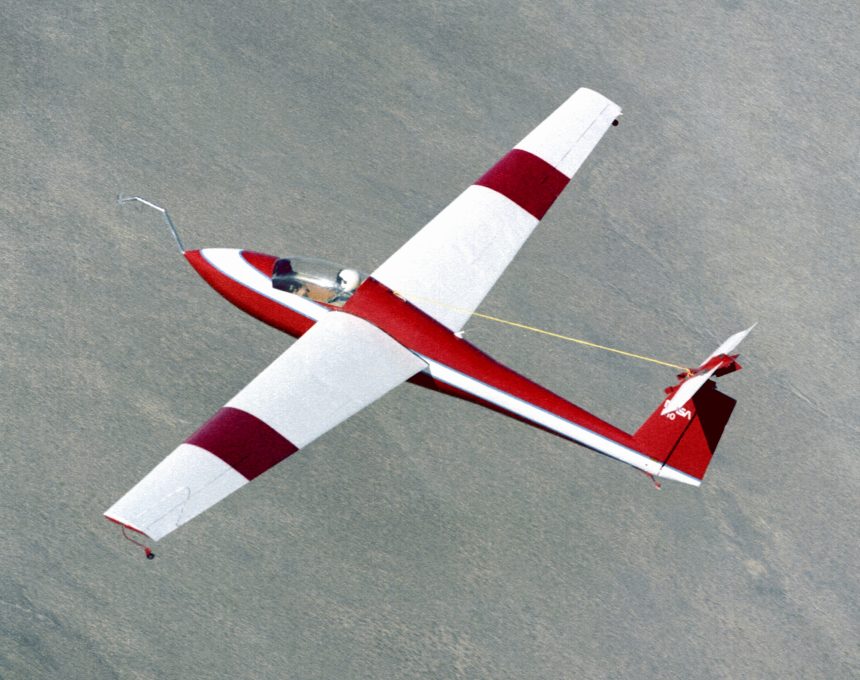

In the early 1980s, engineers at NASA’s Dryden Flight Research Center at Edwards, California, wanted to understand whether a pilot could keep an aircraft under control after it had moved well beyond a normal stall. Most airplanes were designed to avoid that region. At very high angles of attack, above about 30 degrees in this program, some aircraft could enter a deep stall, where lift decreases sharply, and control response becomes weak. To study this, NASA used a modified Schweizer SGS 1-36 sailplane to conduct controllability research in the deep-stall region. The SGS 1-36 was a single-seat, T-tail design that was used commercially as an advanced trainer. It is primarily fabricated from aluminum, which allows for easy modification of the horizontal tail, longitudinal control system, and cockpit area. NASA acquired the aircraft, registered N502NA, and prepared it for modification.
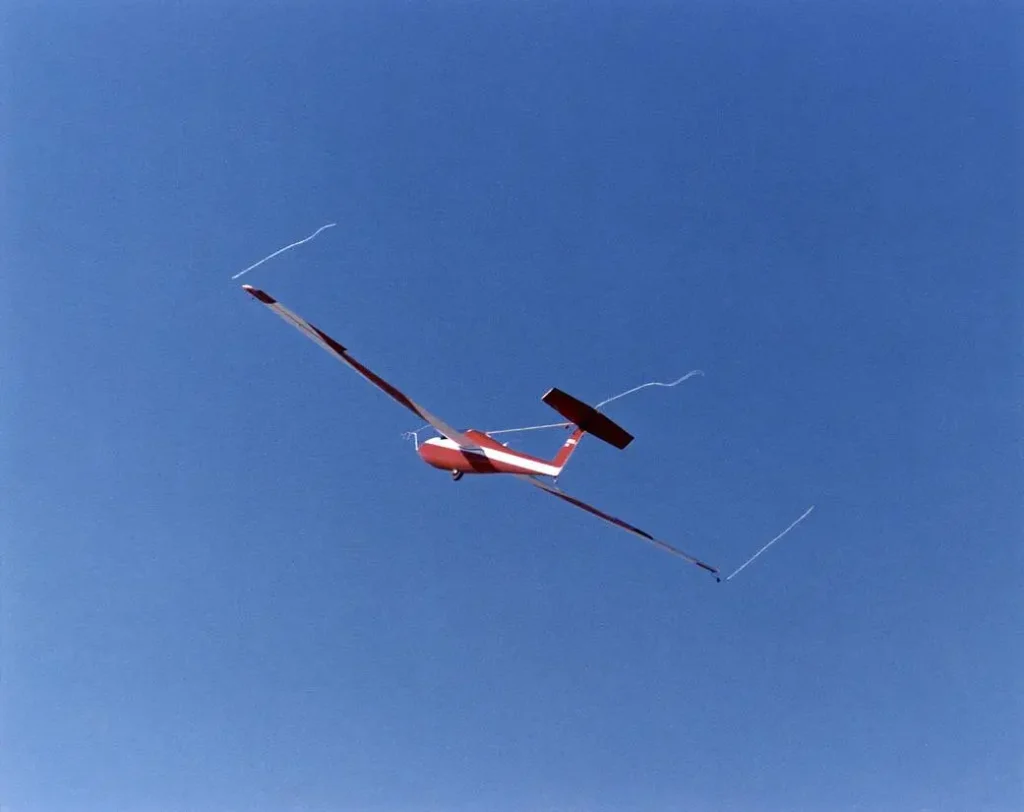
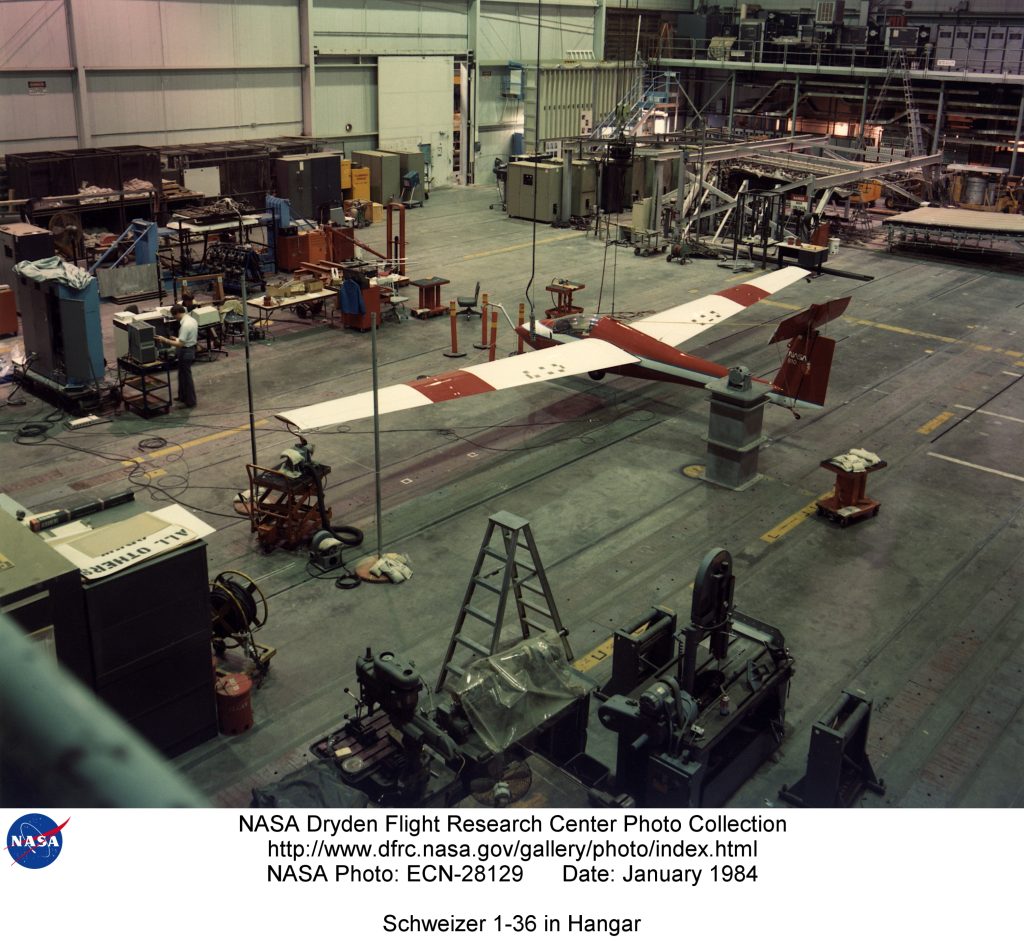
NASA selected this aircraft because it flew slowly and, aerodynamically, could resist high angles of attack due to its 46-foot-long wingspan and 21-foot-long fuselage. The program aimed to demonstrate that it is possible to safely control an aircraft in a deep stall. It also focused on improving techniques for safely entering, maneuvering, and recovering from controlled flight at very high angles of attack. As part of the program, before handing it to NASA, Schweizer modified the SGS 1-36 sailplane’s T-tail configuration so that it could pivot up to 70 degrees with the leading edge down. Once the aircraft arrived at Dryden, it was further modified by NASA engineers. They modified its cockpit area to permit easier pilot entry and exit and added a NASA instrumentation system in the fuselage. After the modifications were completed, radio-controlled model and ground tests of the aircraft were performed before flight tests. These preliminary tests included using a simulator. In September and October 1983, the modified SGS 1-36 sailplane began its research flights. The sailplane was towed to an altitude of 8,500 feet above ground level and released. After release, the pilot decelerated the sailplane toward the near-stall. From there, the angle of attack was deliberately increased, exceeding 30 degrees and, in some cases, reaching 72 degrees. During the 20 sailplane flights at Dryden, NASA focused on stability and control derivatives, trim data, and piloting techniques needed to safely enter and exit the very high-angle-of-attack flight regime.
NASA used maximum-likelihood analysis techniques to estimate aerodynamic derivatives from flight-test data. The data were compared to predicted results from wind tunnel tests. Overall, the agreement was fair to good, but the derivatives were used to refine the aerodynamic database for low and very high angles of attack. Additionally, NASA analyzed the flight data better to define the vehicle’s trim and operational performance envelope. The flight data helped the engineers better understand how to adjust the vehicle’s balance and performance. They could control the airplane’s trim within a 30° to 72° angle-of-attack range. At low angles of attack, the airplane performed well enough for the flight research experiments. However, at very high angles of attack, the sink rates reached about 4,000 feet per minute. Hence, the SGS 1-36 program was not meant to create a new aircraft, but to understand how a high-aspect-ratio wing behaves well beyond the stall, and how a tail can remain effective in that region, which helped engineers think more clearly about deep-stall risks and recovery strategies. When the tests were complete, the modified sailplane was retired from research service, and the aircraft remains preserved at the National Soaring Museum in Elmira, New York. Like other aircraft in the Flight Test Files series, the SGS 1-36 sailplane also helped NASA engineers at Dryden learn something new, solve another important aviation engineering problem, and make future flights safer and more efficient. Read more Flight Test Files articles HERE.