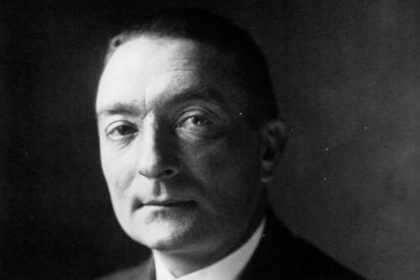
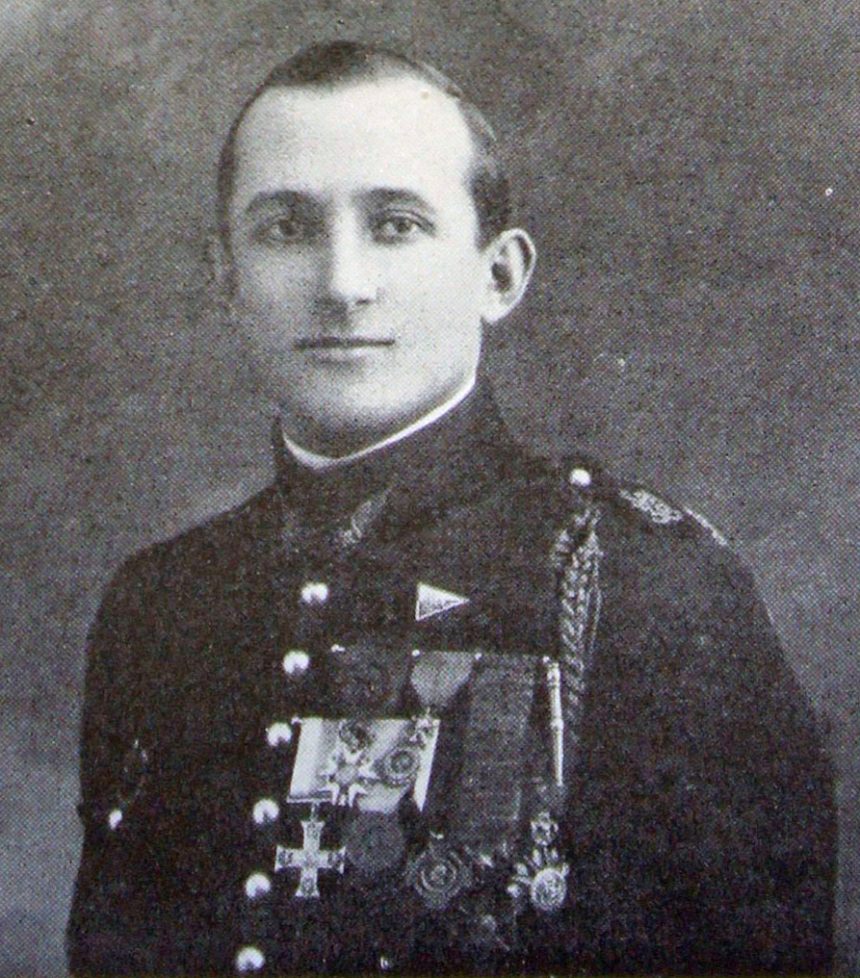

Georges Madon was born on July 28, 1892, in Bizerte, Tunisia, as his French father, a former military engineer, worked there. His father died in 1898, when Madon was only six years old, and he grew up in Tunis with his two sisters. However, he had to quit school because of malaria and stay home, where he found comfort in reading technical magazines about early aviators, and ultimately wanted to become a pilot. In 1911, after persuading his mother to travel to France for health reasons, he rushed to enroll at the Blériot flying school in Étampes and obtained his civilian pilot’s license at just 19 years old. In early 1912, he decided to join the military as a pilot and was assigned to the First Engineering Regiment in Versailles. His initial months were hard as he spent nearly six months as a cook in the regiment before being sent to the Avord flying school and earning his military pilot’s license in early 1913, a year after enlisting. Initially, he flew Blériot XI, and as World War I broke out on August 3, 1914, unlike many other aces, he was already a fully qualified military pilot. In September, he joined Squadron BL30 and carried out numerous reconnaissance flights over enemy lines and artillery spotting missions, even flying at night, which earned him his first commendation.
Georges Madon’s Ace Journey
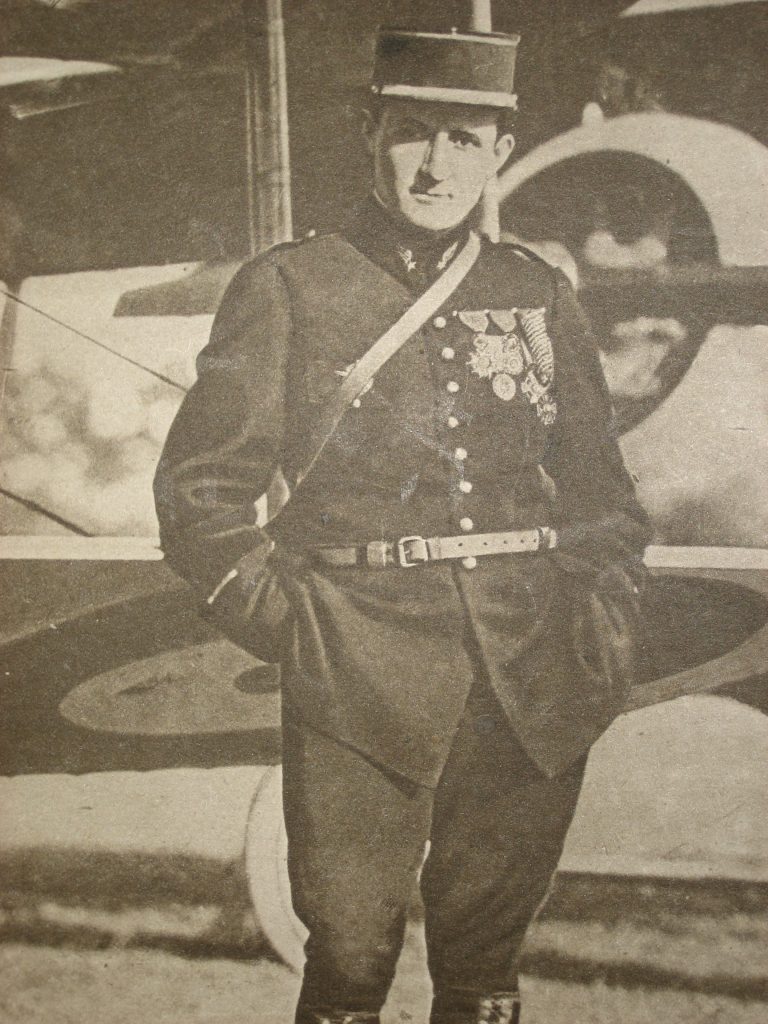
On March 12, 1915, he was transferred to Squadron MF 44, but his time with this unit was short. On April 5, he mistakenly landed in Switzerland during a ferry flight in a Maurice Farman MF XI, and became lost in the fog. Interned by the Swiss police for several months, he eventually escaped after two unsuccessful attempts and returned to France on December 27, 1915. As a result of his actions, he was court-martialed and sentenced to 60 days’ confinement. After returning, he was assigned to an artillery spotting squadron but requested a transfer to a fighter squadron. His request was accepted, and he was sent to the Pau flying school in May 1916 to learn to fly Nieuport fighter planes. On September 1, 1916, he was transferred to Squadron N 38, stationed at the Noblette airfield near Mourmelon-le-Grand. Three days after his arrival, he shot down a German two-seater, which was not officially recognized. His first official victory came on September 28, and his score gradually increased to five on January 31, 1917, which earned him a citation in the Army communiqué.
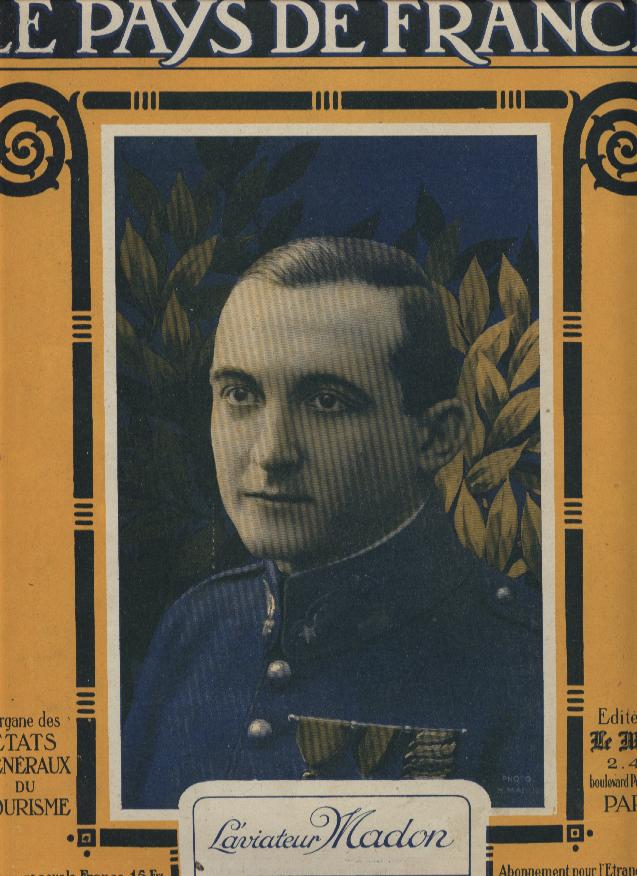
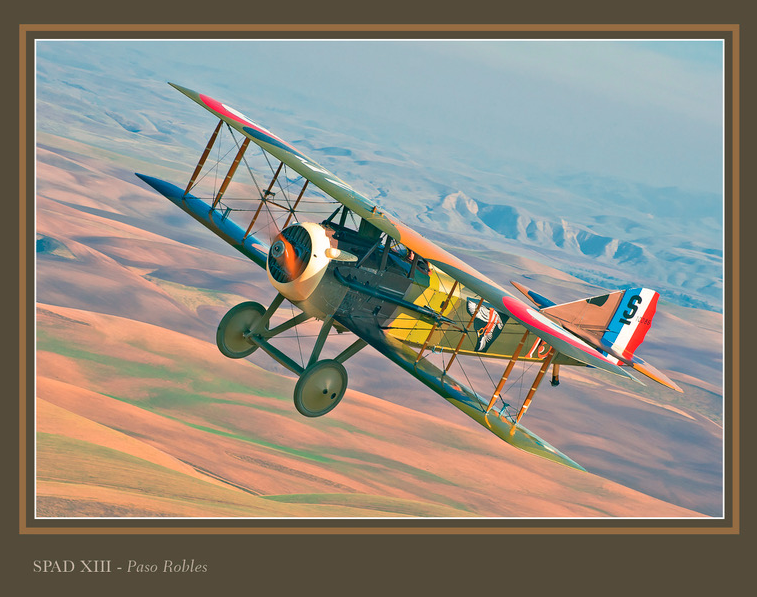
As he slowly increased the numbers, his confidence also grew. According to later accounts, Madon once challenged a locally renowned German ace, Hartmuth Baldamus, to a duel. He dropped a message over the lines inviting the German pilot to appear at 9:00 am at an altitude of 5,000 meters above the Main de Massiges. However, Baldamus was killed in action on April 14, 1917, so Madon couldn’t fight him. He continued to steadily increase his own score, reaching a total of 19 official victories by the end of 1917, as well as more than 20 unconfirmed ones. In 1918, Madon’s score continued to soar. In January, he scored three victories, two of which were officially confirmed, and by March 1918, his personal score stood at 25. After that, Madon was appointed to command Squadron Spa38, which was re-equipped with new Spad XIIIs. While specializing in reconnaissance, Spa38 was heavily involved in air combat, with the motto, “Whoever rubs against me gets pricked”. Madon’s arrival boosted the unit’s confidence. He trained several other pilots who went on to become aces themselves. He completed the war with 41 official victories, making him one of France’s top five aces of the war, along with 64 unconfirmed successes. If those were counted, he would rank among the very highest-scoring Allied pilots.
A True Lover of Aviation
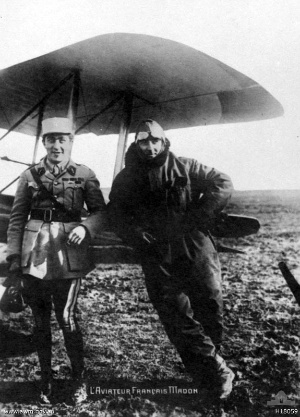
He received several honors, including the Médaille Militaire, the Chevalier de la Légion d’honneur, and the Croix de Guerre with ten palms. He also earned the Italian and Romanian Orders of Valor. The Avord Air Base, where he learned to fly, is named “Base Aérienne 702 Capitaine Georges Madon.” According to the Ministry of Defense’s biography of Georges Madon, he is described as a lieutenant and an active engineer and pilot. “He was an elite fighter pilot known for his energy, bravery, and skill. He fought in many battles without fear of his opponents and never let them breach our lines. He avoided injury throughout his service, thanks to the speed of his attacks, the accuracy of his maneuvers, and his precise aim. Even after being seriously wounded in falls, he led his squadron by setting a great example and showing new acts of bravery every day. On August 11, 1918, he shot down his 40th enemy plane. He received the Chevalier de la Légion d’honneur for his bravery in war and earned nineteen citations for his service,” the biography said.
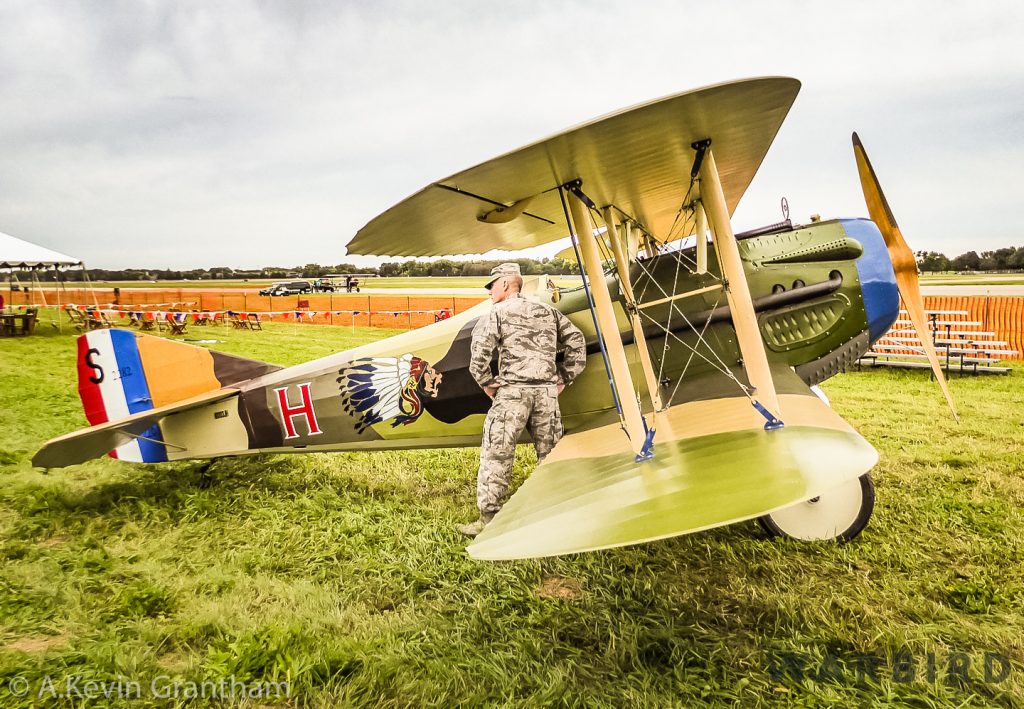
Madon continued his career in aviation after World War I. In 1922, he flew a racing monoplane called the Simplex, which had a powerful Hispano-Suiza engine but poor visibility due to its design. He crashed the plane during a test flight and sustained serious injuries. On November 11, 1924, at age 32, he died in Tunisia while preparing for a tribute to fellow airman Roland Garros, crashing his aircraft into a villa to avoid hitting spectators. In the Aces series, Georges Madon showcases the confidence, courage, valor, and self-belief a fighter pilot needed during World War I. His passion for aviation, like many other aces, continued to push him hard even after the war, and his death reveals he lived his life to fly. Read about more Aces HERE.