







(Image credit: VAN)
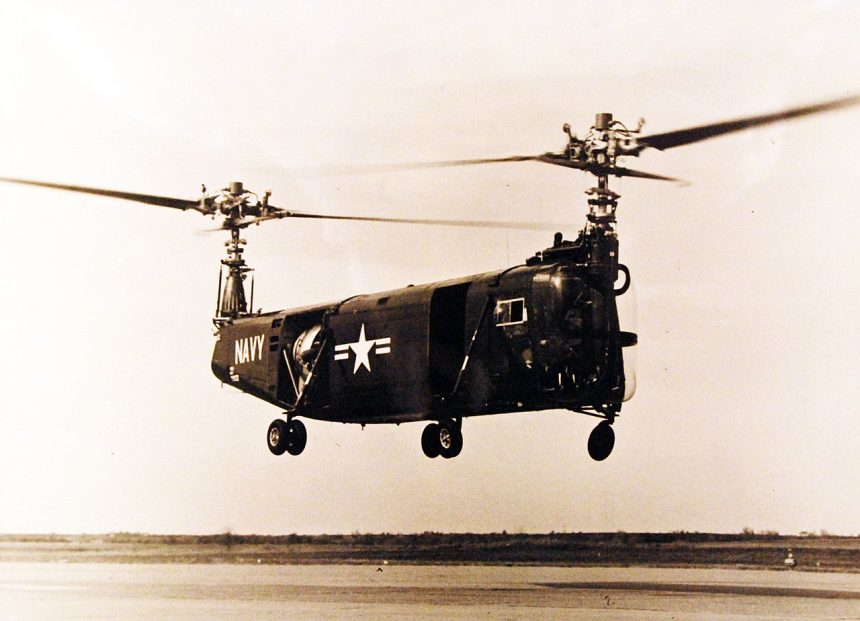
On this day in aviation history, 73 years ago (March 3, 1953), the Bell HSL took flight for the first time. Known as the Model 61 internally by Bell, the HSL was an anti-submarine warfare (ASW) helicopter designed and built for the United States Navy. Bell began development of the Model 61 in June 1950, after the company was announced as the winner of the US Navy’s design competition for a new ASW platform. The Navy subsequently ordered three XHSL-1 evaluation aircraft.
Bell designed the Model 61 with a rectangular-shaped fuselage with sections for the different flight crew positions. The aircraft had four landing gear legs, each with six wheels. Dual main rotors, located at both ends of the tube-shaped fuselage and linked via transmission, were powered by a 2,100-horsepower Pratt & Whitney R-2800-50 18-cylinder radial engine. The Model 61’s front rotor was placed slightly ahead of the front cockpit position.
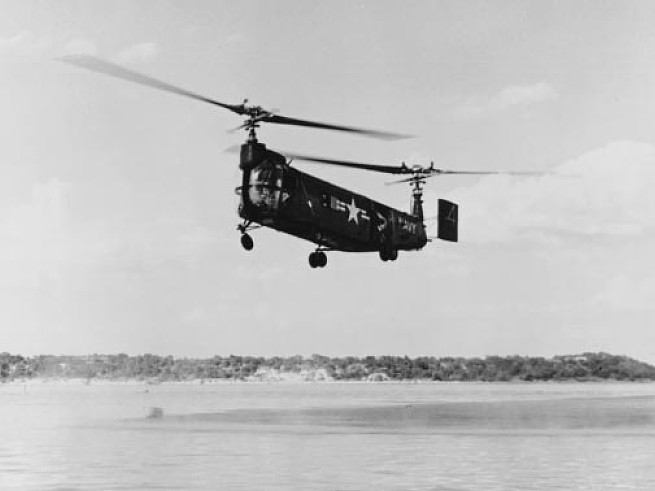
The US Navy had an urgent need for the new anti-submarine warfare aircraft, and a small batch of production HSLs was ordered shortly after the initial order for 3 XHSL-1s. A contract for 160 production aircraft was eventually ordered, which included 18 for the Royal Navy. Bell faced developmental problems with the XHSL-1, which caused the project to lag behind the contract’s schedule. Only 50 aircraft were built and delivered. After acceptance and flight testing, only a few were actually used, primarily during the development of airborne mine sweeping. The rest of the HSL-1s were taken directly to storage and written off shortly after.
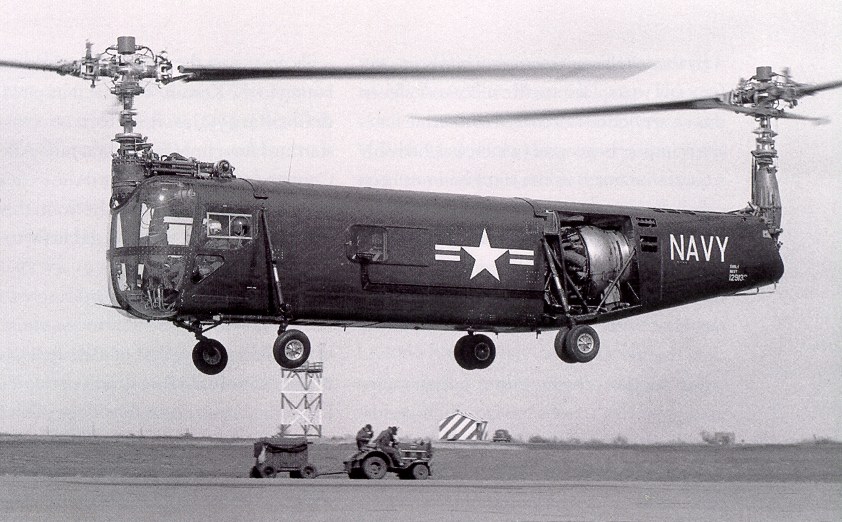
Bell’s HSL-1 had a crew of 4 during search missions and 3 during attack missions. The aircraft had a hoist capacity of 800 pounds and a combat range of 120 nautical miles. On search missions, the HSL had an endurance of 3 hours and 30 minutes of loiter time. The HSL-1 would cruise at 96 mph and could attain a maximum airspeed of 124 mph. HSL-1s were armed with two Mark 43 torpedoes.
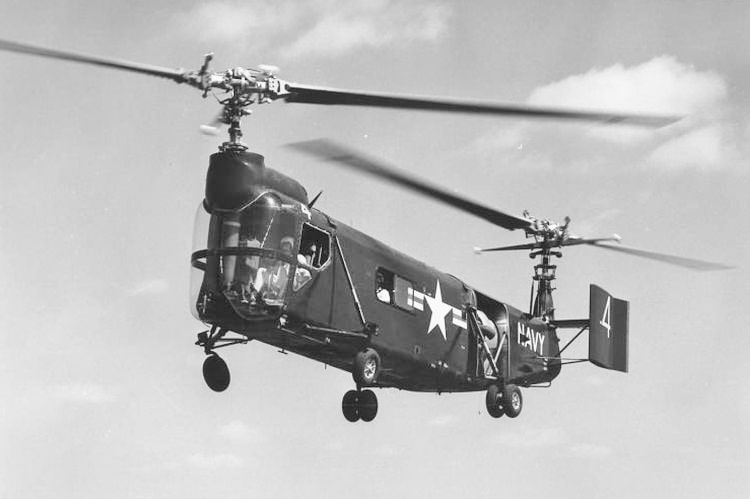







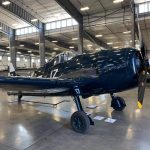




“The aircraft had four landing gear legs, each with six wheels.” I see four landing gear legs in the photos, but the forward legs each have a single wheel, while the aft legs each have two wheels, not six wheels on each leg.