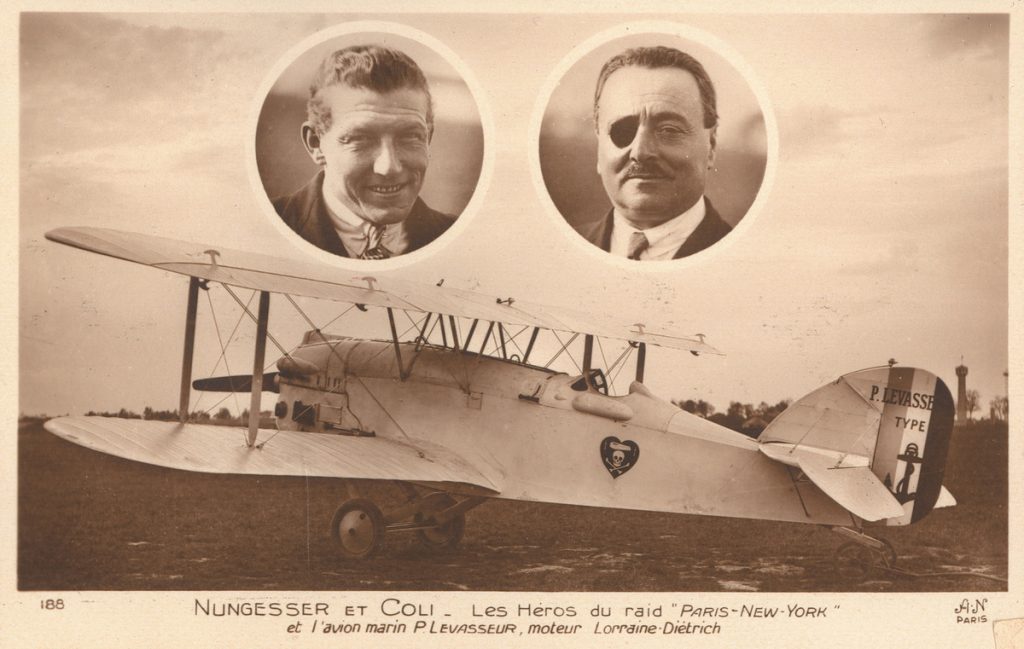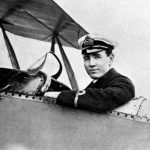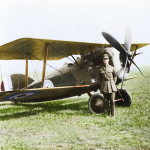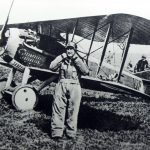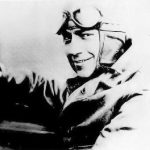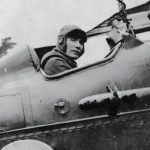
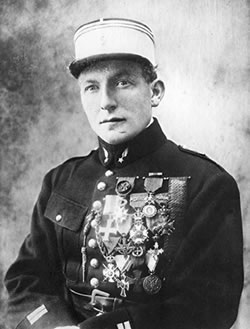

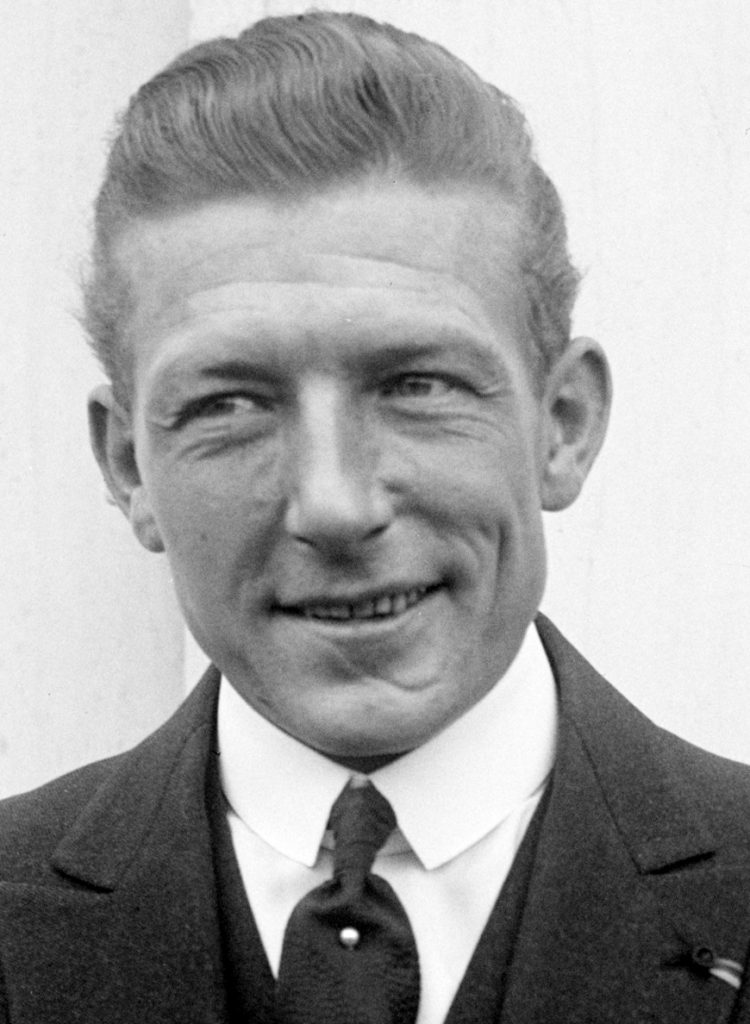
Charles Nungesser was born on March 15, 1892, in Paris. His life was mysterious, from the way he used to bounce back to the war after injuries, to his death. In World War I, he became one of the “aces of aces” with 43 air combat victories, making him France’s third-highest scorer. But his life didn’t start as an aviation freak. Like many aces, he initially was interested in mechanics. In 1907, after graduating from the École des Arts et Métiers, Nungesser went to South America, where he worked as an auto mechanic in Buenos Aires, Argentina. Later, he became a professional racer and, in 1909, participated in one of the first automobile expeditions across the Andes Mountains. He became involved in aviation when he began flying a Blériot plane owned by a friend. He flew numerous flights over Uruguay and Argentina.
Ace Journey of Charles Nungesser
As World War I began, Nungesser returned to France and was assigned to the 2nd Régiment de Hussards, a cavalry regiment. He participated in the Battle of the Frontiers but found himself surrounded. He managed to reach the French lines on September 3, 1914, after intercepting a German staff car, killing the four officers inside, and driving the vehicle at high speed through the entire German-occupied area. This daring action earned him the Military Medal. But his dream of flying in the war had not yet been fulfilled, so he requested a transfer to the air force. The request was granted, and he was transferred to a French World War I bomber squadron, Escadrille VB106. On January 22, 1915, he began his training and obtained his pilot’s license on April 8. Based at Saint-Pol, near Dunkirk, he flew his first mission over occupied Flanders on April 11 aboard a Voisin 3.
On April 26, Nungesser engaged in his first aerial duel against a German Albatros, and his aircraft was hit four times, but he safely brought it back. His first confirmed aerial victory came in late July when he shot down an Albatros plane. He was awarded the Croix de guerre, a prominent French military decoration established in 1915 to honor soldiers, after his first win. However, just after his first victory, he was also placed on house arrest despite shooting down another Albatros. In July 1915, when he was assigned to non-flying duties, he flew his Voisin to give chase to five Albatros planes. Though he shot one in partnership with his mechanic, Roger Pochon, he was punished with an eight-day house arrest. He participated in 53 bombing missions with VB106 before shifting to a new squadron. After an advanced training course for fighter missions, Nungesser joined a renowned French fighter squadron, Escadrille N 65 in Nancy in November. It was at this time that he had a coat of arms painted on the fuselage of his Nieuport, which would become a legendary black heart bearing a silver skull and crossbones above a coffin flanked by lit torches.
The Last Journey
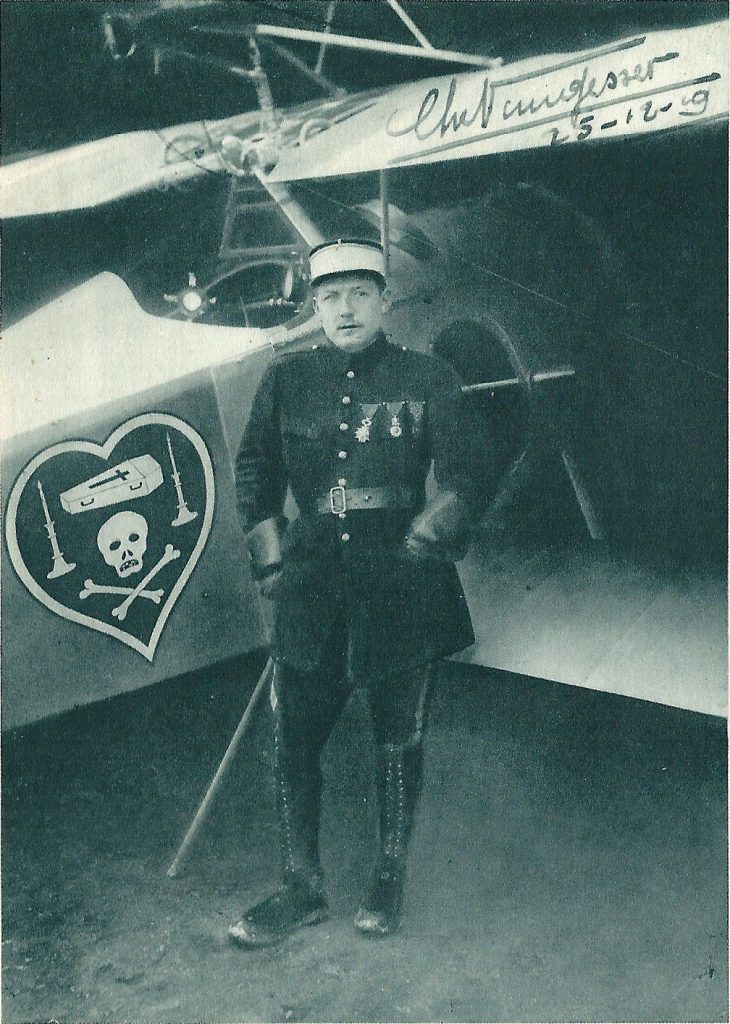
In February 1916, Nungesser broke both his legs as his aircraft crashed. He was injured many times during his fighting career, but returned strongly. In April 1916, he claimed his fifth victory and became an ace officially. After being injured again in May and June, he kept flying during the Battle of the Somme, and in September 1916, Nungesser achieved the feat of shooting down three enemy aircraft on the same day. In December, he scored his twentieth victory, earning him a commendation and the Military Cross. He secured 21 confirmed victories by the end of 1916. However, he was wounded again and temporarily discharged from service. He nevertheless obtained permission to continue flying and shot down two enemy aircraft on May 1, 1917. On August 16, he achieved his 30th victory. However, as a consequence of his injuries, his health deteriorated, especially after he was seriously injured in a car accident in which his mechanic, Pochon, was killed. Despite everything, Lieutenant Nungesser returned to the front in December.
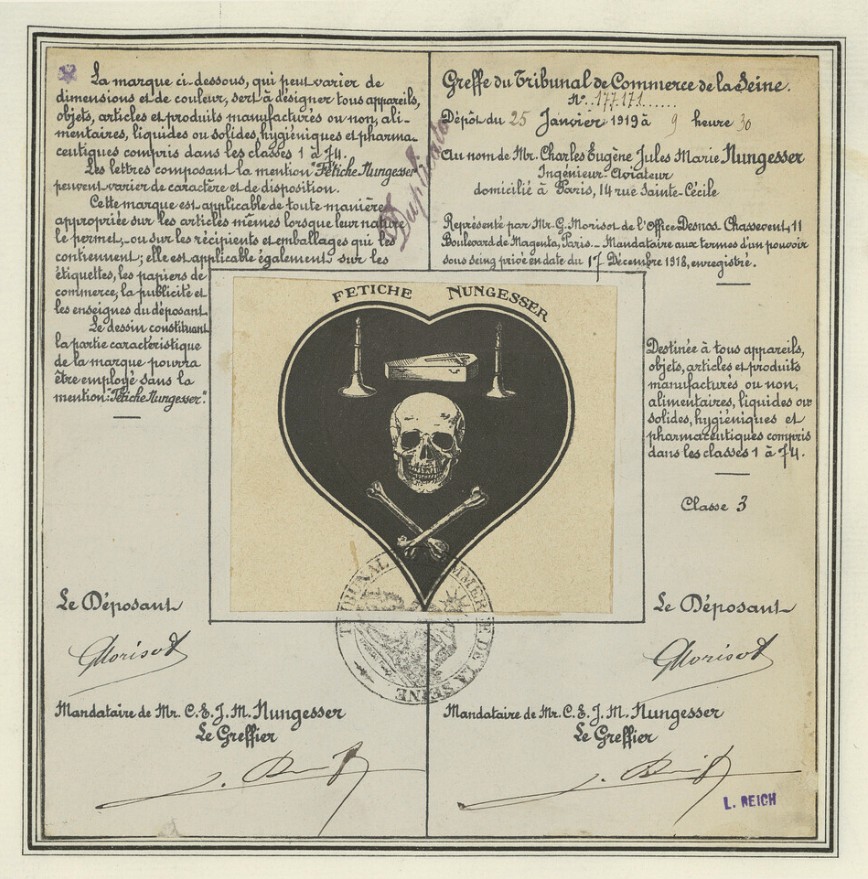
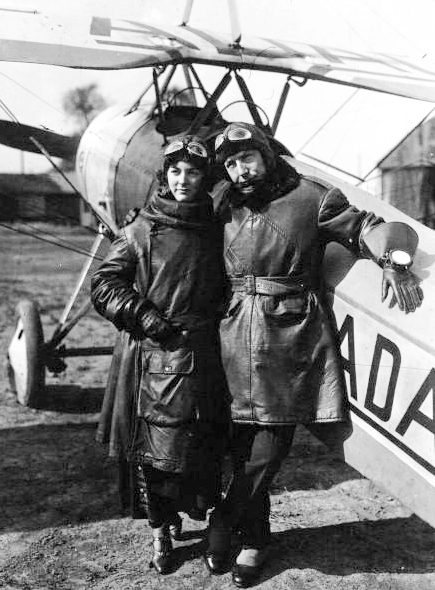
On June 5, 1918, he shot down the 36th plane and received the Legion of Honour. After another stay in the hospital, Nungesser returned to the front on August 14, with a new aircraft, the Spad XIII, and instantly shot down four balloons to increase his tally to 42. The next day, he scored yet another victory, and his final score, to reach a total of 43, was the third highest among French Aces. As the war ended, he returned to civilian life, but his passion for aviation remained the same. Nungesser agreed to establish a flying school in Orly. However, a lover of challenges, he wanted to cross the Atlantic by plane. On May 8, 1927, he, along with François Coli, a navigator already known for making historic flights across the Mediterranean, took off from an airport near Paris towards New York. They flew L’Oiseau Blanc (The White Bird) aircraft, a Levasseur PL.8 biplane painted with Nungesser’s old World War I insignia. Last sighted near Ireland, Nungesser and Coli neither reached New York nor returned to Paris and are presumed dead. Their disappearance remains one of aviation’s enduring mysteries. Charles Nungesser both had courage and the ability to bounce back strongly, the abilities all the flying aces share in common. Read about more flying aces HERE.