






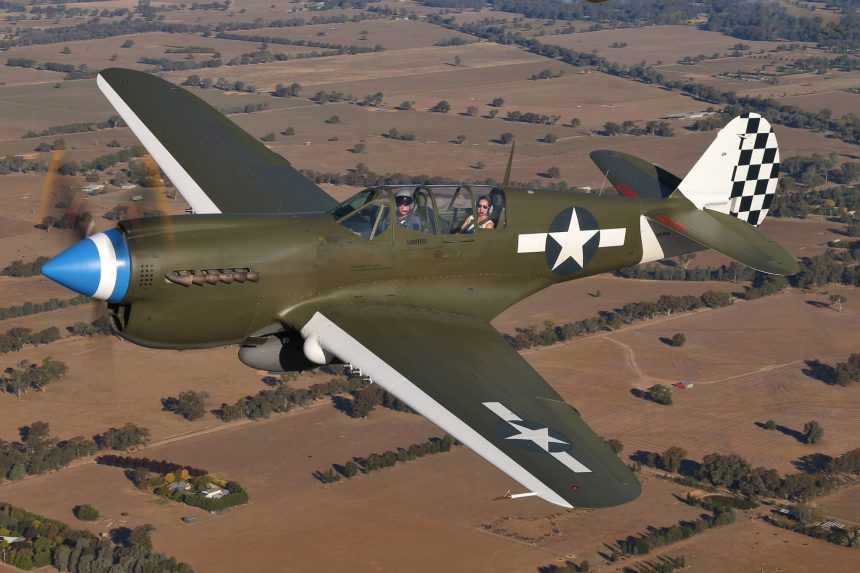

Platinum Fighter Sales has listed a historically significant P-40N Warhawk for sale that served in World War II. The P-40N-5-CU, with serial number 28748 and United States Army Air Corps tail number 42-104986, belonged to the 49th Fighter Group, 8th Fighter Squadron. This P-40 was produced under a 1942 contract by Curtiss Aircraft at Buffalo, New York, in mid-1943, and upon delivery to the United States Army Air Corps, it was disassembled, shipped overseas, reassembled in Australia, and flown north to New Guinea. At this time, the aircraft had a white tail section with a black checkerboard pattern. The plane kept doing its work till 1944, silently, until on February 14, 1944, it took off from Gusap Airfield, piloted by 1st Lt Nelson D. Flack, Jr, on a fighter sweep over Wewak. Flack was flying as “Yellow Flight” leader with wingman Lt. Jim Reynolds. While over the target, Flack broke formation to pursue a Ki-61 Tony. He engaged in a turning dogfight with the enemy fighter, executing a high-g-force turn and then attacking head-on. Flack’s fire hit the Tony, killing the pilot, and the Tony crashed into the sea in a shallow dive, his second confirmed victory. It was Flack’s second confirmed aerial victory, but the P-40’s cooling system was damaged from a machine gun hit by Tony, which raised the aircraft’s oil pressure.
After the dogfight, Flack proceeded back to base alone. He could not find Reynolds due to overcast skies and called for him over the radio, but other pilots did not locate Reynolds during their flight back to Gusap Airfield. Flack made a forced landing in a field of kunai grass near the Sogram River, northeast of Siniap in the Ramu Valley near Tauta, about 60 miles north of Gusap and behind enemy lines. During the landing, he was knocked unconscious and sustained a broken arm. When he awoke, he exited the cockpit before the plane caught fire and exploded. After Flack went missing, three L-5 Sentinels from the 25th Liaison Squadron “A” Flight took off from Gusap Airfield on a mission to locate and rescue Flack. About 60 miles north, L-5 Sentinel 42-98066, piloted by MSgt Eugene Salternik, was the first to spot the burning P-40 wreckage. He saw a grassy field a mile away from the crash site, but when he landed, the tall kunai grass caused his aircraft to flip over, breaking the propeller. Salternik was unhurt but could not find Flack, so he stayed with his plane overnight.
The next morning, more L-5s returned from Gusap Airfield to drop supplies for Salternik and told him to stay at the crash site. Meanwhile, Lt. Hector Henstridge of the Australian Army 2/7th Commando Company volunteered to parachute down, even though he had never done it before and had flown in an airplane only once. On February 16, 1944, Henstridge successfully parachuted from another L-5 and reached Salternik. The following day, they found Flack and spent the next two days clearing a landing area they named “Flack Field” for another L-5 to land. On February 21, 1944, two more L-5s took off from Gusap Airfield to land at the new area. L-5 “Termite” 42-98085, piloted by James D. Nichols, landed safely but damaged the airframe, making it unusable. L-5 piloted by Sgt. Thomas Stallone also landed successfully but could not take off with extra passengers and left alone. After losing multiple rescue aircraft, the 71st Tactical Reconnaissance Group decided not to send any more planes for the “Flack Incident.”
On the ground, the group of four, led by Henstridge, began walking 35 miles through dense jungle to meet an Australian patrol. Other L-5s could not find them, and they were declared Missing In Action (MIA) as the search was called off. On March 3, 1944, after ten days in the jungle, they ran out of food and had to eat nuts and fish from the area. They all caught malaria and lost 20-35 pounds during the journey. On March 10, 1944, they encountered an Australian Army patrol that was also looking for them before the Japanese. They were taken to a shelter to recover, and on March 12, 1944, they were evacuated from Faita Airfield to Gusap Airfield by a Royal Australian Air Force (RAAF) Walrus. Afterwards, the Henstridge was awarded the U.S. Army Distinguished Service Cross, and the two L-5 pilots, Salternik and Nichols, were awarded the Silver Star for their parts in saving P-40 pilot Flack. Flack received a Purple Heart for his injuries and an Air Medal for his confirmed kill during the mission.
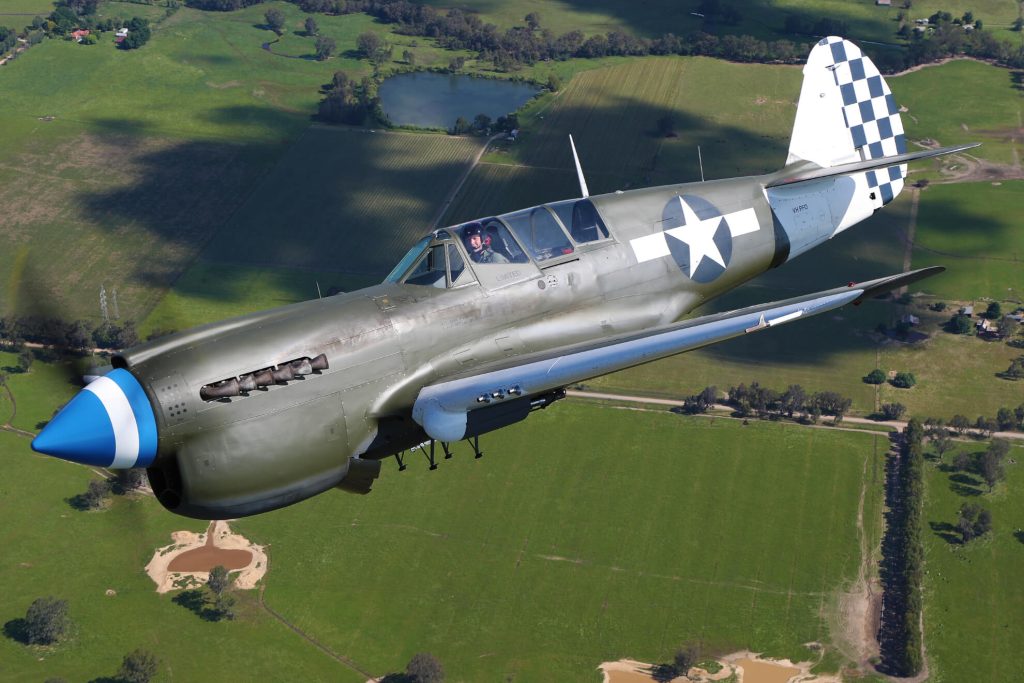
The wreckage of the P-40 with tail number 42-104986 remained at the crash site and was damaged by the landing and fire. In 1946, an RAAF Searcher Team visited a plane wreck on May 18 and recorded its serial number. They recorded that traces of the green-and-white checkerboard pattern on the tail were still visible, indicating it belonged to the 49th Fighter Group. The P-40 was burned near the cockpit and engine, but had otherwise crashed relatively well. They also found L-5 42-98066. The wreck remained at the site until 2004, when John Douglas rediscovered it. In early June 2004, Robert Greinert from HARS Aviation Museum Australia (HARS) and Murry Griffith from Precision Aerospace recovered the P-40. They removed the engine and one wing from the crash site, flew them to Madang, stored them there, and then sent them to Precision Aerospace at Wangaretta Airport in Australia. After the recovery, Murry Griffith transported a critical part of the tail and rudder to Australia. Initially, this aircraft was sold to Gus Larard. In 2005, restoration started with a new wing set and fuselage, using only parts of the original tail section. After Murry Griffith passed away, the renamed company Precision Airmotive completed the restoration. In 2011, Platinum Fighter Sales sold the plane to Doug Hamilton.
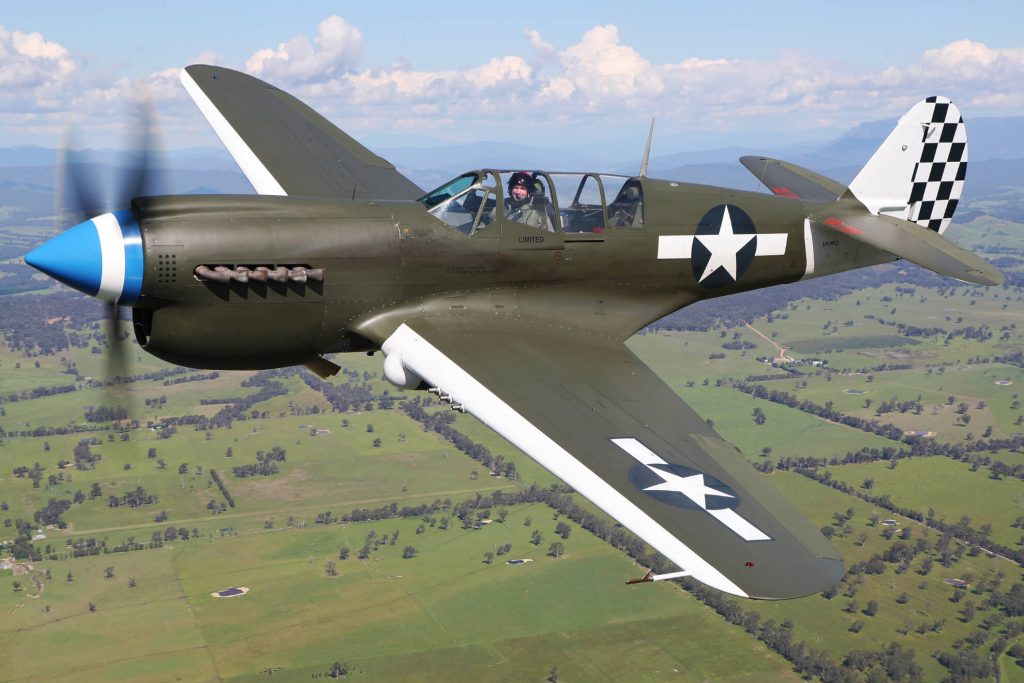
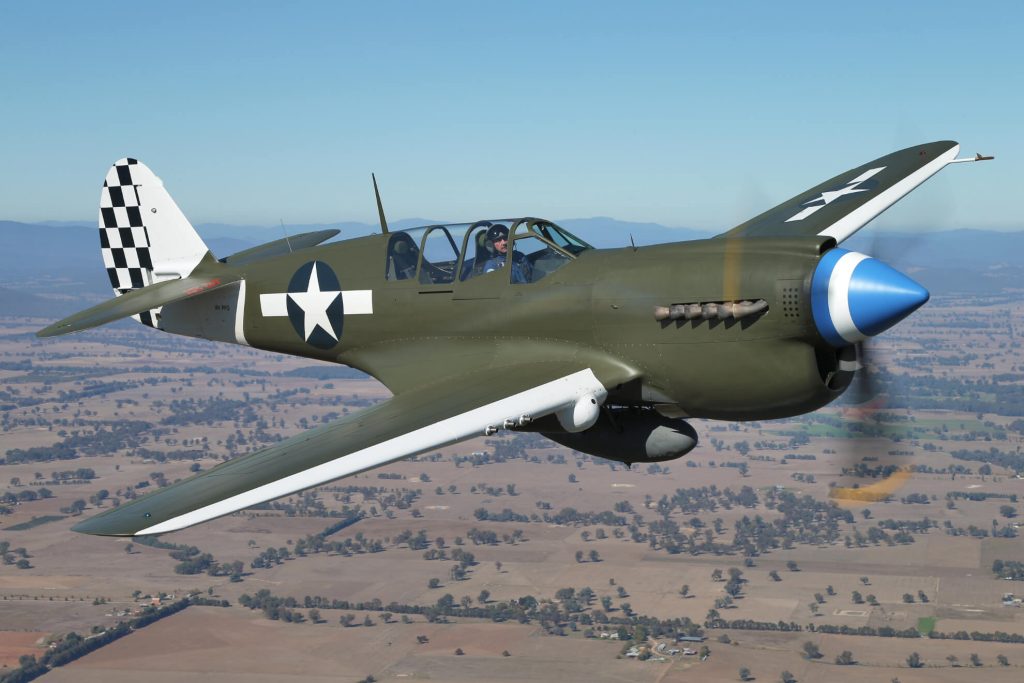
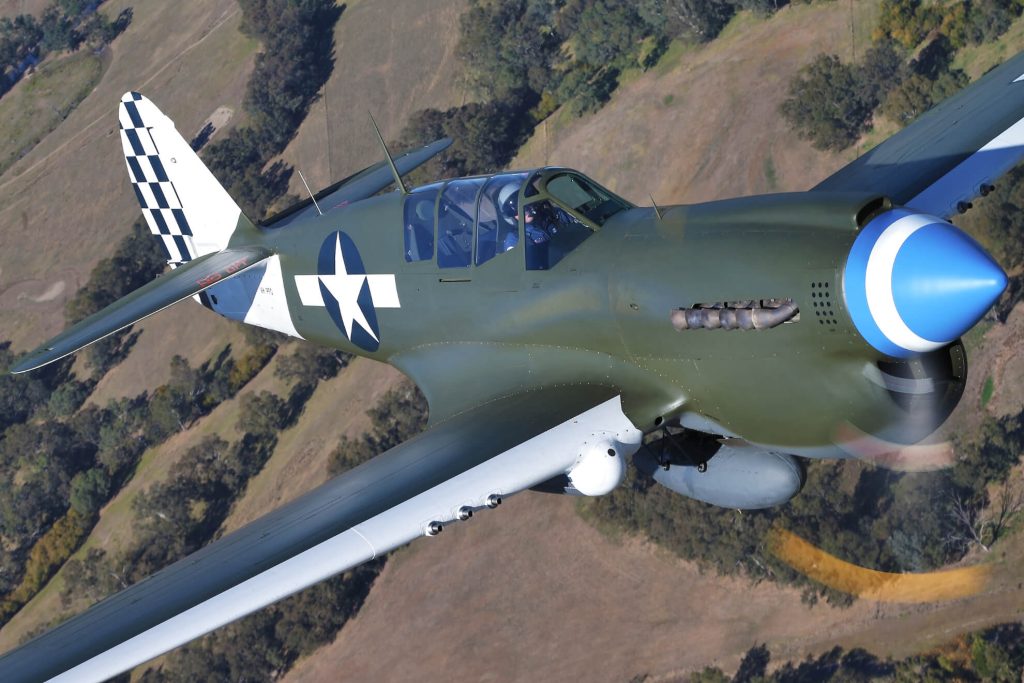
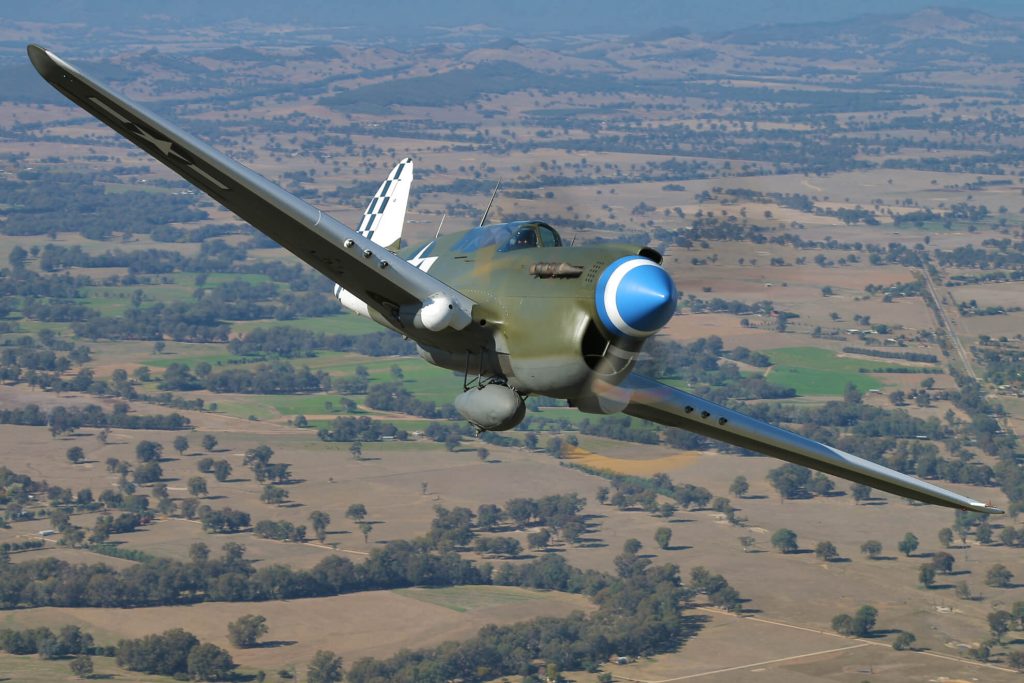
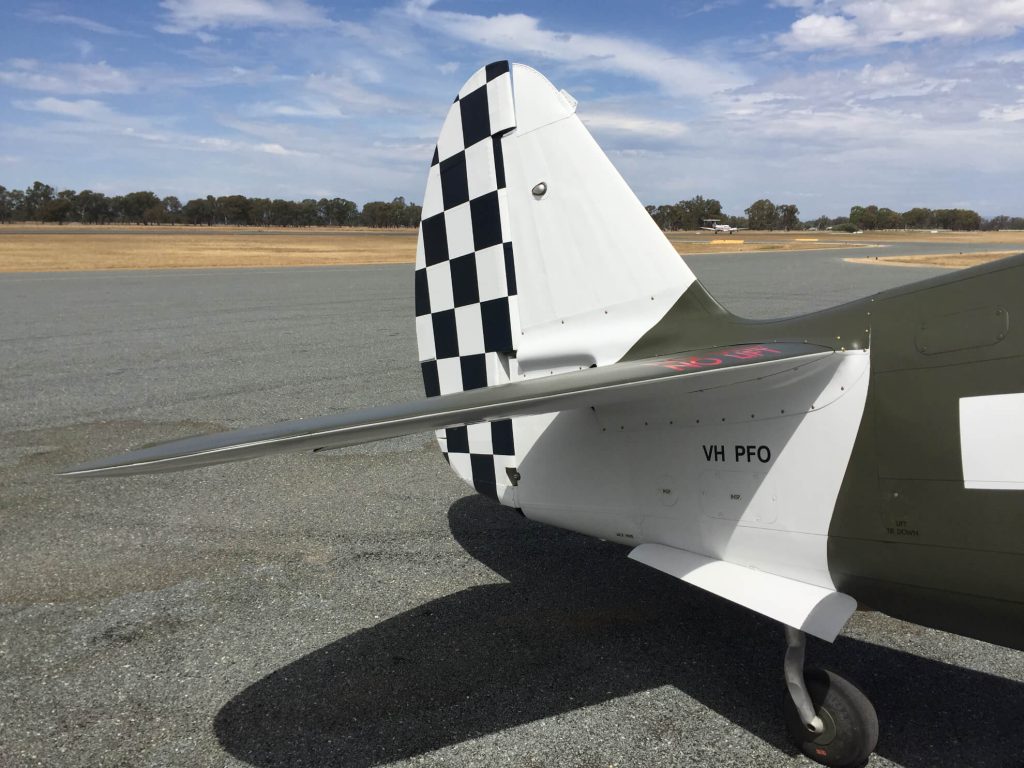
On October 14, 2015, the plane was registered in Australia as VH-PFO and owned by Precision Airmotive Pty Ltd. After 10 years of restoration, the P-40 made its first flight on March 6, 2016. It was painted to match the markings of Flack’s aircraft, P-40N 42-104986. Starting in 2016, Classic Air and Classic Air Adventure Flights began offering flights in this aircraft from Wangaretta Airport. For more information about this airplane, visit www.platinumfighters.com.
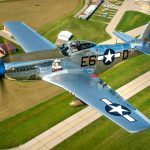
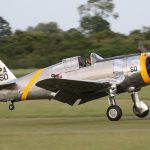
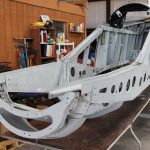
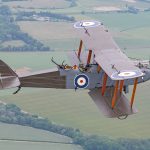




The P40, a Great and Largely Overlooked Fighter.
A Good, Solid Workhorse that, despite lacking the charisma of the Mustangs, Lightnings and Thunderbolts, always gave a good account of itself, in the Right Hands.
Fighting against the Me109’s, 110’s & Fw190’s in North Africa, the Mediterranean and Italy.
And against the Japanese Army & Navy Fighters across the Asian & Pacific Theatres.
Rugged, Dependable and Capable; what more could any Pilot of reasonable Skill ask for?
For my money, the Best Looking of All is the P40C; it looked what it was … a Killer.
My Hat Off, and thanks, to All those Brave American & Allied Pilots who flew it with Skill and Determination.
Helping to Win for the World a Just Victory and Peace; Their Star Will Never Dim.