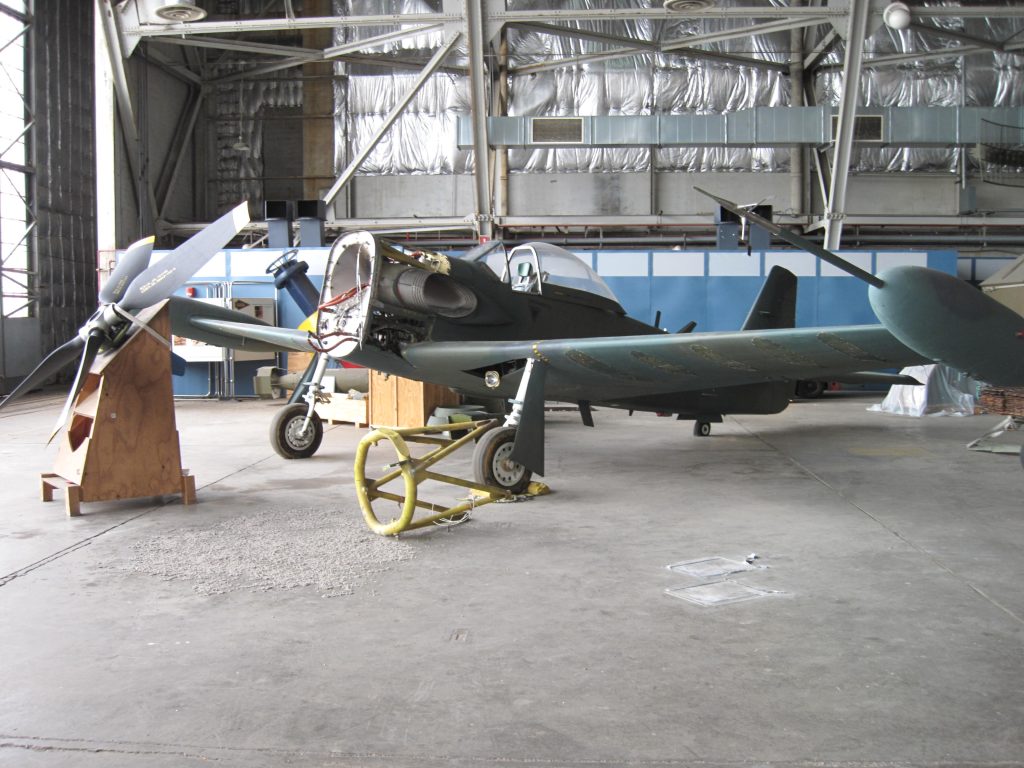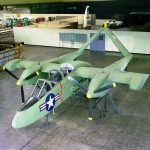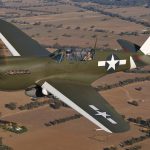
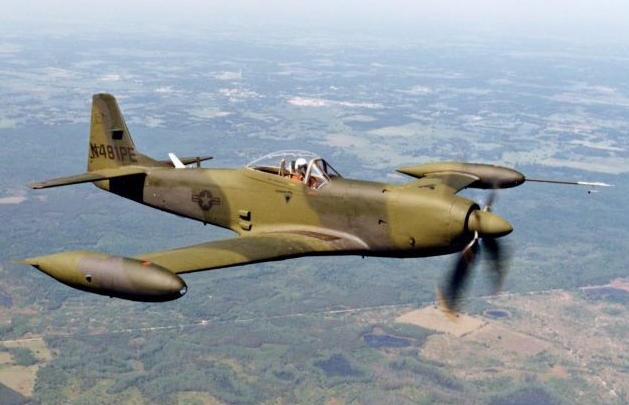

The North American P-51 Mustang was considered one of the best US fighters of World War II due to its long-range escort capability, high speed, and dominance over Europe. In the 1960s, Cavalier Aircraft Company sought to redevelop the P-51 as a lightweight ground-attack aircraft with greater punch for use in the US Air Force’s low-intensity conflicts and counterinsurgency (COIN) operations. Cavalier began developing the aircraft in 1968 and installed a Rolls-Royce Dart 510 turboprop engine into airframes of the company’s earlier-upgraded P-51 Mustangs. Cavalier’s owner and founder, David Lindsay, called it Turbo Mustang III. The new engine increased speed and payload capacity, and the aircraft was fitted with armor protection. It performed well during test flights, but the US Air Force and other services never ordered it. During the 1960s, the US Air Force was not interested in lightweight aircraft, despite several attempts being made to persuade the service.
Evolution of Piper PA-48 Enforcer
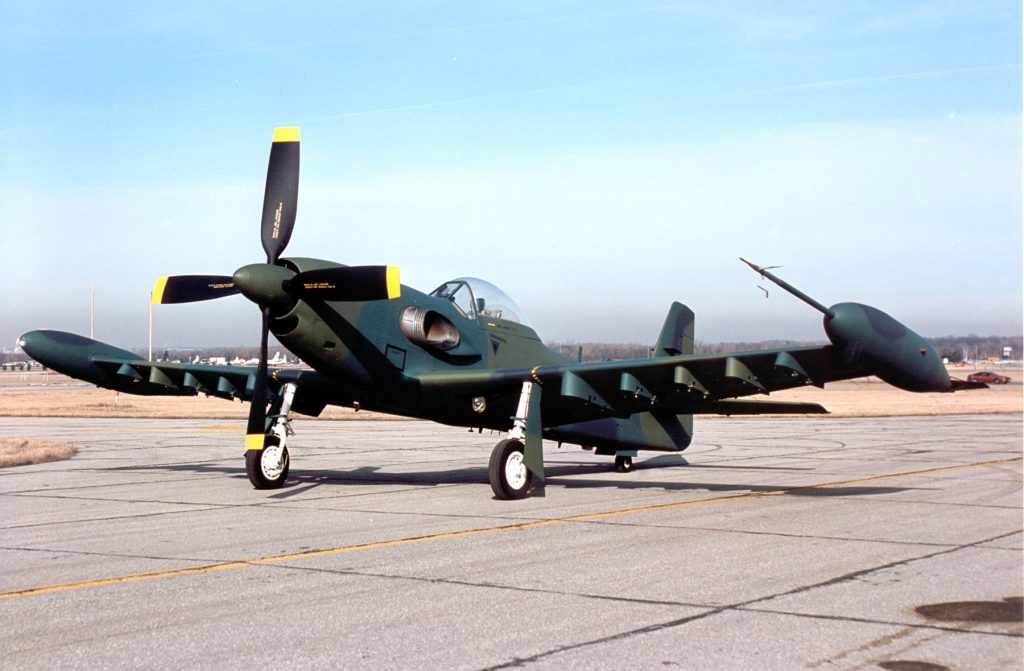
As Cavalier lacked the capacity to mass-produce its Mustangs, Lindsay sold its concept to Piper Aircraft in 1970, which eventually named it the Enforcer. Piper fitted a leased Lycoming T55-L-9 engine from the US Air Force to Cavalier’s Mustangs and flew the aircraft for nearly 200 hours. Piper converted two existing Enforcers into two different kinds of aircraft with heavy modifications and a new engine. One was a single-seat aircraft, and the other was a dual-control aircraft. However, this dual-control platform crashed in July 1971 before it could be presented to the US Air Force for evaluation. Only the single-seat aircraft was tested, and it performed well but still failed to secure any contract. No Enforcer tests or reevaluation occurred until 1979, when the US defense bill allocated $11.9 million to Piper to build two new prototypes of the aircraft for the Air Force to reevaluate. The aircraft was renamed the PA-48 Enforcer, and Piper redesigned it from scratch. While continuing with the Lycoming YT-55-L-9A turboprop engine that produced 2,445 horsepower, the plane was heavily revamped, and at last, it shared less than 10% of its parts with the World War II Mustang fighter.
No Orders Despite Strong Performance
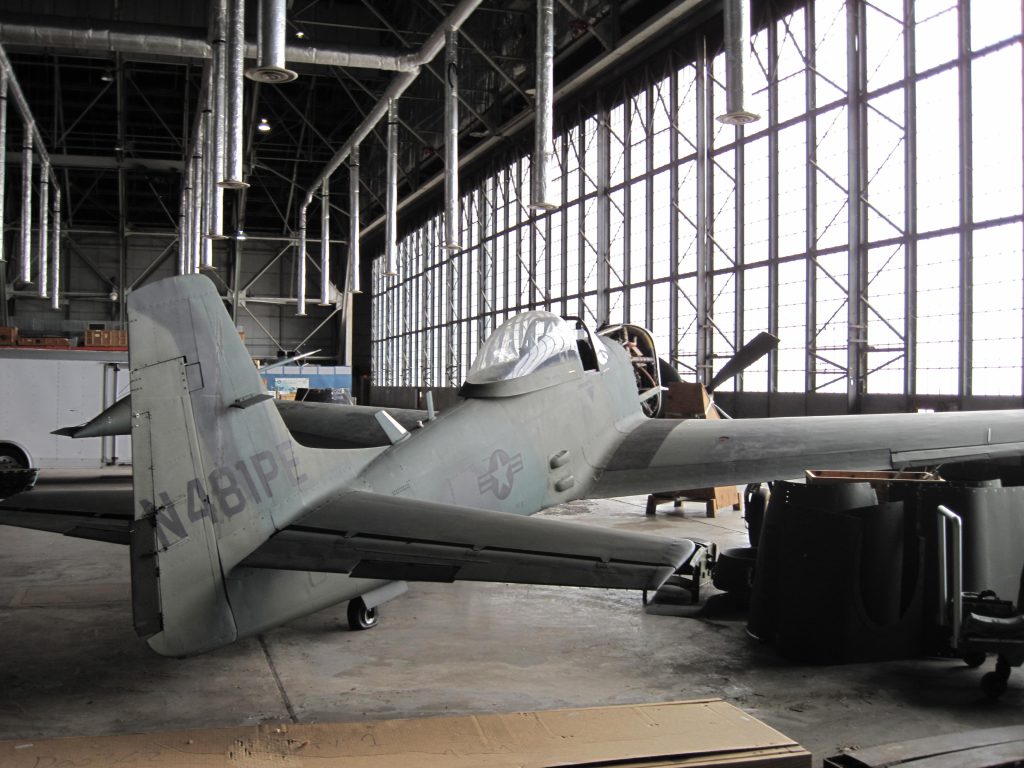
The single-seat aircraft was 34 feet long and 13 feet high, with a wingspan of 41 feet. Its loaded weight was 14,000 pounds, and it had a maximum speed of 345 mph at an altitude of 15,000 feet. The aircraft featured 10 underwing hardpoints, allowing a varied mix of munitions depending on the mission profile. It could carry 5,680 pounds of weapons. The engine was mated to the 4-bladed Aeroproducts propeller with a diameter of exactly 11 ft 6 in. The aircraft looked like a P-51 Mustang, but was a completely new plane. It underwent testing with the US Air Force again in 1983 and 1984. The aircraft performed well and was found to be well-suited to COIN roles, but the US Air Force once again chose not to move forward with it, and both prototypes were retired in 1984. There is still no clarity on why the US Air Force decided to ignore the platforms that performed extremely well in their intended space. After its retirement, one of the PA-48 Enforcer prototypes was sent to the National Museum of the United States Air Force. In the Grounded Dreams series, the PA-48 Enforcer stands out as an aircraft that showed no issues, flew well, generated enough power, and still found no buyers. Many aircraft show both good results and problems before being canceled, but the PA-48 Enforcer stands out. There is no released data from any of the services that tested the aircraft, which is why the project’s cancellation remains a secret. Finally, the aircraft could have performed the same way as the World War II icon, the P-51 Mustang, had; it just didn’t get a chance. Read more about Grounded Dreams aircraft HERE.