






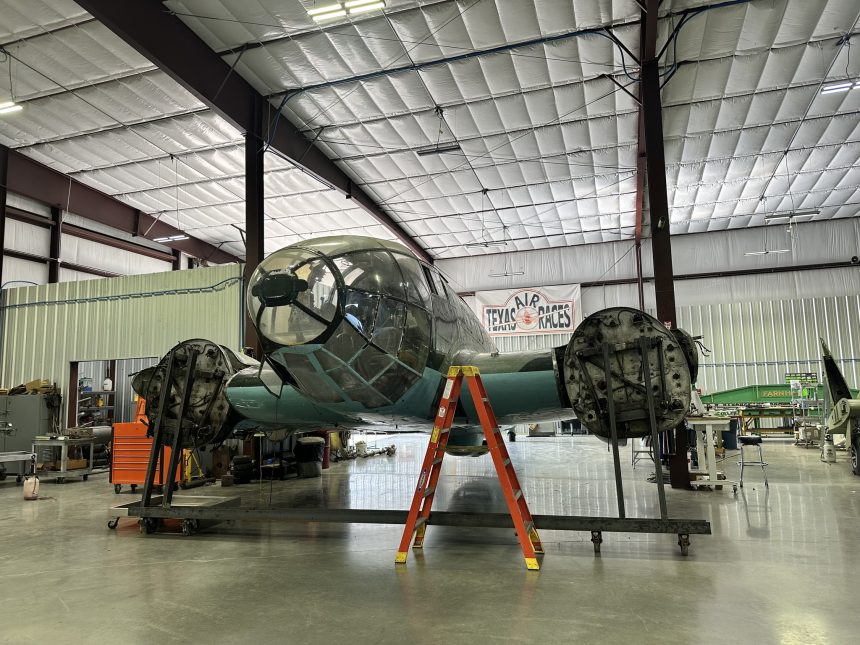

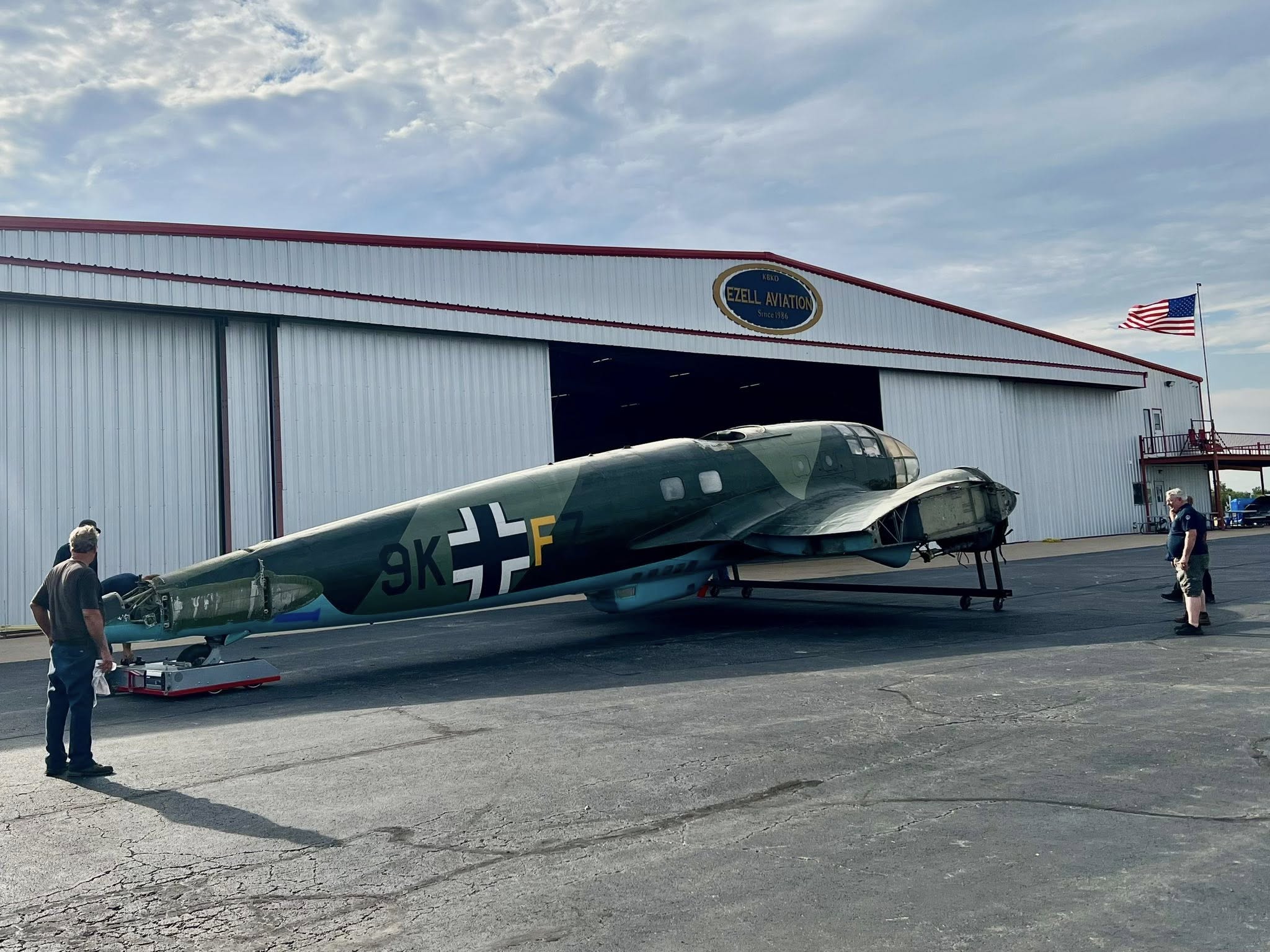
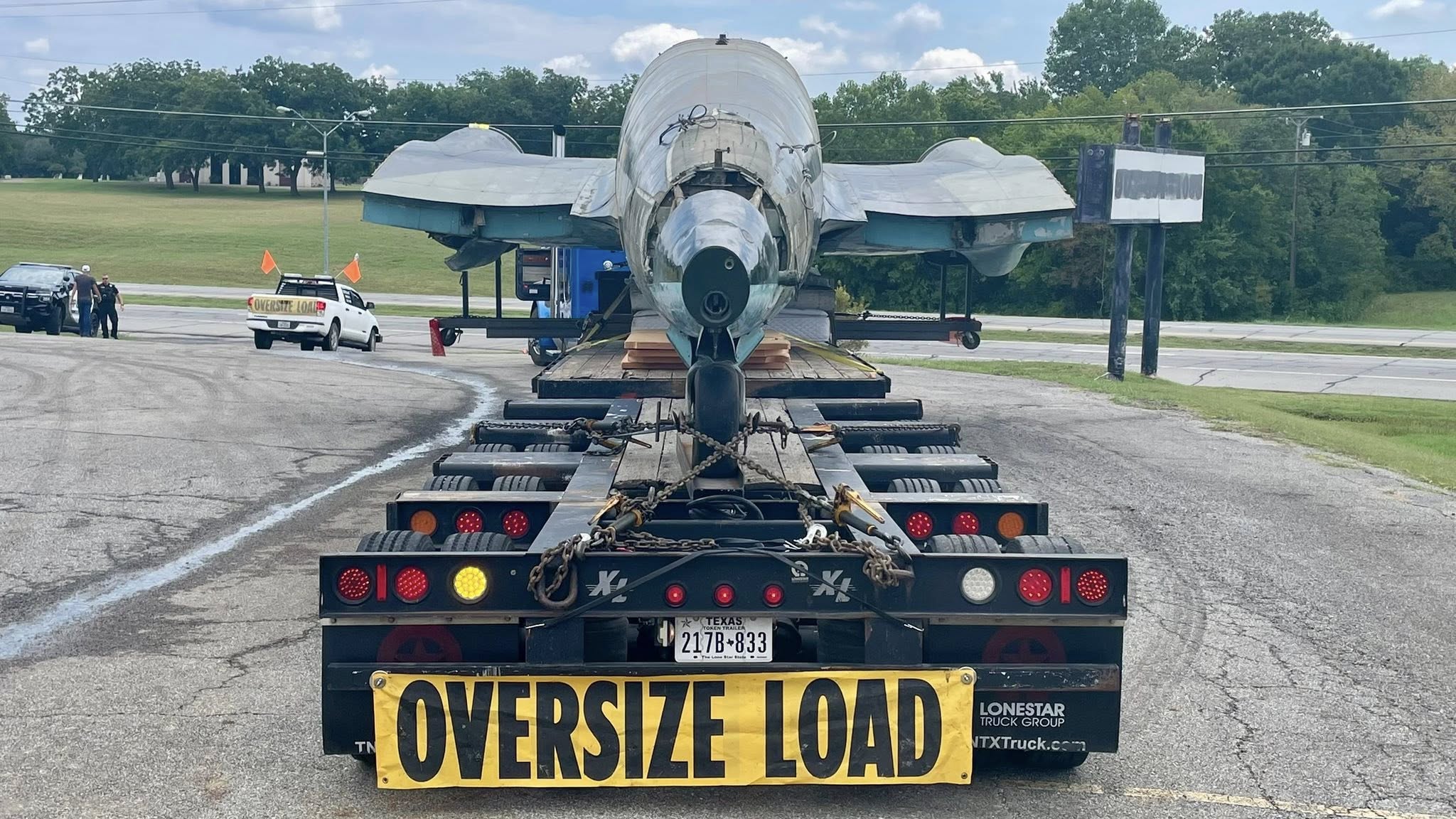
On August 13, the Cavanaugh Flight Museum announced that restoration work had begun on its Spanish-built version of the Heinkel He 111—the C.A.S.A. 2.111. Following the museum’s closure in Dallas, the bomber was initially relocated from Addison to Sherman, Texas. From there, it was carefully transported by truck to Ezell Aviation in Breckenridge, a facility renowned for award-winning warbird restorations, including the recent completion of the Lockheed P-38J Jandina III. Ezell’s team has been tasked with returning the aircraft to its former cinematic glory, as seen in the classic films Battle of Britain and Patton. The project will involve extensive inspections and repairs to assess and restore this historically significant bomber.
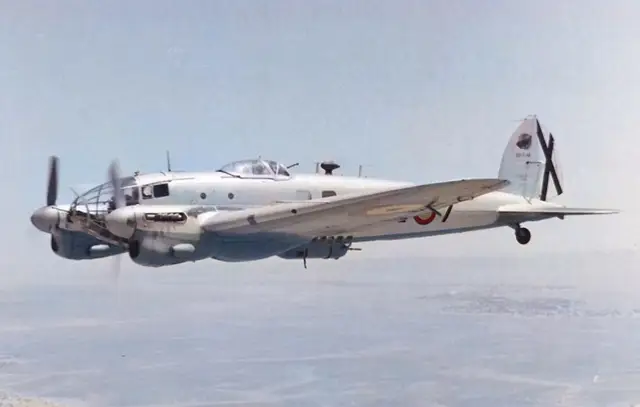
The museum’s aircraft, a CASA 2.111E, was built as serial number 155 and accepted by the Ejército del Aire (Spanish Air Force) in 1950 as B.2I-27 ( Source via Spanish aviation historian Paco Rivas) . Initially, a shortage of engines forced the aircraft into storage. In 1956, it was fitted with Rolls-Royce Merlin engines and modified for aerial photography and mapping duties. It officially entered service on December 14, 1956, as B2-I-27 with the Air Force’s Cartographic Group.
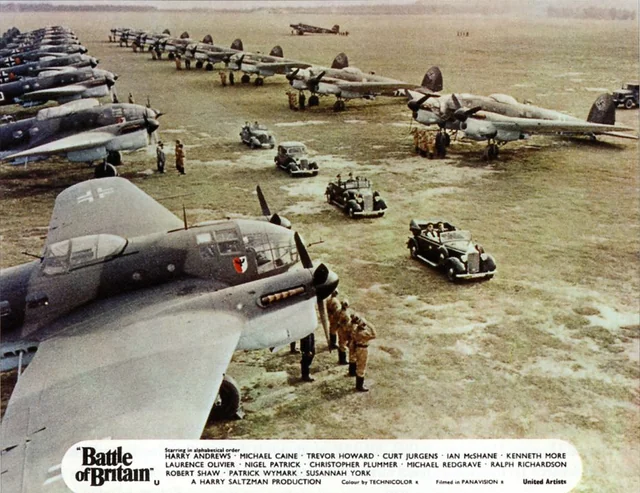
In 1968, B2-I-27 was painted in WWII Luftwaffe markings and became one of over 30 CASA bombers used as stand-ins for the unavailable Heinkel He 111s in the film Battle of Britain. From 1970 to 1972, it served with 403 Escuadrón at Cuatro Vientos near Madrid, before transferring to 406 Escuadrón at Torrejón in November 1972. In January 1974, it joined 46 Grupo in Gando, Canary Islands, where it supported Spain’s campaign in Western Sahara. On January 21, 1975, B2-I-27 was returned to the air armaments factory in Seville, declared surplus, and placed in storage—marking it as, according to available records, the last CASA 2.111 in active Spanish Air Force service.
Now registered N99230, the bomber was ferried across the Atlantic in October 1977 by British warbird pilot Neil Williams for new owner Dolph Overton. Painted in the markings of Kampfgeschwader 51 “Edelweiss” of the WWII German Luftwaffe, it was loaned to the Confederate (now Commemorative) Air Force in the late 1970s, which maintained and operated it before it returned to Overton’s Florida base. In 1983, David Tallichet acquired the aircraft for display at the Combat Air Museum in Topeka, Kansas. The Cavanaugh Flight Museum purchased B2-I-27 in 1995, and its ferry flight into Addison Airport that year was its last to date.
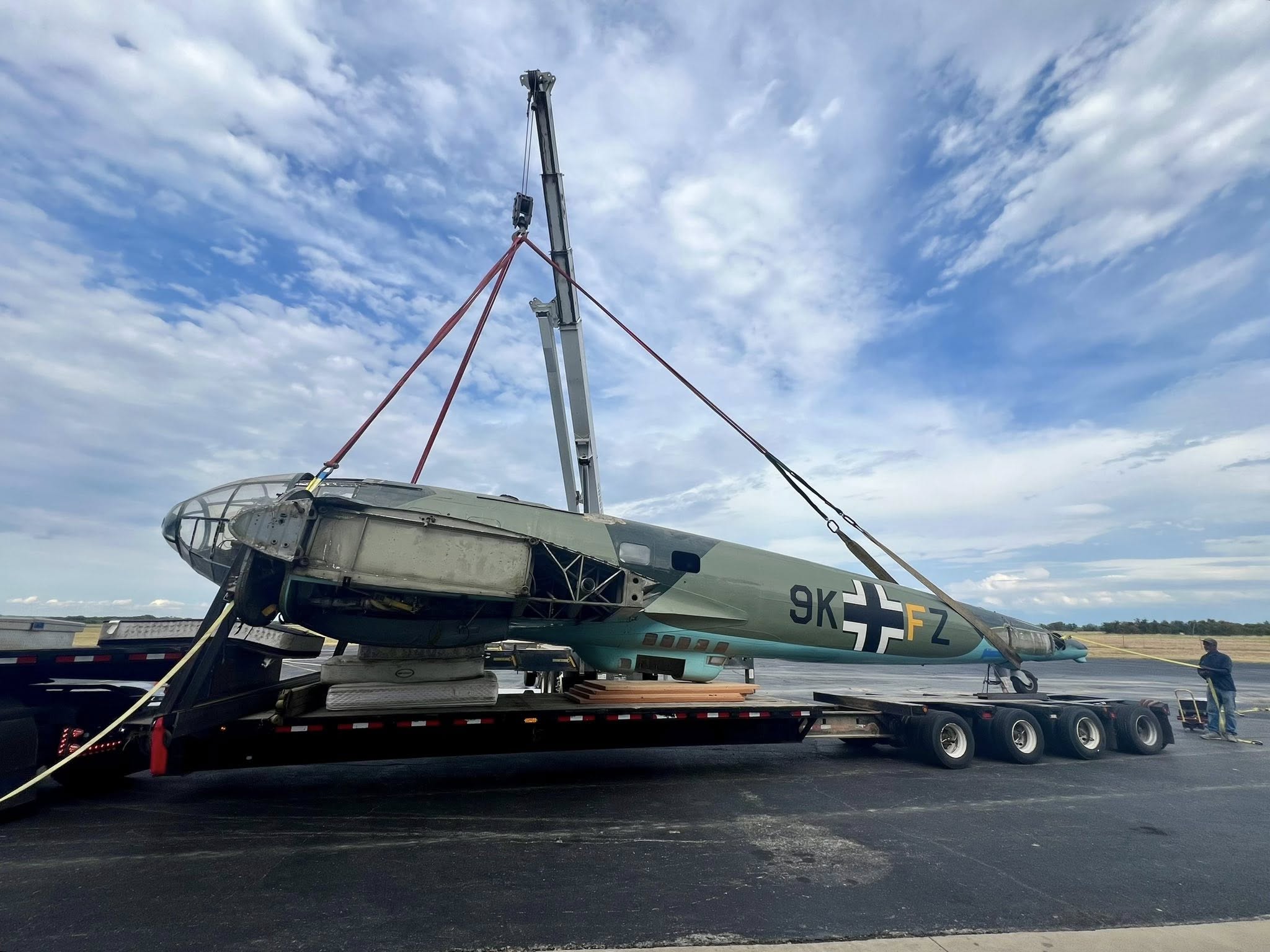
The recent move from Sherman to Breckenridge was challenging but successful. The museum expressed its gratitude to the cities of Sherman, Muenster, and Graham; to the maintenance facility volunteers; and to Tony and Julia Wood. Special thanks were given to the Breckenridge Police and Fire Departments for managing traffic during the transport. The Cavanaugh Flight Museum plans to provide ongoing updates as the restoration progresses on this rare and historically important aircraft. For more information, visit the museum’s Facebook page: www.facebook.com/CavanaughFlightMuseum.









Dear VAN-Team!
Great to read about that CASA 2.111-Restoration. Two questions are on my mind:
Will it be restored to flying condition?
Amd if so, wich engines will it use (since I heard about rumors that several Junkers Jumo-Engines will be rebuilt)?
Just curious…
Hartmut Hekmann
We understand that it will be restored to flying conditions. We don’t have any confirmed information about the engines. Very likely they will us RR engines.