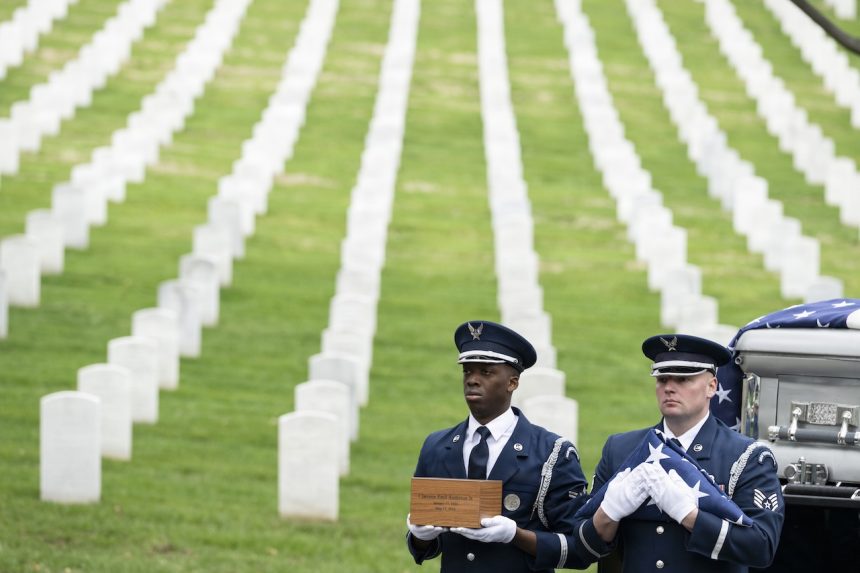

On March 30, 2026, more than 100 family members, friends, and members of the aviation community gathered at Arlington National Cemetery to honor the life and legacy of Col. (Ret.) Clarence E. “Bud” Anderson—fighter ace, warbird ambassador, and one of the most respected pilots in American history. Anderson, the last surviving American World War II triple ace—credited with 16¼ aerial victories, well beyond the five required to attain “ace” status—passed away at the age of 102. He was laid to rest in Section 38 beside his beloved wife of nearly 70 years, Eleanor “Ellie” Cosby, who preceded him in 2015.
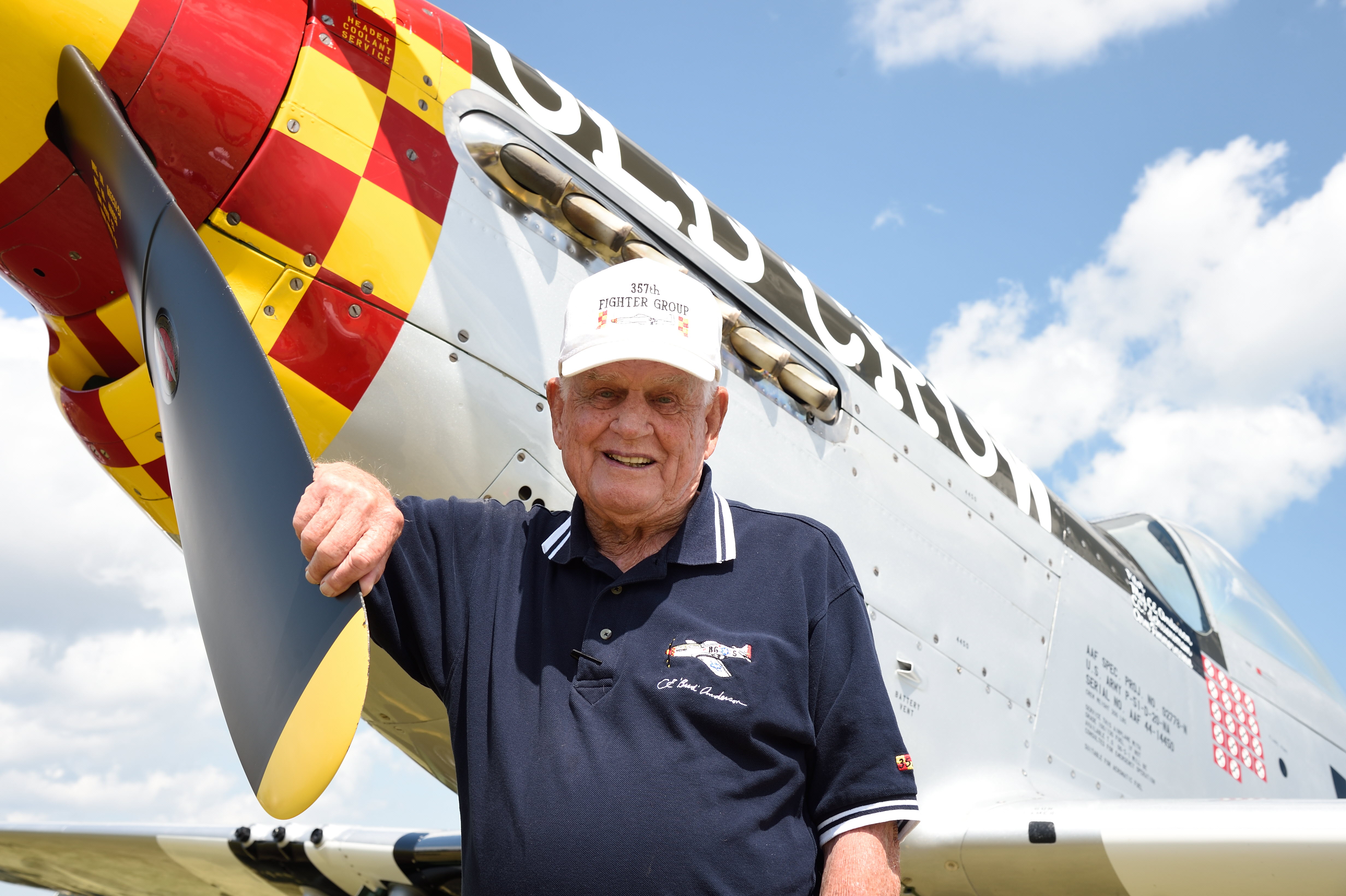
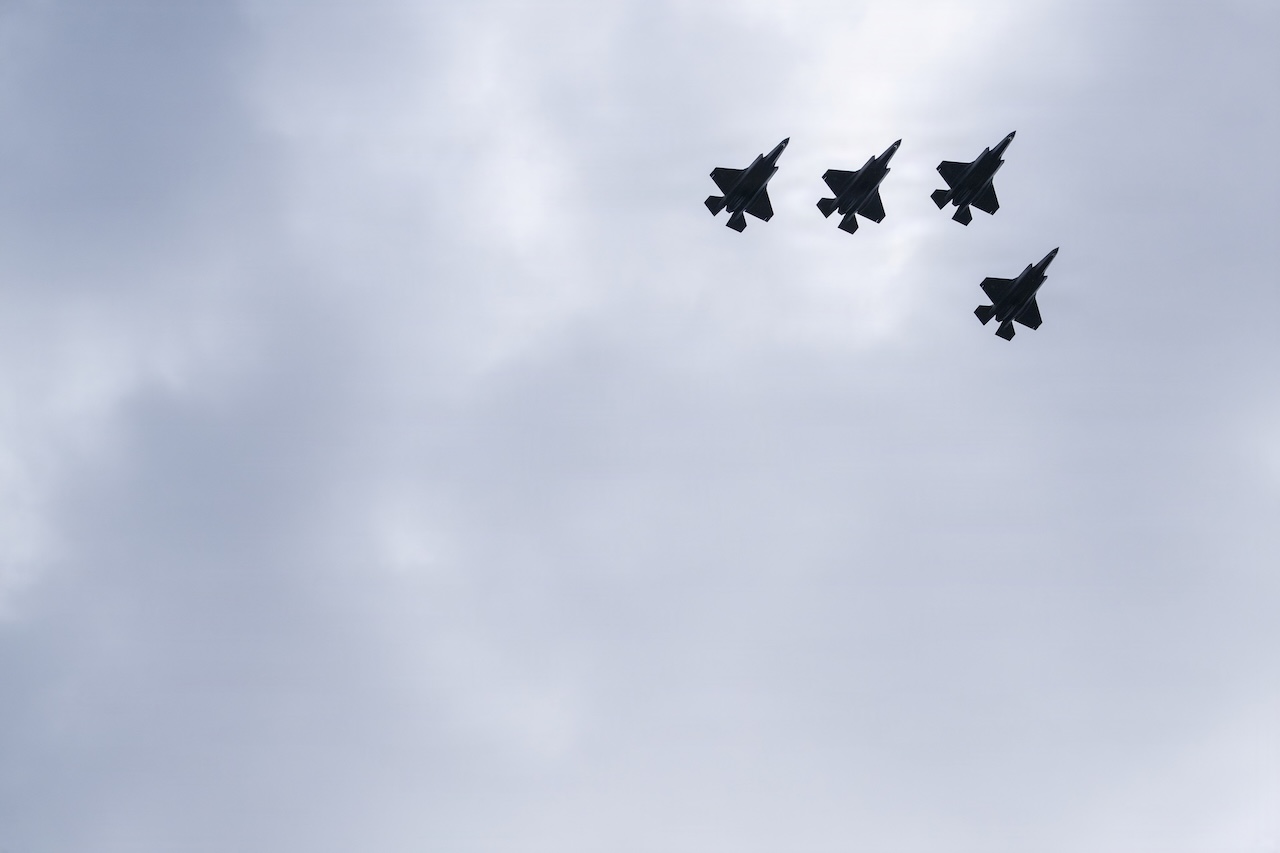
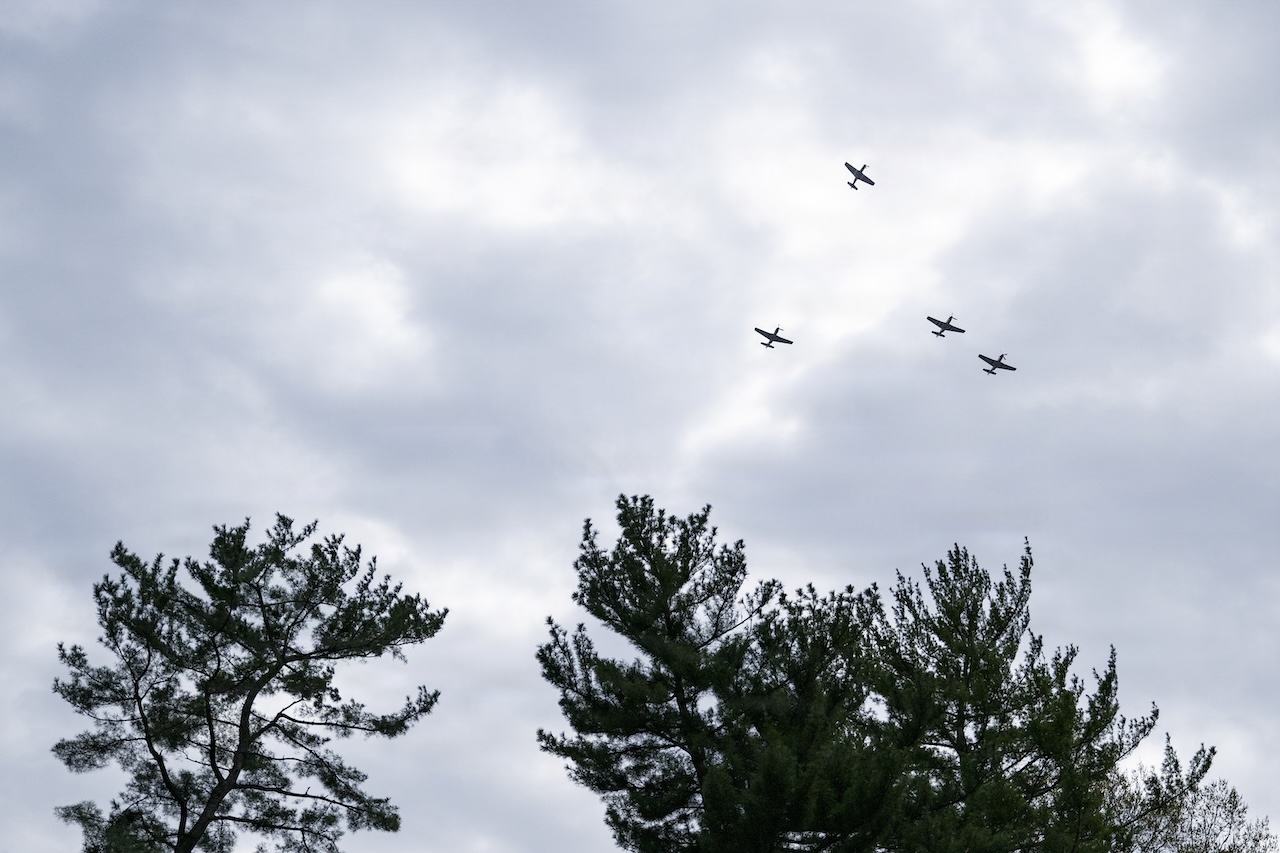
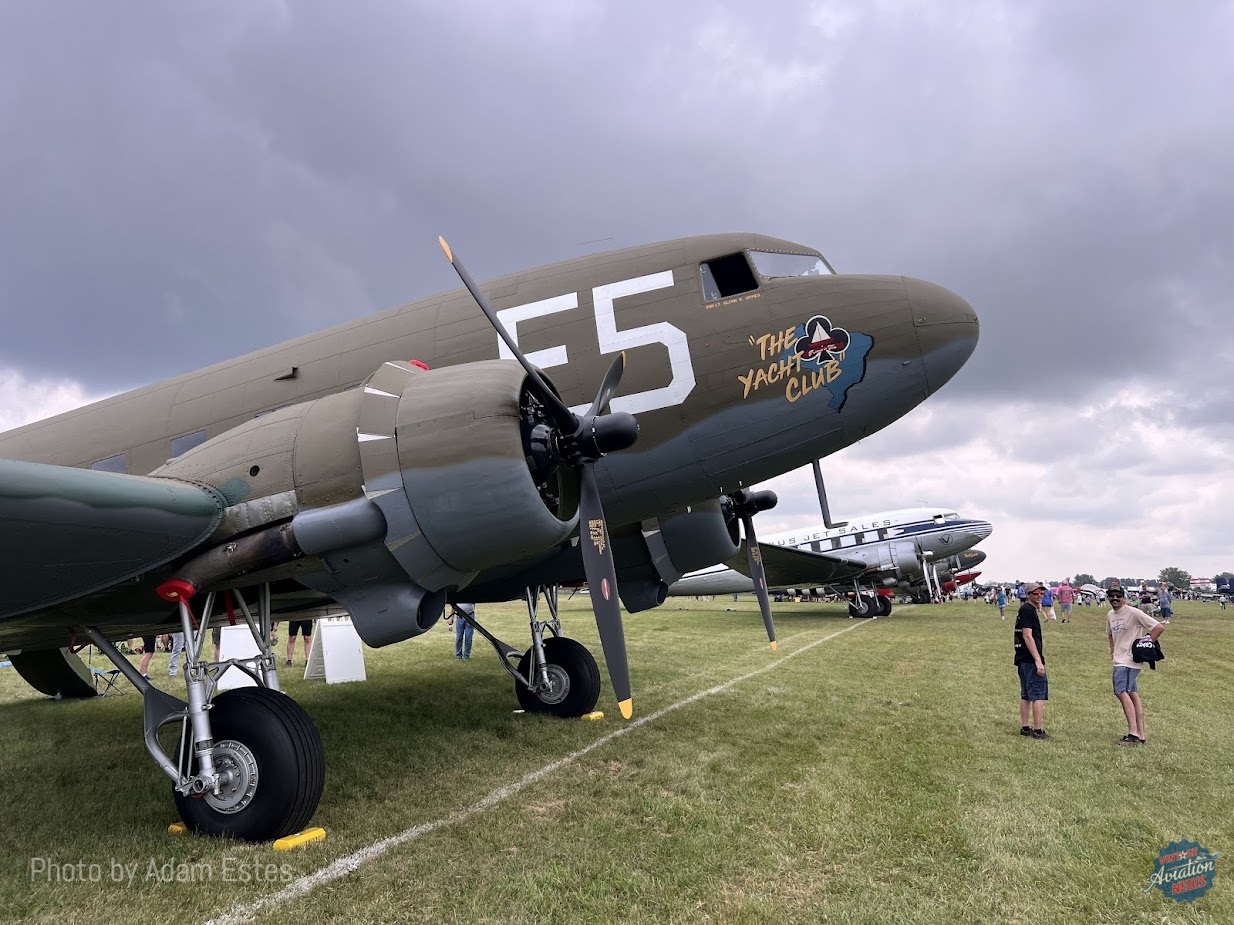
A full military funeral with escort honors paid tribute to Anderson’s extraordinary service. The ceremony opened with a stirring double flyover: four U.S. Air Force F-35 Lightning II fighters conducted a missing man formation, followed by a formation of four North American P-51 Mustangs—the aircraft with which Anderson achieved fame during World War II. Among them were aircraft bearing the iconic name Old Crow, the markings Anderson carried into combat over Europe.
The warbird formation was led by Liberty Foundation Chief Pilot Ray Fowler, flying the organization’s P-51D Mustang Old Crow. Joining in tribute were additional Mustangs brought by the American Honor Foundation, including The Rebel, Blue Nose, and a P-51B-model Old Crow. Present among those paying their respects were prominent members of the warbird community, including James Hagedorn, Steve Hinton, Paul and Gail Bowen, Connie Bowlin, Theresa Eaman, the Fagen family, and the Axdorph family from Sweden—underscoring Anderson’s enduring influence within the global preservation community.
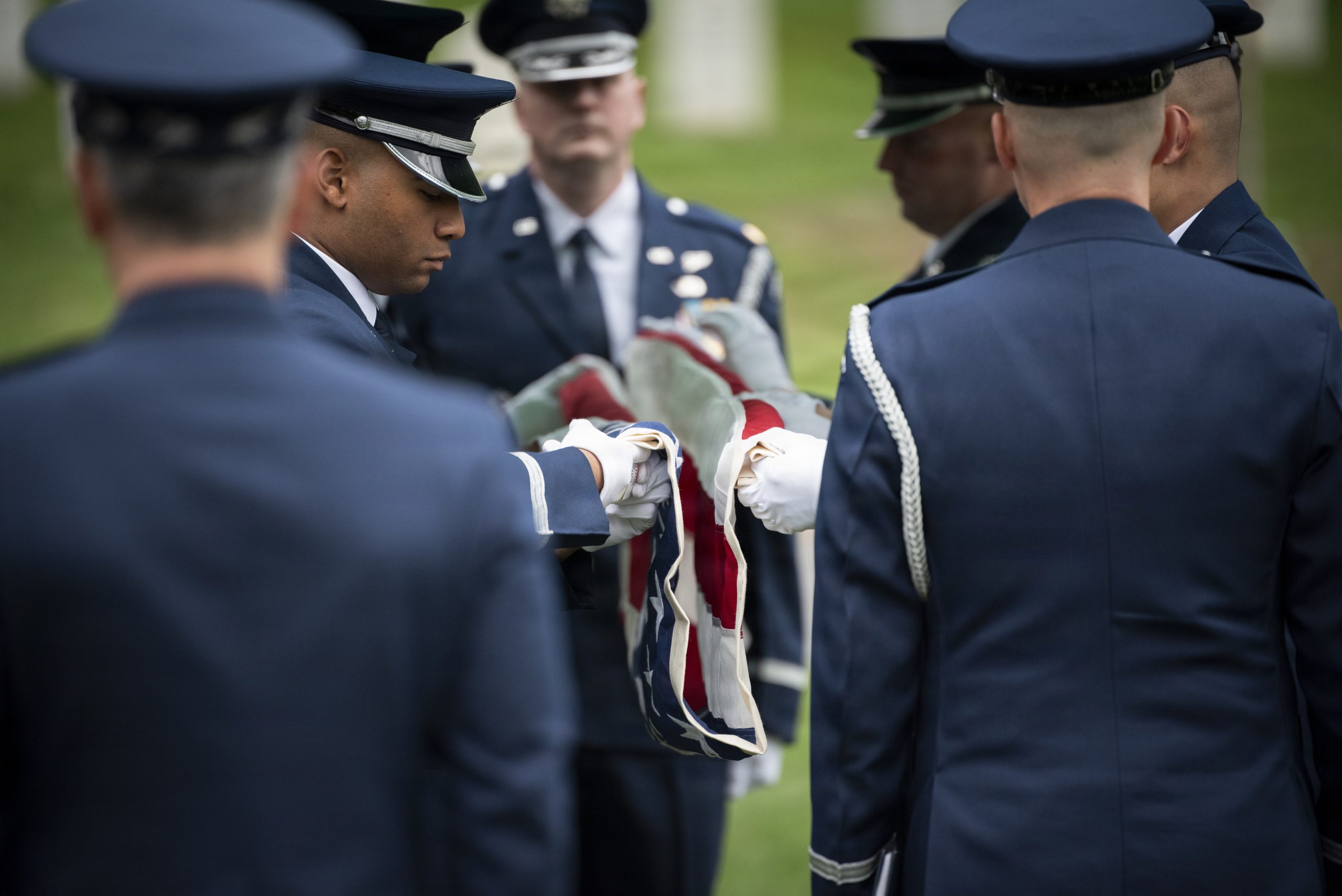
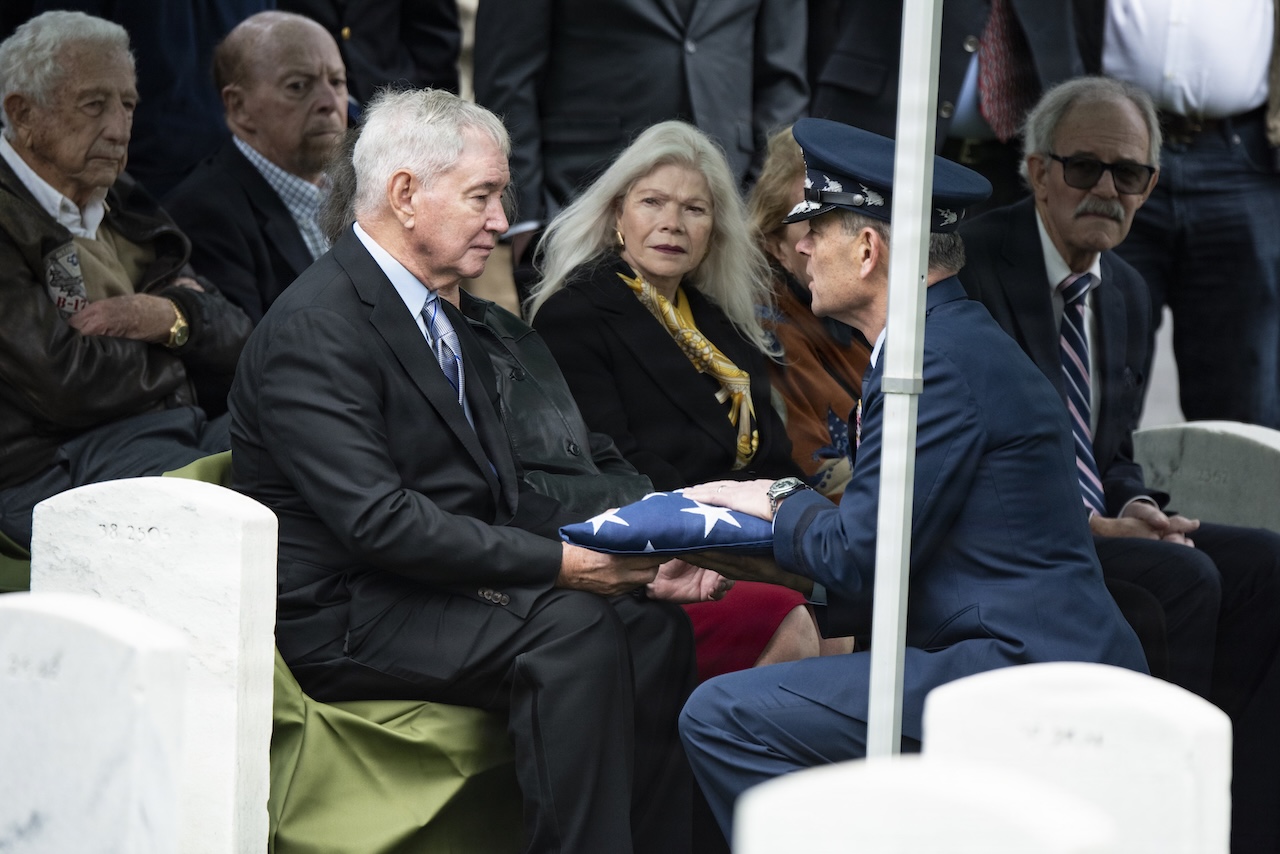
A horse-drawn caisson carried Anderson’s urn to the gravesite, where an Air Force honor guard rendered final respects. Three volleys were fired, a bugler sounded Taps, and a lone bagpiper concluded the ceremony with a moving rendition of Amazing Grace. U.S. Air Force Chaplain Capt. Andrew Lloyd, who officiated the service, reflected on Anderson’s life of service: “In life, Bud Anderson honored the flag with his service to the nation; now, it is our honor to present our nation’s flag in honorable and faithful service.” Following the precise folding of the American flag, Chief of Staff of the Air Force Gen. Kenneth S. Wilsbach presented it to Anderson’s son, Jim, who then shared it with his sister, Katherine “Kitty” Burlington. “We’re sharing it,” Jim later explained.
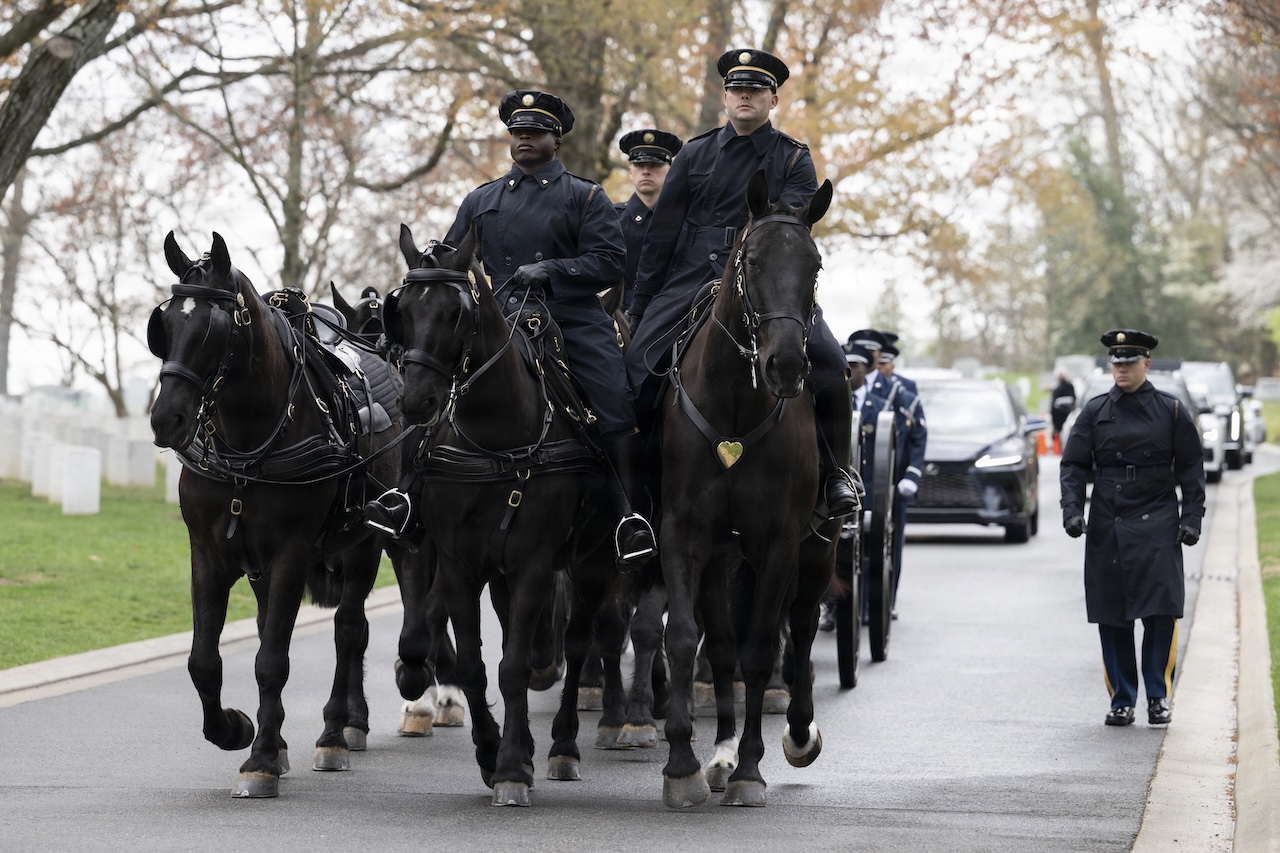
For the Anderson family, the ceremony carried both solemnity and surprise. While Jim had worked to ensure the presence of the P-51 Mustangs, the addition of the F-35 flyover was unexpected. “That was really special,” he remarked. The passing of a legend often leaves us grappling with the question of why, as we tend to think of legends as immortal. Mourning a legend is different from grieving a family member or a close friend. While the latter leaves a significant void in personal lives, Bud Anderson was unique—he was not just an icon, but also an integral part of the warbird family. His presence at airshows, his willingness to share stories, and his passion for preserving history made him more than a historical figure—he was a living bridge to aviation’s golden era.
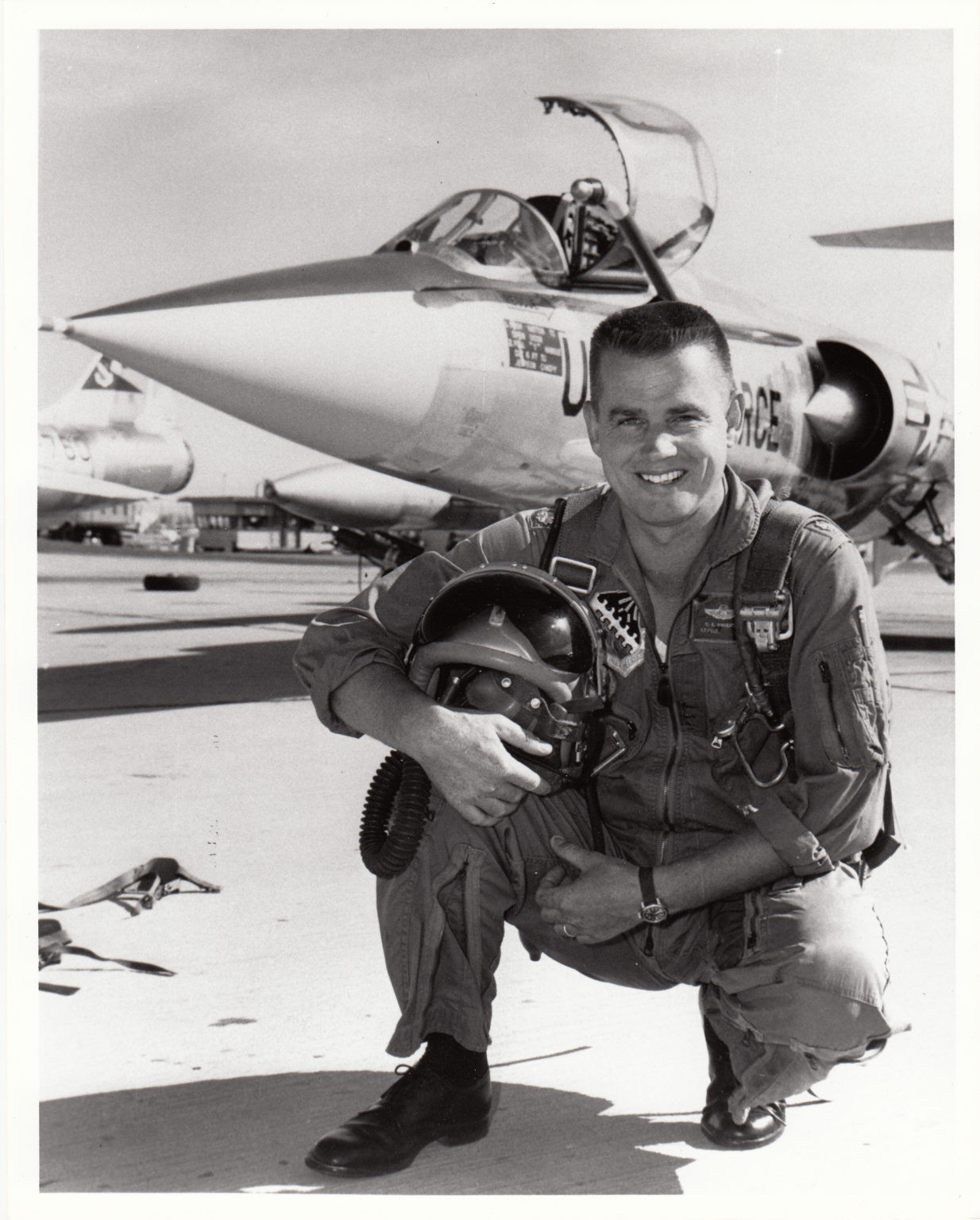
Born in 1922 and raised on a California farm, Anderson’s fascination with flight began at an early age as he watched aircraft pass overhead. He earned his private pilot’s license in 1941 at just 19 years old, and soon after entered the Army Air Corps Aviation Cadet Program in early 1942. Commissioned later that year, he would go on to serve two combat tours with the 363rd Fighter Squadron in the European Theater. Flying the P-51 Mustang, Anderson completed 116 combat missions, escorting Allied bombers deep into enemy territory and helping secure air superiority over Europe. His tally of 16¼ aerial victories earned him the rare distinction of “triple ace.” His wartime achievements were recognized with numerous decorations, including five Distinguished Flying Crosses, two Legions of Merit, and 16 Air Medals, as well as the French Legion of Honor and Croix de Guerre. Anderson continued his military career after World War II, serving through the transition to the independent U.S. Air Force in 1947. Over three decades of service as a fighter pilot, test pilot, and commander, he logged more than 7,500 flight hours in over 130 types of aircraft before retiring in 1972.
Yet his contributions did not end with his military service. In the decades that followed, Anderson became one of the most visible and respected ambassadors of the World War II generation. Through his memoir and countless public appearances, he helped preserve the stories of those who served and educated new generations about the realities of aerial combat and the importance of service. His passion for flight never faded. Anderson continued flying well into his later years and, remarkably, took his final flight in a P-51 Mustang at the age of 100 during a 2022 aviation gathering. Beyond his public legacy, Anderson was remembered most dearly as a devoted husband, father, grandfather, and great-grandfather. His children recalled a man deeply engaged in family life—teaching them to hunt and fish, play sports and games, and even building a makeshift cockpit from cardboard so his young son could “fly” alongside him. In his later years, he remained equally devoted, visiting his wife daily during her time in a nursing home. “I really admired that he was so loyal to her,” Kitty reflected.
The ceremony at Arlington provided a fitting farewell to a man whose life spanned—and helped define—an extraordinary era in aviation history. As Gen. Wilsbach concluded, “Bud Anderson is a hero and legend in air combat; he wrote the playbook. He mastered his craft, flew with immense courage, and leaves a legacy of service that will inspire generations.”