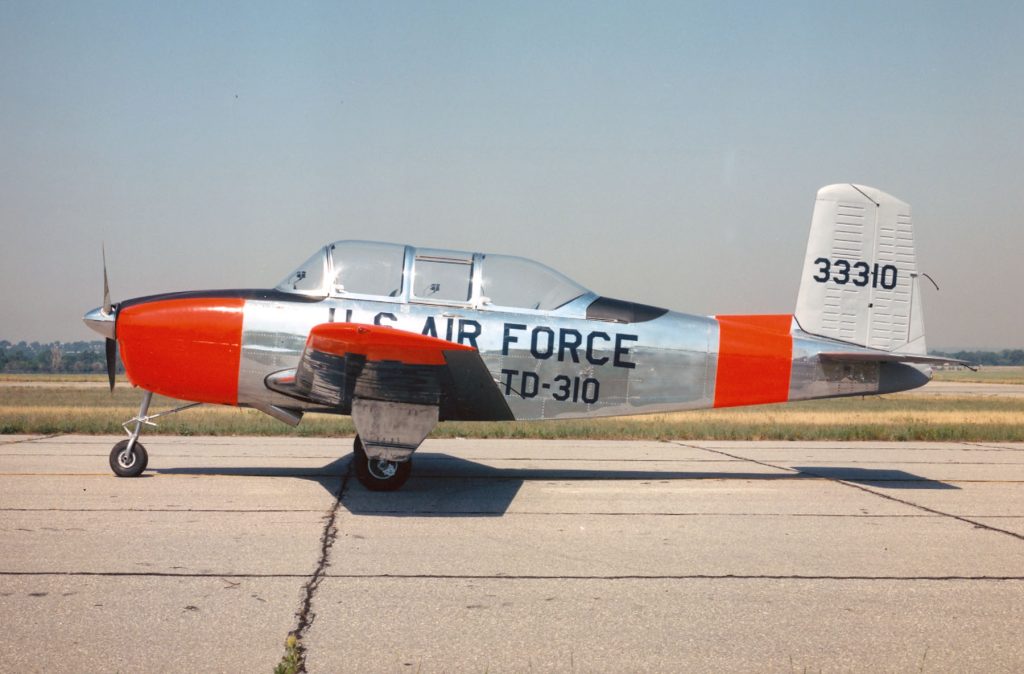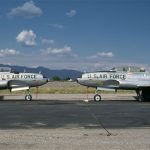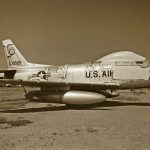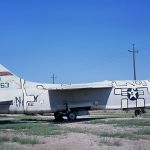
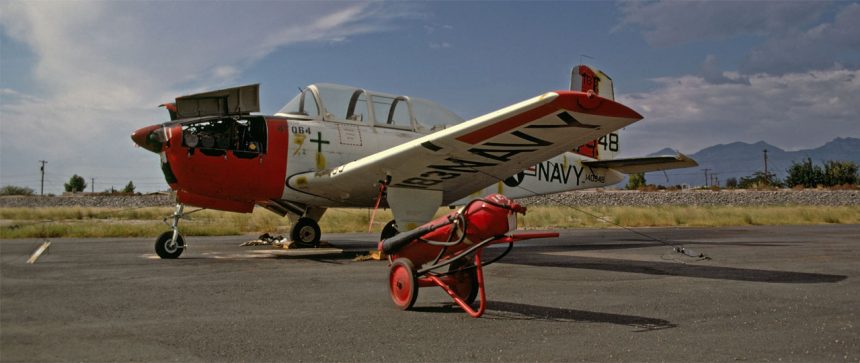

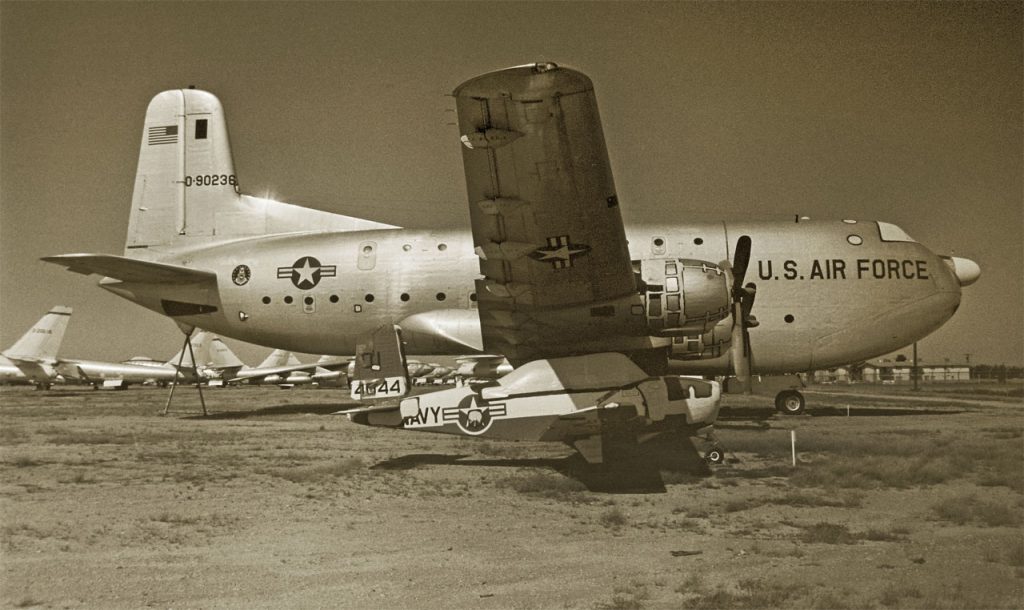
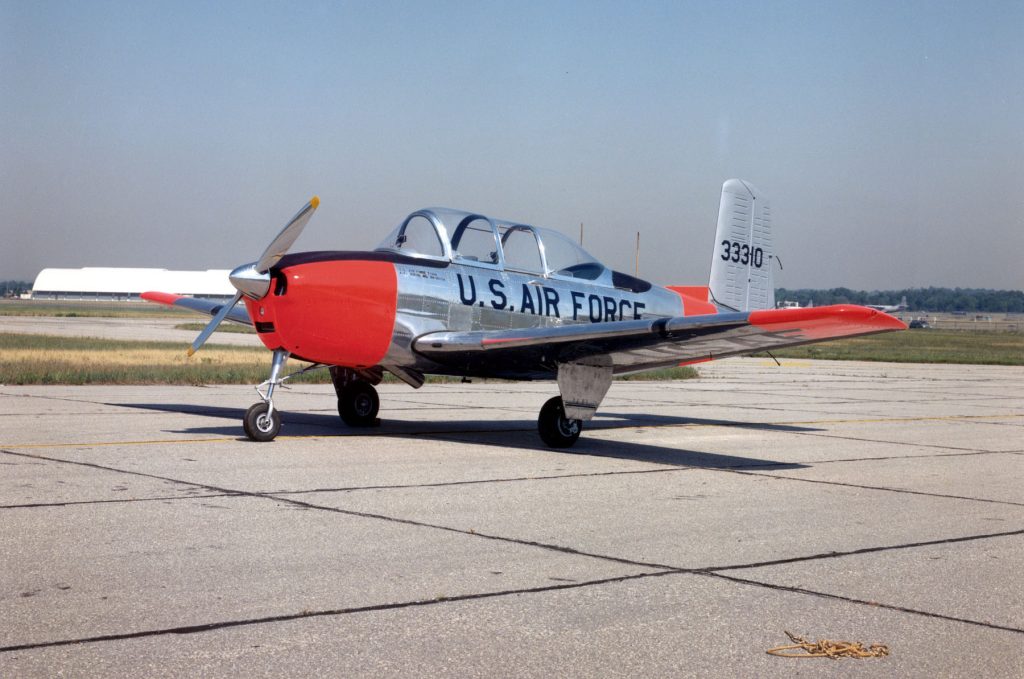
As we continue the Boneyard Files series, which showcases some of the retired aircraft resting at Davis-Monthan Air Force Base in Tucson, Arizona, in the late 1960s, today’s story features the Beechcraft T-34 Mentor through the lens of Neil Aird’s “Monthan Memories” photos. During WWII, the US Navy and the Army Air Forces used the same training aircraft. The practice continued into the 1950s when both the Navy and the newly formed US Air Force selected the Beechcraft T-34 Mentor as their main training aircraft. The US Air Force used the T-34A for basic flight training in the 1950s. The T-34A, also known as the Mentor, is based on the Beechcraft Model 45, a variant of the well-known Beechcraft Bonanza. It first flew in December 1948. The first military model, called the YT-34 by the Air Force, took its first flight in May 1950. In early 1953, the US Air Force ordered the Mentor after extensive trials. The first T-34A was delivered to Edwards Air Force Base in California for testing in October 1953. Deliveries to the Air Training Command started in 1954. The T-34A was 25.11 feet long, 9.7 feet high, with a wingspan of 32.10 feet. The loaded weight of the aircraft was 2,900 pounds, and its maximum speed was 191 mph. The T-34A’s range was 821 miles, and the ceiling was 20,000 feet. It was powered by a Continental O-470-13 engine, producing 225 horsepower.
On the other hand, the US Navy began using the Beechcraft T-34 Mentor, designated T-34B, in 1954. The Navy operated the T-34B for over twenty years, flying almost 100,000 hours each year. One aircraft logged 5,115 hours of flying time, which included 16,459 landings, 17,904 stalls, and 4,604 loops. In 1975, the Navy introduced the T-34C Turbomentor as its main flight trainer for Student Naval Aviators. In April 1975, the Navy ordered this improved version of the aircraft, powered by a 400-horsepower Pratt & Whitney PT6A-25 turboprop engine. These aircraft were used in the first stage of flight training for new Naval Aviators and also helped future Naval Flight Officers become familiar with aerobatics. In service, the T-34C aircraft replaced the North American T-28 Trojan at training air wings at NAS Whiting Field in Florida and NAS Corpus Christi in Texas. In 2002, the Navy began a gradual phase-out of the T-34, replacing it with the T-6A Texan II, a joint primary trainer used by both the Navy and the Air Force. Several countries used different versions of the Beechcraft T-34 Mentor, including Argentina, Japan, and the Philippines. A total of 423 Beechcraft T-34B Mentor training aircraft were built for the US Navy from 1954 to October 1957. Later, the service also received 280 T-34C aircraft for the Navy.
Before 1990, the United States Army received six T-34C aircraft from the US Navy. The army used these planes as test and chase aircraft at Edwards Air Force Base in California and Fort Bragg in North Carolina. NASA’s Armstrong Flight Research Center in Edwards, California, previously called the Dryden Flight Research Center, also operated two T-34C aircraft. The first NASA aircraft was used for turboprop engine testing at the Glenn Research Center in Cleveland, Ohio. In 1996, this aircraft moved to Dryden to serve as a chase aircraft and was returned to the US Navy in 2002. The second T-34C was acquired in early 2005 from the Naval Air Warfare Center Aircraft to chase unmanned air vehicles that fly slower than NASA’s F/A-18 aircraft. The US Air Force used 450 T-34As until they were replaced by the Cessna T-37 jet trainer, which was introduced in the late 1950s. As the Air Force replaced the Beechcraft T-34 Mentors with T-37s, many T-34s were given to base aero clubs, and some were sent to Davis-Monthan Air Force Base, known as “The Boneyard.” Read more Boneyard Files Articles HERE.