






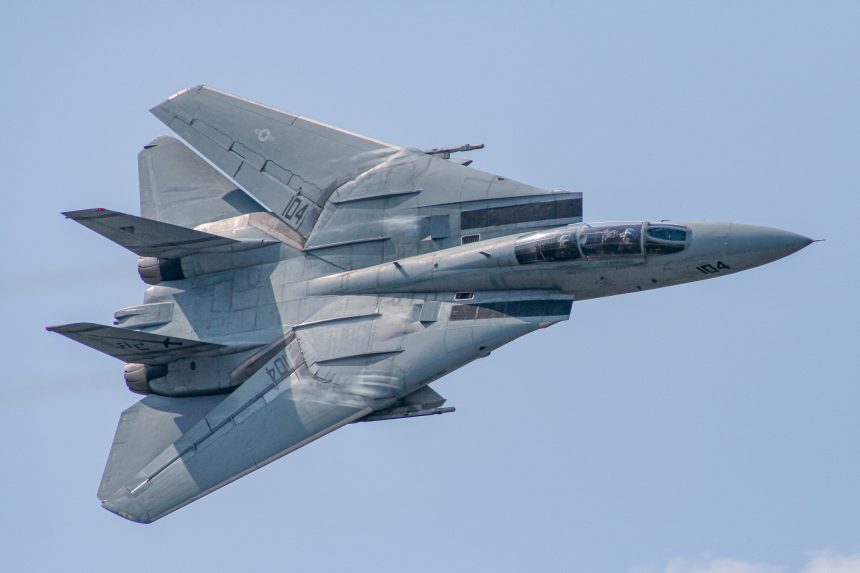

During a recent episode of Ward Carroll’s popular YouTube channel, filmed at the U.S. Naval Institute on the grounds of the U.S. Naval Academy, the former F-14 Radar Intercept Officer (RIO) sat down with retired Rear Admiral Mike “Nasty” Manazir to discuss one of the most talked-about developments in the warbird world: the “Maverick Act,” legislation that could eventually return a U.S. Navy F-14 Tomcat to flying status. Their wide-ranging conversation offered perhaps the most detailed public examination yet of what it would actually take to bring the legendary swing-wing fighter back to life.
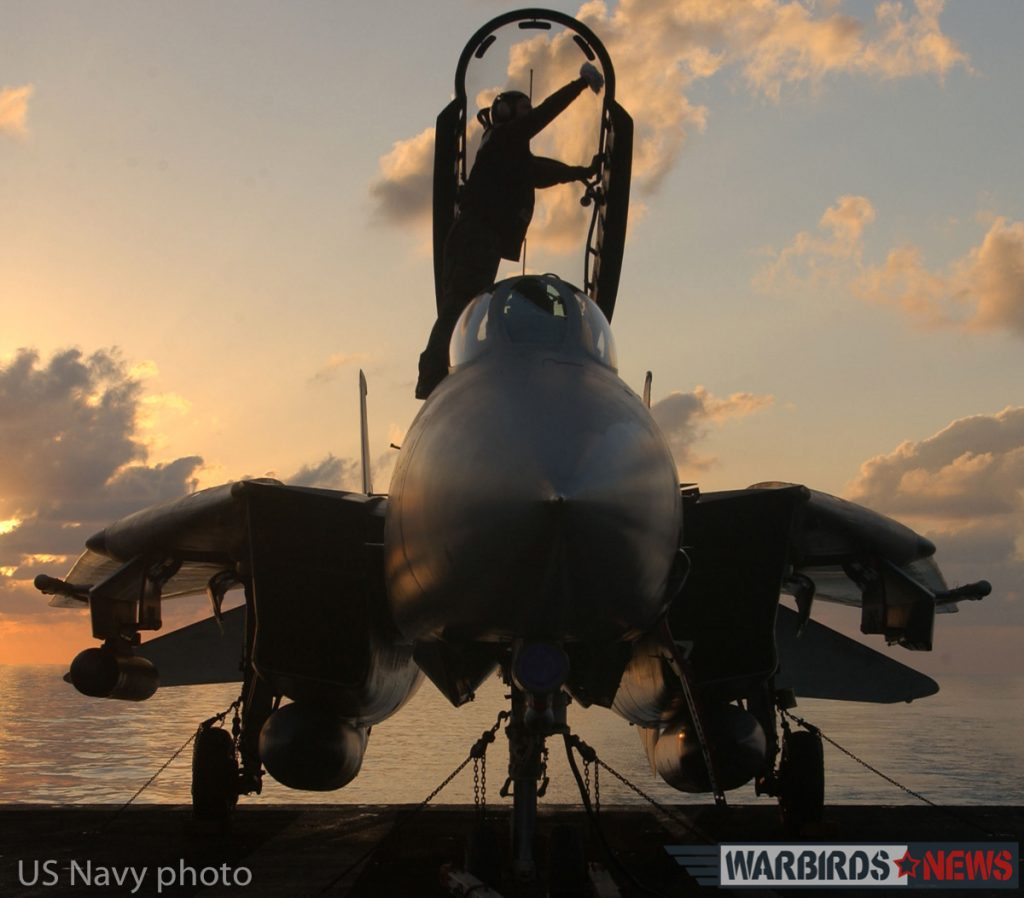
Earlier this month, Vintage Aviation News reported on the Senate’s passage of the so-called “Maverick Act,” legislation that authorizes the transfer of several surviving F-14s from AMARG storage at Davis-Monthan Air Force Base to the U.S. Space & Rocket Center Commission in Huntsville, Alabama. (vintageaviationnews.com) The bill also permits the transfer of spare parts and technical documentation, potentially enabling one aircraft to be restored to flyable condition.
Carroll and Manazir—both former Tomcat aircrewmen with decades of operational experience—used the discussion to break down the realities behind the headlines. According to the legislation, the aircraft involved are BuNos 164341, 164602, and 159437. However, Manazir noted that one of those aircraft, 159437, was incorrectly identified as an F-14D. In reality, it remained an F-14A throughout its service life and later participated in the famous 1989 Gulf of Sidra incident as part of VF-32’s MiG-23 shootdown.
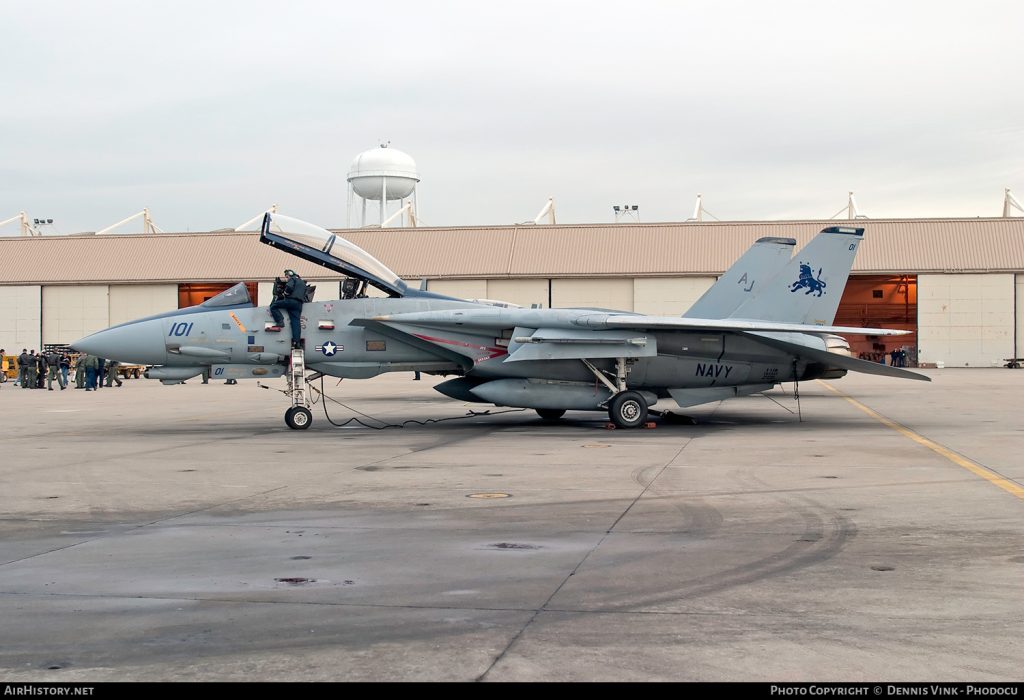
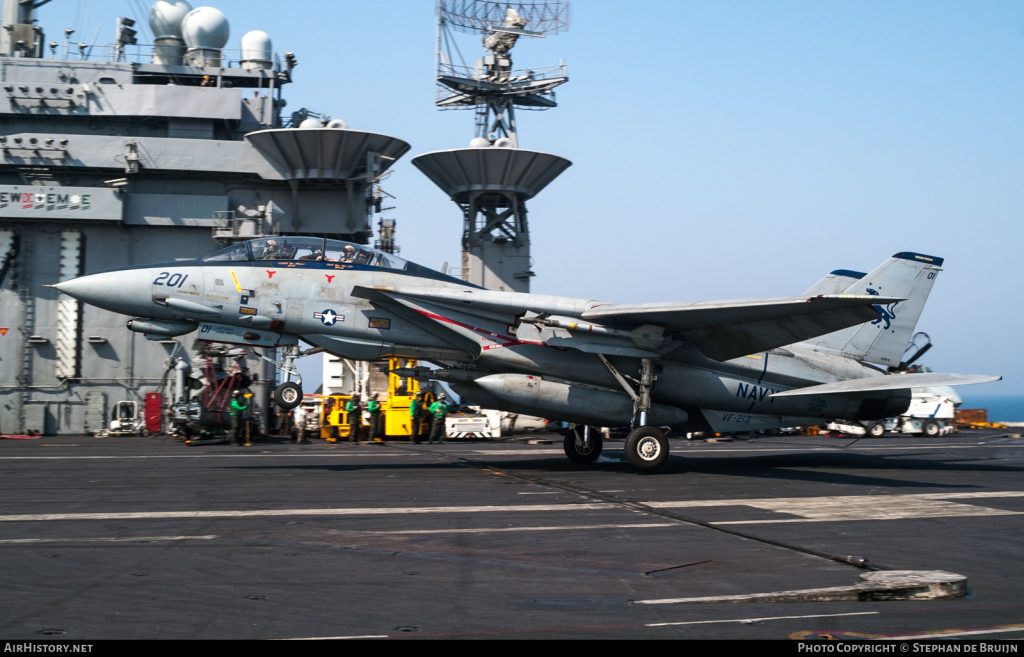
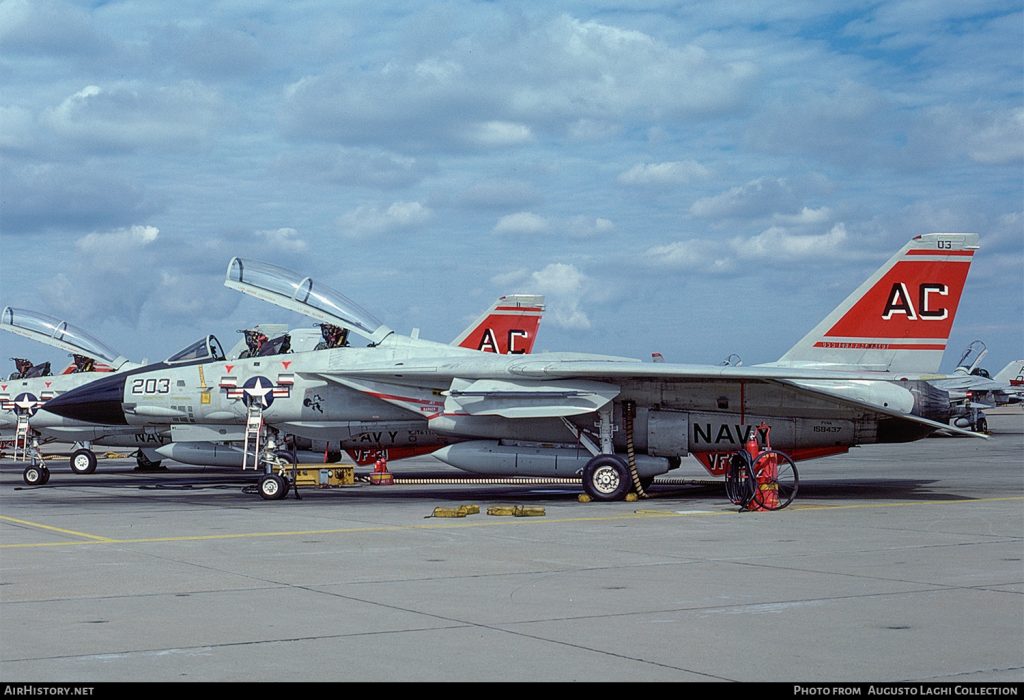
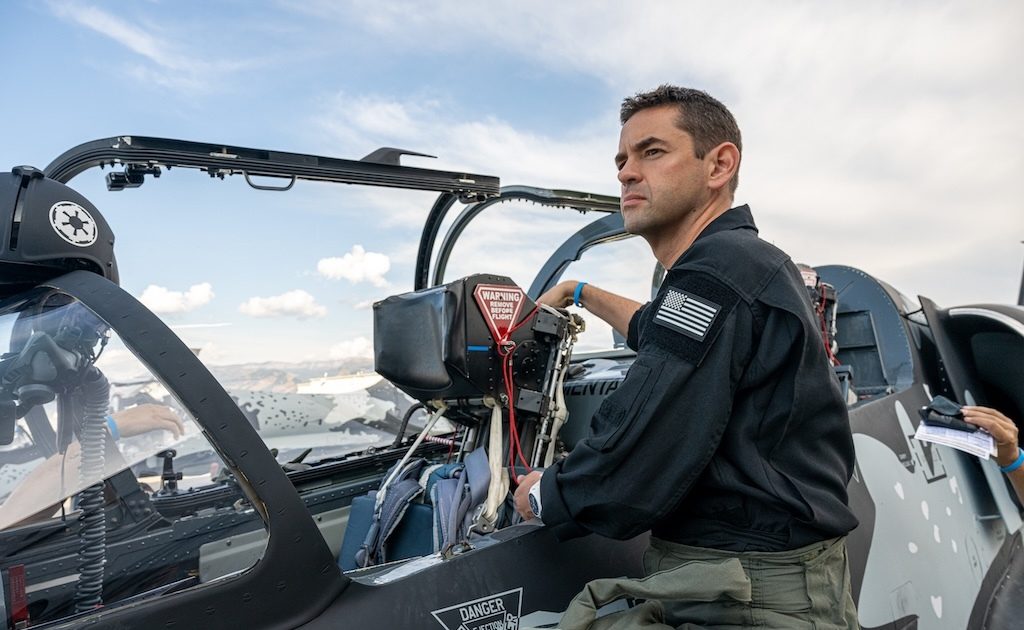
That leaves the two actual F-14Ds as the most likely candidates for restoration. Both aircraft remain preserved at Davis-Monthan, where they escaped the scrapping process that destroyed most retired Tomcats after concerns arose over spare parts reaching Iran, the type’s only remaining operator. A central figure behind the effort is reportedly Jared Isaacman, the aviation entrepreneur, founder of Draken International, and current NASA administrator. Carroll described Isaacman as the driving force behind the initiative, citing both his passion for tactical aviation and his considerable experience flying high-performance military aircraft. According to the discussion, restoration work would likely take place near Tucson, Arizona, rather than in Huntsville itself.
The two former naval aviators explained that restoring an F-14 would require far more than simply making the aircraft airworthy. Manazir described the process as a complete “radome to burner cans” rebuild, comparable to full depot-level remanufacturing. Every major system—hydraulics, fuel, electrical, flight controls, and structural components—would need to be inspected, rebuilt, or replaced. At the same time, both men stressed that the Tomcat’s defining aerodynamic characteristics must remain intact. The aircraft’s variable-sweep wings, spoiler-based roll control system, hydraulic flight controls, and high-alpha handling qualities are fundamental to the Tomcat experience and cannot simply be simplified away.
Where modernization could occur, however, is inside the cockpit. Carroll and Manazir suggested replacing the original combat avionics with modern glass displays, updated communications systems, weather radar, and civilian IFR navigation equipment. Since the restored aircraft would not carry weapons or radar-guided combat systems, much of the original mission equipment could be removed while preserving the aircraft’s handling and appearance. One particularly interesting part of the conversation centered on the Tomcat’s iconic two-seat crew concept. Both Carroll and Manazir strongly argued that a flying Tomcat should retain both a pilot and a RIO. Even if the rear cockpit no longer manages weapons systems, the RIO would still play important safety and systems-monitoring roles during demonstrations while preserving the heritage and identity of the aircraft.
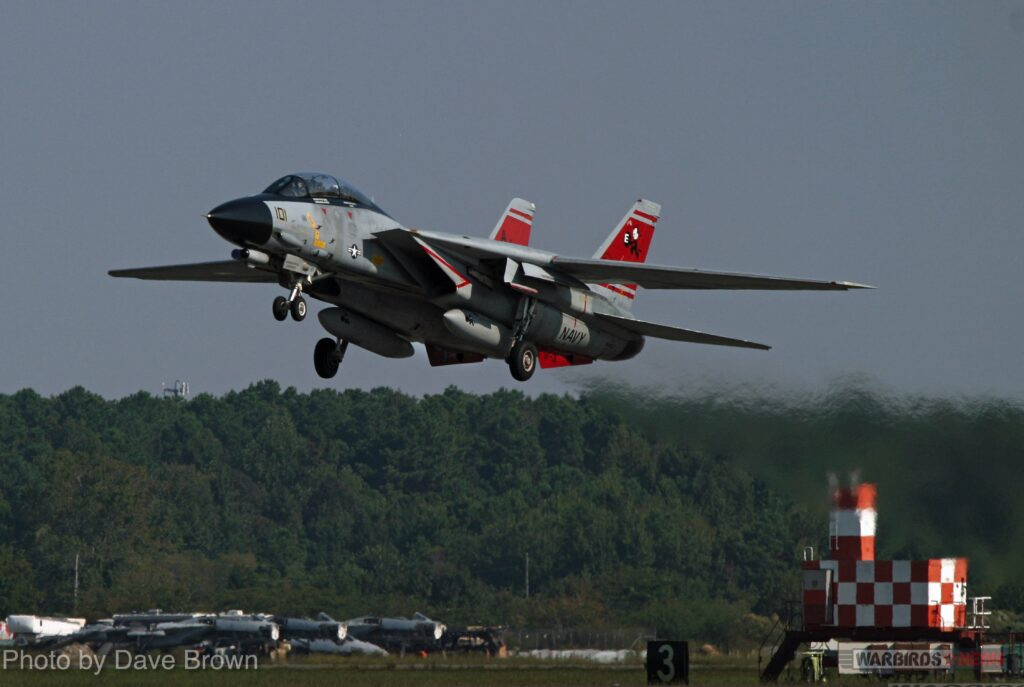
The discussion also highlighted the importance of the General Electric F110 engines used in the F-14B and F-14D. Manazir described the engines as transformational compared to the earlier TF30s fitted to the F-14A. With a lightweight airshow configuration and modernized systems, the pair envisioned a Tomcat capable of dramatic demonstration maneuvers including vertical climbs, high-alpha passes, and the thunderous afterburner performance that made the aircraft legendary on the airshow circuit decades ago. Carrier-specific systems such as the tailhook, launch bar, and kneeling nose gear would also likely remain operational. Though no longer necessary for carrier operations, both men emphasized that these features are inseparable from the Tomcat’s naval aviation heritage.
Perhaps most remarkably, Manazir believes the timeline is achievable. Assuming the legislation clears the House and receives presidential approval, he estimated that a restored F-14 could potentially debut on the airshow circuit as early as the 2028 season. For naval aviation enthusiasts, the prospect remains almost surreal. Yet after hearing two former Tomcat veterans discuss the project in detail, the possibility of once again seeing—and hearing—an F-14 Tomcat in flight no longer feels impossible. To follow Ward Carroll’s popular YouTube channel, click HERE.















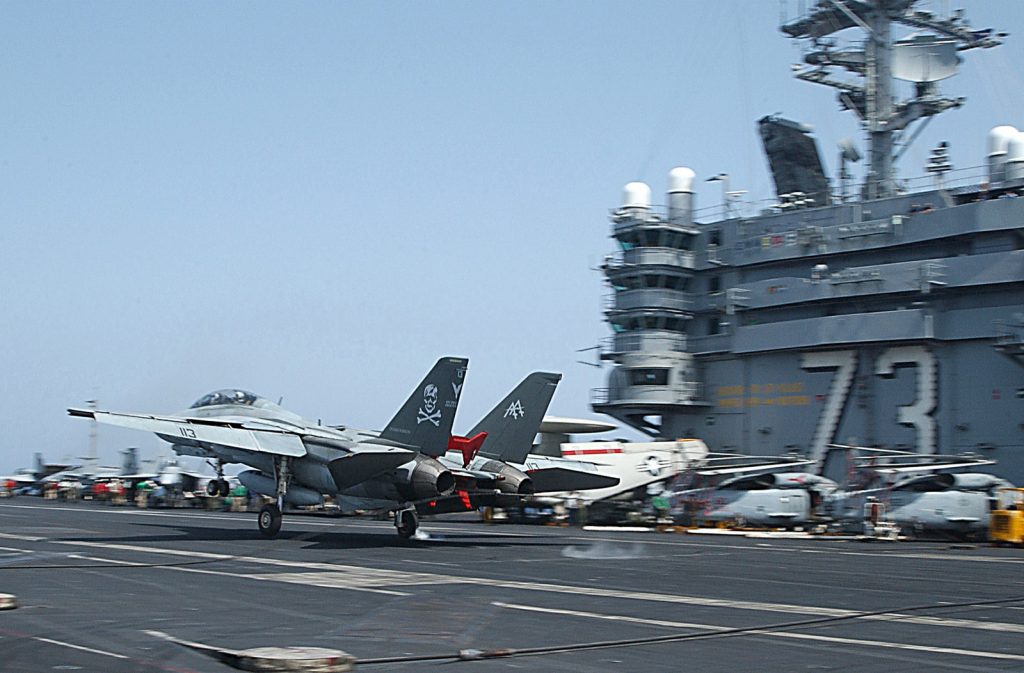
If this does become reality, seeing the legendary Tomcat as a warbird would be really AWESOME!!!!!! Now, the caption to the top photo in this article incorrectly states that the F-14 in the photo, is an F-14D, but, VFA-32 never flew the D model F-14, instead, they only flew A, and B model Tomcats, before switching to the F/A-18F Super Hornet.
Dont do it. Real life is not a movie.
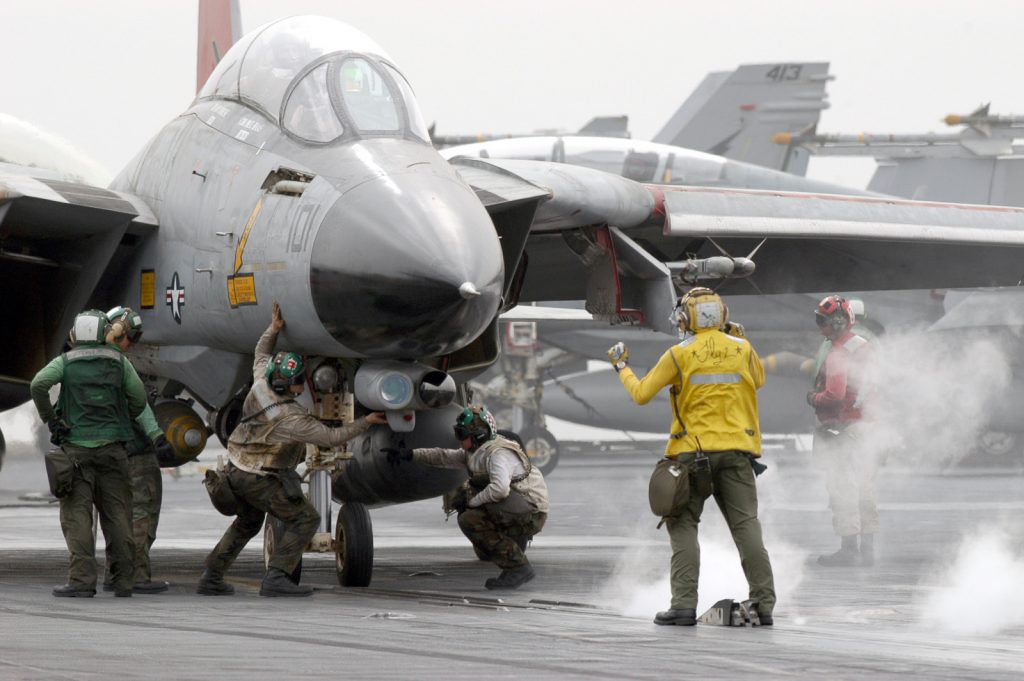
I was on the CVN72 in March 2003 and worked on the Tomcat in the picture. The amount of maintenance it would require I would not wish on anyone.
I had heard that ALL F14s and even spare parts were destroyed after decommission, to prevent our current enemies who own some from making repairs. Not so?
“Don’t do it. Real life is not a movie.”
— Says no one ever that has flown, served with, worked on, or is just an aviation enthusiast/fan of the Tomcat. Epistemologically speaking, stating that “real life is not a movie” is a fallicious and petty attempt at trying to undermine and discredit the 14s legacy over some past burden you felt inconvenienced you. A past that I seriously doubt ever happened. And with a name like ‘Nikolay Grigoryev’ it doesn’t take a savant to know where your loyalties might lie.
That last Tomcat to depart NAS Oceana, landed at Republic Airport (KFRG) and taxied to the American Airpower Museum. Following shut down and a short ceremony, Titan L3 began the demilitarized process. Felix 101 remained at the Museum in my custody for 2 years before it was towed through the streets to the Grumman Bethpage plant. It was put on display in front of building 25 until the property was sold. The plane is now with the Cradle of Aviation museum.
I count 6 complete F-14 airframes at DM and a couple of fuselages and parts lying around.
Yes indeed, Lawrence! https://vintageaviationnews.com/aviation-museum-news/last-f-14-tomcat-in-us-navy-service-now-on-display-at-the-cradle-of-aviation-museum.html
Obviously the nut at NASA just wants to add the legendary Tomcat to his list of flight accomplishments. I would understand restoring a museum piece for inclusion into a complete craft for the Smithsonian (since all internal avionics and electronics were removed from all static displays in years past to keep spares from making their way to Iran, as some did), but why now make one or two operational? The costs would be outrageous and completely wasted.
The Tomcat is a beautiful and exceptional fighter aircraft that deserves all the recognition and laurels that can be bestowed on it and the fine men that flew them, but rebuilding one or two for the entertainment of a few gawking fans and the vanity of the NASA administrator is just another example the dismantling of our democracy under this administration, the tyrant in the white house and the sycophants that surround and encourage him.
If the national debt is keeping us from feeding the poor, caring for the infirmed and the elderly, then why are we giving Billions to Bezos, Musk, Cook, and others for pet projects while social security goes bankrupt and the debt grows to unrepayable amounts? Let’s not be stupid here. We have already added more that 100 Billion to the debt wasting needed munitions on Iran. Can’t anybody in Washington destroy this monster before it eats us all?
I am a Tomcat lover. But it appears our politicians have nothing better to do but pass some nonsense bill at the time the country is fighting for debt ceiling issue every single year and shut down government every budget season. And now they want to fund to restore two jets that will waste multi-millions. Where is the Orange Man DOGE? What the F!
“Tyrant?” “Destroy this monster”
Be proud You are a part of the problem in America that the MAJORITY out voted.
Your ignorant speach over violence doesn’t help anyone and is one of the Min Reasons You Lost!… I built F14s at Grumman in Stewart Fla and Calverton LI… i will Volunteer my skills to rebuild one Agin. What’s in Your Wallet?
I have worked in aviation and aerospace, both military and commercial, for over 40 years and support keeping our country’s history alive. But, why is the F-14 garnering so much attention that a federal act is reviving it, per-say? I’ll tell you why…politics and Hollywood. What about all the other aircraft in our country’s history? Why not government fund keeping a WWII B-17 flyable, or an F-86 from Korea, a Boeing 707, or a UH-1 from Vietnam? If you going to pass government funded acts to save one, why not all of them? There’s other historically important aircraft out there that deserve some love other than one that Tom Cruise threw up in making a movie.
I highly doubt thus will happen, but I’d throw my hat into the ring if you need a plane captain. I still remember all the hard signals and what they were meant to check 😉
Wow what another waste of our tax dollars by the powers(?) in charge. As previous comments illustrated this is an expensive folly for a few of our leaders followers. Unfortunately, this follows in the footsteps of this administration’s other give aways of the taxpayers funds, according it will most likely happen. Put these in F14s in static displays across the country for all to enjoy. If you want them to fly again then have the trillionaires enriched by our leader privately fund this folly.
Dan,
Its obvious that you are an absolute Hater of military aviation. I don’t look at it as stroking the ego of a NASA administrator. I look at it as bringing to the forefront the reason why people like you and many others feel the need to ultimately beat on the president. You can’t do it sensibly so you cling to things that are really irrelevant. Its a shame. This has nothing to do with feeding the hungry. Its history plain and simple. I really wonder what you were saying when the last administration was buying illegals to New York and giving them money? Did you think that money could have gone toward receiving some debt or feeding hungry people? Probably not.
This is great American history that many, like yourself are desperately trying to dispose of. Our children need to see and hear the exact catalyst that made it were those, like yourself, can openly whine and complain. Instead they need to see and experiencing why and what made us the great nation we are today.
Im sure out there are people that will gladly donate to have these aircraft restored to operational. The joy and excitement they can bring to the public to encourage future pilots, not to mention, restore the patriotism and encourage our youth to serve this great nation.
Want to blame hunger on someone? Then try the last couple of administrations. Want to invigorate a nation? Then allow them to experience their history.
I say drop the “Save the world” speech for a more political forum. Im sure their are some retards out there at will gladely entertain your bile. Or better yet, Instead of hiding behind your phone or computer, get out there and do something. Action speaks louder than words.
I think this is an awesome idea. We are a nation of fighters. Fighters who have made it strong. Allow us to regenerate that spirit with some great aviation history we can see and experience.
The 2 “experts” failed to ask a critical question: do ANY of the 3 doner aircraft have an intact titanium wing box? If the answer is yes, then the aircraft may be able to be restored- and multiple people committed federal felonies by failing to cut them 20+ years ago as MANDATED by Congress. If the answer is no, unless a multi billion $ net worth invidvdual or organization is willing to te create the tooling and manufacture a one off part…
The F14 won’t fly again in the US.
Air Force pilot here: 20th century weapon. War has changed. It’s clinging to muskets while the enemy has machine guns. This isn’t Hollywood
All the teen series fighters are still in service. All but one. The only thing that separates them are current updates and modernization. The disparity is not that great. Unlike the F/A- 18SH that replaced it, I dont remember Mig’s flying over Carrier battle groups when Cats were in service. I dont remember it because it didnt happen.
When the U.S. Navy retired the F-14 fleet, it implemented aggressive demilitarization procedures to prevent spare parts from falling into the hands of hostile operators (such as Iran). As part of this process, the titanium wing spars and central wingboxes on retired U.S. Tomcats were deliberately cut with torches. This structural destruction ensures that no museum or private collector can ever make a retired U.S. F-14 airworthy again.
When the U.S. Navy retired the F-14 fleet, it implemented aggressive demilitarization procedures to prevent spare parts from falling into the hands of hostile operators (such as Iran). As part of this process, the titanium wing spars and central wingboxes on retired U.S. Tomcats were deliberately cut with torches. This structural destruction ensures that no museum or private collector can ever make a retired U.S. F-14 airworthy again.d
If you’re going to the trouble of restoring 1 go ahead with 2side by side