






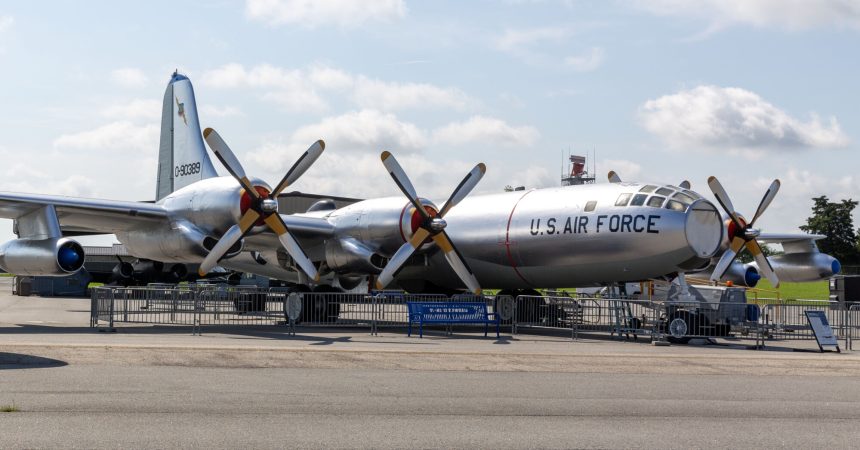

In the history of aviation, the Boeing B-50 Superfortress has traditionally been overshadowed by the achievements of other bomber aircraft employed by the United States Air Force. Originally developed from the B-29 Superfortress as the B-29D, the aircraft was intended to replace the B-29’s four Wright R-3350 Duplex Cyclone radial engines with four Pratt & Whitney R-4360 Wasp Major radial engines, which were more powerful than the Duplex Cyclones that had been mechanically unreliable in early B-29s. However, the number of modifications added to the B-29D would make it so different from the original B-29 that the US Army Air Force would have the aircraft redesignated as the B-50. While the general layout of the B-50 was similar to the B-29, having the same length and wingspan as the B-29, a similar bombload and the remote-operated turret design found on the B-29, the four new Wasp Major engines, each mounted in a quick engine change (QEC) pod, had increased horsepower and torque, resulting in the installation of a taller vertical stabilizer on the tail, bringing the aircraft’s total height to 32 ft 8 in compared to the B-29’s 27 ft 9 in.
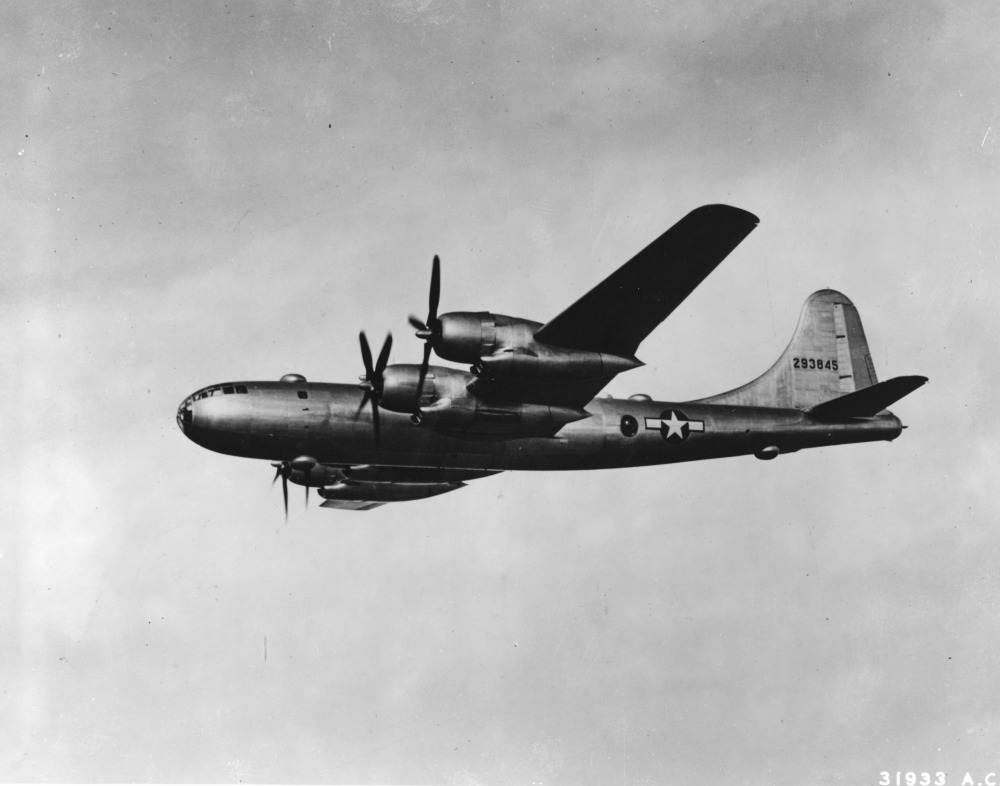
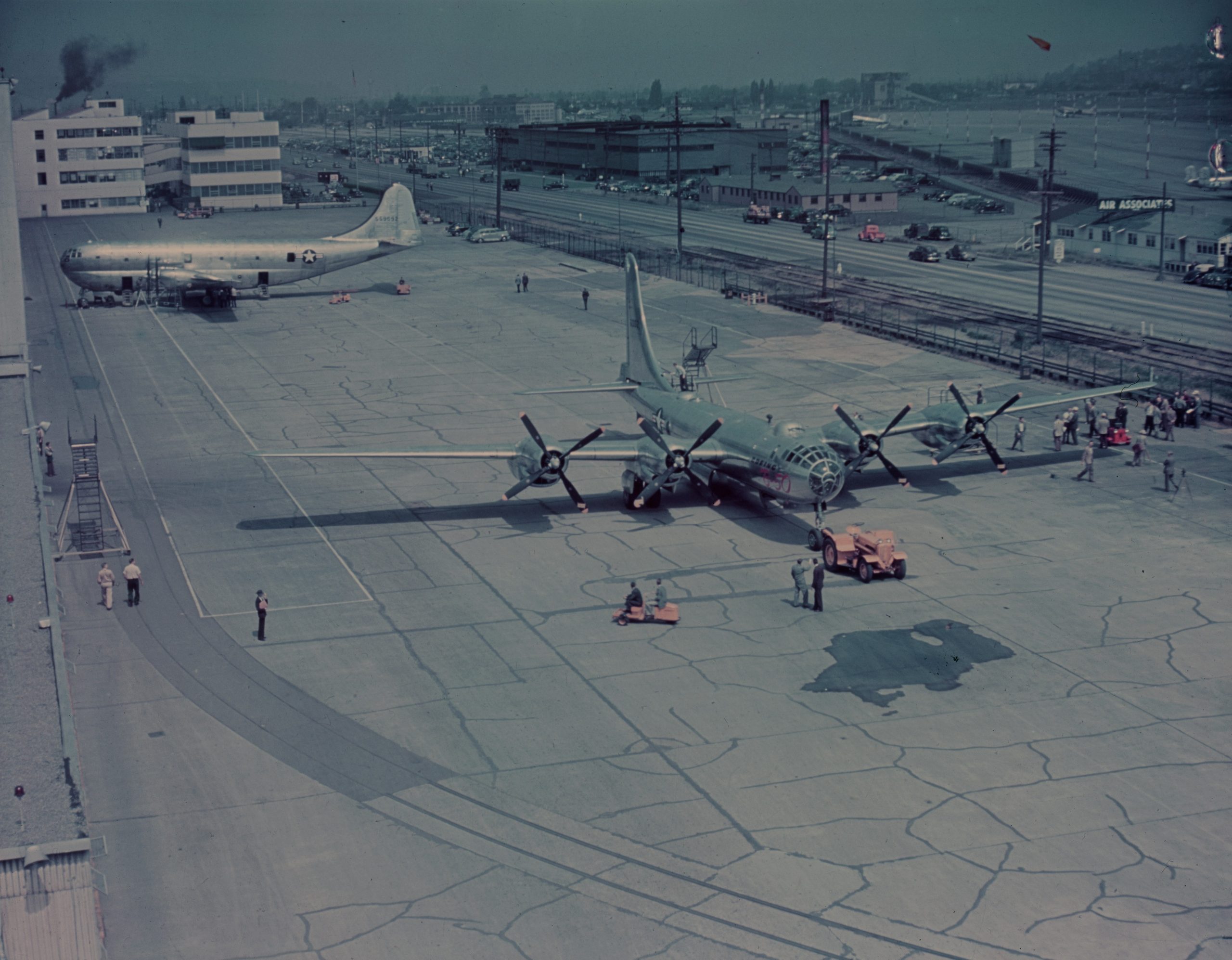
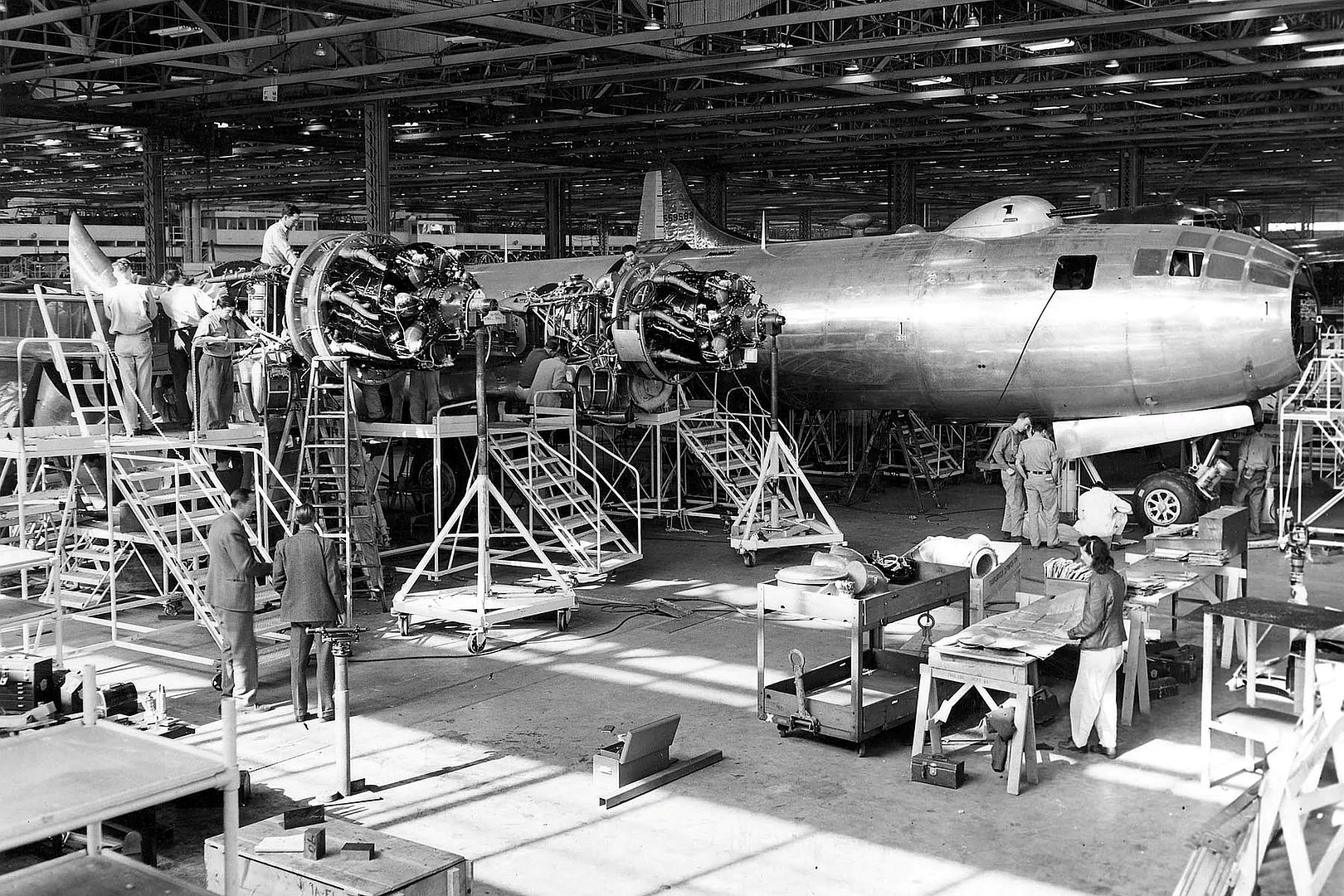
The B-50 did not make its first flight until June 25, 1947, just six months before the first flight of Boeing’s first jet bomber, the B-47 Stratojet. As the Stratojet underwent testing, the B-50 entered operational service in 1948, taking its place in bombardment wings of the newly formed Strategic Air Command (SAC), and being equipped to deliver atomic bombs in the event of the new Cold War with the Soviet Union turning hot. In addition to replacing the B-29 in SAC’s bombardment wings, the B-50 also fulfilled the USAF’s need for a long-range reconnaissance aircraft, gathering intelligence on Soviet air defenses, and even performing reconnaissance flights over North Korea during the Korean War. Though other companies had also developed jet-powered bombers, such as the North American B-45 Tornado, the piston-powered Boeing B-50 would remain as a stopgap for the incoming Stratojet, which would replace the B-50 as both a bomber and reconnaissance aircraft by 1954, and which would itself be replaced by the enduring Boeing B-52 Stratofortress, which would make its first flight in 1952.
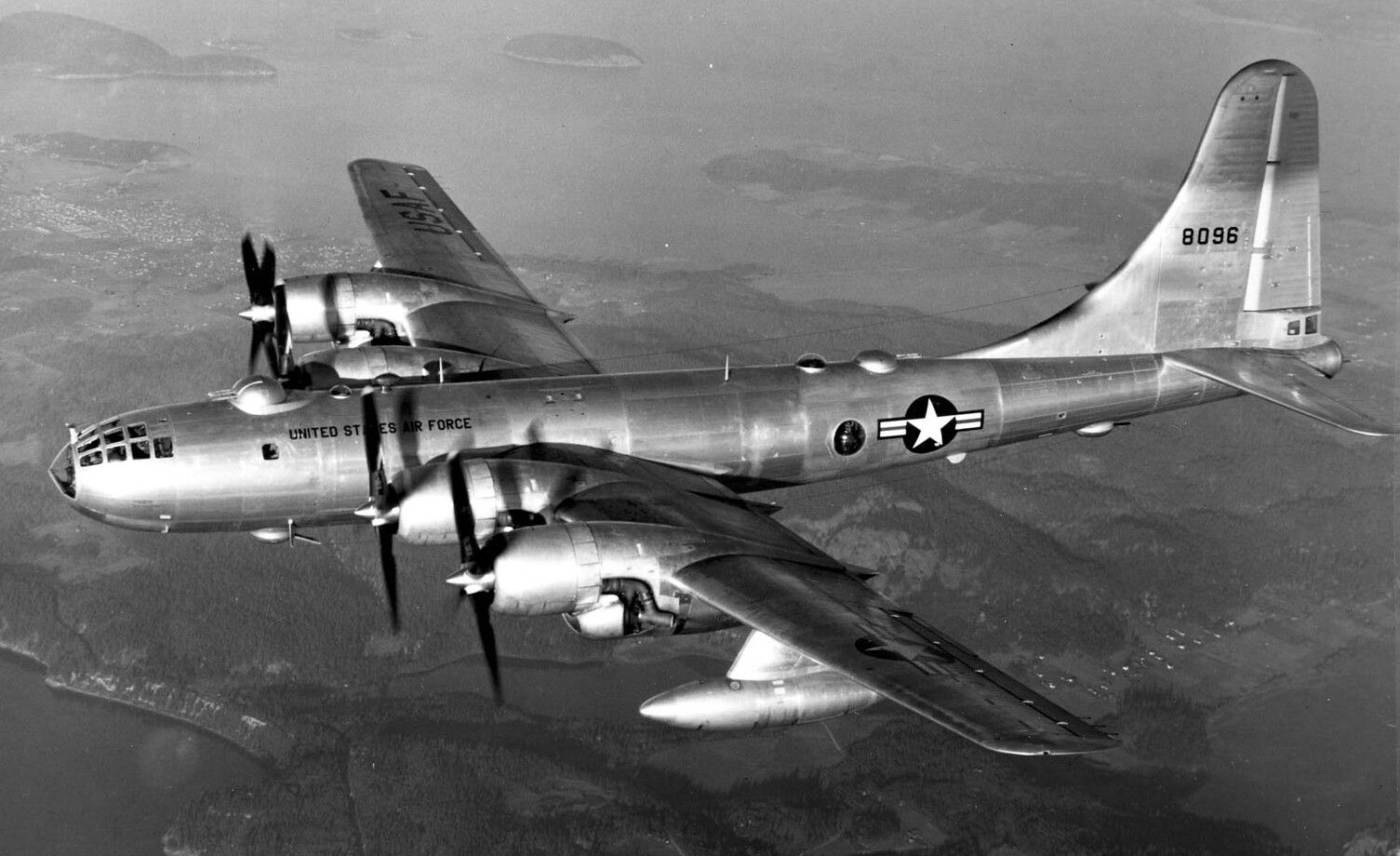
However, this was not the end of the B-50’s story, as the majority of the B-50s still in service with the USAF were converted to fulfill the roles of aerial refueling tankers for the USAF’s Tactical Air Command (TAC) and weather reconnaissance aircraft, which had been the domain of B-29s converted to these tasks as the KB-29 and WB-29 respectively, while others still found use as testbeds in experimental projects or were used as motherships for experimental rocket-powered aircraft tested at Edwards Air Force Base, California. It would be in these two roles that the Boeing B-50 would remain in active-duty service well into the 1960s, with the KB-50s helping other aircraft remain aloft and extend their time in the air, while the WB-50s provided valuable weather forecasts while flying for hours on end over the vast, trackless expanses of the oceans, and were used to track the movements and determine the strength of incoming hurricanes and typhoons. Many of the KB-50s were also fitted with a pair of General Electric J47 mounted in pods to the underside of the outer sections of the wings next to other pods holding the refueling hose and drogue for an aircraft mounted with a refueling probe to transfer fuel from.
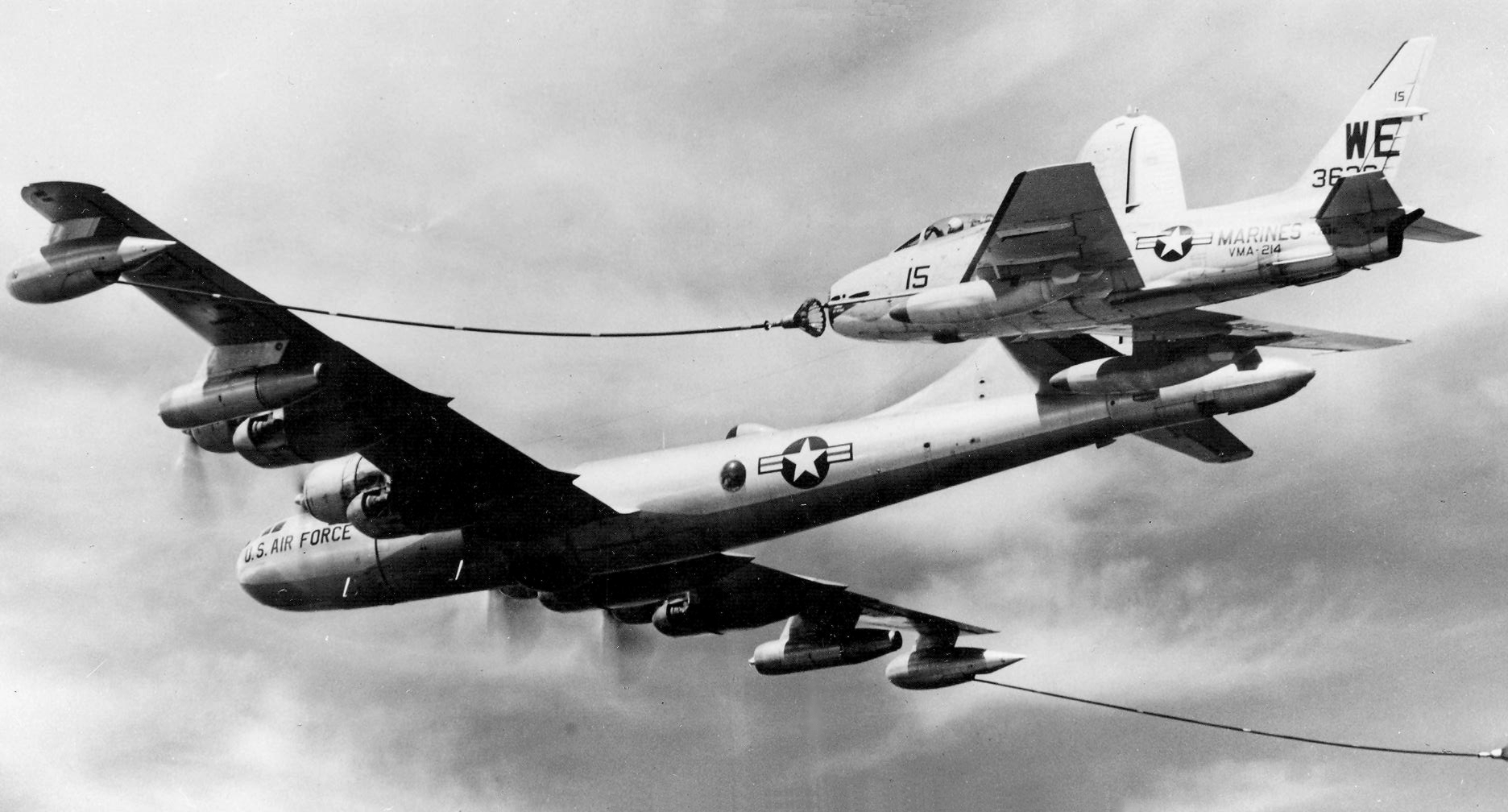
By the mid-1960s, though, the old and well-worn B-50 airframes revealed signs of corrosion and excessive use that made their continual usage economically unfeasible. The decision to retire the remaining KB-50s and WB-50s would see other aircraft, such as the WB-47, take on the role of weather reconnaissance, and the Boeing KC-97 Stratofreighter (which actually shared the engines, wings, tail, and landing gear of the B-50s) and the Boeing KC-135 Stratotanker replace the KB-50. The last operational B-50s were retired in 1965, not bad considering their derivation from the B-29, which had first flown in 1942, and the majority of the fleet of Boeing B-50s would end their days being scrapped at Davis-Monthan Air Force Base, Tucson, Arizona. Of the total of 370 Boeing B-50 Superfortresses built, just four complete examples and one partial airframe survive to this day, scattered across the United States. These are the stories of the surviving B-50s and how they have endured to the present day.
B-50A 46-010 (c/n 15730) “Lucky Lady II”
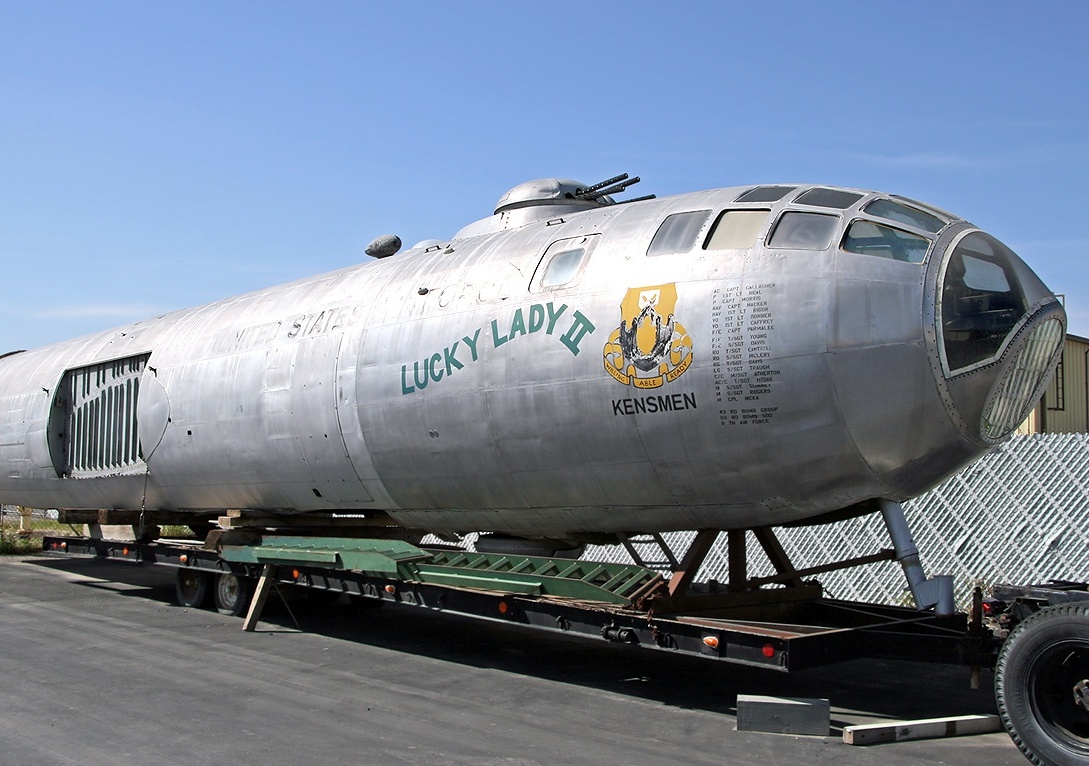
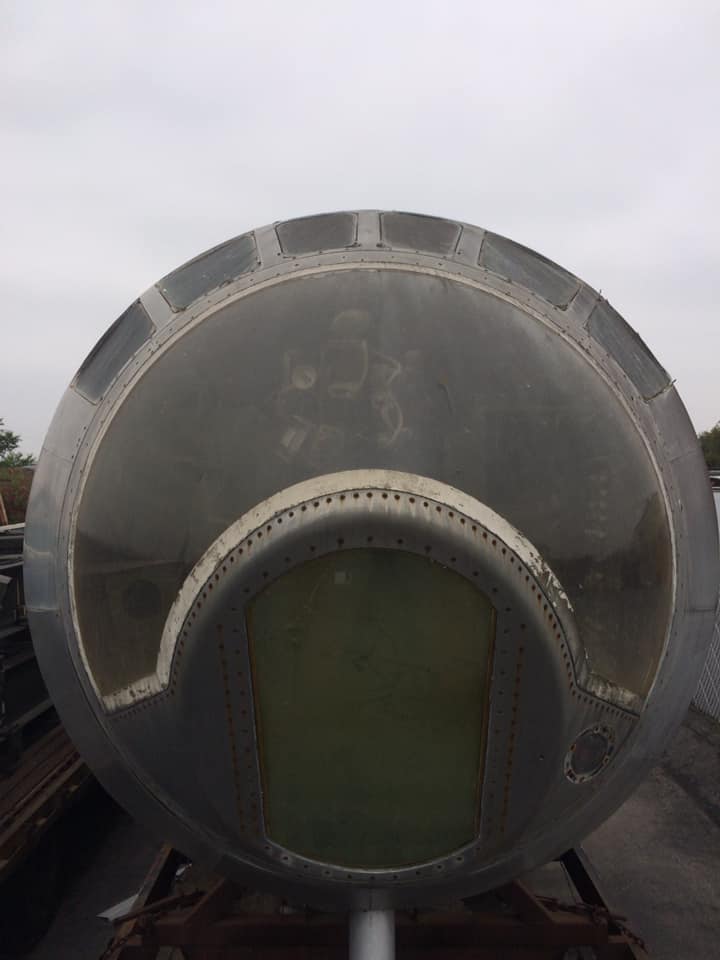
Though the Planes of Fame Air Museum in Chino, California, has a well-earned reputation of being one of the largest collections of airworthy WWII aircraft in the United States, it also holds a significant number of aircraft on static display as well, from rare German and Japanese aircraft of WWII to Soviet jet fighters of the Cold War. Yet among the aircraft displayed outdoors rests the forward fuselage of an aircraft often mistaken by visitors to be the front section of a B-29. In fact, this is the forward fuselage of B-50A 46-0010, whose weather-worn aluminum skin still wears the name “LUCKY LADY II”. Built as construction number 15730 at Boeing’s factory in Renton, Washington, the aircraft was officially accepted by the USAF as B-50A 46-010 on January 29, 1948. For the rest of the year, the aircraft went through several Air Material Command (AMC) centers for storage and modifications at McClellan AFB, near Sacramento, California, Inglewood, California, Wichita, Kansas, and Davis-Monthan Air Force Base. On December 14, 1948, 46-010 was finally transferred to Strategic Air Command when the aircraft was assigned to the 63rd Bombardment Squadron, 43rd Bombardment Wing, at Davis-Monthan AFB in Tucson, Arizona, with the 43rd BW being the first fully operational B-50 unit. By the start of 1949, though, the aircraft would become involved in setting a new record that would demonstrate the global reach of the newly independent United States Air Force at the start of the Cold War. In 1924, the United States Army Air Service completed the first aerial circumnavigation of the world with the Douglas World Cruisers after a 175-day odyssey. Since then, numerous aviators from around the world set new records for flying around the world, but with the onset of the Cold War, the US Air Force sought to demonstrate its ability to reach any target in the world at a faster rate than any other military. Between July 22 – August 6, 1948, two B-29As of the 43rd Bombardment Wing – Lucky Lady (44-62304) and Gas Gobbler (44-62314) – completed a fifteen-day journey around the world, with a total of eight stops during the operation despite the loss of B-29A 44-62309 and six of her crew after attempting to depart from Aden, Yemen. But following the adoption by the 43rd BW of the new B-50s and with the introduction of the KB-29 tanker variant of the B-29 bomber, it was determined that another round-the-world flight would be made; this time with the goal of being the first aircraft to complete a nonstop aerial circumnavigation. Combined with the need to once again demonstrate the USAF’s capabilities, USAF Chief of Staff General Hoyt S. Vandenberg approved of the plan on January 19, 1949.
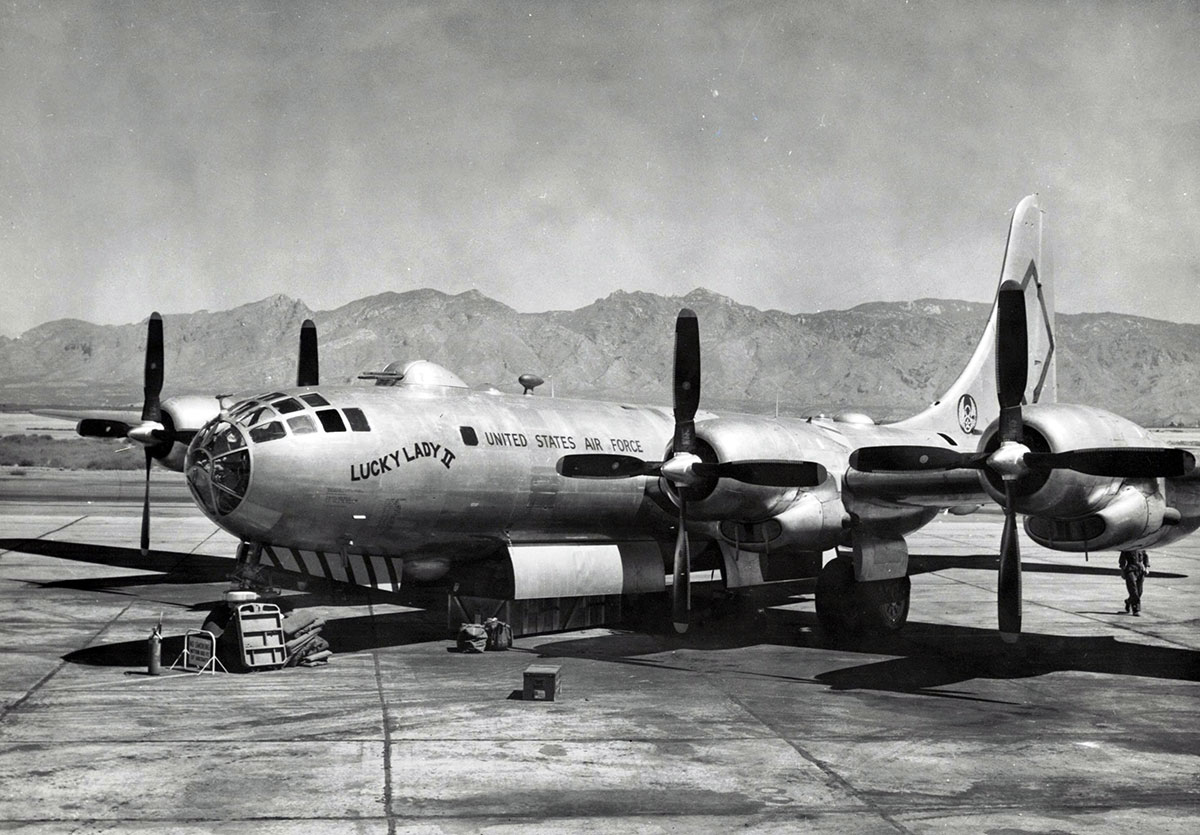
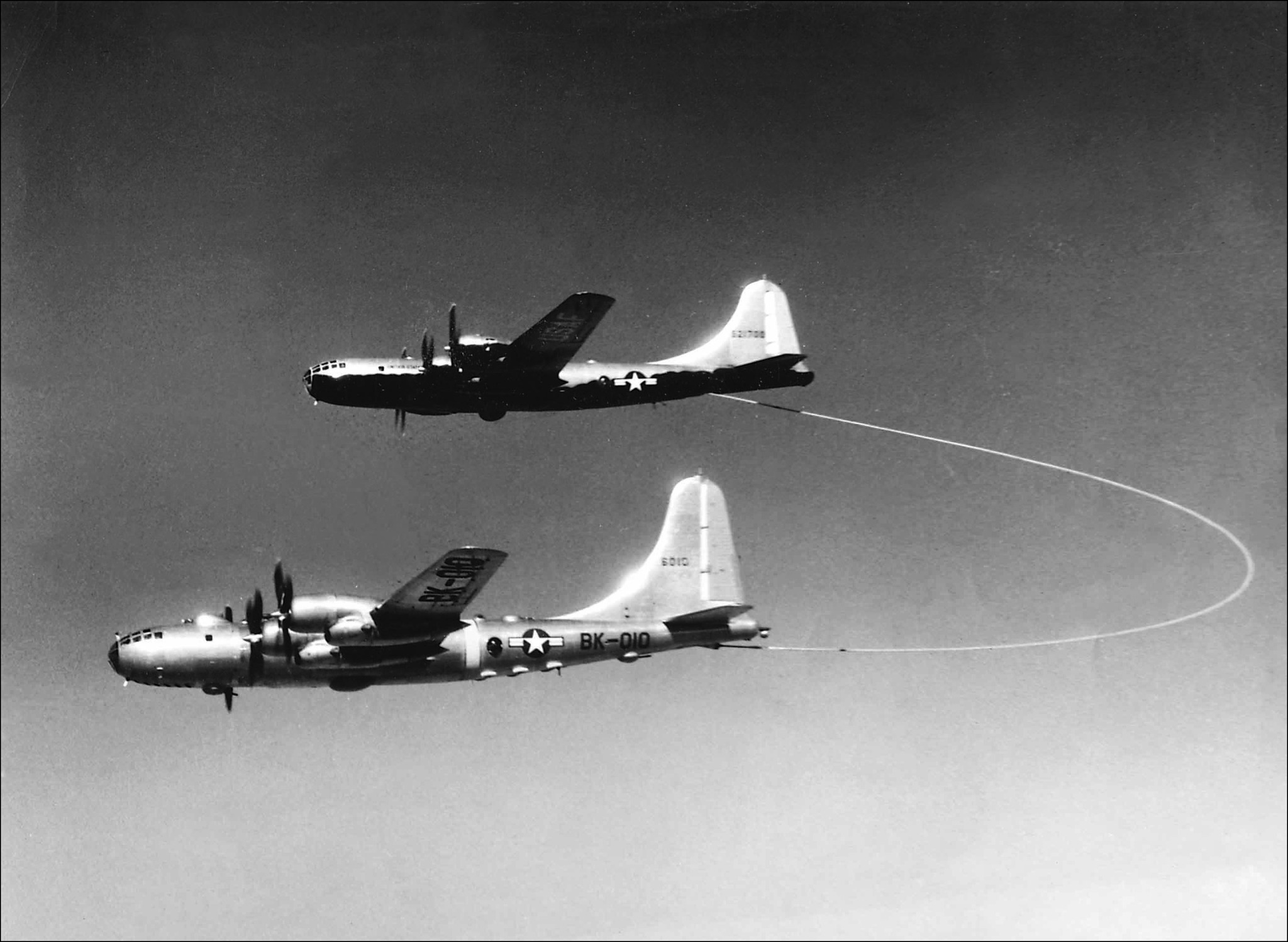
The method of aerial refueling that was to be used in the nonstop world flight was to be the Grappled-line looped-hose method pioneered by British aviator Sir Alan Cobham during the 1930s and developed by Cobham’s company, Flight Refueling Ltd. In simple terms, the system worked by having a steel cable extended from the receiver aircraft, while the tanker would deploy a line shot to grapple onto the receiver aircraft’s cable. Once secured, the line would be brought into the tanker aircraft to connect the refueling hose to the receiver’s cable. The tanker would be flying above the receiving aircraft, and the force of gravity would allow the fuel to flow down from the tanker. It was a delicate procedure and would require the installation of an extra fuel tank in the B-50’s aft bomb bay to accept the fuel transfer. Over the next five weeks, the 43rd Bombardment Wing began practicing aerial refueling with the looped hose method over the United States, with five B-50As, including 46-010, being selected for the flight. However, only one B-50A would be in the air during the record attempt, with the other four being kept in reserve should anything happen to the other B-50s, and KB-29M tankers from the 43rd Air Refueling Squadron were sent to waypoints at Lajes Air Base in the Azores, Dhahran Airfield (now King Abdulaziz Air Base), Saudi Arabia, Clark Air Base on the Philippine island of Luzon, and Hickam Air Force Base in Hawaii. During this time, B-50A 46-010 would receive the name “Lucky Lady II’ in honor of the B-29 that had completed the 1948 record-setting flight around the world.
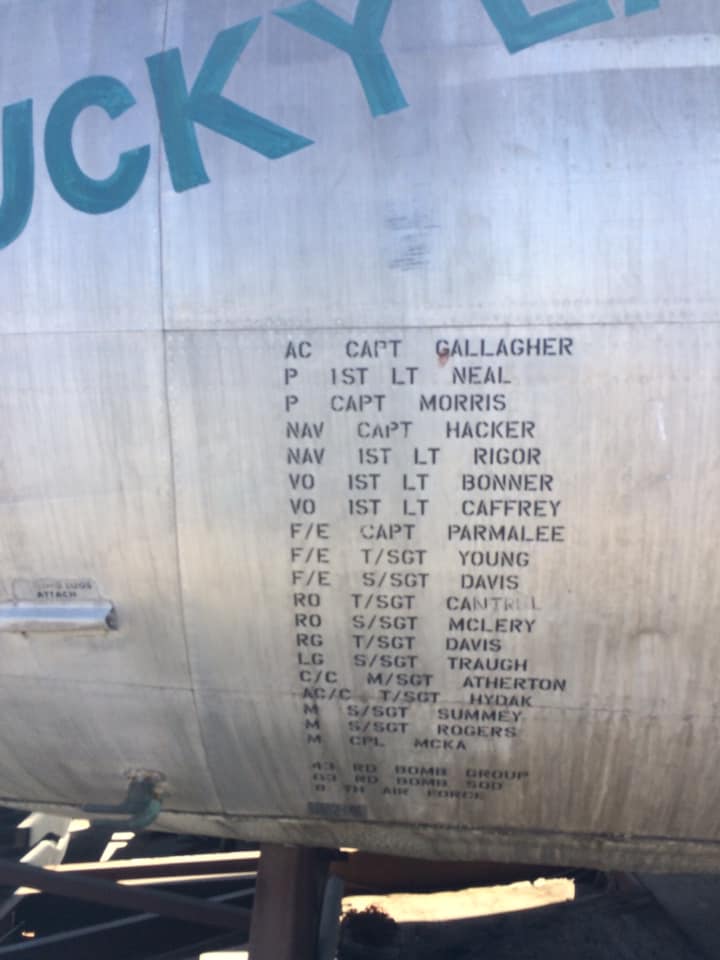
On February 25, 1949, another B-50A, the Global Queen, assigned to the 64th Bombardment Squadron of the 43rd Bomb Wing, took off from Carswell Air Force Base (now Naval Air Station Joint Reserve Base Fort Worth) near Fort Worth, Texas. 16 hours into the flight, however, as Global Queen began approaching the Azores for its first of four aerial refueling rendezvous, the No.2 engine (left inboard) caught fire and had to be feathered, resulting in the aircraft making an emergency landing at Lajes Air Base on Terceira Island, the base personnel being kept unaware of the true nature of Global Queen’s flight. The next day, B-50A 46-010 Lucky Lady II set off from Carswell with an augmented crew of 14 that would take shifts at 4-to-6-hour intervals during the flight. In command of the flight was Captain James G. Gallagher with copilot Captain James H. Morris and second pilot/relief pilot 1st Lieutenant Arthur M. Neal onboard. Additionally, Lucky Lady II had two navigators (Captain Glenn E. Hacker and 1st Lieutenant Earl L. Rigor), two radar operators (1st Lieutenant Ronald B. Bonner and 1st Lieutenant William F. Caffrey), three flight engineers (Captain David B. Parmalee as project officer/chief flight engineer, Technical Sergeant Virgil L. Young and Staff Sergeant Robert G. Davis), two radio operators (Technical Sergeant Burgess C. Cantrell and Staff Sergeant Robert R. McLeroy) and two gunners (Technical Sergeant Melvin G. Davis and Staff Sergeant Donald G. Traugh Jr).
Dodging bad weather in the southern US by tracing the coast to New England, Lucky Lady II cruised at 20,000 feet before descending to 10,000 near the Azores to rendezvous with the first of two KB-29M tankers flying out of Lajes Air Base. After taking on a total of 60,000 pounds of fuel, it was on to Dharhan, Saudi Arabia. While en route to Saudi Arabia, Lucky Lady II encountered turbulence over North Africa, a booster pump for the No.2 fuel tank failed, and a set of propeller de-icers also failed. Nevertheless, Lucky Lady II soldiered on, meeting another two KB-29Ms that took off from Dharhan Airfield after descending to 9,000 feet. While the first refueling operation went over smoothly, and the Lucky Lady II was able to successfully connect with the second KB-29M, the two aircraft entered a sandstorm that had a ceiling of 13,000 feet. Being unable to outclimb the storm while still coupled together, the two aircraft completed this refueling operation entirely on instruments while being buffeted by moderate to severe turbulence. Yet Lucky Lady II’s luck held up, as the aircraft had successfully taken on 30,000 lbs. of fuel each from the two KB-29M tankers, and had completed two of the four aerial refuelings required to complete the flight.
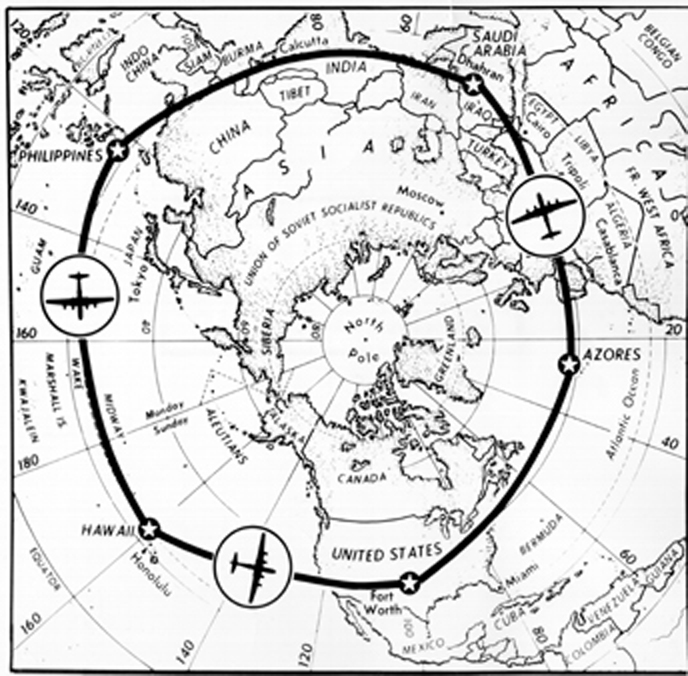
Further issues continued as the autopilot system failed on Lucky Lady II, which meant the crew needed to fly the remainder of the globe manually. After overpassing India and Indochina, Lucky Lady II was now approaching the Philippines, where up to KB-29M tankers took off from Clark Air Base to meet the B-50A 46-010. On March 1, 1949, Lucky Lady II appeared over Clark Air Base, but at the end of the first refueling off the east coast of Luzon, the aircraft broke formation, and the refueling hose separated from both Lucky Lady II and the KB-29M tanker. Worse still, the windlass for reeling out and retracting the cable on Lucky Lady II was damaged. If this could not be fixed, the crew on Lucky Lady II would have no choice but to abort the mission and land at Clark Air Base. However, the aircraft had a spare windlass onboard, and it was determined that it would take less time to replace the damaged windlass than to repair it. This, however, would take nearly two hours to complete, during which time a second KB-29M was forced to turn back to Clark due to supercharger issues. With daylight fading, Captain Gallagher made the decision to turn back towards the Philippines to extend their time in daylight to finish the repairs and refuel. Finally, the crew installed the replacement windlass and coupler, a procedure that would ordinarily be carried out while on the ground, demonstrating the expertise of the crew onboard, and soon the next attempt at refueling proved successful, and Lucky Lady II turned east into the night headed for Hawaii. Unbeknownst to the crew of Lucky Lady II, however, one of the KB-29 tankers would never return to Clark Air Base. Boeing KB-29M 45-21705 of the 43rd Air Refueling Squadron crashed while returning to Clark Air Base with the loss of all nine airmen onboard (these men being Lt. Col. Jack S. Hunt (Assistant Chief of Staff, U.S. 18th Fighter Wing, Clark Field, Philippines), Captain William W. Taylor, Captain William G. Fuller, 1st Lt. William S. Roegels, 1st Lt Edwin W. Ryan, 1st Lt. Robert C. McCormick, Staff Sgt. Arthur W. Stear, Staff Sgt. Andrew. J. Brooks, and Sgt Fred L. Shepherd). Later, immediate Air Force press releases would state they were on a training mission and the truth of their involvement with the Lucky Lady II would be downplayed to avoid casting a bad light on the Lucky Lady II’s crew.
As the Lucky Lady II flew over the Pacific, it crossed the International Date Line, restarting March 1, 1949, for the crew onboard, but their troubles were not over. Engine No.4 occasionally began backfiring, and the flight engineers needed to control the oil temperature on all four engines manually. Being informed of the troubles over the Philippines, two of the KB-29Ms at Hickam AFB were dispatched to rendezvous with Lucky Lady II near Johnston Atoll, some 820 miles to the southwest, while another pair remained on standby 300 miles off the coast of Hawaii. Having been topped off for a fourth time, Lucky Lady II was now in the home stretch back to Carswell. During the last half of the flight across the Pacific, engine No.4’s carburetor suffered issues, leading to excessive fuel consumption rates, while engine No.2 also began backfiring, with the crew only solving the backfires by manually controlling the fuel mixture for the rest of the flight. Then, three hours from the California coast, the intercooler exhaust door on engine No.3 came loose, causing issues with induction air temperature. However, Lucky Lady II arrived at the southern coast of California right before dawn and continued flying eastward towards Tucson, where it was met by three KB-29s that formed up to escort the B-50A into Carswell AFB. At 9:31 am local time, B-50A 46-010 Lucky Lady II landed back at Carswell AFB, successfully completing the first nonstop flight around the world, having flown continuously for 94 hours, 10 minutes. Immediately after the Lucky Lady II’s arrival, an entourage of VIPs, including Secretary of the Air Force W. Stuart Symington, Jr., US Air Force Chief of Staff General Hoyt S. Vandenberg, commanding general of the 8th Air Force General Roger M. Ramey, and commanding general of Strategic Air Command Lieutenant General Curtis E. LeMay, greeted the 14-man crew, who were all awarded the Distinguished Flying Cross for this feat. Later, the crew was further honored with the Mackay Trophy for the most meritorious flight of the year. Videos of Lucky Lady II’s arrival can be found at these links: HERE, HERE, and HERE.
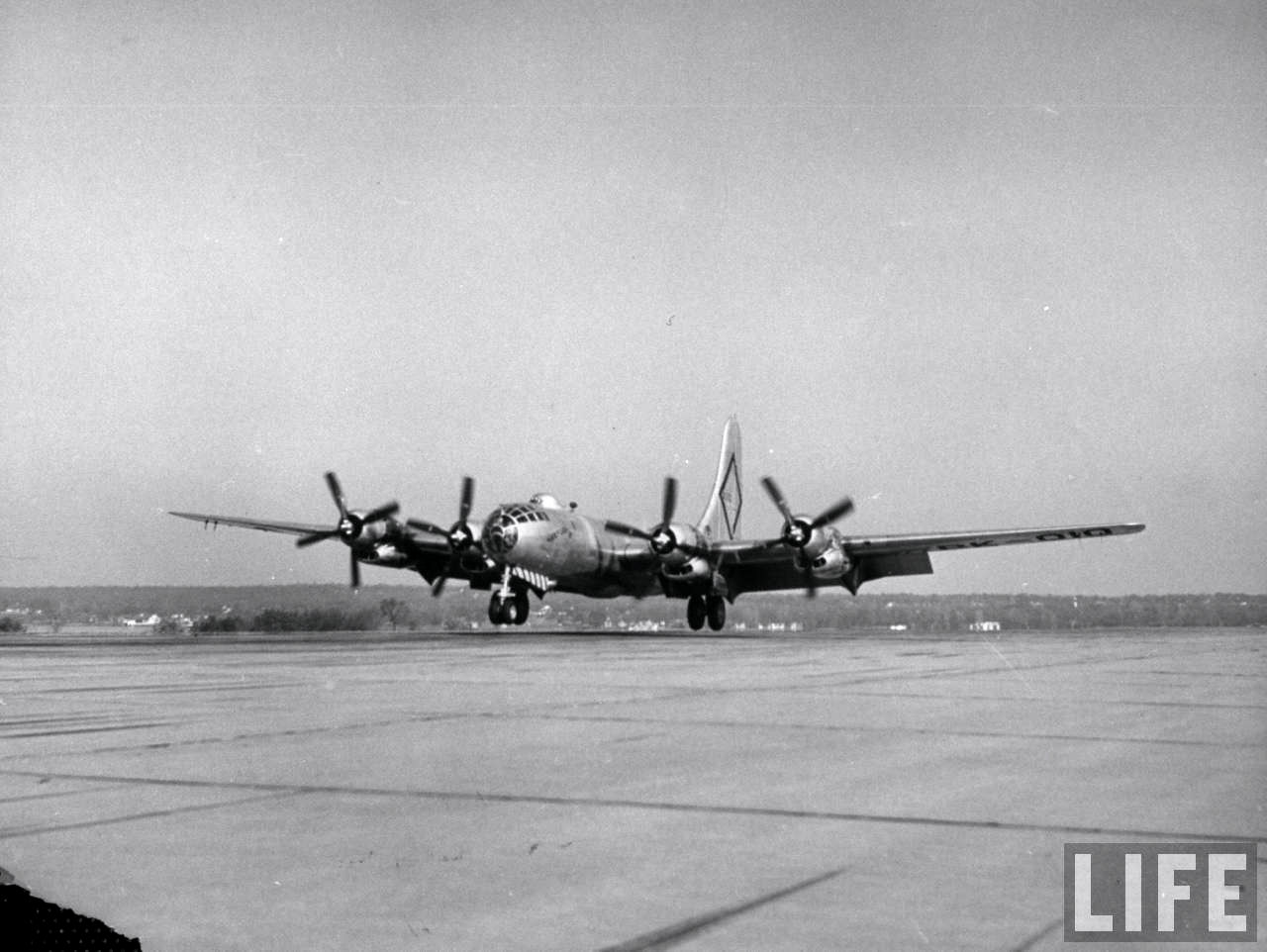
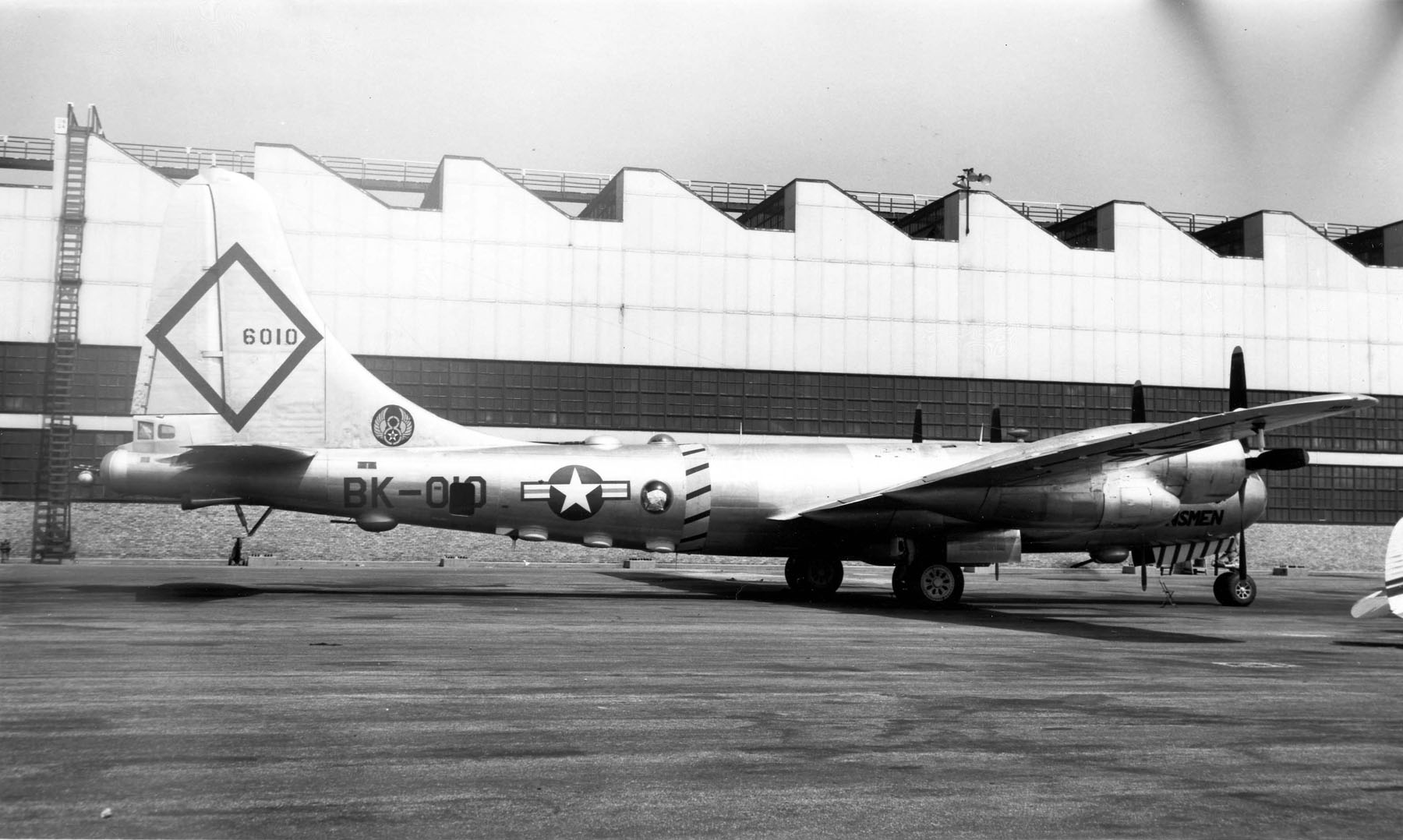
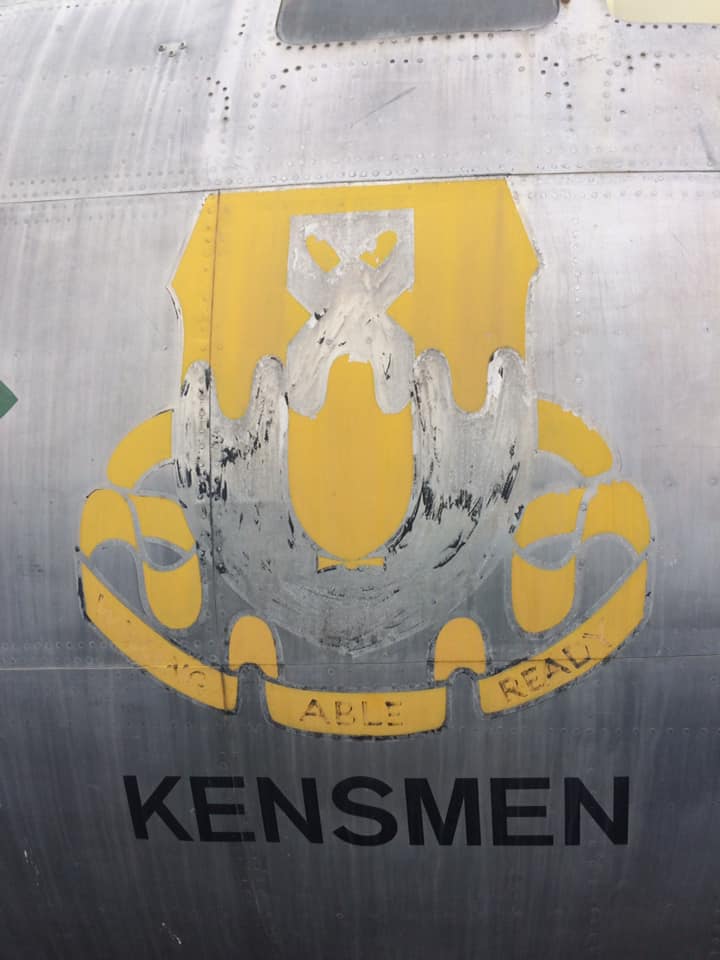
Not long after returning to Carswell, B-50A 46-010 was flown out to Tinker AFB in Oklahoma City to be examined and overhauled at Tinker’s Air Material Area and later returned to routine service with the 43rd Bomb Wing at Davis-Monthan AFB. During this point, the B-50As of the 63rd Bombardment Squadron, including Lucky Lady II, had the name KENSMEN written on the right sides of their cockpits in honor of Major Ken McCullar, the wartime commander of the 43rd Bomb Group who had been killed in a crash at Port Moresby, New Guinea, on April 12, 1943. Less than one year after its nonstop aerial circumnavigation, Lucky Lady II’s luck ran out. On August 13, 1950, B-50A 46-010 was on final approach to Davis-Monthan Air Force Base when all four of its Pratt and Whitney R-4360 Wasp Major engines failed. In the subsequent investigation, it was revealed that a defective circuit breaker for a small light in the navigator’s Plexiglass astrodome on top of the fuselage began generating a large amount of smoke in the cockpit. In order to stop the power source, the crew shut down the aircraft’s generators and converters, switching to battery power, which then drained power from the aircraft’s batteries. Once the voltage in the batteries fell below 12 volts, the fuel valve cutoffs for all four engines closed, causing the loss of power in all four engines. With insufficient energy and altitude to make it to the runway, Captain Warren E. Griffin told the 11-man crew to brace for impact. The Lucky Lady II made a wheels-up landing in the desert about two miles south of the base. Fortunately, all 11 men survived the crash landing, with all but one of the crew escaping without injury. The exception was bombardier 1st Lieutenant Theodore Hastings, who was in the forward-most section of the crew compartment. As the Lucky Lady II belly-landed in the desert, it cut through a patch of Cholla cactus, with Hastings being struck by the barbed spines that broke through the Plexiglass in front of him.
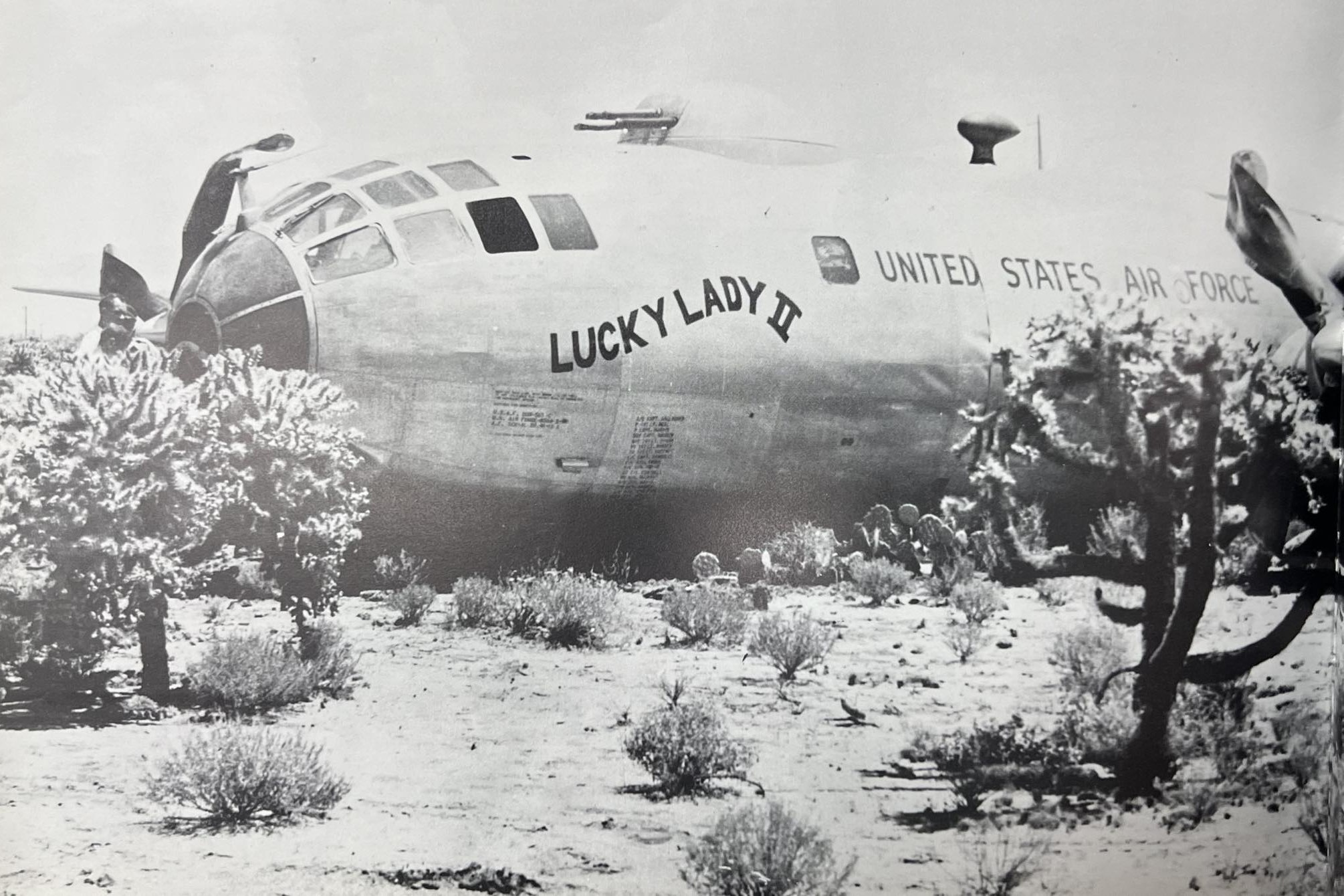
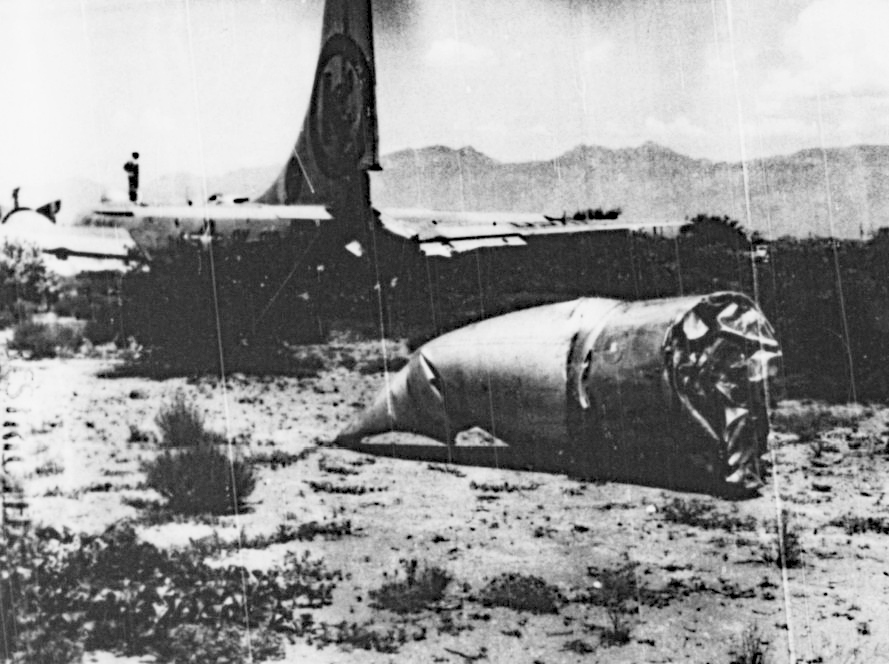
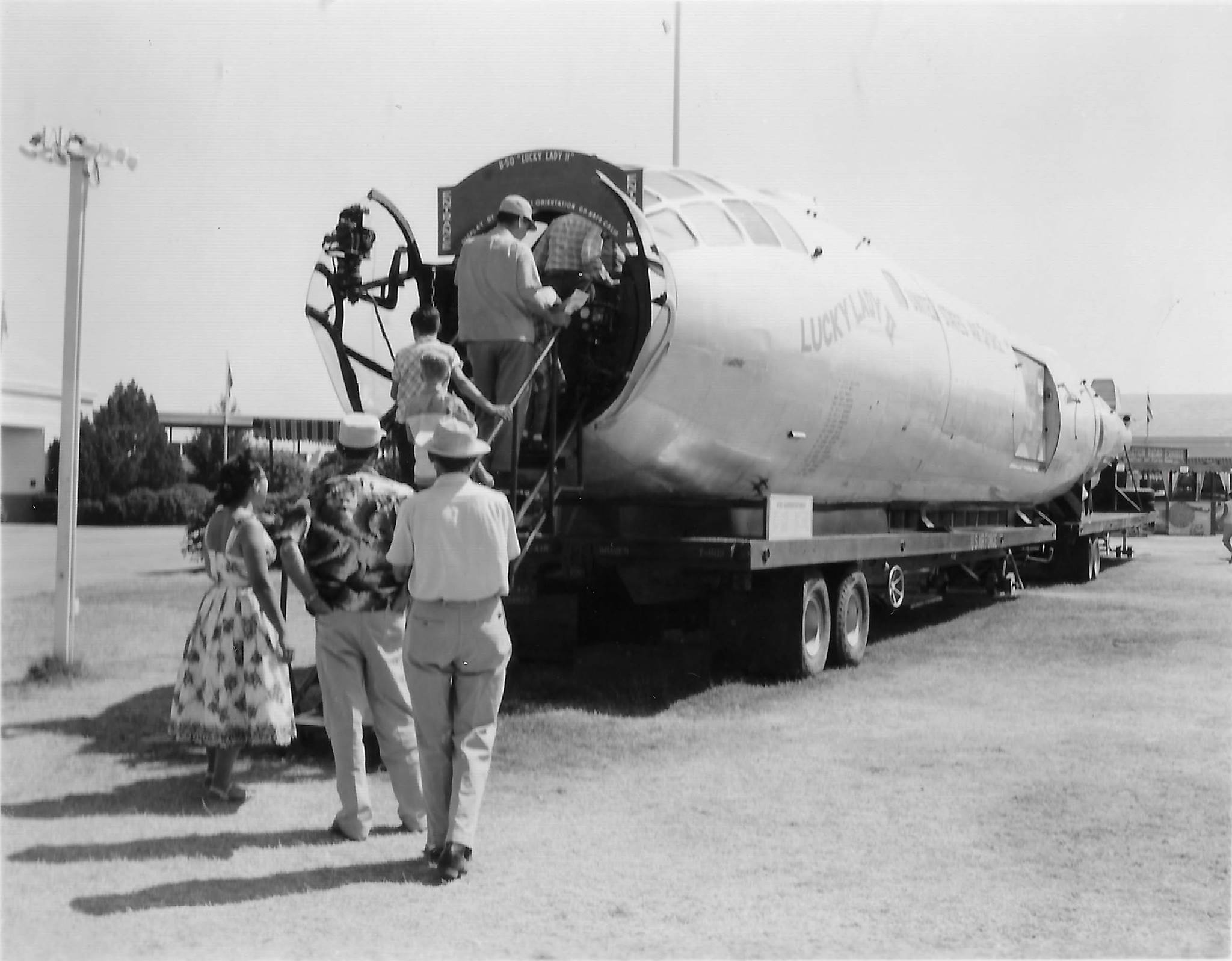
While the crew would all fly again, the same could not be said of the Lucky Lady II. The necessary repairs were deemed to be economically infeasible, but instead of scrapping the entire aircraft, which was still famous from its recent flight, the Air Force decided to retain and repair the fuselage of the aircraft and tour it across the country as part of an Air Force recruiting campaign. The fuselage of Lucky Lady II would be driven on a semi-truck and flatbed trailer across the United States, while the bombardier’s plexiglass cone was modified into a double-door entry for visitors to go through the aircraft’s cockpit. By 1958, the fuselage of the Lucky Lady II had become part of an outdoor collection of surplus aircraft at Norton Air Force Base in San Bernardino, California (the decommissioned base is now San Bernardino International Airport), which included a North American B-45 Tornado, a North American F-107, a B-47 Stratojet, a B-29 Superfortress, a B-17 Flying Fortress, several F-86 Sabres, a B-25 Mitchell, a Curtiss C-46 Commando, a P-51 Mustang, and a McDonnell XF-85 Goblin. In August 1962, movie pilots Paul Mantz and Frank Tallman, who formed Tallmantz Aviation, incorporated the International Flight and Space Museum (IFSM) as a non-profit entity to obtain loans for the surplus aircraft at Norton AFB. In 1964, though, a new commanding officer at Norton felt that the collection was nothing but a bunch of surplus aircraft overdue for the scrapyard. Mantz and Tallman could not save every aircraft, but the majority of the collection, including the fuselage of B-50A 46-010 Lucky Lady II, was saved and transported to Orange County Airport (now John Wayne Airport) in Santa Ana, California, which became home to the rest of Mantz and Tallman’s combined collection of vintage aircraft, from WWI biplanes to WWII fighters and bombers used in film and television work.
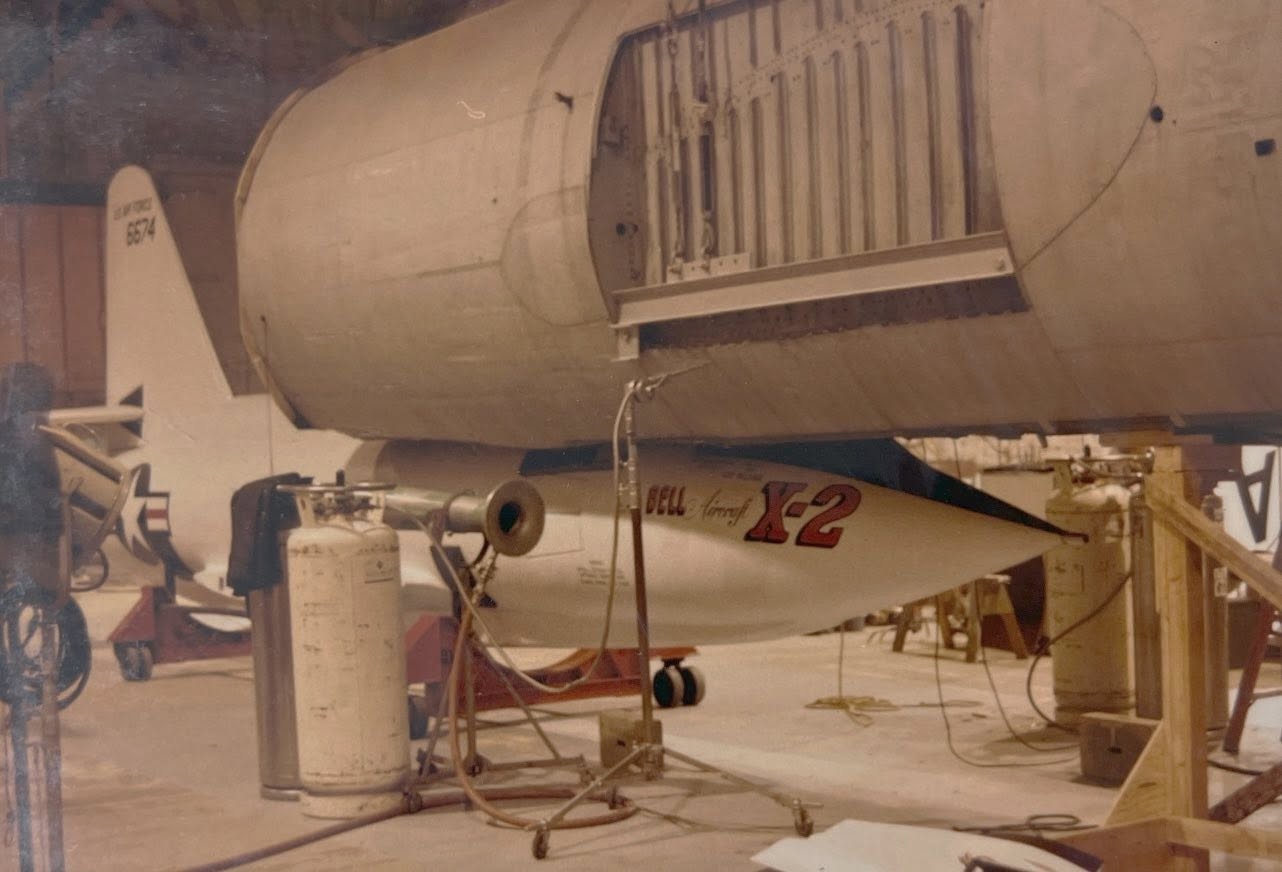
With the death of Paul Mantz in 1965 during the filming of the movie Flight of the Phoenix and the auctioning of much of the Tallmantz collection in 1968, the IFSM was disbanded, and while some aircraft would be incorporated into the USAF Museum’s Loan Program, Lucky Lady II’s fuselage, along with a Grumman F11F-1 Tiger (BuNo 141868), Lockheed P-80A Shooting Star (44-85488) and Lockheed T-33A (53-5541), were all acquired by the Planes of Fame Air Museum in Chino, California around 1975, and were all placed on outdoor static display. At one point in 1989, the aircraft was used in the production of the pilot episode of the popular science-fiction television series Quantum Leap, where a time-traveling physicist “leaps” into the bodies of people throughout history to correct past mistakes, with the first episode involving a story based on the real-life Bell X-2 rocket-powered experimental aircraft. The fuselage of Lucky Lady II stood in place for the EB-50B mothership used in the original X-2 program, and the show’s production team built a fiberglass replica of the X-2 for the show. When filming wrapped on Quantum Leap’s two-part pilot episode “Genesis”, Lucky Lady II returned to Planes of Fame, along with the Bell X-2 replica, which remains part of the collection to this day.
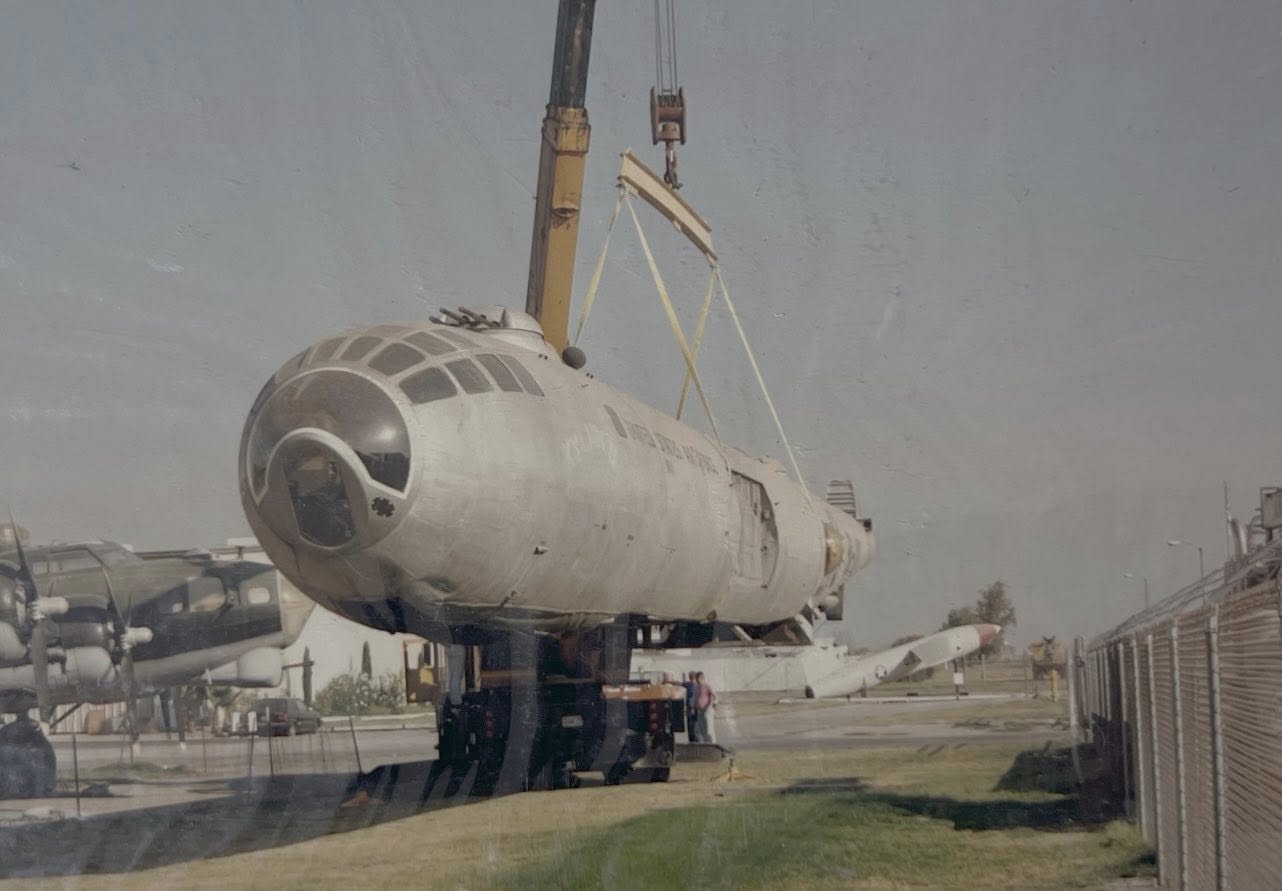
Today, the forward section of the fuselage of Lucky Lady II is still on outdoor display at the Planes of Fame’s main location at Chino Airport, but the rear section Lucky Lady II’s fuselage was shipped to another location of the Planes of Fame at Valle Airport, Arizona, and while the museum is now closed to the public and the airport is now dormant, the Planes of Fame maintains ownership over the property that includes the museum hangar. Additionally, Planes of Fame has long considered rebuilding the Lucky Lady II, and since the Boeing B-50 bomber shares parts with the Boeing KC-97 Stratofreighter, it was decided in the 1990s to find a surplus KC-97 to be used as a source of parts for B-50A 46-010. In 2001, it was learned that a derelict KC-97 at Stockton Airport, California (KC-97G s/n 53-0317) was to be scrapped by Scroggins Aviation. Planes of Fame managed to acquire the wings, center section, landing gear, engines, and tail of 53-0317 and ship them to Valle Airport, where they remain today.
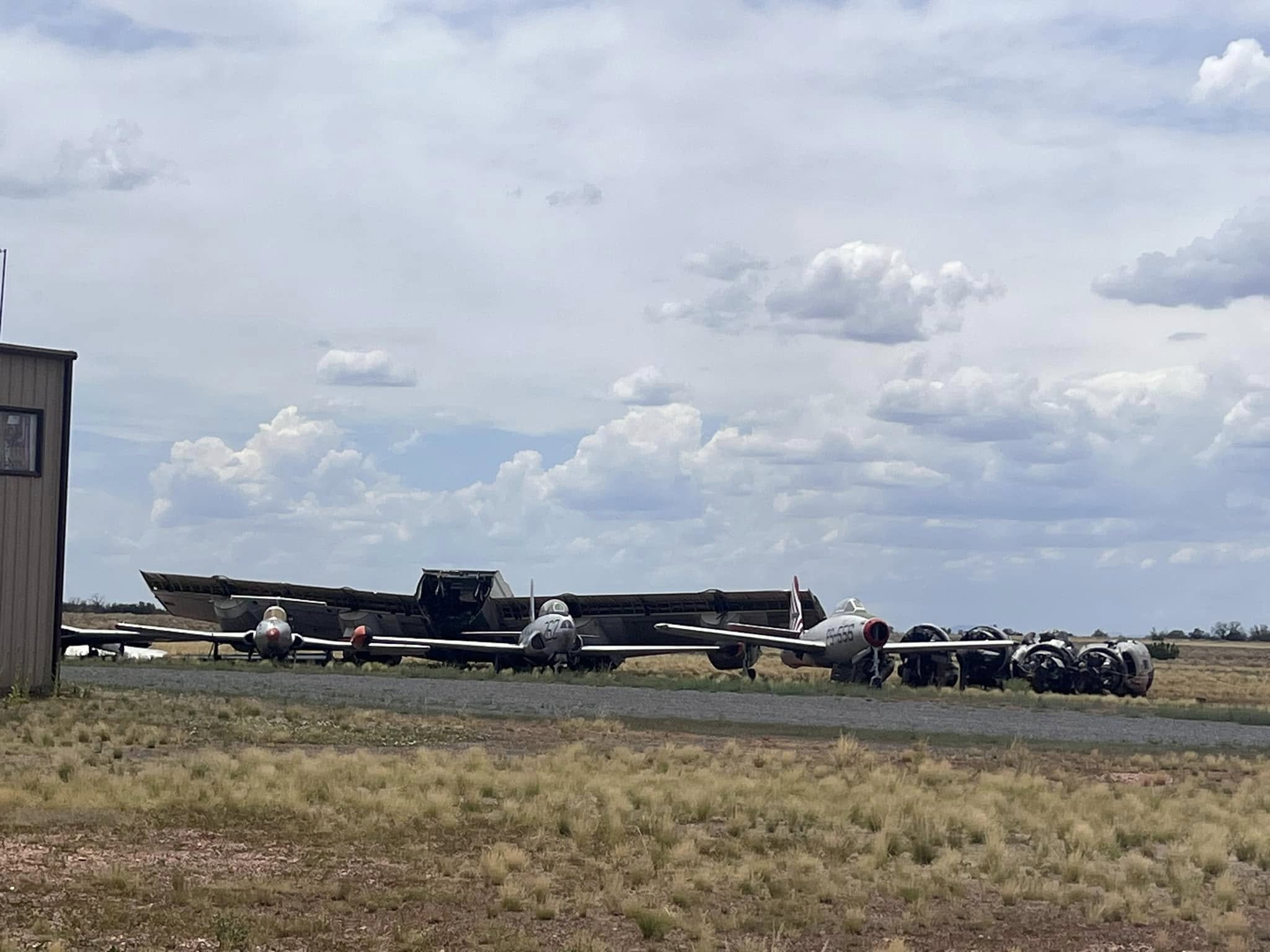
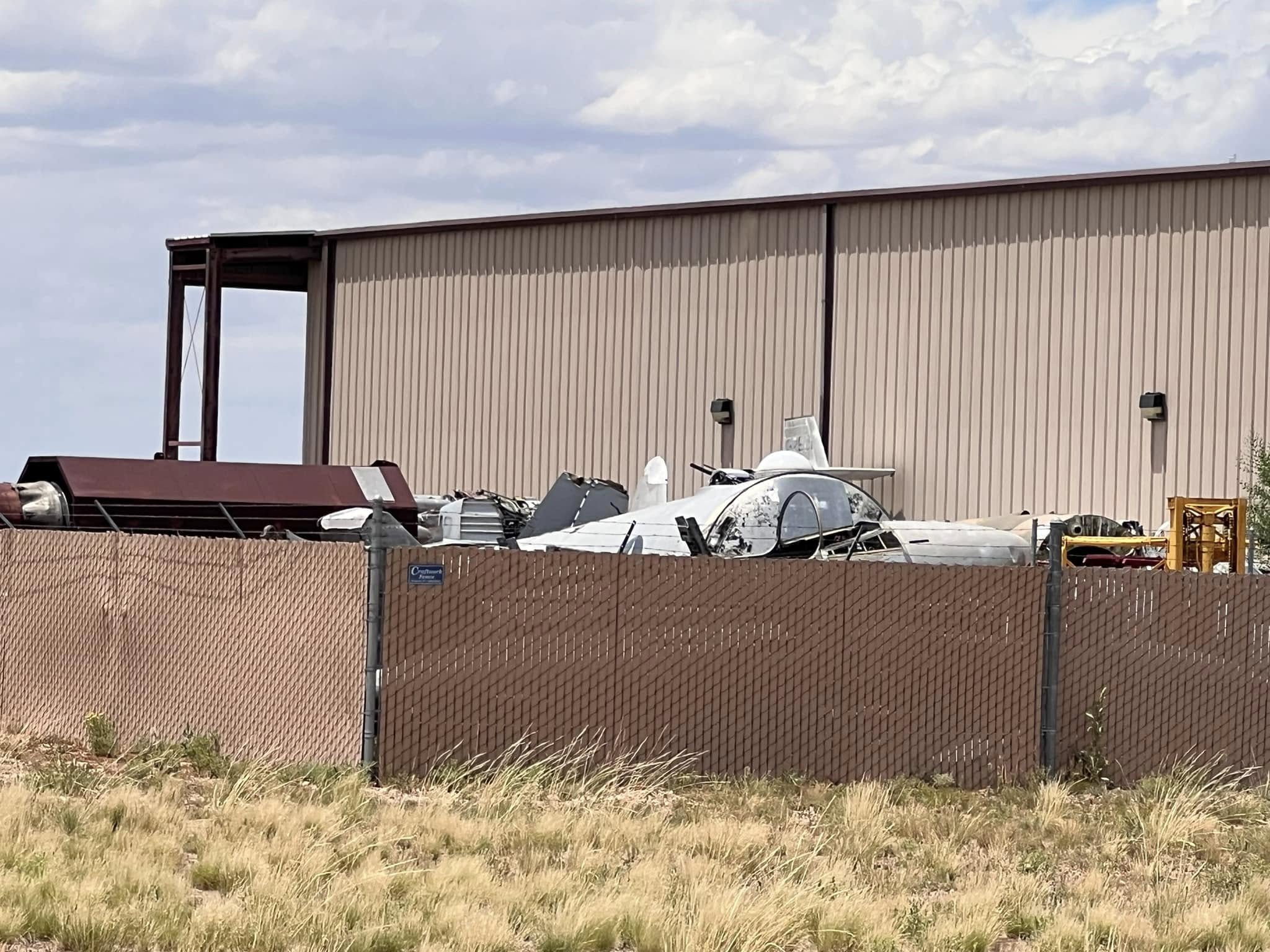
All of these components would allow the museum to make the Lucky Lady II a complete airframe once again, albeit a hybrid of a B-50 and KC-97, but despite widespread enthusiasm among the museum and its members, the expense in simply reassembling the aircraft, let alone making it presentable for display or even brought back to airworthy condition would be considerable, both in terms of money and labor, which the museum has prioritized on maintaining their airworthy collection. But yet, so long as Planes of Fame owns the Lucky Lady II’s fuselage and the KC-97 parts, this proposal may yet come to pass, even if in the far distant future. But considering the journey this aircraft has taken throughout its nearly 80-year history, it is evident that Lucky Lady II still has a lucky streak.
WB-50D 49-0310 (c/n 16086)
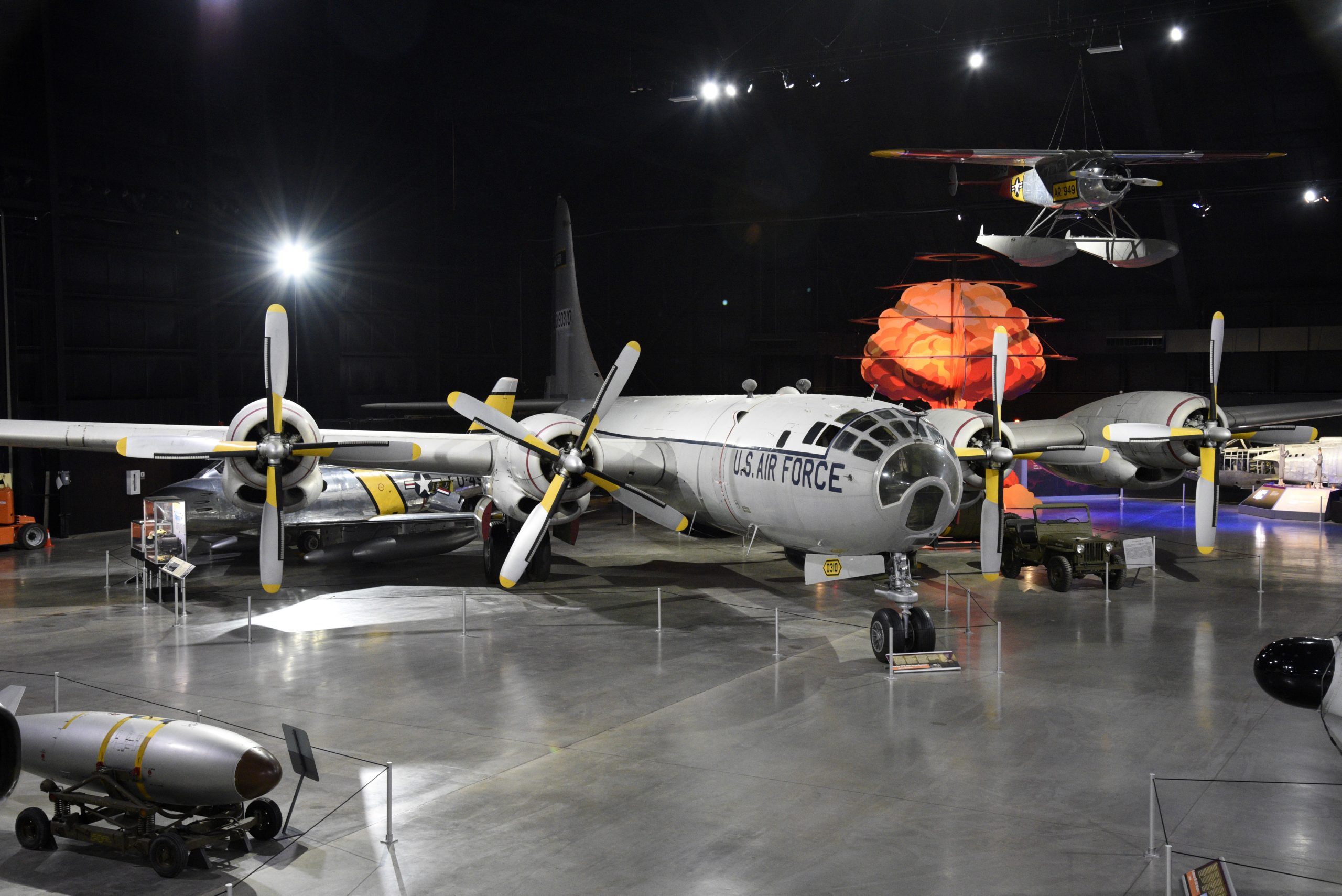
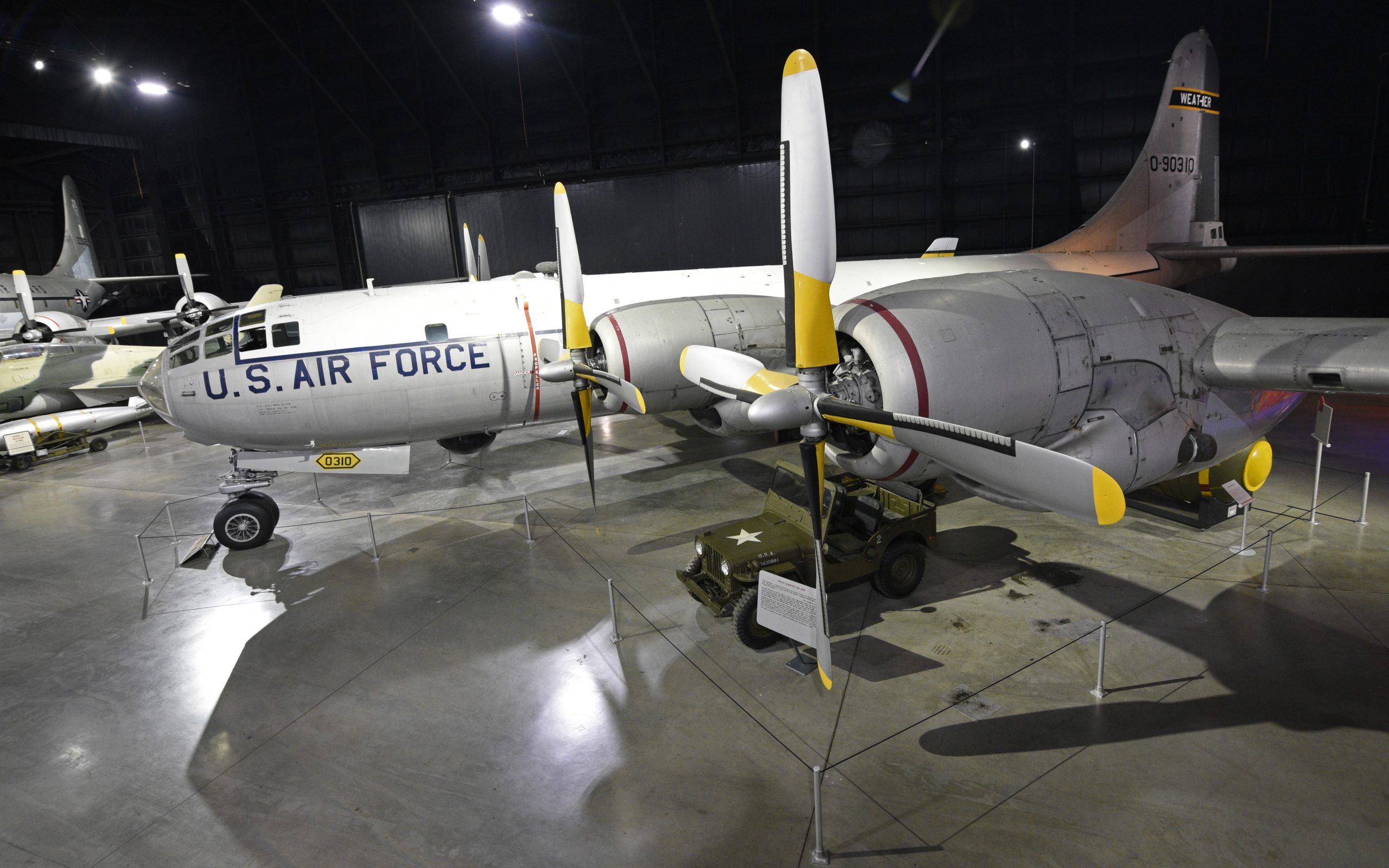
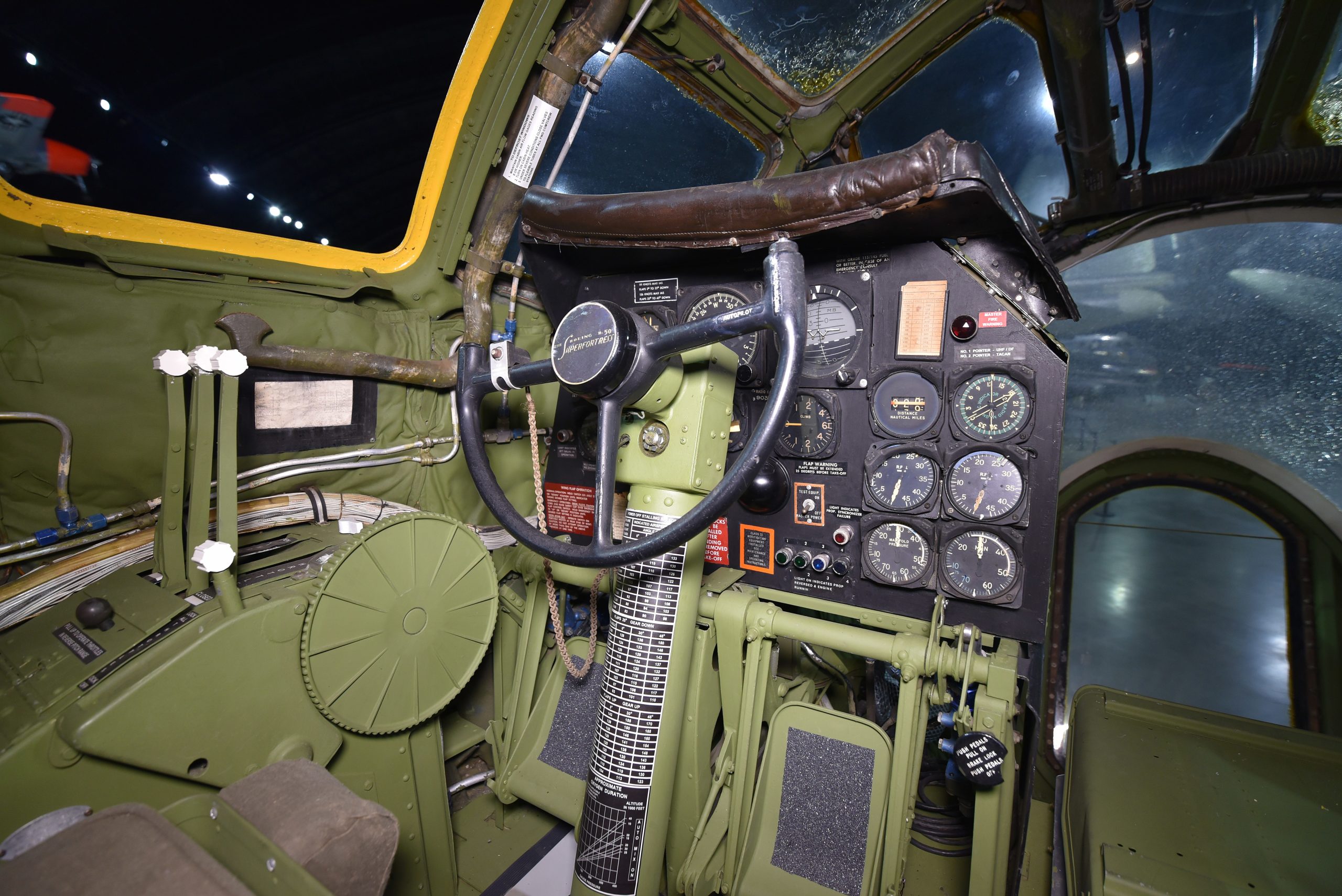
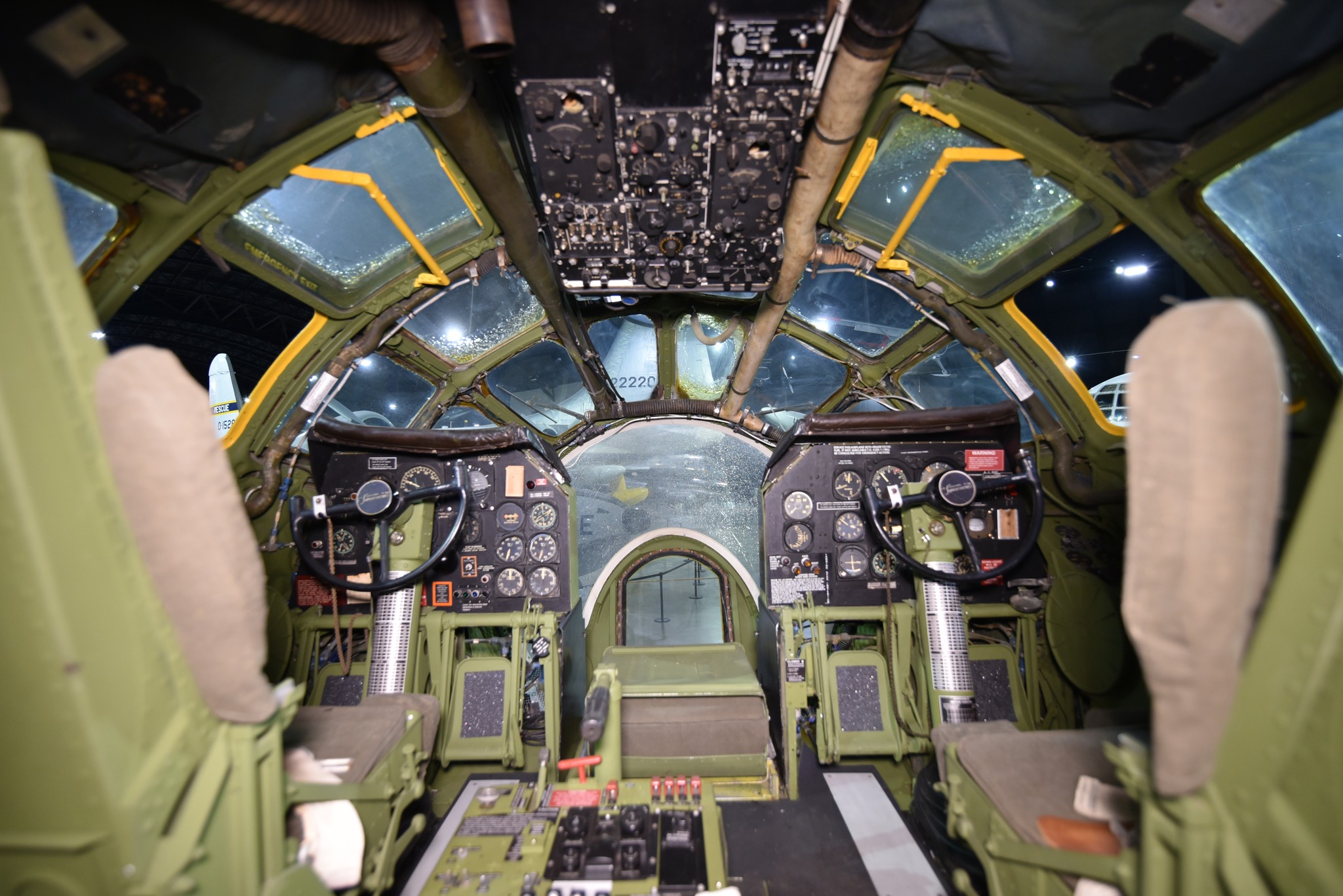
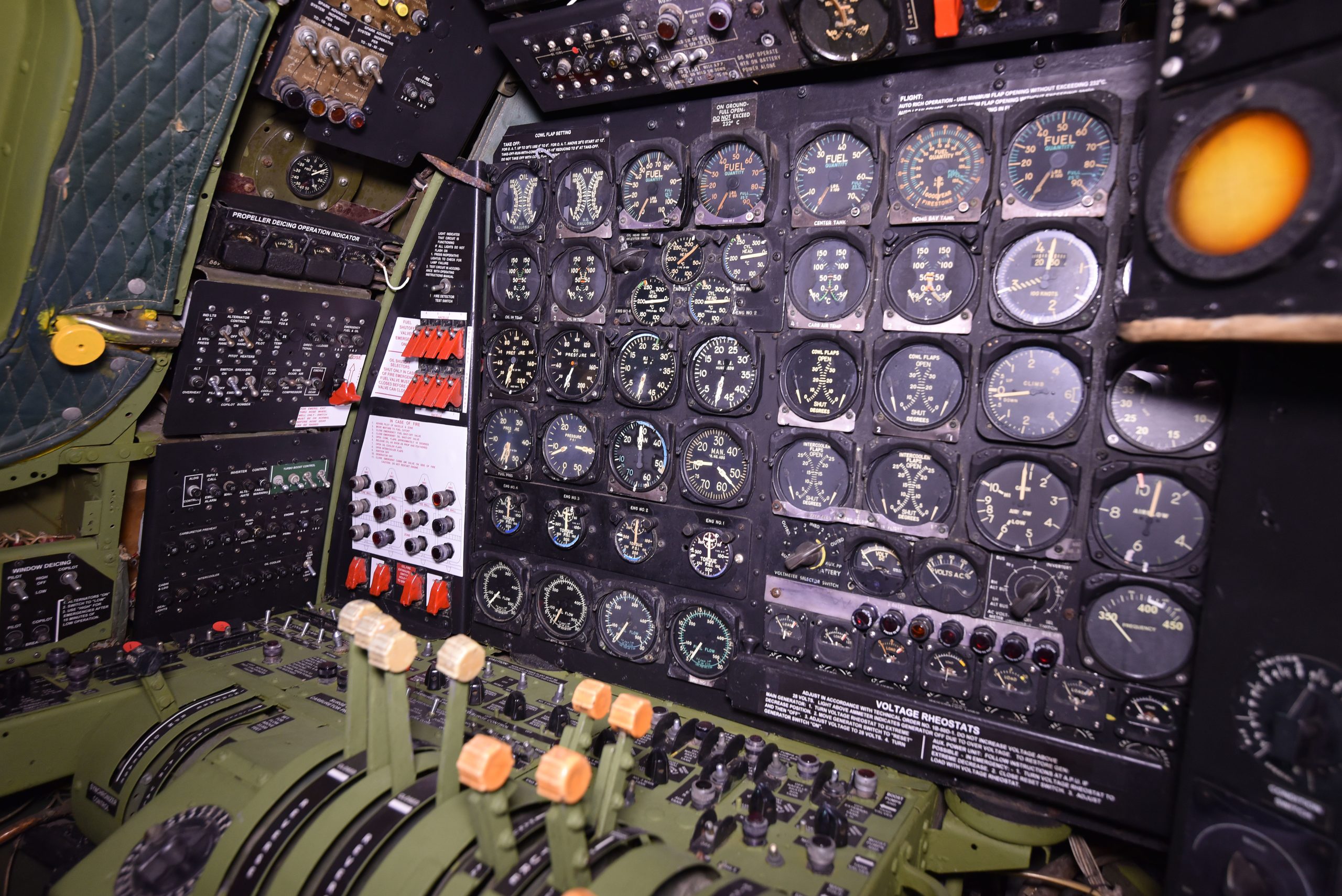
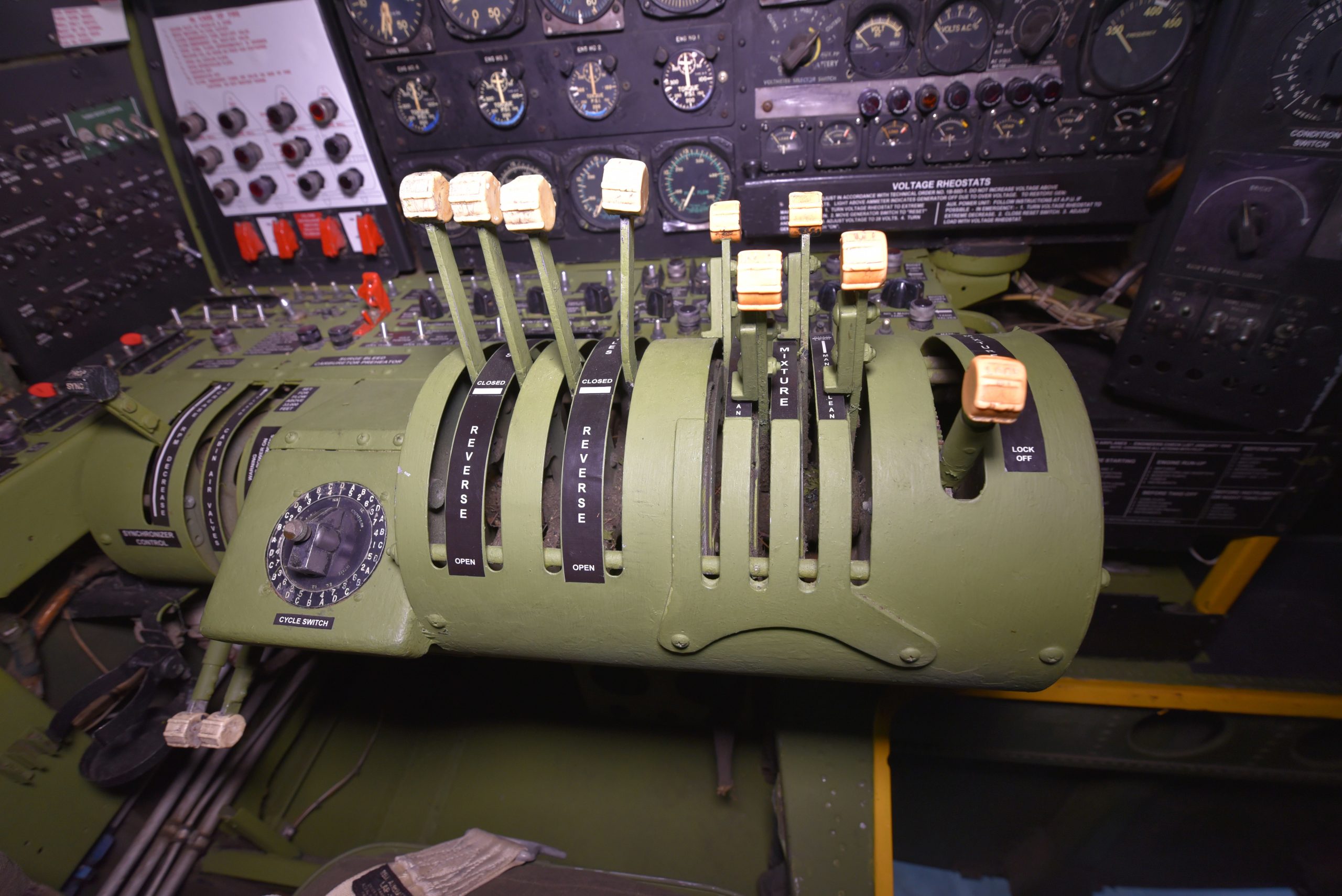
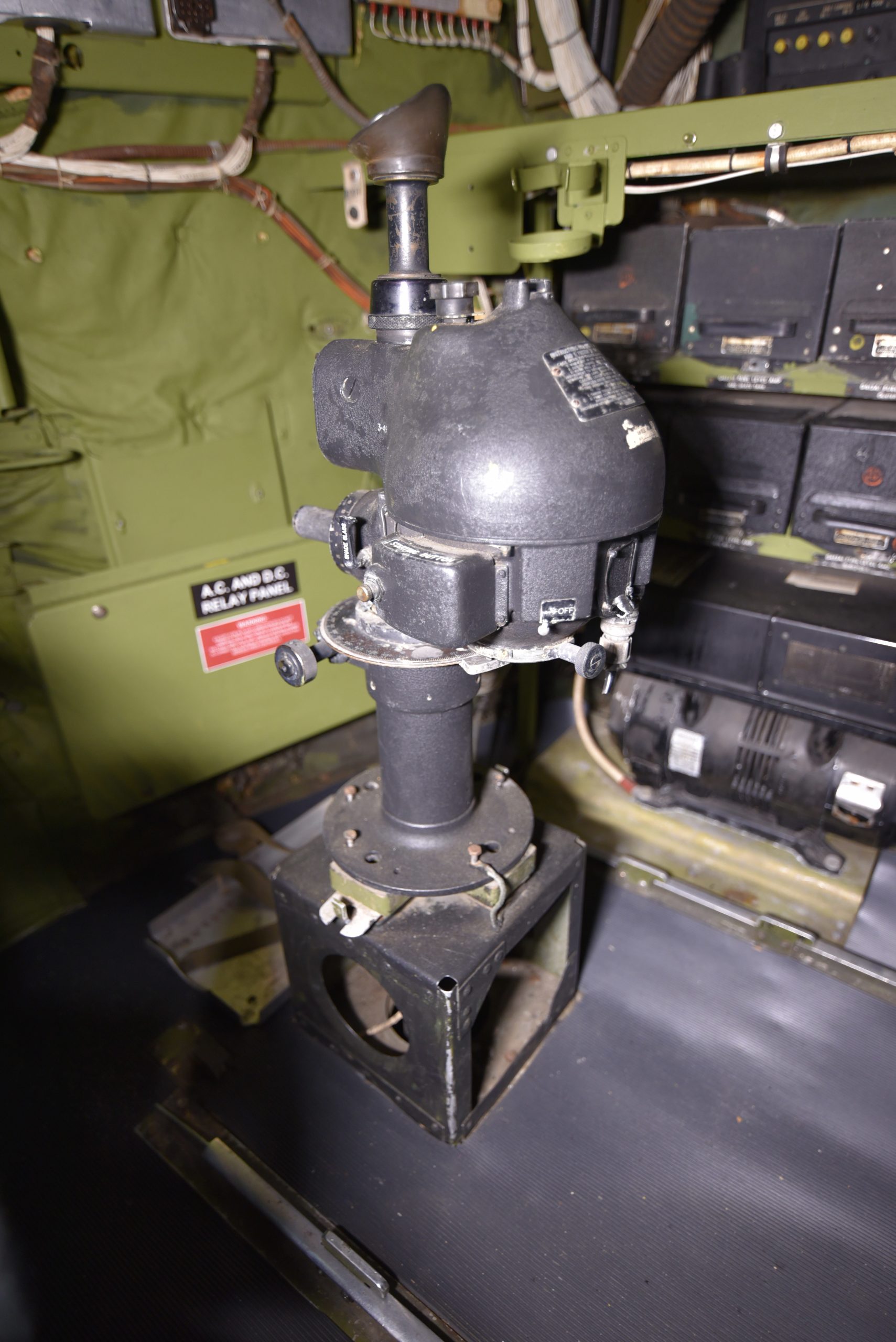
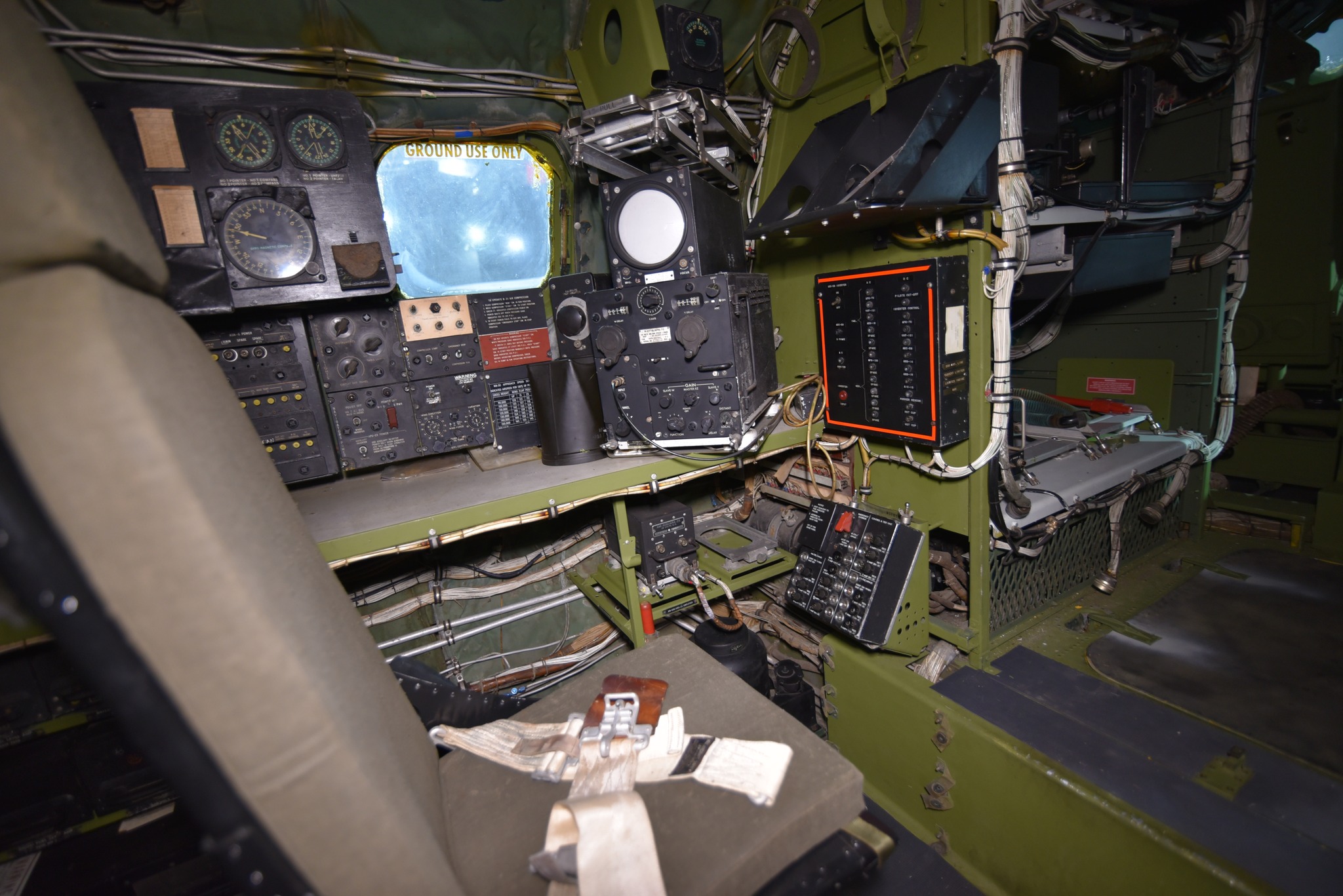
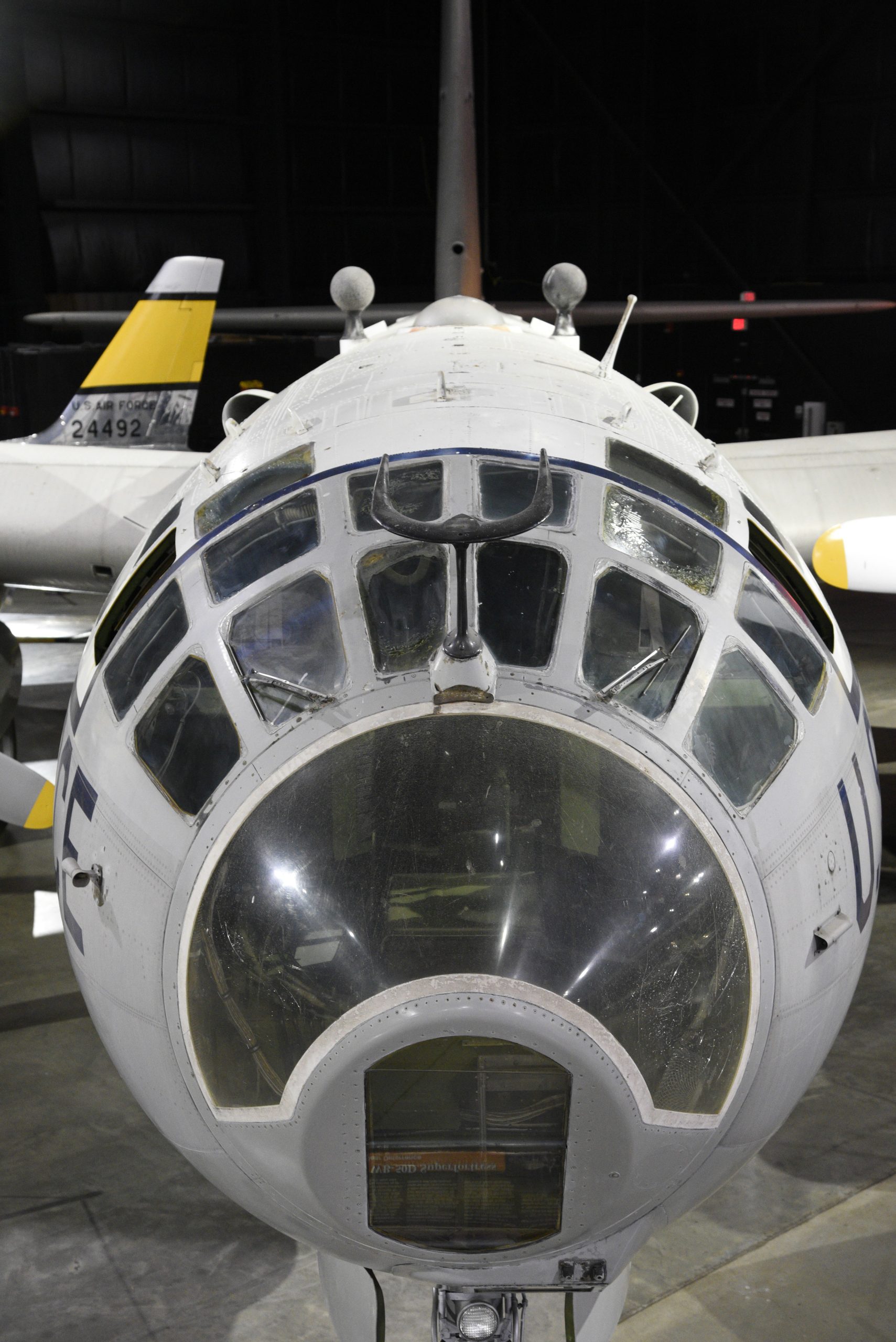
With a lineage stretching back to 1923, the National Museum of the USAF at Wright-Patterson AFB in Dayton, Ohio, has one of the most extensive collections of American military aircraft, from the time of the Wright Flyer to the Lockheed Martin F-22 Raptor. One of the most popular galleries in the NMUSAF is the collection’s Eugene W. Kettering Cold War Gallery, which host to numerous fighters, bombers, trainers, and transports flown by the USAF from the 1940s to the 1990s, and among these is perhaps the most well-preserved example of a surviving Boeing B-50 Superfortress; WB-50D 49-0310, which was also the final B-50 to be operational service with the USAF. Constructed at the Boeing Renton plant as a B-50D with the construction number 16086, the aircraft was accepted into the USAF in 1950 as serial number 49-0310 and was deployed as a nuclear-capable bomber during the early 1950s. According to aviation historian Geoffrey Hayes, 49-0310 was flown by three separate Bombardment Wings in Strategic Air Command: the 2nd Bombardment Wing, based at Hunter Air Force Base (now Hunter Army Airfield) near Savannah, Georgia, the 509th Bombardment Wing based at Roswell AFB, New Mexico, and the 97th Bombardment Wing stationed at Biggs AFB near El Paso, Texas.
In 1956, B-50D 49-0310 was selected for conversion to a WB-50D weather reconnaissance aircraft, with the USAF awarding Lockheed Aircraft to modify it and other B-50s into weather reconnaissance aircraft at their facility based at Ontario Airport in Ontario, California. The modifications would include the installation of high-altitude weather samplers, Doppler radar, weather radar, and an additional fuel tank mounted in the aft bomb bay. One of the distinctive traits of the WB-50D was the installation of an air sampling system scoop mounted on the top aft part of the fuselage, which could be used not only to gather weather data, but could also be used to measure airborne radioactive fallout resulting from above-ground nuclear tests from the Soviet Union. With the modifications complete, WB-50D 49-0310 would fly with the 57th Weather Reconnaissance Squadron (WRS) at Hickam AFB, Hawaii, starting on July 9, 1956. After two years of operations, 49-0310 was flown to the Hayes Aircraft Corporation’s facility at Birmingham, Alabama, for an Inspect and Repair as Necessary (IRAN) overhaul on August 8, 1958.
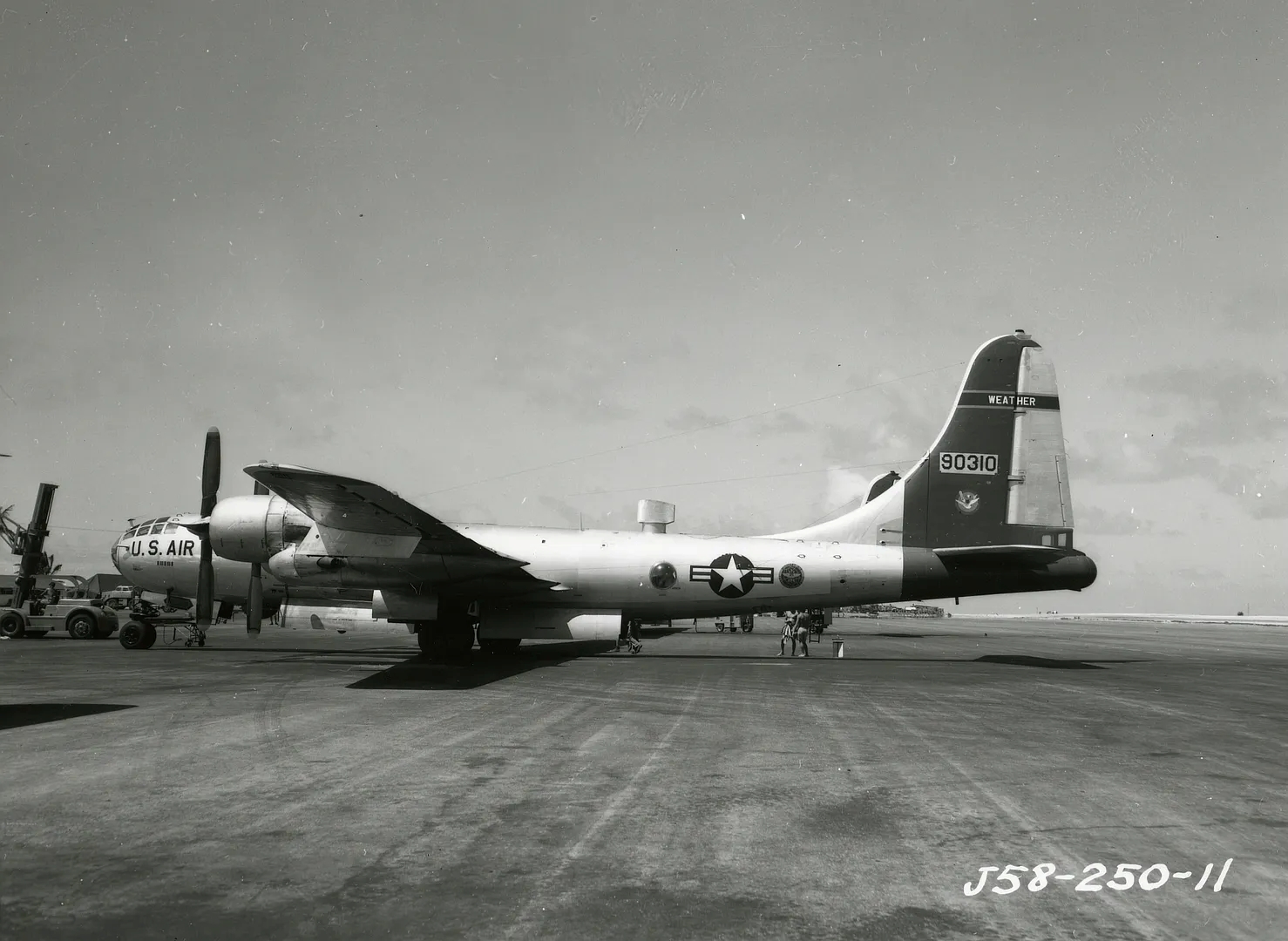
Two months later, on October 29, 1958, WB-50D 49-0310 returned to Hickam AFB, this time to join the 55th WRS. Three years later, on April 5, 1961, 49-0310 was flown back to the continental United States for another IRAN overhaul, this time at the Douglas Aircraft Company facility in Tulsa, Oklahoma. Upon completing this overhaul, WB-50D 49-0310 was reassigned to the 56th Weather Reconnaissance Squadron at Yokota Air Base, Japan on May 12, 1961. It would continue flying missions with the 55th WRS until September 1965, when corrosion discovered across the USAF’s inventory of B-50s accelerated the type’s retirement from service. On September 14, 1965, WB-50D 49-0310 was flown to Davis-Monthan AFB, Arizona, to be placed in storage, but it would not stay in Arizona for long.
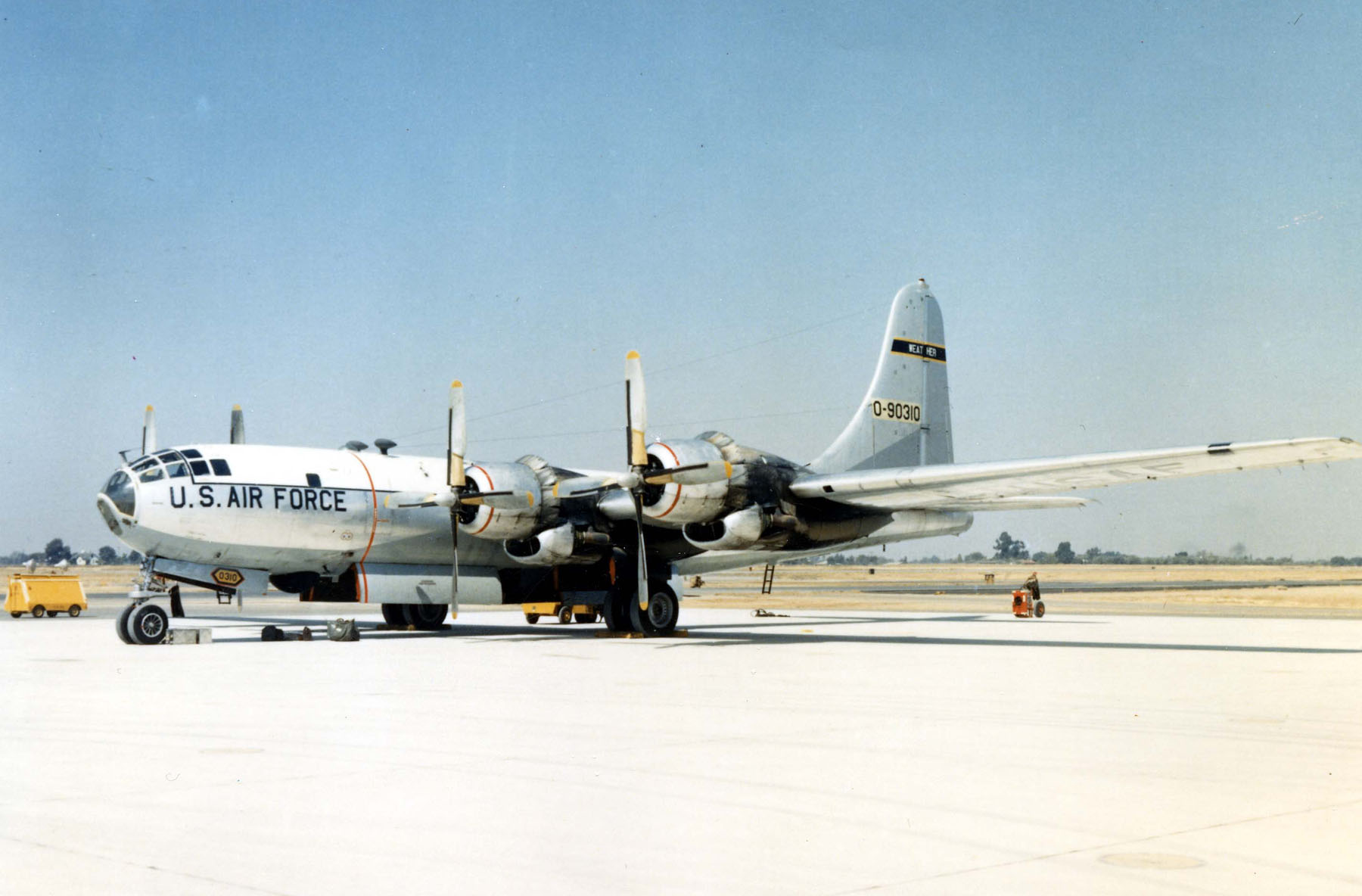
On June 19, 1966, WB-50D 49-0310 departed from Davis-Monthan AFB and was flown to Wright-Patterson AFB near Dayton, Ohio, to be used for flight experiments managed by Air Force Systems Command (AFSC), specifically to be used for testing Tactical Near-Time Reconnaissance equipment. The aircraft arrived at Wright-Patterson with a large nose piece and side scanner blisters that would be used in the upcoming flight experiments, and would receive further modifications at WPAFB, such as a side-looking radar (SLR) unit fitted with a moving target indicator, Reconofax VI Infrared Mapping Set, modified aerial strip and aerial framing cameras, and an observer scoring system. The aircraft was also redesignated as a JB-50D to indicate its status as being used for temporary special test duties. This was all done in order to evaluate reconnaissance and surveillance equipment that was to be used in detecting movement of North Vietnamese personnel and equipment traveling along the Ho Chi Minh Trail under the cover of night, inclement weather, and foliage. Starting on January 7, 1967, JB-50D 49-0310 was used in collecting infrared and side-looking radar data on targets set in the Appalachian Mountains and throughout the southeastern US. Then, in July of 1967, JB-50D 49-0310 was sent to Howard AFB inside the Panama Canal Zone for testing over jungle terrain more analogous to the terrain found on the Ho Chi Minh Trail, which skirted across the borders of Vietnam, Laos, and Cambodia.
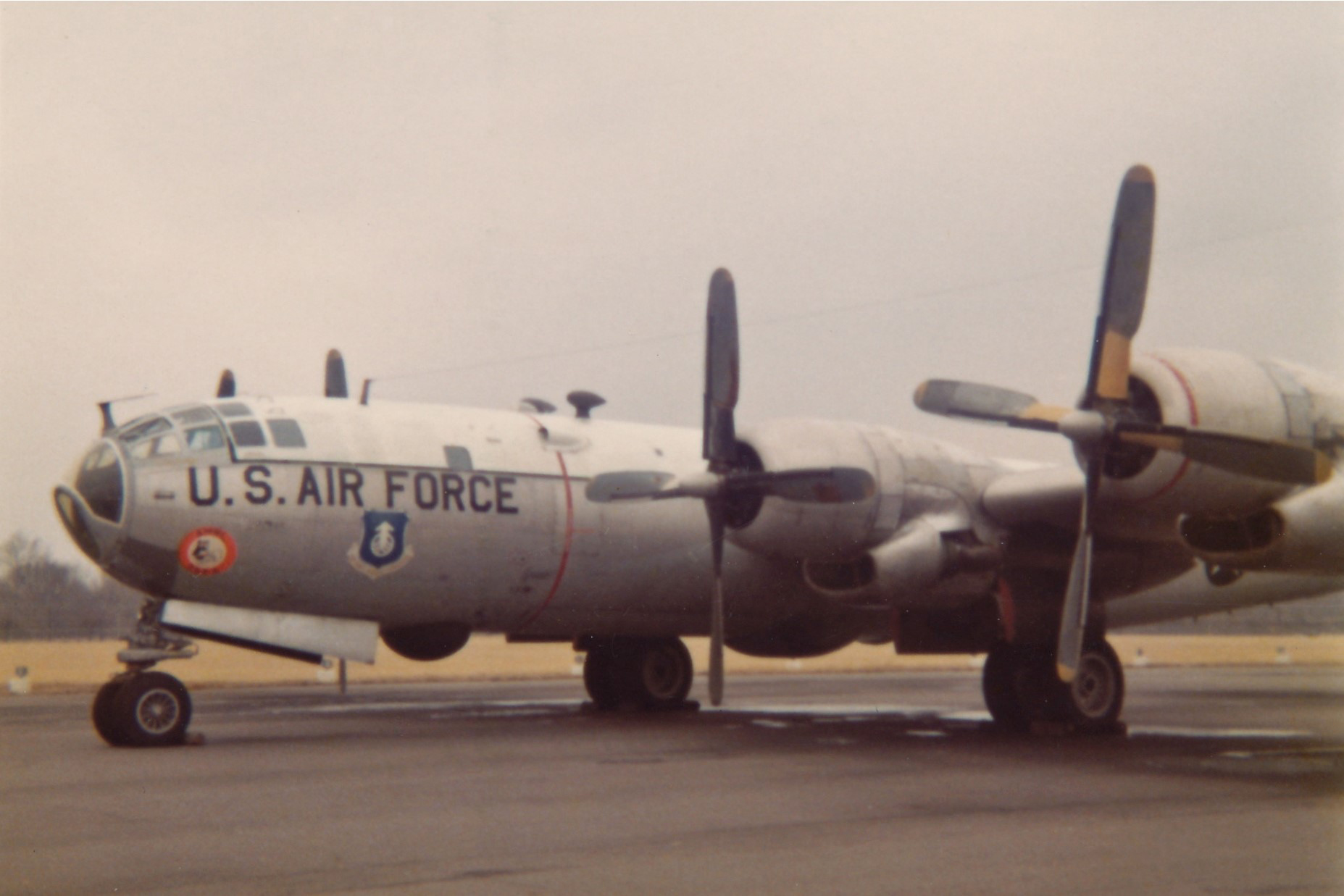
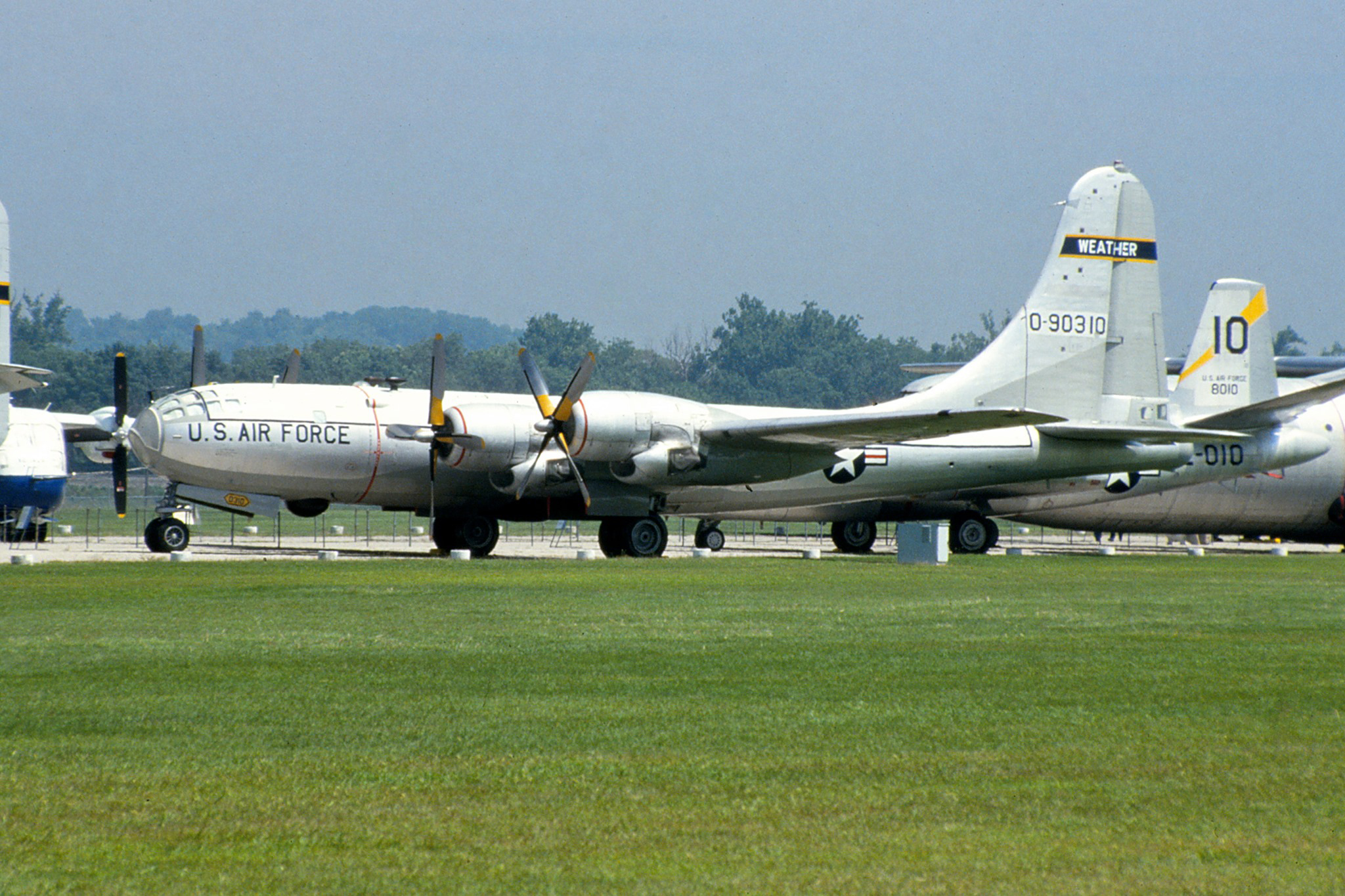
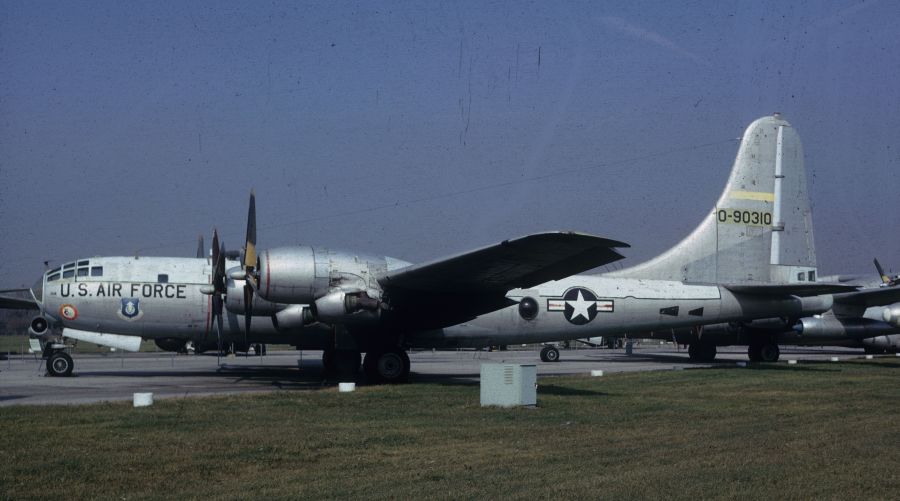
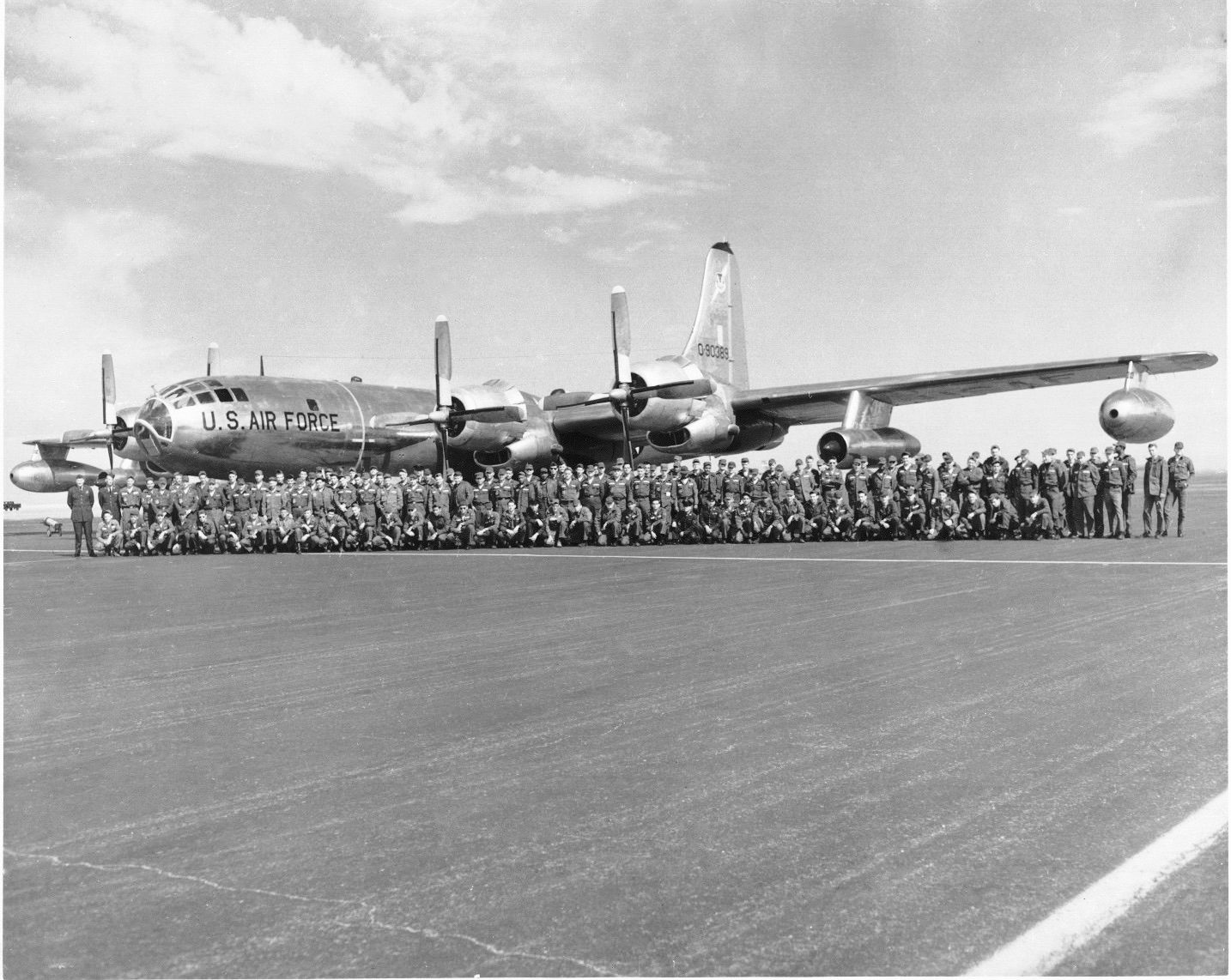
At the conclusion of this test program, 49-0310, which was now the sole operational Boeing B-50 in the USAF, was selected for preservation at the United States Air Force Museum at Wright-Patterson AFB, and so on April 29, 1968, 49-0310 made its final flight into WPAFB, and was placed in storage on the Wright Field portion of the base, as although the museum was on the Patterson Field portion of the base closer to Fairchild, the museum had plans to move to the Wright Field side, and so several aircraft earmarked for the museum, including another B-50, KB-50J 49-0389, were kept in storage to await the museum’s move across the base. By 1971, the United States Air Force Museum (now the National Museum of the United States Air Force) had reopened, and the USAF Museum could boast having two B-50s on display (49-0310 and 49-0389). With KB-50J 49-0389 being sent out on loan from the NMUSAF, and the Air Force Museum Foundation raising funds to expand the museum at Dayton, the weather-worn WB-50D 49-0310 underwent refurbishment and was placed on display inside the Eugene W. Kettering Cold War Gallery, which opened to the public in 2003. Today, WB-50D 49-0310, the last B-50 in active service with the USAF, is the only one of the five surviving B-50s displayed indoors, and it sits proudly among other iconic aircraft of the Cold War period, demonstrating the critical yet unsung role of weather reconnaissance aircraft played in supporting the daily operations of the United States Air Force.
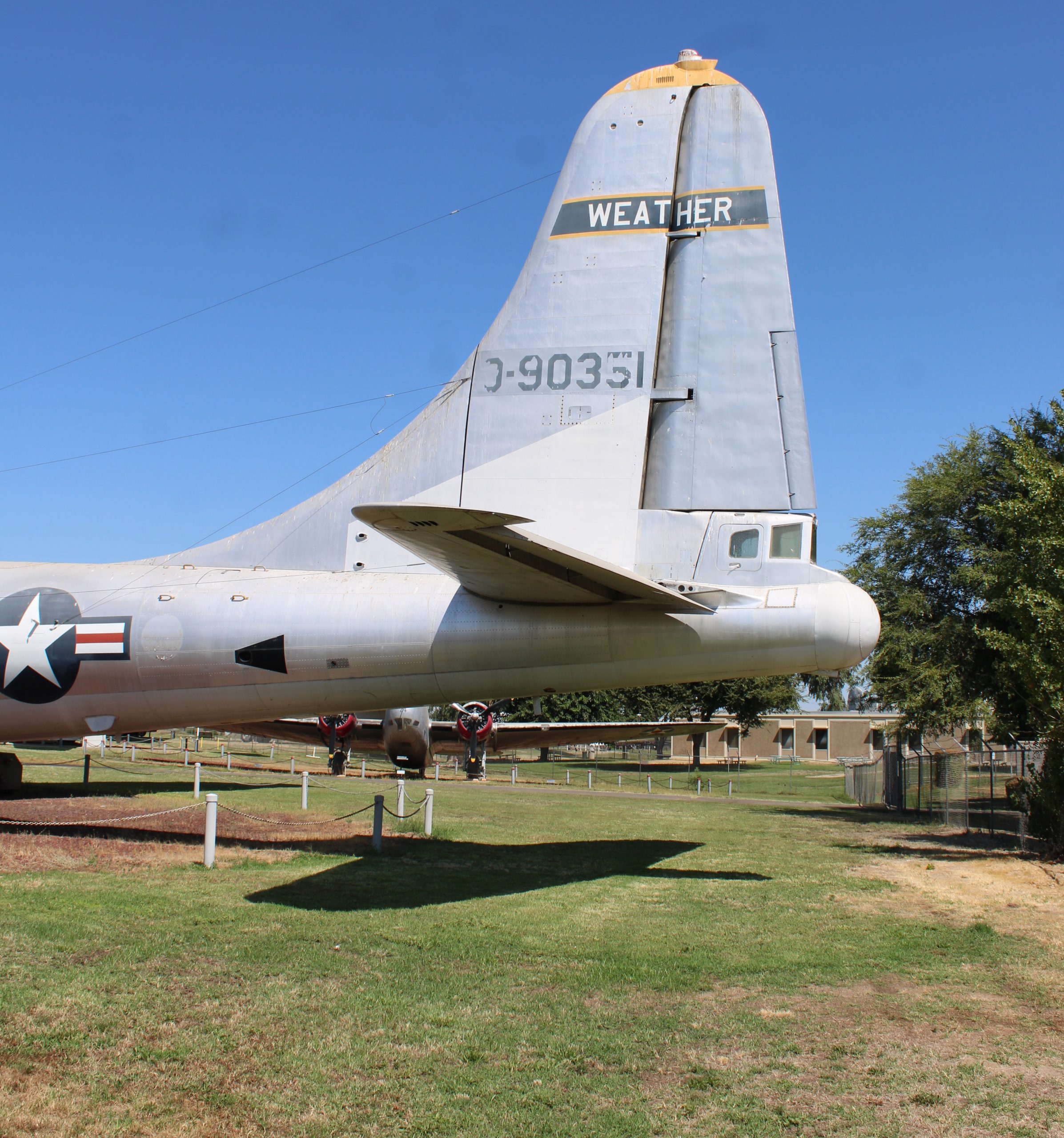
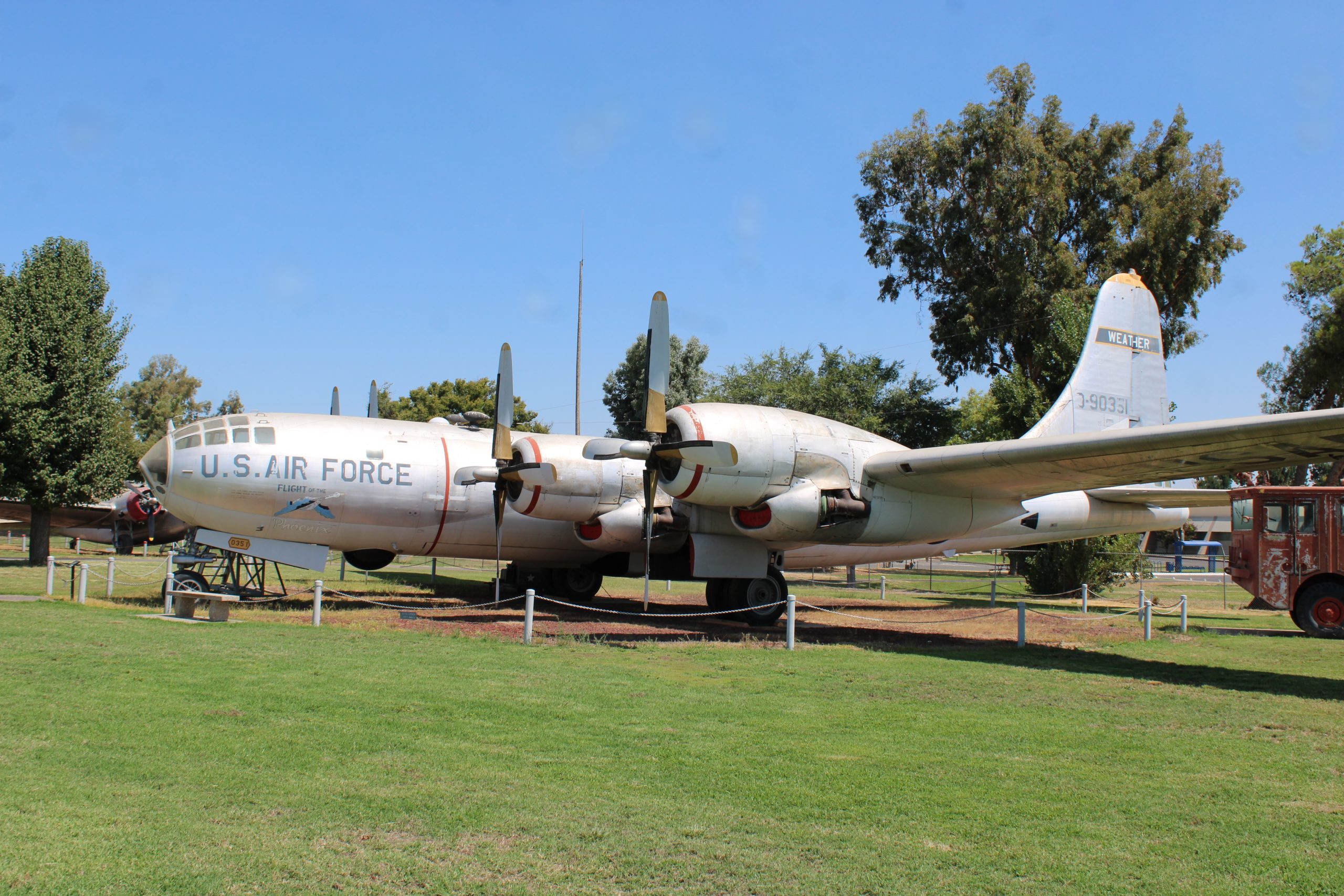
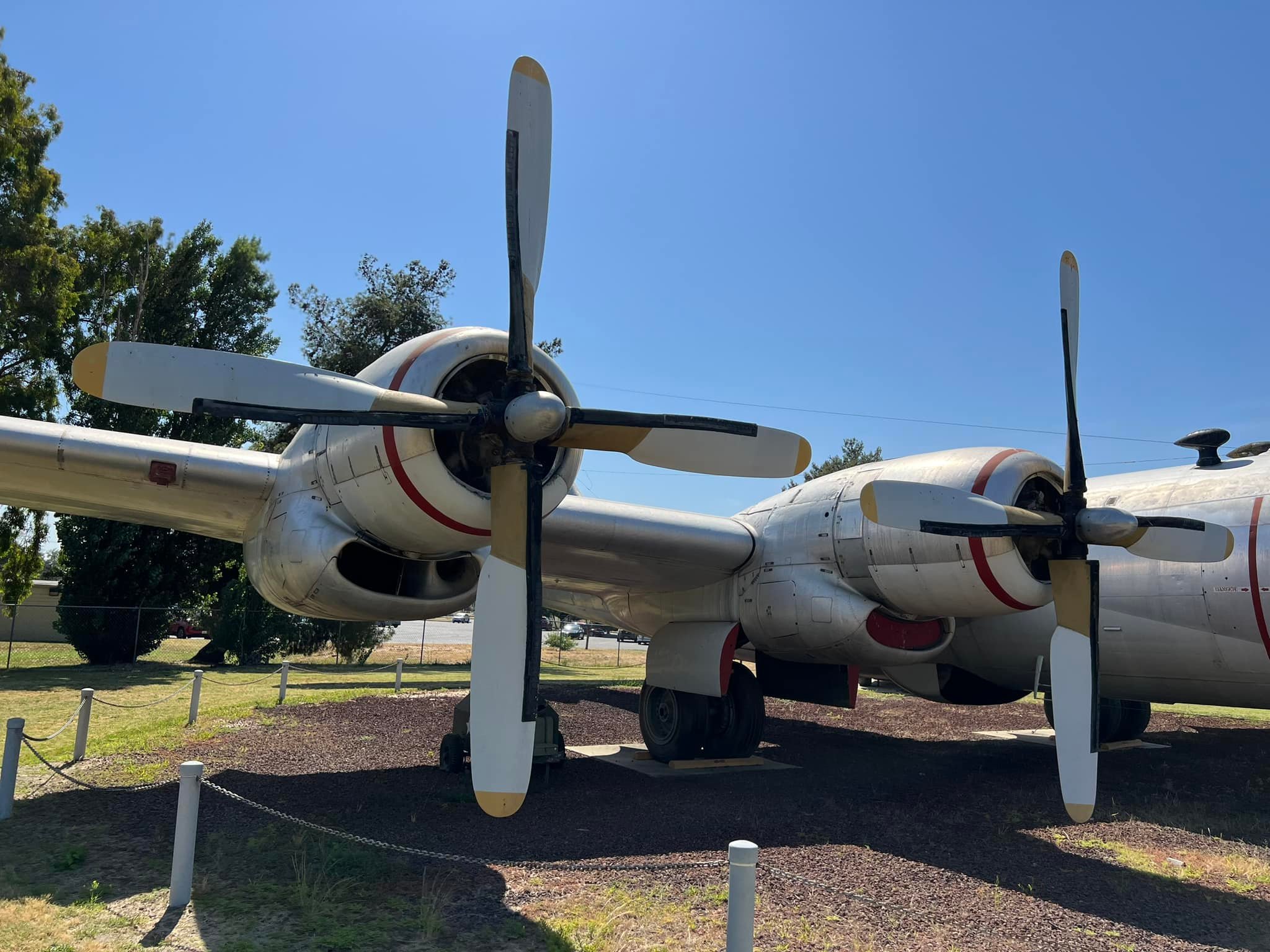
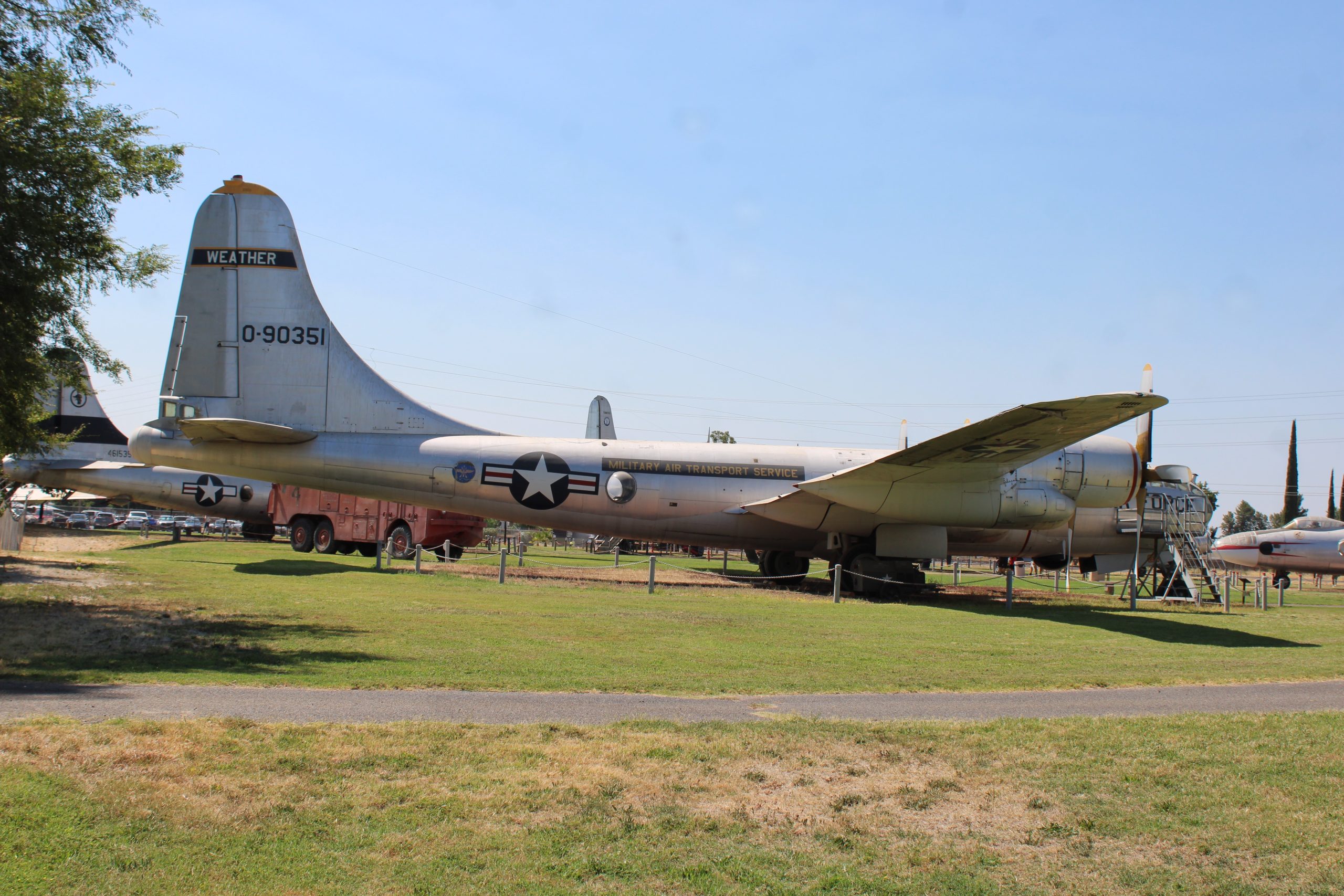
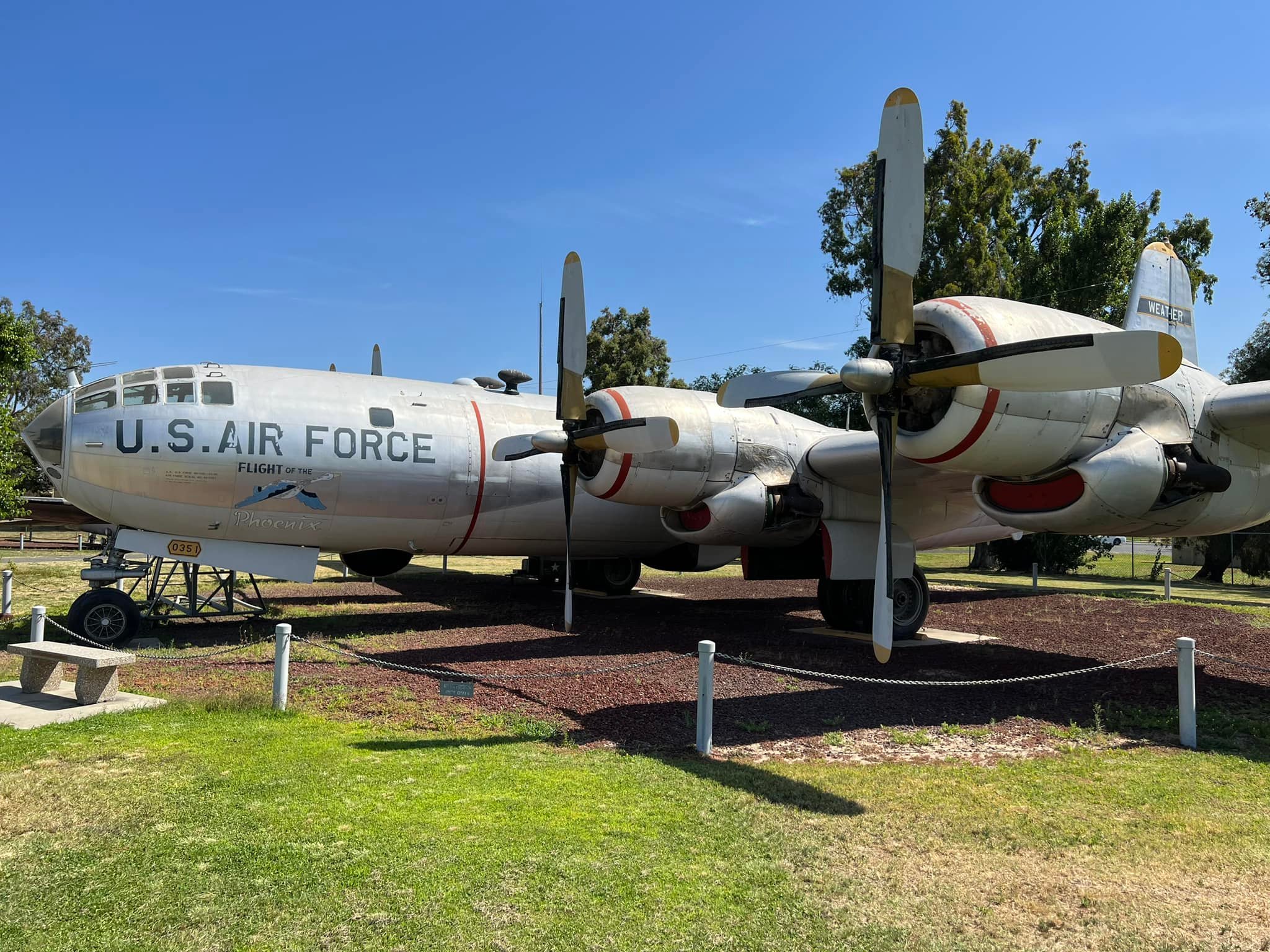
WB-50D 49-0351 “Flight of the Phoenix” (c/n 16127)
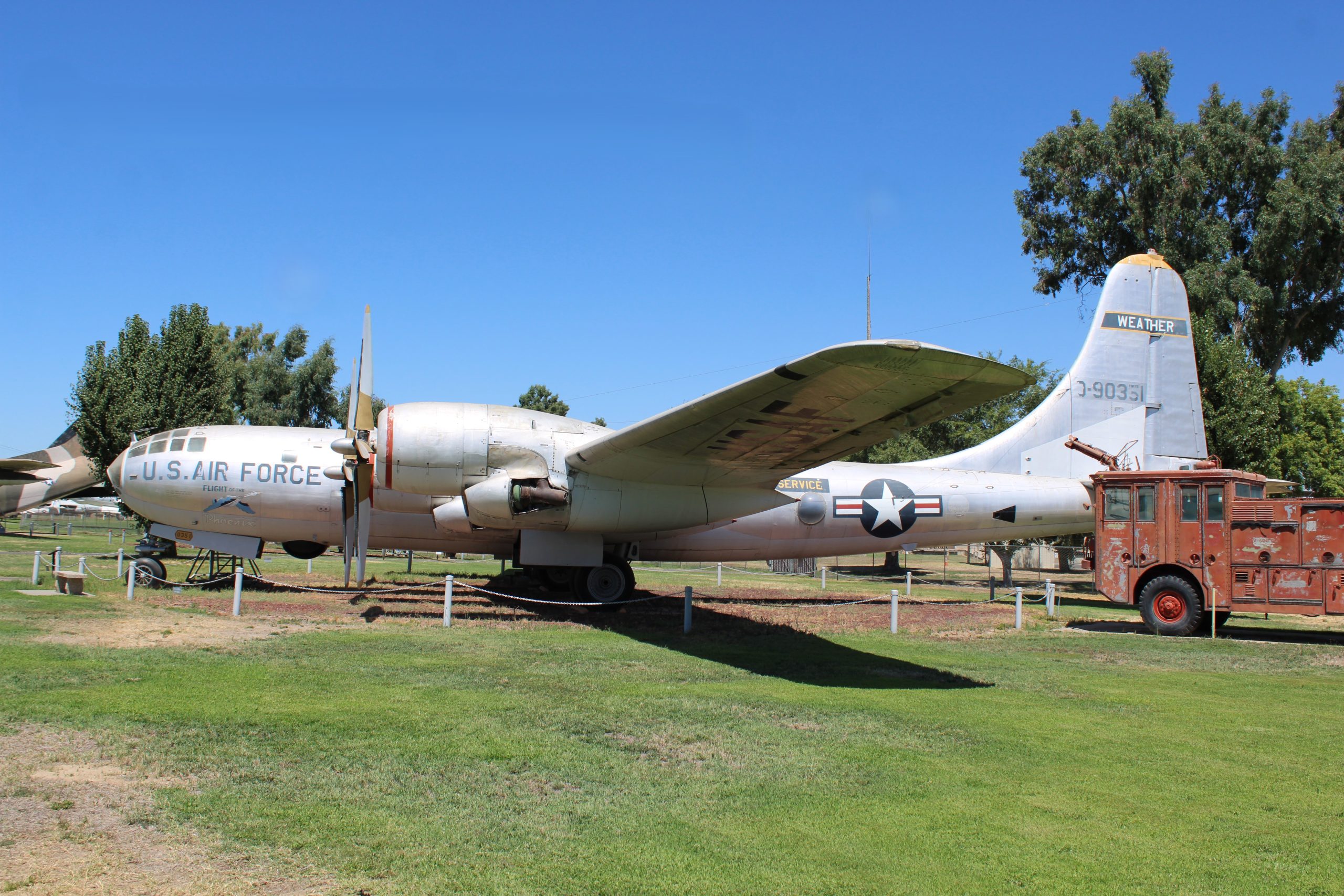
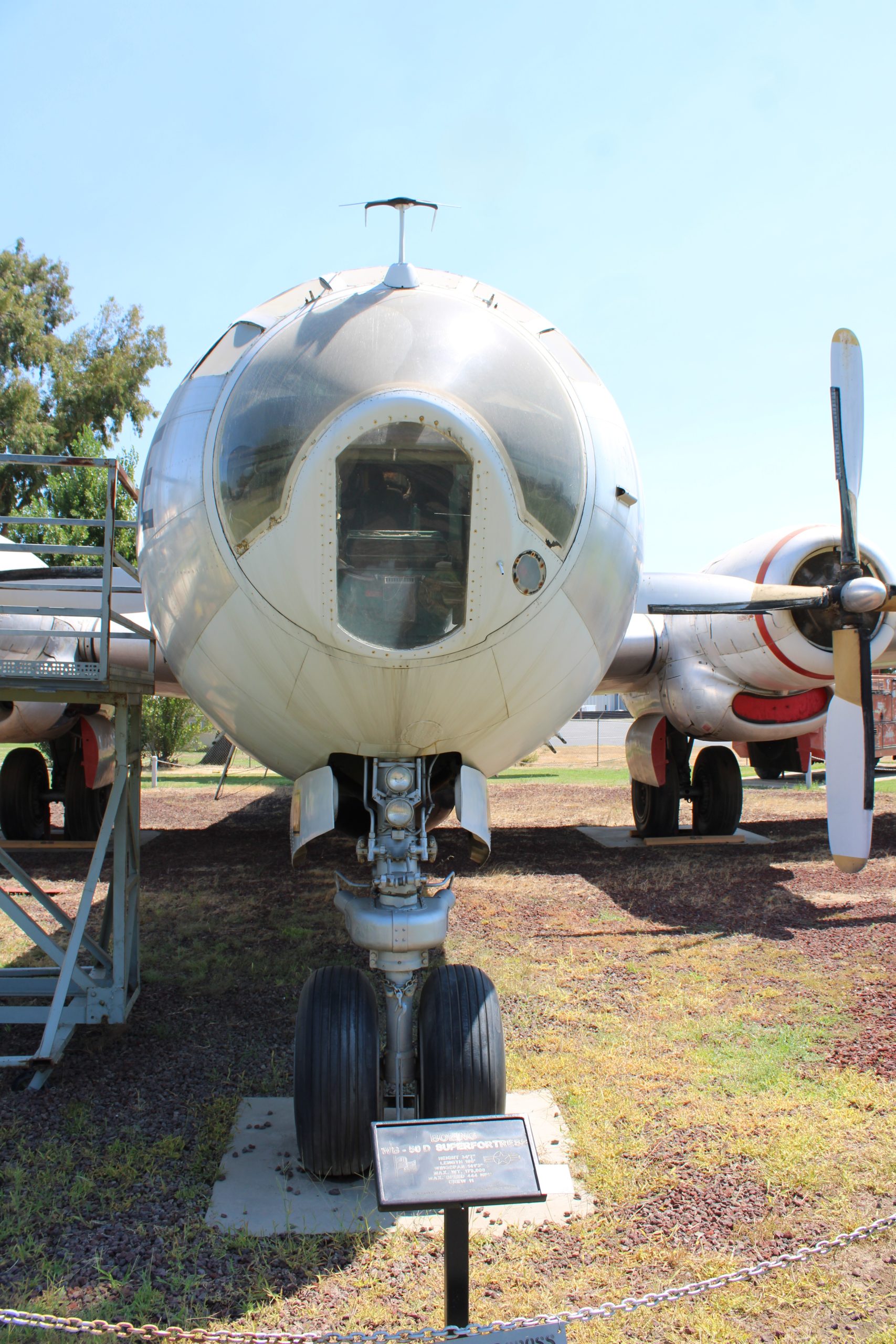
For over forty years, the Castle Air Museum in Atwater, California, has been one of the largest collections of Cold War bombers on the US West Coast, from the Convair B-36 Peacemaker to the Boeing B-52 Stratofortress and even an Avro Vulcan of the Royal Air Force. Yet the Castle Air Museum is also remarkable in that it is the only place in which a B-29 and a B-50 can be seen side-by-side. The B-50 here at the Castle Air Museum, WB-50D 49-0351, also has the distinction of completing the final flight of a Boeing B-50 Superfortress. Originally manufactured as a B-50D, it was accepted from Boeing by the USAF on September 5, 1950. Shortly after its incorporation into the Air Force, 49-0351 was assigned to the 97th Bombardment Wing, stationed at Biggs Air Force Base at Fort Bliss in El Paso, Texas. In December 1953, 49-0351 was flown to Davis-Monthan Air Force Base and placed in outdoor storage until January 1955, when the aircraft was flown to Lockheed Aircraft’s plant in Burbank, California, as the company had been contracted to modify B-50s for weather reconnaissance. After being redesignated as a WB-50D, 49-0351 was sent to Eielson Air Force Base, near Fairbanks, Alaska, to join the 58th Weather Reconnaissance Squadron in August 1956. Nearly two years later, in July 1958, 49-0351 was reassigned to the 55th Weather Reconnaissance Squadron, stationed at McClellan Air Force Base near Sacramento, California. Finally, in March 1961, WB-50D 49-0351 was deployed on what would be its final active-duty assignment, being part of the 56th Weather Reconnaissance Squadron at Yokota Air Base in Tokyo, Japan. With the phasing out of the WB-50s in 1965, WB-50D 49-0351 was once again sent into storage at Davis-Monthan Air Force Base, arriving from Yokota on September 6, 1965, where it would await its disposal. However, on March 15, 1972, it was decided that the aircraft would be loaned by the United States Air Force Museum to the newly established Pima County Air Museum (now the Pima Air and Space Museum), located on the other side of the road from Davis-Monthan.
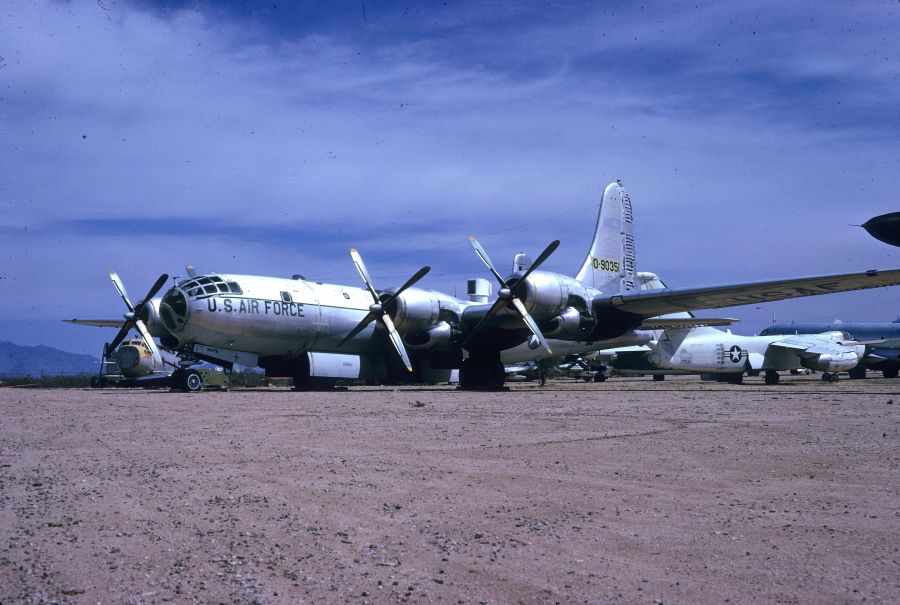
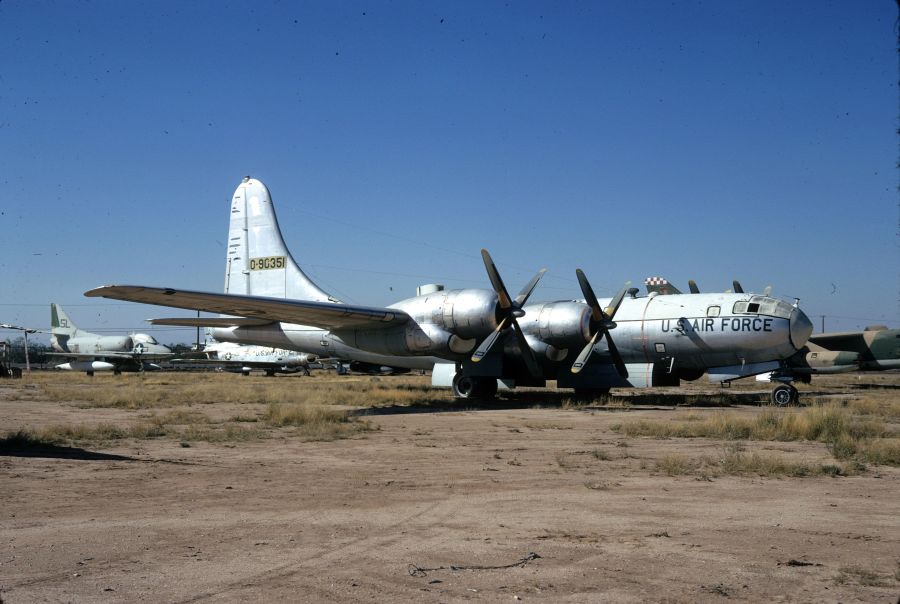
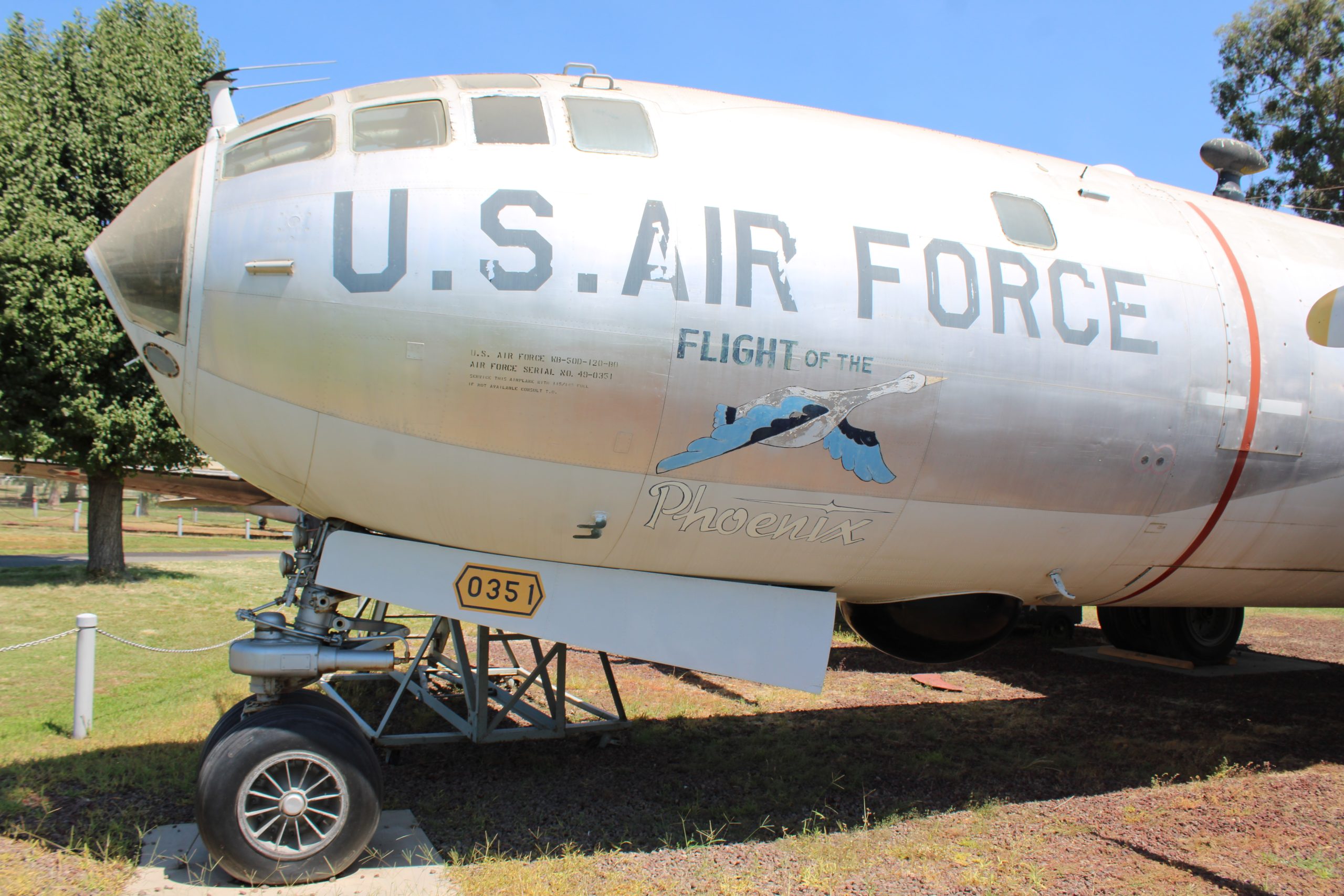
For a time, Pima was home to two B-50s allocated from Davis-Monthan, but while one of these would remain at Pima, the Air Force had other ideas for WB-50D 49-0351. In 1979, efforts began to establish a museum at Castle Air Force Base. By 1980, six aircraft had already been donated to the new museum (a B-17G Flying Fortress, B-25J Mitchell, A-26 Invader, B-29 Superfortress, B-45 Tornado, and KC-97 Stratofreighter), and the museum personnel made a successful effort to retrieve WB-50D 49-0351. In December 1980, maintenance technicians arrived from Castle AFB in Tucson to prepare 49-3051 for a one-way ferry flight from Davis-Monthan to Castle. Over the course of nine days, the technicians overhauled and tested all four engines, reinstalled the plane’s stabilizers, and replaced the brakes and ailerons of the aircraft with those from surplus KC-97 Stratofreighters at Davis-Monthan, as both aircraft used the same wing and landing gear design. It was a record time to be sure to get a 30-year-old aircraft that had not flown in 15 years ready to fly, but the desert conditions in Tucson had preserved the WB-50D well, with most of the electrical systems still operational once power was reapplied, much to the pleasant surprise of the mechanics. During its overhaul, 49-0351 received the name Flight of the Phoenix, after the 1965 Jimmy Stewart movie about a group of crash survivors that escape from the Sahara Desert by building an airplane from the wreckage of the one they had crashed in.
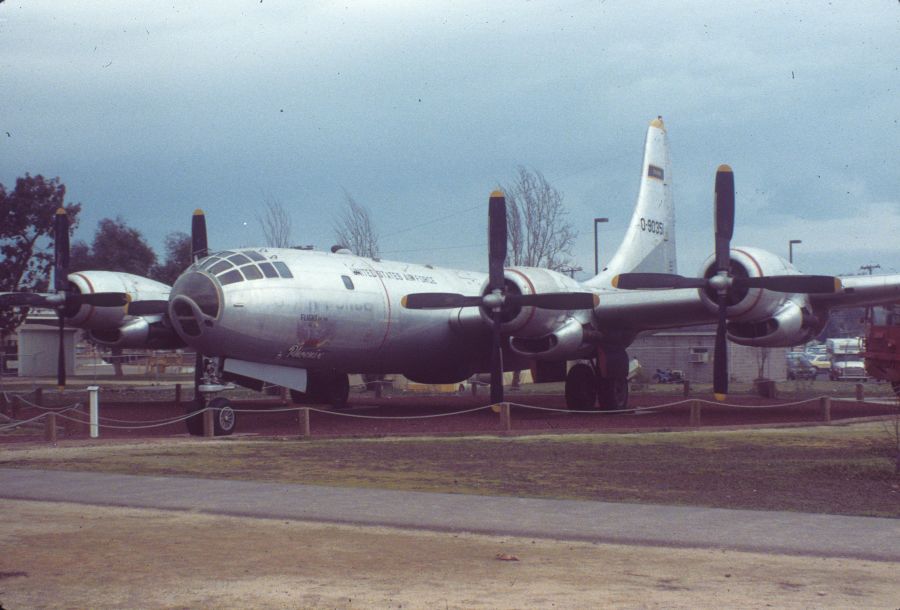
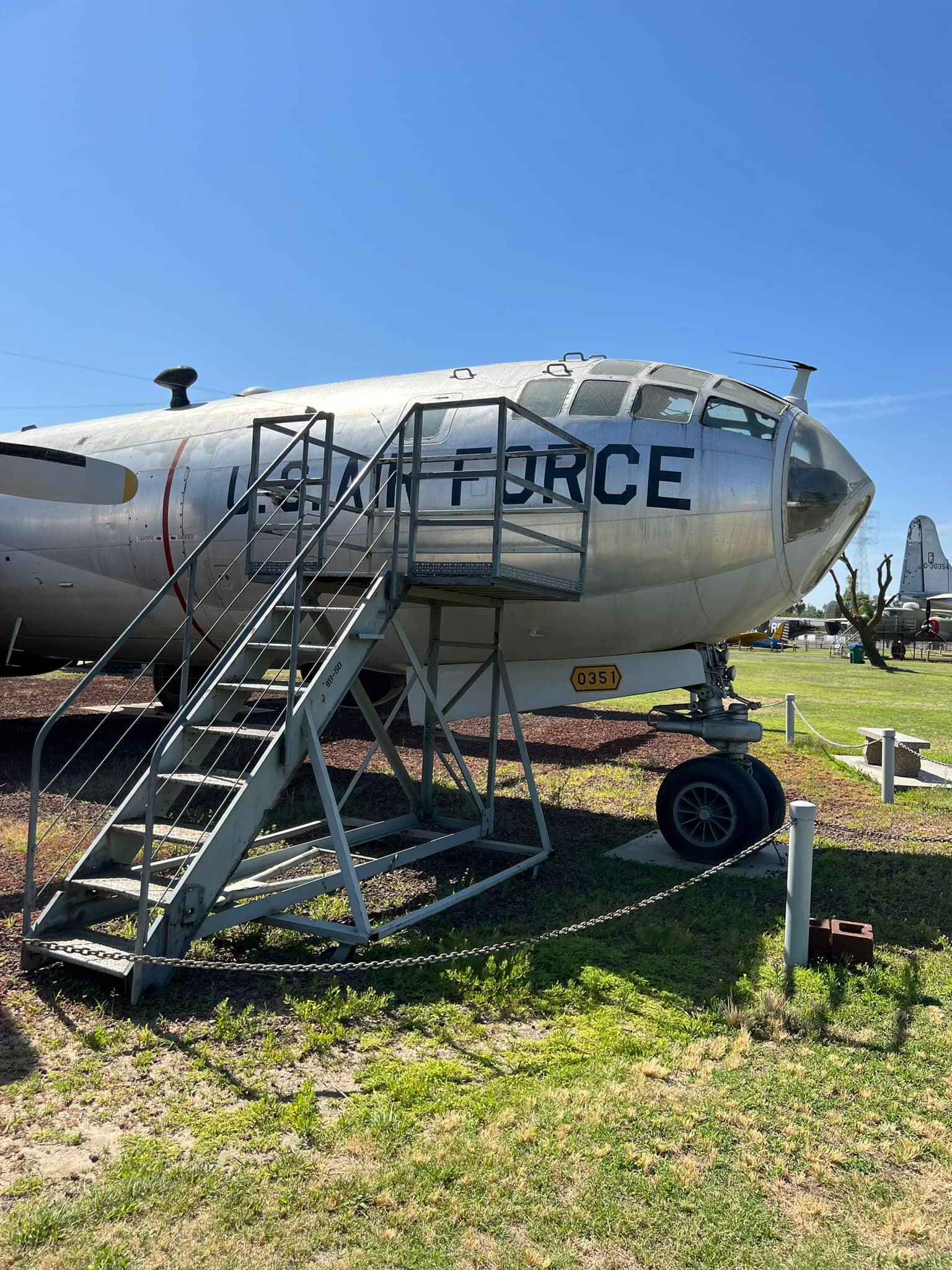
On December 15, 1980, WB-50D 49-0351 “Flight of the Phoenix” lifted into the Arizona skies, bound for the California Central Valley. At the controls was Major General Andrew Pringle, Jr, who, as a young lieutenant, had previously flown B-50s as a member of the 330th Bombardment Squadron, 93rd Bombardment Wing at Castle Air Force Base. With its final touchdown, the flight marked the last time a Boeing B-50 Superfortress would ever take to the skies. Today, Castle Air Force Base has been closed since 1995 and is now a public airport, and WB-50D 49-0351 remains on display at the Castle Air Museum through the National Museum of the USAF’s Loan Program, still wearing the name and nose art of Flight of the Phoenix. Sitting beside it is B-29A 44-61535 “Raz’n Hell”, which was also brought to Castle in 1980, but this time from target ranges of Naval Air Weapons Station China Lake, and which was reassembled from three other B-29s from China Lake (44–61535, 44–84084, and 44–70064). Seeing the two aircraft together helps aviation enthusiasts to distinguish the differences and similarities between the two bombers, and the rest of the open-air museum is well worth a visit to see a range of other aircraft, which we have covered in other articles HERE.
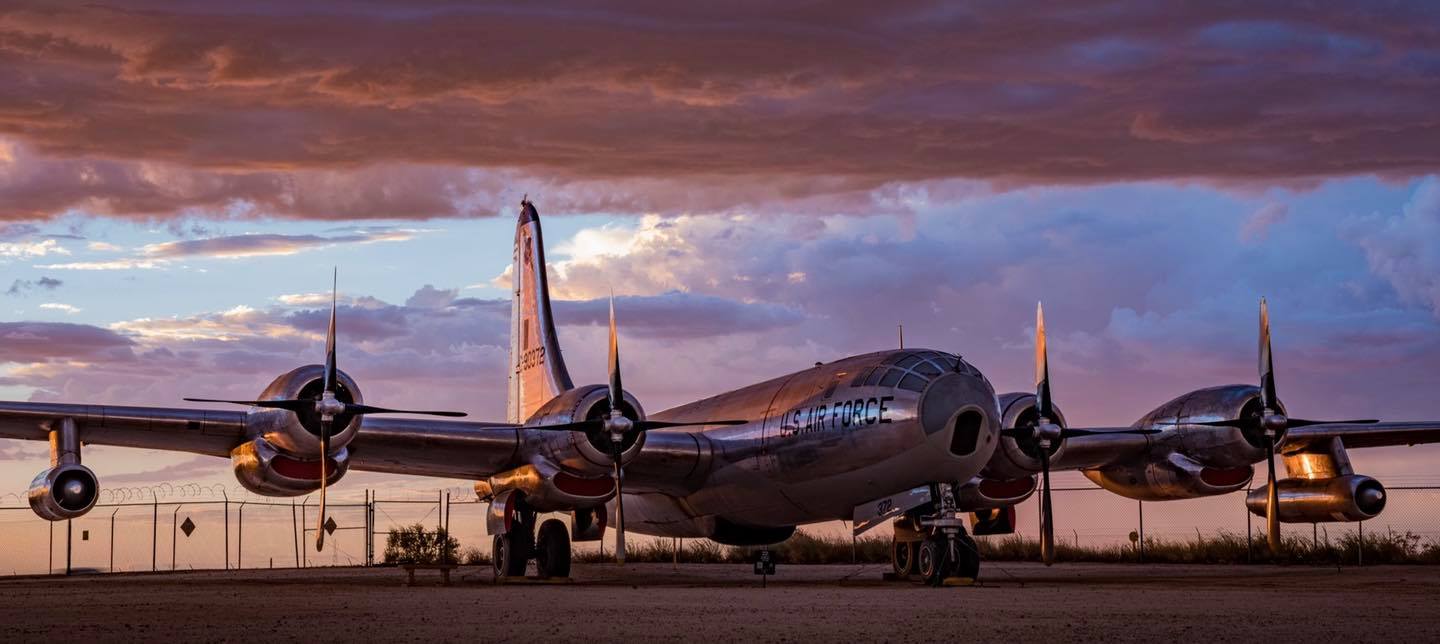
KB-50J 49-0372 (c/n 16148)
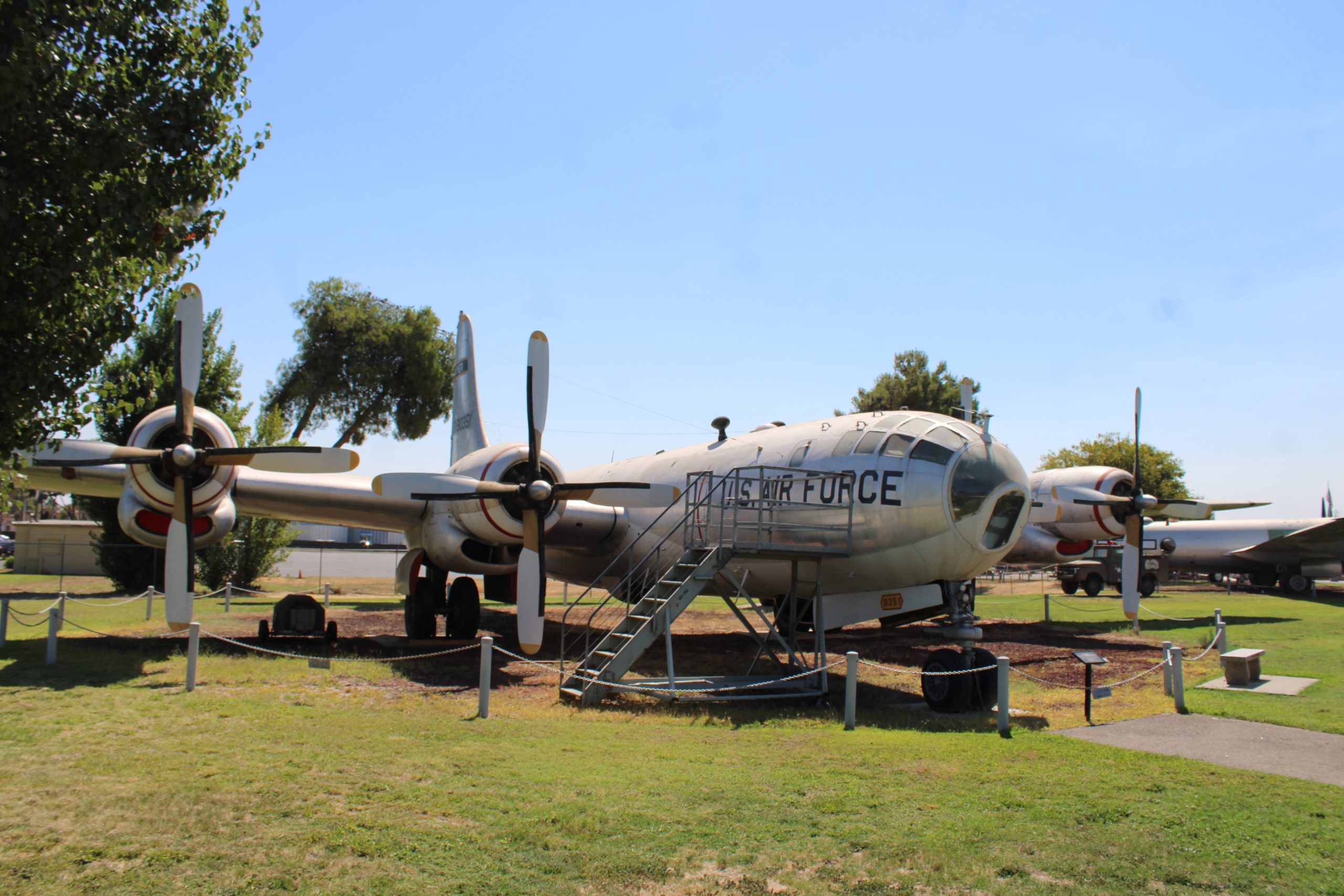
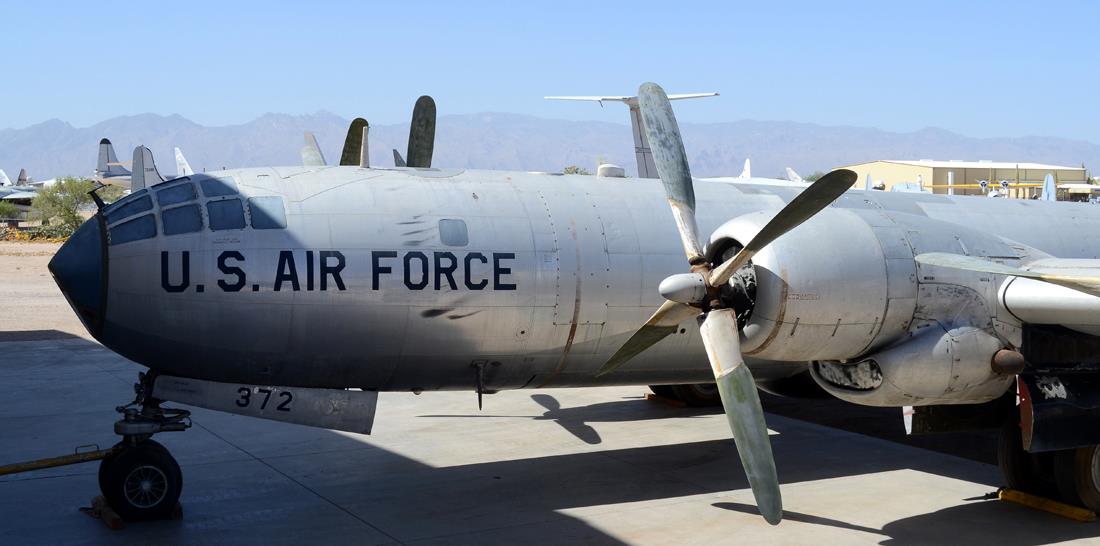
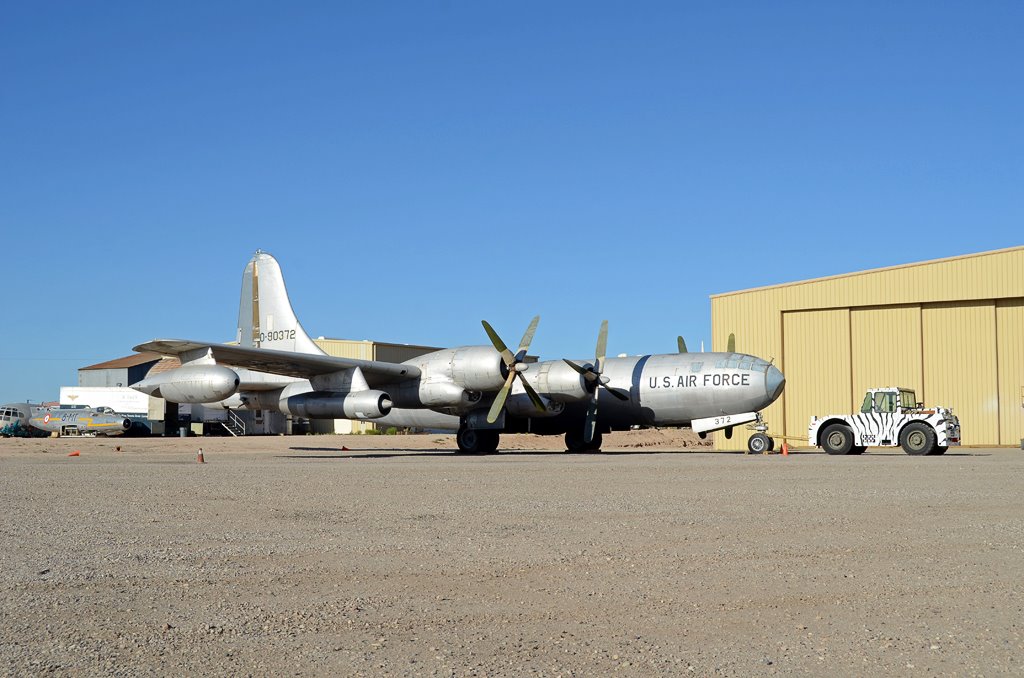
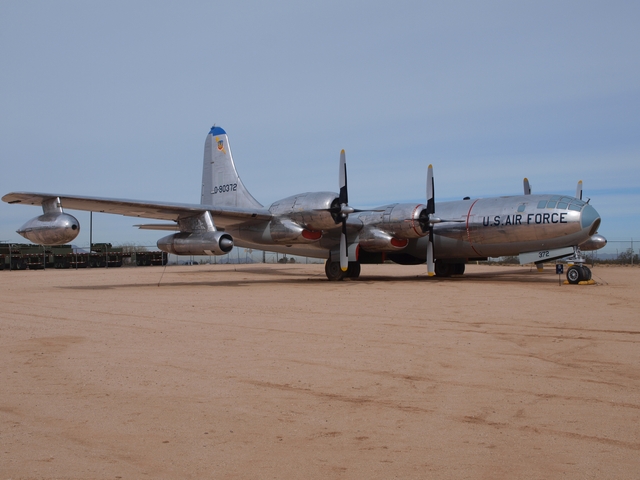
In the deserts of Tucson, Arizona, enthusiasts of military aviation from around the world are well familiar with the large outdoor aircraft storage and reclamation sites at Davis-Monthan Air Force Base, commonly known as the “Boneyard”. Yet just across the street from the Boneyard is the equally impressive Pima Air and Space Museum, with over 400 aircraft and spacecraft from all eras of aviation history, and from all corners of the globe. The museum is also home to one of the most extensive collections of USAF bombers and tankers on public display, and it is here where one will find KB-50J 49-0372, one of the last surviving B-50s, and one of only two of the five survivors that ended its time in the USAF as an aerial refueling tanker.
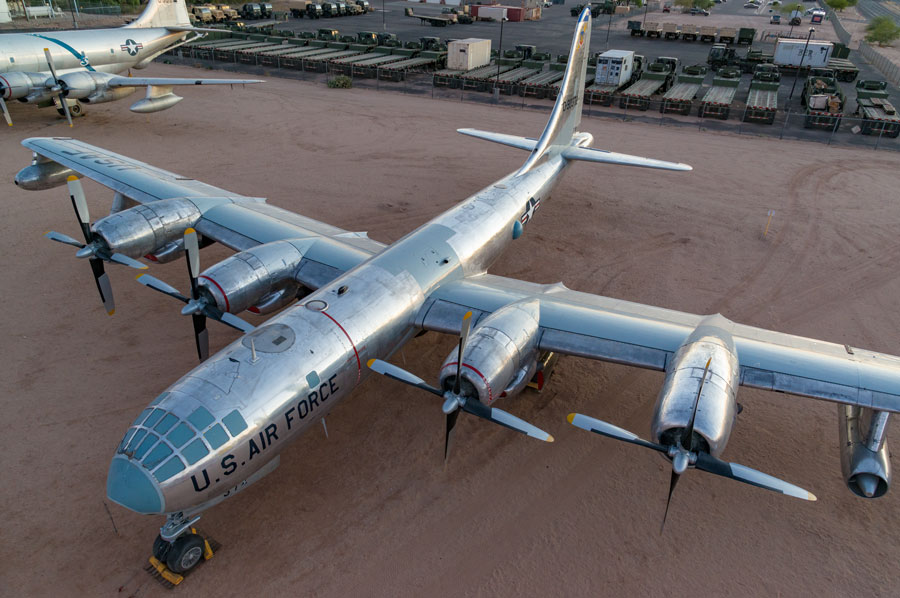
Built in November 1950 at Boeing’s Plant in Renton as a B-50D bomber with the construction number 16148, B-50D 49-0372 was assigned to the 329th Bombardment Squadron, 93rd Bombardment Wing, based at Castle Air Force Base, California. While 49-0372 was still part of the 93rd BW, the unit was deployed to RAF Mildenhall, England, to provide a nuclear-armed deterrent force in Europe. By 1954, the 93rd BW had swapped out its B-50s for B-47 Stratojets, and B-50D 49-0372 was sent into storage to await a new assignment. By 1956, it was determined that the aircraft would be converted into a KB-50 aerial refueling tanker and was flown to Birmingham, Alabama, where the Hayes Aircraft Corporation had a contract with the USAF to modify all B-50s selected for tanker conversion. Upon receiving these modifications, KB-50 49-0372 was assigned to the newly established 431st Air Refueling Squadron (ARS) of the USAF’s Tactical Air Command (TAC) at Turner AFB, near Albany, Georgia (later Naval Air Station Albany), and was used to refuel combat aircraft of TAC, from F-84F Thunderstreaks to F-100 Super Sabres. However, the widespread adoption of more jet-powered aircraft in the meant that KB-50s were struggling to keep up with the aircraft they were to refuel in midair, so the KB-50s that were part of TAC were to be sent back to Hayes Aircraft and converted into KB-50Js, equipped with a pair of General Electric J47 turbojet engines mounted on the undersides of the outer wings of the tanker aircraft. 49-0372 returned to Birmingham in August 1958 to receive these modifications, while at the same time, the 431st ARS was made part of the 4505th Air Refueling Wing, whose headquarters were at Langley AFB, Virginia, but the 431st ARS would remain at Turner AFB until July 1959, when the squadron was sent to Biggs AFB at Fort Bliss near El Paso, Texas, but routinely sent aircraft on deployments to both the Atlantic and Pacific areas of operations.
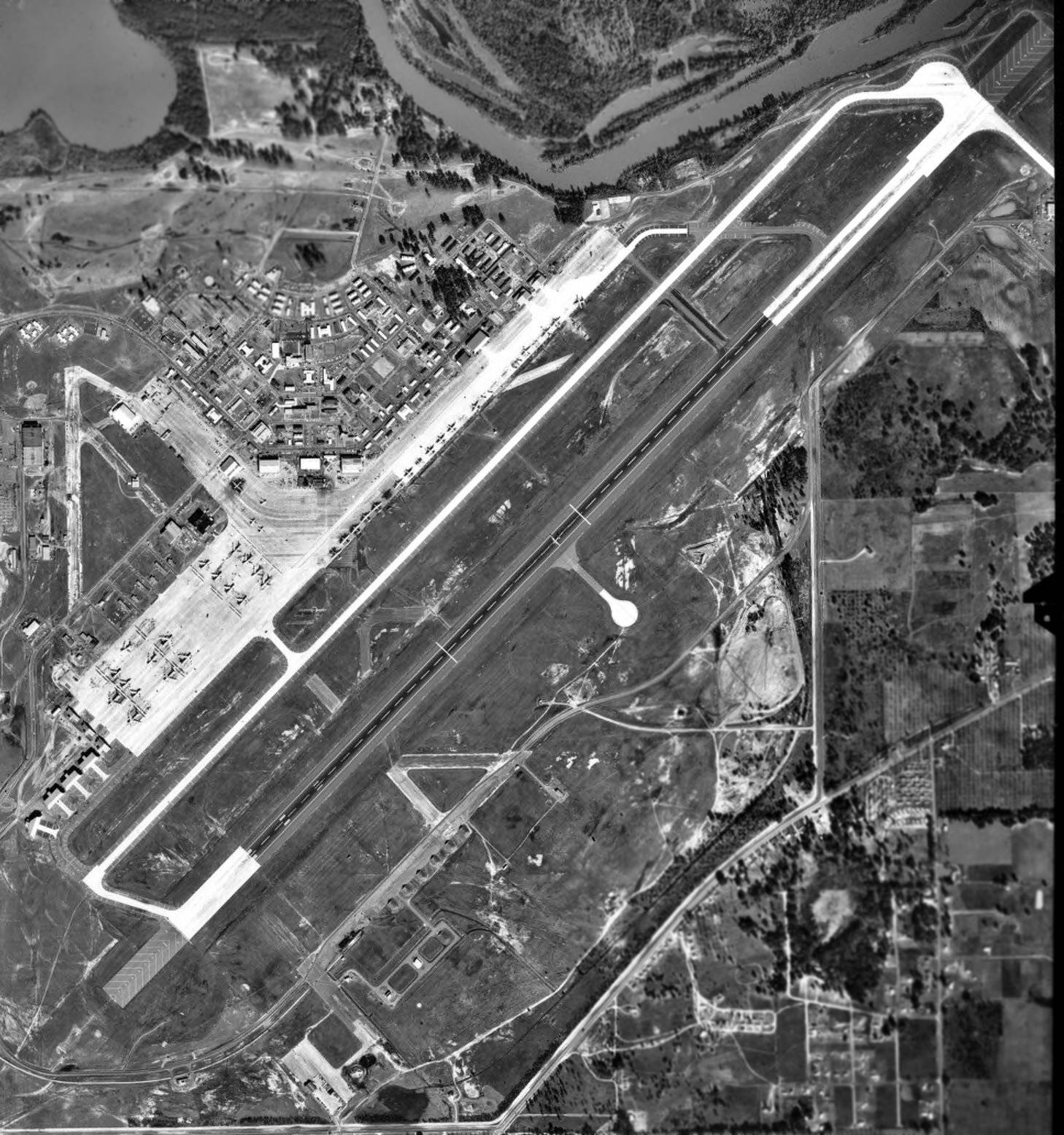
By the mid-1960s, the KB-50s were in the twilight years of their service lives in the USAF, even as some were being used to support operations ramping up in Southeast Asia, particularly over communist North Vietnam. However, their retirement was hastened when one aircraft, KB-50J 48-065, crashed shortly after takeoff from Korat Royal Thai Air Force Base near Nakhon Ratchasima, Thailand, on October 14, 1964, killing all onboard. A subsequent investigation concluded that the cause was due to structural failure from severe corrosion. Inspection of other KB-50Js found corrosion in these airframes as well, and the KB-50Js were flown back to the US for decommissioning, while the KB-50Js were to be replaced by KC-97s and KC-135s. As for KB-50J 49-0372, the aircraft had been assigned to the 4440th Air Depot Group at Biggs AFB, and on January 27, 1965, the aircraft was flown from Biggs AFB to Davis-Monthan AFB, Arizona. While most of the KB-50Js and WB-50Ds flown to Davis-Monthan AFB would be scrapped during the 1960s, KB-50J 49-0372 was selected to be part of an informal display of surplus aircraft placed in view of the public, albeit through the base’s chain-link fence, which became a popular site for many local aviation enthusiasts (photos of aircraft displayed at Davis-Monthan (including KB-50J 49-0372) can be found HERE).
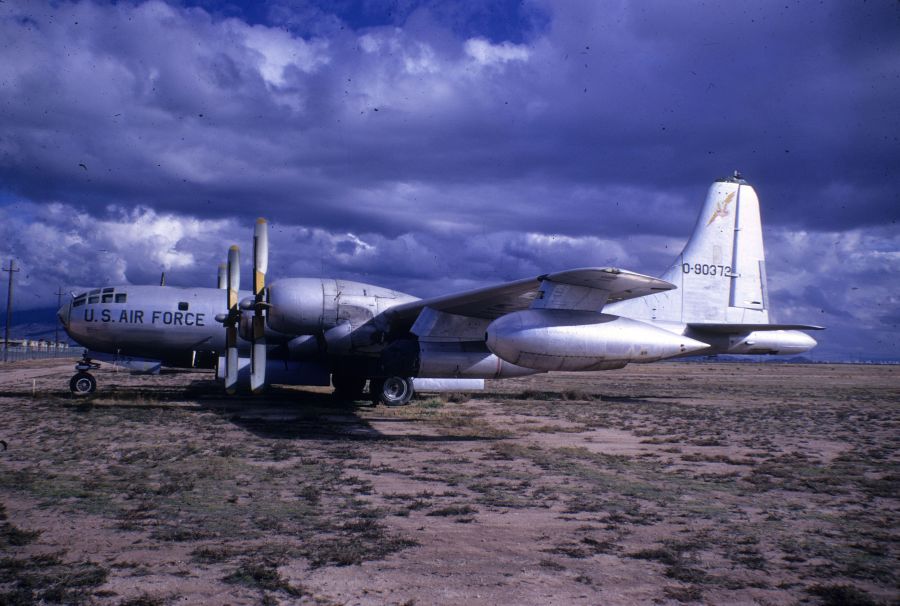
By the late 1960s, the commander of the Military Aircraft Storage and Disposition Center (MASDC; now the 309th Aircraft Maintenance and Regeneration Group (309 AMARG)) at Davis-Monthan and other members of the Tucson chapter of the Air Force Association sought to establish a publicly-accessible museum to better preserve the aircraft that had been set aside, which would eventually result in the creation of the Pima Air and Space Museum. But before bringing the aircraft from Davis-Monthan, the museum foundation had to clear 30 of the 320 acres of land they acquired to comply with the requirements set by the USAF Museum in Dayton, Ohio. In 1973, the grounds of the new museum were at last ready for aircraft to be moved from Davis-Monthan AFB, and by 1975, KB-50J 49-0372, as well as WB-50D 49-0351, had been towed to the site of what was then the Pima County Air Museum, which opened to the public on May 8, 1976. While WB-50D 49-0351 would later fly to the Castle Air Museum in 1980, KB-50J 49-0372 would remain at Pima, officially on long-term loan from the National Museum of the USAF.
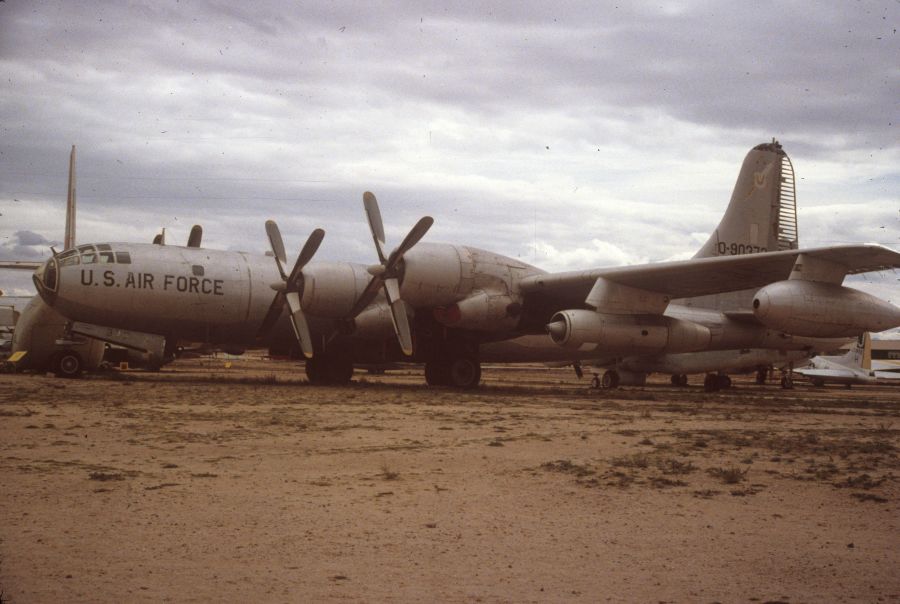
Even though the dry environment of southern Arizona is one of the best environments for storing aircraft, it is not perfect, and over time, the sunbaked aircraft’s age began to show, especially since it had largely gone unrestored since its arrival at Davis-Monthan back in 1965. Prompted by a letter written around 2010 by veteran TAC tanker crews to the National Museum of the USAF over the current condition of 49-0372, the aircraft was towed to the museum’s restoration hangar in May of 2012. For the rest of the year, the Pima Air and Space Museum’s restoration staff worked on the aircraft. Scott Marchand, the Museum’s Director of Collections and Restoration, would say of the restoration of KB-50J 49-0372, “This is our largest restoration project since the B-36 Peacemaker in 2008.” By February 2013 (as covered in our article from the time on this aircraft HERE), 49-0372 was fully polished and back to her former glory. Today, KB-50J 49-0372 remains on outdoor display at Pima, sitting fittingly between the museum’s KC-97 and KC-135 tankers, while the museum’s B-47 Stratojet and B-36 Peacemaker rest nearby, which provides visitors with a unique opportunity to compare this aircraft with other legendary bombers and tankers of the Cold War.
KB-50J 49-0389 (c/n 16165)
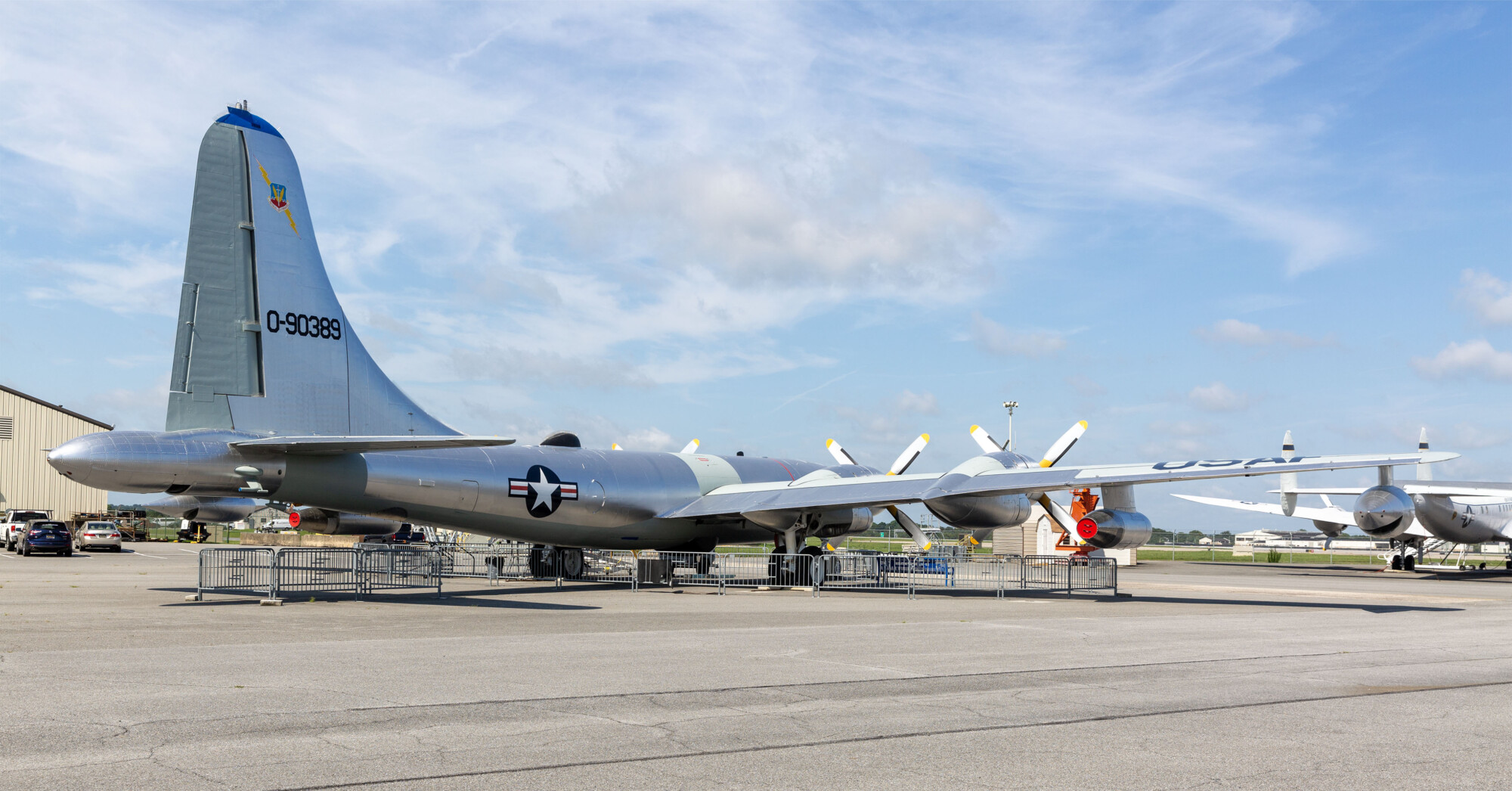
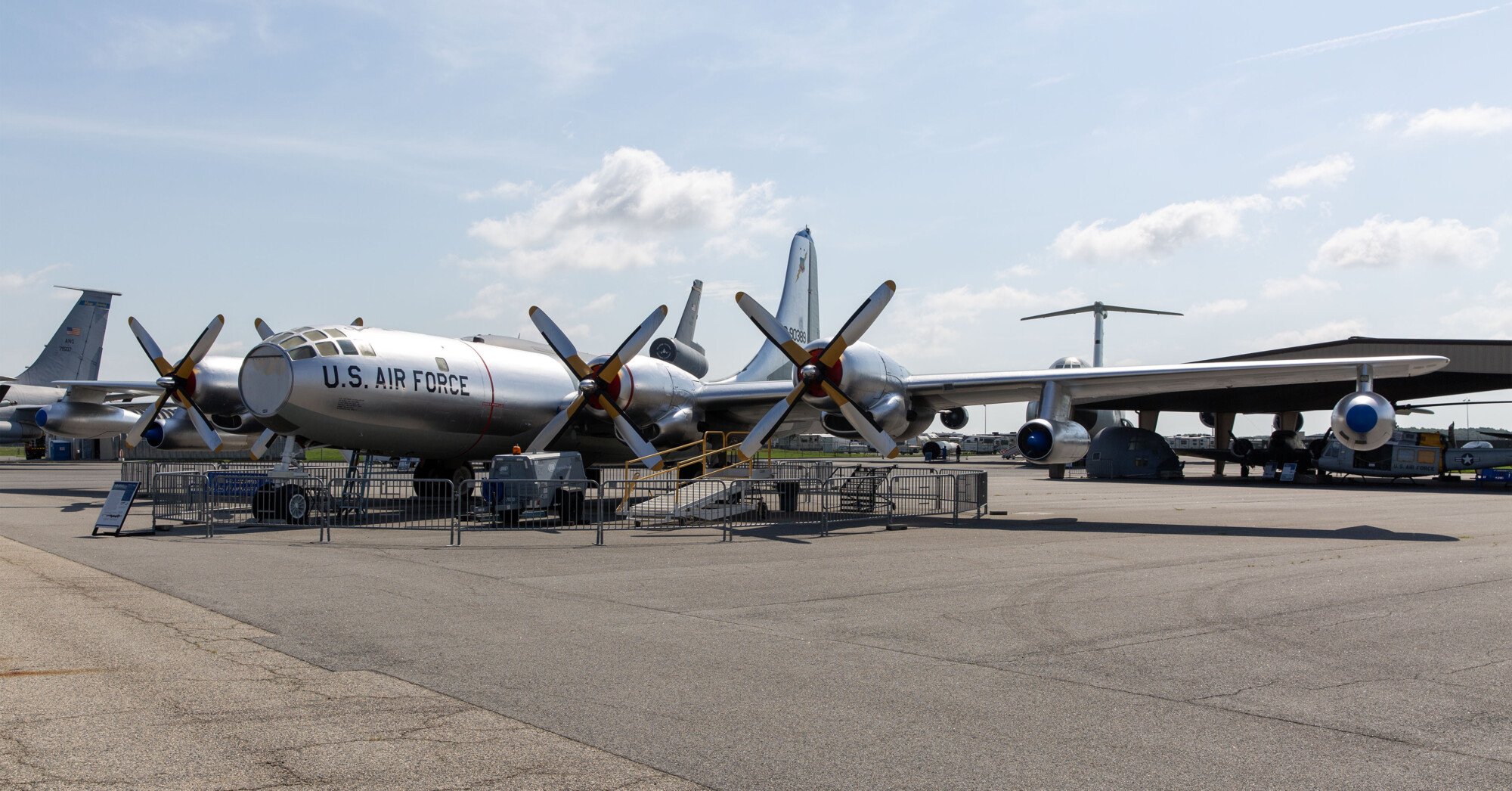
The last aircraft on our list is one that has been prominent among the surviving Boeing B-50s in that this aircraft, KB-50J 49-0389, has completed several moves across the United States after its decommissioning from the USAF. Indeed, the very latest of these moves was only made within the last decade, but like its cousins scattered across the US, this B-50 has a storied career marked by adopting new roles during the Jet Age. Built at Boeing’s Plant 2 in Seattle as a Boeing B-50D with the construction number 16165, 49-0389 was accepted by the USAF on December 14, 1950, and later that month, B-50D 49-389 was assigned to the 2nd Bombardment Wing (Medium) of Strategic Air Command at Hunter Air Force Base (now Hunter Army Airfield) near Savannah, Georgia. During the course of its three-year assignment with the 2nd BW, 49-0389 went on deployment to Goose Bay Air Base in Labrador and at RAF Upper Heyford in the UK. Then on November 17, 1953, as the 2nd Bombardment Wing was preparing to transition to the Boeing B-47 Stratojet, 49-0389 was flown to Davis-Monthan Air Force Base, Arizona, and placed in outdoor storage with the 3040th Aircraft Storage Depot of Air Materiel Command. Three years after that, on November 5, 1956, 49-0389 was flown from Davis-Monthan to Birmingham, Alabama, where the Hayes Aircraft Corporation was contracted to modify the aircraft into a KB-50 aerial refueling tanker. With this conversion complete, KB-50 49-0389 was assigned to the 431st Air Refueling Squadron of the USAF’s Tactical Air Command (TAC) at Turner AFB, near Albany, Georgia (later Naval Air Station Albany) in June 1957. In 1958, 49-0389 returned to Birmingham, where it was upgraded to the KB-50J configuration with a pair of General Electric J47 engines along with its four Pratt & Whitney R-4360s.
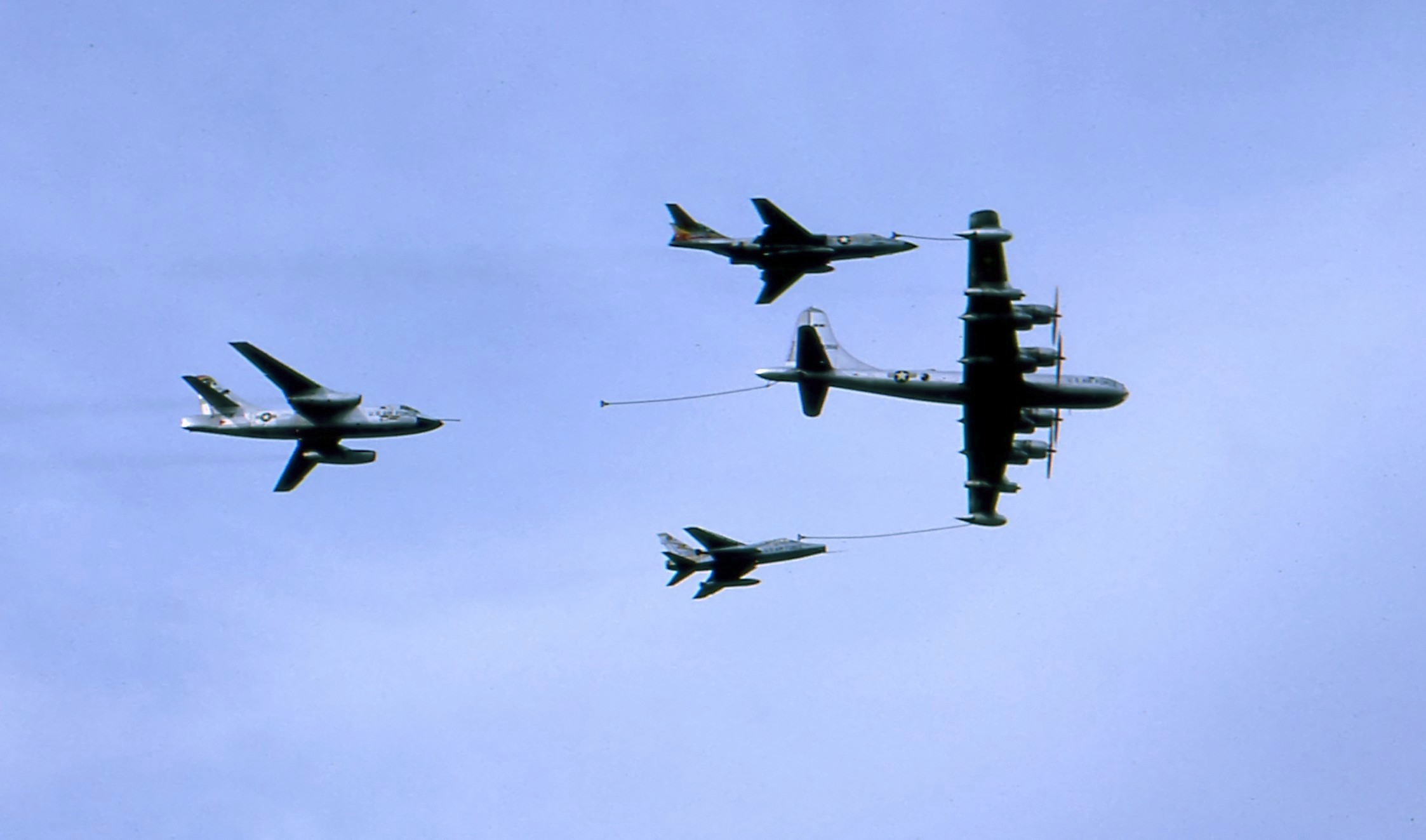
In June 1958, KB-50J 49-0389 returned to Turner AFB, this time as part of the 4505th Air Refueling (Tactical) Wing, with the aircraft going on deployments from Turner to Lajes Air Base in the Azores, Langley AFB, Virginia, and Kindley AFB, Bermuda (now L.F. Wade International Airport). In July 1959, the unit moved to Biggs AFB, Texas, with further deployments to Hickam AFB, Hawaii, Chateauroux Air Base, France, and Lajes Air Base, Azores. By the mid-1960s, the last of the KB-50Js were being phased out in favor of the KC-97 Stratofreighters and KC-135 Stratotankers. Given the role that KB-50s played in pioneering the routine operational use of aerial refueling within the USAF, KB-50J 49-0389 was selected to be set aside for preservation at the United States Air Force Museum at Wright-Patterson AFB, Dayton, Ohio. On February 15, 1965, KB-50J 49-0389 made its final flight from Biggs AFB to Wright-Patterson. As mentioned in out discussion of WB-50D 49-0310, KB-50J 49-0389 would be kept in outdoor storage at the Wright Field side of WPAFB, along with a few other aircraft such as Convair B-36J Peacemaker 52-2220, as the museum already had plans to move the collection to the Wright Field side before they ultimately accomplished this objective in 1970, and following the reopening of the museum in 1971, 49-0310 and 49-0389 were on outdoor display together at the museum. During the mid 1980s, the aircraft’s tail number was repainted as 48-0114, which had been the serial number for another B-50D turned KB-50J, but which was scrapped at Davis-Monthan on March 23, 1965, following the end of its service life.
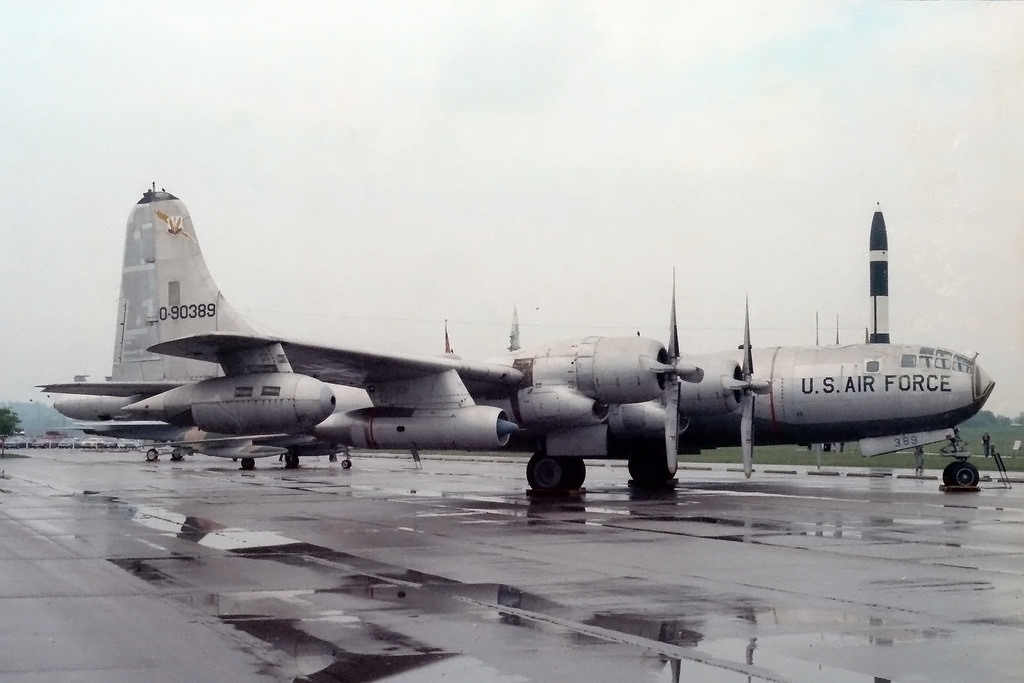
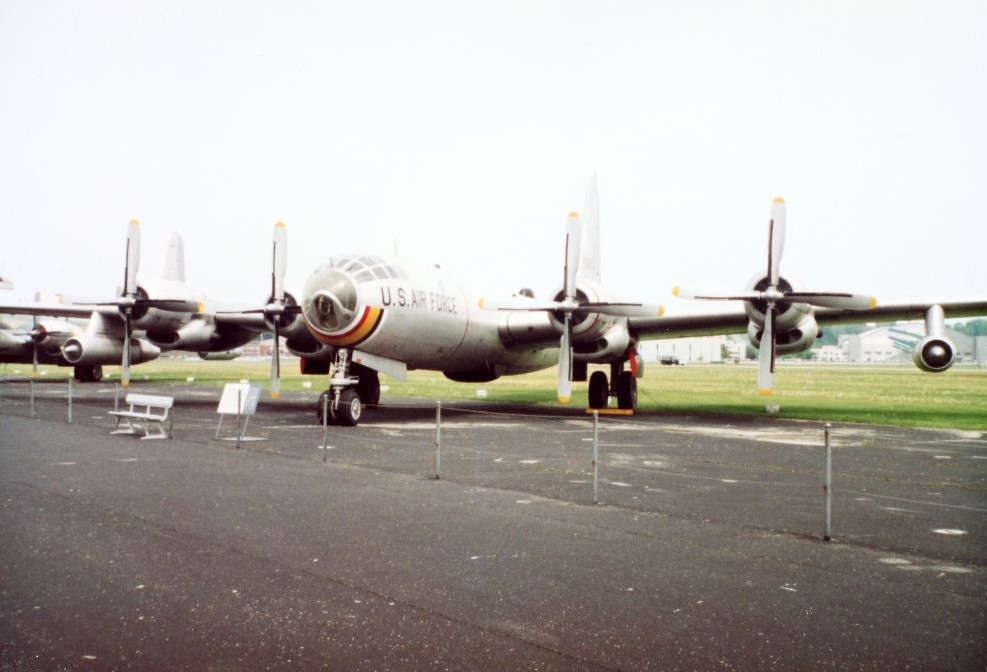
By the 1990s, the National Museum of the USAF determined that they would retain 49-0310 for the eventual hangar that would house the Eugene Kettering Cold War Gallery, and it was decided to send 49-0389 and loan it out through the museum’s Loan Program. In 1996, 49-0389 (still marked as 48-0114) was disassembled and shipped down to MacDill Air Force Base in Tampa, Florida, where the aircraft was assembled at the base’s Memorial Air Park on the shores of Hillsborough Bay. The base commander at that time, Col. Charles T. Ohlinger III, hoped to make a complete air park featuring enough aircraft to represent each era of MacDill’s history from its establishment in 1939. In addition to KB-50J 49-0389, the Memorial Air Park was also home to two other aircraft: McDonnell Douglas F-4E Phantom II 66-0302 (which had once flown as a member of the USAF’s Thunderbirds) and General Dynamics F-16 Fighting Falcon 81-0721. With a change in priorities across the military following the September 11th attacks, maintenance of the Memorial Air Park’s aircraft fell to civilian contractors, but the expense in hiring these contractors would prove to be prohibitive for MacDill AFB, especially with the long-term exposure of the park’s three aircraft to the local environment’s hot, humid, saltwater air. By the 2010s, the new leadership on base decided to repurpose the space into a new kind of park that would be easier to maintain, which meant finding new homes for the three aircraft.
Unfortunately, F-4E 66-0302 was deemed to be too badly corroded to be saved and was thus scrapped onsite in September 2016.
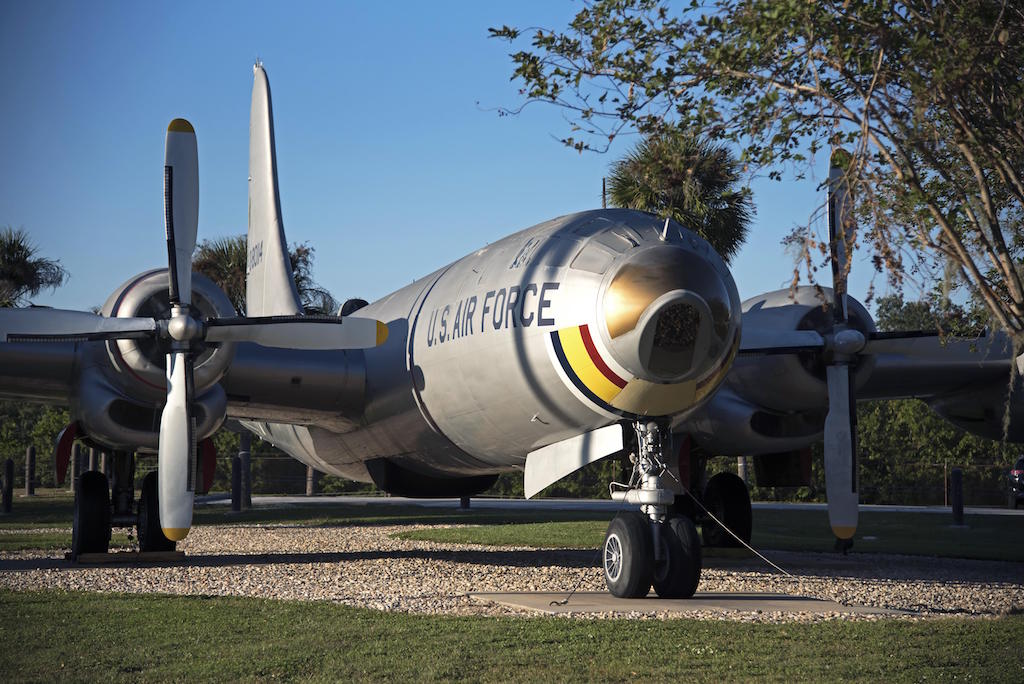

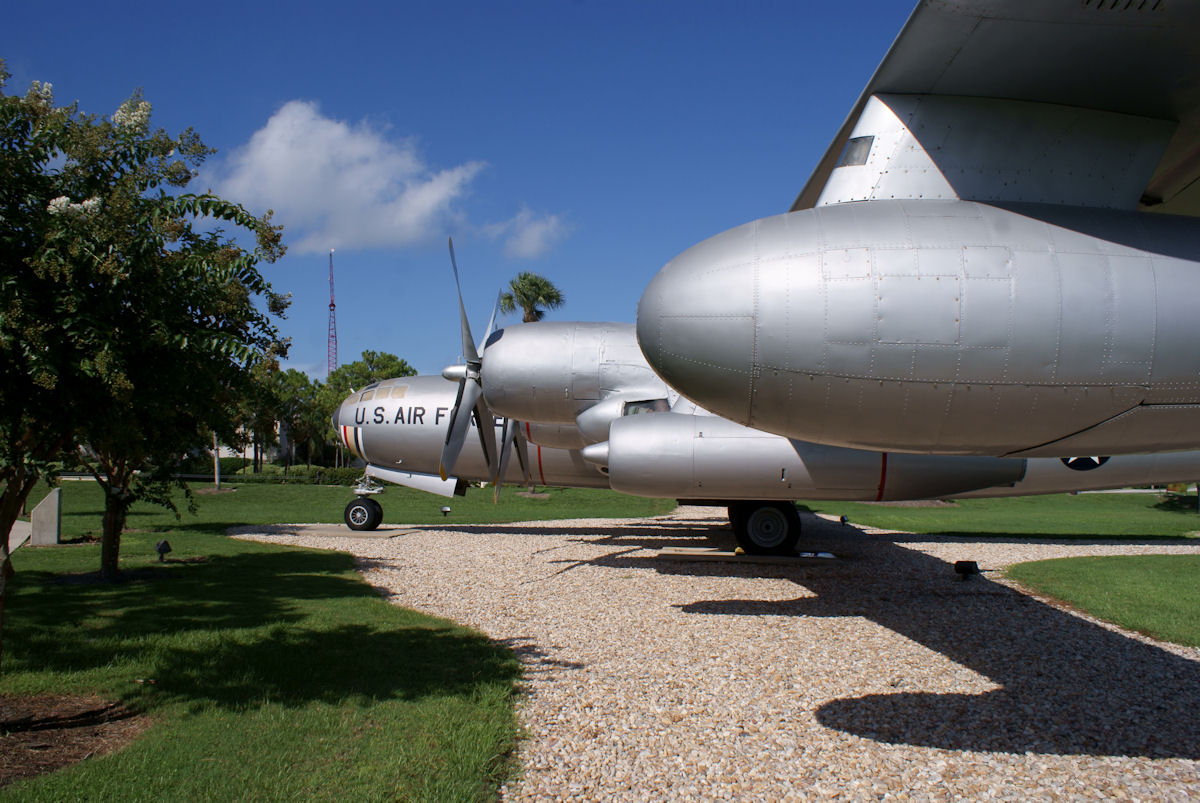
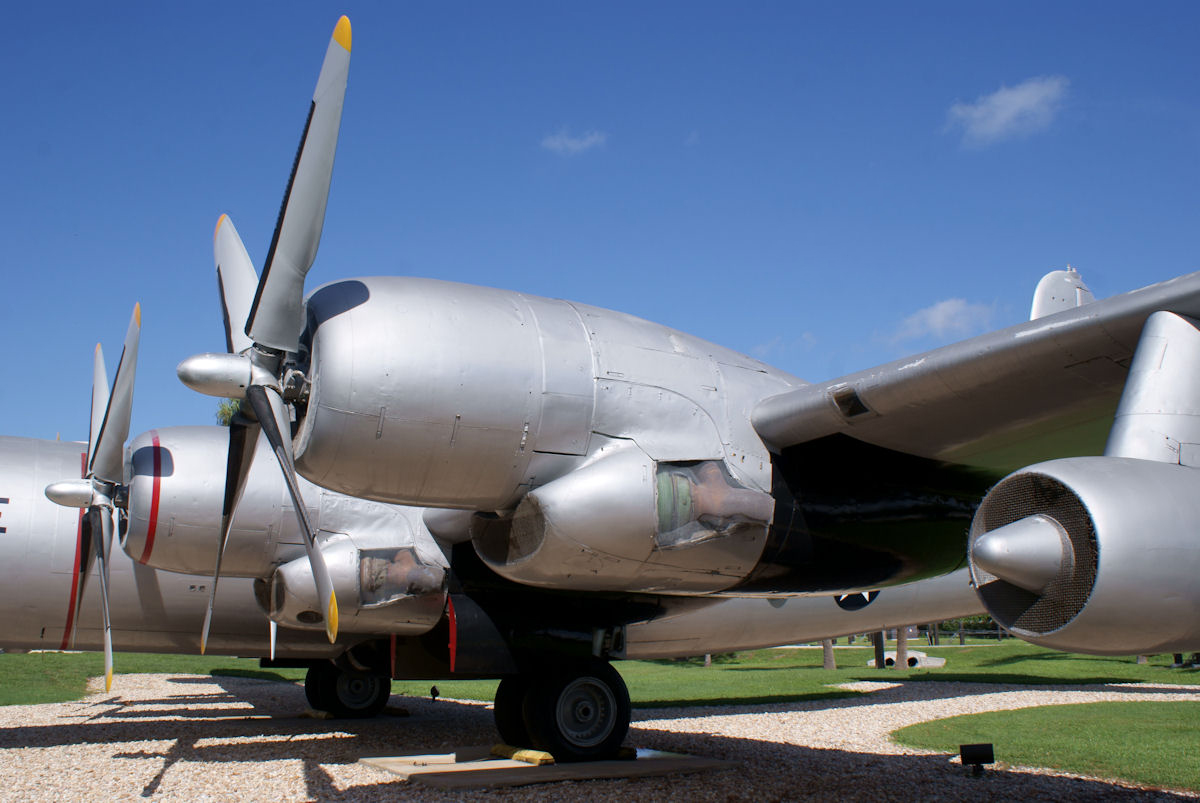
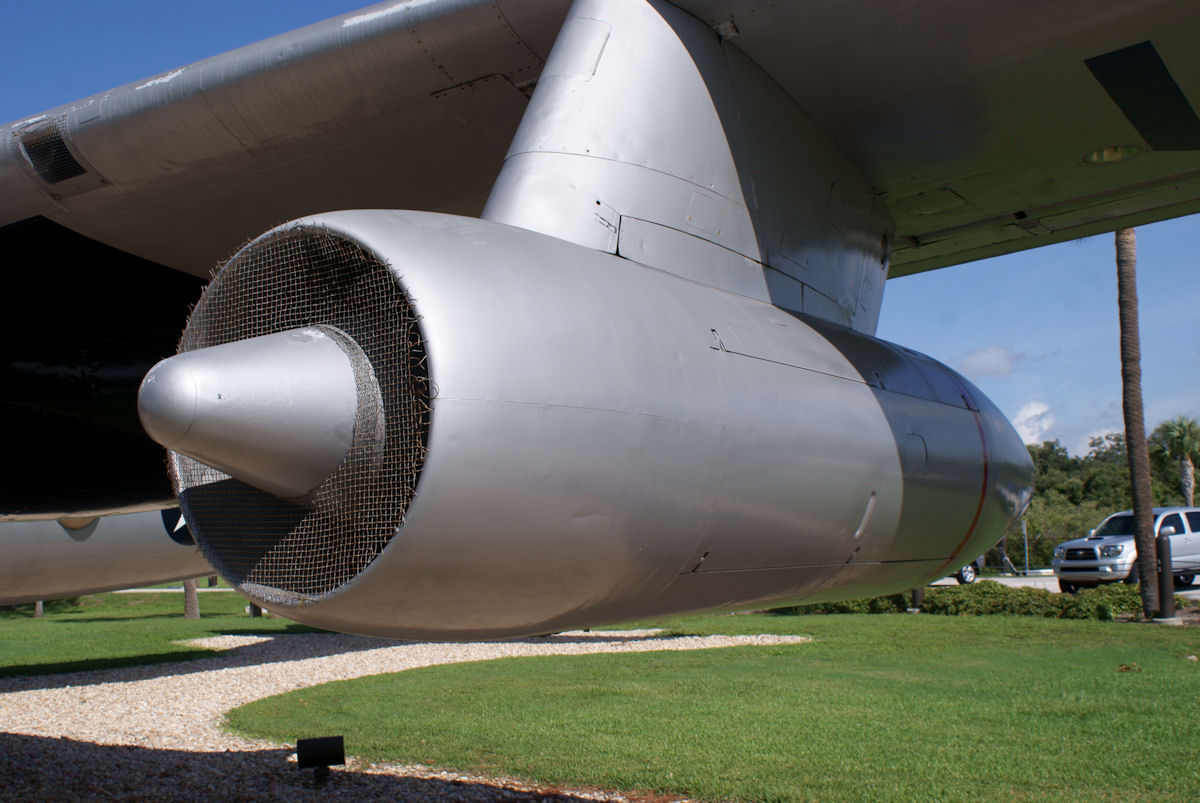
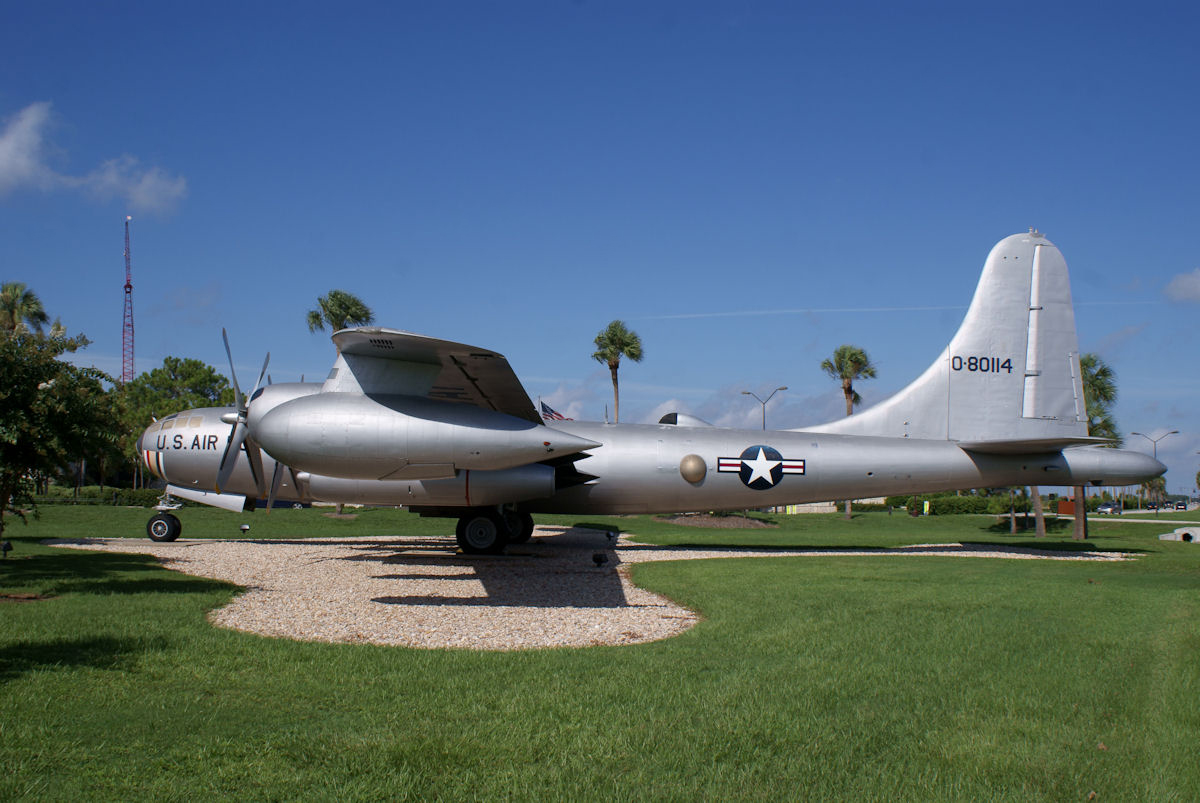
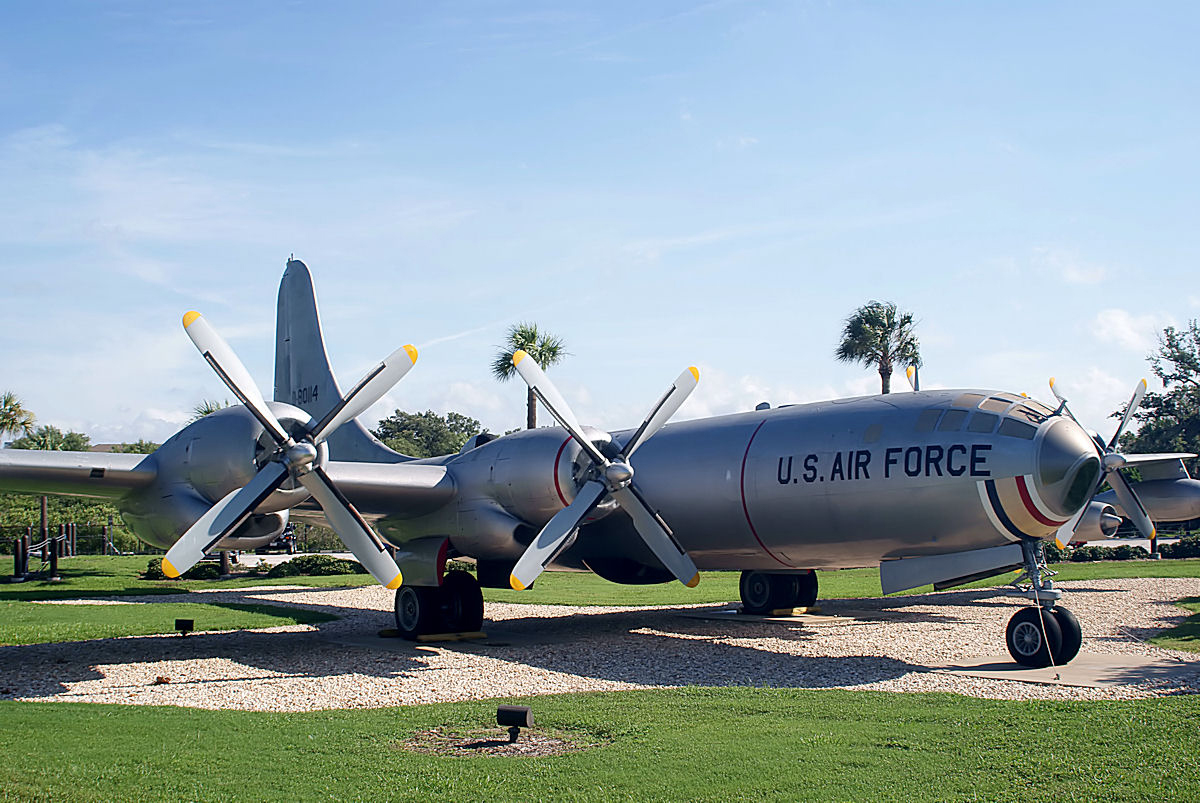
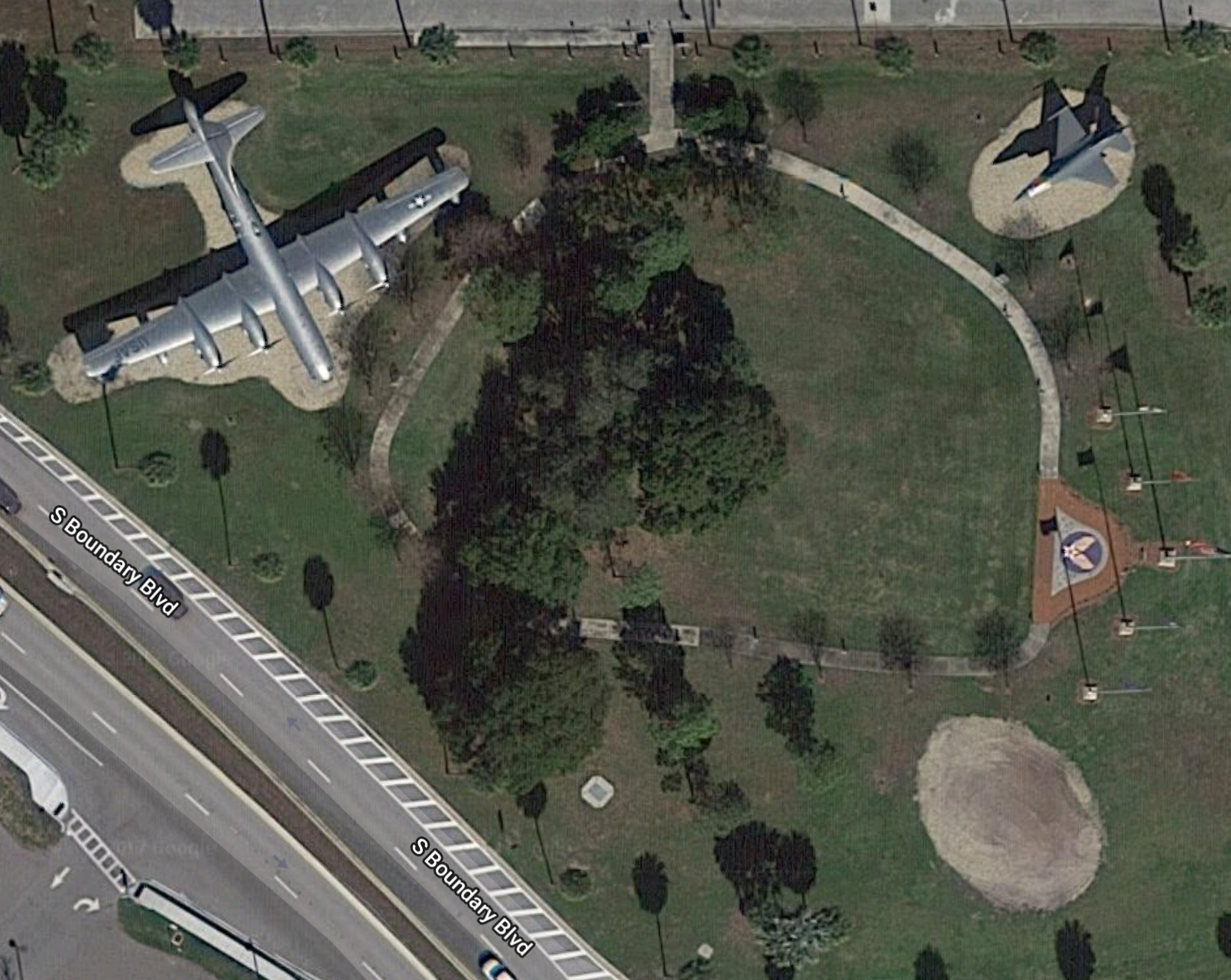
Given the fact that KB-50J 49-0389 represented one of only four remaining intact B-50s, the Air Mobility Command Museum in Dover, Delaware offered to provide 49-0389 a new home. With the museum’s focus on the history and legacy of the USAF’s transport wings, from heavy cargo transports such as the Lockheed C-5 Galaxy, to the USAF tanker fleet, represented by the museum’s KC-97 and KC-135, the Air Mobility Command Museum secured permission from the National Museum of the USAF to bring the KB-50J to Dover, which would make the aircraft more publicly accessible than it had been at MacDill. John Taylor, director of the AMCM, explained the decision to bring the KB-50J from MacDill AFB to Dover AFB: “The AMCM is unquestionably the single most appropriate location for this historic aircraft. We have already identified a preliminary display position, placing this historic aircraft in line with the two other AMCM tankers, a KC-97 Stratofreighter and a KC-135 Stratotanker. This will provide an arrangement of substantial impact, depicting an air refueling lineage of 60 years’ worth of strategic and tactical air refueling history.”
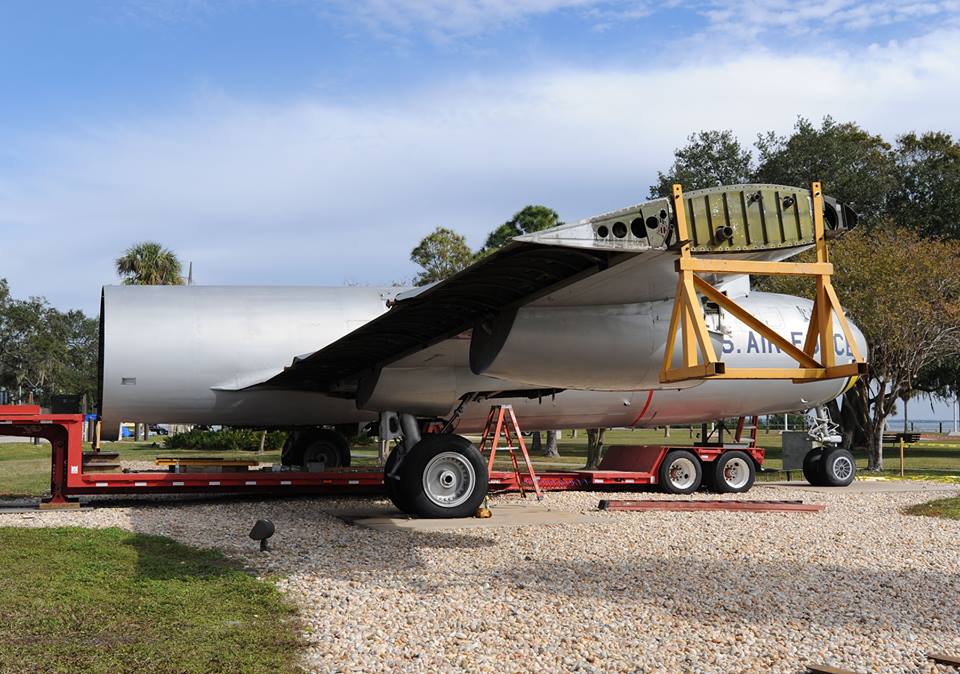
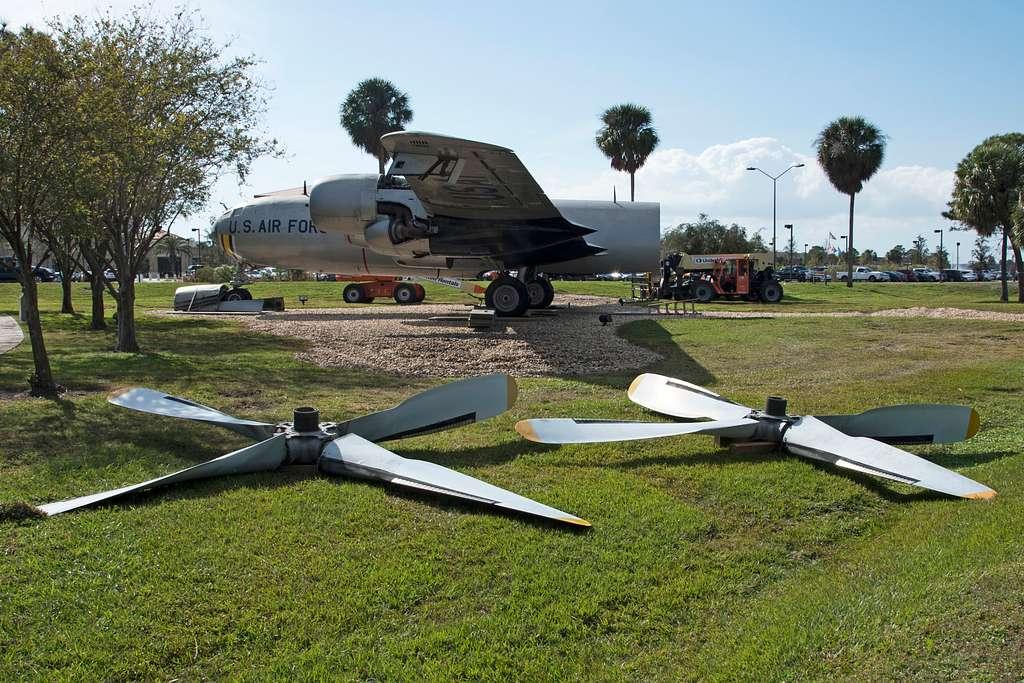
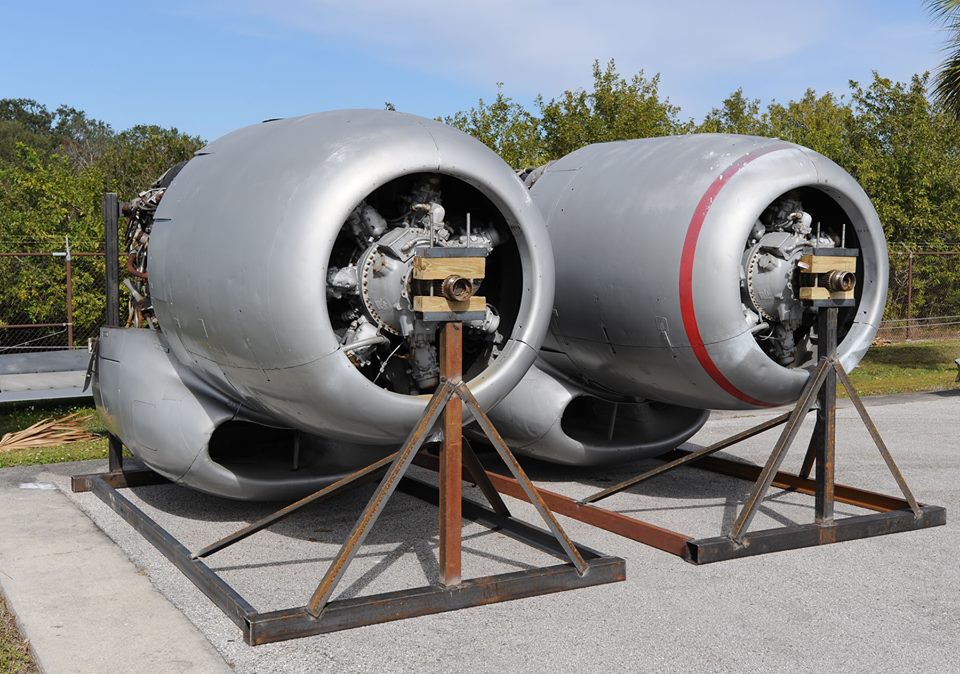
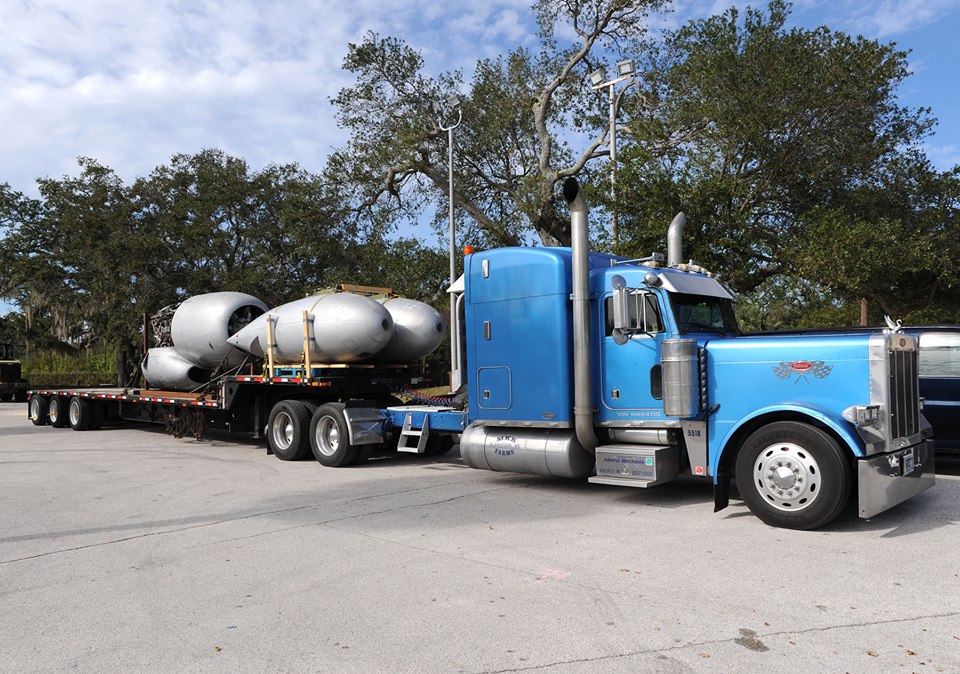
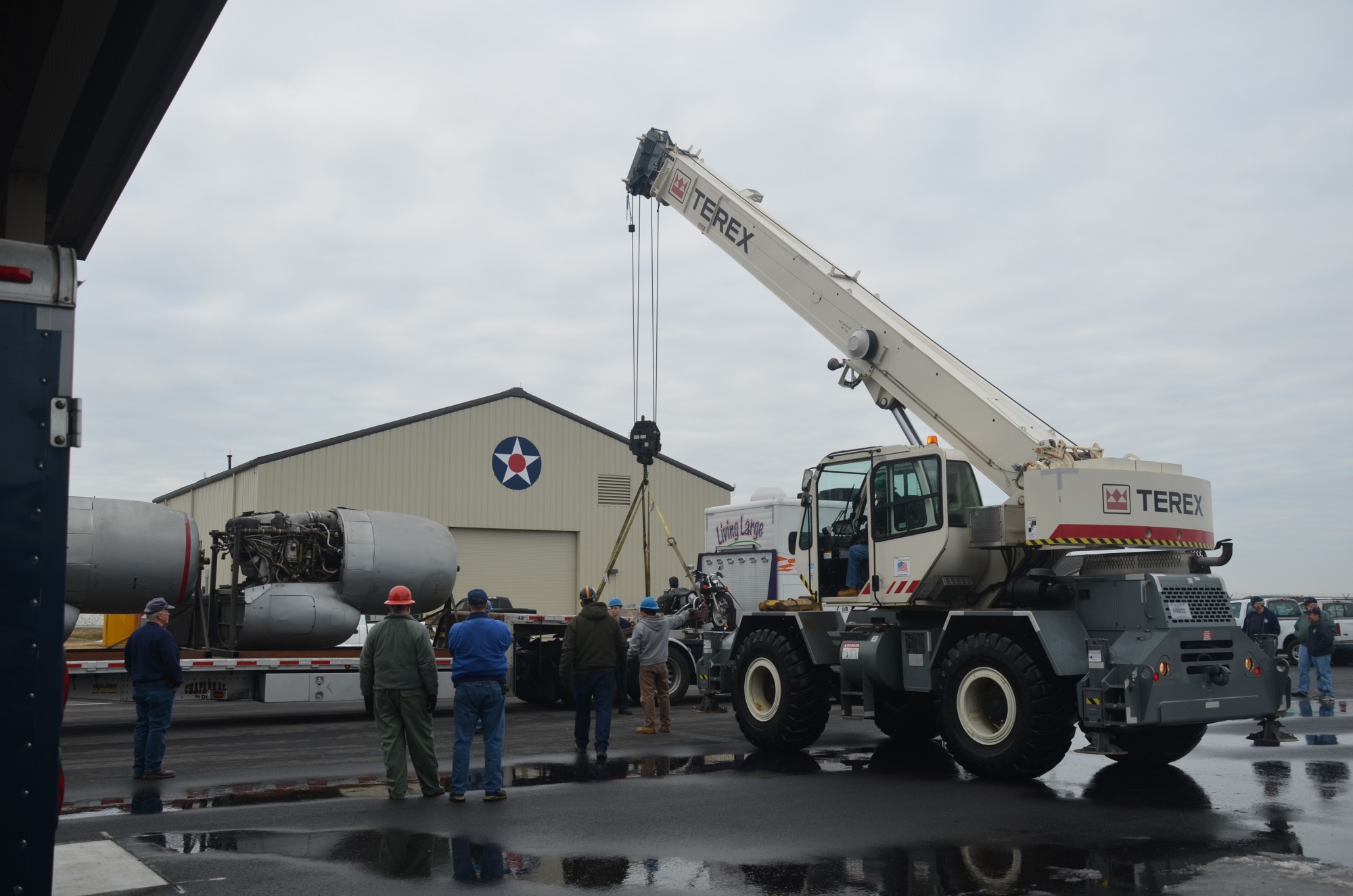
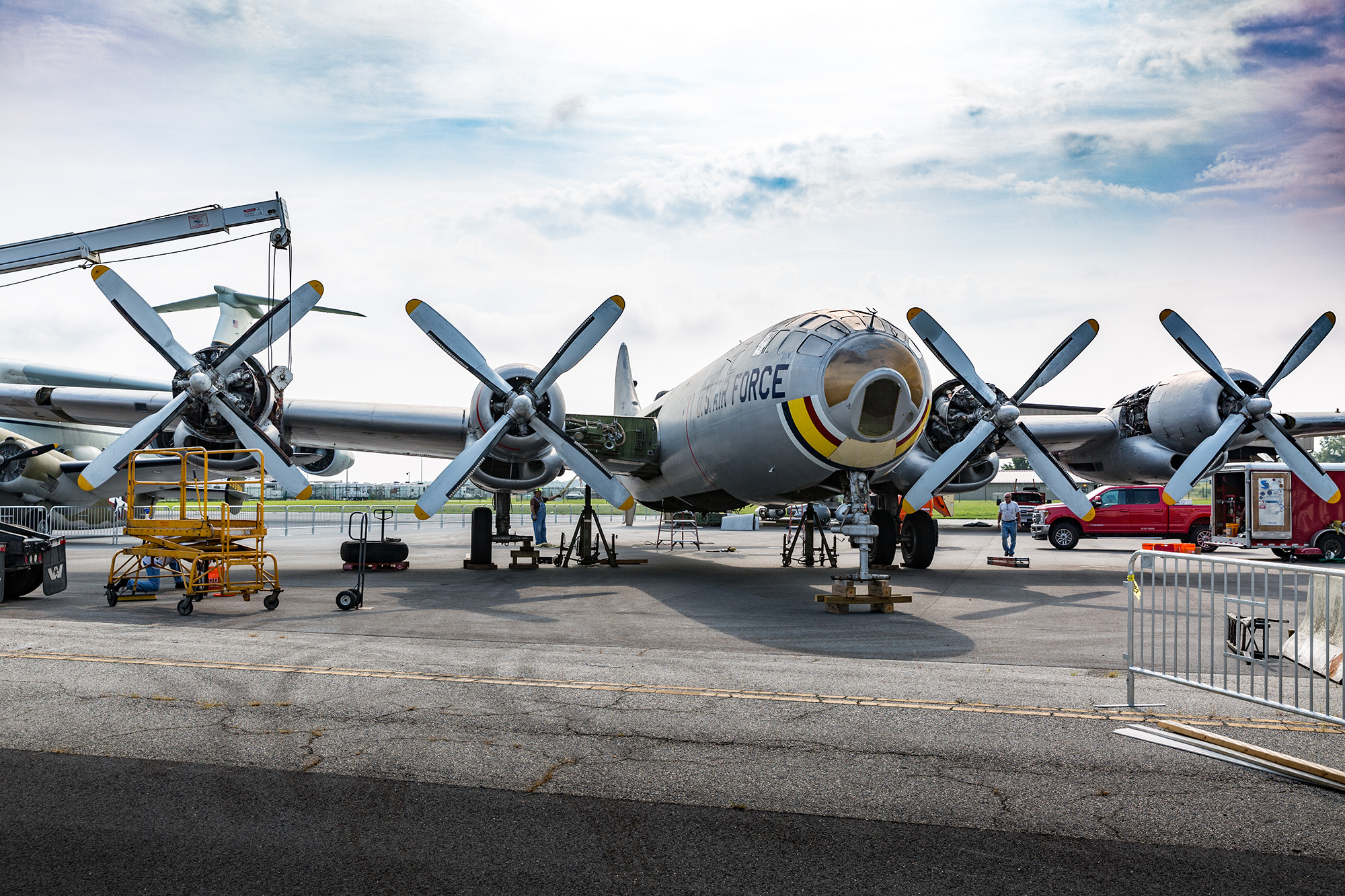
The presence of Hurricane Maria in 2017 further underscored the museum’s sense of urgency to bring KB-50J 49-0389 to Dover as well. In December 2017, contractors arrived at MacDill AFB and began the process of carefully disassembling the KB-50J, with the wings unbolted from the fuselage and disassembled into inboard and outboard sections. Similarly, the piston and jet engines, along with the two externally mounted fuel tank pods, were taken from the wings and placed on flatbed trailers, while the fuselage was disassembled into front and rear sections. In 2018, the entire aircraft was disassembled by truck and delivered to the Air Mobility Command Museum. In the years since KB-50J 49-0389’s arrival, the aircraft has gone through the installation of new longerons and skins due to excessive corrosion, but the aircraft is fully reassembled and stands proudly alongside other aircraft from the museum’s extensive collection of USAF transport aircraft. As for the former Memorial Air Park at MacDill Air Force Base, the last aircraft on display there, F-16A 81-0721, has since been moved to the Papago Army Heliport at Papago Park Military Reservation, Arizona (just outside downtown Phoenix) Though KB-50J 49-0389 remains on outdoor display, it is now being tended to by dedicated volunteers, and is more accessible to the general public than it was at MacDill AFB. Though the exterior is largely complete, gradual restoration work of the aircraft’s interior continues at a steady pace.
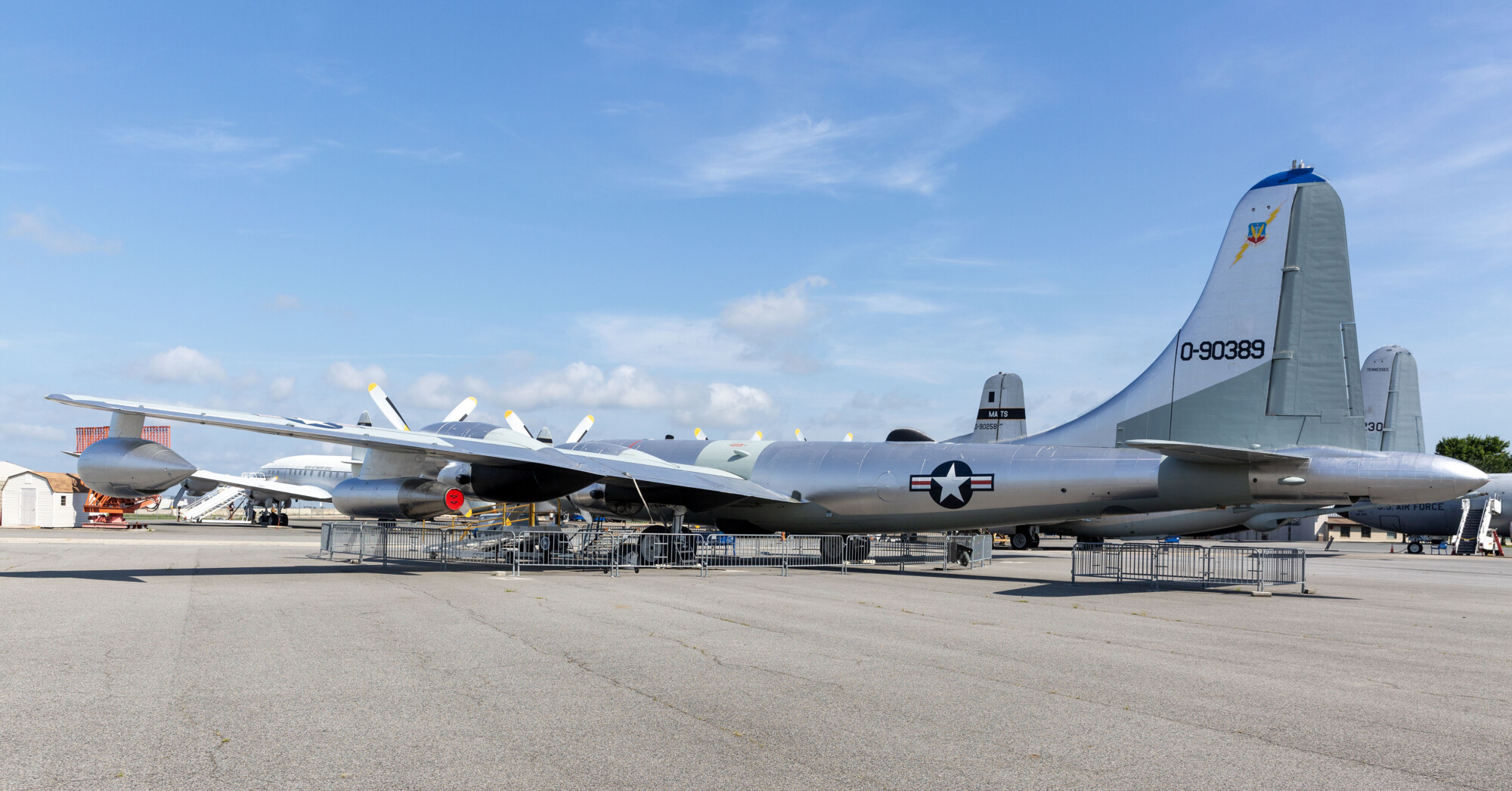
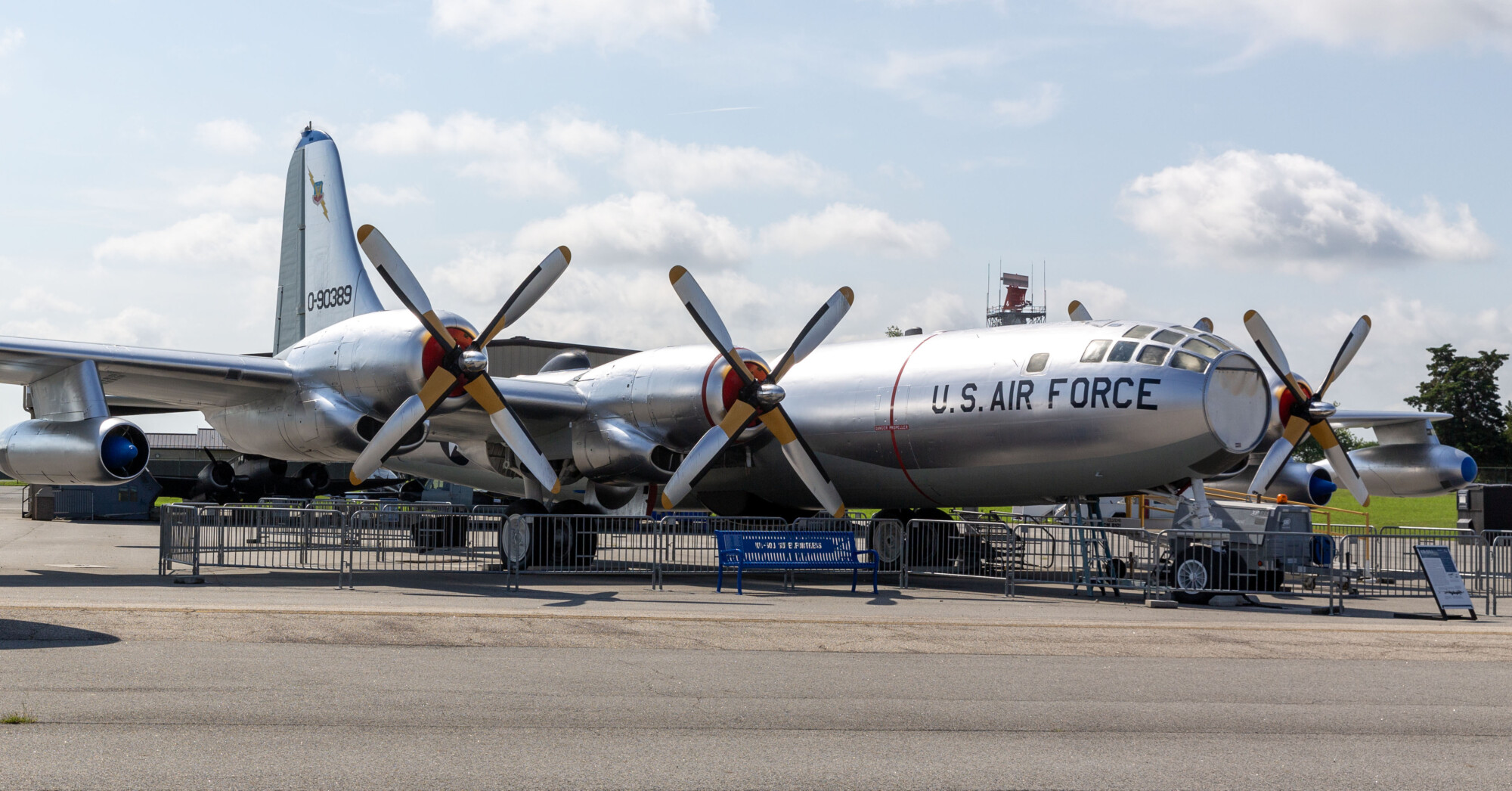
The Boeing B-50 Superfortress may be an underrepresented aircraft among the popular accounts of American military aviation history, but as the final piston-powered bomber in the USAF’s inventory, it served in an era of transition, holding the line until the Jet Age truly kicked off, and once it was no longer a frontline bomber, it continued to provide valuable support to USAF operations as a refueling tanker and weather reconnaissance aircraft. In a time when aviation technology advanced rapidly, rendering aircraft once on the cutting edge to being obsolete in just a few short years, the B-50 endured for almost 20 years, and the surviving examples today serve now as tributes to the men and women who built, flew and maintained these great aircraft, and in an era of deterrence, the fact that the B-50 never dropped a bomb in combat exemplified Strategic Air Command’s creed of “Peace Through Strength”.




Thank you Adam Estes for putting together this great article on the B-50.
Thank you for an excellent read.