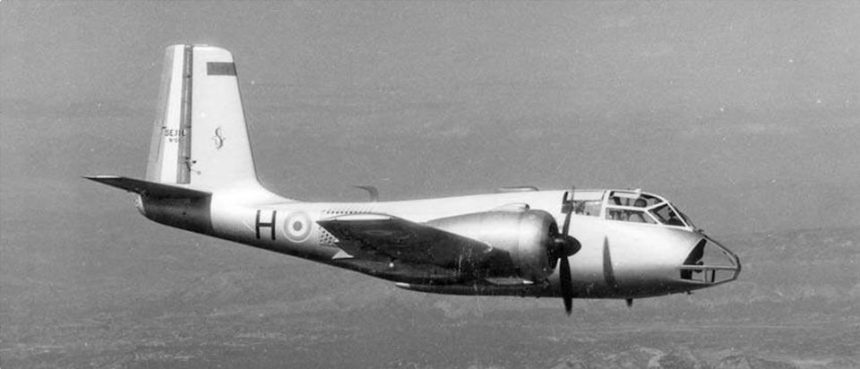

On this day in aviation history, 68 years ago (June 5, 1958), Sud Aviation SE-116 Voltigeur took flight for the first time. Of French origin, the SE-116 was a prototype army support aircraft that was intended to handle observation and ground attack sorties. Large-scale production was not undertaken, with only three aircraft built. France’s involvement in the Algerian War exposed a desperate need for an aircraft that could act as a counter-insurgency platform, while also providing photography and observation reporting. Sud Aviation was one of three French aviation companies to initiate development of a solution in 1958. The SIPA S.1100 and Dassault Spirale were the competing airframes to the SE-116. Each design was a prop-driven twin. Sud Aviation initially named their new COIN aircraft the Fonceur. Voltigeur was ultimately the name chosen, after the French cavalry units that dealt in skirmishes.
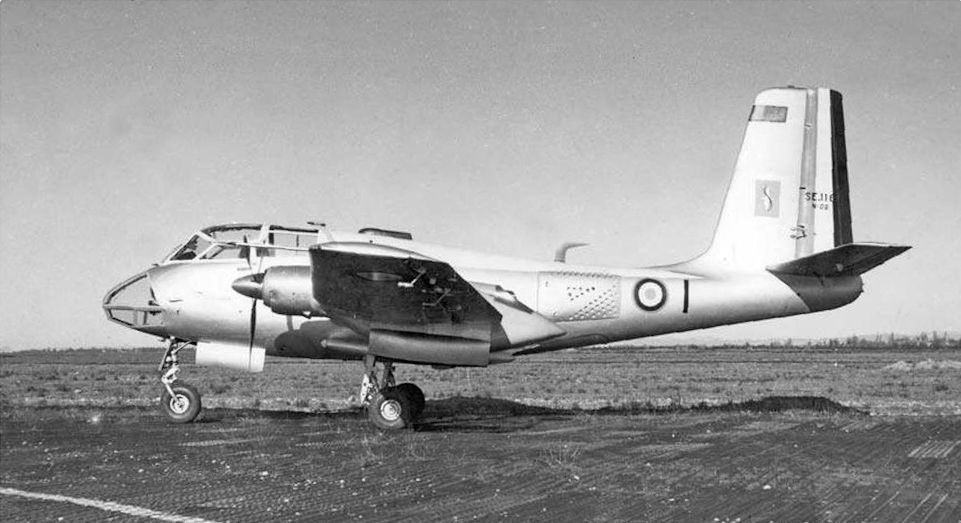
The initial SE-116 prototype was powered by two 800-hp Wright Cyclone 9-cylinder radial engines. These were replaced on the second prototype by twin 760-hp Turbomeca Bastan turboprop engines. The Voltigeur featured rugged, retractable landing gear for operations on unimproved airfields. A multi-panel canopied cockpit and glazed nose afforded the SE-116 exceptional visibility for observation and aerial photography duties. Installed aft of the wing’s trailing edge, on the fuselage, were perforated airbrakes. Armament for ground attack operations consisted of two DEFA 522 30 mm cannons and six under-wing hardpoints, capable of carrying rockets and/or bombs. Roger Carpentier was at the controls of the SE-116 on its first test flight. On January 9, 1959, he and two others were lost to an accident in the Voltigeur as a result of tail flutter on a high-speed run. Flight testing continued, but the project was ultimately abandoned. The aircraft was capable of attaining a maximum airspeed of 283 mph and could take off and land in 660 ft of runway.
(Image credit: USN - U.S. Navy Naval Aviation News/Wikimedia Commons)