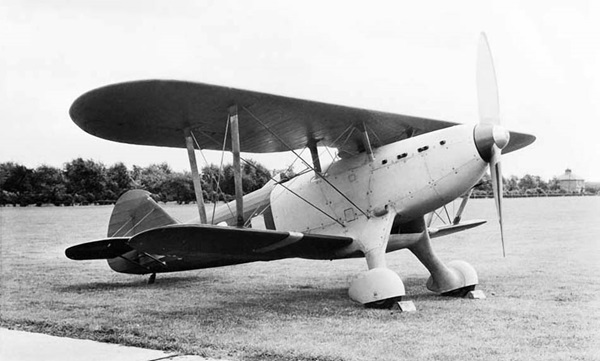
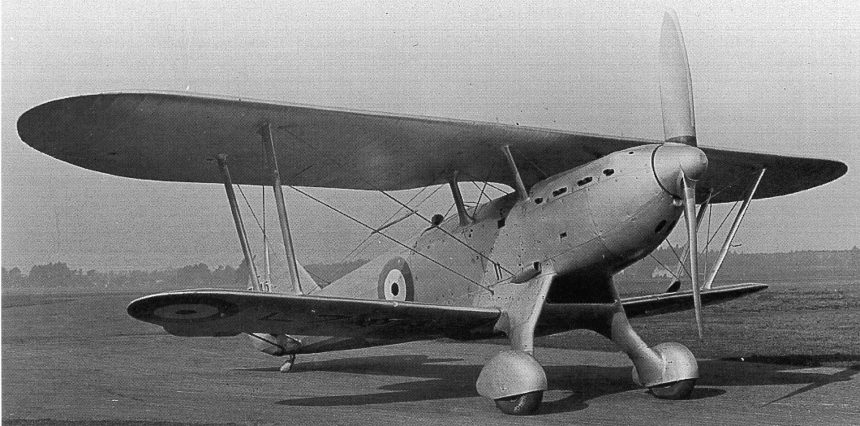

On this day in aviation history, 91 years ago (June 6, 1935), the first flight of the Fairey Fantôme took place. Also frequently referred to as the Féroce, this biplane fighter was of Belgian origin. Fairey Aviation designed the Fantôme prototype, while Avions Fairey of Belgium manufactured the three production aircraft. In 1934, Belgian Aéronautique Militaire released a specification that sought a replacement for the Fairey Firefly II they were currently operating. Belgium intended the specification to be open internationally, so as to pull concepts and prototypes from all over the world. Marcel Lobelle, an aeronautical engineer of Belgian lineage, was working for Fairey in Britain. He began to develop a fighter that would satisfy the requirements of his home nation’s Air Force.
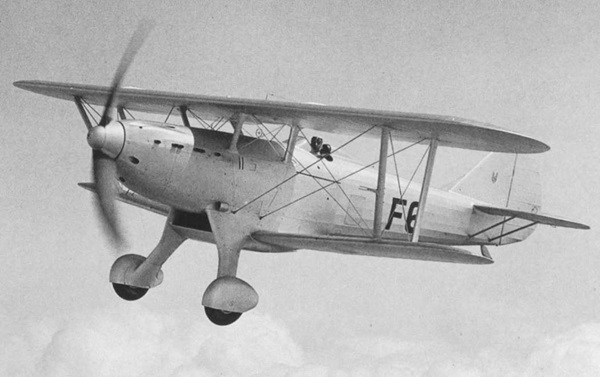
What resulted from Lobelle’s work was an all-metal biplane, with fabric covering. The aircraft had fixed landing gear, with spats to enhance aerodynamics. A 925-hp Hispano-Suiza 12Ycrs liquid-cooled V12 engine powered the Fantôme. An engine-mounted Oerlikon 20 mm cannon, which fired through the prop hub, gave the Fantôme its primary means of armament. Additionally, two 7.62 mm Browning machine guns were mounted in the wings, and two more guns could be installed in the upper fuselage if the cannon was not equipped.
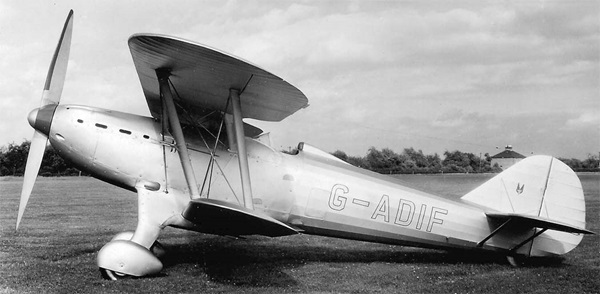
The first flight of the Fantôme on 6/6/35 took place from the Great West Aerodrome, which is now part of London Heathrow Airport. On July 17, 1935, the aircraft crashed during the flight testing competition in Belgium, and the pilot was sadly lost. The parts manufactured for three additional Fairey aircraft were shipped to Belgium, and they were built as Fairey Féroce fighters by the Avions Fairey factory at Gosselies. During this process, the Belgian Air Force revised the requirements for their fighter specification. This rendered the Féroce obsolete, and two airframes were sent to the Soviet Union. Some claim that these Féroces were then sent on to the Spanish Republican air force during the Spanish Civil War, but evidence is scarce. The third production Féroce was given to the British Air Ministry for flight testing. The Féroce could reach a maximum airspeed of 270 mph, and reach an altitude of 13,000 ft in 5 minutes and 40 seconds. Flight endurance for the fighter was 2 hours. The Air Ministry transferred the last Féroce fighter to an Air Gunnery School in December 1940, and the aircraft was eventually struck off charge in March 1943.