





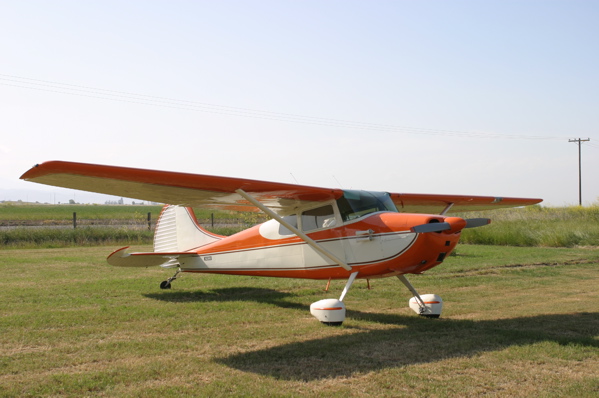

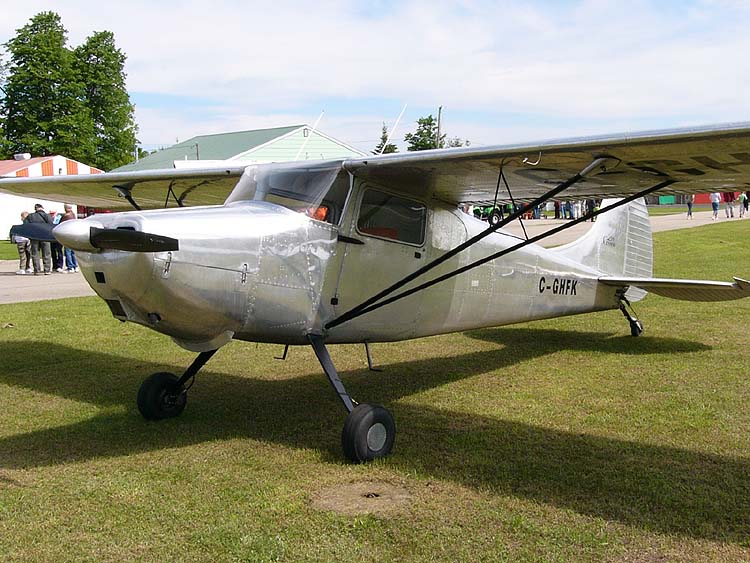
On this day in aviation history, 78 years ago (June 1, 1948), the first flight of the Cessna Model 170 took place. This single-engine taildragger is considered a classic amongst pilots and aviation enthusiasts alike. The original Model 170 was designed with four seats within an all-metal fuselage. The tail and wing surfaces were covered in fabric, a carry-over from Cessna’s well-received Model 140. The original 170s were essentially four-seat variants of the 140, only with a more powerful 145-hp Continental O-300 (nee C145-2) engine. Cessna’s Model 170A was upgraded to all-metal construction and featured plain flaps with 50* extension. After the 170A came the Model 305, a military variant of the airframe. Flying under the military designations of L-19 and O-1 Bird Dog, the 305 served admirably and frequently as a forward air control (FAC) and recon aircraft. The Bird Dog was an extensive redesign of the 170A, with tandem seating (rather than side-by-side) and 60* Fowler flaps. The Model 305 would see service in the Korean and Vietnam Wars with the US Army, Air Force, and Marine Corps.
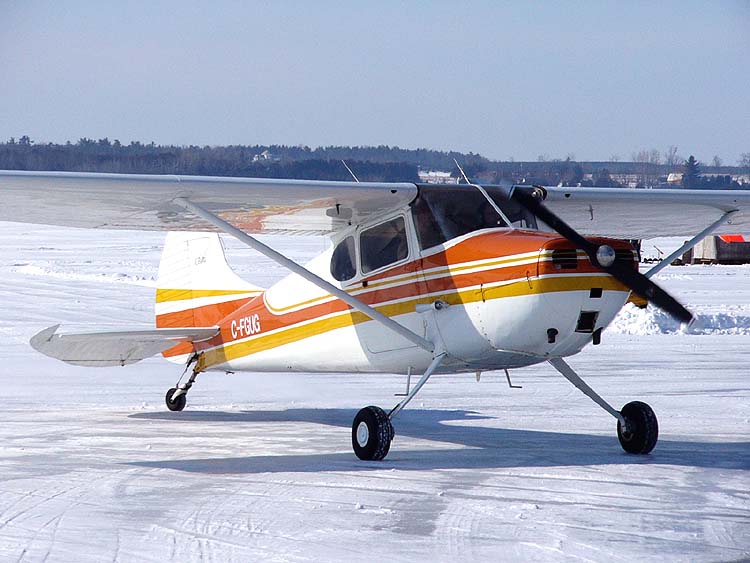
Cessna released the Model 170B in 1952, which featured a new outboard tapered wing and Fowler flaps, both inspired by the Model 305. The Model 170 would eventually be developed into what has arguably been Cessna’s most successful aircraft, the Model 172. In 1956, Cessna modified a Model 170B with a nosewheel and a square tail, giving birth to the Skyhawk. Production of the Model 170 eventually ceased once the 172 began to gain sales. The Model 170B was also powered by the 145 hp Continental C145-2 air-cooled flat-six engine. In cruise, the aircraft can typically fly along at 120 mph, while the maximum attainable airspeed is 140 mph. Stall speed for the Model 170B is 52 mph. Cessna’s 170B has a flight endurance of just over 4.5 hours. The 170 can climb at a rate of 690 fpm and reach a service ceiling of 15,500 ft. During the aircraft’s production run, Cessna built 5,174 Model 170s. Many survive in airworthy condition today, and can typically be seen at fly-in breakfasts across the United States.










One of my favorite small planes! May it live on!….Fred
Thanks! 😊
My father was involved with recon in light aircraft over the Burma Trail to clear for train shipments on munitions, in the CBI theater in WWII. When he returned back home and started his family he then got his ticket and aquired a 170. We had some good times in that plane and dad even used it for his job traveling through out northern California
Cool story! That’s some brand loyalty, right there. 👍