







By Matthew Scales
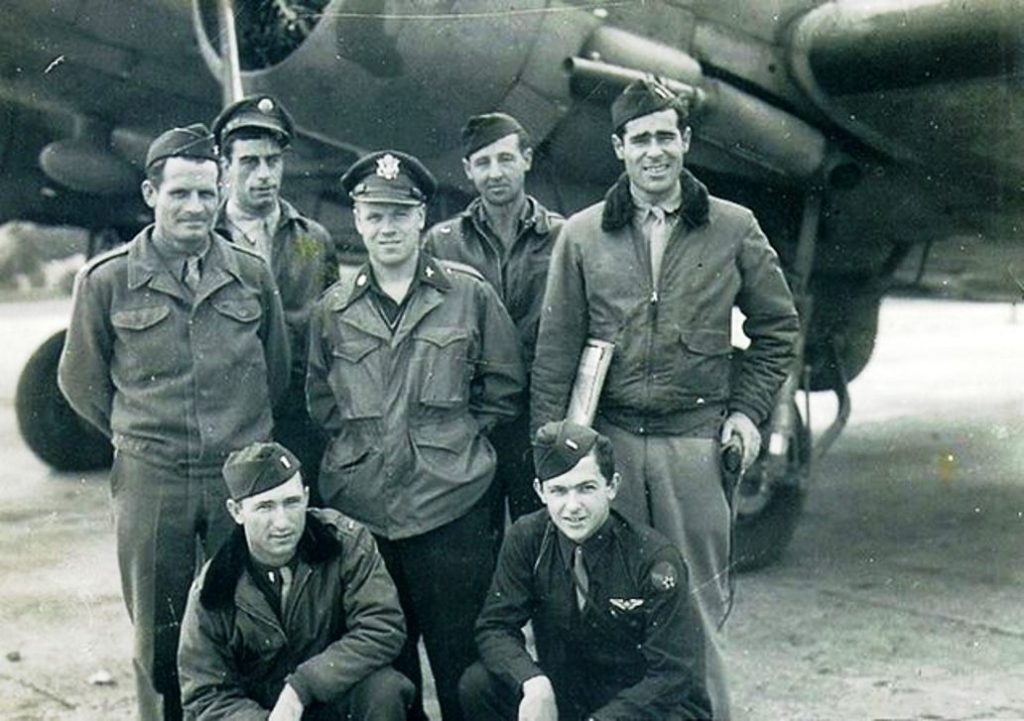
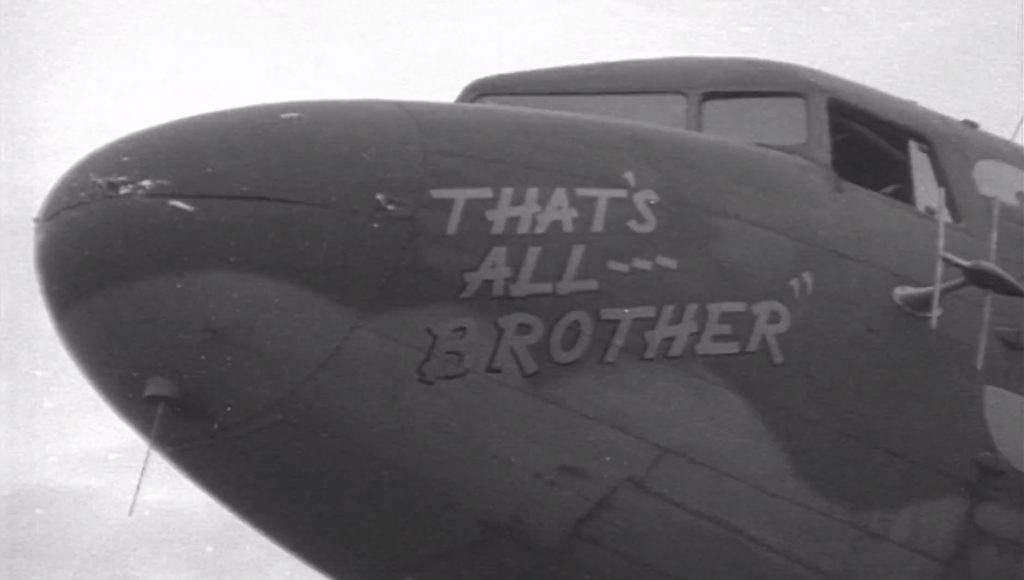
As the C-47 “That’s All, Brother” rumbled through the late-night sky on June 5, 1944, its crew comprised seven men from across the United States. The plane leading the main wave of paratroopers invading Europe included an aircraft commander, pilot, co-pilot, two navigators, a crew chief, and a radio operator. Until training for that one fateful night began months prior, their stories were plotted in widely divergent localities, from the largest cities in the country to the tiniest of farm towns. This is the story of those men.
The Aircraft Commander
The aircraft commander aboard “That’s All Brother” and the man behind the aircraft’s unique name was Lieutenant Colonel John Munnerlyn Donalson. Donalson was born on August 22, 1901, in Blakely, Georgia. In 1920, Donalson entered the Georgia Institute of Technology, better known as Georgia Tech, where he earned a degree in electrical engineering. Shortly after graduating, Donalson moved to Birmingham, Alabama, and in 1926, enlisted in the Alabama National Guard’s 106th Observation Squadron.
For the first two years of his enlistment, Donalson flew as an observer in the squadron’s JN-4 Jennys until September of 1928, when he was selected to commission as a second lieutenant. For the next 12 years, Donalson would advance in rank and skill and even experience mishaps. His first crash led to a nickname that would follow him for the rest of his life, “Snake.” Described by his daughter as a more respectable name than “caterpillar,” which was bestowed on other pilots who had bailed out of an airplane and “hit the silk” by deploying their silk parachutes, he gained the moniker after he, too, bailed out of an airplane after experiencing mechanical issues in an O-11 biplane.
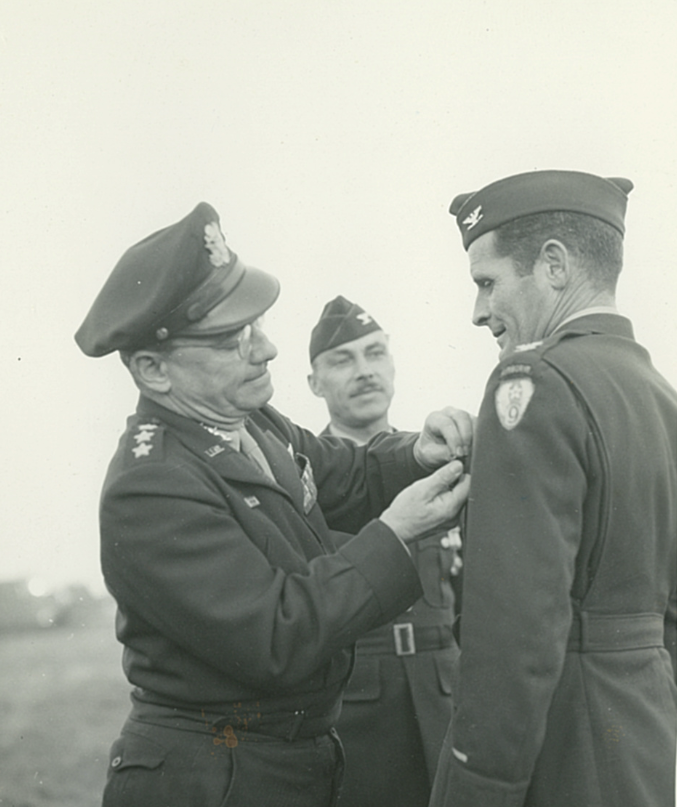
Donalson’s aviation career grew exponentially in the 1930s. From air races to air shows and even meetings with state and national leaders, Donalson worked tirelessly to promote aviation in Alabama. In 1932, John Donalson created a flight school in Birmingham and trained everyone from physicians and attorneys to 20-year-old Martine Comer, the first female to obtain her pilot’s license in Alabama. Donalson’s reputation as an instructor was such that an advertisement he placed in the April 7, 1935, edition of the Birmingham News contained, in addition to his phone number, and, for anyone who might inquire about references, the confident suggestion “ask anyone who learned to fly in Birmingham in the last six years.”
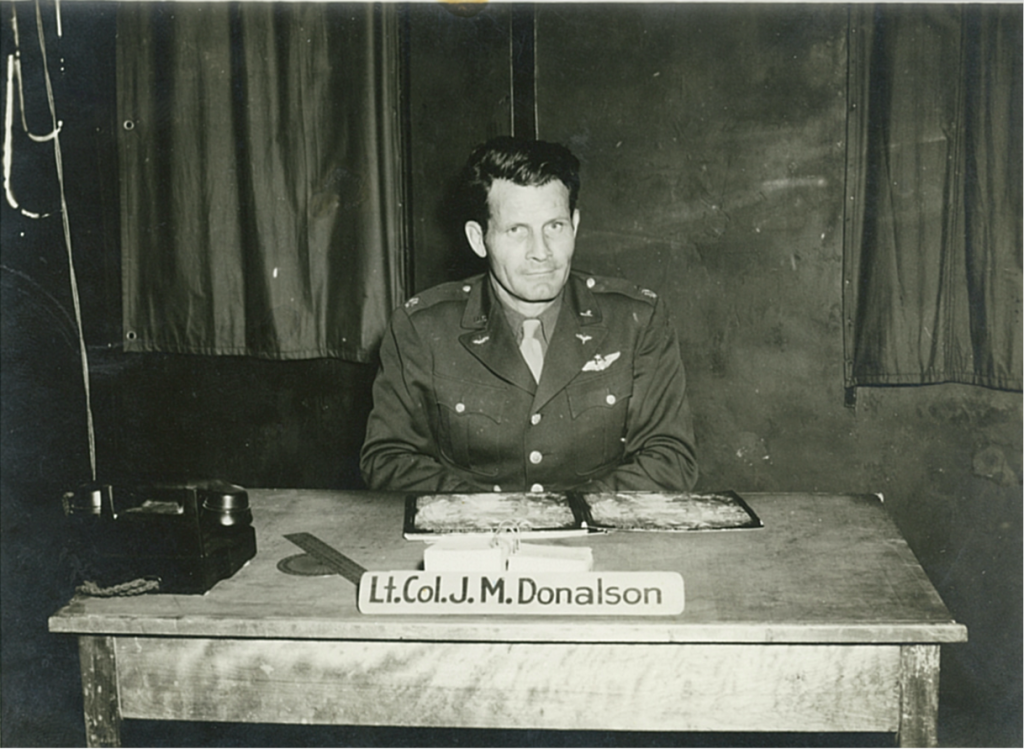
When war came to the United States on December 7, 1941, the Army Air Corps found Donalson with the Alabama National Guard flying unarmed O-47s off the coast of Miami in search of German submarines. Recognizing the value of a senior Major with nearly fifteen years of flying experience, Donalson was quickly transferred to Langley Field before he finally joined the 438th Troop Carrier Group in 1943 at Baer Field, Indiana. Despite his extensive experience in the cockpit, there was a glaring gap in his resume when he arrived at the 438th: he had no experience in combat. For that, he would turn to a fellow Birmingham resident, David Daniel.
The Pilot
The pilot of “That’s All Brother” on June 5 and 6, 1944, was Lieutenant Colonel David Edwin Daniel. Born in Selma, Alabama, on December 3, 1916, to John and Mary Daniel, he and his mother moved to Birmingham in 1918 after his father was admitted, for reasons not documented, to an inpatient psychiatric hospital in Tuscaloosa called Bryce Hospital. David Daniel was an only child and was raised by his single mother, her sister, and her parents in a small home in West Birmingham. After graduating from Ramsay High School in 1935, Daniel entered Birmingham Southern College, where he became a member of the Alpha Tau Omega fraternity. Working for a short time at Tennessee Coal and Iron, Daniel left the job and joined the Army Air Corps on November 23, 1940. Shortly thereafter, he was assigned to flight school class 41-E, where he learned to fly alongside future Doolittle Raiders Dick Cole and William Farrow. After receiving his pilot’s wings on July 12, 1941, Daniel became a troop carrier pilot flying C-47s, the plane that would take him to war. In November of 1942, Daniel, now a pilot assigned to the 10th Troop Carrier Squadron, took off from England and flew the first and longest airborne mission in the history of the Army Air Forces. Loaded with paratroopers from the 509th Parachute Infantry Regiment, Daniel flew one of 39 C-47s that dropped airborne troops to seize airfields at Tafraoui and La Senia in North Africa.
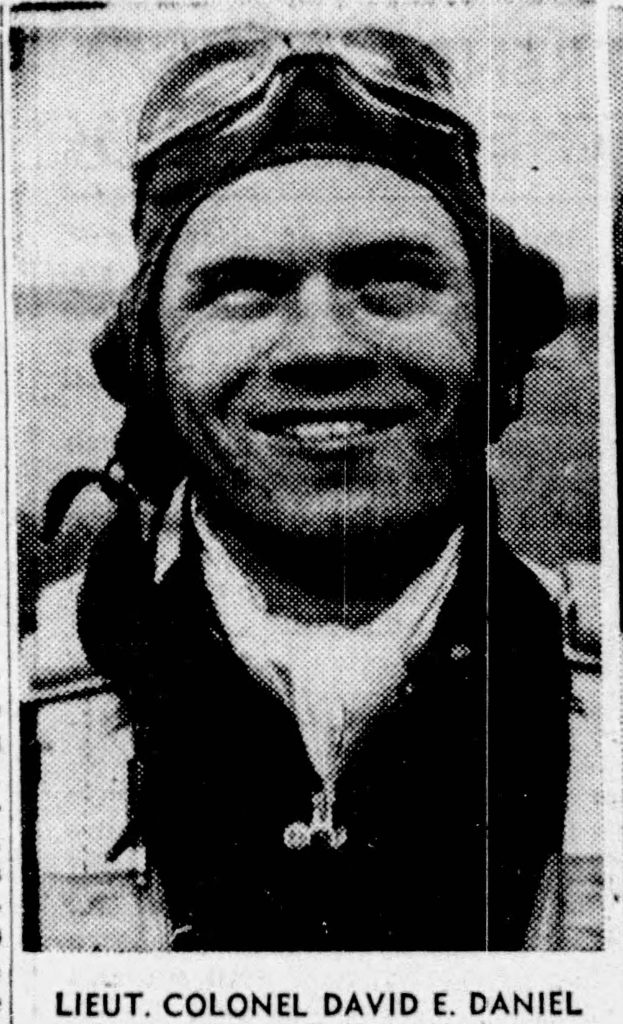
(Image credit: Daniel Family/Matt Scales Collection)
This early combat experience proved invaluable to the troop carrier community. In April 1943, after almost eight months overseas, Captain Daniel was ordered back to the States. Joining him were six of his squadron mates who took various command positions in C-47 units, quickly forming for the invasion of Europe. Returning home also proved helpful to Daniel’s family as, on June 13, Daniel’s father, who had remained in Bryce Psychiatric Hospital since 1917, passed away. A month later, Daniel was promoted to Major and given command of the 87th Troop Carrier Squadron, which, along with the 89th TCS commanded by his good friend Maj. Clement Richardson was assigned to the newly formed 438th.
The Co-Pilot
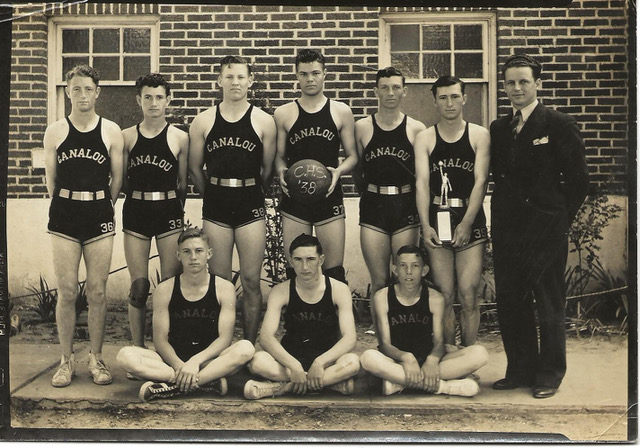
When he wasn’t flying with Colonel Donalson aboard his regular C-47 aptly named “Belle of Birmingham,” David Daniel had as his co-pilot, 1Lt. Barney Blankenship. Born February 28, 1919, in Algoa, Arkansas, the family later relocated to Canalou, Missouri. How small was his hometown? When Blankenship graduated from Canalou High School in 1938, he was one of seven graduates and rounded out the 9-member basketball team. Growing up with three sisters and two younger brothers, Blankenship worked on the family farm, developing a passion for the land that would stay with him throughout his life.
A little over a month after Pearl Harbor, Blankenship enlisted in the Army and quickly learned that there was a right way, a wrong way, and the Army way. Upon entering service, he noticed his last name was misspelled on his enlistment paperwork, which read “Blankenship” instead of the family spelling of “Blankinship.” When the young farm-boy-turned-soldier brought this error to the attention of Army officials, he was told the mistake would not be corrected. Obeying his superiors, Blankenship not only did not argue the point any further but continued spelling his last name the Army way for the rest of his life.
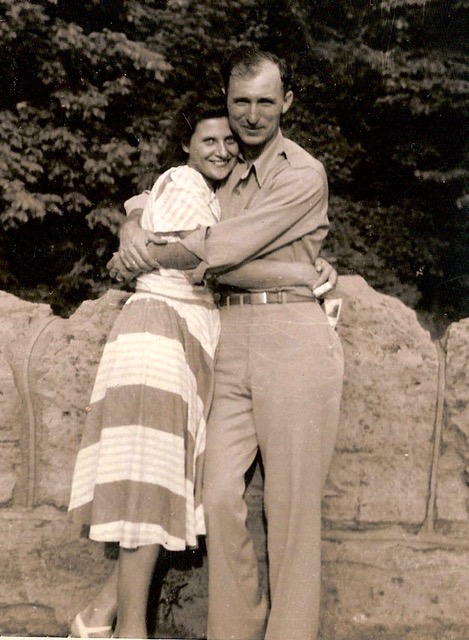
Shortly after entering basic training, Blankenship, like all of his fellow soldiers before and after him, took an aptitude test. Despite having never attended college, Blankenship scored high enough on the tests to qualify for flight school and began primary flight training 10 months later at Majors Field in northeast Texas. Following primary training, Blankenship remained in Texas for basic flight training at Aloe Army Airfield before finally reporting to Advanced training at Bergstrom Field, where he learned to fly the C-47. Leaving Bergstrom in August 1943, the new lieutenant spent some time back on the farm before reporting to Lt. Col. Daniel and the 87th Troop Carrier Squadron at Laurinburg–Maxton Army Air Base in North Carolina.
The Navigator
Also reporting to the field around this time was another young man whose childhood experiences couldn’t have been more different from those of a farm kid from southeast Missouri, but one who would join forces with the growing crew on one of the most historic nights in world history. The navigator assigned to David Daniel’s crew and the lead navigator for the flight on D-Day aboard “That’s All Brother” was a young man from Chicago named John Shallcross. Born in the Windy City on March 8, 1918, Shallcross graduated from Albert Grannis Lane Technical High School in Chicago and enlisted in the Army on May 29, 1942, leaving his job as a clerk at a musical instrument company. Upon entering the Army, “Bud” Shallcross reported to Camp Custer, Michigan, where he was assigned to the 5th Infantry Division and trained as a machine gunner. Shortly after graduating from basic training, Shallcross was hitchhiking for a ride back to Chicago when another young man, whom Shallcross later learned was an officer from his company, picked him up. Hitting it off immediately, the two ignored Army regulations and remained good friends. Eventually, though, their uneven ranks began to pose problems in the company. The problem was solved when Shallcross entered Officer Candidate School. After graduating from OCS, Shallcross reported to Camp Shelby, Mississippi, where the newly commissioned lieutenant began teaching soldiers how to be machine gunners. As more members of his unit began transferring out of the division to try their hand at flight school, Shallcross decided to join them. After preflight training at Kelly Field, Shallcross moved to primary training at Hatbox Field in Muskogee, Oklahoma, and later basic flight training in Coffeyville, Kansas. There, the young Chicagoan was repeatedly gigged for landing too fast and was eventually dropped from training. Despite pressure from the cadre at Coffeyville, Shallcross remained steadfast in his desire not to transfer to training as a bombardier but instead waited for an opportunity to train as a navigator, a career he felt would have more application in a post-war world. Completing navigator training at Hondo Army Airfield outside San Antonio in late 1943, Shallcross reported to the 87th Troop Carrier Squadron and David Daniel in North Carolina. As the first navigator to report to the squadron, Daniel named him as the squadron’s navigation officer and selected him to be the navigator on his crew aboard the “Belle of Birmingham.”
The Crew Chief
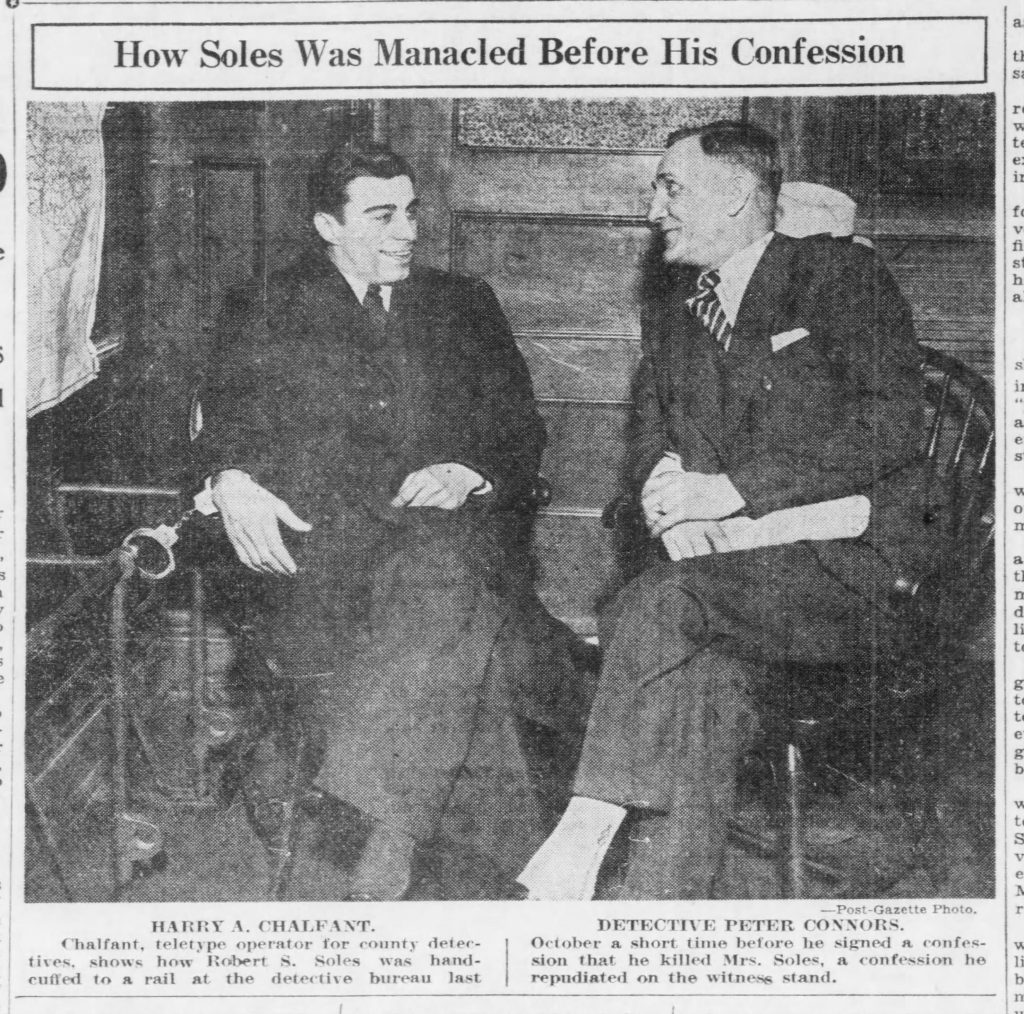
The next individual to make up the five-man crew was the aircraft’s crew chief, Harry A. Chalfant. Nearly as old as Lt. Col. Donalson, Chalfant was born in Crafton, Pennsylvania, on May 7, 1906. Later employed by the Duquesne Light Company, Chalfant married his first wife, Beatrice Rowan, on June 26, 1928, at the Roosevelt Hotel in Pittsburgh. Sixteen months later, his son Edward Thomas Chalfant was born, but just after Edward celebrated his second birthday, Harry and Beatrice divorced. Three months after Pearl Harbor, Chalfant enlisted in the Army and, after roughly a year in training, graduated from mechanic school at Seymour Johnson Field in North Carolina. While his exact reporting date to the 438th Troop Carrier Group is unknown, he no doubt joined the unit shortly after its formation and, at some point, was picked to join the rest of David Daniel’s crew. For the fifth and final member of the crew, Daniel would have to look no further than his own hometown.
The Radio Operator
The radio operator aboard “Belle of Birmingham” and later “That’s All Brother” was Staff Sergeant Woodrow, Samuel Wilson. Like his squadron commander, Wilson was born in Selma, Alabama. Four years older than his new boss, Wilson was born on June 24, 1912, to Samuel and Mary Wilson and likely not named for the President of the same name, who didn’t take office for over six months after he was born. Raised in Selma, Wilson’s father ran a business with his brother dyeing local cotton, and passed away after a lengthy illness when Woodrow was 15 years old. Working with his mother and sister at a local general store, Wilson traded this job for the US Army when he enlisted on October 20, 1942. In January of 1943, he reported to Scott Field, Illinois, for radio operator training, which he completed at Sedalia Army Air Field, Missouri, in late 1943. With their five-man crew complete, the men spent the next five months training in the US. Then came their call to head overseas. Departing Morrison Field in West Palm Beach, Florida, in January of 1944, the group headed south and, after an hour of flying, were allowed to open their top-secret orders informing them that their destination was Europe. Together, David Daniel, Barney Blankenship, John Shallcross, Harry Chalfant, and Woodrow Wilson, along with a handful of passengers, winged their way across the Atlantic aboard “Belle of Birmingham” before finally arriving in England. Following months of training in the UK, the 438th Troop Carrier Group proved itself time and again to be the most accurate at delivering its paratroopers when and where they were supposed to. As a result, the group was selected to fly the lead wave (Serial 7) of thirty-six C-47s from Greenham Common Airfield to begin the assault on “Fortress Europe.”
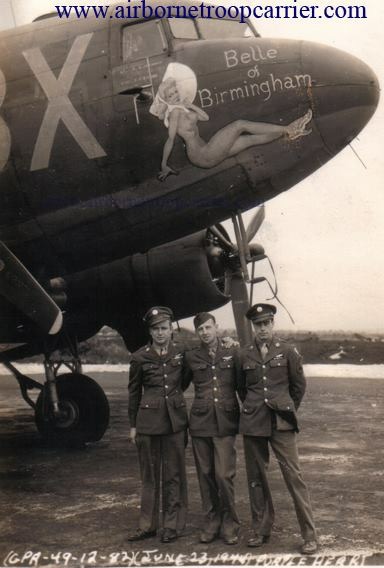
This unique role and position meant the crew of “Belle of Birmingham” would receive a brand new aircraft. Recently modified with an SCR-717 radar to pick up the signals from equipment set up by pathfinder paratroopers who went ahead of them, the new C-47 was christened “That’s All Brother” by Lt. Col. Donalson as a message to Hitler that, much like Porky Pig had told audiences since 1937, his show was over.
And Then There Were Seven
The new, specialized radar required the crew that had flown together for months to suddenly find themselves adding a new man to the group. Lt. Robert Goodman Groswird was born in Oakland, California, on April 18, 1919. Growing up in Oakland, Groswird attended University High School, where he was on the school directory staff and the track team. After graduating from University High School in 1936, Groswird got a job with his brother Don as a clerk at an insurance company until he was drafted into the Army on March 28, 1941. While very little is known about Groswird’s life during the war, he was with the 438th just prior to D-Day and joined the crew of “Belle of Birmingham” as they boarded “That’s All Brother” for their historic flight. Some men recounted their experiences to their families back home. In a letter postmarked June 14, Blankenship wrote back home to his sister Hazel, telling her, “I was flying the first ship that dropped paratroopers in France. The Colonel was handling the lights. I wish I could tell you all about it, but I can’t.” Shallcross wrote back to his family telling them: “We caught the Krauts sleeping,” while Wilson wrote back to Selma telling his family he was aboard the “first aircraft to leave English soil” and “Every detail was timed to the split second and the mission gave me a ringside seat at the world’s greatest show.”
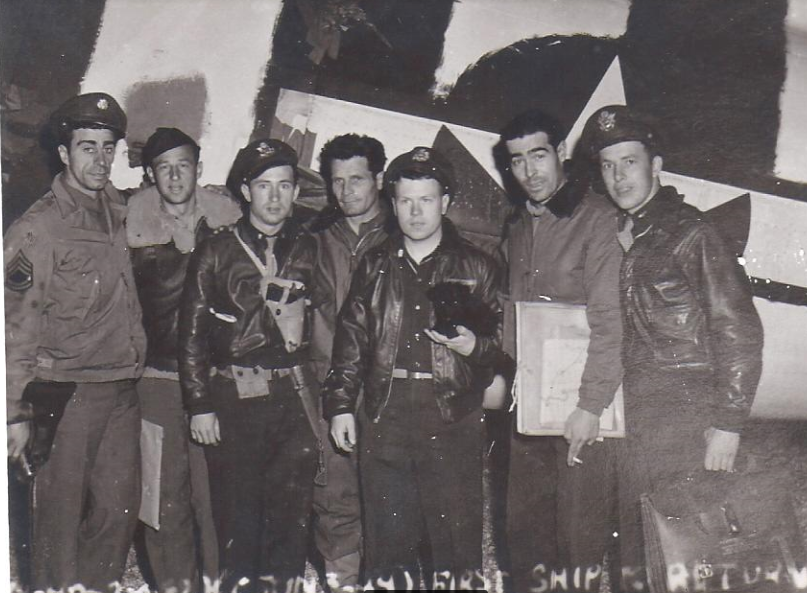
Wilson’s experience had the added (albeit unwanted) excitement of his getting hit by shrapnel at some point in the flight. The story was recounted to Barney Blankenship’s family when he told them Lt. Col. Donalson, not flying at the time, went to the radio compartment of the C-47 to help treat the wounded radio operator. Following the end of WWII, each man returned home and had post-war experiences as varied as their lives before the war. John Donalson returned to Alabama and was instrumental in ensuring the 106th Observation Squadron, which had been activated and sent to the South Pacific, was returned to state control. He remained in the Air National Guard and even served briefly as the state’s adjutant general. Major General John Donalson passed away in Alabama on June 10, 1987, at the age of 85. David Daniel also chose to remain in the military, but on active duty with the newly formed US Air Force. The Selma native remained in the troop carrier/airlift community, flying in the Korean War and serving in various command positions throughout the world. The veteran pilot retired in 1970 as the director of operations for the Military Air Transport Service at McGuire AFB, New Jersey. Daniel died in 1997 in Austin, Texas. Throughout the war, Blankenship thought of only one thing: returning to the family farm in southeast Missouri. In 1945, Blankenship did that very thing but brought with him his British bride. The former Betty “Hettie” Belnikoff had been born and raised in London and was serving with the Auxiliary Territorial Service when she met a young Lieutenant Blankenship at a dance. The two married, and Blankenship brought his young bride, used to the hustle and bustle of London, to a small farm town in southeast Missouri, where they raised five children. Through the years, Blankenship would make multiple trips back to England with Betty to visit family. She referred to those visits as “going home.” Blankenship passed away on April 26, 1983, in Sikeston, Missouri. After the war, John Shallcross took advantage of the GI Bill and returned to Illinois, where he attended the University of Illinois. After graduating in 1950, Shallcross married Marcia Keel before the two moved to California. There Shallcross became heavily involved in civic clubs and worked in the insurance industry. Raising two kids along with his wife in Granite Bay, California, John Shallcross was the last member of the crew of “That’s All Brother” to pass away when he died on February 9, 2009, a month shy of his 91st birthday. Though he appears to have only flown one mission with the crew of “That’s All Brother,” Bob Groswird was the youngest member of the crew. Groswird had some tough times after the war, which included marrying and divorcing twice in the first few years he was back in the states, as well as getting arrested for DUI following a car accident in 1956. Despite this, he too chose to continue his educational career and was accepted into the University of San Francisco School of Law. Passing the bar in 1957, Groswird focused his practice on bankruptcy law, frequently representing lending institutions. Despite being the youngest member of the crew, Bob Groswird was the first to pass away when he died in California in 1981 at age 62. After returning to the States following WWII, Wilson initially settled down in Selma for about a year before choosing to use the skills he had learned in the Army Air Force with the airlines. Taking a job with Pan American, Wilson moved to Miami in 1946. He married Florence Woolley Dameron on November 27, 1952, in her hometown of Atlanta. Described by Wilson’s nephew as “the love of his life,” Florence passed away in 1962, and Woodrow never remarried. The radio operator who had been wounded on the historic flight on June 6 passed away in Miami on September 3, 2001. The most mysterious member of the crew of “That’s All Brother” is Harry Chalfant. Very little is known about his post-war life beyond the fact that he chose to remain in the Air Force Reserve for a few years following the war. Assigned to a unit in Massachusetts, Chalfant married Grace Elizabeth Breinig in 1950, but it appears the two did not have any children. After leaving the Air Force Reserve as a Tech Sergeant, Chalfant and his wife moved to South Carolina for a number of years, but it is not known why Chalfant passed away on the other side of the country in San Diego in 1984. Their post-war lives were as varied as their occupations and experiences before the war. But on the evening of June 5th, 1944, seven men from across the U.S. came together to accomplish a nearly impossible task. With hardly any experience among them, the men who ranged in age from 25 to 42 and who rose to young adulthood and seemed to have little in common, relied on their shared training and accomplished extraordinary things. And, when the “eyes of the world” were upon them, they relied on each other and kicked off the liberation of Europe.
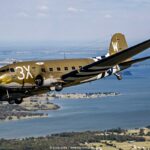






The … ”That’s All, Brother” … crew, just a bunch of ordinary men thrust into an extraordinary experience, in extraordinary times, and expected to ‘Work- Miracles’, as routine; a small but very vital piece of the Whole Jigsaw.
What people forget is that, flying from England, the Weather is Not Your Friend. Frequently fickle – being an (large) Island the Weather usually – though Not Always – comes off the Atlantic; you can experience Winter, Spring, Summer and Autumn … All In One Day … Plus FOG!
And don’t forget, the Normandy Invasion was postponed 24 hours … Because of Storms; just a little bit of … ‘Additional Excitement’!
And, of course, the Germans weren’t too happy about you Over-Flying their Atlantic Wall; making their feelings known in a Very Business Like Manner!
So, All-In-All, the flights to and from Normandy were no … ‘Day Excursion Freeby’.
But, as All Service Men Know … Duty Is Duty, and … ‘When You Gotta Go, You Gotta Go’.