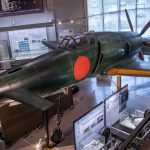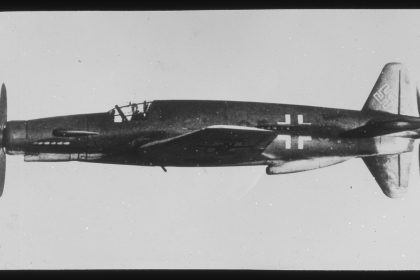
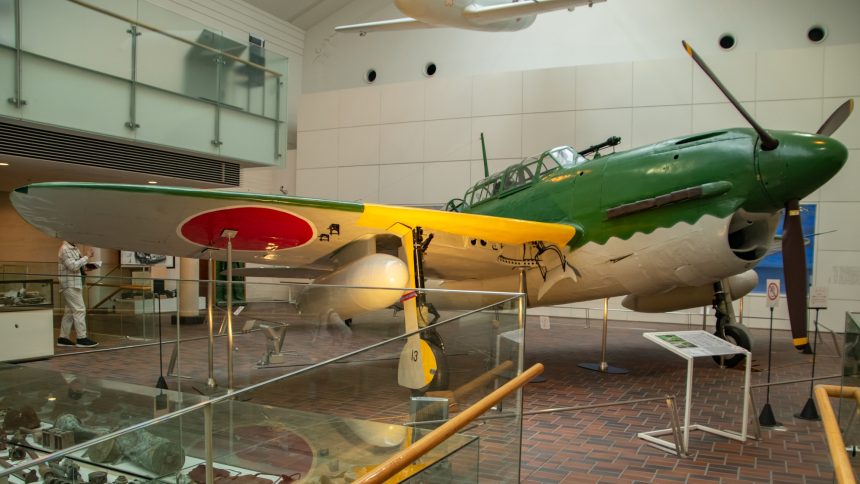

Located near the Imperial Palace in central Tokyo, the Yasukuni Jinja Shrine is Japan’s national memorial to its war dead and one of the most frequented religious sites in the country. Within the grounds of this highly symbolic place is the Yushukan, a military museum and research center. Owing to its unapologetic stance on Japanese war crimes, the Yushukan sits uncomfortably with many Western visitors, but for those with an interest in military history, it is a must-see site because of the artefacts within its deathly quiet halls. Signs written in Japanese and English warn visitors to look on in silence and refrain from lengthy explanations of what they see! Of specific interest to us is the only complete example of the Yokosuka D4Y2 Suisei (Comet) dive bomber, or “Judy” to the Allies. Many years ago, I went to the Yushukan especially for a date with Judy. More than a quarter of a century later, I returned, this time to examine her in greater detail. What follows is the story and detailed description of this much underrated aircraft.
(Image credit: Grant Trevor Newman)
Incorporating aerodynamic refinements not normally seen in this class of warplane, the Yokosuka D4Y was an attractive two-seat dive bomber powered by a single 1,265-hp (1,400 emergency power) Aichi Atsuta AE1P 32 12-cylinder inverted-vee engine. Later variants had this replaced with more reliable radial engines, either the 1,560 hp Mitsubishi Kinsei 62 14-cylinder radial or the 1,825 hp Nakajima Homare 12 18-cylinder radial in the D4Y5 model. With a maximum speed of 360 mph at 17,225 feet, the Suisei was the fastest carrier-based single-engined bomber of the war, capable of outrunning a Grumman F4F Wildcat single-seat fighter in level flight. With the D4Y1-C reconnaissance bomber variant possessing a maximum range of 2,100 nautical miles, the Imperial Japanese Navy (IJN) had a potent warplane indeed in the Suisei.
(Image credit: Grant Trevor Newman)
Although its development and subsequent career, covered in depth elsewhere, were not especially auspicious, the type was responsible for inflicting considerable damage on US warships during the Battle of Leyte Gulf. On October 24th, 1944, the Independence-class light aircraft carrier USS Princeton was attacked by a single D4Y, and the damage was so severe that the stricken carrier was scuttled. The Essex-class fleet carrier USS Franklin was also hit by two bombs dropped by a D4Y, resulting in severe damage and the loss of 807 of the “Big Ben’s” crew.

D4Y night fighters armed with a single Type 99 20 mm Model 2 cannon fixed in the aft cockpit to fire obliquely forward claimed several B-29 Superfortresses during night raids on the Japanese home islands in the last months of the war. At the war’s end, however, many Suiseis had been wasted as suicide bombers. A total of 2,038 D4Ys were produced between 1940 and 1945, which is remarkable given that, because of the constant system failures and poor engine reliability plaguing the type in service, the IJN regarded it as “too complex and delicate to be a practical aircraft.”
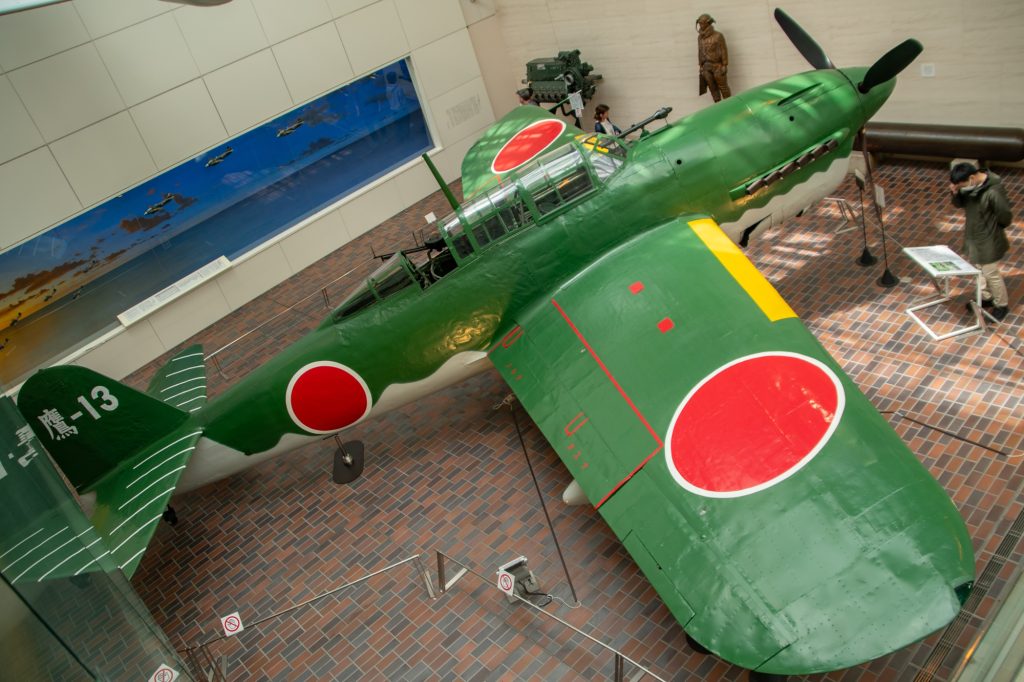
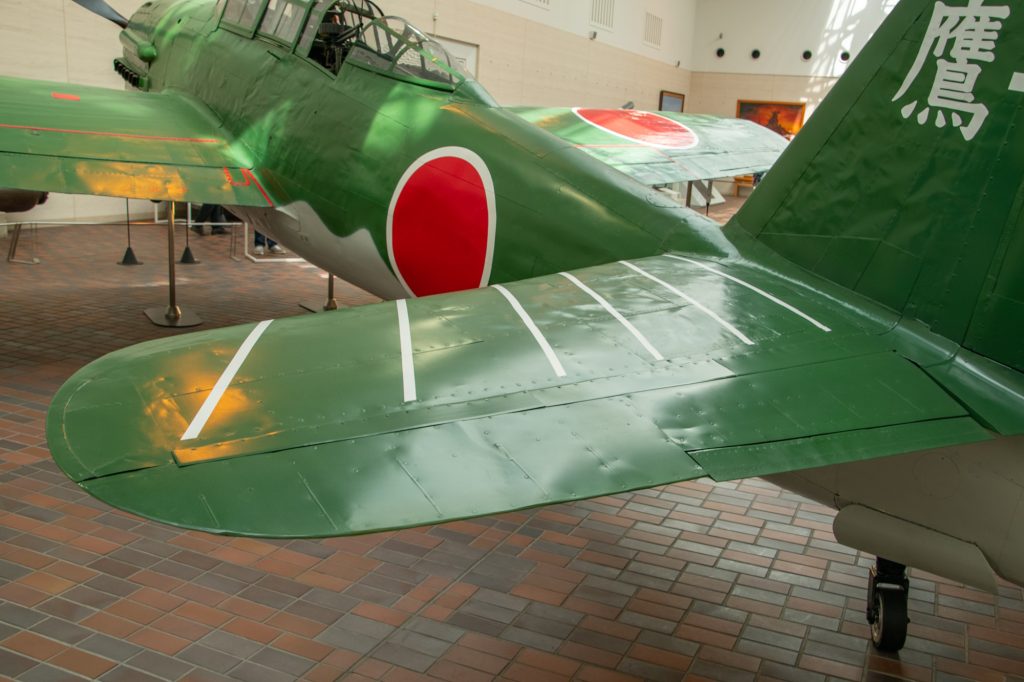
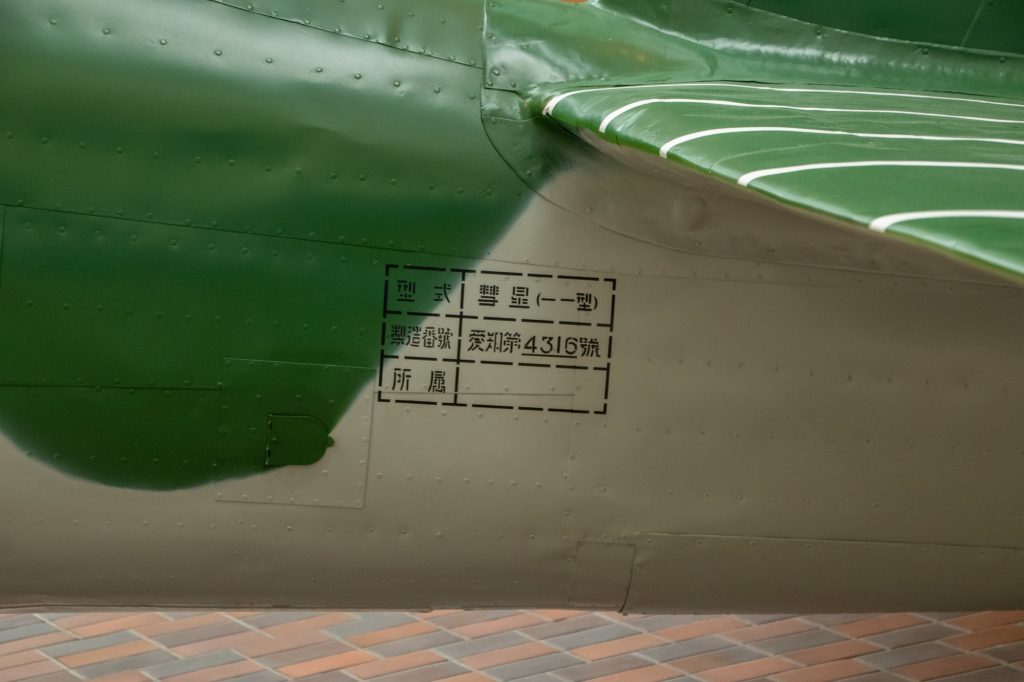
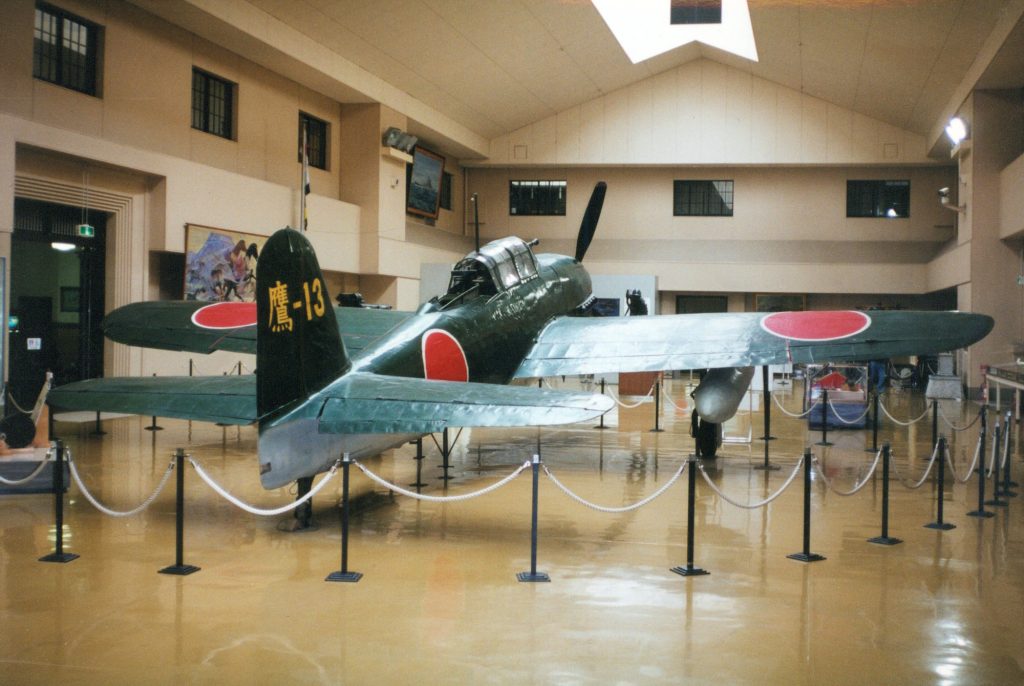
Discovered derelict off the edge of the overgrown runway of Colonia Airfield on the island of Yap in the Carolines in 1972, the Yushukan’s Suisei is a composite construction of D4Y2 components mated to the fuselage of a D4Y1. After recovery from the Carolines in 1980 under the supervision of businessman Nobuhiko Endo, the remains were transported to Japan Ground Self-Defense Force Camp Kisarazu, which had formerly been an Imperial Japanese Naval air station during WWII. With sponsorship from the Nihon Television Company Ltd., 220 volunteers took a total of 75 days to rebuild it to display condition inside Hangar G at Kisarazu. Assigned serial no. 4316, the completed aircraft was finished as a machine of the 523rd Kokutai in Imperial Japanese Navy (IJN) dark green top surfaces and light grey undersides, with yellow “Taka-13” markings on each side of the fin. Upon completion on November 29, 1979, amid much publicity, the Suisei was rolled out onto the airfield for a short ceremony, after which the restorers symbolically pushed it along Kisarazu’s runway, from where it had taken off on its final flight in Japan 37 years earlier. On April 5, 1988, the completed aircraft was donated to the Yushukan and placed on display in the main hall, where it remains to this day. Over the years, thanks to the efforts of researcher Shoichi Tanaka and Yushukan curators, additions have been made to the aircraft, including a refresh of its color scheme in 2016, when it was painted in a carefully researched light green topside color. The Taka-13 markings on the fin are now in white, with white diagonal aiming stripes for the rear gunner on the horizontal stabilizer upper surfaces. Accurate cautionary markings have also been added to the aircraft, increasing its authentic appearance overall.

Period features added since construction include an original Type 92 7.7 mm machine gun, which had been donated to the museum, an original spinner fitted to the propeller assembly, and underwing fuel tanks that have been reshaped to match their correct profile. New items manufactured from scratch include a spring-loaded footstep on the left side of the fuselage, tail undercarriage doors, and a new tailwheel, all of which have been carefully replicated from original components.
(Image credit: Grant Trevor Newman)
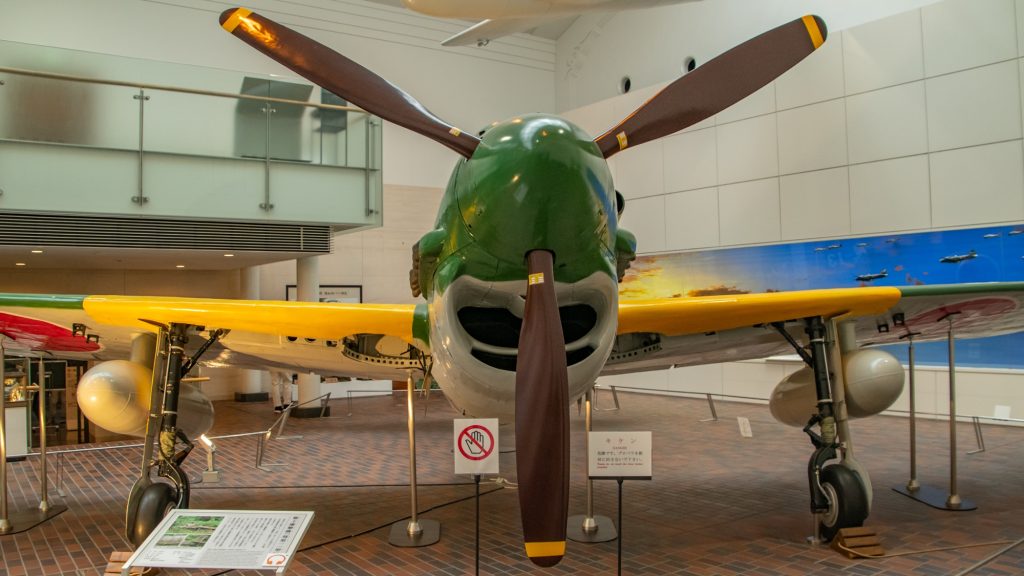
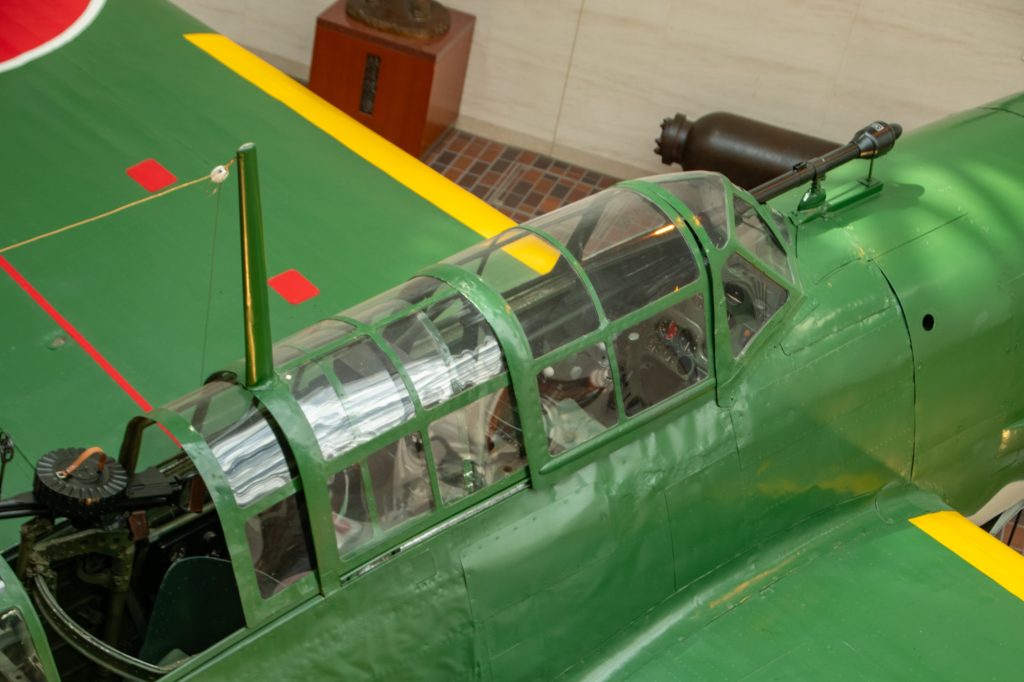
Embodying all-metal construction typical of the early 1940s, the D4Y2 in the Yushukan is a single-engined, two-place monoplane fitted with a mid-positioned, single-piece, two-spar wing. Constructed of an entirely flush-riveted outer skin of lightweight aluminum alloy, the D4Y2’s 33.5-foot-long fuselage is of oval cross-section and contains the two cockpits for the pilot and navigator/radio operator/rear gunner, or simply the observer, below a five-piece-sectioned metal-framed, clear Perspex canopy. Of these, the foremost and center sections are fixed, with the covers over the individual cockpits sliding rearward and forward, respectively, while the rearmost tapered section rolls 180 degrees within the rear fuselage to provide obstruction-free firing for the rear gun.
(Image credit: Grant Trevor Newman)
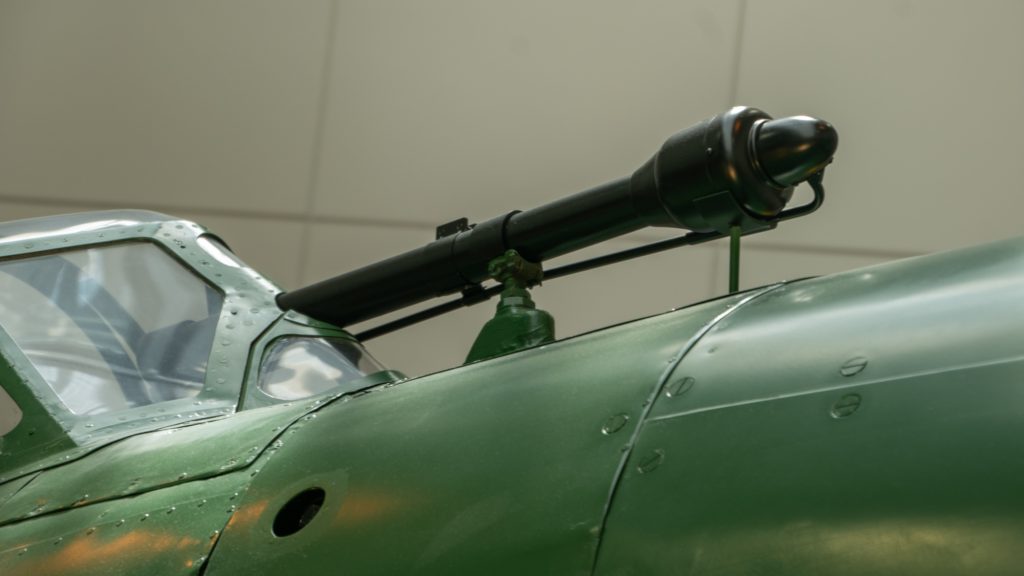
Ahead of the pilot was a multifaceted, entirely Perspex windshield through which a tubular Type 2 Model 1 optical bombsight passes. This has a hinged front cone, which provides a streamlined protective cover over the lens. On either side of the pilot’s instrument panel is the breech of a Type 97 7.7 mm machine gun, with 400 rounds per gun, that fires through openings in the upper forward cowl above the inverted vee-12 engine.
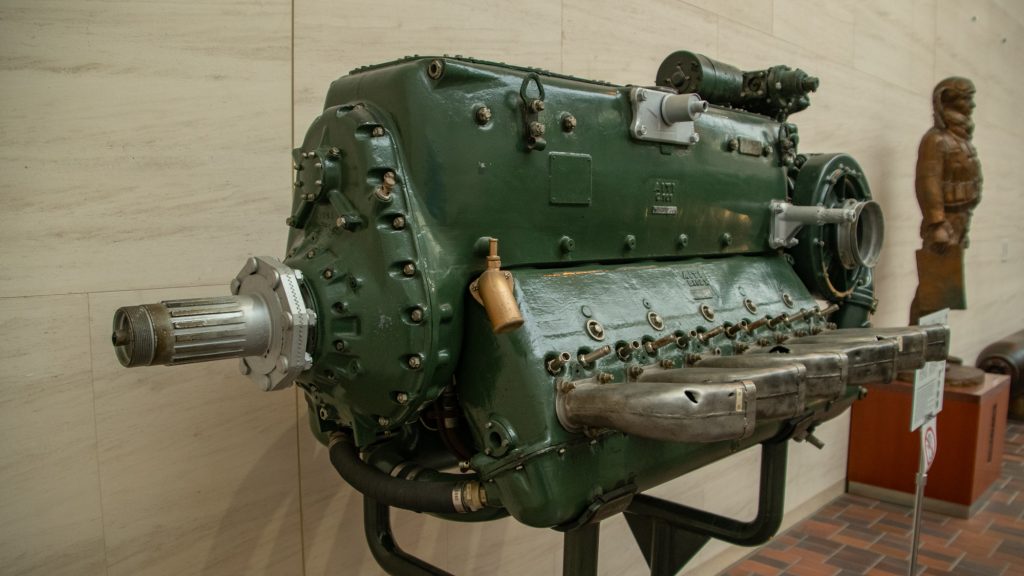
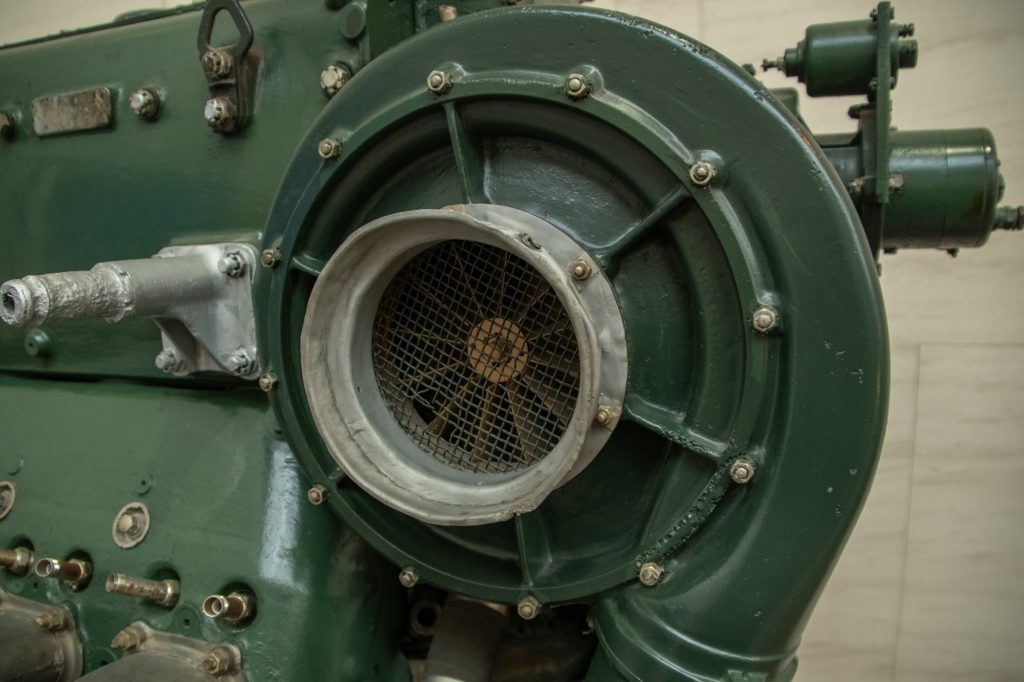
This was a liquid-cooled, direct-injected, 33.93-liter, supercharged, license-manufactured Daimler-Benz DB 601A, with its cylinders arranged at 60 degrees from each other. A truncated intake on the left-hand side of the engine cowl provided ram air for the engine’s geared single-speed supercharger, which was mounted perpendicular to the direction of flight in a housing at the aft end of the engine casing. Directly aft of the engine, against the firewall, is a generously proportioned oil tank. Absorbing the engine’s power output is a three-blade Sumitomo KL-18 counterweighted, non-feathering constant-speed propeller of 10.5-foot diameter, the hub of which is fully enclosed in a streamlined spinner.
(Image credit: Grant Trevor Newman)
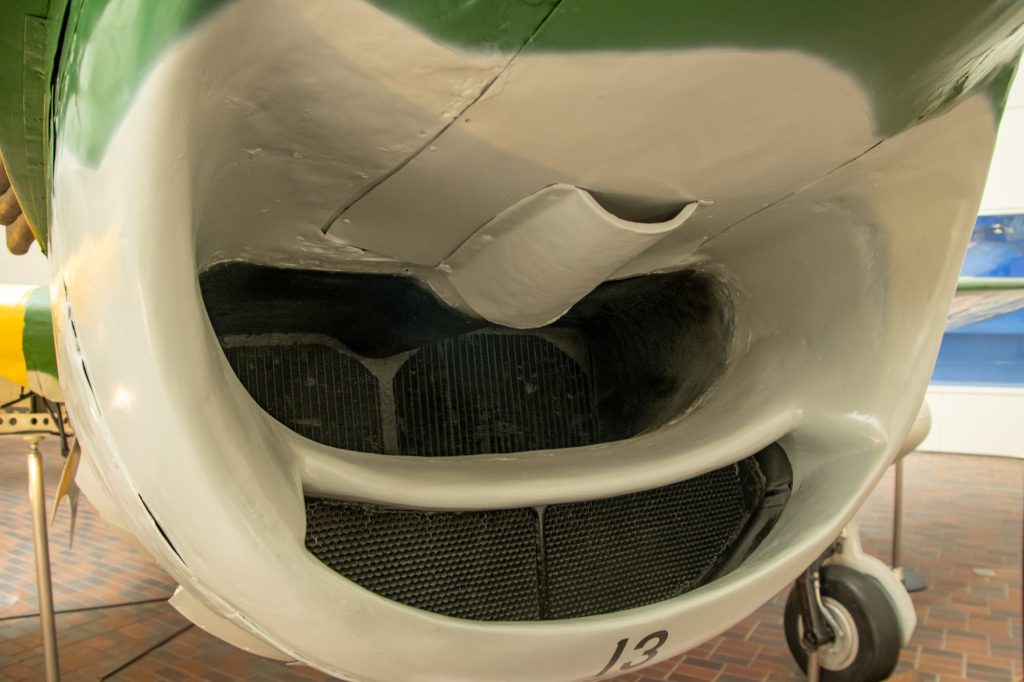
Directly below the propeller is a gaping maw resembling the open mouth of a basking shark, which houses the glycol coolant radiator and, below it in separate ducting, the oil cooler. Aft of the intake opening and faired into the lower cowl are separate actuating petals for outflow for both the oil cooler, forward, and the radiator aft. Exhaust exits the engine through six individual ejector ports attached to the engine cylinder blocks that protrude on each side of the lower engine cowl.
(Image credit: Grant Trevor Newman)
The pilot’s instrument panel is horizontally split into two sections, with the normal range of Japanese flight instruments scattered across the upper panel, while the lower panel incorporates engine and indicating instruments, including prominent circular flap and dive brake position indicators and function switches. The pilot’s flight controls are conventional, comprising a single joystick and a rudder bar, with power and propeller control levers mounted in the usual position on the pilot’s left console. The pilot’s seat was vertically adjustable. Electrically actuated systems included flaps, undercarriage, and bomb bay doors, although there was an ingenious manual selecting system in case of electrical failure. This comprised a single box with a hand crank and selector arm for the different functions, which is located on the right-hand side of the pilot’s cockpit. The electrical system proved troublesome in service, requiring considerable maintenance.
(Image credit: Grant Trevor Newman)
(Image credit: Grant Trevor Newman)
Aft of the pilot’s seat is a tubular roll bar, then the radio rack, behind which the observer sat on a swiveling seat that enabled him to face forward to operate equipment ahead of him and turn to the rear gun behind him. Equipment mounted ahead of the observer comprised a Navy Type 96 Ku No. 2 transceiver box, which was standard equipment aboard IJN aircraft. A prominent radio aerial is attached to the fixed center canopy, with a cable exiting the fuselage on the left side of the rear cockpit and extending from the mast to the vertical fin. Above the radio set was a Type 0 Model 1 Kai magnetic floating compass to the left and a Navy Type 1 Model 3 gyro-stabilized inclinometer to the right. To the lower left of the observer’s seat is the drum for a trailing antenna, which exited through an orifice in the lower fuselage forward of the left-hand wing trailing edge. To the observer’s right was a Type 1 Ku Mk. 3 radio direction finder, whose hoop aerial was located in the lower rear fuselage. Standing vertically to the observer’s right is a Navy Type 2 Mk. 1 Gun/Bombsight Type 1, comprising an optical device on top of a vertical tubular mounting that protrudes out the right-hand lower fuselage below the right-hand wing fairing. This was the optical component of a mechanical computing system centered on the Navy Type 1 Model 3 gyro-stabilized inclinometer, which, when programmed with precise information, gave the position and the dive angle that the observer passed to the pilot. The observer would enter information such as dive speed, target speed and direction, and bomb-release altitude into the device, which would then calculate the correction angle to be entered into the bombsight reticle for optical confirmation.
(Image credit: Grant Trevor Newman)
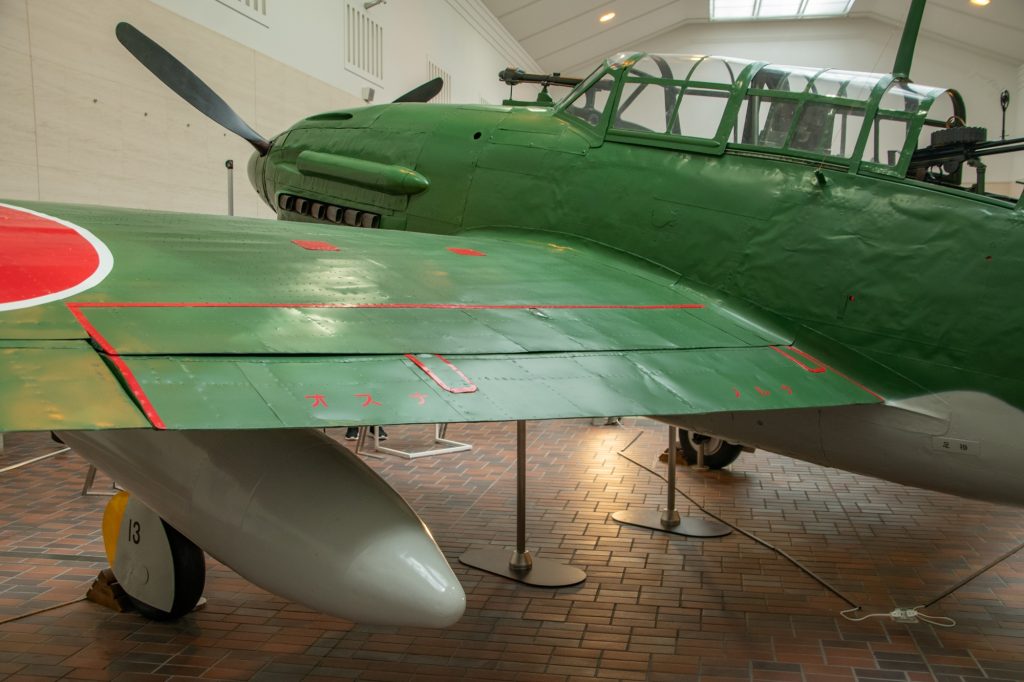
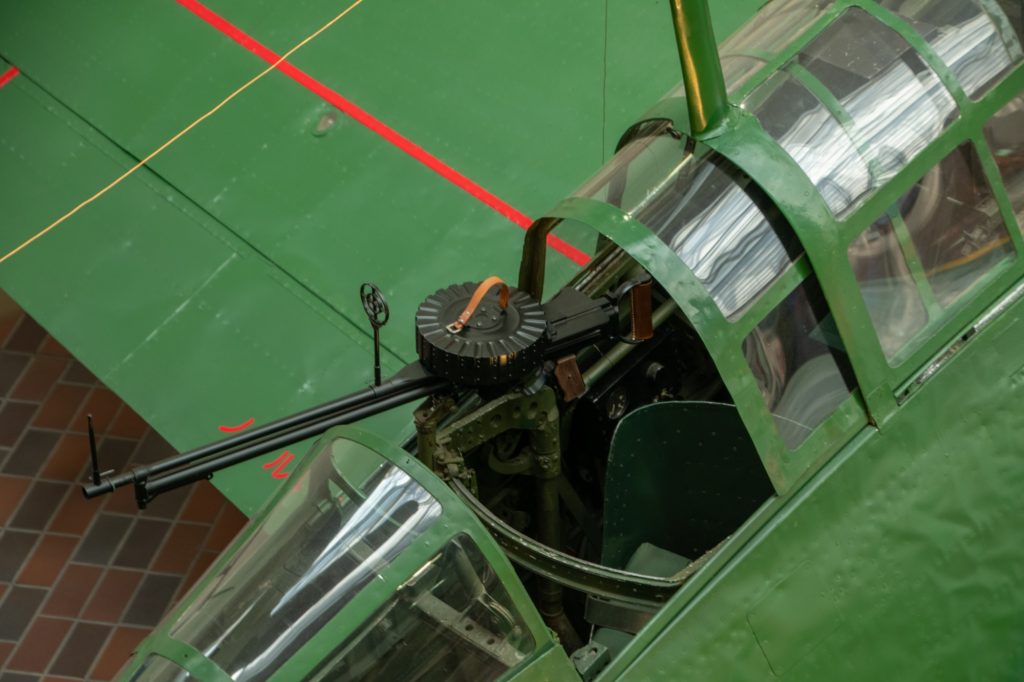
The rear armament comprises a manually operated Type 92 7.7 mm machine gun mounted on an articulated semicircular ring capable of vertical elevation, whose ammunition is provided in a single drum containing 97 rounds. This weapon is a license-built BSA .303 Lewis machine gun, which was widely applied aboard IJN aircraft. At least four ammunition drums were nominally provided in the rear cockpit. Access to the cockpits was via two spring-loaded retractable pegs on the left side of the fuselage over the inboard wing. These were intended to prevent aircrew from standing on the wing trailing edge, prominently marked by a red border on the wing surface.
(Image credit: Grant Trevor Newman)
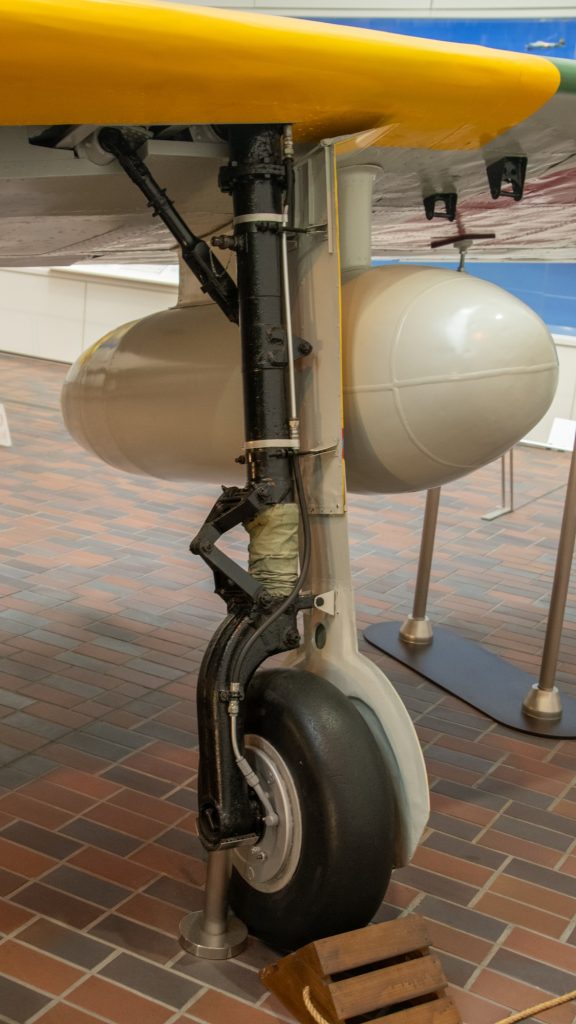
In the D4Y2, neither the pilot nor observer had armor plating, although in the D4Y5 model, a slab of armor was provided aft of the pilot’s head, and a 75 mm-thick plate of armored glass was fitted in the windshield. Mounted on the right-hand side of the aft cockpit are three oxygen bottles, with three more in the left-hand rear fuselage. The cockpit is mounted directly on top of the aircraft’s one-piece cantilever wing, which comprises two I-section spars, the forward main spar being full-span, while the rear was half-span to the outer edge of the flap channel, with interspersed lateral ribs to support the outer skin. The aircraft’s wingspan was 37.7 feet, with a wing area of 254 sq ft and dihedral on each side of +3.5 degrees. Forward of the main spar was the main undercarriage leg orifice inboard, which was completely enclosed by three-piece doors fitted to the fully retractable legs and a semicircular inner door that is mechanically closed by the movement of the retracting main gear. The gear legs are electrically actuated to fold inwards and are pulled up by a diagonal hydraulic drag brace attaching to the upper inside leg. When extended, the legs give a wide track of 15.2 feet. Each wheel is 20 inches in diameter, with a 600 mm-wide tire, the hub of which is fitted with a hydraulic drum brake.
(Image credit: Grant Trevor Newman)
Directly aft of the main wing spar inboard are two fuel tanks on each side, with a total of 780 liters (206 US gal) in all four, while a single fuselage-mounted fuel tank below the cockpit contained 260 liters (68.6 US gal), for a total of 1,040 liters (274.6 US gal) of internal fuel. An external tank is fitted outboard of each undercarriage leg, carrying 305 liters (80.5 US gal) each. None of the D4Y2’s fuel tanks had the rubberized protective linings installed in later Suisei variants.
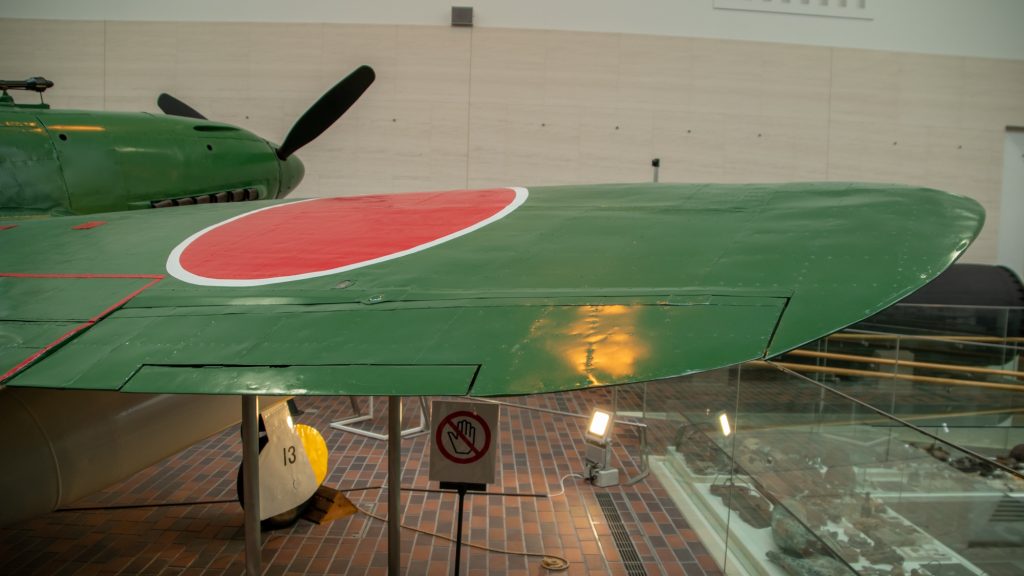
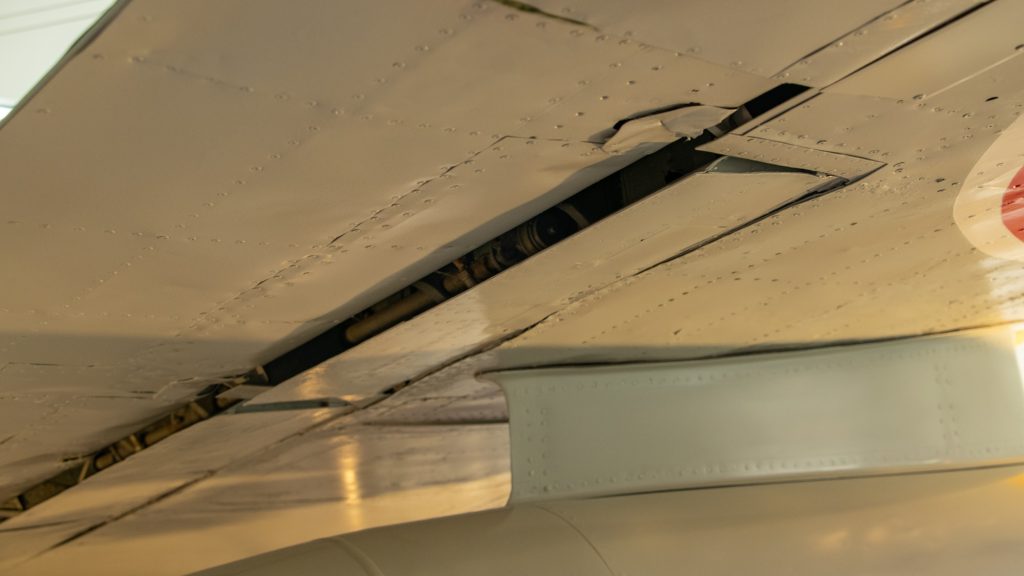
Aft of the rear spar are electrically actuated Fowler flaps and dive brakes. The flaps are single-piece and are retracted on four rails inset into the upper wing. Driven by torque tubes, they extend to a maximum of 40 degrees, while the trailing edge is exposed on the topside of the wing when fully retracted. The dive brakes are sectioned into three lengths on either side immediately forward of the flaps and sit flush with the underside of the wing when not in use. They are 6.2 sq ft in total area and open to a maximum angle of -70 degrees. When the flaps are extended, the dive brakes close upwards to lie flush with the foremost edge of the flap recess, providing a clean channel for airflow between the wing and flap, increasing flap effectiveness at low speeds.
Outboard of the flaps are the ailerons, which are all-metal Frise-type and are actuated by torque tubes rather than cables, as are all flight controls, giving positive authority during manoeuvres. All of the primary flight controls are fitted with flight-adjustable trim tabs, which hints at a comfortable flying experience during long-endurance flights. The horizontal tailplane and vertical fin are of cantilever design, with all-metal control surfaces actuated by torque tubes. The tailplane’s span is 8.7 feet, while the vertical fin’s height is 5.3 feet above the ground.
(Image credit: Grant Trevor Newman)
Below the vertical fin is the tailwheel bay, with two doors that fully enclose the retractable gear in flight. The wheel is an aluminum-alloy hub with a 200 mm-wide solid rubber tire. Forward of the tailwheel bay is the 3-foot-long arrestor hook, which sits in a longitudinal recess, rendering it invisible when viewed from the side. It is anchored to a structural support on the floor in the aft cockpit.
(Image credit: Grant Trevor Newman)
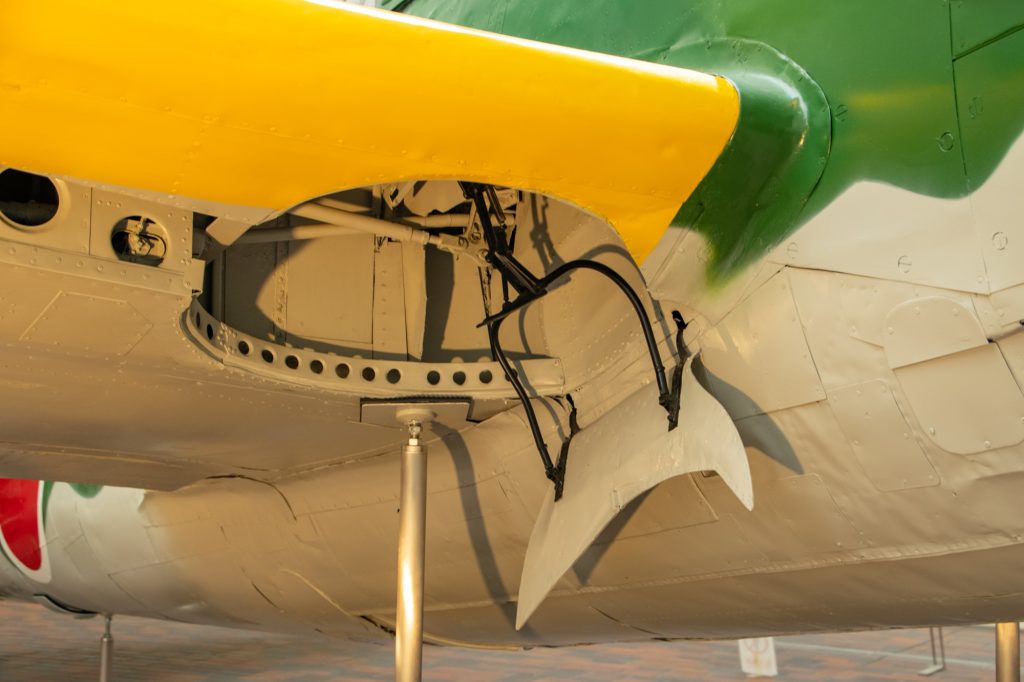
Finally, below the center wing fuel tank is the internal bomb bay, which is 7.3 feet long, 1.9 feet wide at the front increasing to 2.1 feet aft, and 1.3 feet deep. The bay is fully enclosed with full-span electrically actuated doors on each side. Typical internal payload was either a 500 kg (1,100 lb) bomb or one 250 kg (551 lb) bomb. Inside the bay, the bomb was attached to a three-pronged yoke at the end of a spring-tensioned swing arm that lowered it out of the bomb bay to enable it to drop below the propeller arc when the aircraft was in a dive.
(Image credit: Grant Trevor Newman)
This, then, is Judy, the last surviving D4Y2. It is an example of the superlative Comet that the IJN hoped would continue the momentum of its early war conquests, but whose own shortfalls and the timely intervention of an increasingly belligerent US Navy largely rendered it impotent. Despite a disappointing career, it was the most promising single-engined bomber that saw operational service during WWII. It is fortunate for the Allies that its designers with the Dai-Ichi Kaigun Koku Gijitsusho at Yokosuka were not able to rectify its shortcomings early on. For more information about the Yushukan Museum, visit https://www.yasukuni.or.jp/english/yushukan/
(Image credit: Grant Trevor Newman)