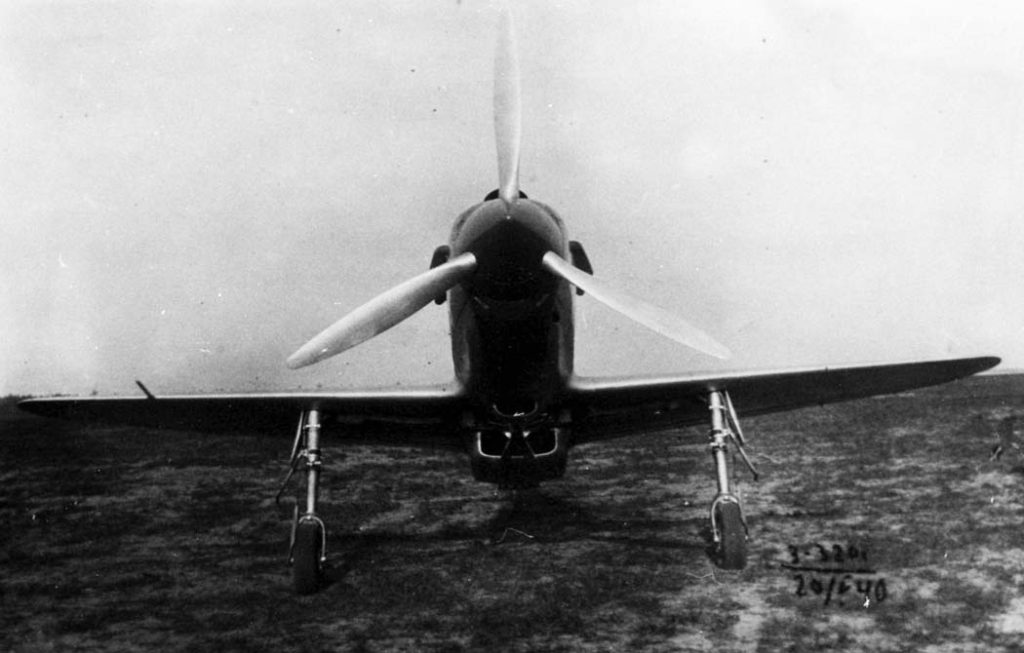
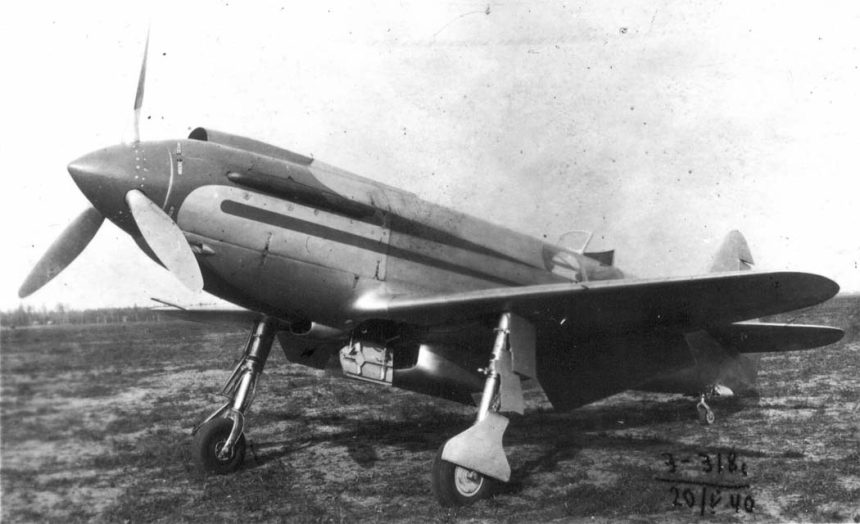


In the late 1930s, the Soviets wanted to build an experimental aircraft to test high-speed capabilities. As a result, in 1938, designer Matus Ruvimovich Bisnovat was granted permission to establish his own experimental design bureau and to work on a new high-speed research aircraft, designated the Bisnovat SK-1. The aircraft was intended to achieve speeds of 430 to 500 mph. The engineers wanted to achieve such high speeds by applying better aerodynamic methods and a small wing with an area of just 102 square feet. They also planned to test different replacement wings with various profiles to assess stability and control under high wing loading.
Design of Bisnovat SK-1
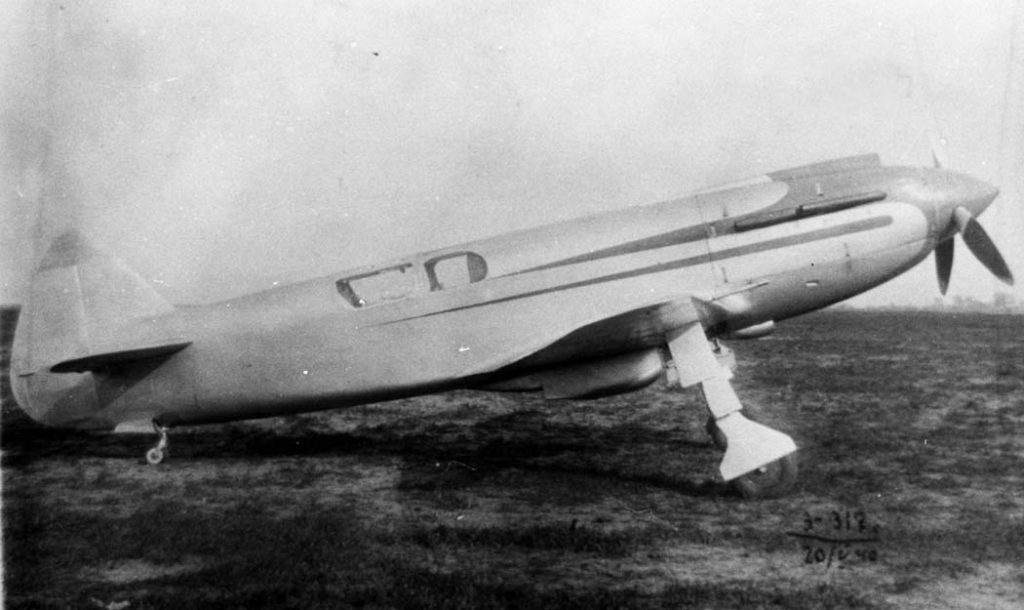
The Bisnovat SK-1 aircraft had a very narrow fuselage, measuring only 9 square feet at its widest point. The cockpit canopy was level with the top of the fuselage. The pilot’s seat in the cockpit could be hydraulically raised during takeoff and landing, raising the canopy roof to act as a windscreen during landing. The SK-1 was built of light materials, with a smooth outer surface. Its wings had a simple design, with a single-plate spar, and were covered with lightweight sheets polished to a shiny finish. The initial wing shape was based on the NACA 230 airfoil and featured slotted Vlasov-style flaps. The ailerons were also covered with fabric. The tail unit had fabric-covered control surfaces and trim tabs, with all controls perfectly balanced for mass. The single-seat aircraft was 26.3 feet long and had a wingspan of 23.7 feet. The empty weight of the aircraft was 3,318 pounds, and the gross weight was 4,630 pounds. It was powered by a Klimov M-105 V-12 liquid-cooled piston aircraft engine, producing 1,050 horsepower. The engine was installed to reduce drag and used a pressurized coolant system, which only needed a radiator about half the size of a similar unpressurized system. The main and tail landing gear could retract hydraulically, and the doors could close fully, further reducing drag.
The Legacy
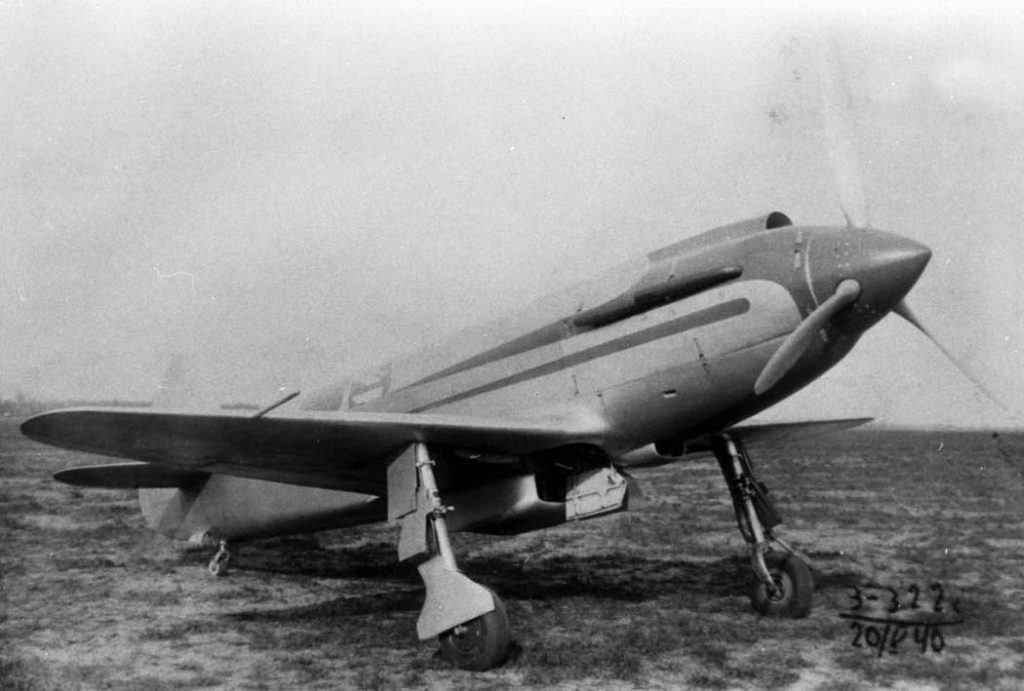
The Bisnovat SK-1 aircraft began testing in the spring of 1940. It first flew on skis and did not have retractable landing gear installed. Test pilot GM Shiyanov reported that the aircraft had stability issues and that the engine oil overheated. On March 26, 1940, during landing, the flaps opened incorrectly, which almost caused a crash. However, during continuous testing, the Bisnovat SK-1 reached a speed of 358 mph at an altitude of 5,500 m. This speed was enough for the first stage of tests. All flight stability tests finished on July 5, 1940, and the test report was ready by August 1. The main issue with the aircraft was the lack of a standard pilot’s canopy, which made flying difficult and was planned to be fixed in a second version, called the SK-2. The SK-2 was developed and flew in the late 1940s. In the Grounded Dreams series, the Bisnovat SK-1 was not exactly canceled, but it marked a new beginning for the Soviet aircraft industry. The SK-1 performed well, which helped to develop the fighter-focused SK-2. The flight tests from the SK-2 were used to improve future Soviet fighters, allowing them to carry heavier wings and use more powerful engines. Read more Grounded Dreams articles HERE.