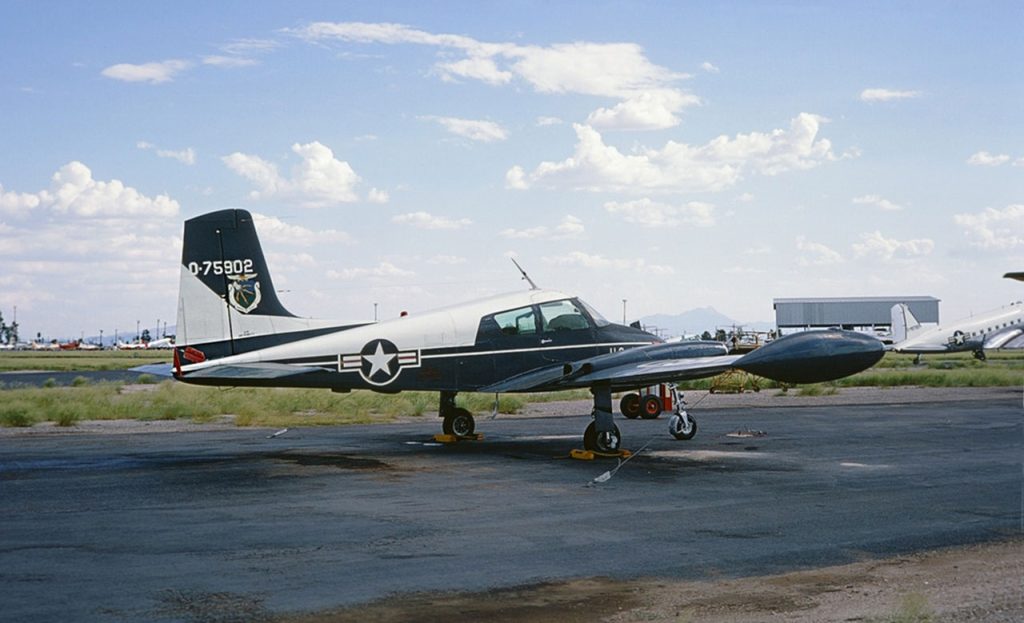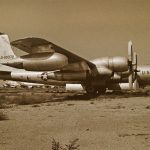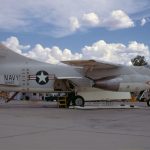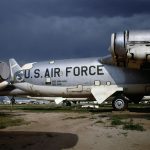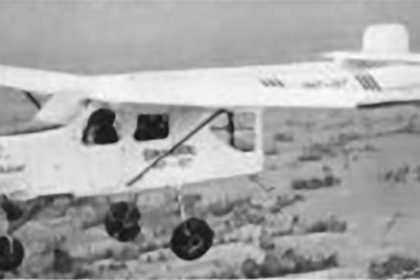
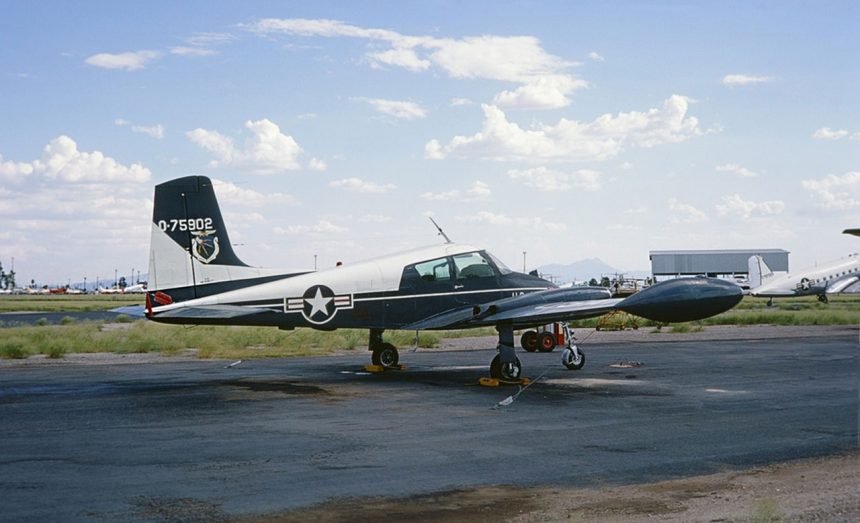

As we continue the Boneyard Files series, which showcases some of the retired aircraft resting at Davis-Monthan Air Force Base in Tucson, Arizona, in the late 1960s, today’s story features the Cessna U-3A through the lens of Neil Aird and Tom Baillie’s “Monthan Memories” photos. The U-3, commonly called the “Blue Canoe” in the US Air Force, was the military version of the Cessna 310 twin-engine transport. Its prototype flew for the first time on January 3, 1953, and production for civilian use began in 1954. In 1957, the US Air Force selected the aircraft for light administrative tasks, cargo transport, and utility transport. The Air Force eventually purchased 160 of these planes, initially designated L-27A, which were later redesignated U-3A.
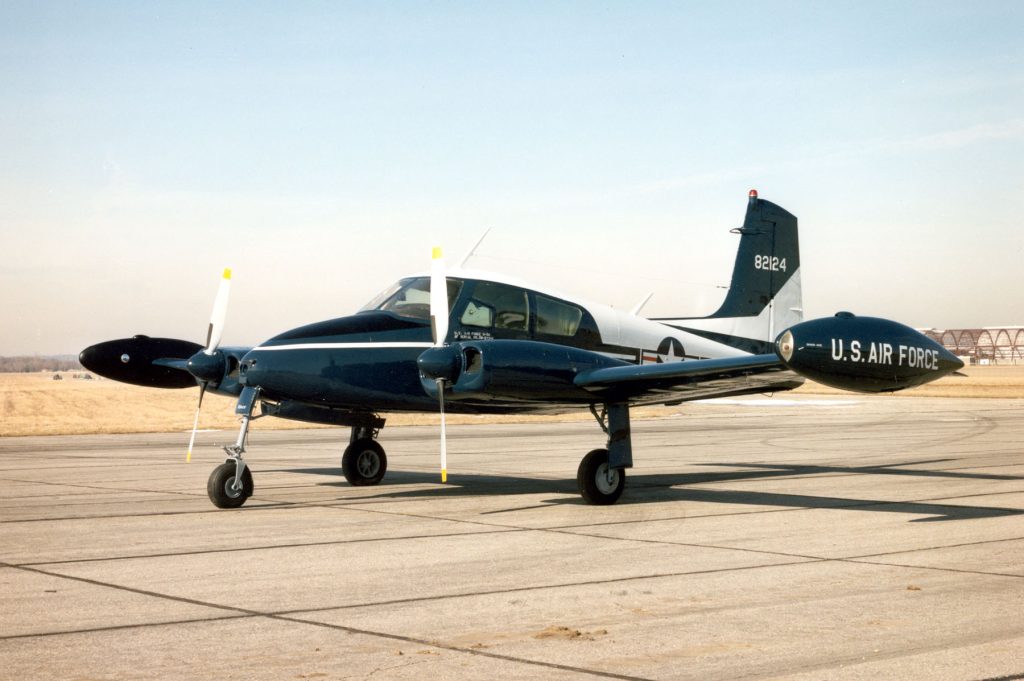
The Cessna U-3A was 27 feet long, 10.5 feet high, with a wingspan of 35.8 feet. Its empty weight was 3,347 pounds, and it was powered by two Continental O-470-M engines, each producing 240 horsepower. The maximum speed of the aircraft was 238 mph, the range was 900 miles, and the service ceiling was 22,000 feet. In 1960-1961, the service received 35 more U-3Bs, which had better engines, extra cabin windows, a longer nose, and a swept vertical fin for all-weather capability. A study by the US Air Force found that the U-3A had operating costs of under $12 an hour after one year of use. In addition to providing staff and administrative support to units around the world, the U-3A helped in testing new avionics equipment and conducting military navigation route surveys. In May 1963, US Air Force Cessna U-3As arrived in Vietnam to transport reconnaissance films and photographs, as well as intelligence reports, to combat units. The Cessna U-3A also played a support role, helping with courier flights between air bases in South Vietnam.
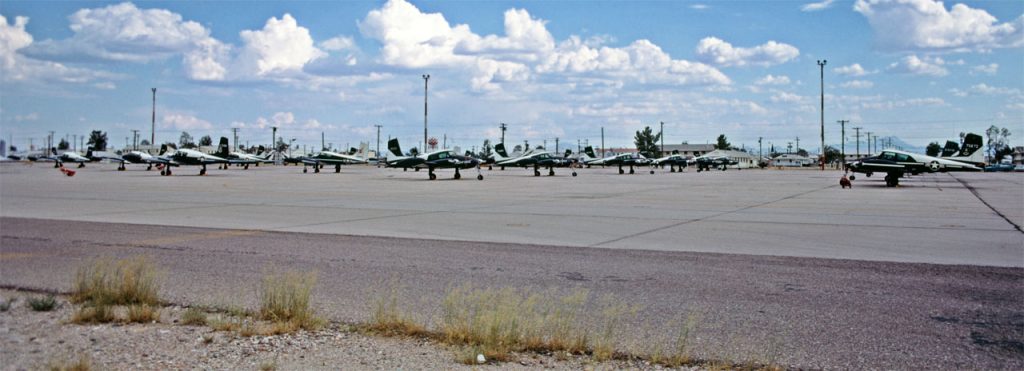
Some US Air Force planes were later given to the US Army and US Navy. The U-3 was used by the military until the mid-1970s. In the late 1960s, the 100th Strategic Reconnaissance Wing (SRW) at Davis-Monthan AFB used the U‑3A as a chase plane and a trainer for its Lockheed U‑2s. The Cessna U-3A was chosen because it had a control yoke and handled well at slow speeds. It could intercept a descending U‑2 at altitudes of 15,000 to 18,000 feet and match its descent and pattern speeds. The 100th SRW usually used two Cessna U-3A planes and had three trained pilots. The planes helped with pre-solo training, provided safety escorts after long solo flights, and handled emergency chases. Some of the Cessna U-3As were also retired in the mid-to-late 1960s, which were seen at the Davis-Monthan Air Force Base, known as “The Boneyard.” Read more Boneyard Files Articles HERE.