





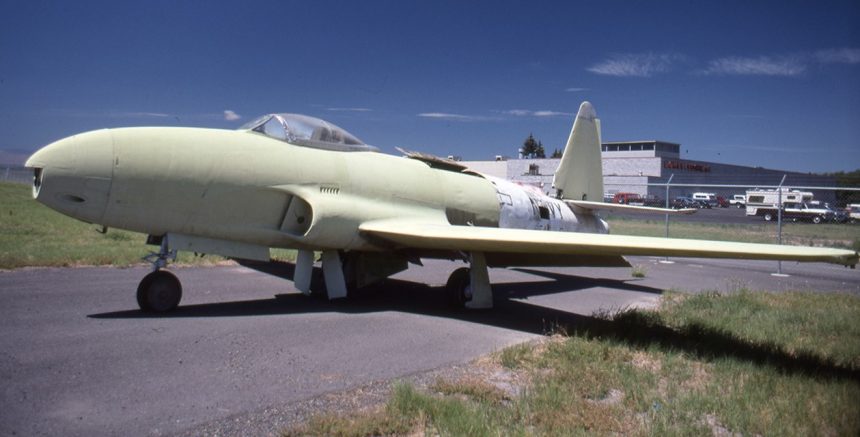

On this day in aviation history, 80 years ago (June 3, 1946), the Lockheed P-80 Shooting Star set a new Fédération Aéronautique Internationale (FAI) world speed record. US Army Air Force Pilot Lieutenant Henry A. Johnson was at the controls for the flight, which took place at Wright Field in Dayton, Ohio. Lockheed P-80A-1-LO Shooting Star 44-85123, sans payload, was flown by Lt. Johnson over a closed circuit of 1,000 kilometers (621.3 miles). Over the course of the next hour, 20 minutes, and 31 seconds, Lt. Johnson and the P-80 would average an airspeed of 745.08 kilometers per hour (462.97 miles per hour). This was good for a new FAI record.
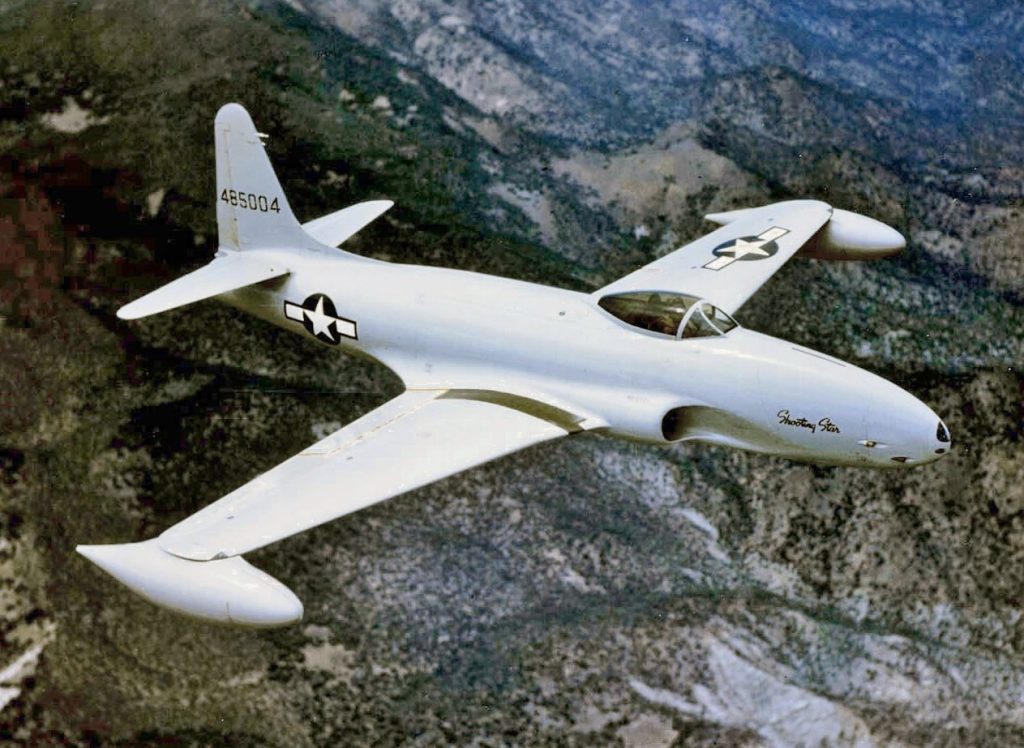
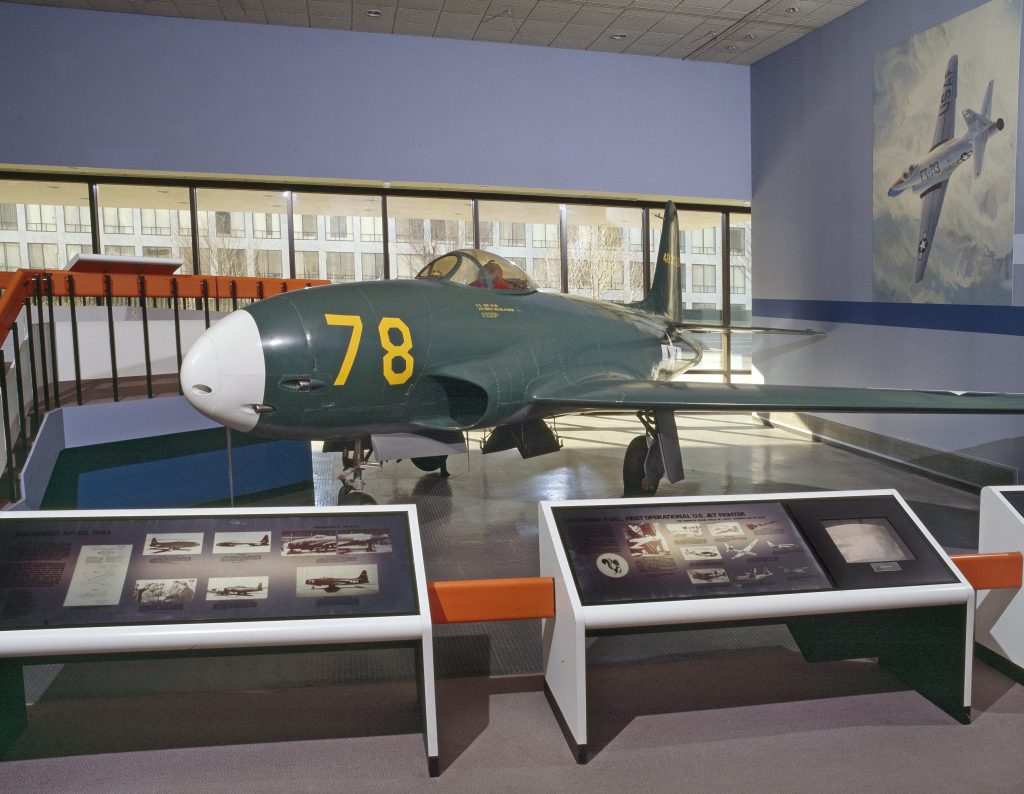
The P-80A-1-LO was the first operational jet fighter for the United States. A design team led by Clarence L. “Kelly” Johnson designed the Shooting Star as a single-seat, single-engine fighter that could potentially best the German Me 262 Schwalbe. Either an Allison J33-A-9 or a General Electric J33-GE-11 powered the early P-80 variants with 3,825 pounds of thrust. A maximum airspeed of 520 mph was eventually discovered for the fighter at 20,000 feet of altitude. The P-80 had a service ceiling of 45,000 feet. Armament came in the form of six Browning AN-M3 0.50 caliber machine guns in the nose.
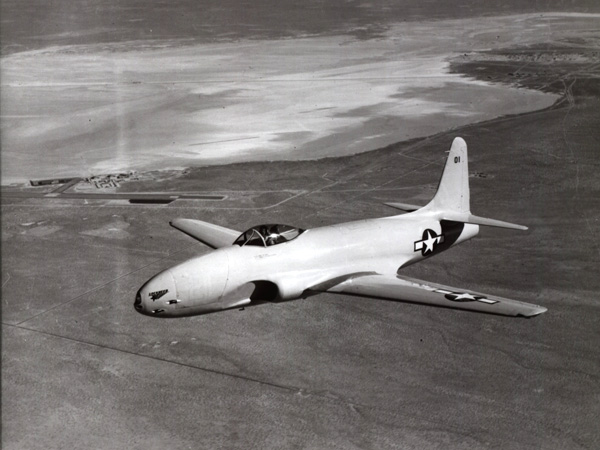
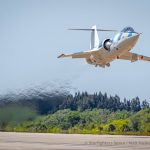
During WWII, the P-80 never engaged in direct combat. Two pre-production YP-80As served briefly in Italy with the USAAF in the months leading up to the end of the conflict. These aircraft flew reconnaissance missions during February and March 1945. The P-80 would go on to see greater use and success during the early years of the Korean War. Furthermore, the T-33 trainer variant would become adored by militaries across the globe, flying up until the 2000s in some instances. P-80A-1-LO 44-85123, the Shooting Star that broke the FAI record in 1946, is currently undergoing restoration at Edwards Air Force Base in California.







Still bittersweet that an experimental P80 took the ace of aces from us. Good ol Richard Bong.
Major Bong’s death buried behind news of Hiroshima atomic blast of same day.
I remember seeing two JASDAF T-33s on base while stationed in Japan in the early 90s. Tried to take a picture of them. JASDAF personnel didn’t appreciate that too much.
P 80 @ 463mph. ME 262 1944 @.562mph
‘Nough said
Swept wings on ME-262 made all the difference.
“Official record.” The ME-262 was a significantly faster plane due to its swept wing design, but did not attempt a world speed record due to the war.