







By Jim Chamberlain
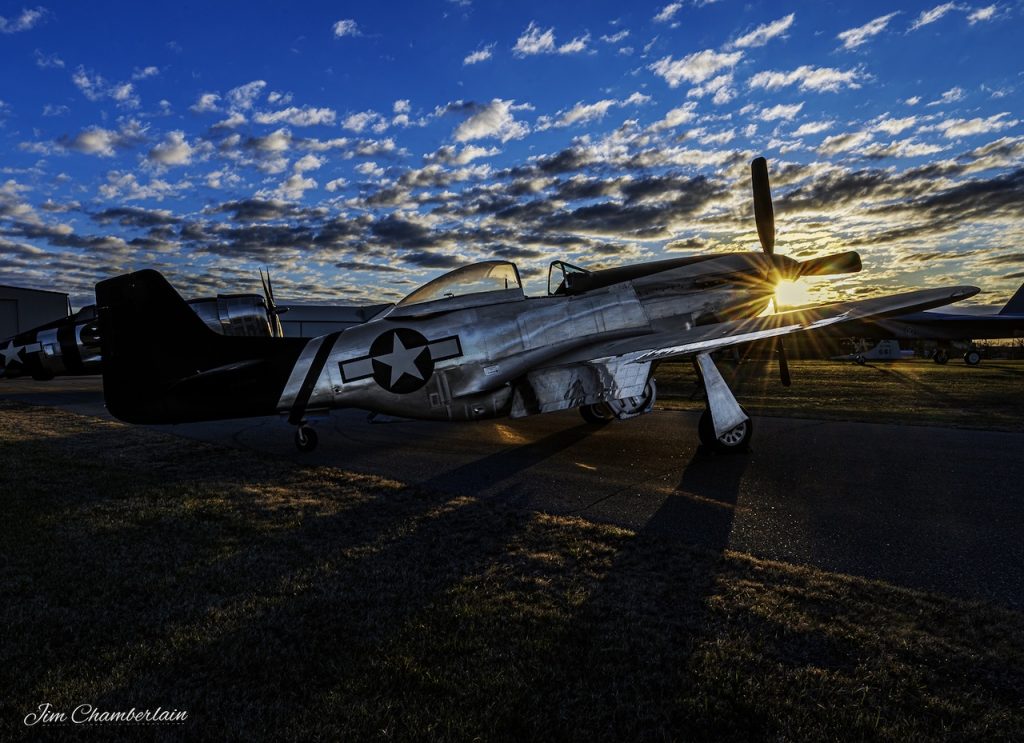
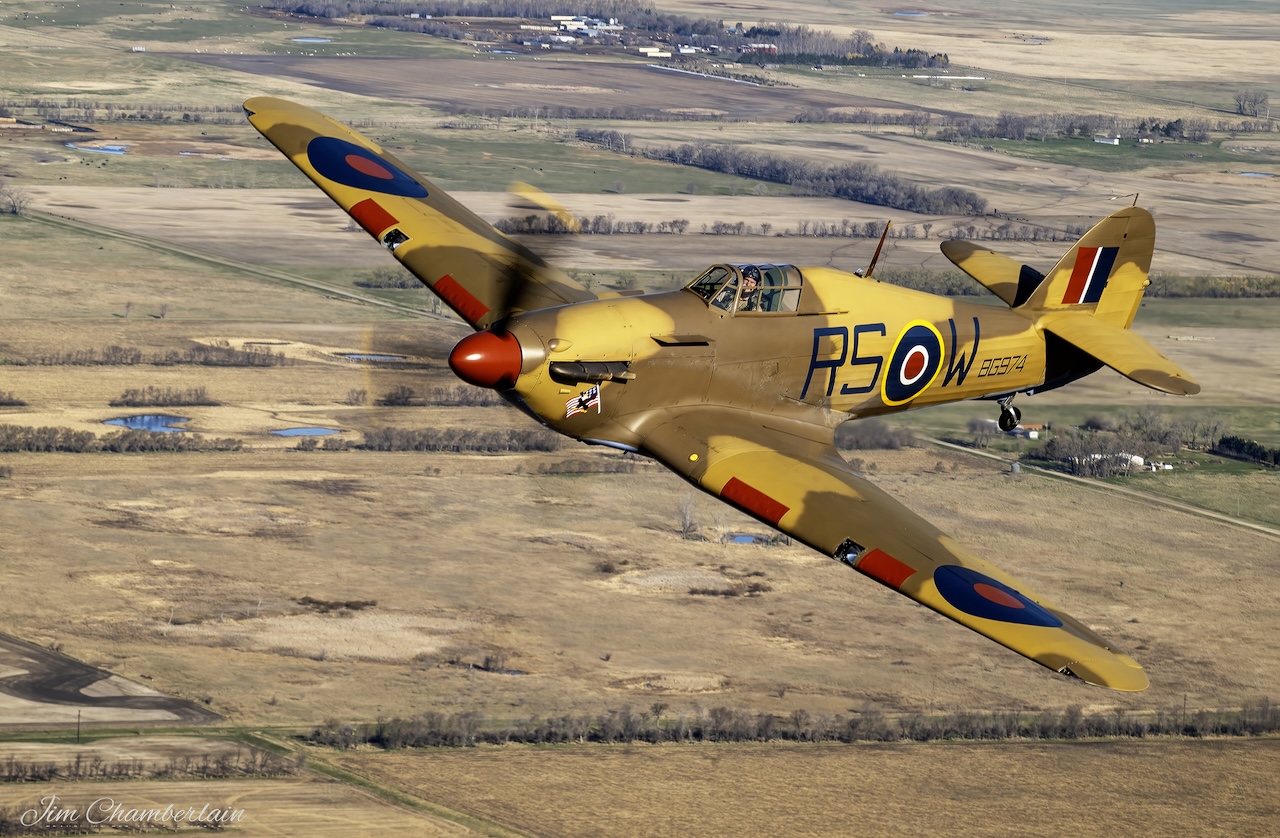
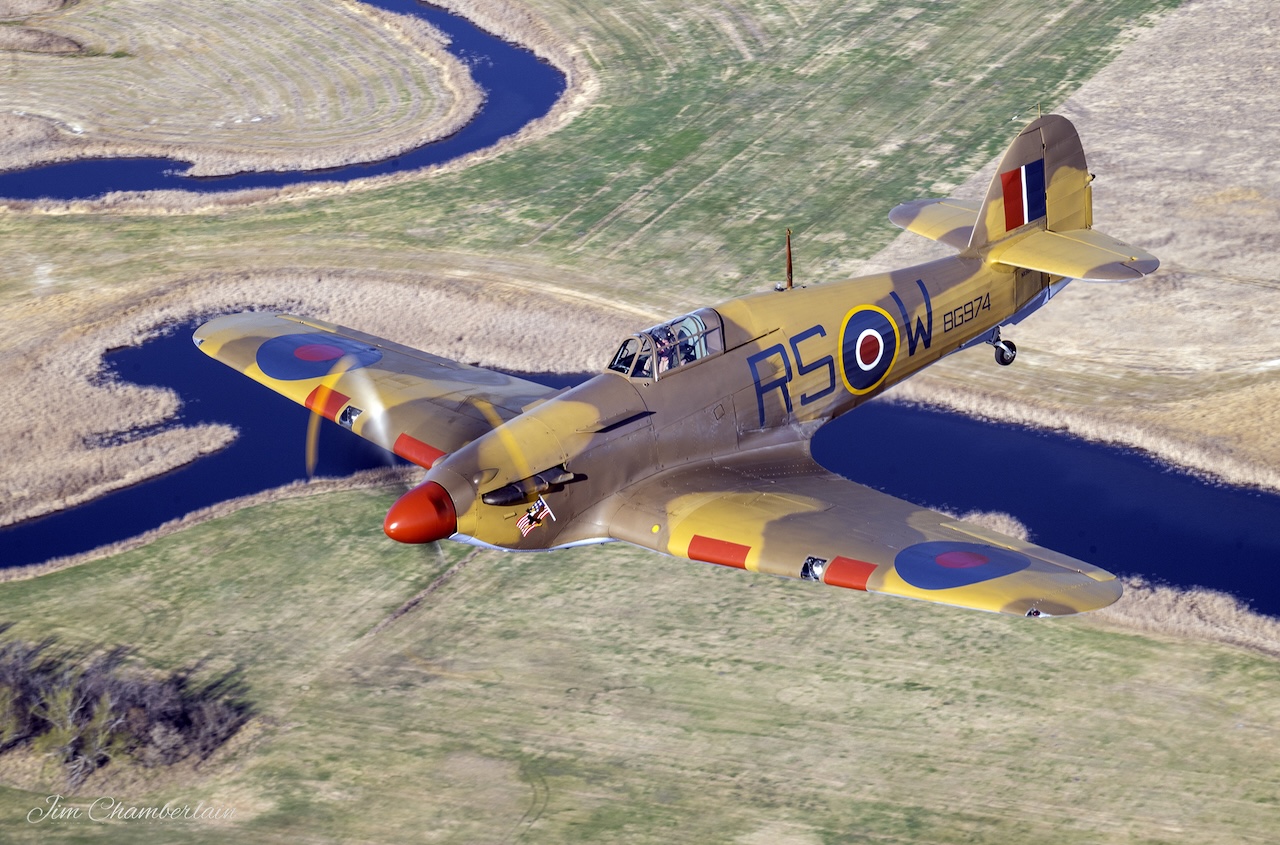
Air-to-air photography—commonly known as A2A—is one of the most challenging and rewarding forms of aviation photography. In this specialized pursuit, photographers fly aboard one aircraft while photographing another in flight, often at close range. It is an exhilarating experience that combines aviation, artistry, and precision flying. In May 2026, I had the opportunity to participate in an air-to-air photography workshop hosted by the Dakota Territory Air Museum (DTAM) in Minot, North Dakota. The event offered a rare chance to photograph some of the museum’s most treasured WWII warbirds in their natural element—the sky. Before sunrise, the silhouettes of a Hawker Hurricane, North American P-51 Mustang, and Republic P-47 Thunderbolt stood quietly on the ramp as the first light of dawn crept across the prairie. As the sun climbed above the horizon, the aircraft emerged from the darkness, providing dramatic opportunities for ground photography before the day’s flying activities began.
Among the aircraft was the museum’s beautifully restored P-51D Mustang Miss Kitty III. The aircraft carries the name originally bestowed by Capt. J.D. Rosenbaum of the 75th Fighter Squadron, 23rd Fighter Group, who flew combat missions in the China-Burma-India Theater during WWII. The name traces a remarkable lineage, beginning with a Curtiss P-40N Warhawk, continuing through two Mustangs, and eventually appearing on an F-86 Sabre during the Korean War after Rosenbaum’s wife, Lavinia “Kitty” Harris, became Mrs. Rosenbaum.
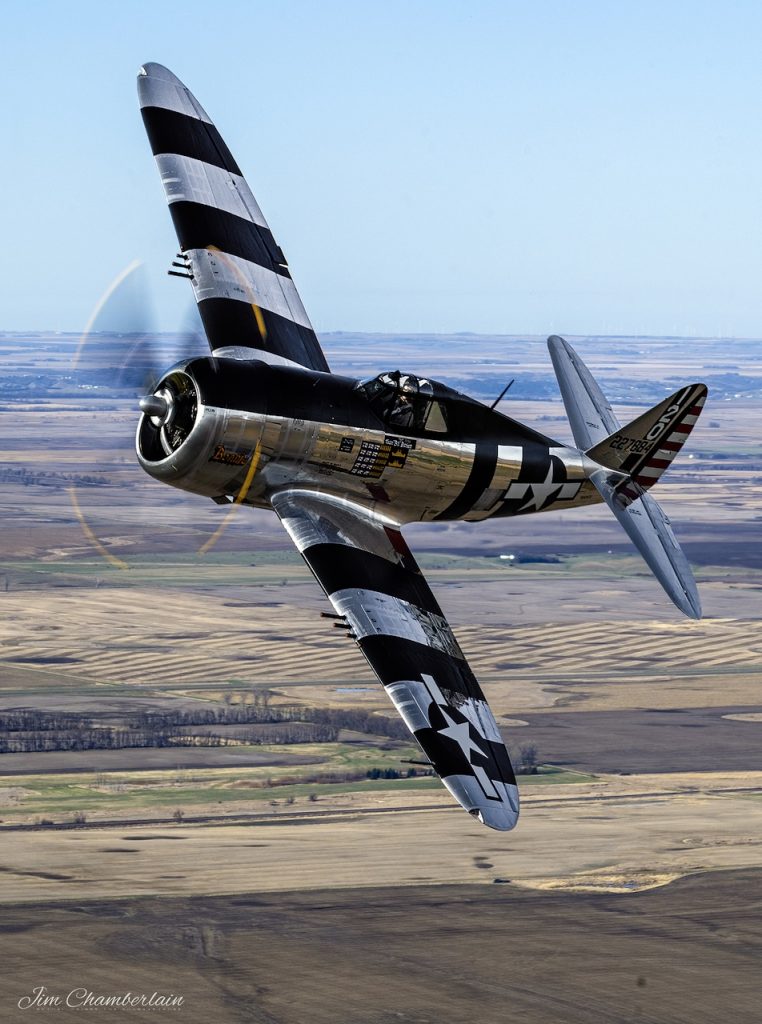
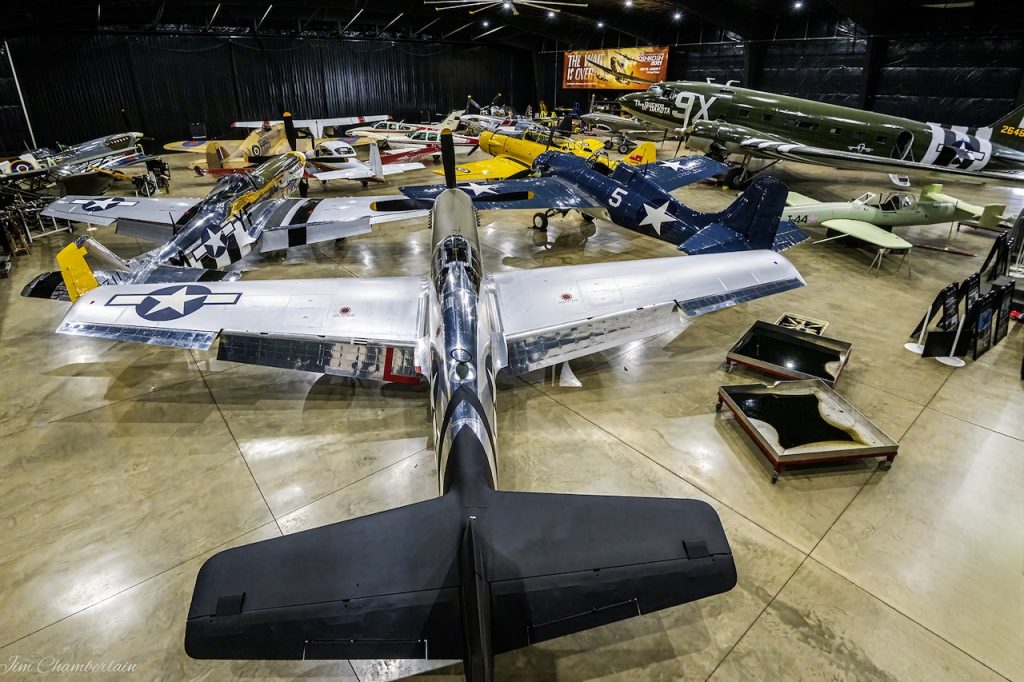
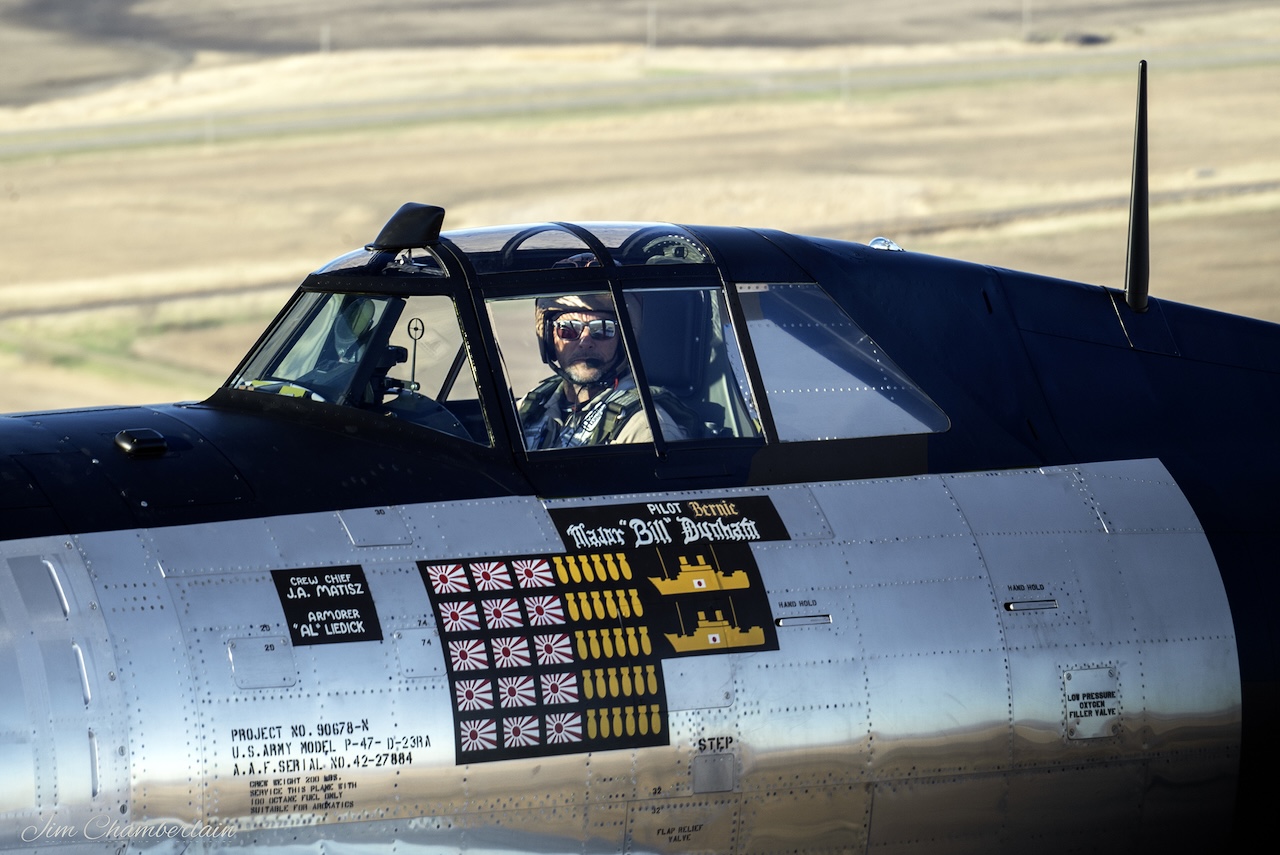
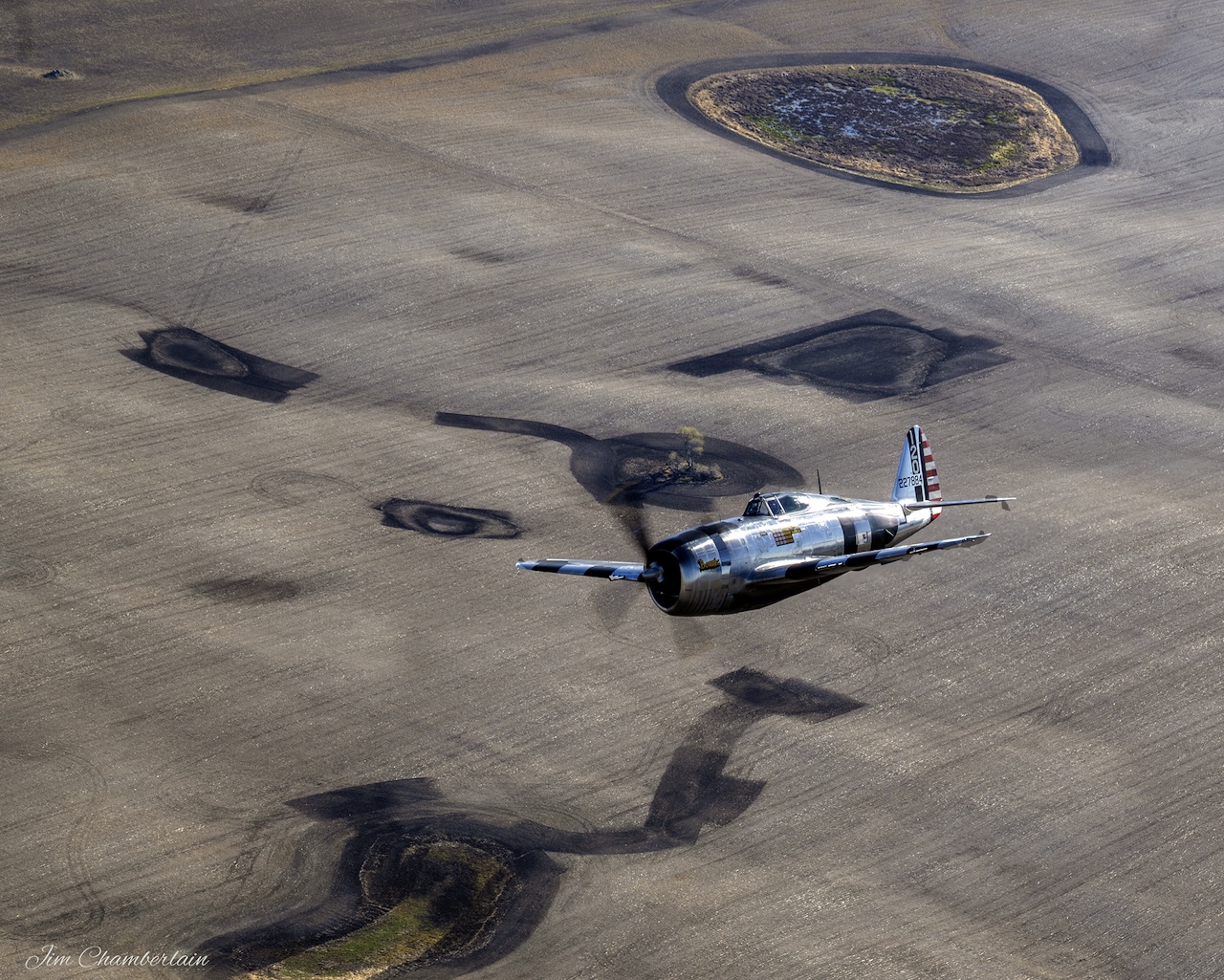
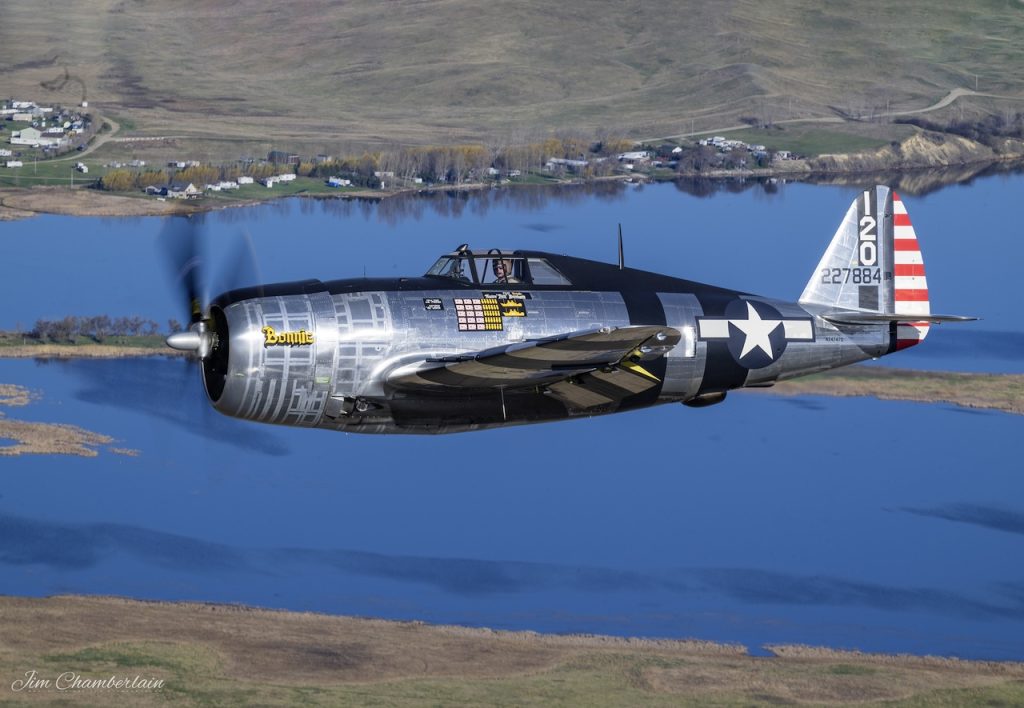
The Dakota Territory Air Museum houses one of the most impressive collections of flying warbirds in the United States. Visitors can see aircraft including multiple P-51 Mustangs, a Curtiss P-40 Warhawk, Douglas C-47 Skytrain, Supermarine Spitfire, Republic P-47 Thunderbolt, Grumman F6F Hellcat, North American AT-6 Texan, and one of only a handful of airworthy Hawker Hurricanes in America. Many of the museum’s aircraft have been restored by AirCorps Aviation of Bemidji, Minnesota, whose award-winning work has earned numerous honors at EAA AirVenture Oshkosh. Their restorations include the P-51D Lope’s Hope 3rd, the P-51C Thunderbird, and the P-47D Bonnie, while another P-51B, Shillelagh, is currently undergoing restoration.
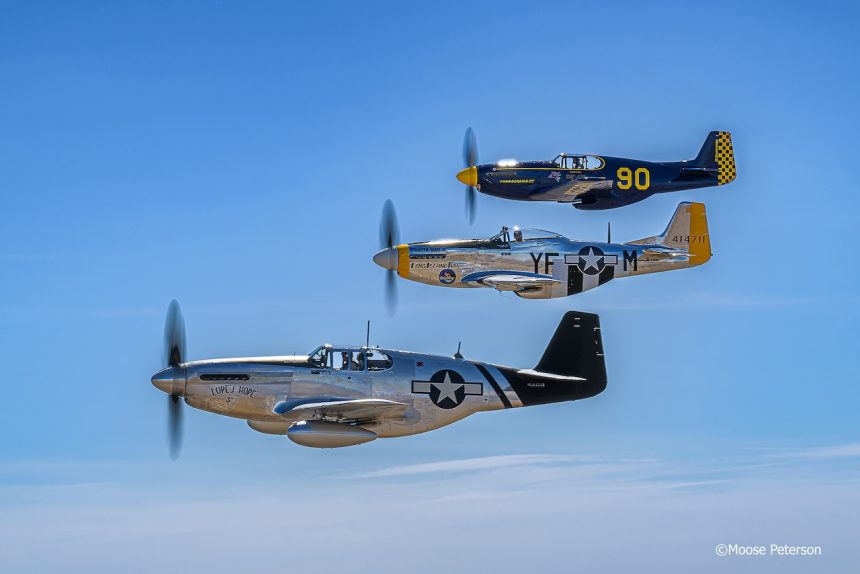
The afternoon before my scheduled flight provided an opportunity to observe the extensive preparation required to keep these historic aircraft flying. Pilots and mechanics meticulously inspected engines, systems, and airframes. Operating vintage warbirds is a labor-intensive undertaking, with each hour of flight often requiring 10 to 20 hours of maintenance. When fuel, inspections, and upkeep are considered, operating costs can reach several thousand dollars per flight hour. One of the day’s highlights was watching three P-51 Mustangs—Dakota Kid II, Lope’s Hope 3rd, and the striking blue Thunderbird—depart in formation for an air-to-air photography mission. The aircraft flew over the North Dakota countryside while renowned aviation photographer Moose Peterson captured images from a nearby photo platform.
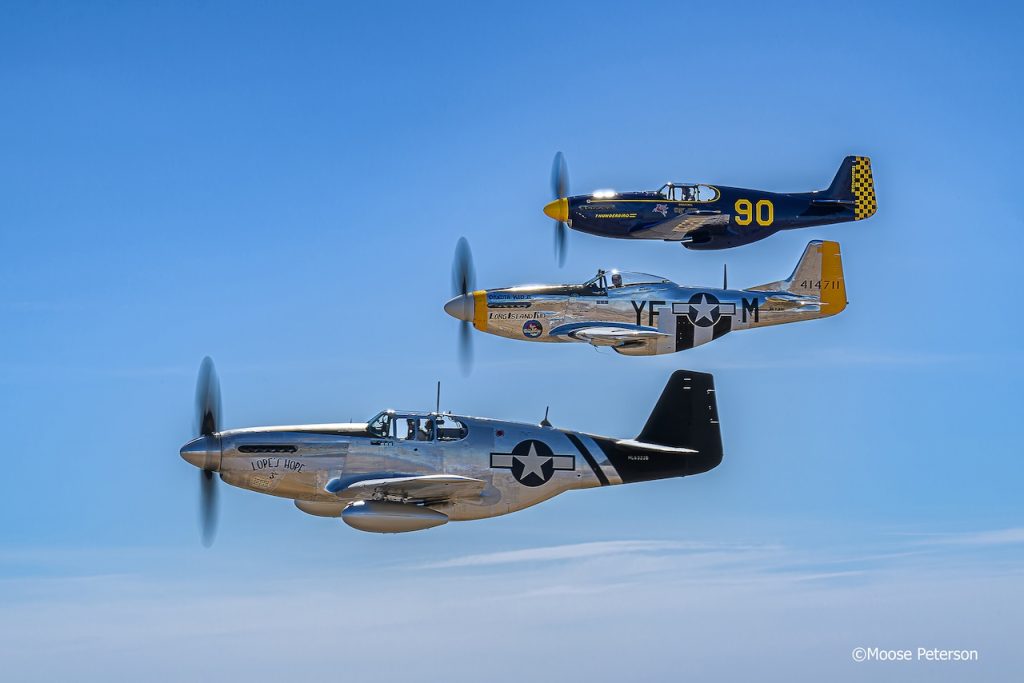
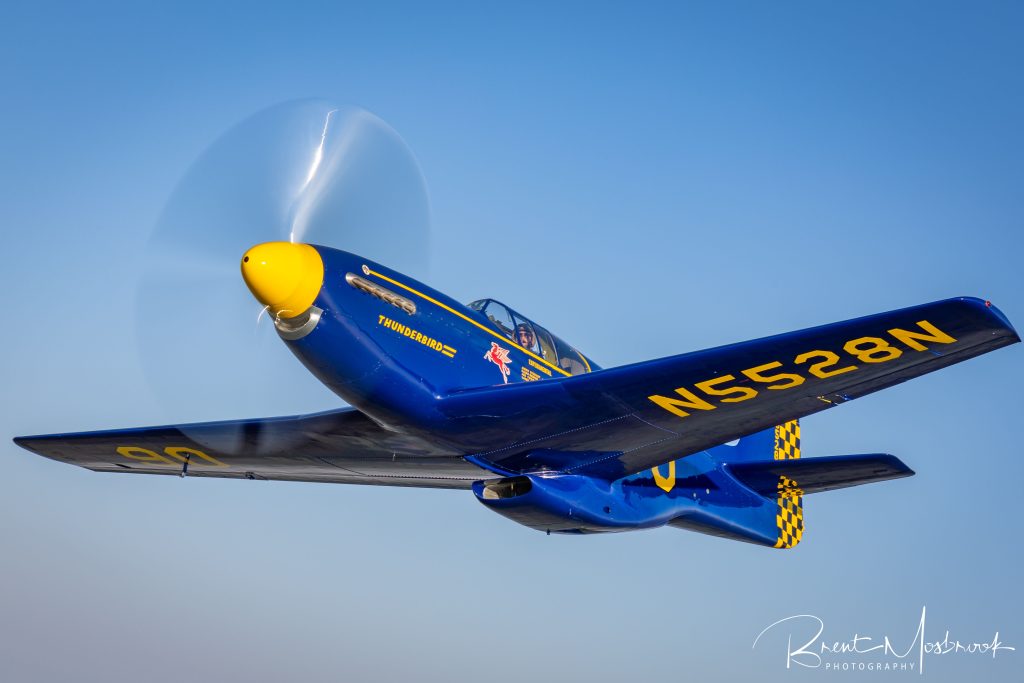
The conditions were challenging, with turbulent air making it difficult to maintain formation. Peterson later joked that the rough ride had left him with a black eye after repeatedly being struck by his camera while shooting. Despite the turbulence, the pilots successfully held formation long enough to create spectacular photographic opportunities. The blue P-51C Thunderbird possesses a particularly noteworthy history. Winner of the 1949 Bendix Trophy Race, the aircraft was once owned by actor and WWII bomber pilot Jimmy Stewart and later by famed aviator Jacqueline Cochran. Today, it belongs to Warren Pietsch, co-founder of the Dakota Territory Air Museum and a recent inductee into the North Dakota Aviation Hall of Fame.
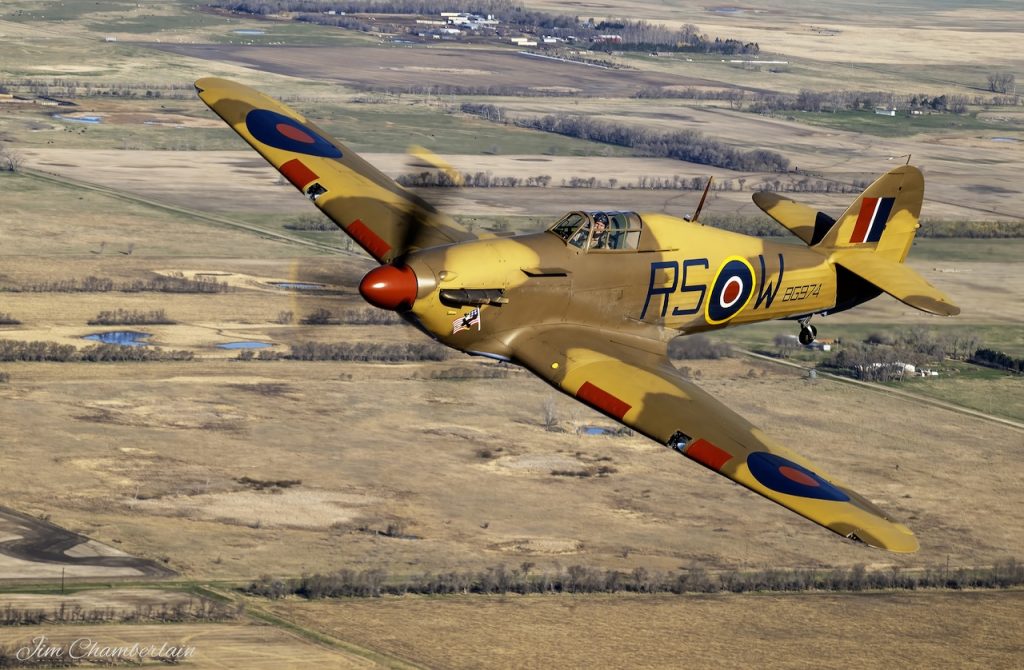
That evening, I prepared for my own first air-to-air mission. The plan was to photograph two legendary warbirds—a Hawker Hurricane and the museum’s award-winning P-47 Thunderbolt Bonnie—from a Beechcraft Bonanza configured as a photo platform with its rear door removed. Unfortunately, increasing winds forced organizers to postpone the flight. Safety always comes first in air-to-air photography, and the rough conditions would have made obtaining quality images nearly impossible. The delay proved worthwhile. The following morning dawned calm and clear, providing ideal conditions for what would become one of the most memorable aviation experiences of my life.
(Image credit: Jim Chamberlain)




Wow, what a great experience and just stunning photos. Great article and great photos. Happy you had such a wonderful trip!