






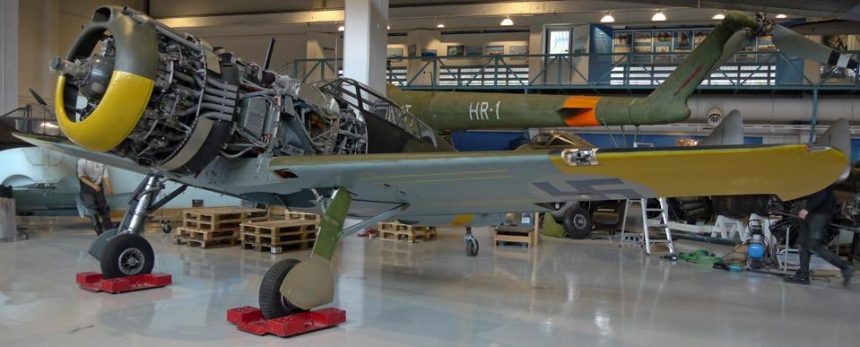

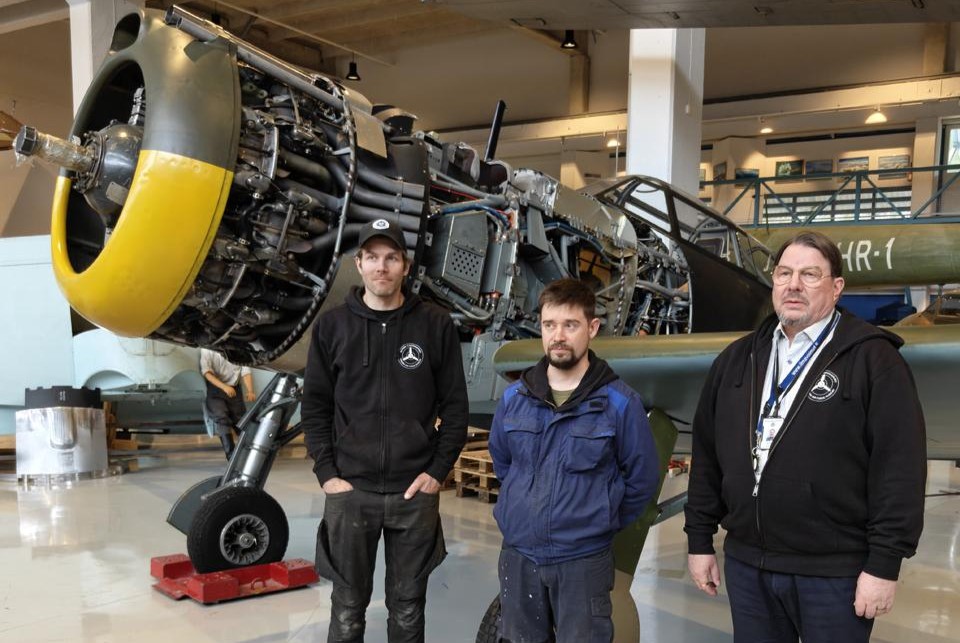
May 5, 2026, was a historic day in the 13-year-long VL Myrsky II restoration project: the fuselage and wings of the aircraft were finally joined together, while the partially restored machine was placed on its landing gear for the first time in more than six decades — encouraging signs for the program seeking to revive the only domestically mass-produced Finnish fighter of WWII. Since our last report, the restoration of VL Myrsky II MY-14 at the “Tuesday Club” (Tiistaikerho) continues to advance steadily. The most important development in recent weeks was the joining of the aircraft’s wings with the fuselage, with the success of this phase largely determining the future of the restoration. During two days (May 4–5), the Tuesday Club, alongside members of the Finnish Air Force Museum (Suomen Ilmavoimamuseo), carried out the careful operation. An electric forklift was rented to raise the fuselage and allow the wings to be slipped underneath it, while pallet trucks, stackers, and hydraulic jacks were used to stabilise the entire structure when both parts first came together. First, the tail of the aircraft was lifted onto a stand using an axle pushed through a lifting tube. Next, the forward section of the fuselage was lifted using a harness tied around the propeller hub, allowing the interim support beneath the fuselage used during the restoration to be removed. Then, manoeuvring the forklift, pallets, and sometimes a bit of brute force from the project volunteers, the wing was slid under the fuselage.
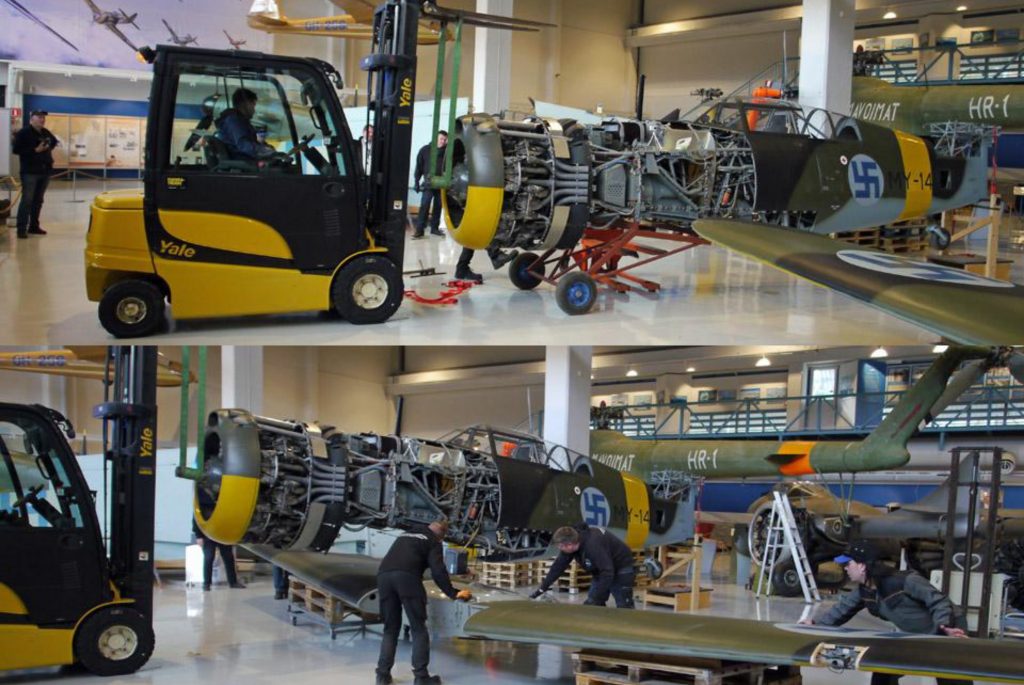
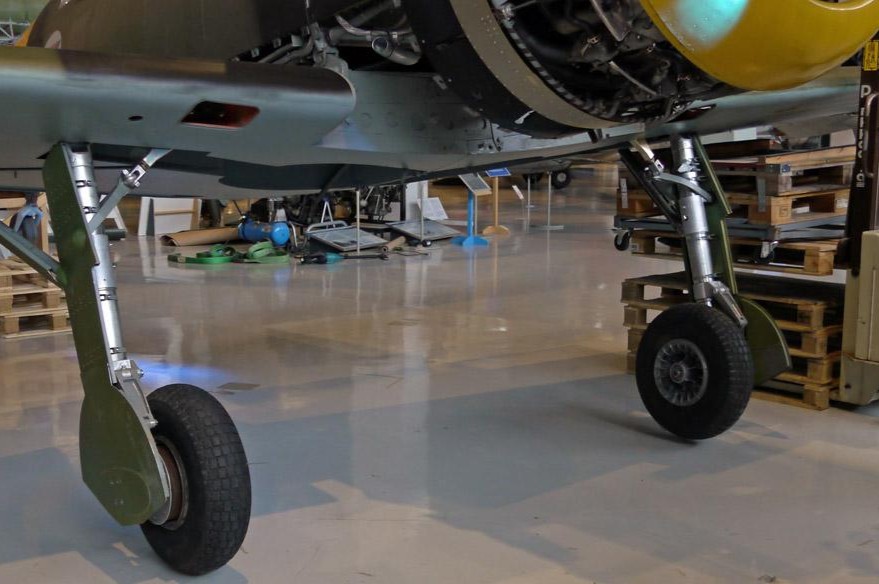
Under the leadership of conservator Antti Lappalainen and assistant conservator Mika Rautasaari, the four bolts connecting the wing and fuselage were installed. According to Reino Myllymäki, spokesperson for the Myrsky MY-14 restoration project, the first three bolts were installed without any problems, but the fourth one — located on the forward right side of the fuselage — required some extra work. But overall, Reino and members of the team affirmed that the work was much easier than originally expected — the wing and fuselage were already joined by the end of the first day. On the afternoon of the second day (May 5), the aircraft’s main landing gear was lowered and locked in the fully extended position. The success of this operation meant that the aircraft rested its full weight on its own “legs” for the first time in more than six decades.
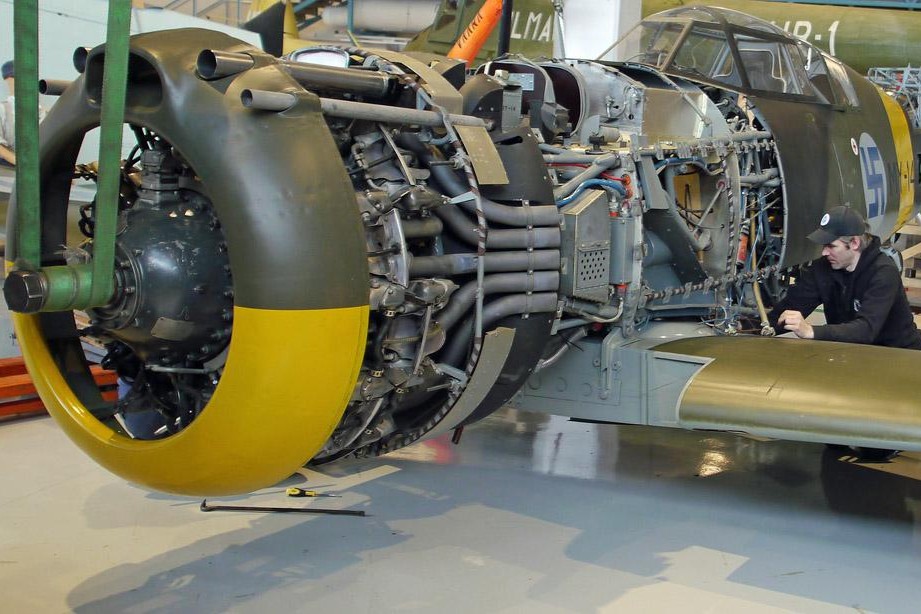
Despite these remarkable developments, Reino underlines that substantial work on the Myrsky is still ongoing, notwithstanding the anticipated handover to the Finnish Air Force Museum later this year. The next scheduled steps will focus on the engine bay through the installation of the oil cooler and engine flaps, while the horizontal stabilisers, elevators, and their base plates will also soon be fitted to the aircraft.
The restoration of MY-14 is a joint effort between the the Finnish Air Force Museum (Suomen Ilmavoimamuseo), the Finnish Aviation Museum (Suomen Ilmailumuseo), and the Aviation Museum Society, Finland (Suomen Ilmailumuseoyhdistys), with Patria and Sinituote acting as the project’s main sponsors. Each institution has played its own role in the restoration of MY-14: while the Myrsky group of the Aviation Museum Association’s ‘Tuesday Club’ (in Finnish, Tiistaikerho) hand-built most of the aerodynamic surfaces, such as the wing, ailerons, stabilizers, and rudder, as well as the forward section of the engine’s NACA ring, the Finnish Air Force Museum restoration team focused on the airframe, engine, weapons, and other technical aspects of the aircraft.







It’s good to see the restoration work proceeding. This aircraft is a new one to me, and requires some reading to learn it’s history.
For instance, was it in Combat with Russian Aircraft during … ‘The Continuation War’; and, if so, how did it compare to those?
My thanks for the News Update; I look forward to seeing more.