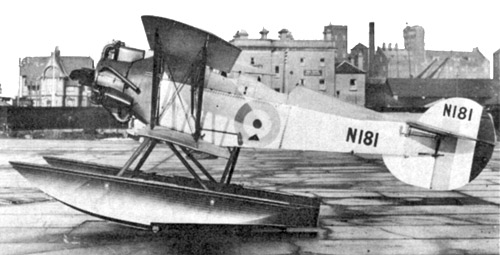
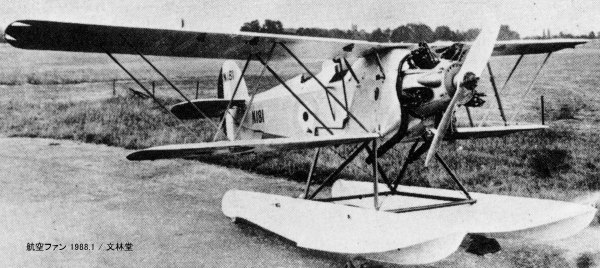


On this day in aviation history, 101 years ago (June 4, 1925), the first flight of the Parnall Peto took place. A reconnaissance aircraft prototype, the Peto was intended to be carried by submarine during deployments at sea. George Parnall and Company designed the aircraft during the early 1920s in response to British Air Ministry specification 16/24. Two examples were manufactured, serial numbers N181 and N182. The first prototype of the Peto, N181, did not fare too well at the onset of flight testing. The aircraft suffered a crash in Gibraltar, requiring a rebuild. Re-named as N255, the restored first prototype was eventually lost in step with submarine HMS M2, when the ship’s hangar flooded. The extremely small confines of the submarine’s hangar made the design of the Peto one of Parnall’s most demanding development projects. There was no option except for the aircraft to fit in the hangar; no half-measures; failure was not an option.
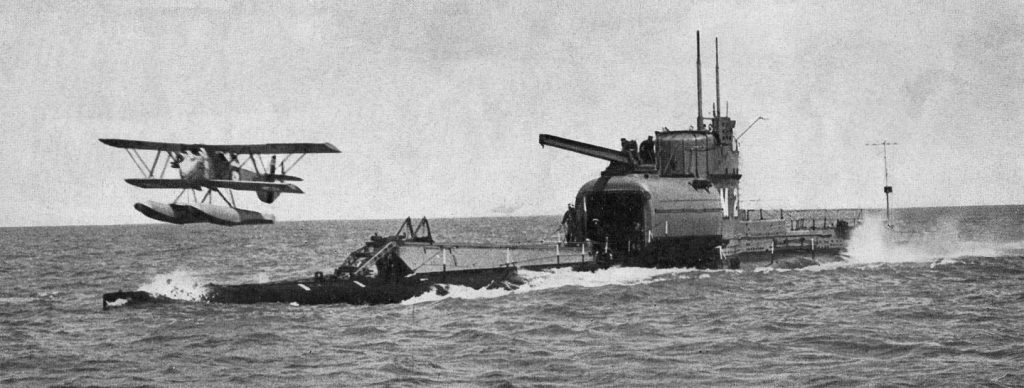
Parnall opted to utilize mixed construction on the Peto – a hybrid of wood, fabric, aluminium, and steel. The “compact” recon biplane had a wingspan of 28 ft 5 in, a length of 22 ft 6 in, and stood 8 ft 11 in tall. A crew of two flew the Peto, behind the pull of a 135-hp Armstrong Siddeley Mongoose IIIC 5-cylinder radial engine. The Peto was given “sea legs” via mahogany plywood “Consuta” floats, which were ultimately upgraded to metal floats after the crash of N181. A more powerful 169 hp variant of the Armstrong Siddeley Mongoose engine was installed, as well. Performance of the Peto proved satisfactory; the aircraft could attain a maximum airspeed of 113 mph and climb at 600 fpm. The Peto was launched via a compressed air catapult that was mounted at the head of the submarine. Recovery of the aircraft involved using a crane. Although catapult testing showed favorable results, the loss of Submarine M2 led the Royal Navy to abandon the program.